How to avoid errors of the beginner with a puukko
The puukko Forgive little. It is simple, almost poor in appearance, and that is precisely why every bad choice is immediately visible: when buying, in the hand, on the stone, in the sheath.

This guide is for you who want to avoid mistakes of beginner.
The puukko.fr to avoid errors of beginner
You don't need a rare knife to get started. You need a real puukko, a straight gesture, and two minutes after each exit.

ERRORS OF BEGINNER :
PUUKKOS AND COUTEAUS IN GENERAL.
This page is not a course d sharpening, nor a complete purchase guide. This is the list of the most frequent errors on a puukko — and, for the most part, on any fixed knife. The idea is not to scare. It is to avoid paying twice: once the knife, once the habits will have to be corrected.




Here are the errors of beginner the most frequent. They apply to the puukko and for most fixed knives.
Many first knives are not worn out. They're tired too soon. Blade too long, fake scandi, stainless steel selected « not to bother », sheath which holds nothing, lever gesture, back raised on the stone. Nothing spectacular. Just a series of small mistakes that turn a clear tool into any knife.
1. Purchase
Take one « puukko » which is not one.
Blade too wide, belly marked, grind in V or convex, guard, silk full survival way: this is no longer a puukko. It's an outdoor knife dressed in birch. Nothing shameful. But it is not the same tool, nor the same gesture.
→ How choose your first puukko
Choose the wrong size.
The first puukko stands around 8 to 11 cm of blade. Shorter: precise, sometimes just for detail. Longer: you already switch to leuku. One beginner with 15 cm of blade learns bad habits faster than a good gesture.
→ Types of puukkos
Believing that stainless steel is « easier ».
L stainless steel Rest assured. It rusts less. It also sharpens less well, especially in grind scandi. The carbon requires two gestures after use: dry, oil. In exchange, it cuts earlier and resumes on a simple stone. For a true first puukko, carbon remains the right teacher.
Watch handle before the blade.
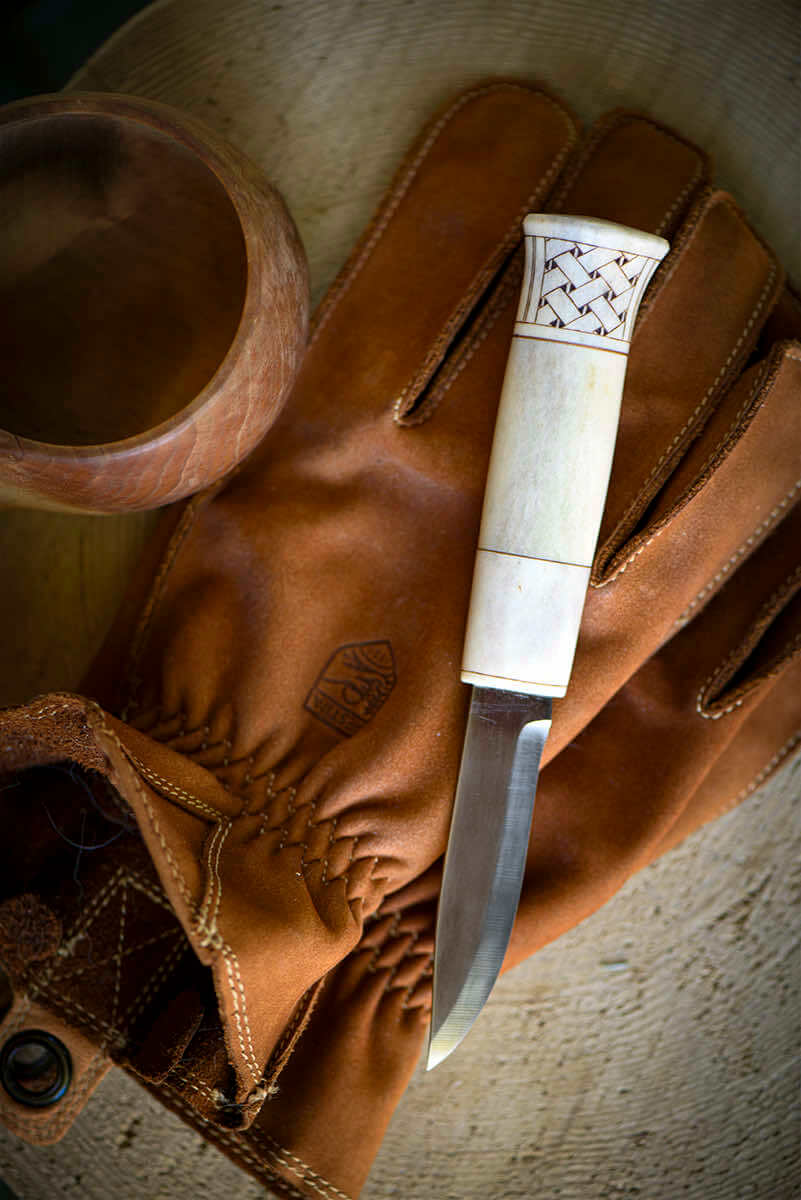
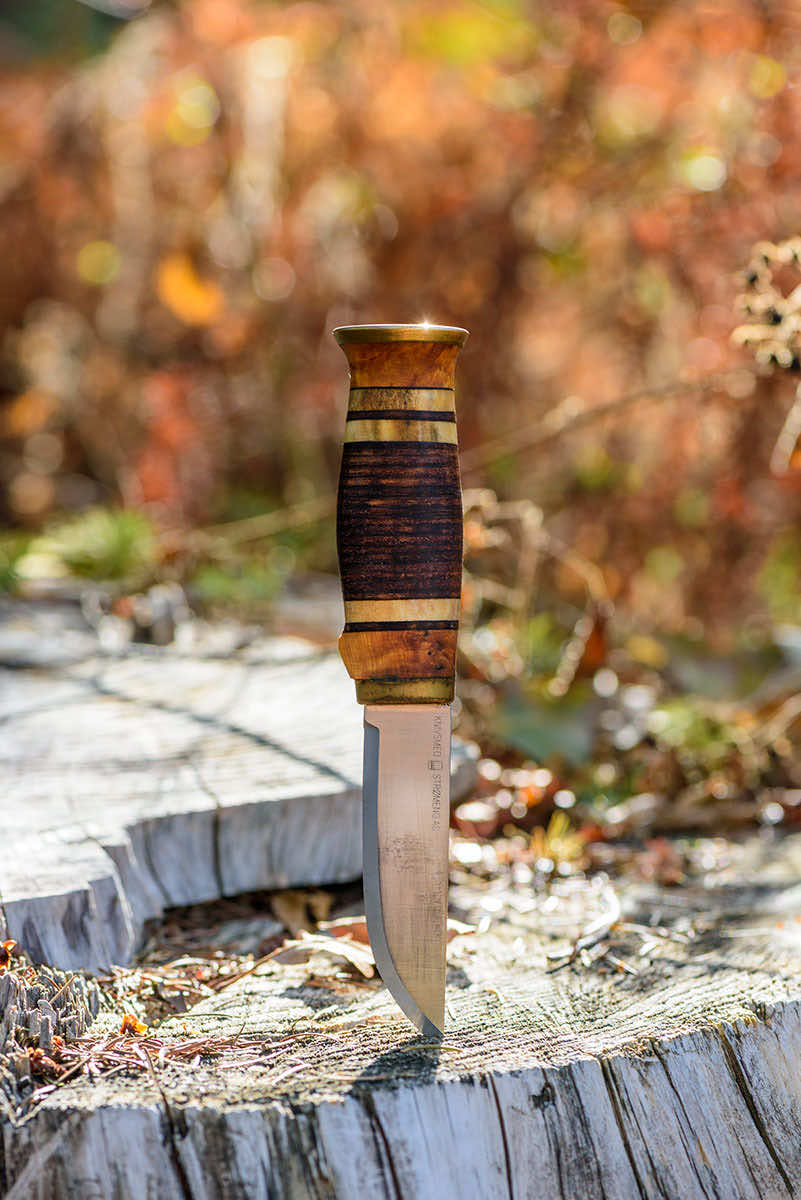
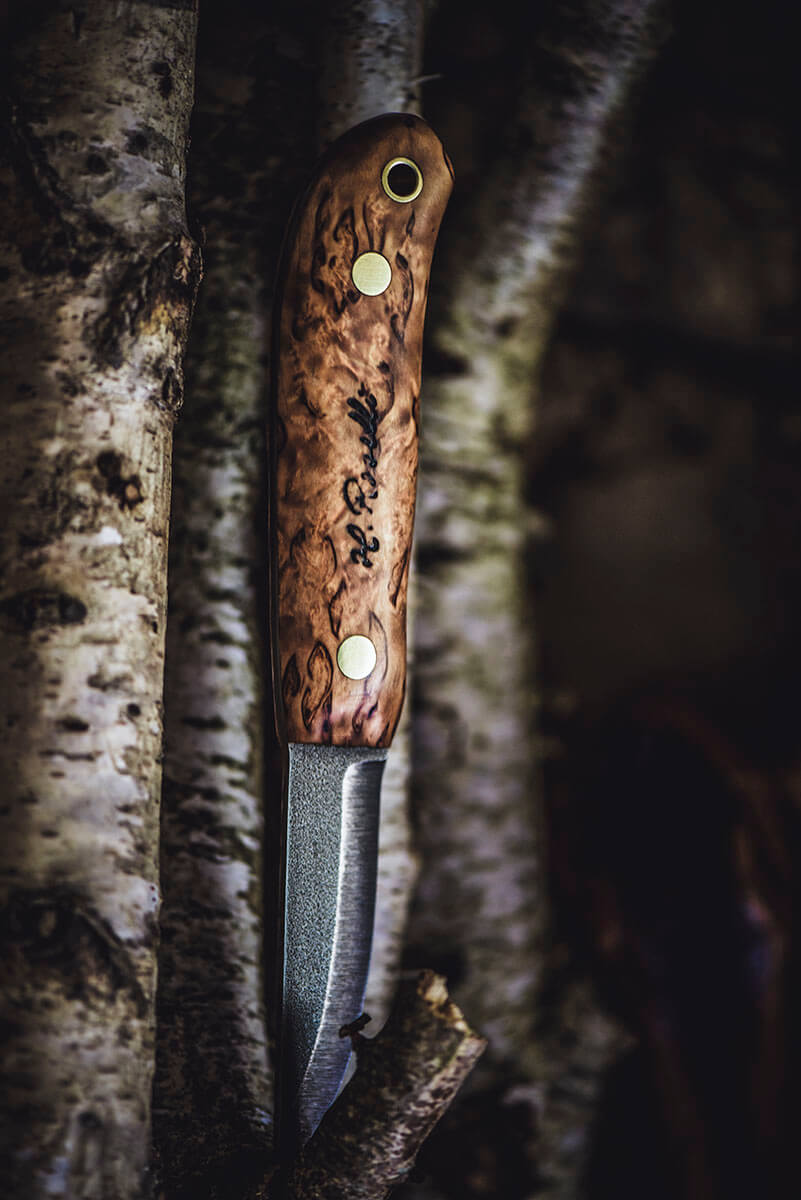
The curly birch, the reindeer wood, the brass mitre: it's beautiful. That's not what's cutting. One handle too carved, too thin, too thin « object » fatigue and slip. A good first handle is simple, a little perry or straight, long enough for the gloved hand.
Neglect the sheath.
One puukko lives in its sheath. Too thin leather, fragile seam, no collar that holds the silk well, wood that splits: the knife falls, oxide, gets lost. The sheath is not an accessory. It's half the tool.
→ How maintain your shingles
Pay the signature before use.
A renowned craftsman doesn't guarantee that this knife fits you. A good one puukko Anonymous, well soaked, well emotional, will serve you more than a piece of window that you won't dare to go out.
Buy « for later ».
The second knife is chosen after the first knife, not before. Without hours of wood, stone and sheath You buy a picture.
2. Hand
Serve as a lever.
The puukko is not a screwdriver, not a dick foot, not a box opener. Hidden silk and thin blade do not like twisting. A broken tip is almost always that.
→ How to handle his puukkos
Cut to yourself.
Kitchen reflex. Bad reflex in the forest. The blade goes where the hand is not. The thumb behind the back of the blade, never on the wire. The wood to spread, not to shoot against the belly.
Tough in the cup.
Push or shoot in the axis. The blade is not rotated in the material. It's this way you're cutting a wire scandi.
Consolidate puukko and leuku.
The puukko slice, size, body, prepare. He doesn't break a log, don't break a tree, don't break a bone. For that, it's leuku. — or a hatchet. Force a small knife to do the work of a big one, it's the most expensive fault.
→ Leuku: anatomy, history and technique of the large Sami knife
Bad hold on handle.
You're losing the point. Too much forward, index on the blade: you cut yourself off on the first slide. The hand fills the handle. The thumb can come on your back for fine work. Wet gloves: even more surface area, even less flour on wood.
Work too close to the wire without seeing the wood.
The scandi is very aggressive. He's coming in fast. We're going through short passes. We don't « saw » Not. And, above all, don't force when it gets stuck: we change angle.
Lend the knife without saying.
Everyone has a move. The beginner Often makes a tip less sharp than he believes. If you're ready, take the stone back.
3. Sharpening and maintenance
Destroy movement scandi.
Error #1. We put the bevel flat on the stone. The whole bevel, not just the wire. As soon as you lift your back « to go faster », we create a micro-bevel. The puukko loses what makes it unique: a thread that recovers in two minutes.
→ How sharpen tone puukko
Switch to electric sharpener or wire puller.
It eats steel, it rounds the scandi It heats the wire. A stone (or two), a leather, possibly a ceramic. Nothing else to start with.
Wait till it stops cutting.
One puukko maintain before being deaf. A few passages to the leather after an exit. A stone as soon as the wire hangs less paper. The longer you wait, the more steel you have to remove.
Leave it carbon wet.
Dry. Always. Including near the mitre if water sank. A trace of oil (camelina, Ballistol, cannon oil, some food oil) on the blade. Not a bath. A movie.
Believing that stainless steel does not maintain.
It still stings with salt, blood, sheath Wet. He's sharpening harder. It's not a careless knife. It's a different care knife.
Oil on handle Like a blade.
The birch loves a siccative oil from time to time (lin, tung), not motor oil. Too much oil softens the wood and rots the sheath.
Scratch the rust with the raw glass paper.
A sting gently removes (hard steel, polishing cream, patience). The big grain starts the bevel and leaves furrows that rust faster.
4. Sheath, transport, law
Store wet knife in leather.
Leather keeps moisture. The blade rusts. Wood works. We wipe, we let the blade dry out of the water sheath If we come back from wet exit.
Leave him alone « somewhere » without sheath.
In a bag, in a glove box, in a drawer among the keys. The wire dies. Someone's cutting. One puukko fits into her sheath, sheath In his place.
Ignore the law.
In France, a knife is not prohibited by nature. Port and transport are, without legitimate reason. One puukko in the bag « in case » In town, it's not a motive. Find out. The most beautiful tool is useless at the police station.
→ The puukkos face French regulations.
5. In the head
Collect before using.
The first puukko must work. Otherwise you won't learn sharpening No wood or your mistakes.
Look for the perfect knife.
He doesn't exist. There's the knife you come out. The second will be better chosen because the first will have served.
Treat him like a weapon.
One puukko is a tool. As soon as we brand it, we've already lost the subject.
Painting: fault, damage, good reflex
| Error | How it feels | The right reflex |
|---|---|---|
| False puukko (guard, belly, V-grind) | Bad move from the first wood to be cut | Right blade, scandi flat, no guard |
| Blade too long to start | We force, we twist, we believe in leuku | 8 to 11 cm for the first |
| Stainless steel « not to bother » | Longer wire to resume, false security | Carbon + dry + oil film |
| Sheath Cheap | Fall, rust, dancing blade | Leather (or wood) that really holds |
| Lever / twist / can opener | Broken tip, tired silk | Cut in the axis, nothing else |
| Puukko used as a hatchet | Scratch wire, veiled blade | Leuku or a hatchet to split |
| Back on stone | The scandi becomes a V. The soul of the knife leaves | Bevel flat, all bevel |
| Electrical / wired | Burned steel, lost angle | Stone + leather |
| Wet blade in leather | Pikûres, stains, working wood | Dry out sheath, then go home |
| Port in town « in case » | Unnecessary damage, very bad idea | Legitimate motive, or leave it at home |
6. Mini-checklist before buying
- Blade 8–11 cm, straight profile, little or no belly
- Movement scandi actual (single flat bevel)
- Steel carbon if you accept two minutes of maintenance
- Handle simple, long enough, unguarded
- Sheath who really holds the knife
- A price consistent with usage, not with the photo
- If five of these six points are there, you have a first puukko Honest.
7. Which is not a mistake
- A micro-piqûre of rust after a rain shower, if you treat her at night.
- A thread that requires leather both uses.
- One handle which patina.
- One puukko Cheap that really cuts.
All this is the life of the tool. The mistake is to want a window knife and a forester use at the same time.
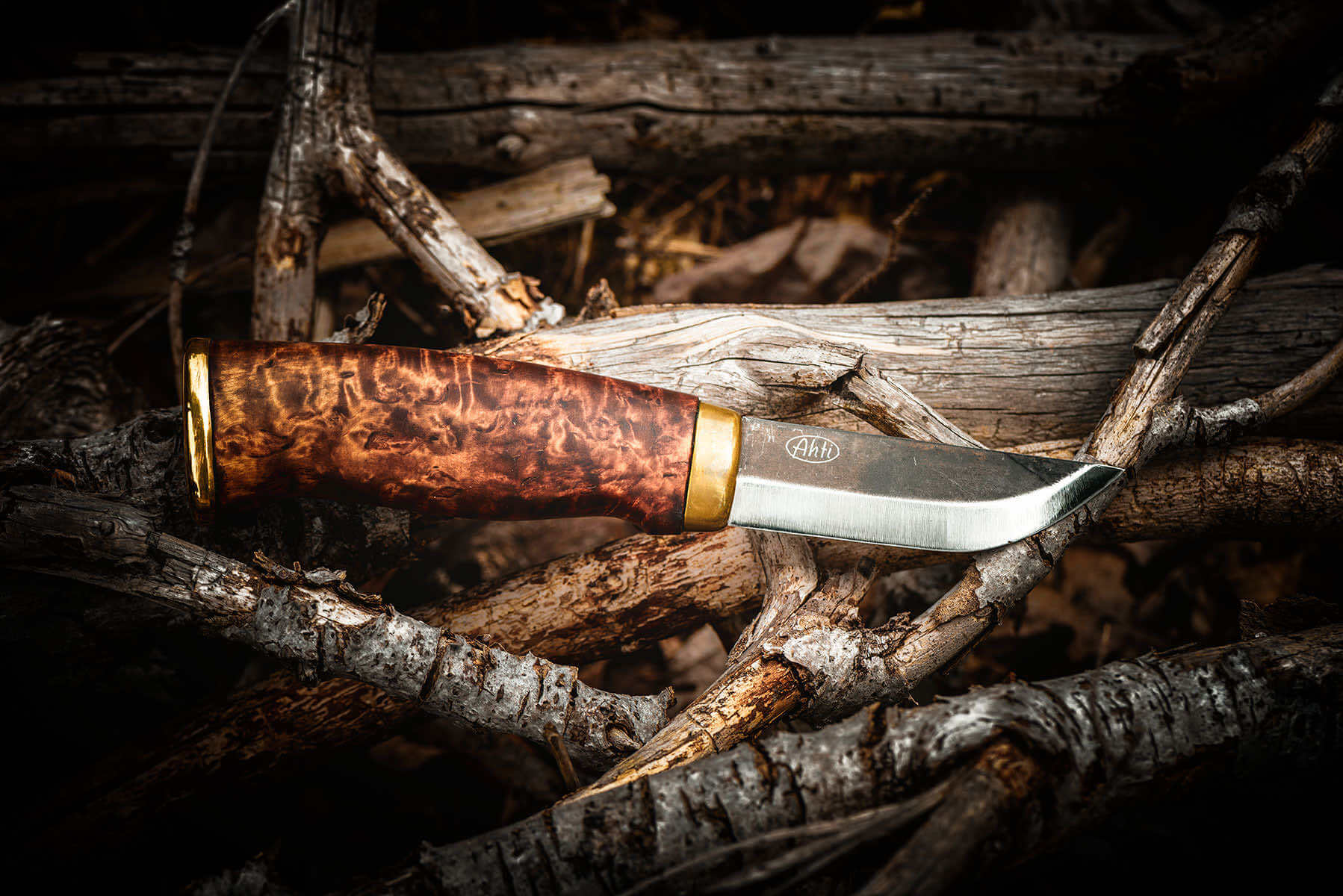
FAQS
Errors in beginner
One puukko Are you okay in the kitchen?
Yes, for camp and simple daily life. He's not a leader: thicker blade, scandi aggressive. Cuts the sausage, not the juliens.
How to know if grind is really scandi ?
One flat bevel, wide, that goes up to the wire. If you see a second angle near the edge, it's no longer a scandi.
Should we oil the handle ?
From time to time, flax or tung oil. Not at every exit. Too much oil softens the wood and fatigues the sheath.
The thread hangs less: stone or leather?
Leather first. Pierre as soon as the leather is no longer enough. The longer you wait, the more steel you take off.
One puukko Used, is it risky?
No, if the blade is not veiled, the thread not crenelated, the sheath Still solid. A stone will tell you quickly if steel is honest.
Should I remove the puukko of the sheath To store it?
Yes after a wet exit. Dry, in the sheath In the shelter. Leather is not a waterproof safe.
Conclusion
You don't have to do everything just on the first day. You're gonna miss a sharpening, forget a damp blade, hesitate on a wood. That's normal. What matters is to take back the knife, treat it, and continue. The puukko Learn with you.
The puukko is not an exam. He is a simple companion, a little demanding, very faithful as soon as he is treated properly. In the north, it is said that a man without a knife is a lifeless man. With a puukko Well chosen and a little care, you already have a good start.
Do you have any other questions? Write to me, we're passionate. : contact(at)puukko.fr. But, above all, think about subscribing to the newsletter. See you soon.
Internal Useful Links:
The puukko Over the seasons: Complete guide + seasonal checklist + PDF to download
How to choose a puukko that suits you
How to secure your puukko
Warm regards,
Subscribe to the newsletter.
The puukko A to Z
ALL GUIDES
A complete journey:
choose sound puukko, do it its own, sharpen,maintain, handle it, and secure it with the children.
You want Learn more on the puukkos?
The puukko You're passionate, so these articles should also be interesting.
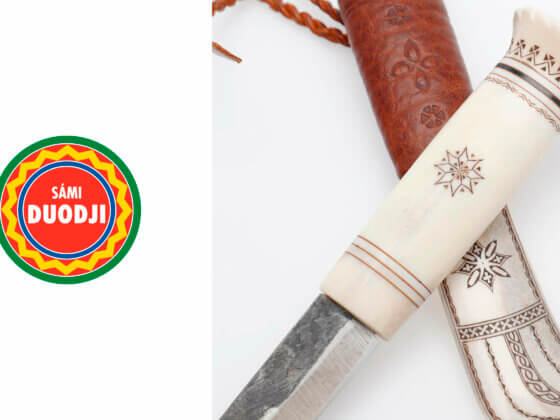
Duodji or craft excellence Sami
Duodji or craft excellence Sami https://puukko.en/wp-content/uploads/2023/09/11016746.jpg 2200 1290 Puukko - Finnish knives //puukko.en/wp-content/uploads/2021/05/21.pngDuodji means craft in Sami Sami culture has many emblematic terms, including duodji – the Sami craft – is part of it. Tools, clothing and accessories from the duodji...

Buy a puukko in memory of your trip
Buy a puukko in memory of your trip https://puukko.en/wp-content/uploads/2022/09/Puukko- Grandfather.jpg 1798 1200 Puukko - Finnish knives //puukko.en/wp-content/uploads/2021/05/21.pngAlthough souvenir purchases are a universal standard for tourists, a knife may not be the first thing you think about when buying souvenirs...
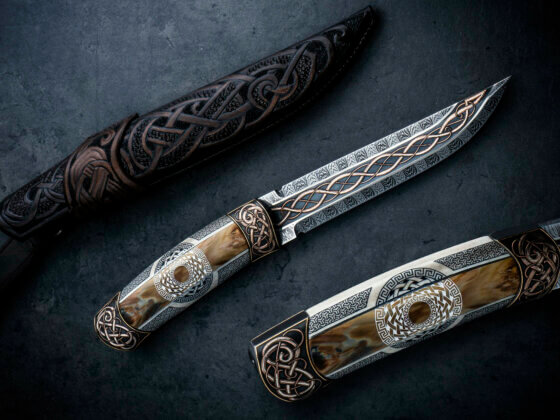
Does André Andersson create the most beautiful knives in the world?
Does André Andersson create the most beautiful knives in the world? https://puukko.en/wp-content/uploads/2026/03/The knives-dAndre-Andersson-scaled.jpg 2560 1707 Puukko - Finnish knives //puukko.en/wp-content/uploads/2021/05/21.pngAndré Andersson is an award-winning craftsman from northern Sweden who creates art works inspired by ancient Nordic mythology and modern design. Scandinavian Spirit To...