

PUUKKOS TYPES

Four families, one idea:
a just tool, made for the hand.

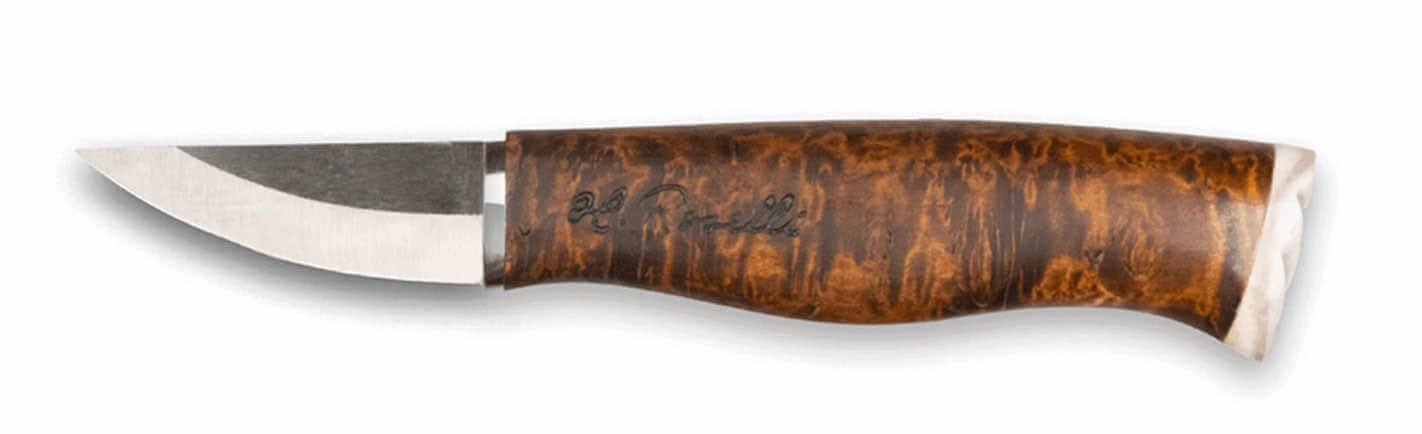
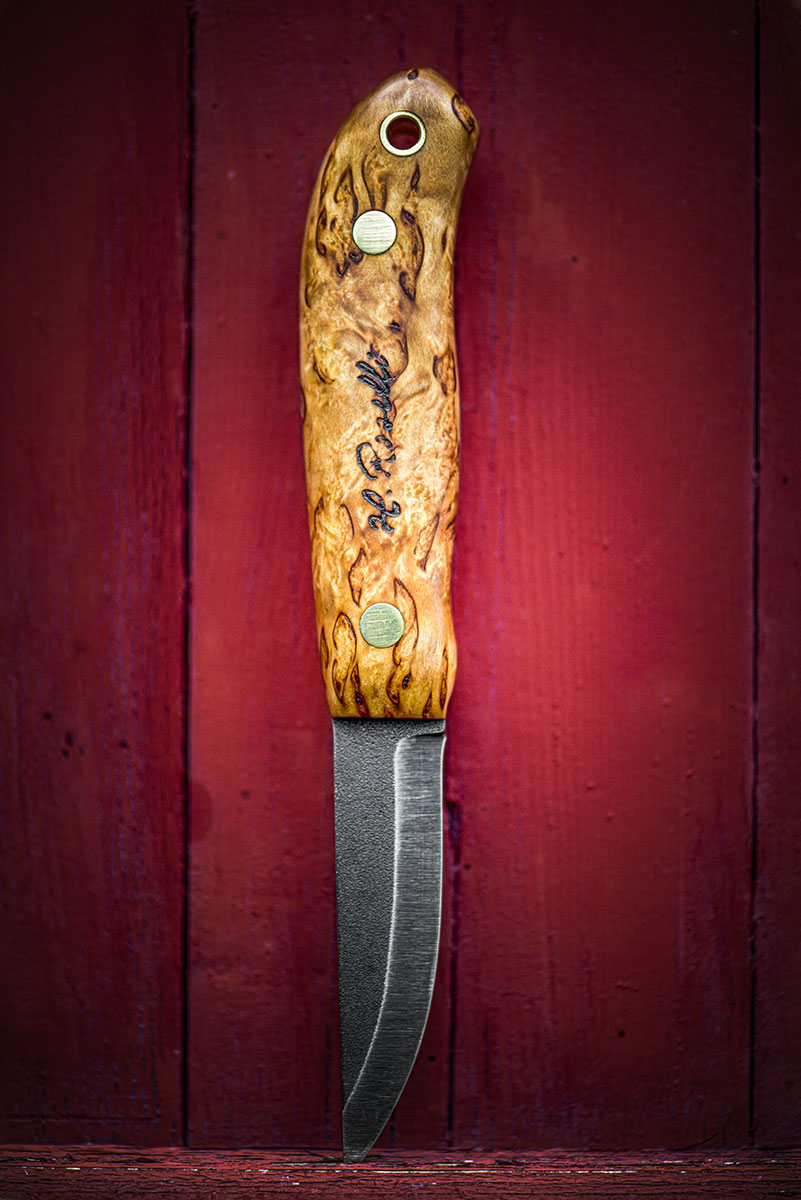
Puukko Roselli

The puukko utility

The everyday puukko: 9–10 cm blade, Scandi-style, handle without a guard. This is the one you’d choose first.

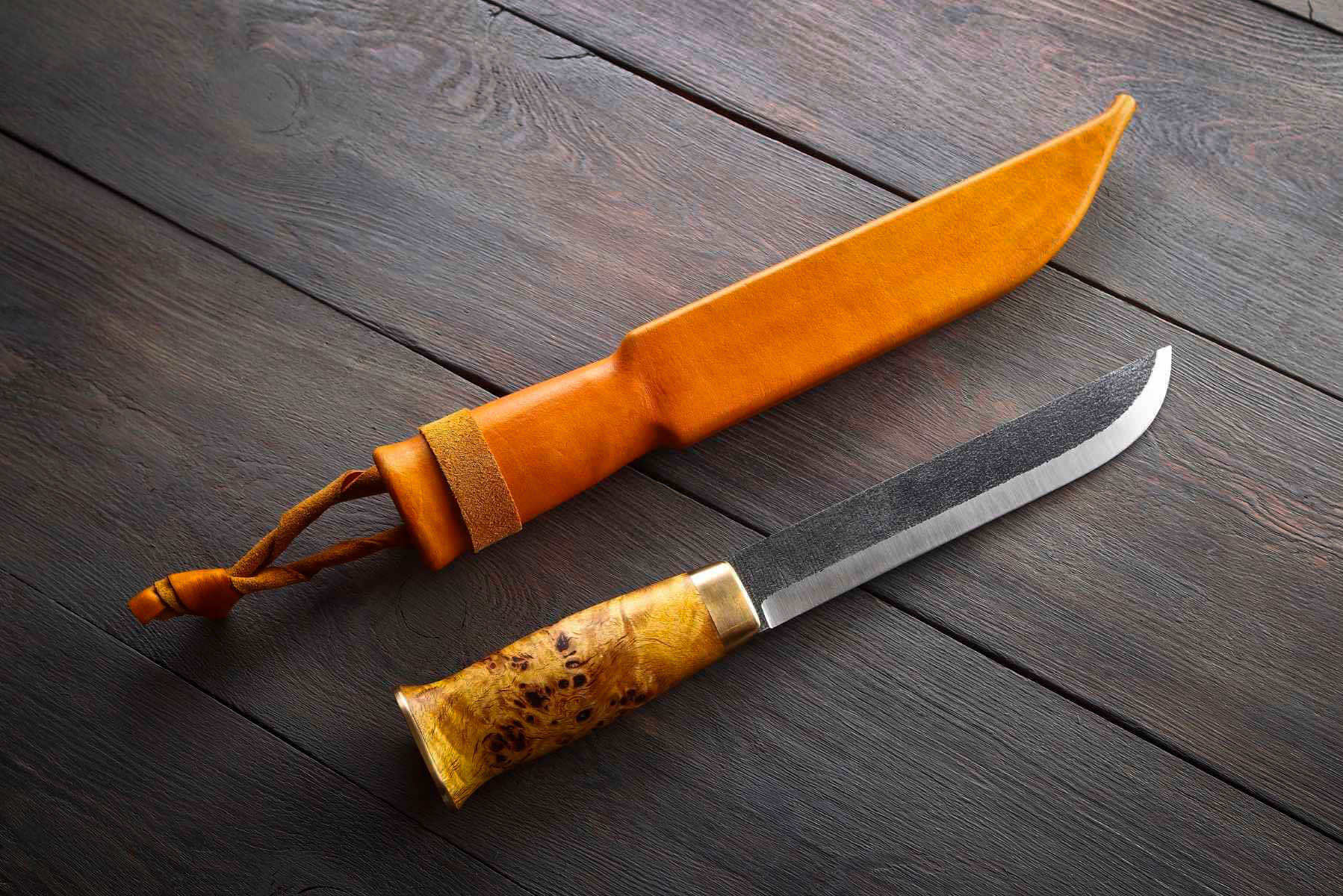
Leuku

The larger Lappish knife, with a longer and wider blade. It does not replace the smaller puukko: it complements it.

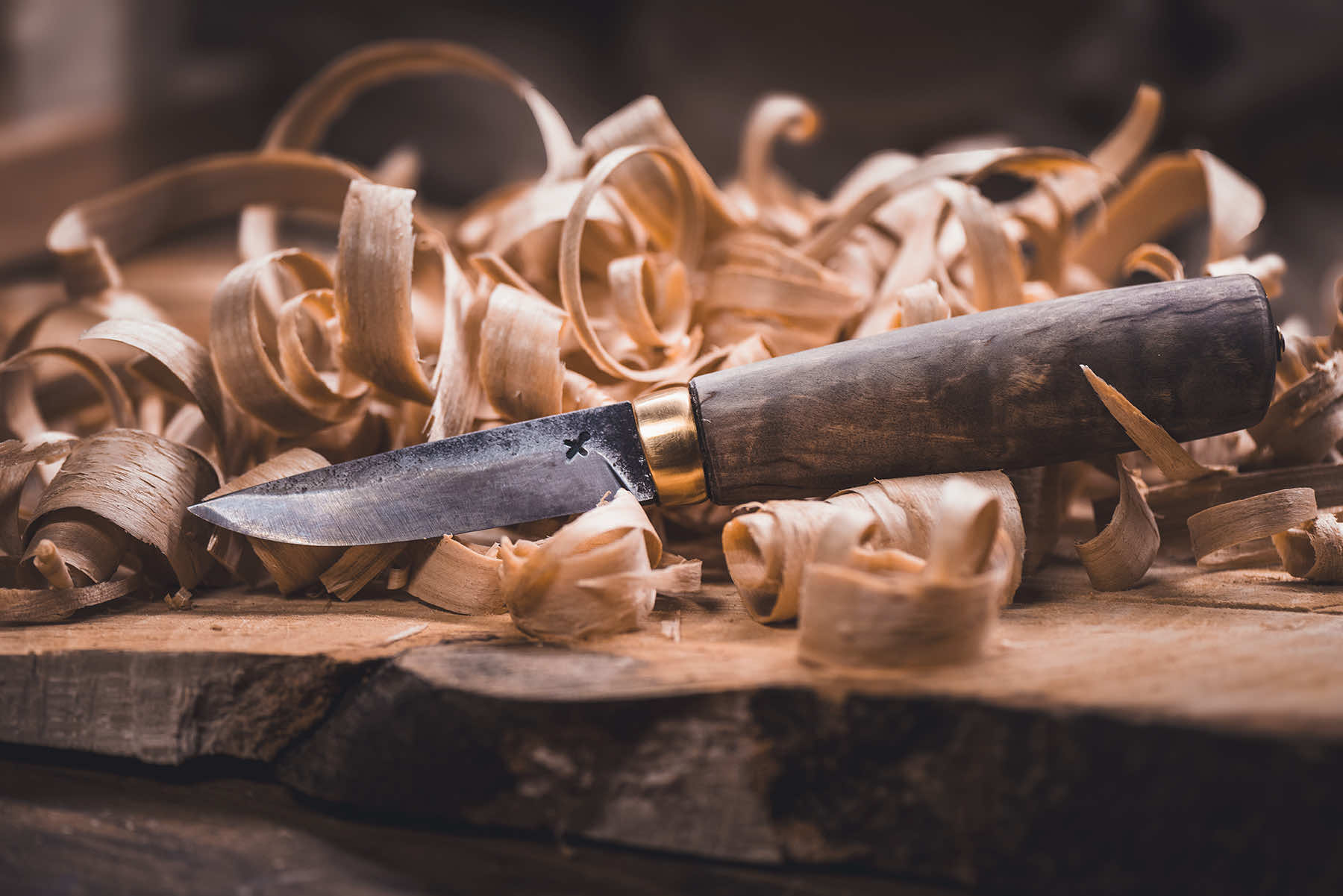
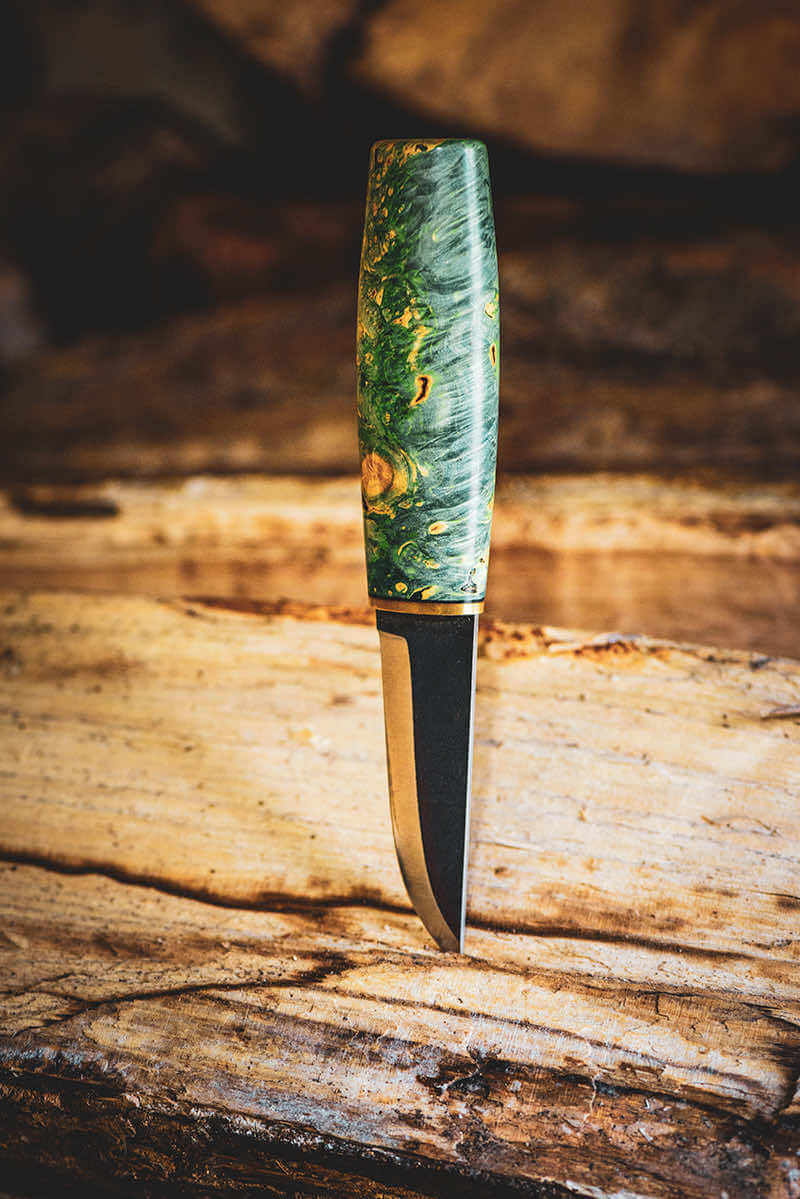
The artistic puukko

Same silhouette, a different feel: birch, reindeer antler, Damascus steel. Above all, it speaks of the craftsman’s touch.

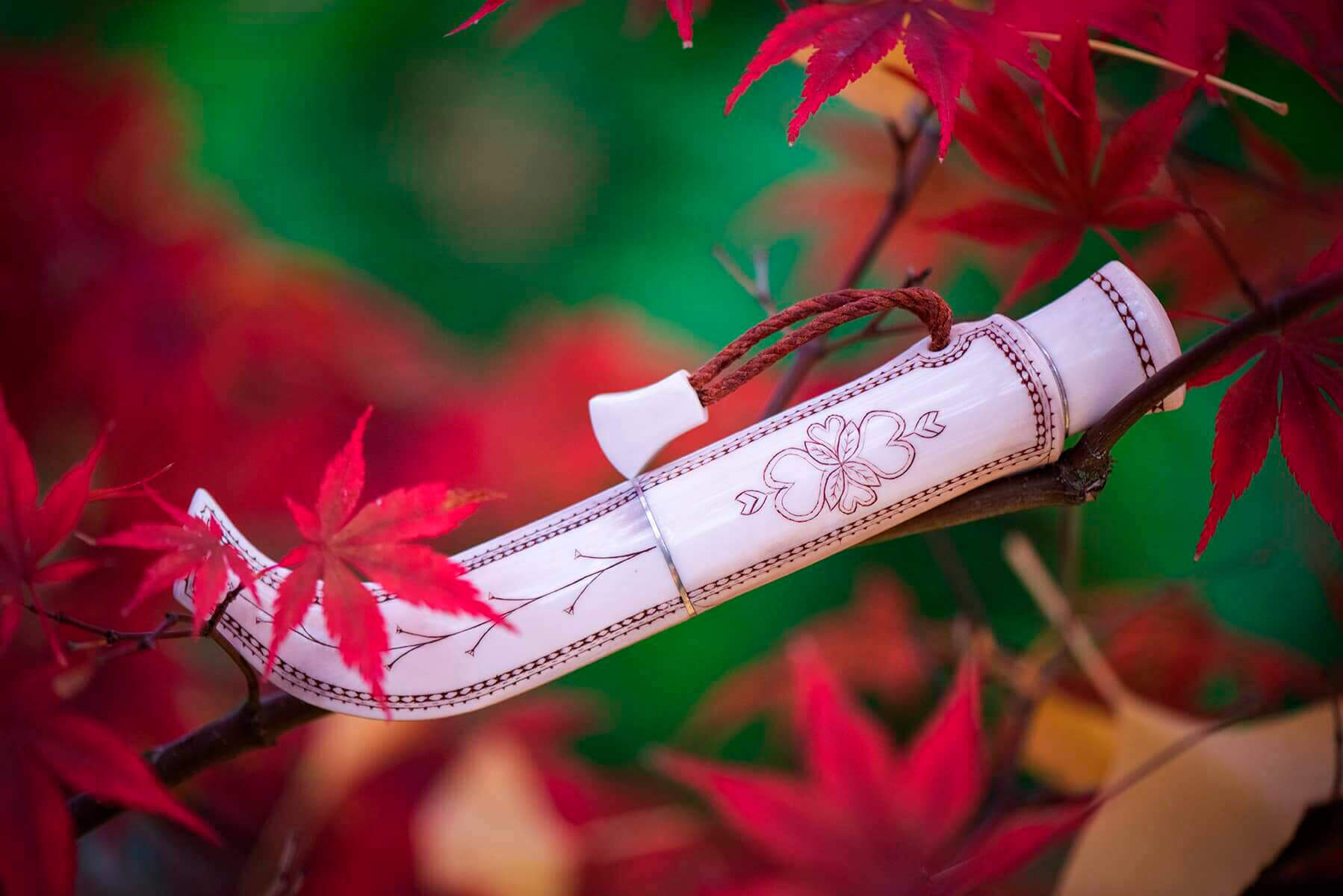
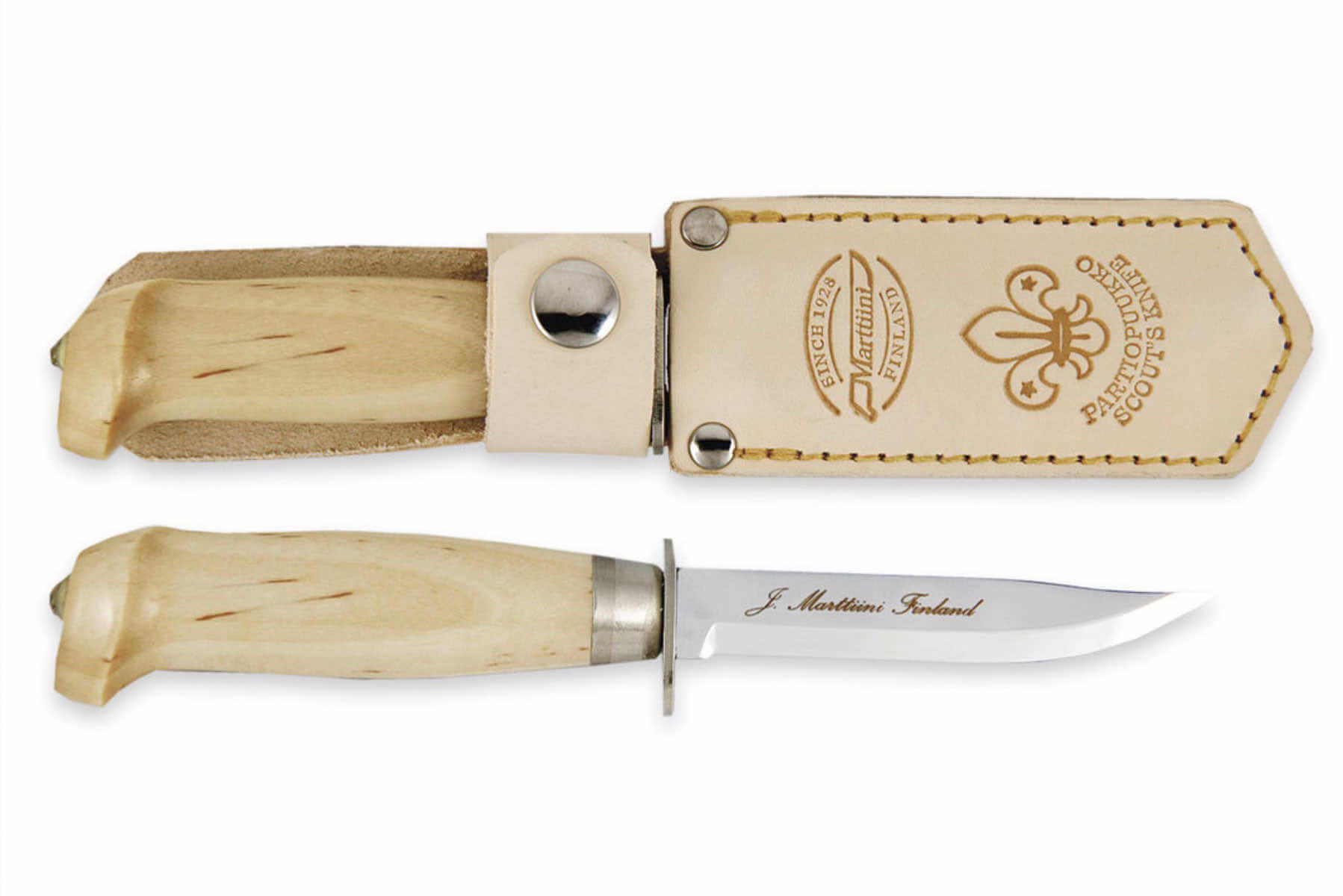
The children’s puukko

A proper little puukko – short, with a secure sheath – given to the child when they are ready. It is a sign of trust, under the watchful eye of an adult.

People often talk about ‘the’ puukko as if there were only one. There are several. Not a collection of gadgets: different responses to the forest, to camping, to the workshop, to childhood.
Here’s how I tell them apart, without using technical jargon or consulting a catalogue.

1. Utility puukko

It's the heart of the subject. Blade length 8 to 12 cm, often 9 or 10. Flat back, Scandinavian grind, no guard, a handle that fills the palm. You cut, you whittle, you prepare, you repair. It doesn’t try to be an axe, nor a piece of jewellery.

If you’re only going to own one puukko, this is the one. Made of birch, sometimes with bark, and a leather sheath that covers part of the handle. A reasonable price: often between €80 and €250 for a very good first one.

2. Leuku

The Lapland big brother. A longer, wider blade, designed for camp use: wood, light felling, and occasionally meat. Among the Sámi, the leuku and the small puukko complement each other. One is for heavy work; the other for precision.

It’s not ‘a puukko that’s too big’. It’s a different tool altogether. Not only that, but it’s more of a hassle to carry, but more rewarding when used. If you haven’t got the hang of it yet, start with the utility knife. Read the article.

3. Puukko Art

Same silhouette, a different feel. Reindeer antler, rare visakoivu, tin wire, damask, engraving. A duodji artefact or a workshop piece that tells the story of the craftsman as much as the design itself.

It can still be used — many of them can. But you don’t take it out as often to gather chestnuts. It’s not a piece of living-room décor: it’s a tool that we wanted to be beautiful. The price reflects the craftsmanship, not a standard price list.

4. Children’s puukko

Short, A safe sheath, a reliable blade without being a display piece. In the North, giving it to a child — when they are ready — is a sign of trust, not a toy. It teaches them how to hold it, how to put it away, and how to treat it with respect.

No mini-daggers, no ‘adventure’ plastic knives. A proper little puukko, under adult supervision. French law, however, leaves no room for poetic licence: carrying and use remain strictly regulated.

Comparison table – Types of puukkos

KindBladeUseMindWho is it for?Landmark
Utility8–12 cm, often 9–10Wood, food, daily, simple sculptureLife toolAlmost all, especially the first80–250 €
LeukuLonger and widerCamp, hardwood, bivouacThe Big BrotherAlready comfortable with a puukkoOften above utility
ArtClassic or freeMay cut; also looks at itselfThe craftsman’s handCollection, duodji, rare giftHand, not price
ChildShort, controllableLearning, small gesturesTrustWhen the child is ready, accompanied by an adultTrue knife, true sheath

FAQ

Types of puukkos

  • A utility knife, 9–10 cm, made of decent carbon steel or stainless steel, with a good sheath. The leuku and the art will follow if the enthusiasm lasts.
    → How to choose your first puukko?

  • No. It complements it. Too many blades compromise accuracy. Too few blades wear the camp down. The Sami had realised this: people often carry both.

  • Quite a few, yes. Beauty doesn’t rule out wood shavings. It’s just that you’re more reluctant to place them near the embers. That’s only human.

  • The cultural practice exists. So does the legal framework. This is not a toy. Use within the law, transport discreetly, and be a responsible adult. See the legal page first.
    → The puukkos face French regulations.

  • These are faces of practicality, and sometimes of art. The grandfather, the carpenter, Kainuu. They enrich the family without replacing it. The glossary provides details about them.
    → Lexicon puukko

  • A good utility is enough for a life. The second comes when you know the first. Not the other way around.


PHOTO GALLERY PUUKKOS

A puukko may be small in size, but it is significant in terms of its cultural importance.

Are you ready for a Puukko Quiz?

Already 247 attempts

1. Where the word comes from « puukko » ?

2. Traditional length of a blade of puukko ?

3. Grind the most characteristic?

4. Traditional material handle ?

5. The puukko: Does he have a traditional guard?

Conclusion

If you’re still in two minds, keep it simple. A good utility knife, 9 or 10 cm long, with a sturdy sheath and a blade you’re willing to look after. The rest — a leuku, a workshop knife, a child’s first knife — will come once you’ve got the hang of it, not before. The puukko doesn’t like being rushed. It likes a hand that knows why it’s being drawn.

Ultimately, these four types aren’t just boxes to tick. It’s a way of using the same item depending on your age, the season and your needs.

  1. Utility accompanies you silently: he cuts the bread, the kindling, the string that’s too short.
  2. Leuku It happens when the camp settles in for good, when you need more grit and less frills.
  3. Art points out that the North has never separated beauty from practicality: an engraving, a visakoivu or a strand of tin do not exempt one from behaving properly; they simply ask a little more respect.
  4. As for the small puukko, It is neither a keepsake nor a toy. It is a mark of trust placed in the child, and a responsibility that the father continues to bear.

If you have any questions, please feel free to email me at: contact(at)puukko.fr. We're passionate and I always answer the requests.

Warm regards,

Subscribe to the newsletter.


Norway – Sweden – Finland

WHO MAKES THE BEST PUUKKOS?

Would you like to find out more about puukkos?

Are you passionate about puukkos? So these articles should also be interesting.

Anssi Ruusuvuori’s definitive book on the puukko

Anssi Ruusuvuori’s definitive book on the puukko 1798 1200 Puukko - Finnish knives

The Puukko: Finnish Knives from Antiquity to Today. The reference book on the puukko. For a Finn, the puukko is both the most important tool and weapon...

Marttiini 245

Marttiini 245 1798 1200 Puukko - Finnish knives

The story of Marttiini begins in northern Finland, in Kierinki more precisely. Kierinki is a small village in the municipality of Sodankylä, well beyond the Arctic Circle. ...

Traditions and Culture in Scandinavia

Traditions and Culture in Scandinavia 1800 1200 Puukko - Finnish knives

When you think of Scandinavia, there are several things that come to mind: Vikings, cold, ABBA and IKEA. Personally, the puukkos add to this list. The Puukko is...

Grand Quiz of Puukko : 20 questions to test your knowledge

Grand Quiz of Puukko : 20 questions to test your knowledge 1792 1008 Puukko - Finnish knives

The Grand Quiz of Puukko Introduction: The puukko sounds simple. Too simple, sometimes. This time we get out of the express quiz. Twenty questions, one map, four themes: the...

    EnglishenEnglishEnglish