Important points:
1. Blade length
The blade of a puukko classic usually measures 8 to 12 cm.
Recommendation to begin: 9 to 10 cm. Too short (< 8 cm) → less versatile (especially for woodworking).
Too long (> 11-12 cm) → harder to control and less manageable on a daily basis.
9 to 10 cm is the length that corresponds to the width of the palm of most people. It provides the best balance between precision (sculpture, kitchen, outdoor) and efficiency.
→ The history of the puukko
2. Steel: carbon Or stainless?
• Steel carbon (most traditional and my favorite)
Benefits: exceptional sharpness, very easy to sharpen, « soul » and patina that develop over time.
Disadvantages: requires minimum maintenance (dry after use, oil from time to time).
Ideal if you're ready to take care of your tool.
• Stainless steel
Benefits: almost no maintenance, very well resistant to moisture.
Disadvantages: less convenient to sharpen as well, cutting a little less « Living ».
Perfect for a first knife if you want zero headshot.
My advice: begins with a good carbon (type XC75, 80CrV2 or equivalent). You'll learn faster and you'll really feel the difference.
→ How to recognize the different steels of the blades puukko (carbon, stainless steel, damas)
Comparison table on different steels
| Steel | Kind | Hardness (HRC) | Sharpness | Tenacity | Corrosion | Sharpening | Recommended use |
|---|
| 80CrV2 | Carbon | 58-62 | Very good | Excellent | Weak | Excellent | Bushcraft, intensive |
| K510 (Silver Steel) | Carbon | 60-64 | Excellent | Good | Weak | Excellent | Accuracy, traditional |
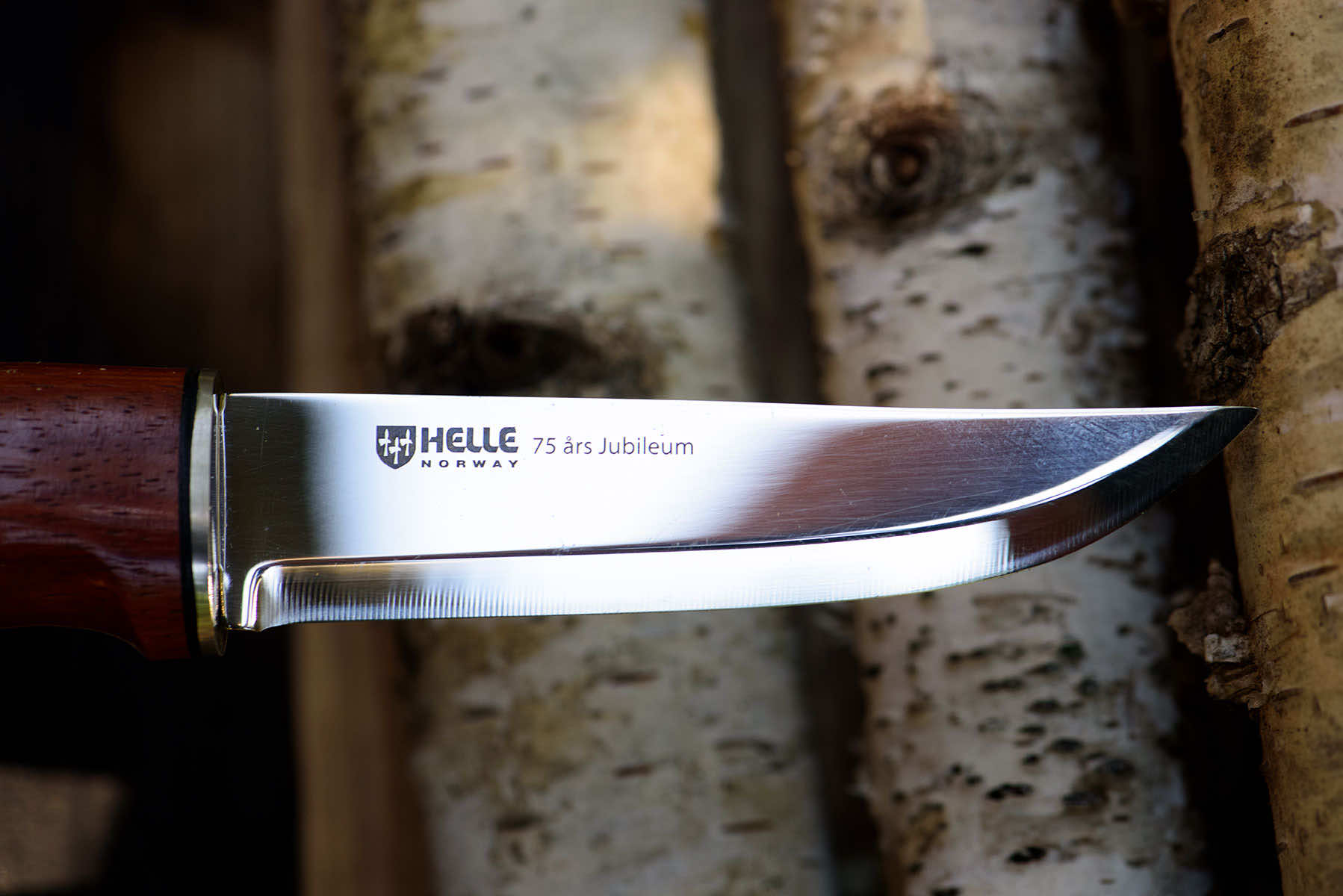
| H3LC (Helle) | Carbon Laminate | 58-59 | Excellent | Very good | Weak | Excellent | Traditional, sculpture |
| 12C27 | Stainless steel | 56-59 | Good | Very good | Very good | Very good | Polyvalent, daily |
| H3LS (Helle) | Stainless steel Laminate | 58-60 | Very good | Excellent | Excellent | Excellent | Outdoor, versatile Helle |
| N690 | Stainless steel | 58-61 | Very good | Good | Excellent | Good | Humid, custom |
| 14C28N | Stainless steel | 58-60 | Very good | Very good | Excellent | Very good | Modern versatile |
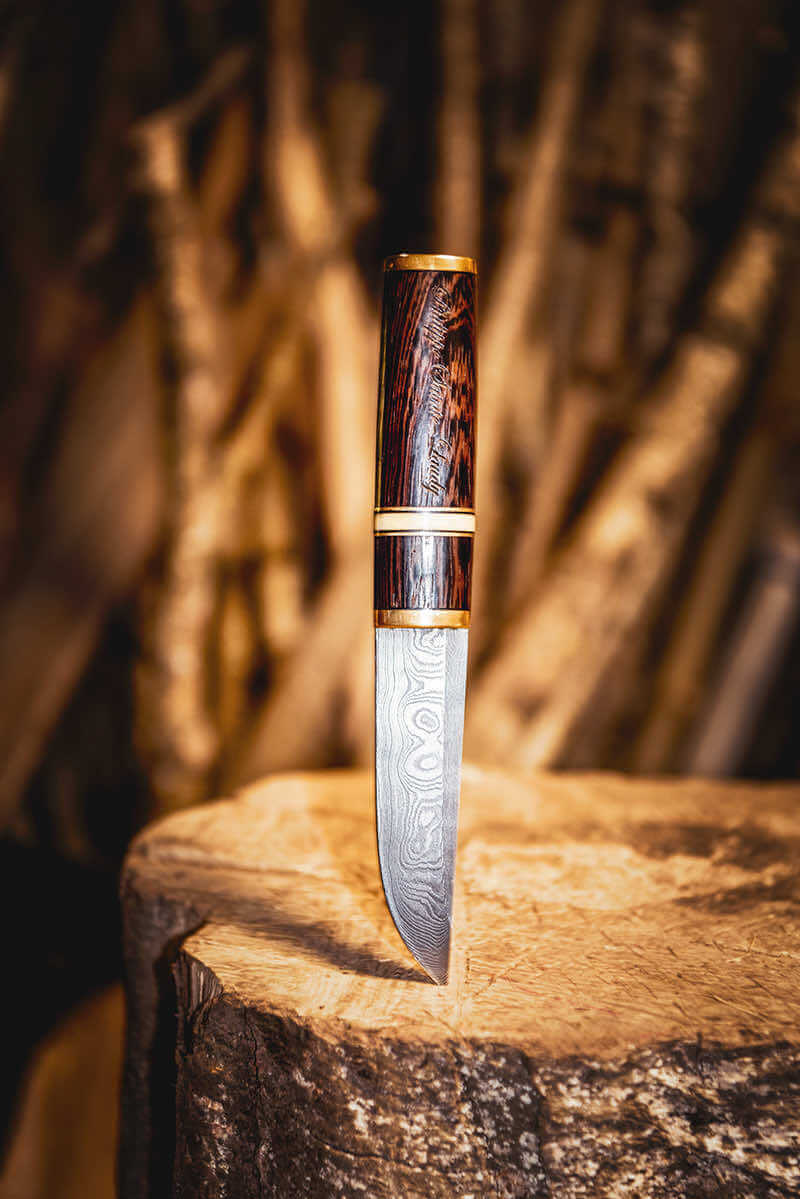
| Damascus carbon | Damascus | 58-62 | Excellent | Good to very good | Weak | Excellent | Collection + use |
| Damascus stainless steel | Damascus | 58-61 | Very good | Good | Excellent | Good | Prestige, humidity |
3. The handle : the most personal criterion
The handle is what makes a puukko becomes yours. Points to look at:
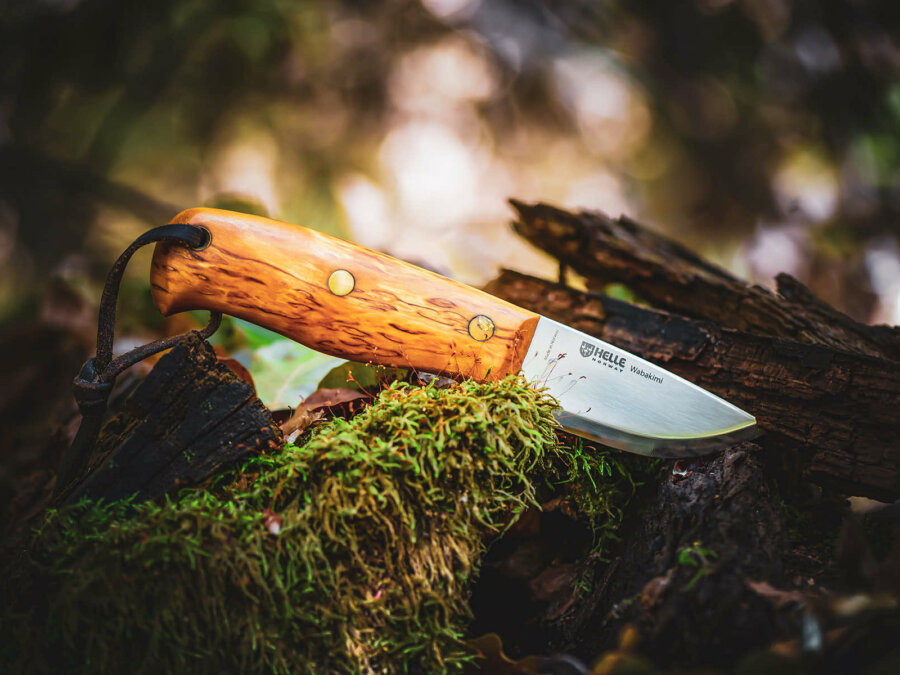
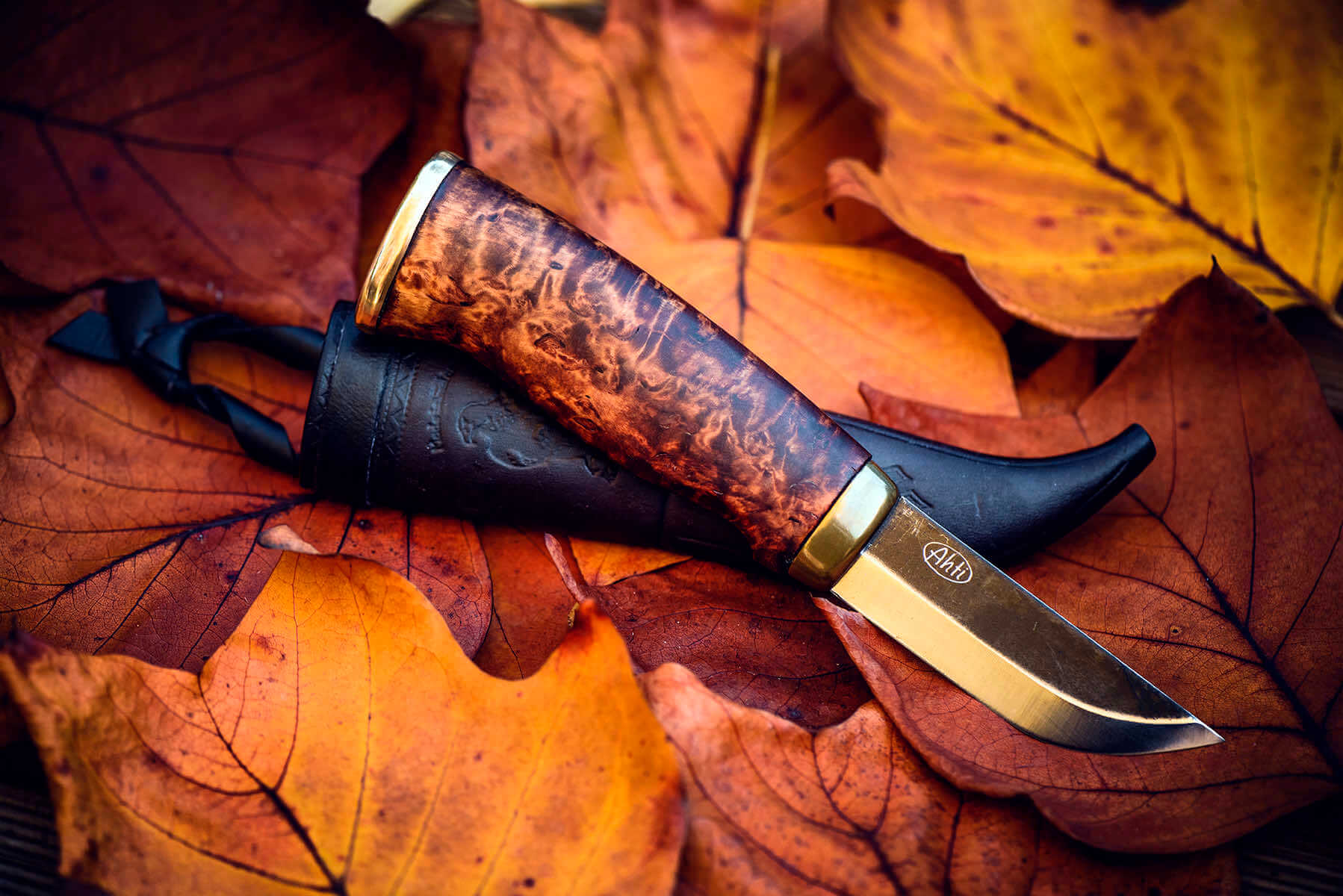
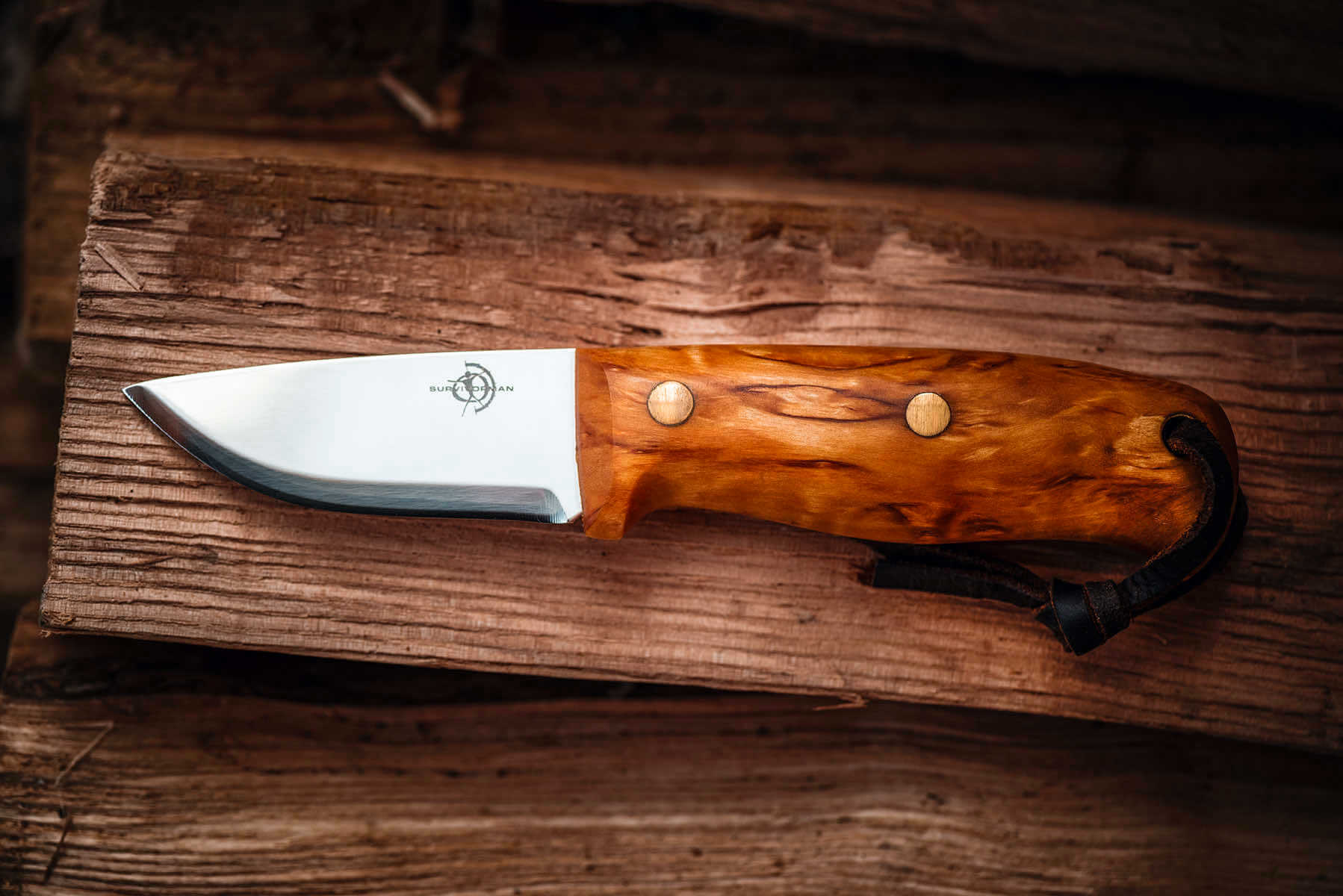
Form: round or slightly oval, without guard (Scandinavian classic). He must fill his hand without pressure points.
Material:
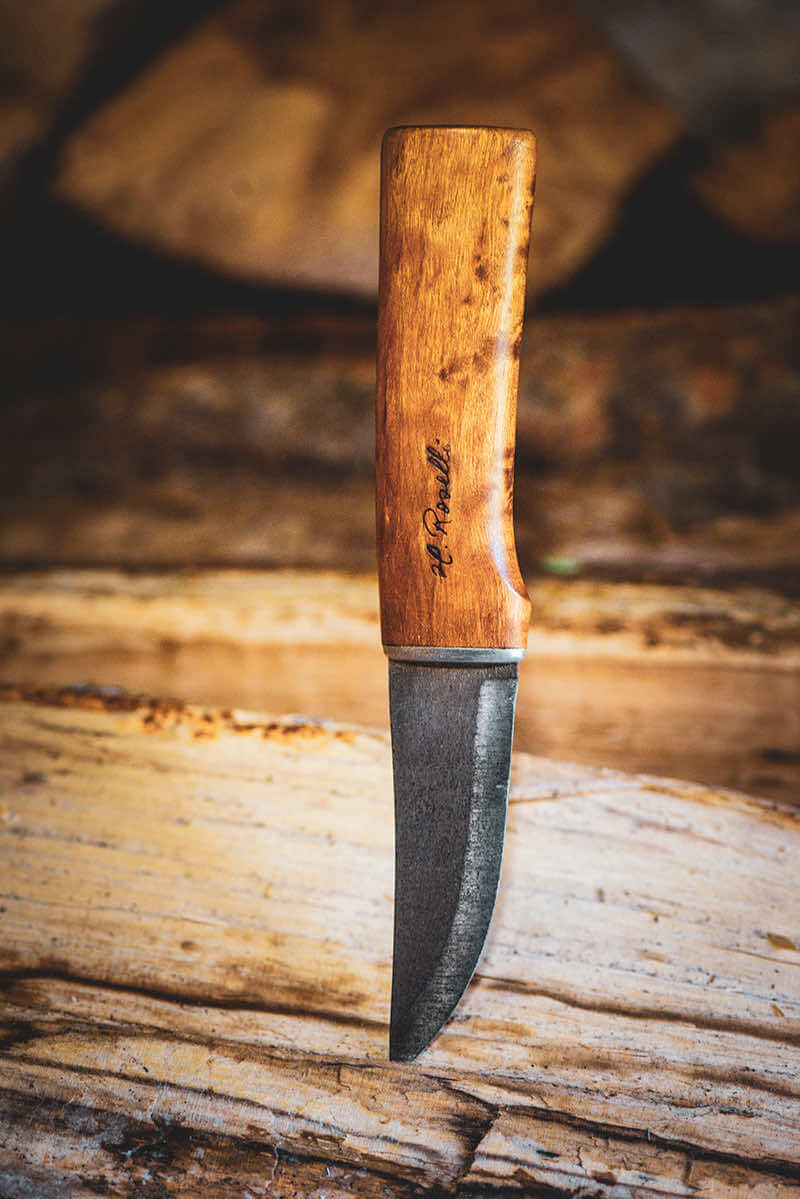
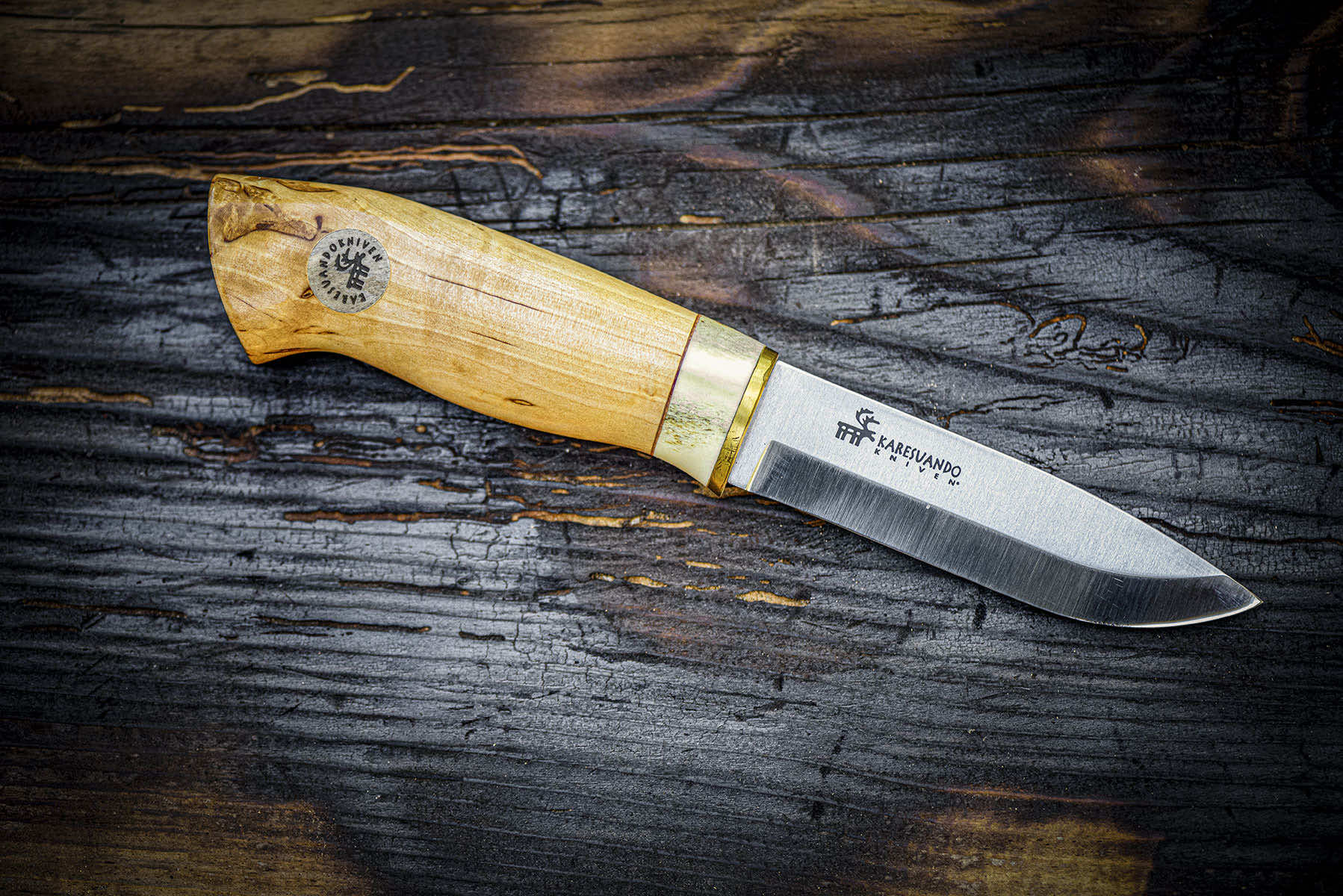
- Birch (classical, pleasant, affordable)
- Birch bark (touch silky, very traditional)
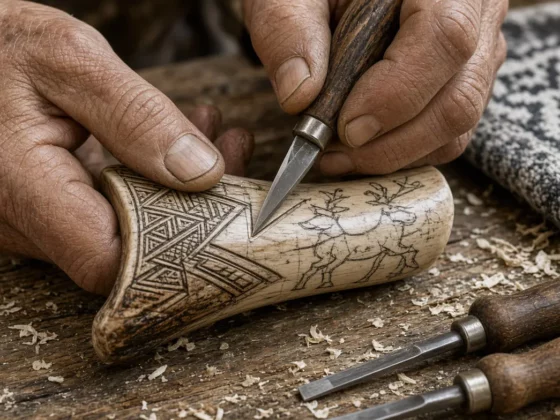
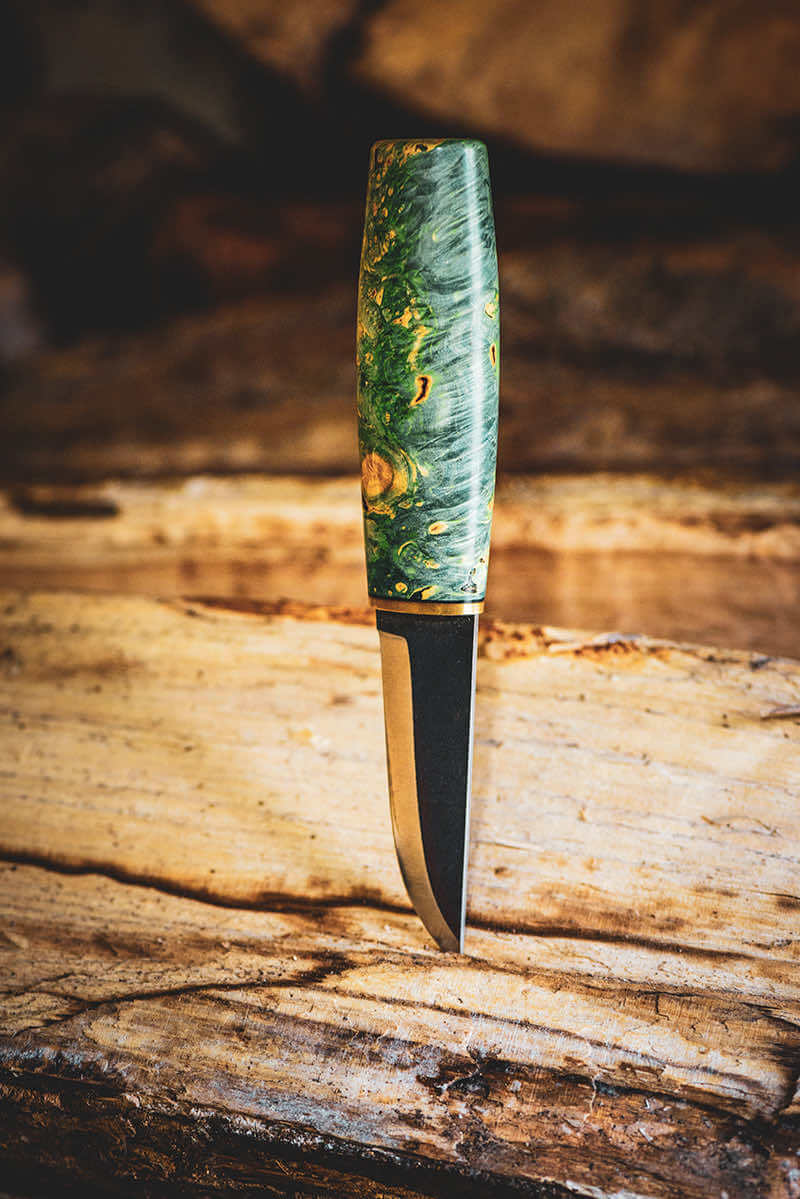
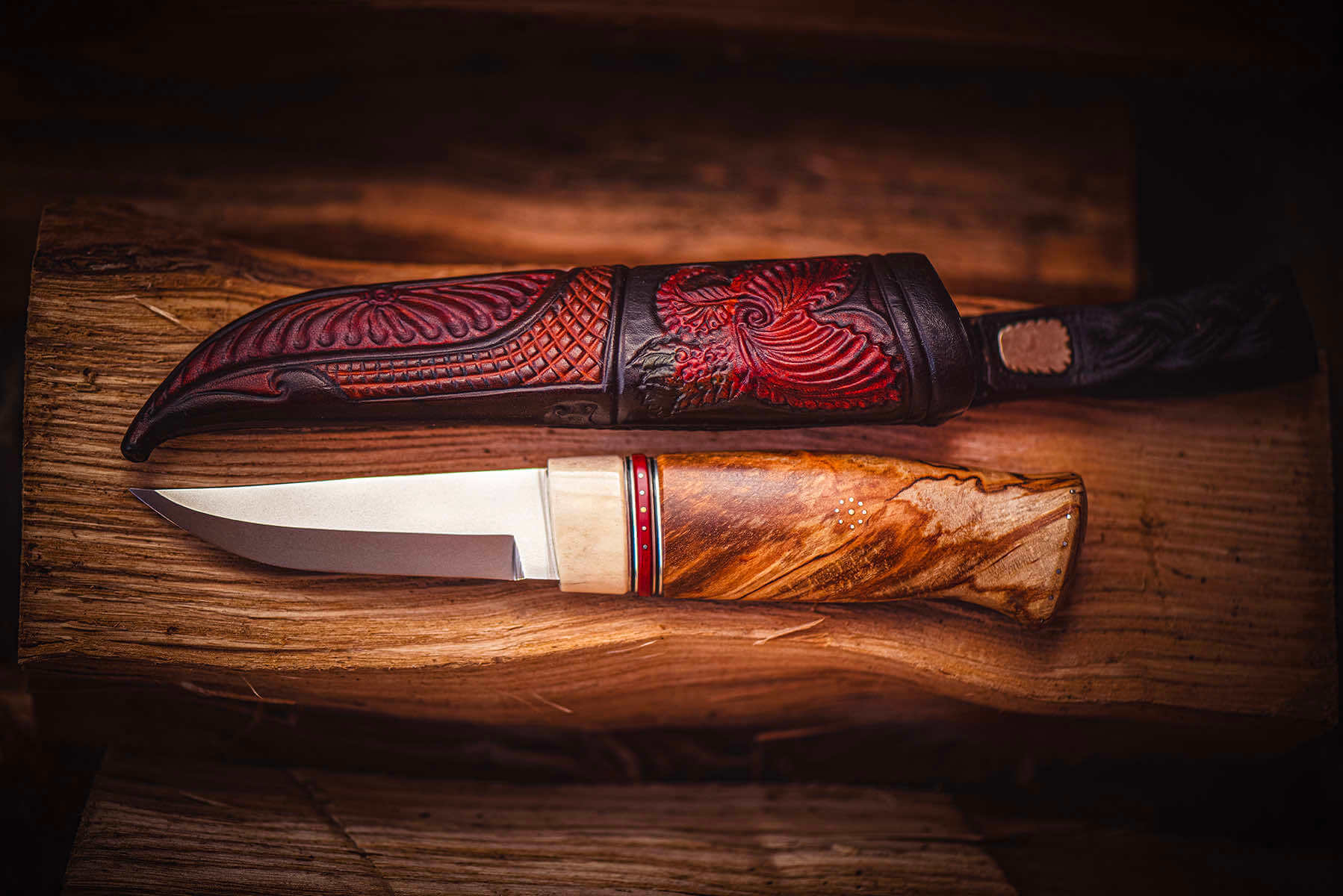
- Reindeer wood / bone / horn (more Sami, more expensive, very beautiful)
- Stabilised wood or combinations (more modern)
- Length: about 10 cm, so that the hand is well positioned. Personally, I have large hands, I prefer 11 cm.
- Finish: oiled, smooth, without asperities.
Decisive test: Take it in hand (or look at the photos from all angles). If « talk » immediately, that's a good sign. One handle too thin or too thick fatigue fast.
→ What is a good puukko ?
4. Grind (the blade profile)
The real puukkos have a scandi grind:
Plate, without secondary bevel, angle around 17-20°. This makes them so efficient in wood carving and so easy to use sharpen on a flat stone. Don't be too complex if you start.
5. The sheath
Often underestimated, yet essential:
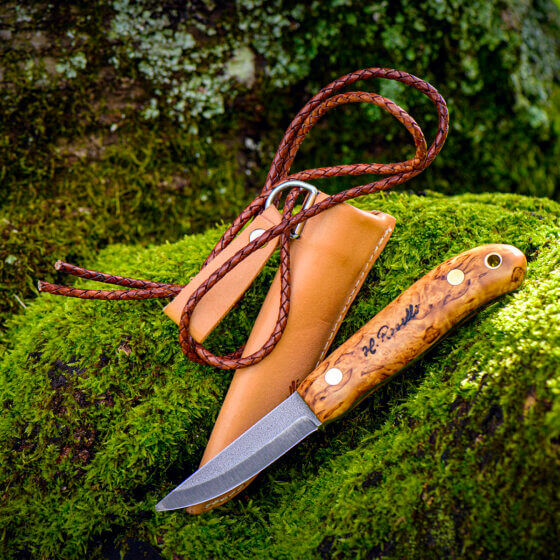
- Leather good quality (thick, well sewn).
- Maintenance safe (the knife must not come out alone)
- Port comfortable in the belt
- Protection complete blade
Rating: a beautiful sheath transforms the puukko as an object that one really wants to wear.
→ How maintain your leather sheaths
6. The budget
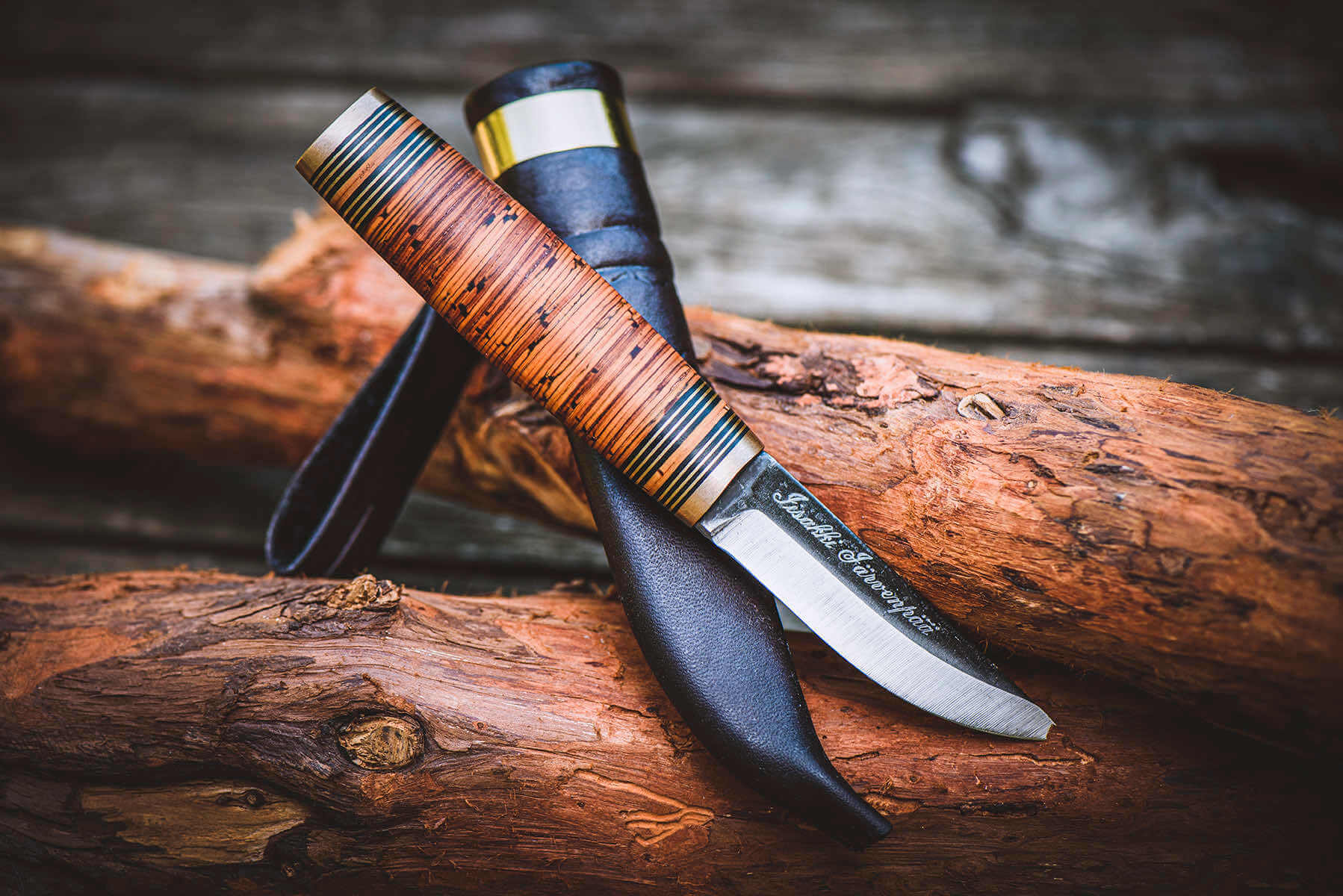
- Entry-level (40-120) €) : Marttiini, Mora, Iisakki Järvenpää, some Ahti... Perfect to start and learn.
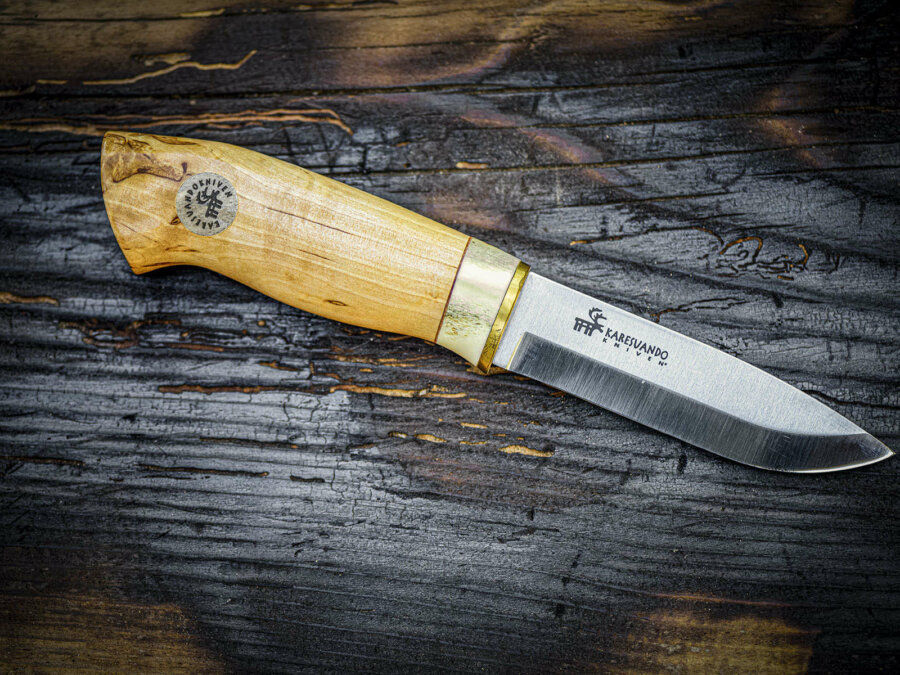
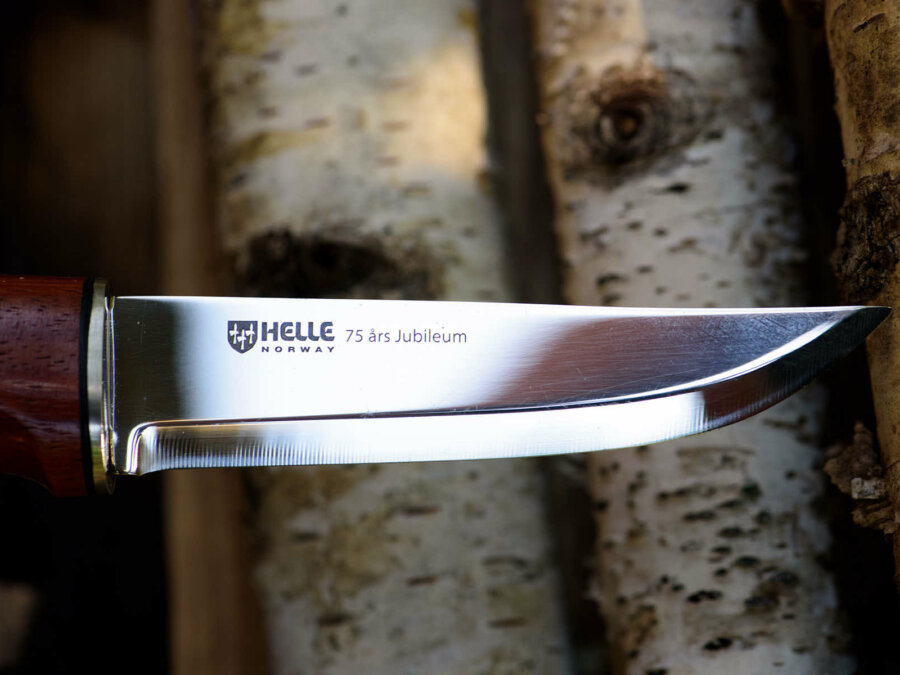
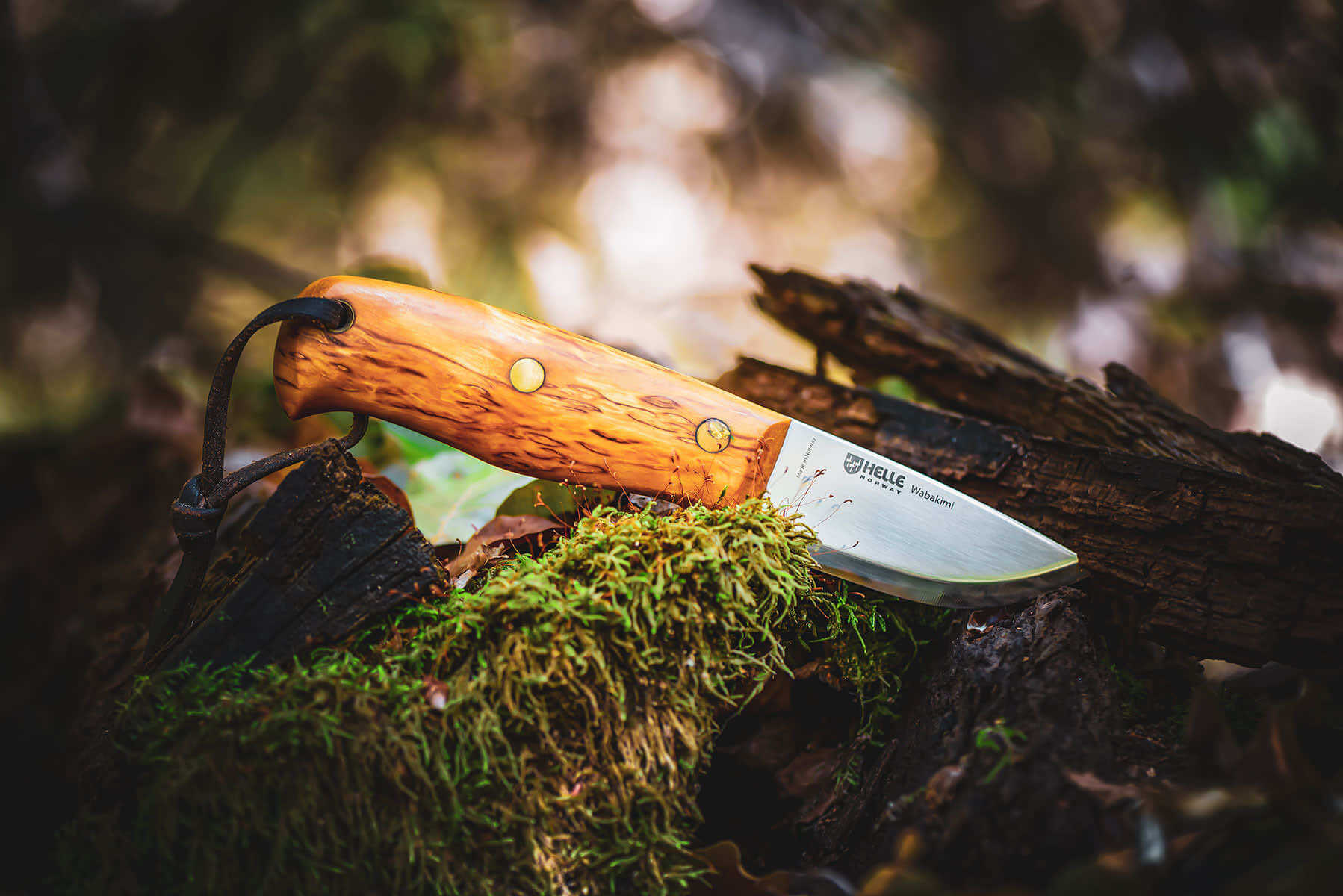
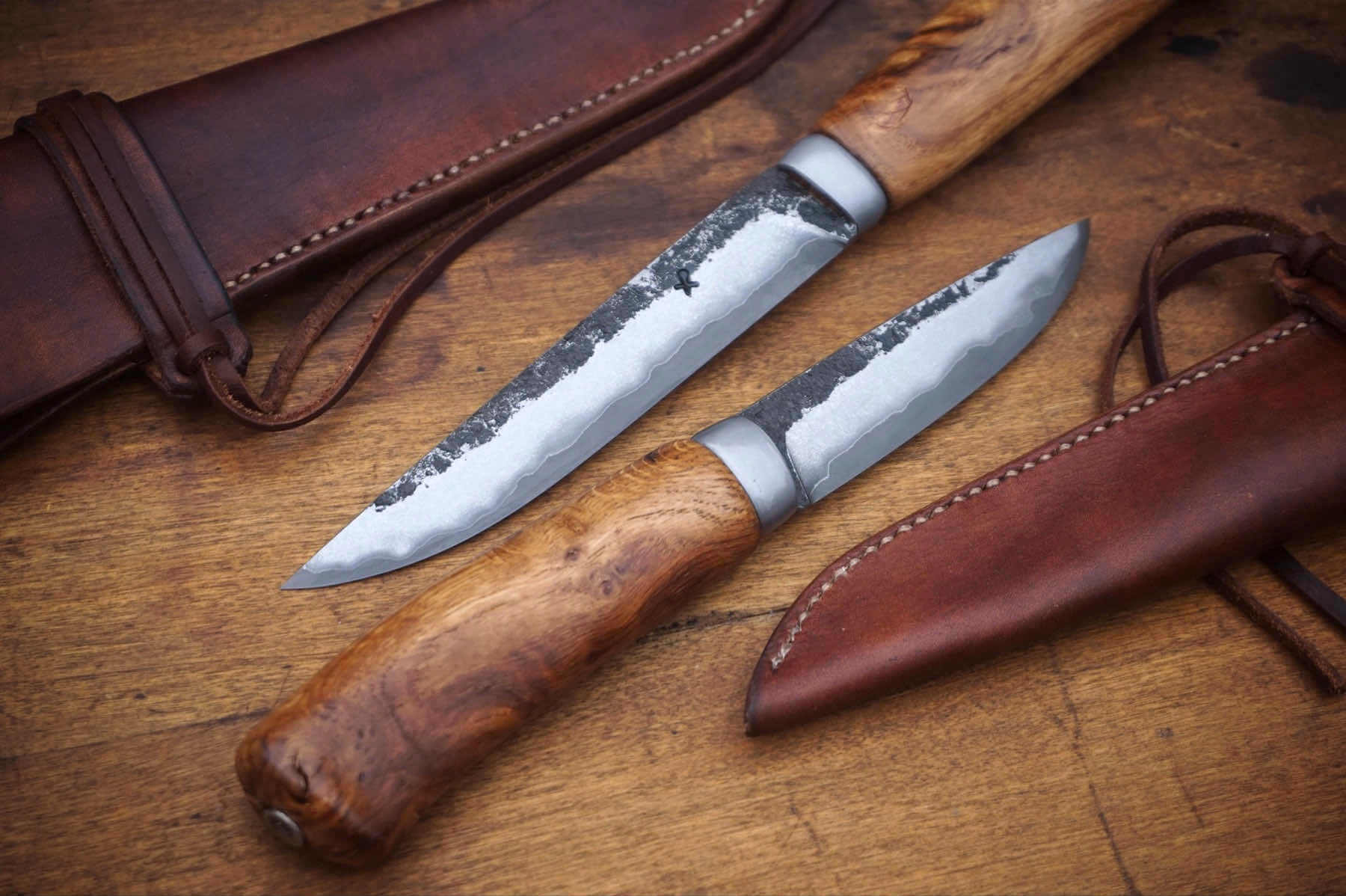
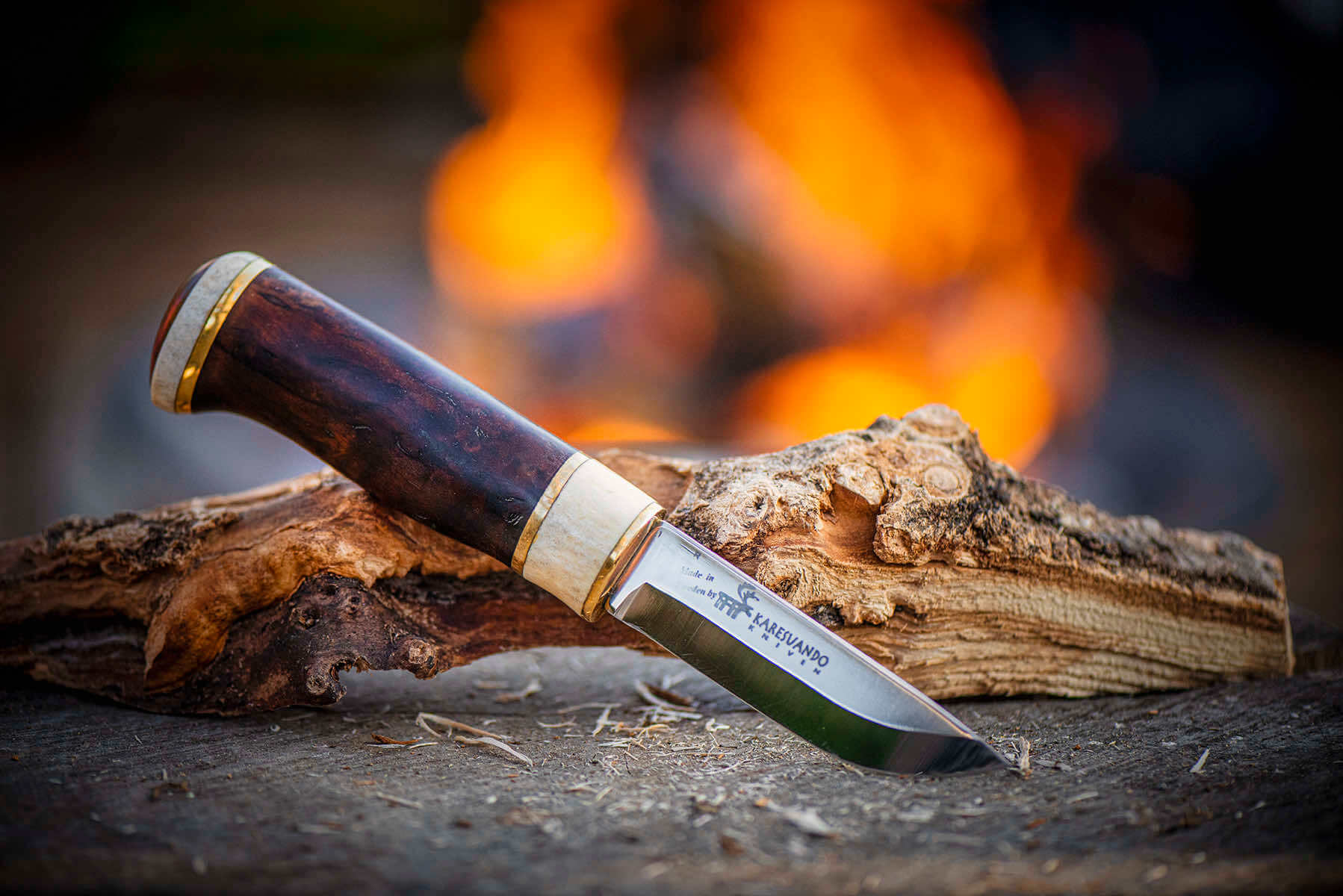
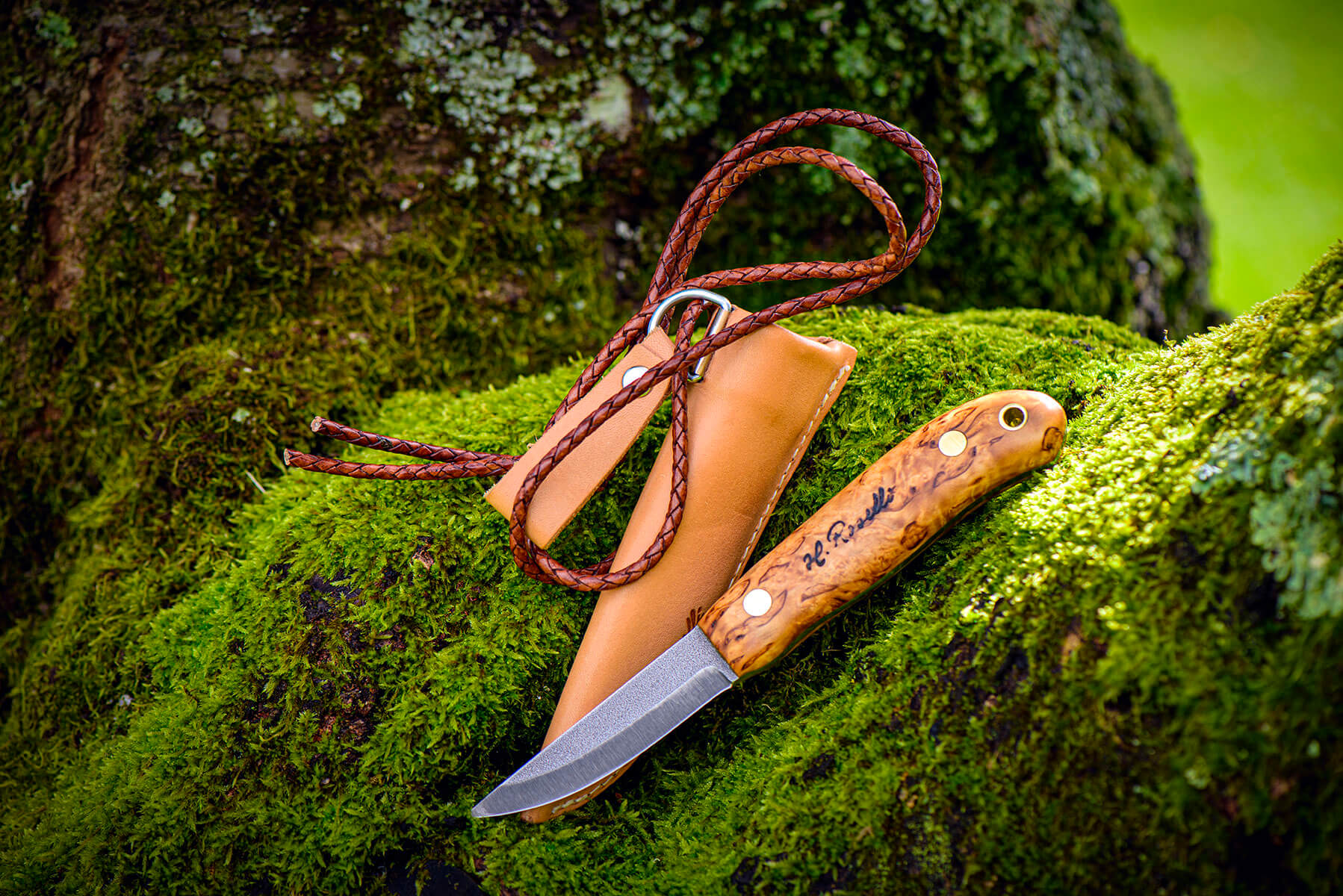
- Medium range (120-300) €) : very good artisanal or semi-crafted puukkos (Roselli, Hell, KaresuandoSome freelancers).
- Upscale / collection (300 € and +): Sami or contemporary artisans. To be kept for later.
- Lotto winners (2 000-15 000) €) : André Andersson, Bertil Fällman…
Council beginner : invested 80-180 € in an excellent utility. You won't regret it.
→ Useful links on puukkos
7. Main use
- Sculpture on wood & bushcraft → carbon + pure scandi grind + handle comfortable.
- Hiking / daily use → stainless steel or carbon well maintained + sheath solid.
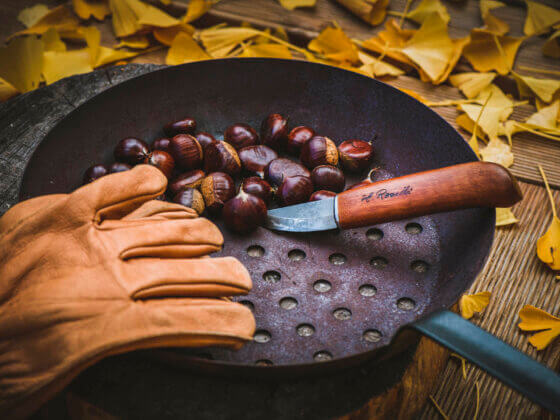
- Outdoor cuisine → blade a little wider and sharp.
- Collection / aesthetics → noble materials (reindeer wood, damas, traditional motifs).
→ Handle sound puukko
8. Aesthetics and « soul »
One puukko is not just a tool. Look:
- History the craftsman or brand.
- Finishes (wood, mitre, rivets, motifs)
- Feeling that he gives you, to the look and touch.
In particular: It is often the latter criterion which makes the difference between « a good knife » and « my puukko ».
→ Puukkos collection
In summary: Quick checklist
- Blade 9-10 cm
- Steel carbon preference
- Handle which fills the hand perfectly
- Grind scandi
- Sheath quality leather
- Budget: 80-250 € for a very good first puukko.
A good one puukko well chosen and well maintained will accompany for decades. Start simple, learn to sharpen correctly, and you will quickly discover why this tool is so appreciated.
→ How to sharpen your puukko
One puukko is a work tool, not a combat knife. Here are the steps to get started:
- Wood carving : hold firmly the handle, the blade outwards. Always work away from you and others.
- Preparation of outdoor meals : the short blade and the Scandi grind are excellent for vegetables, cheese and meat.
- Daily work : open boxes, cut a rope, make chips for fire... on puukko is versatile.
- Basic security : never leave the knife out of its sheath When you don't use it. Always store it in height or out of reach of children.
To go further:
→ How to secure your puukko
→ Manipulating Puukkos – Tips and videos
Quick maintenance of your first puukko
One puukko well maintained lasts decades. Here is the subsistence minimum:
- After each use : wipe the blade with a dry cloth (especially if it is carbon).
- Once a month (or after a wet outlet): applies a thin layer of oil (camelia, mineral or ballistol) to the blade and the handle.
- The sheath : clean it occasionally and nourish the leather with a balm adapted 2 to 3 times a year.
- Wiring : as soon as the edge weakens, pass it on a flat stone (scandi grind = very easy). Finish with leather.
Complete tutorials:
→ How sharpen sound puukko
→ Maintain blade, handle and sheath