

André Andersson is an award-winning craftsman from northern Sweden who creates art works inspired by ancient Nordic mythology and modern design.
Scandinavian Spirit


To the question: Does André Andersson make the most beautiful knives in the world? The answer is in the question!
Good morning, everyone. Today, I share with you a discovery I made during a long winter evening to do research on puukkos. The heavy eyelids, I scrolled pages and pages on sites in Northern Europe hoping to find information on the « scrimshaw ». A technique of engraving or decoration on horn used by Sami artisans.
At the turn of a click, I arrive at the site of André Andersson. I thought I was hallucinating! The first photographs, moreover of very good quality, were considered, I had not yet seen anything like it. What originality, know-how and mastery! Certain, I am moving away from the primary vocation of this site which is mainly centered on the puukko, but sometimes you have to know how to make exceptions.
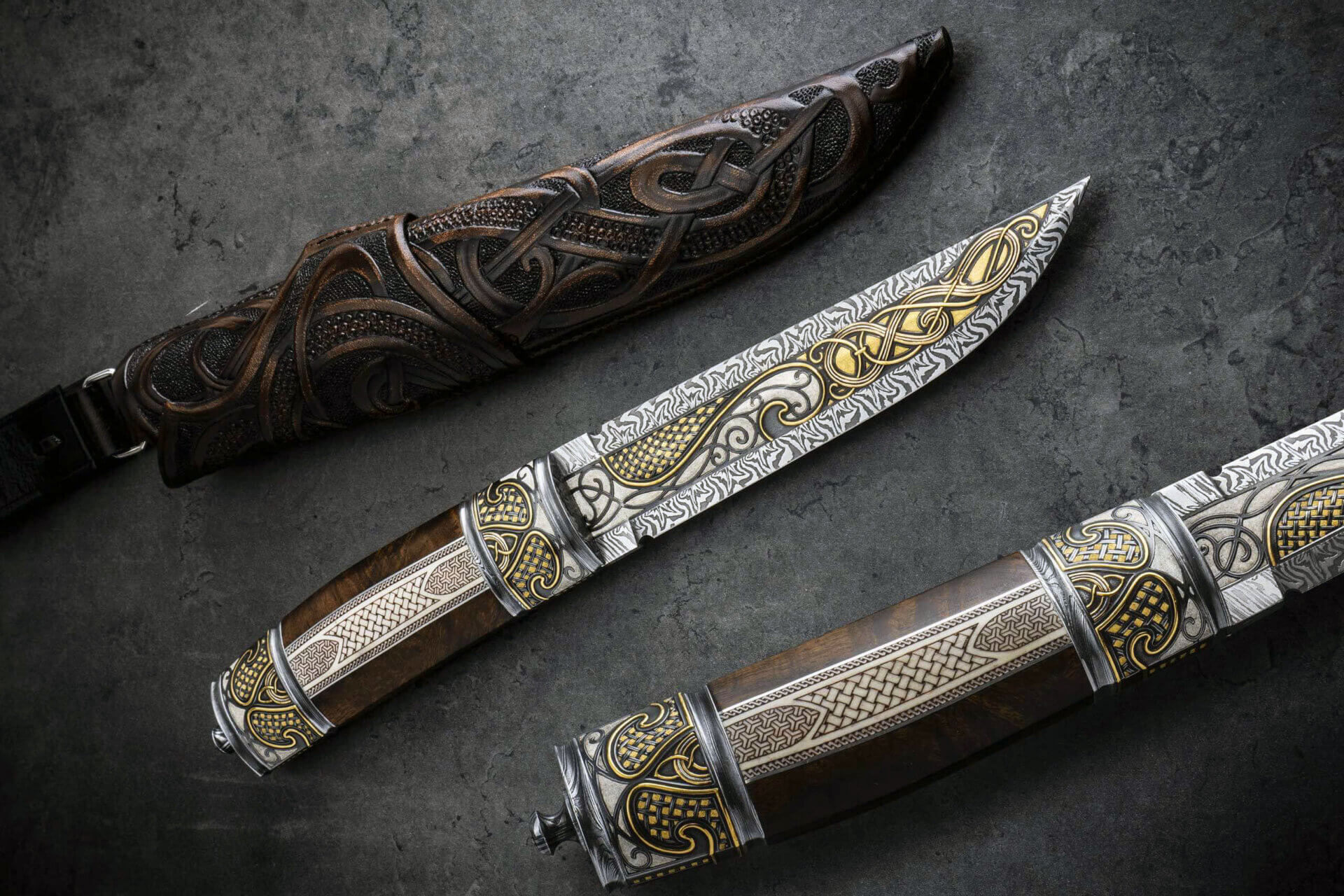
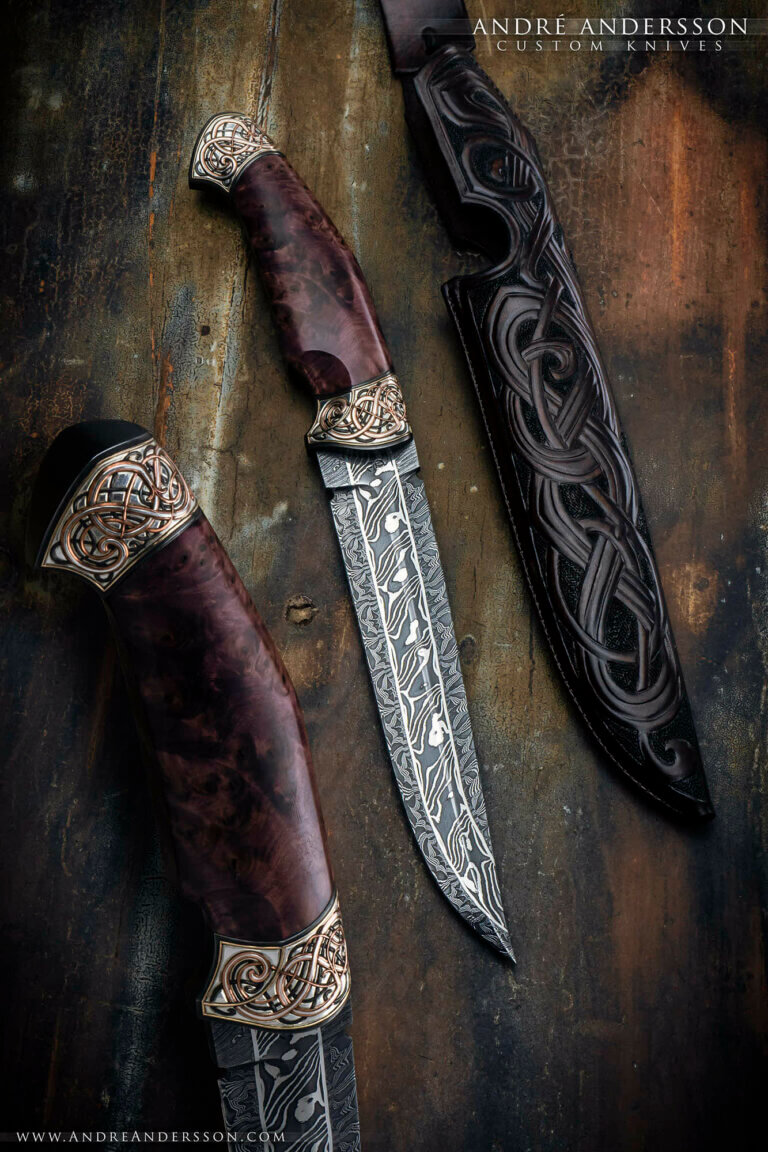
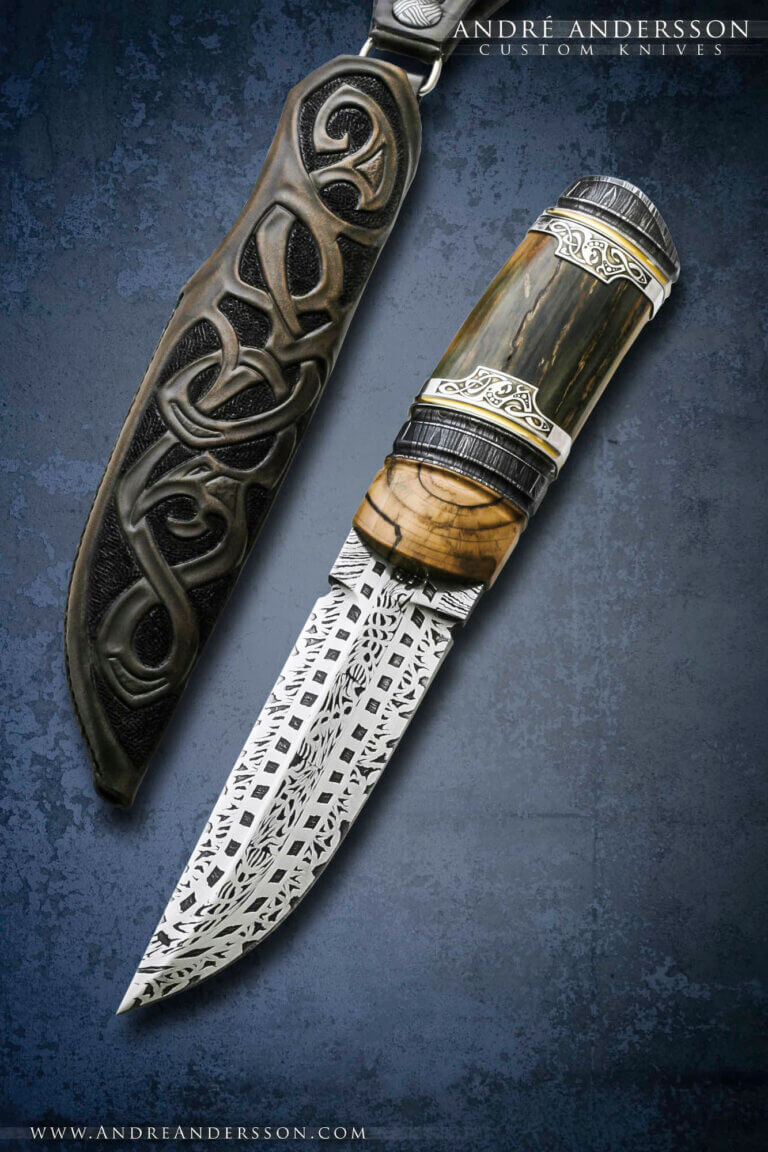
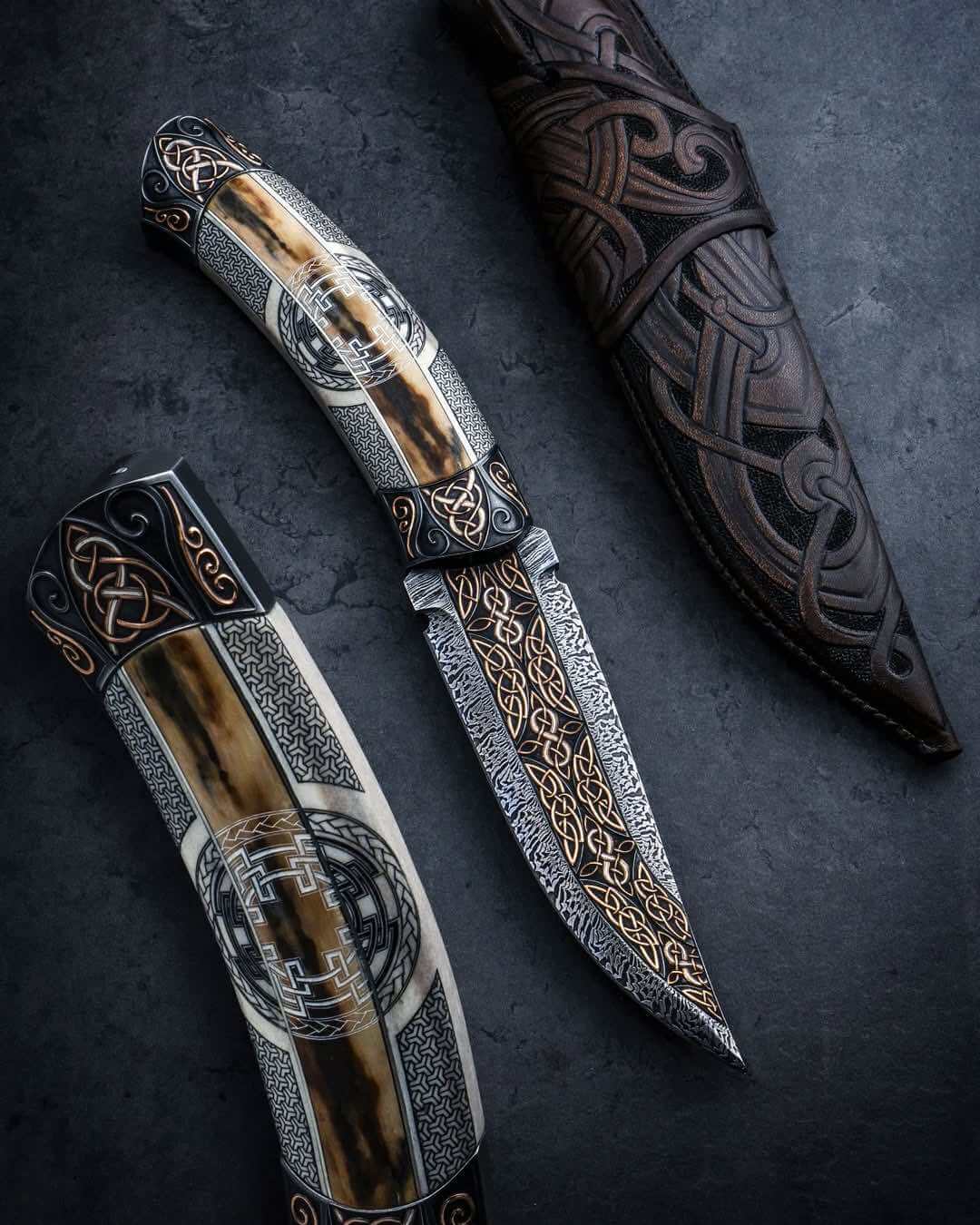
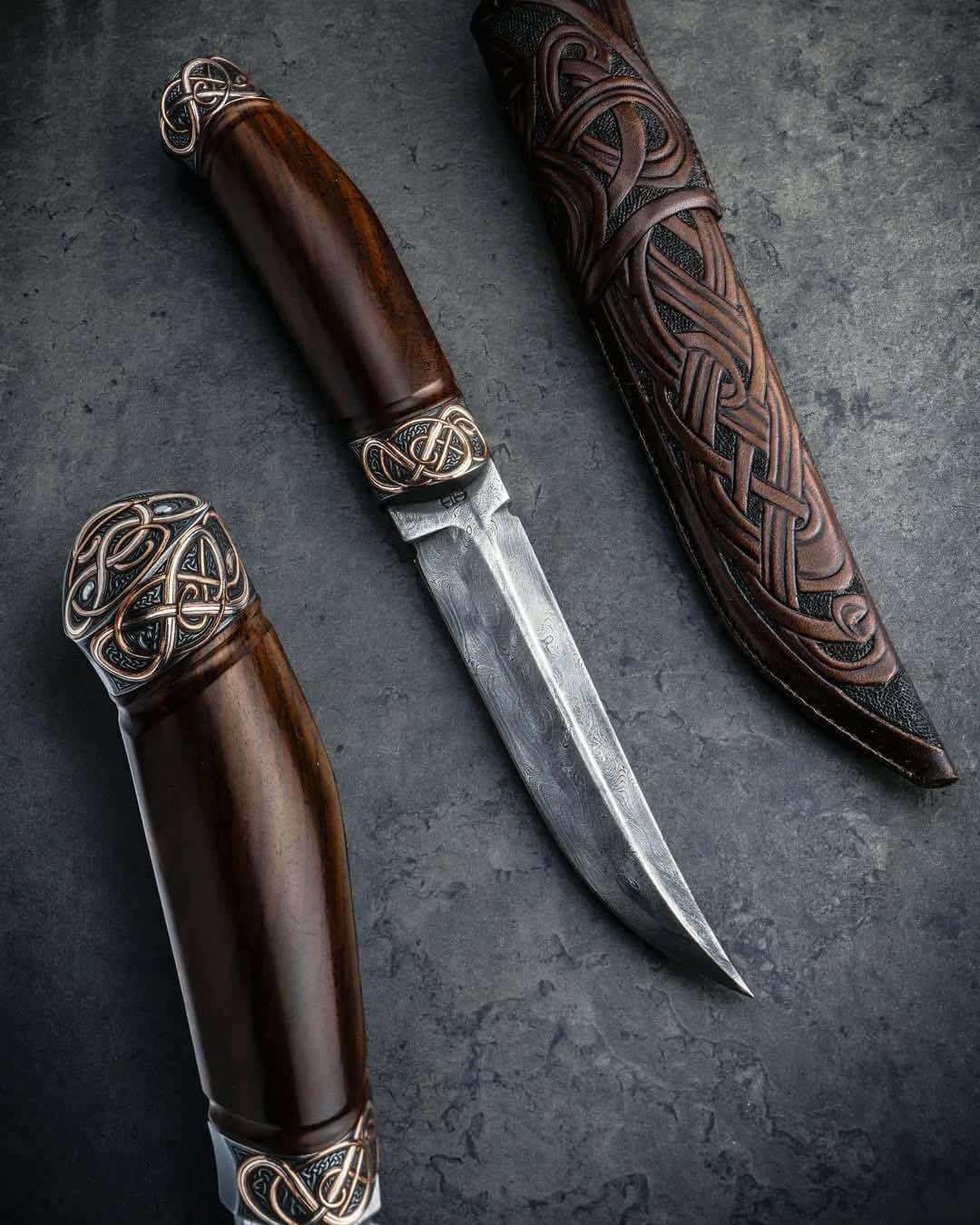
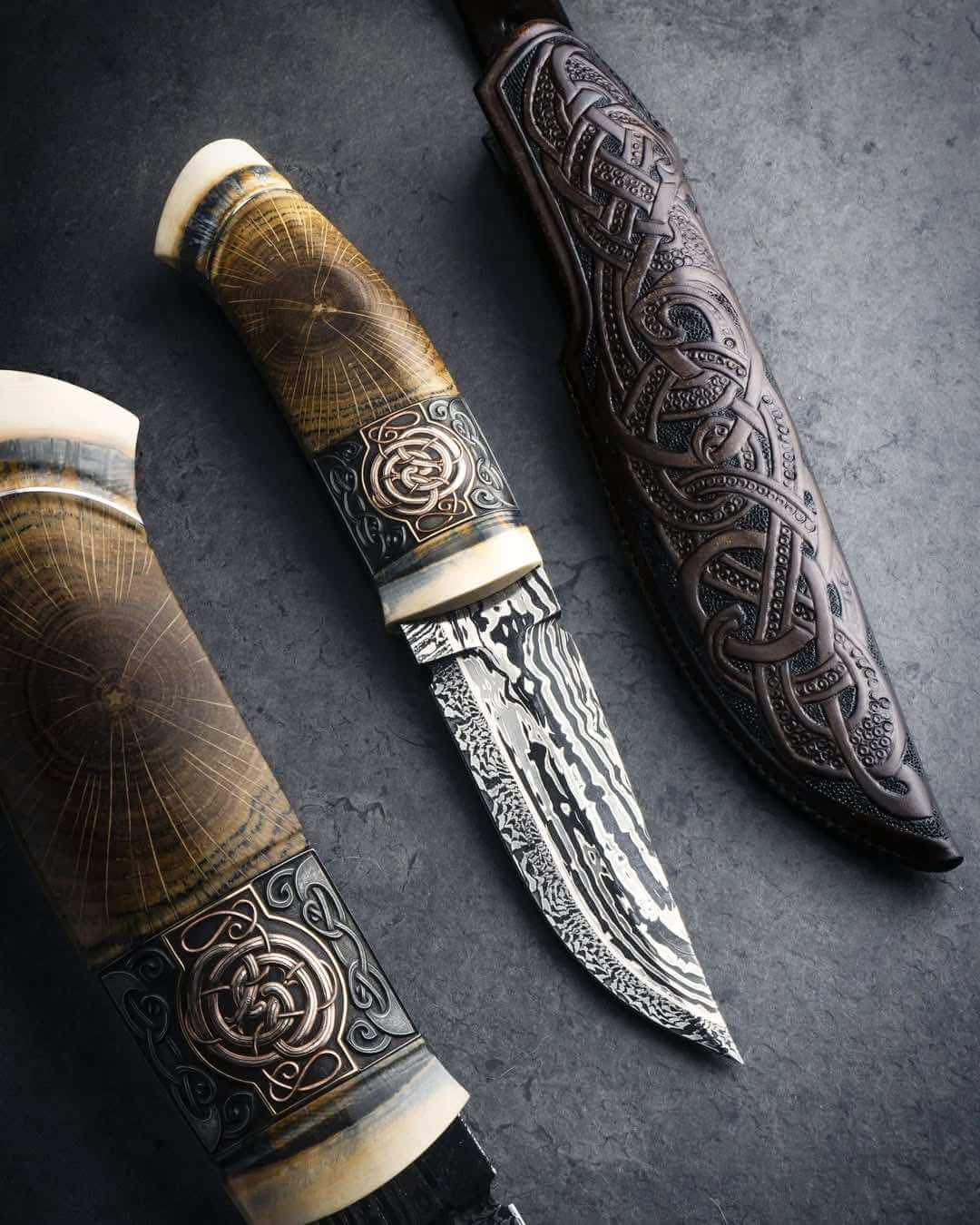
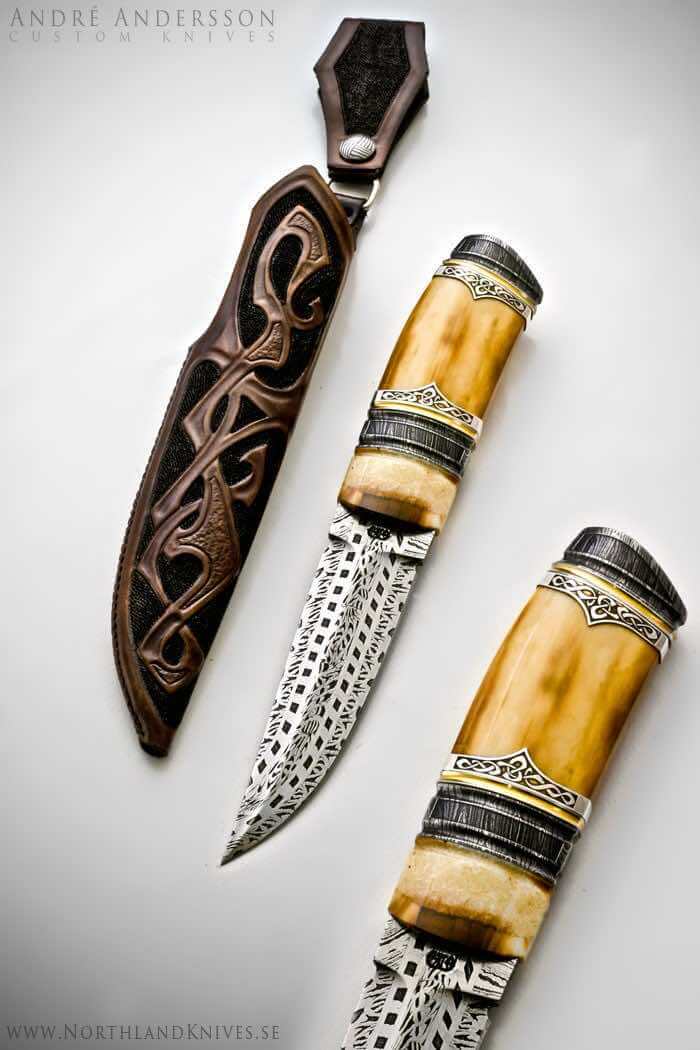
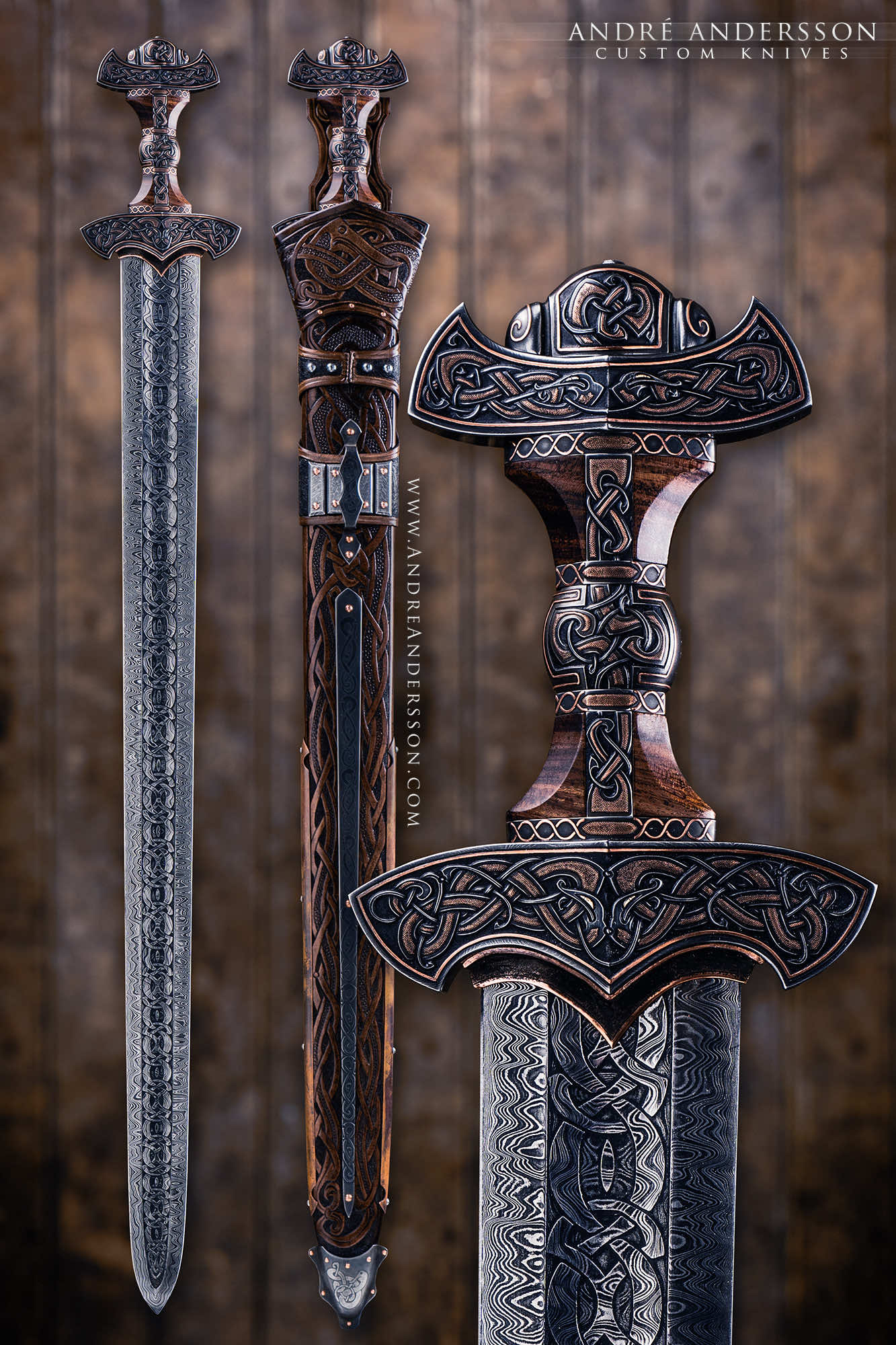
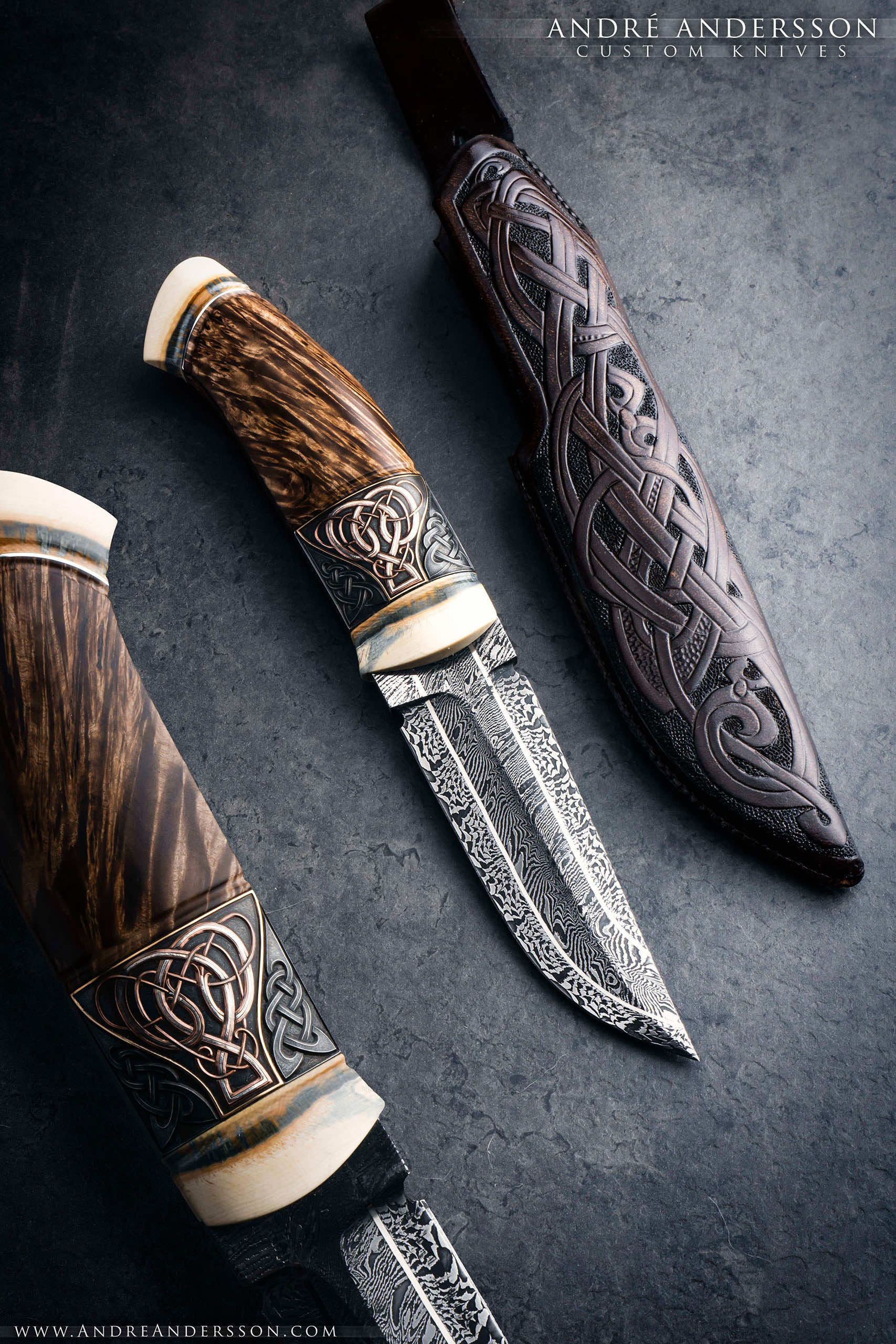
In this new article, I leave a great deal of room for the image, because they are all worthy of interest. Isn't it said that an image is worth a thousand words? After going through this page, you can tell me in comment if you think André Andersson actually creates the most beautiful knives in the world. For my part, I think he's in the lead platoon.






Who's André Andersson?
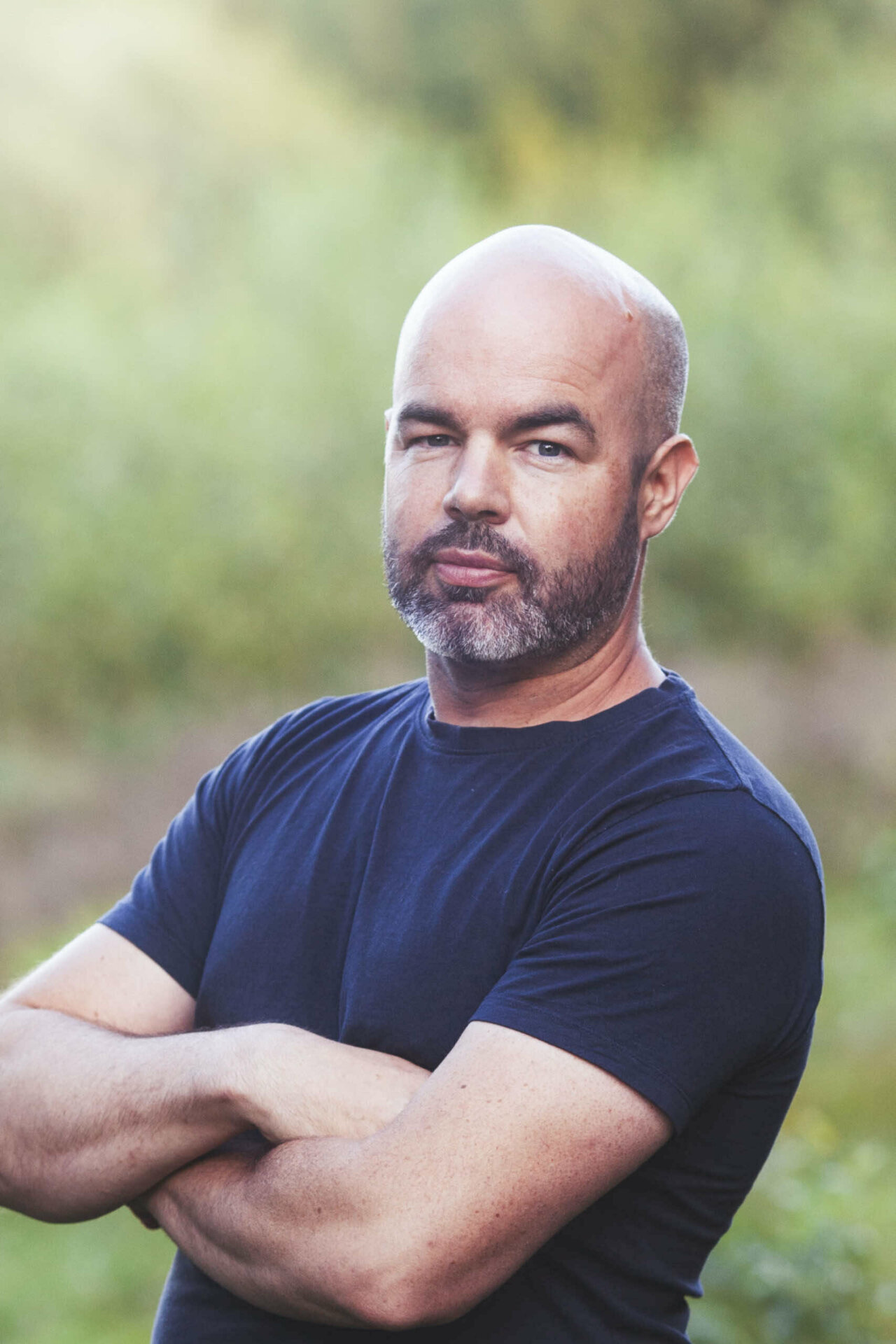
My name is André Andersson and I am an artisan cutlery from northern Sweden, a small country in the far north of Europe with about 9.3 million inhabitants. I was born on a cold day in December 1980 and have since lived in Umeå and its surroundings, a city nestled between the rock formations of the Baltic shield and the Baltic coast.




My career as a cutlery began in 1999 after a weekend internship with blacksmith Roger Bergh, in which I participated with my father. I didn't plan to go, but my father, who wanted to start the forge, convinced me. However, I had never held a blacksmith hammer and my experience with knives was limited to the one I had made years before in school. I also had a small collection of cheap knives, bought during a holiday in Europe, but nothing, even in my wildest dreams, could have prepared me for what Roger Bergh showed this weekend.
Gradually, my father and I set up a small workshop equipped with the necessary equipment. At the same time, we have tried to learn the techniques of pattern welding and the basics of knife manufacturing. Passionate about drawing, I quickly understood the potential of the knife. I am among those who need to find inspiration in the challenges and constantly evolve so that my work remains exciting.


Every knife I make is unique, and I don't like to do it again. My best creations are always the ones I make from A to Z, where I enjoy total artistic freedom. I constantly strive to improve my skills and creations, without aiming for perfection. Creating a perfect knife is not my goal, because I don't believe in absolute perfection. I always try to express something, an expression that reflects where I am at this very moment. If I move, I feel the need to create another expression, because life around me is changing. A wise man seeks answers; A fool is the one who thinks he's found them all.
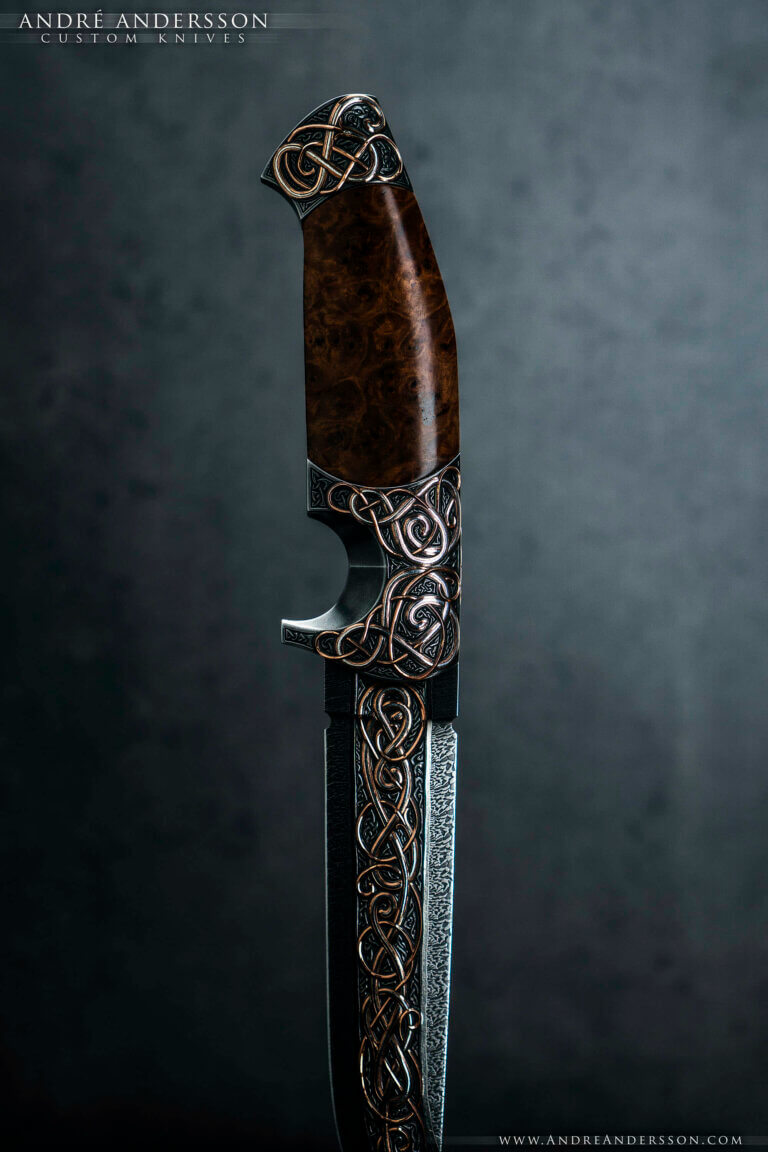
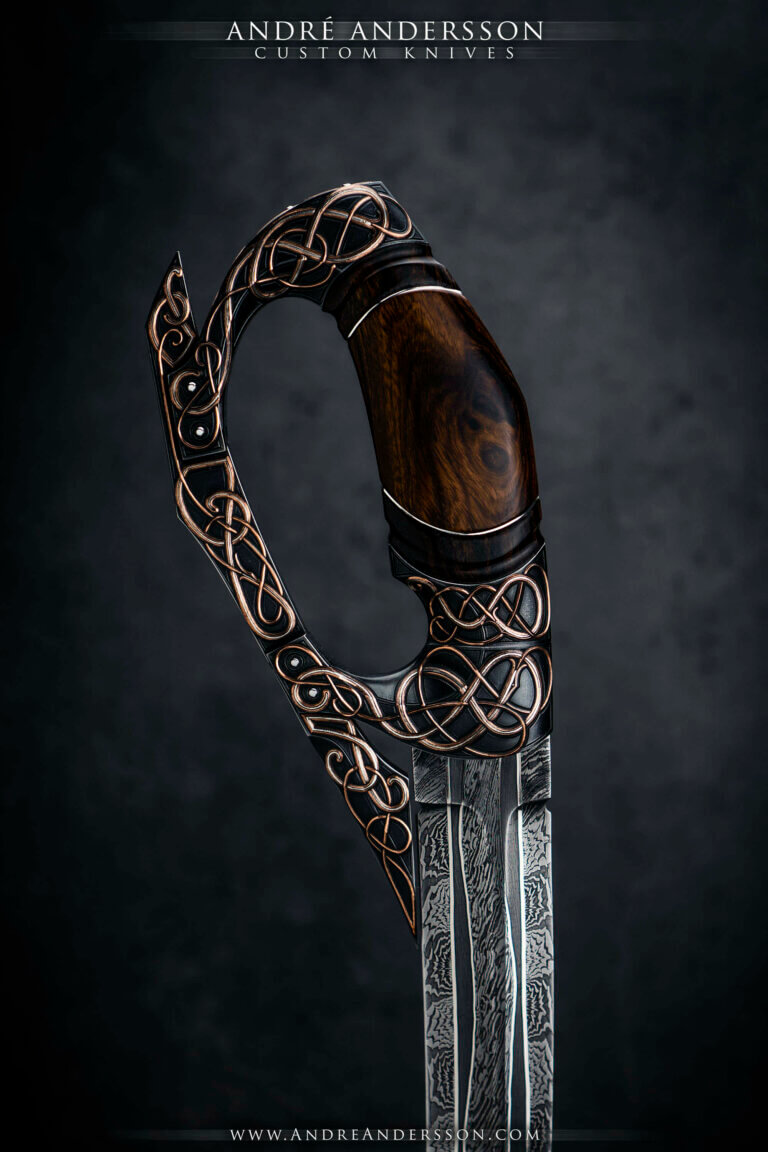
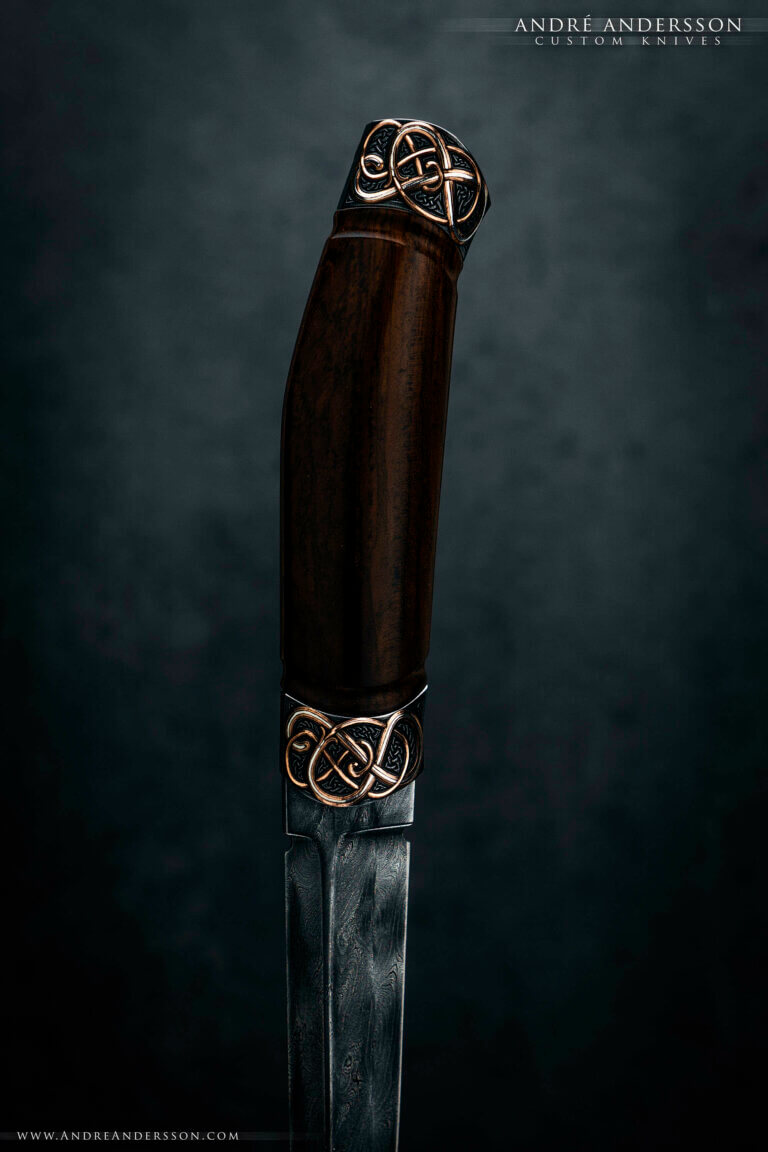
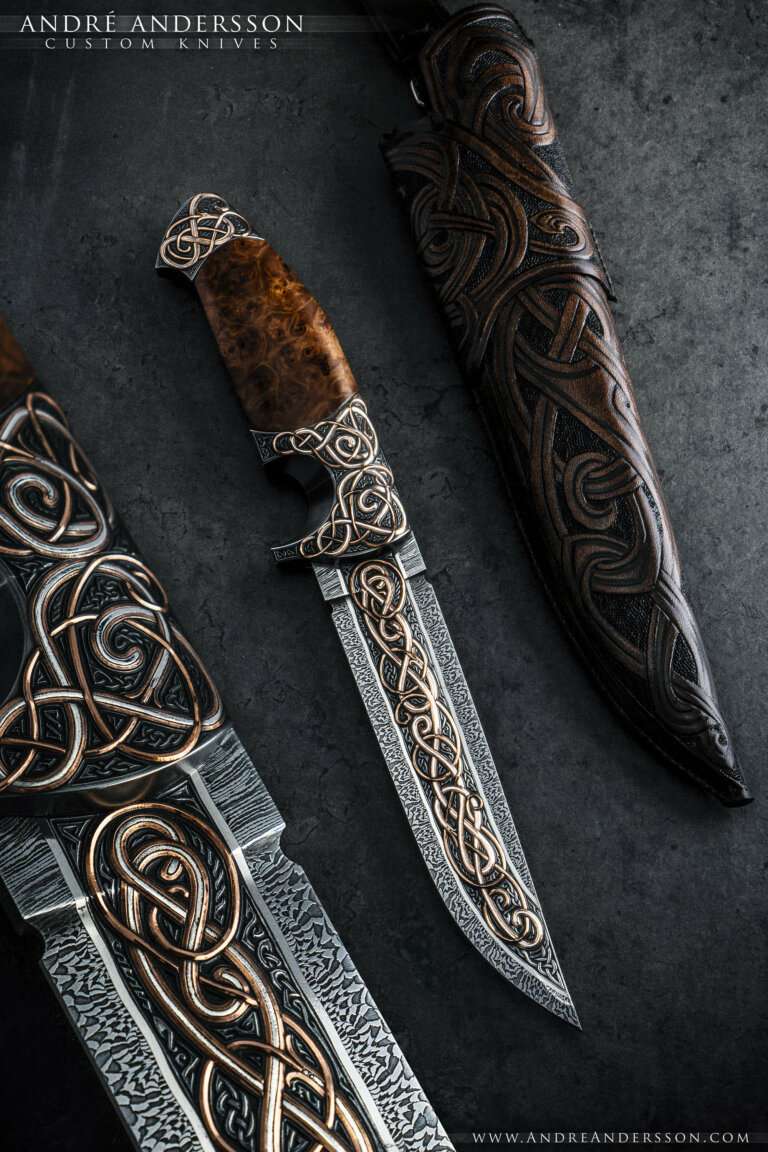
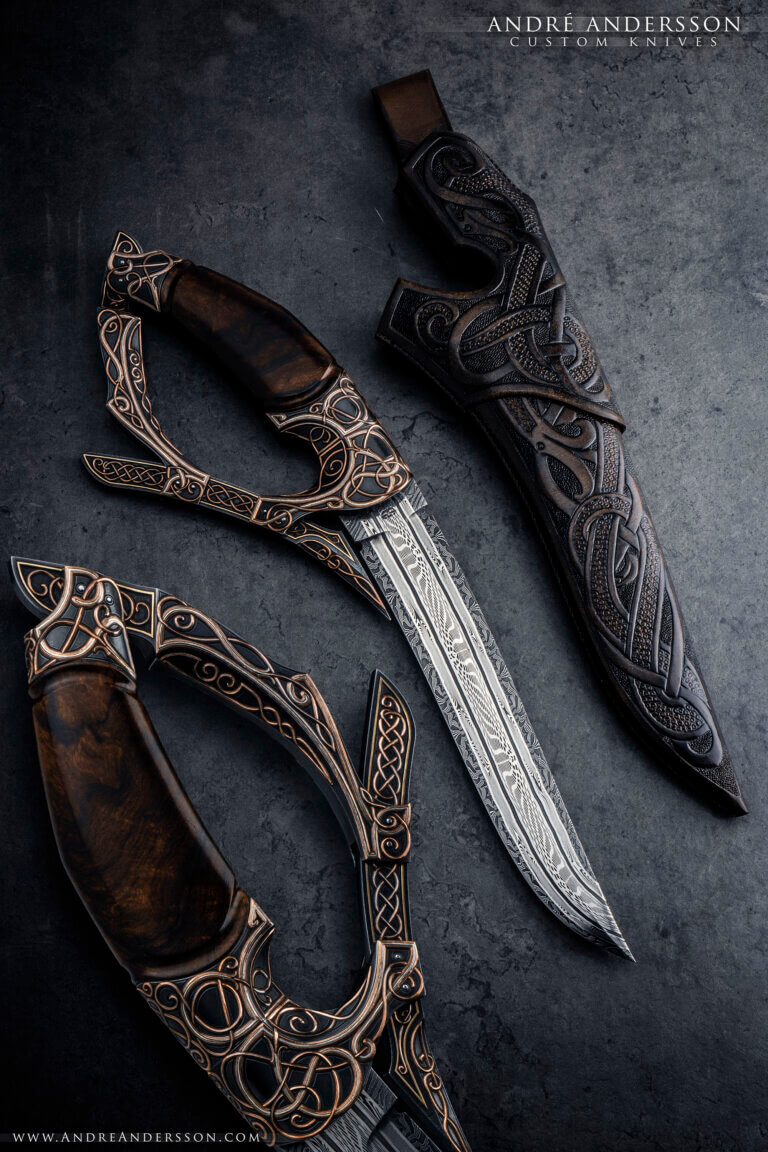
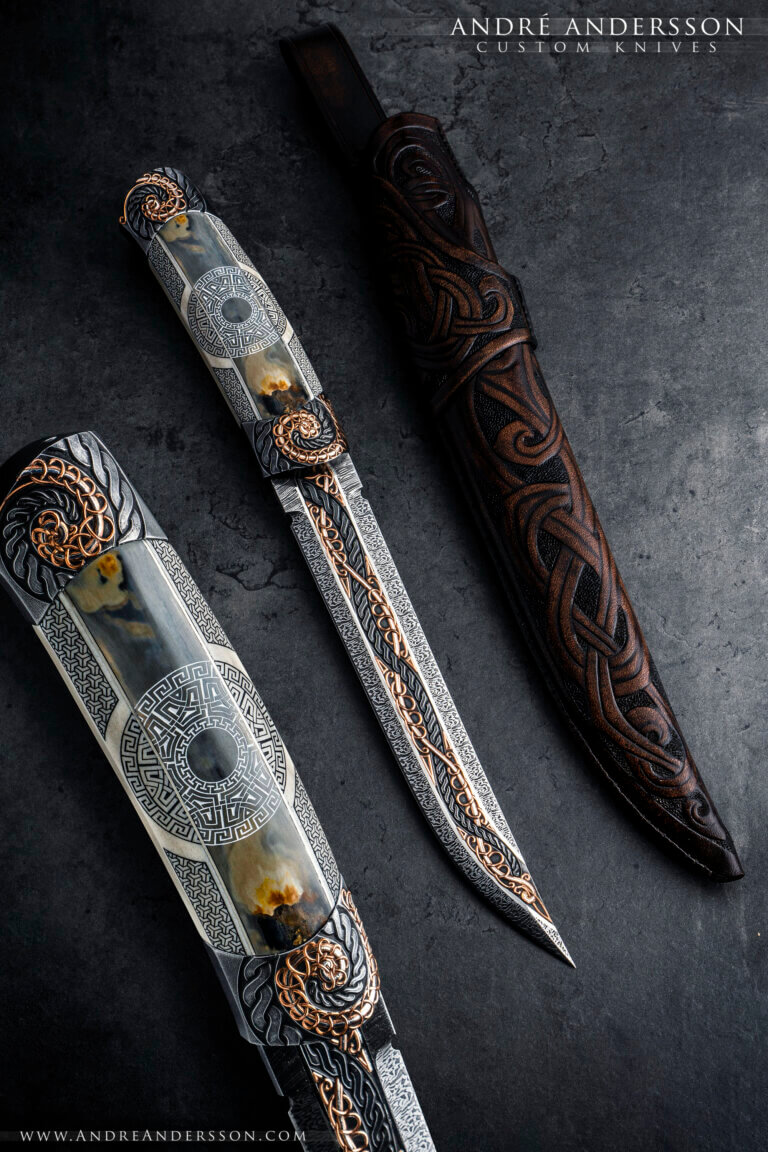
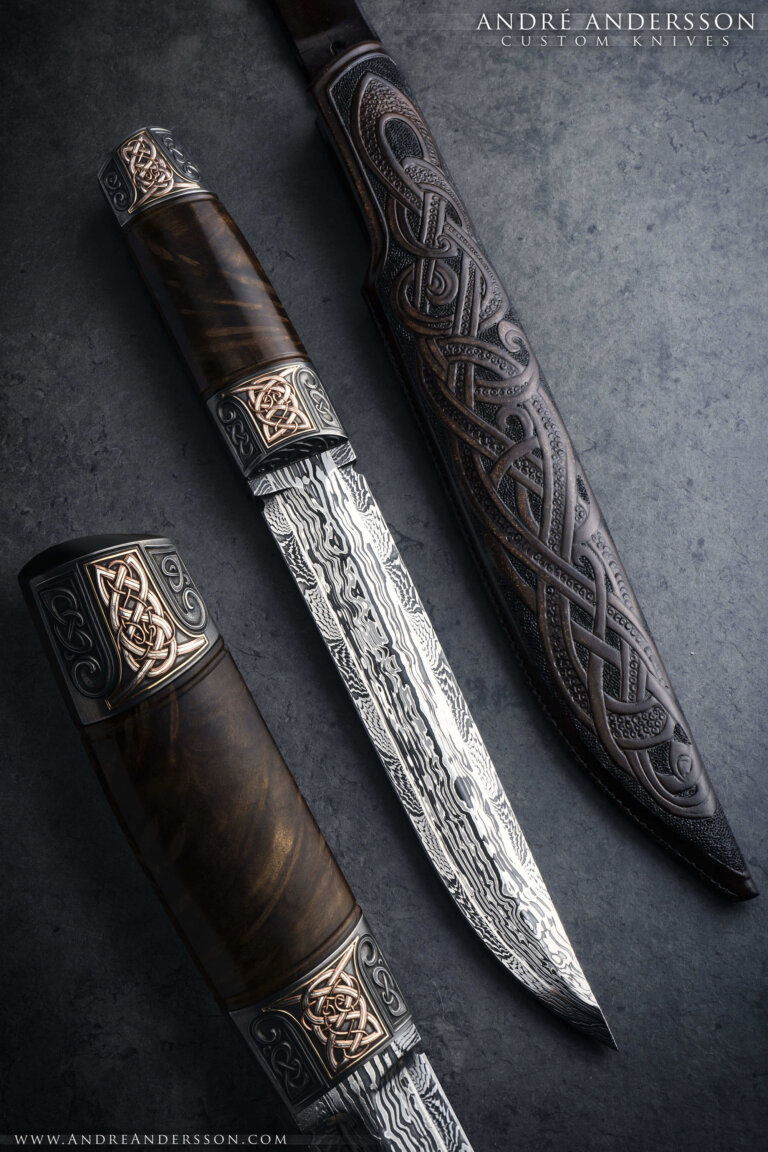
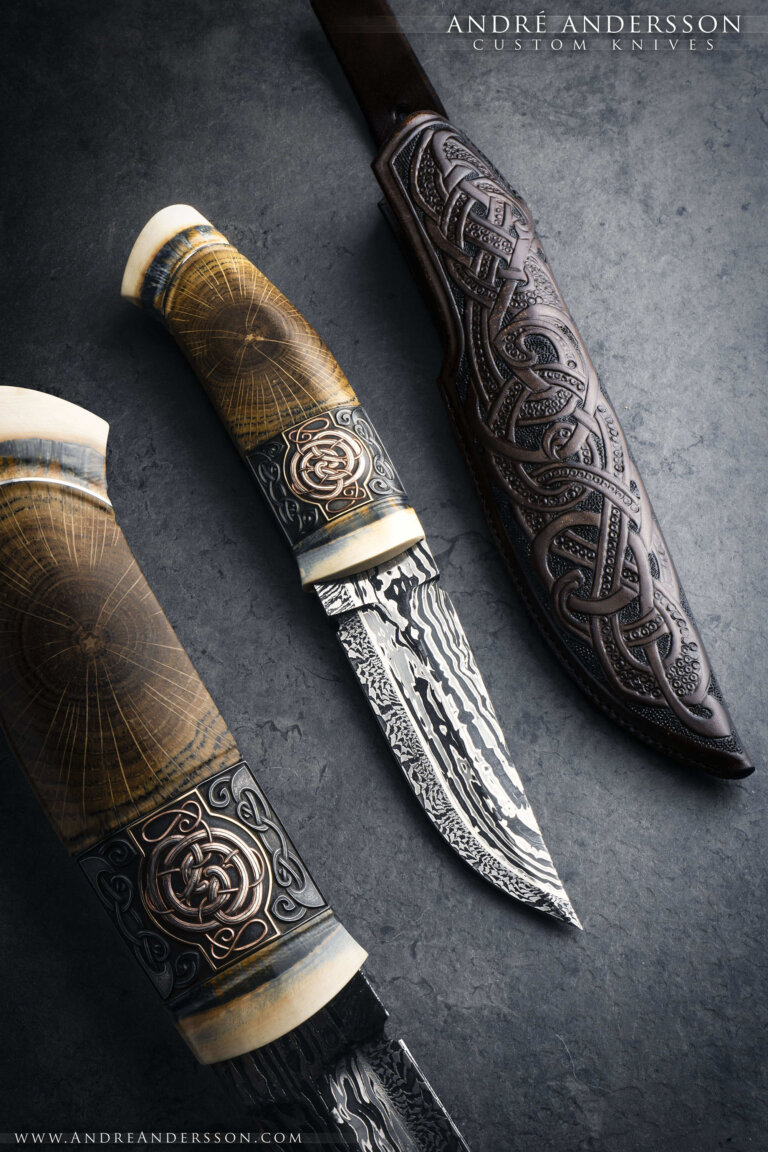
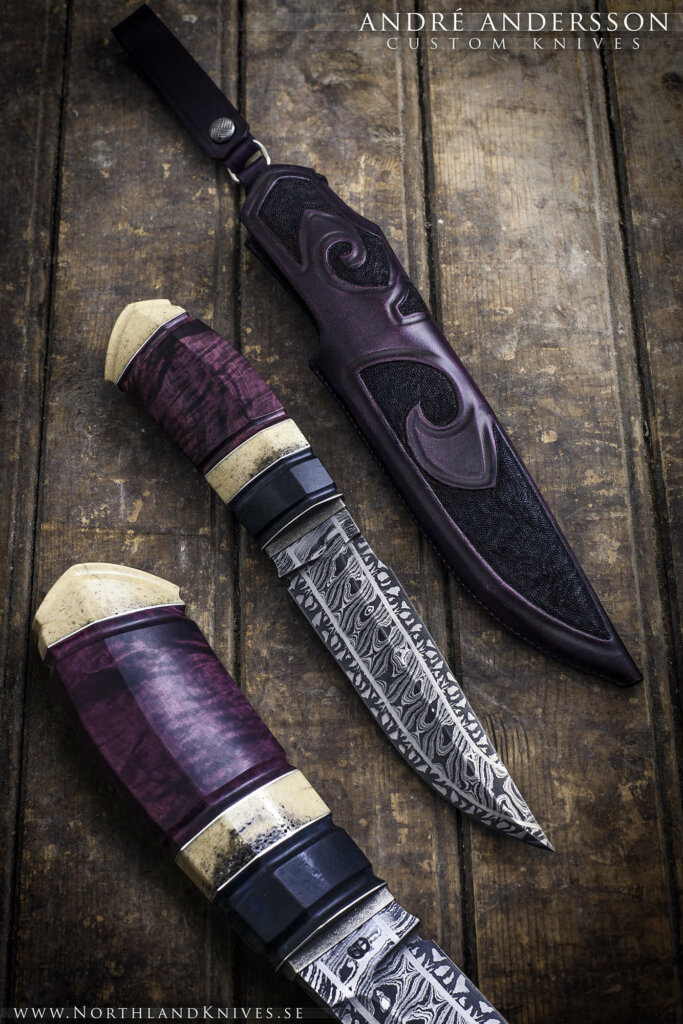
Thus, I work with very exclusive materials such as damaged steel, fossils, gold, silver and exotic wood. When I make a knife, I do not want the materials to define it, that it perceives its value only by the materials themselves. No, I want the material to sublimate the knife, leaving its shape and design to define it.
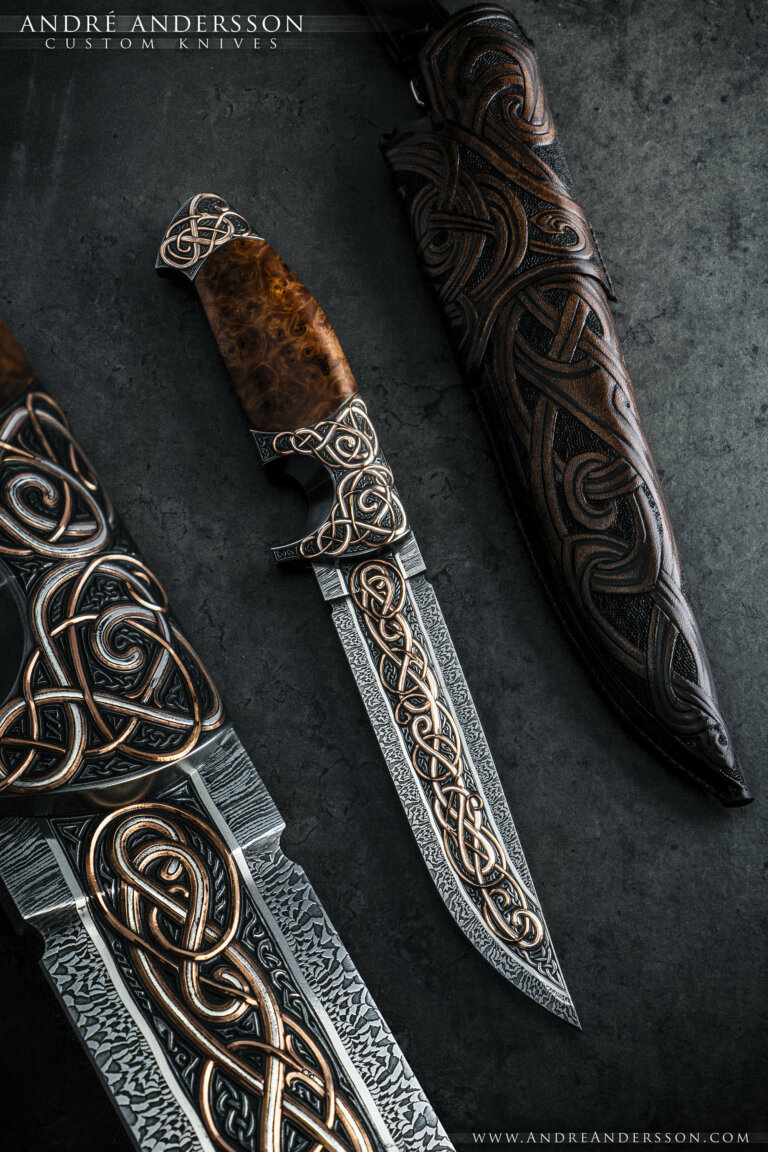
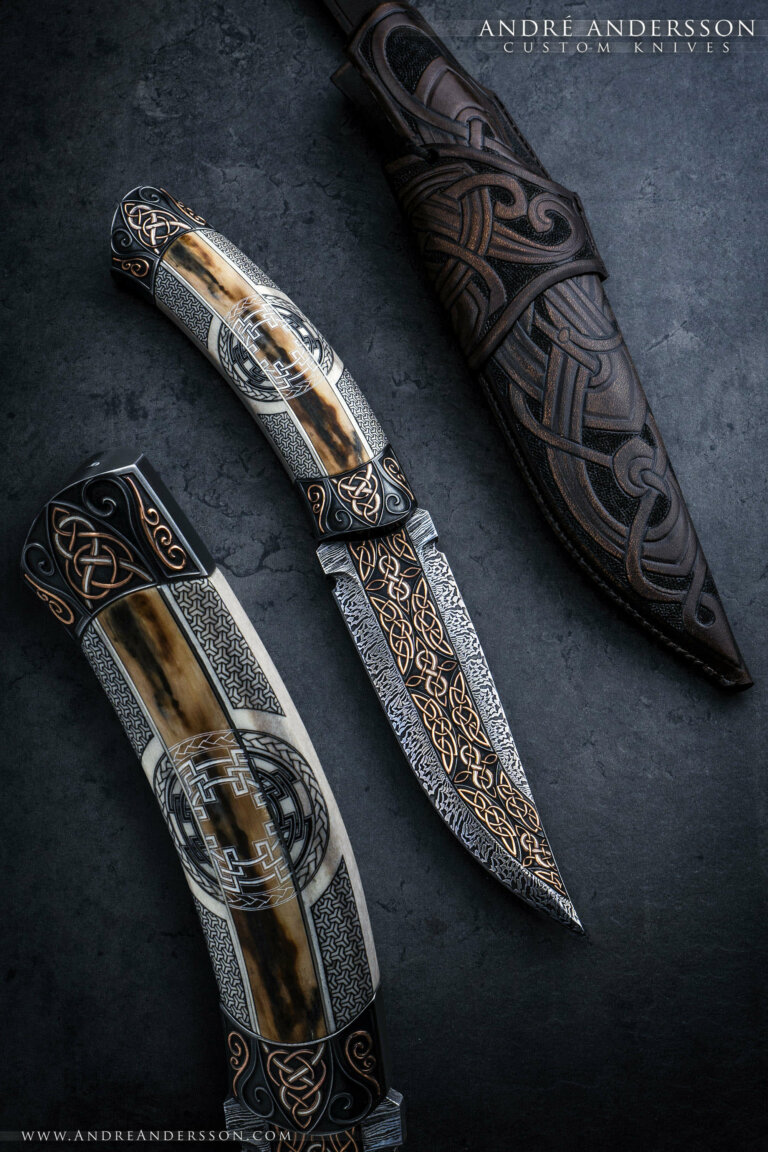
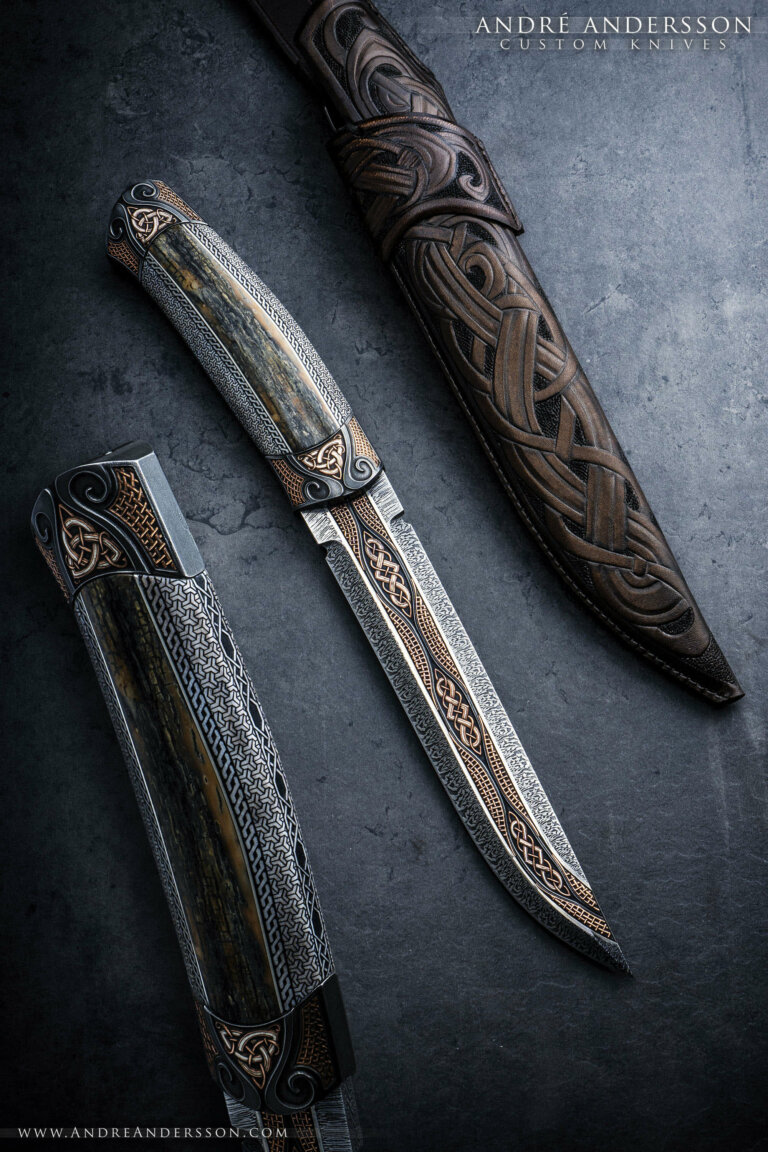
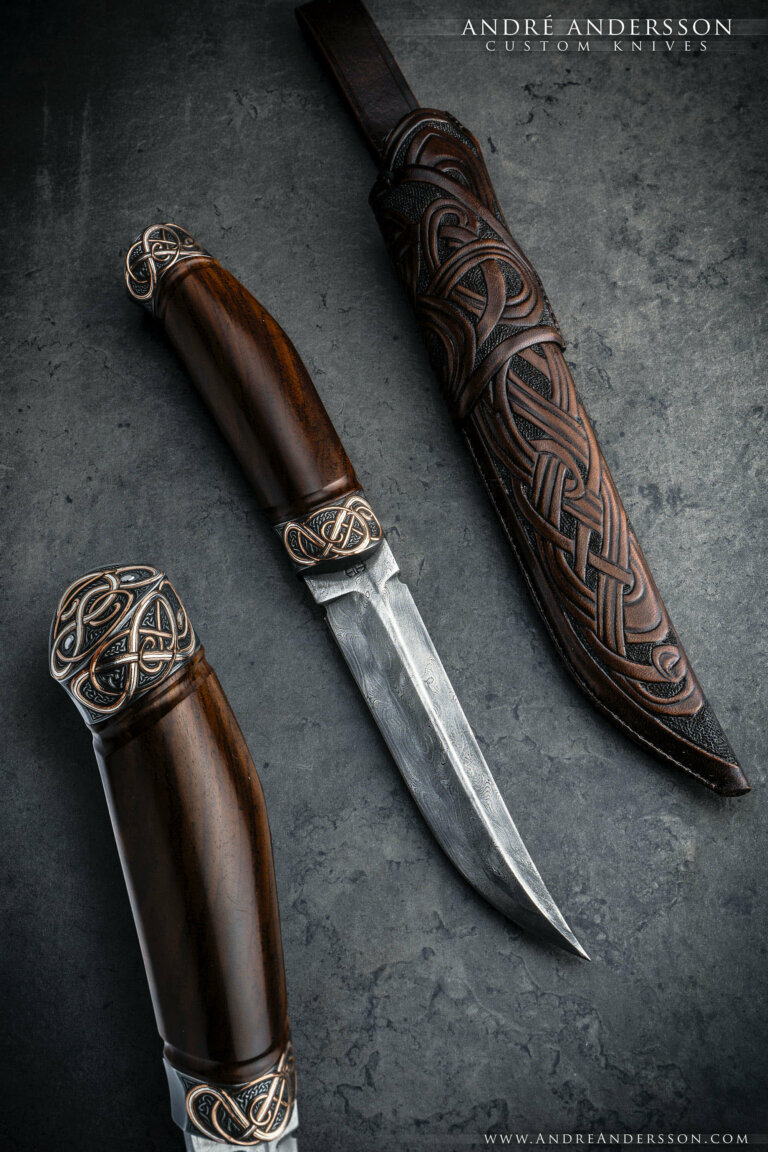


André Andersson
My creations are unique and I dare say that what you see on this page can only be acquired at home.
Yours,
André Andersson
Interview and presentation of the work of Swedish cutlery André Andersson. Directed during the first edition of FICX, the International Forum of Contemporary Knife at the Brongniart Palace.


Scandinavian Spirit
Here is the technique that I use to simultaneously solder several steel billets welded to the wheel.
Of course, not everyone proceeds in the same way. Some may even disapprove of me, but I found that this method was the most effective in terms of time and resources.
Of course, not everyone proceeds in the same way. Some may even disapprove of me, but I found that this method was the most effective in terms of time and resources.
The process begins with the forging of steel, involving tools such as old avils, hammer-pilons and a hydraulic press built by himself and his father, to shape and solder complex patterns. He particularly appreciates the mosaic Damascus for its aesthetic reasons, and integrates thermal treatments to ensure the durability and sharpness of the blades.
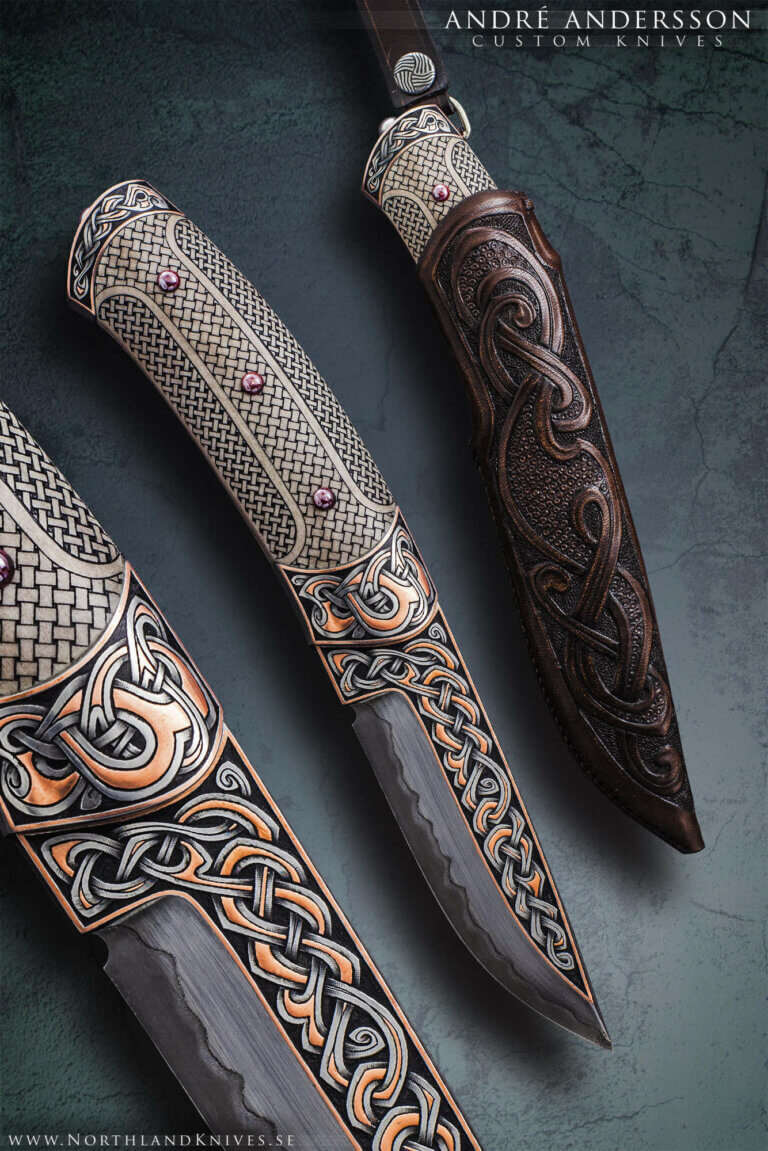
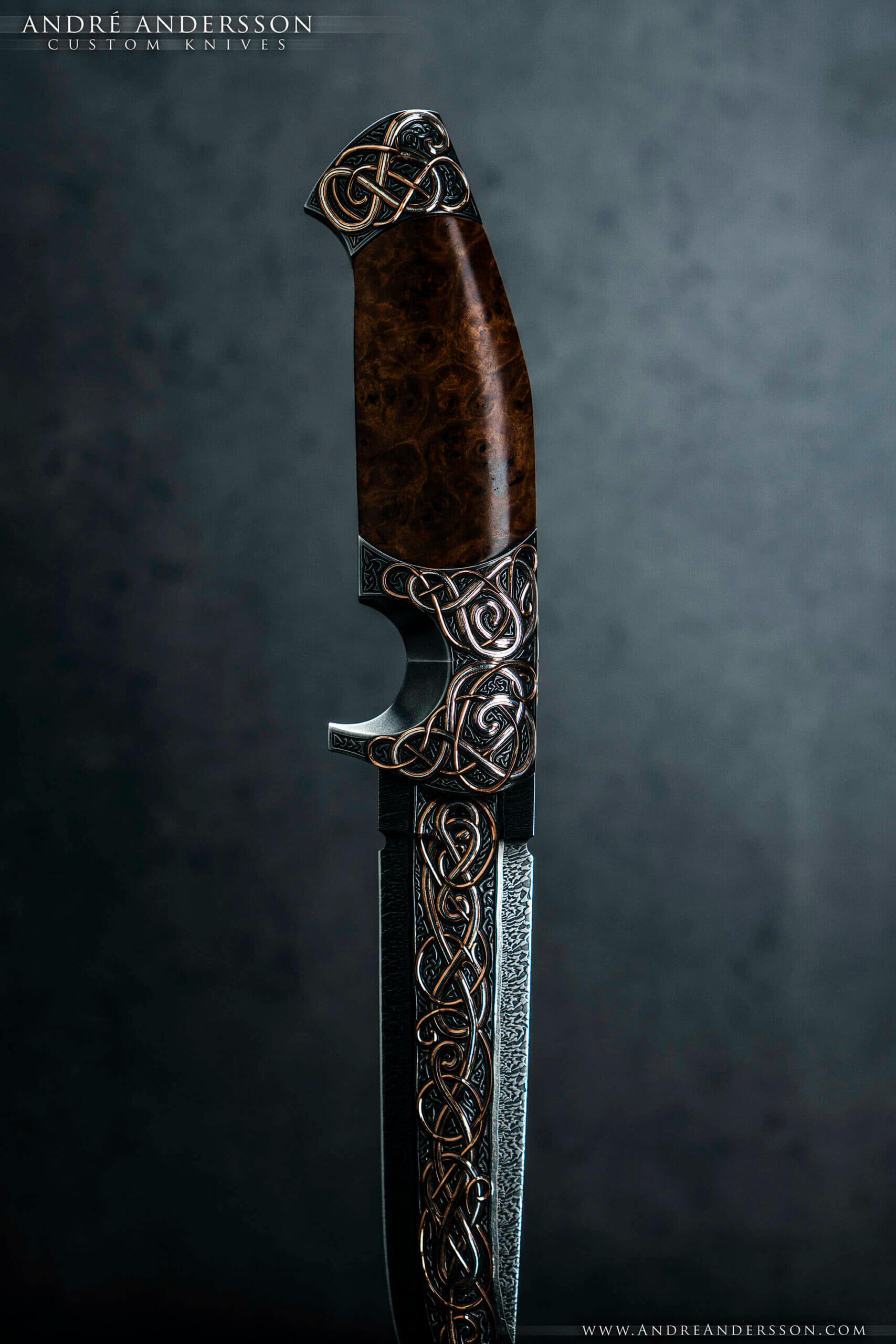
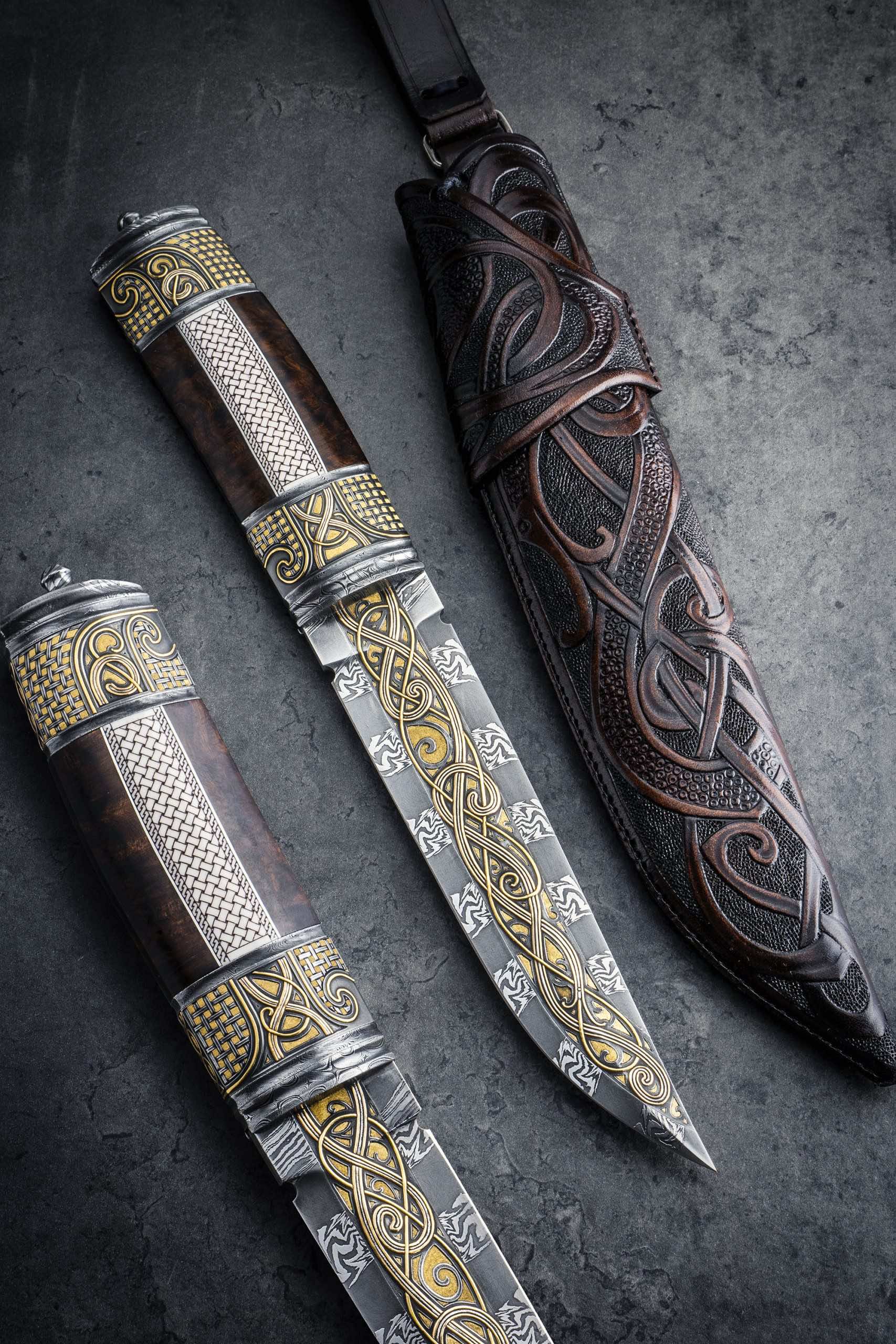
Its unique methods include the integration of incrustations and superpositions (overlays) of precious metals such as 24K gold, pure silver, 21K pink gold, copper or even semi-precious stones, which are inlaid in blades, guards and even semi-precious stones. handles to create designs inspired by Nordic mythology and Viking.
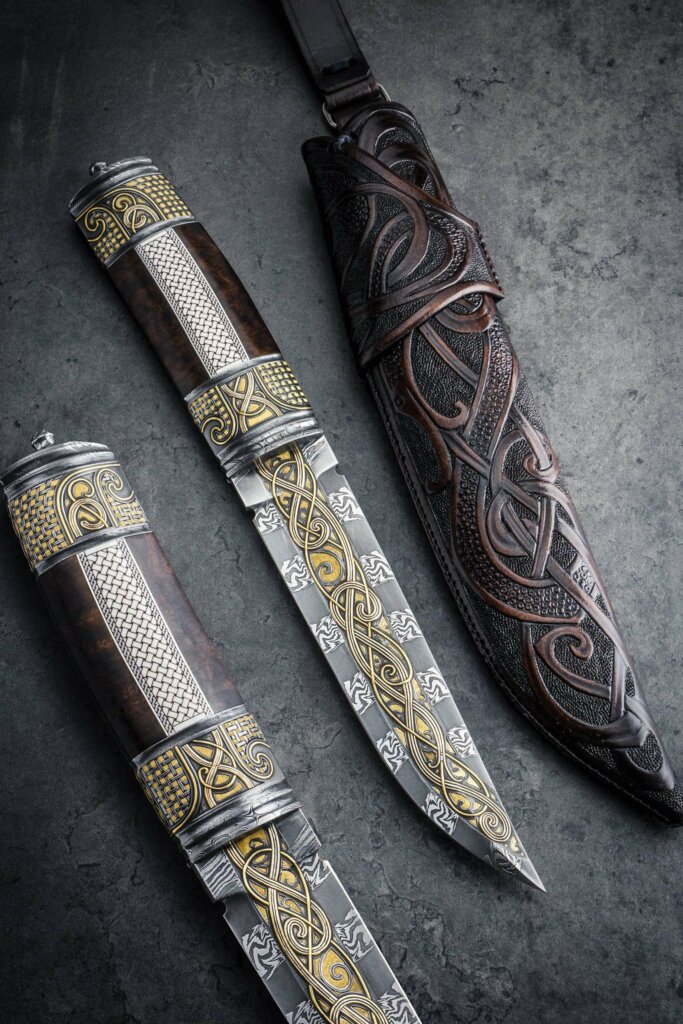
A distinctive technique is overlay engraving: the inlaid materials exceed the surface of forged steel (often blue for contrast), then are hand carved for a pronounced 3D effect, as in a Viking snake pattern using copper, silver and 18K gold. This approach combines raw forging with meticulous planning of engravings, via detailed sketches, as the engraved lines cannot be erased.
Complementary materials include exotic wood such as desert ironwood for handles (frequently engraved with patterns such as reindeer), fossils, and hand tanned raw leather for shingles, decorated with Viking patterns. Each knife is unique, avoiding repetitions, and aims to transcend materials to produce functional artistic pieces.
Original engraving on the knife blade.




Example price
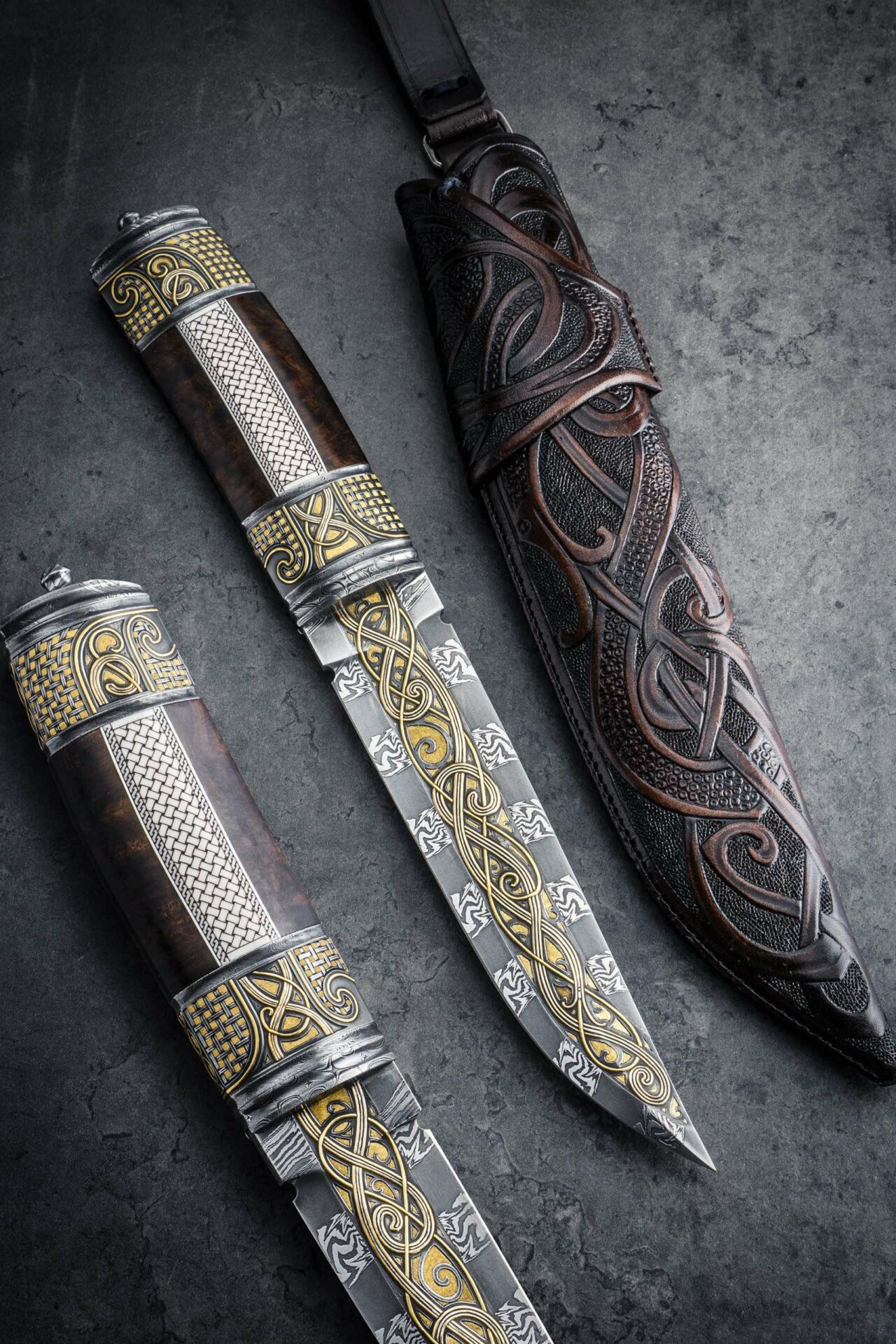
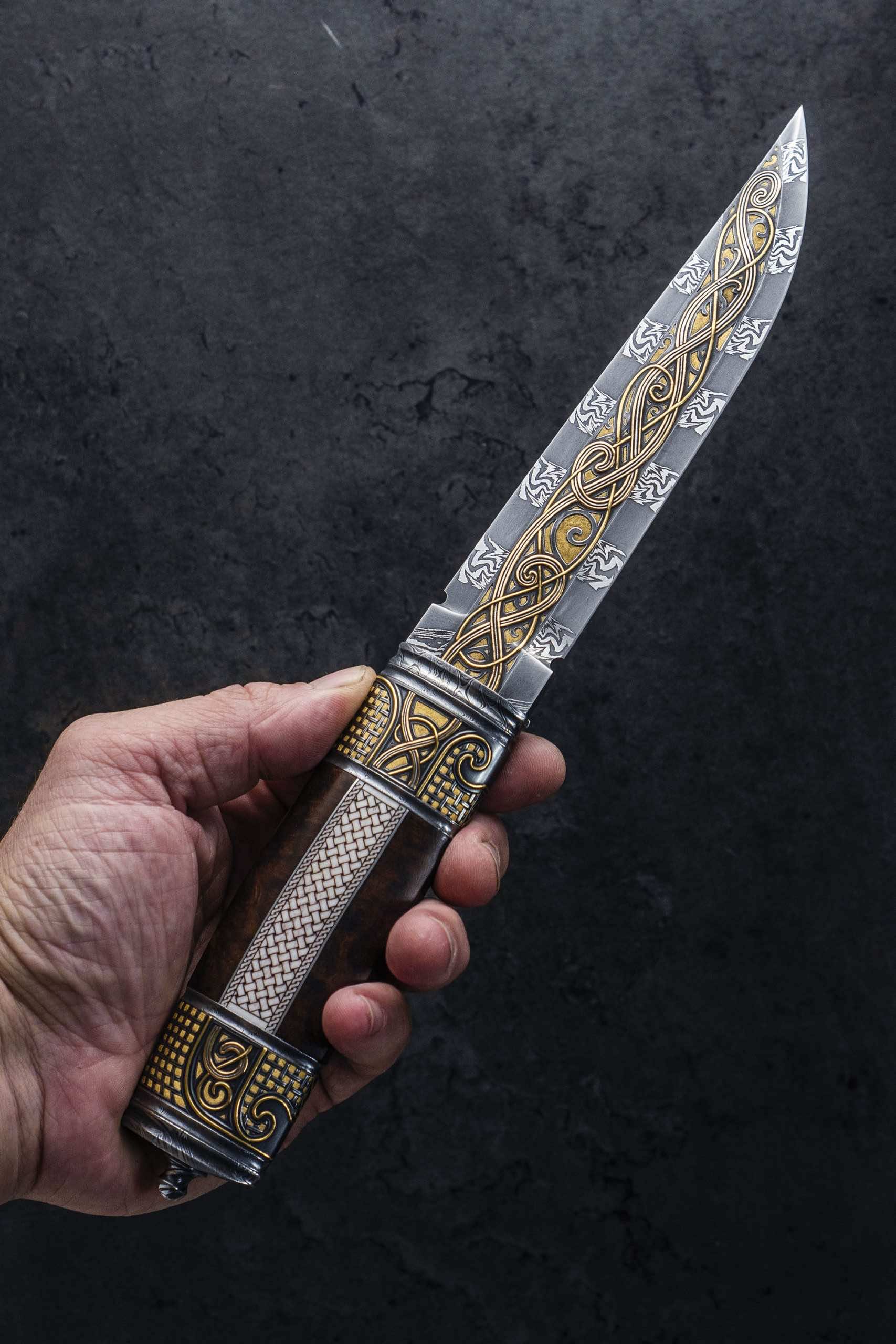
Knife : Golden Trails
Total length: 30 cm.
Robust Scandinavian lines decorated with complex Viking engravings. Hand forged blade with several bars and serrated edge. Handle of desert iron wood inlaid with a completely engraved reindeer horn. This engraving is made according to several techniques: superimposition of precious metals, inlay on gold background and sculpture on steel. The 24 carat gold, 21 carat pink gold and pure silver make up this striking work of art.
Blade: Three-bar Damascus with fully engraved central soul. Gold 24 carats and pure silver.
Mitre: sculpted and engraved steel, inlays and veneers 24 carat gold and pure silver.
Handle : Desert iron wood with engraved reindeer inlay.
Sheath : In two-piece raw leather, hand-worked, with Viking pattern by André Andersson.
Price:
EUR 12 400 (EU customers, VAT in addition).
Conclusion:
I'll give you a moment to get over the price shock... Here, quality and the exception have a price that, for the majority of us, will remain in the category: dream inaccessible. But, what a pleasure for the eyes!
It's time to comment on what you think about the work of this extraordinary artist. Also think about signing up for the newsletter so you don't miss out on future articles. Thank you for your visit and very soon.
Loved,
Photos and presentation text: @AndreAndersson
Discover another cutlery craftsman, Finn this time: Pasi Jaakonaho

The Blog of puukko.fr
Articles on puukkos, Scandinavia, nature and large spaces.


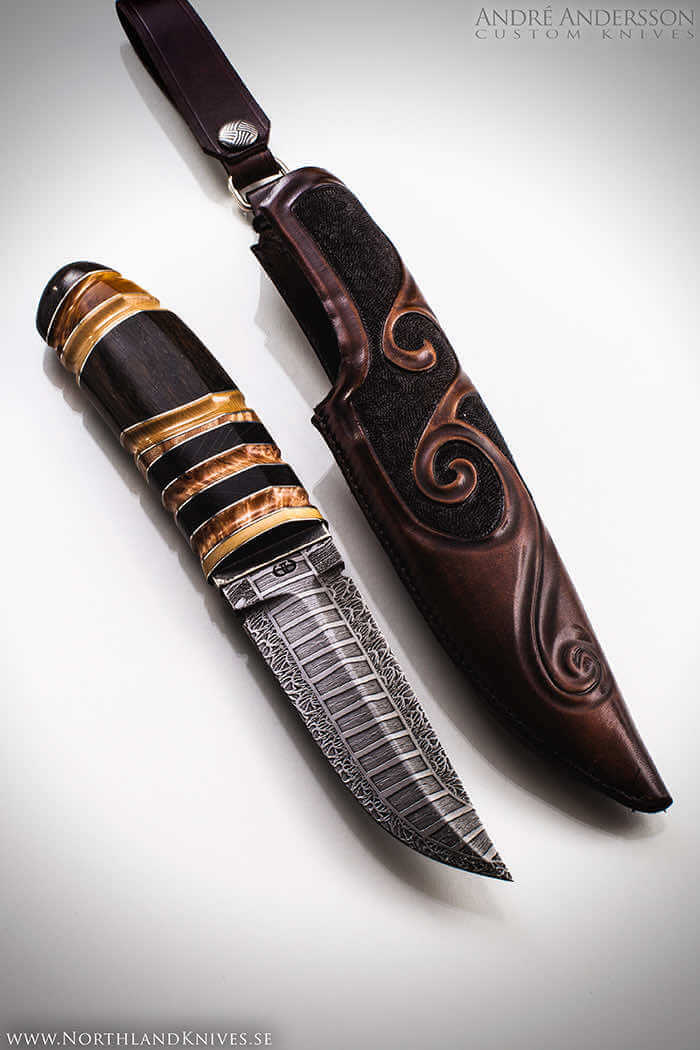
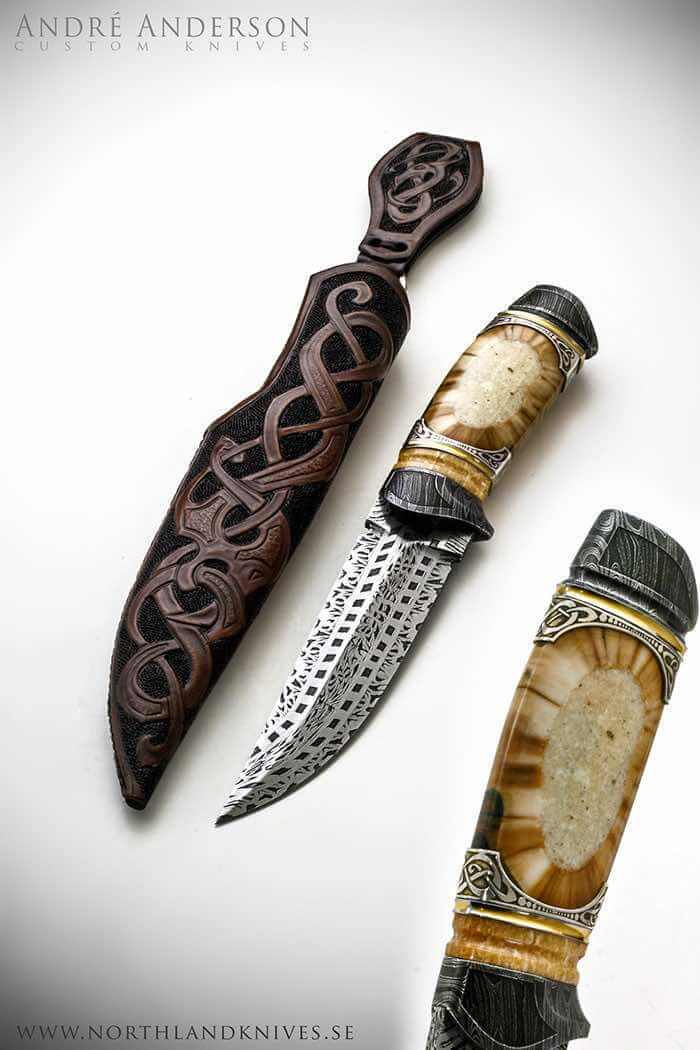
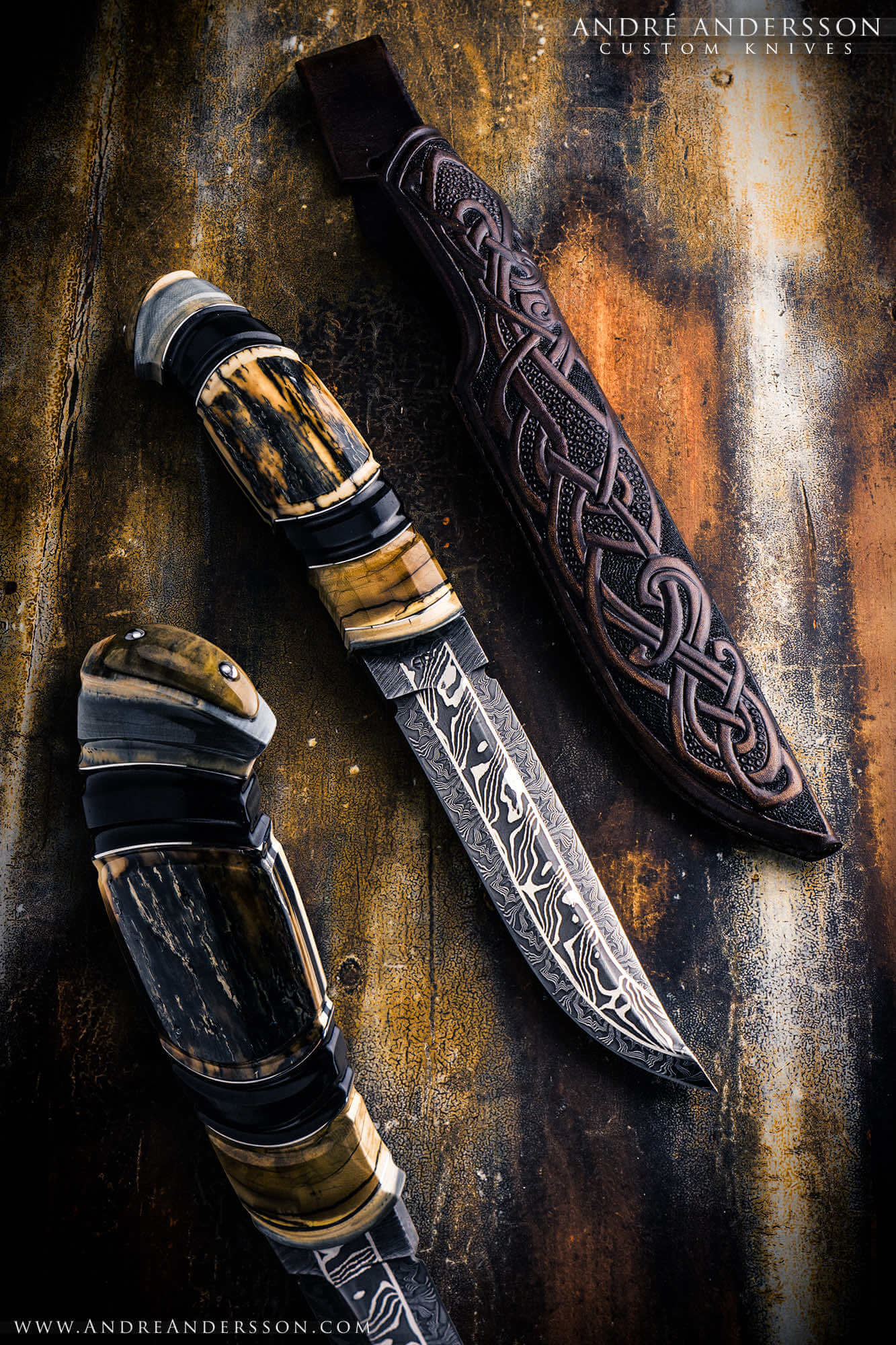
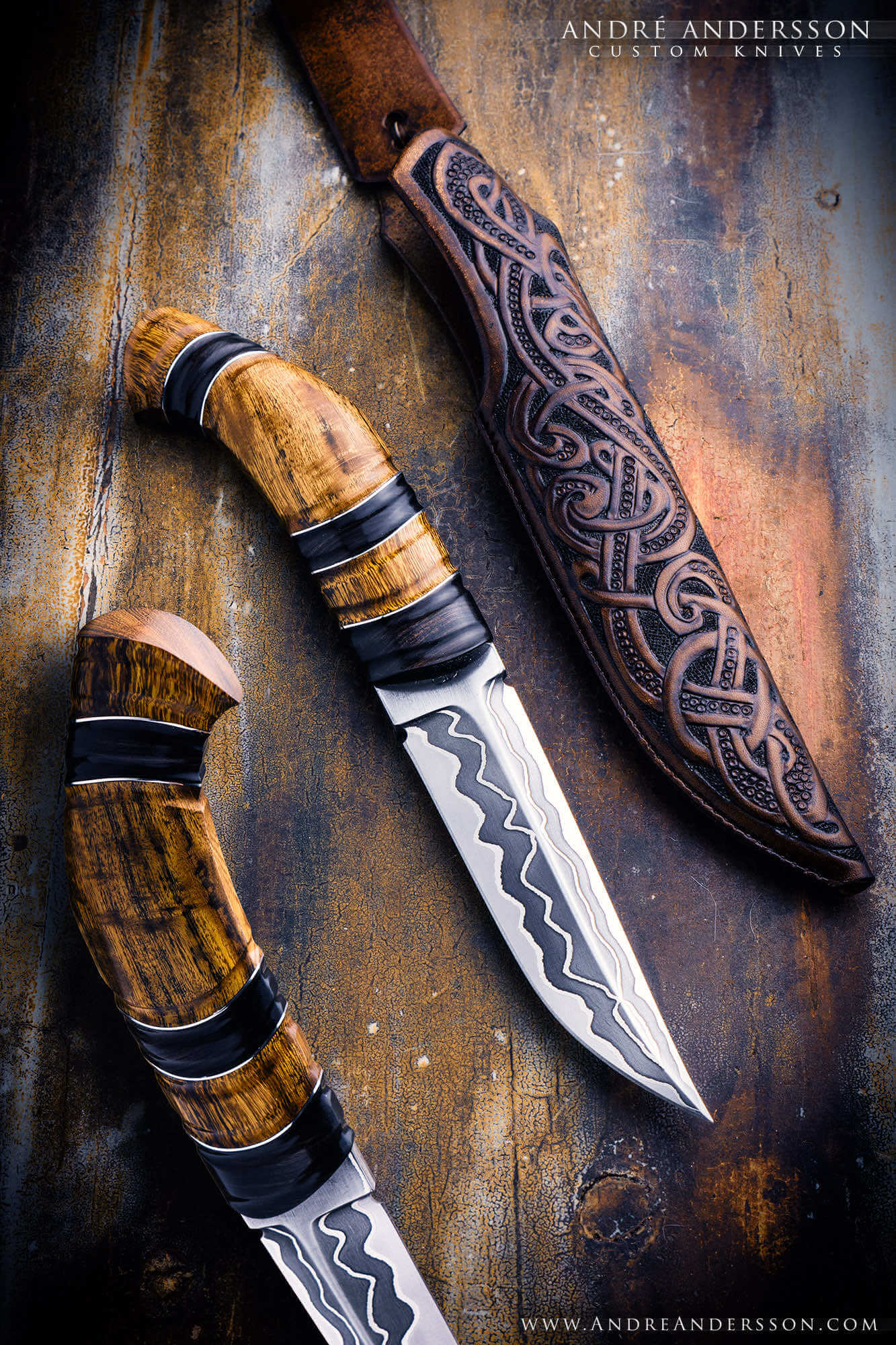
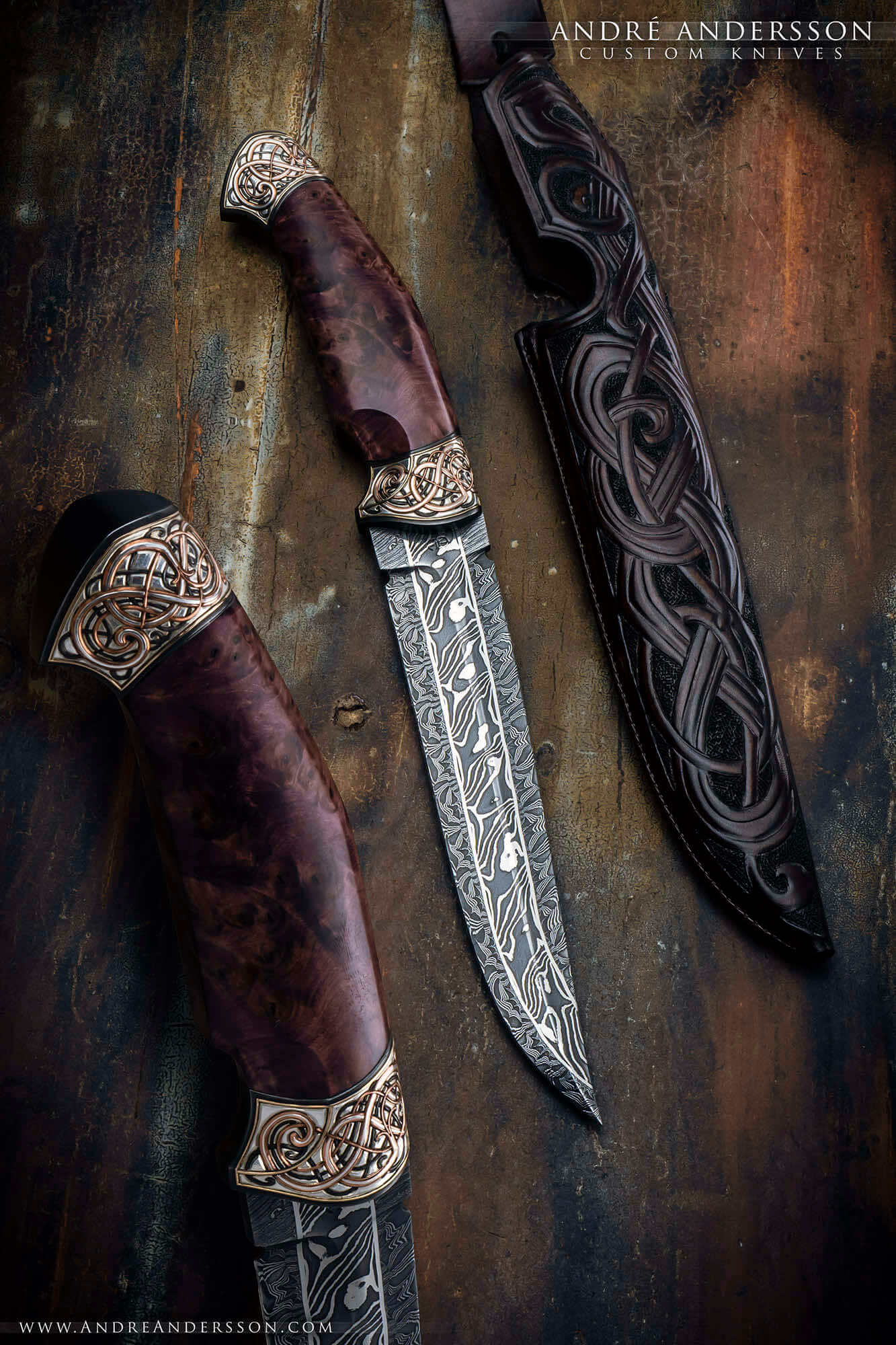
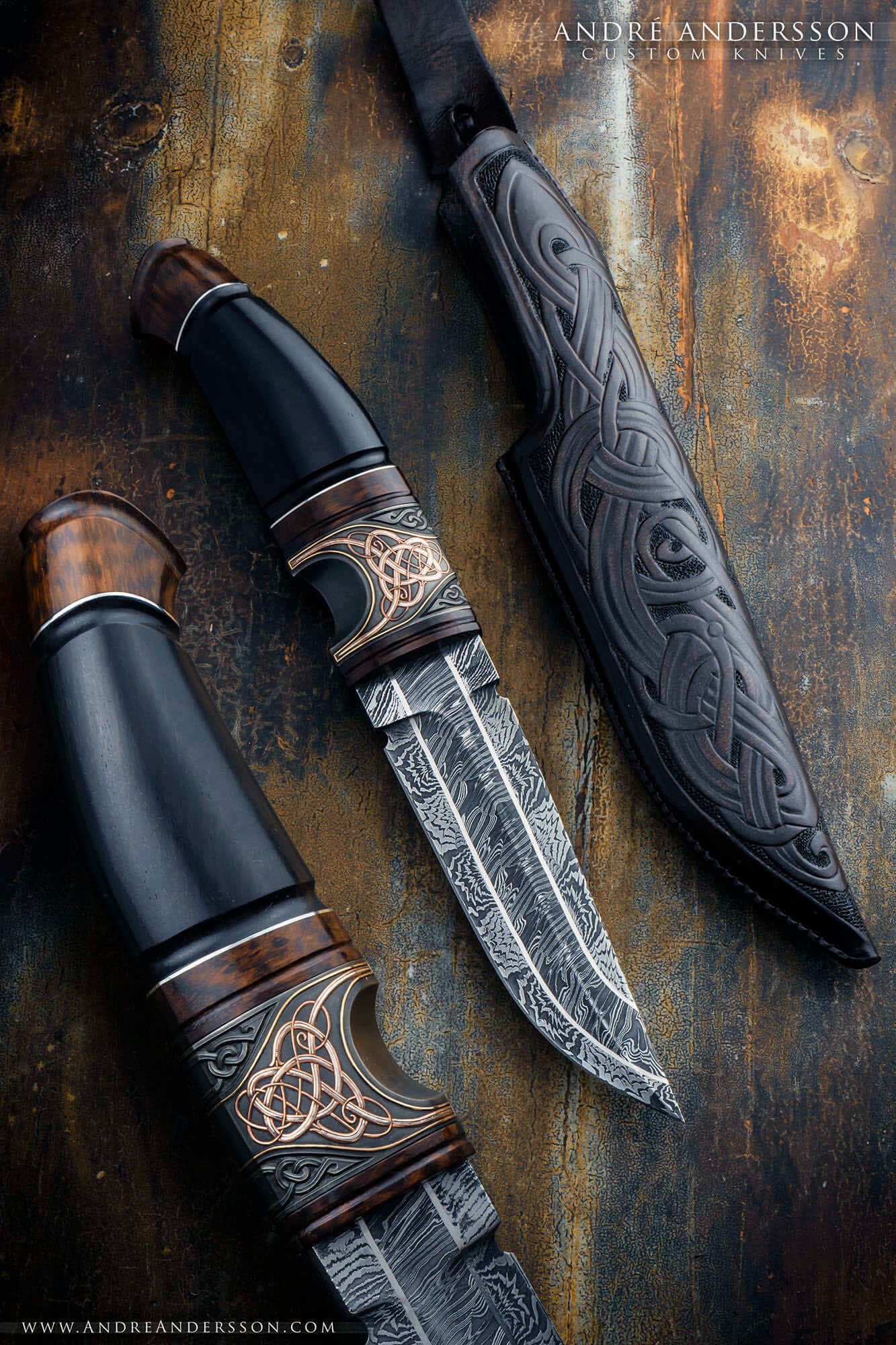
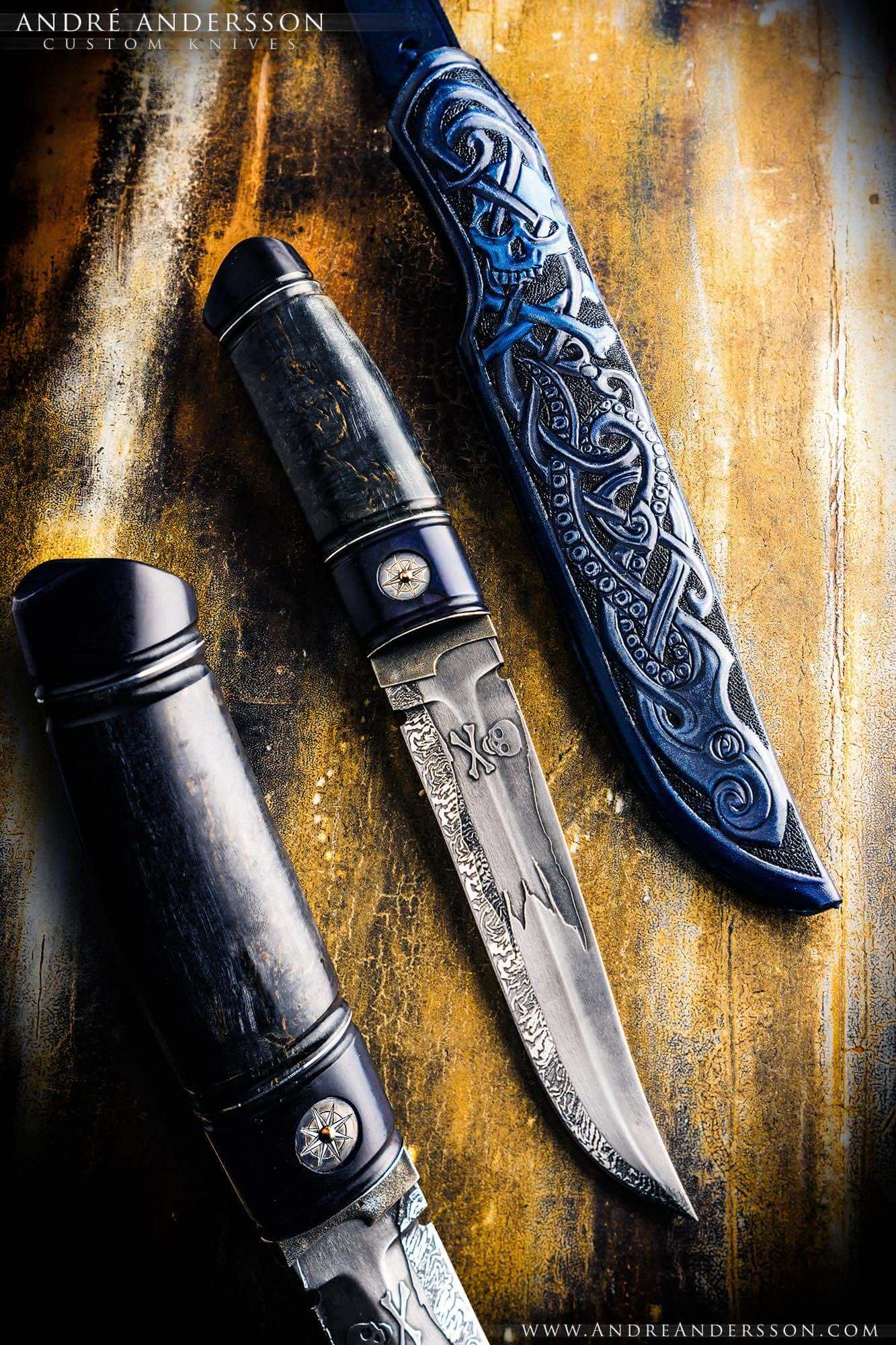
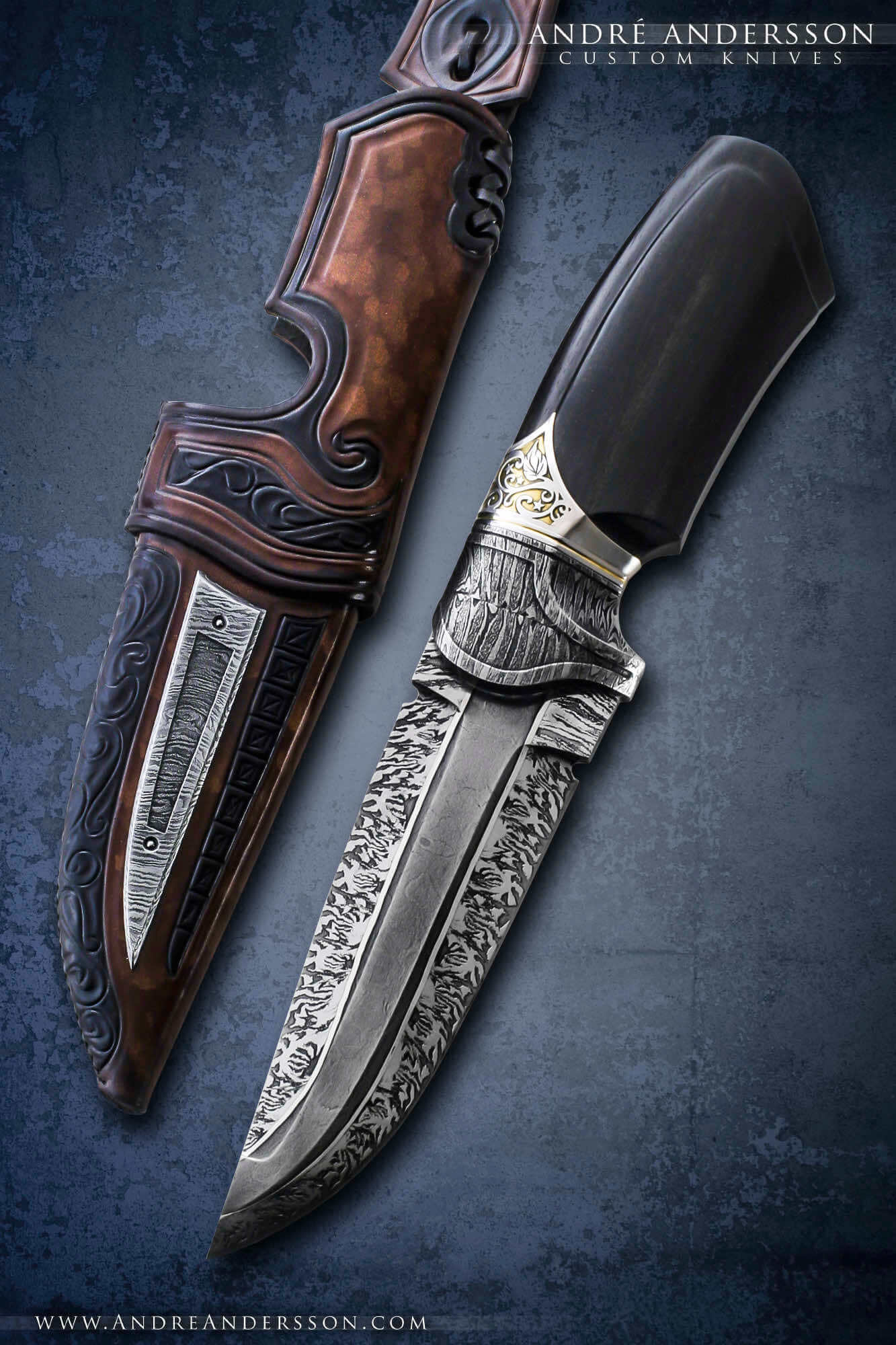
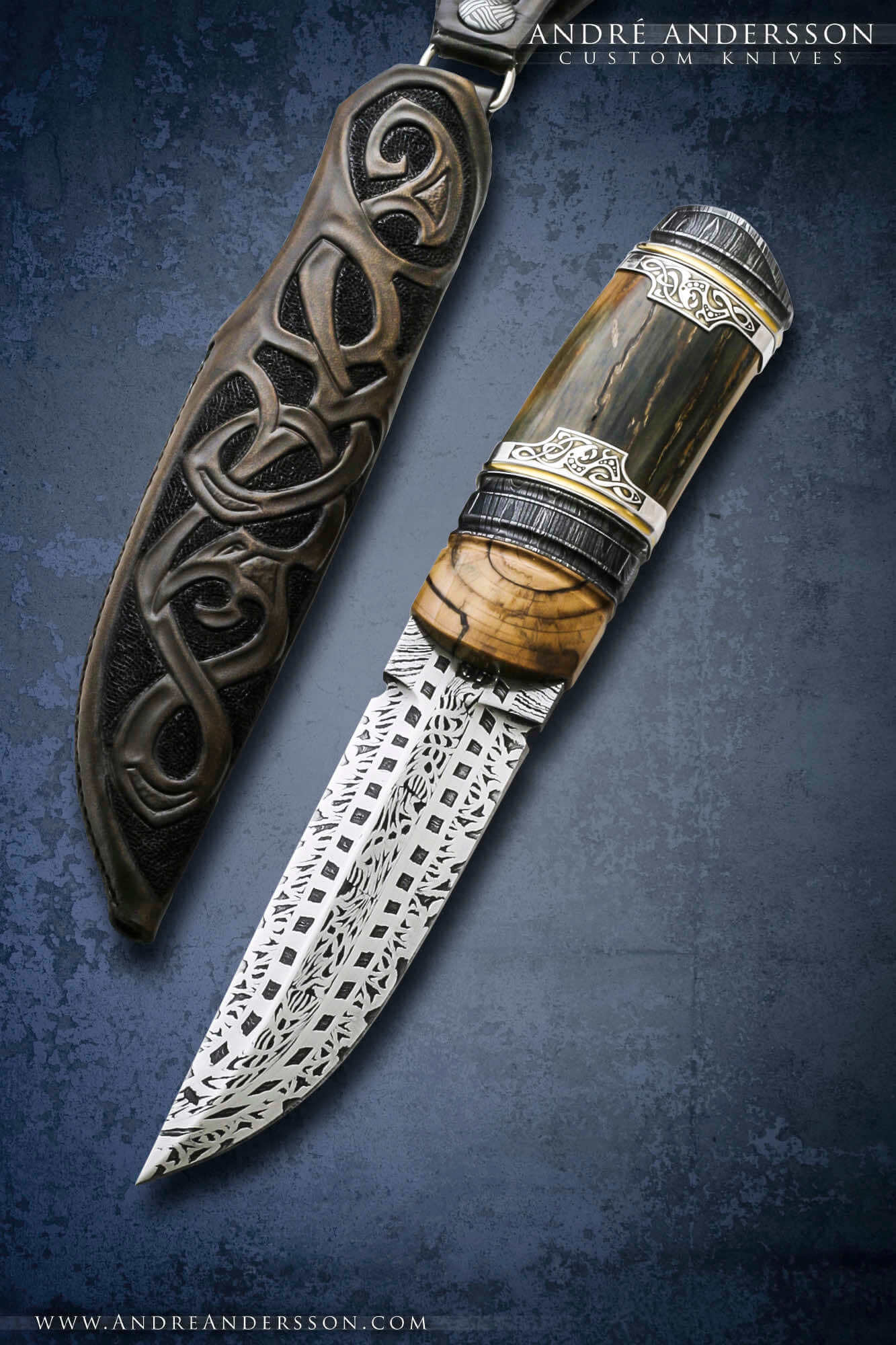
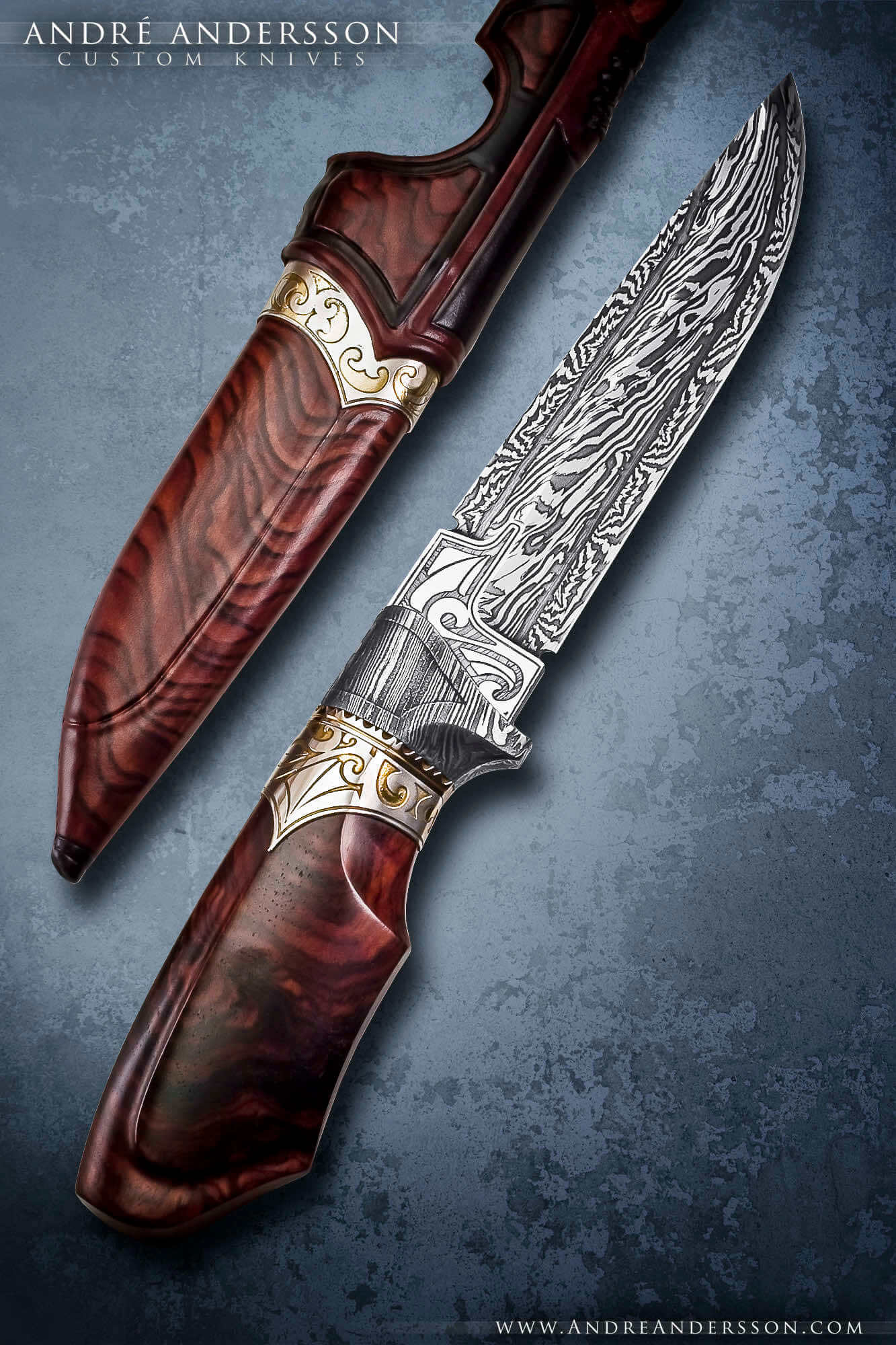
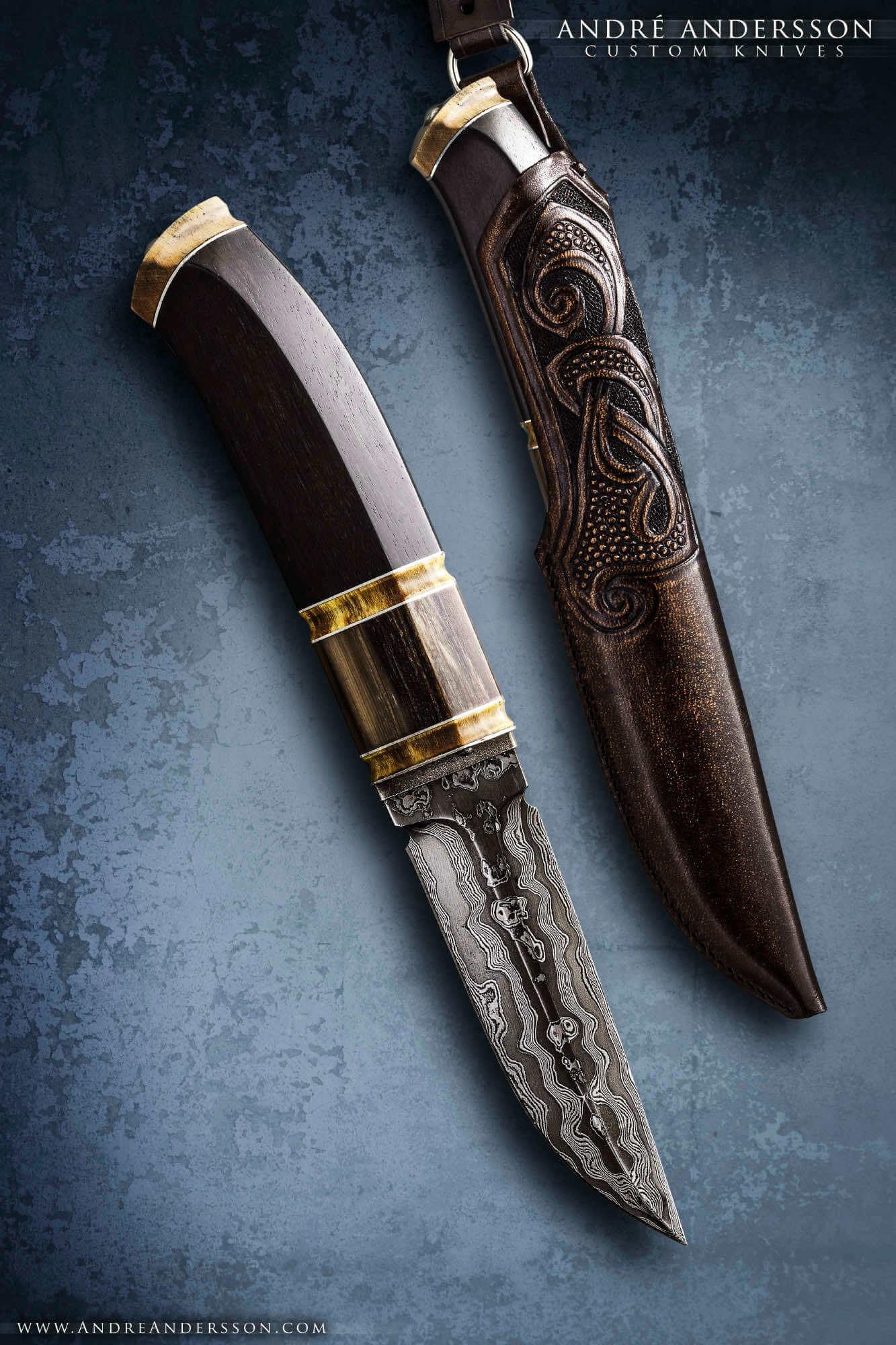
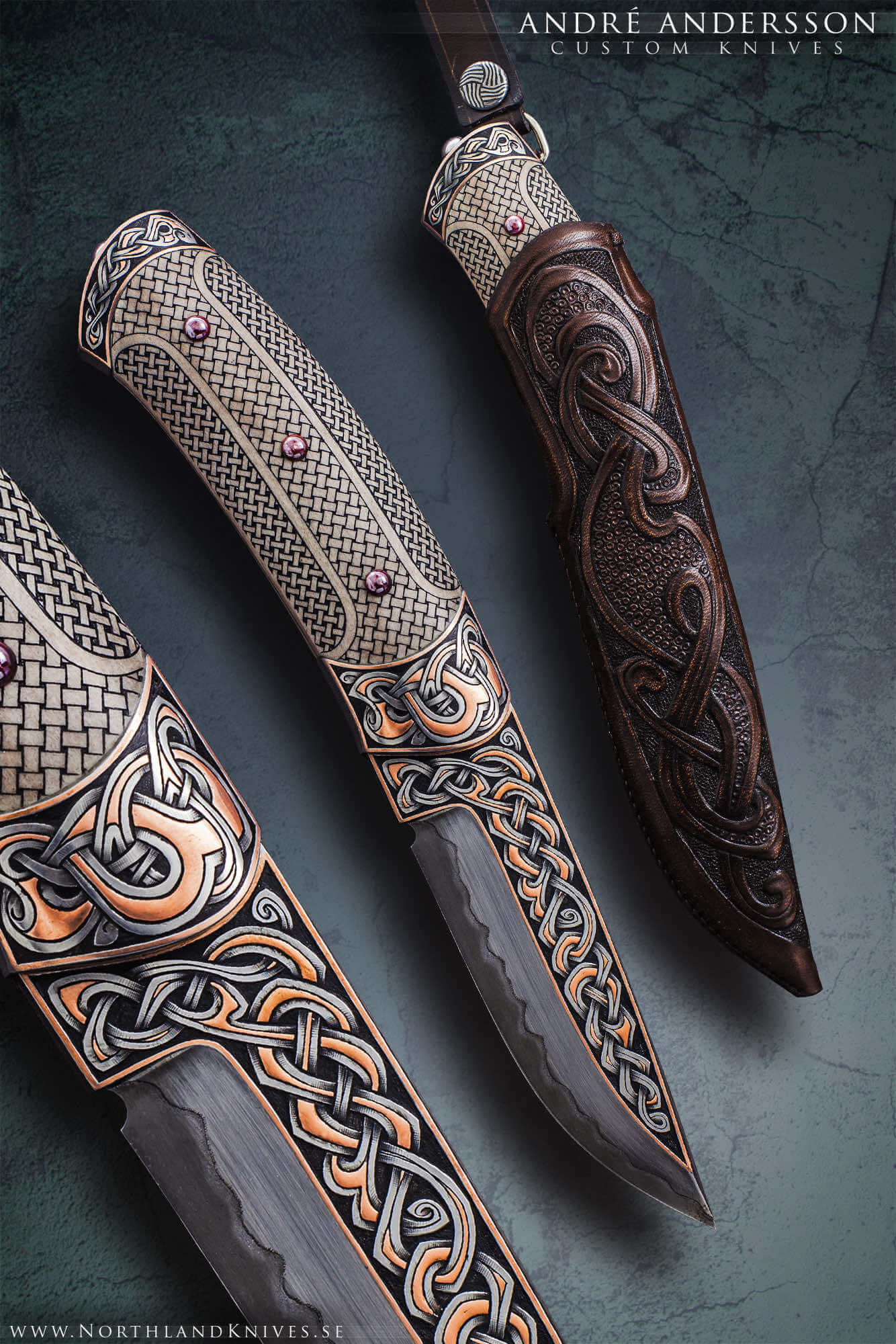
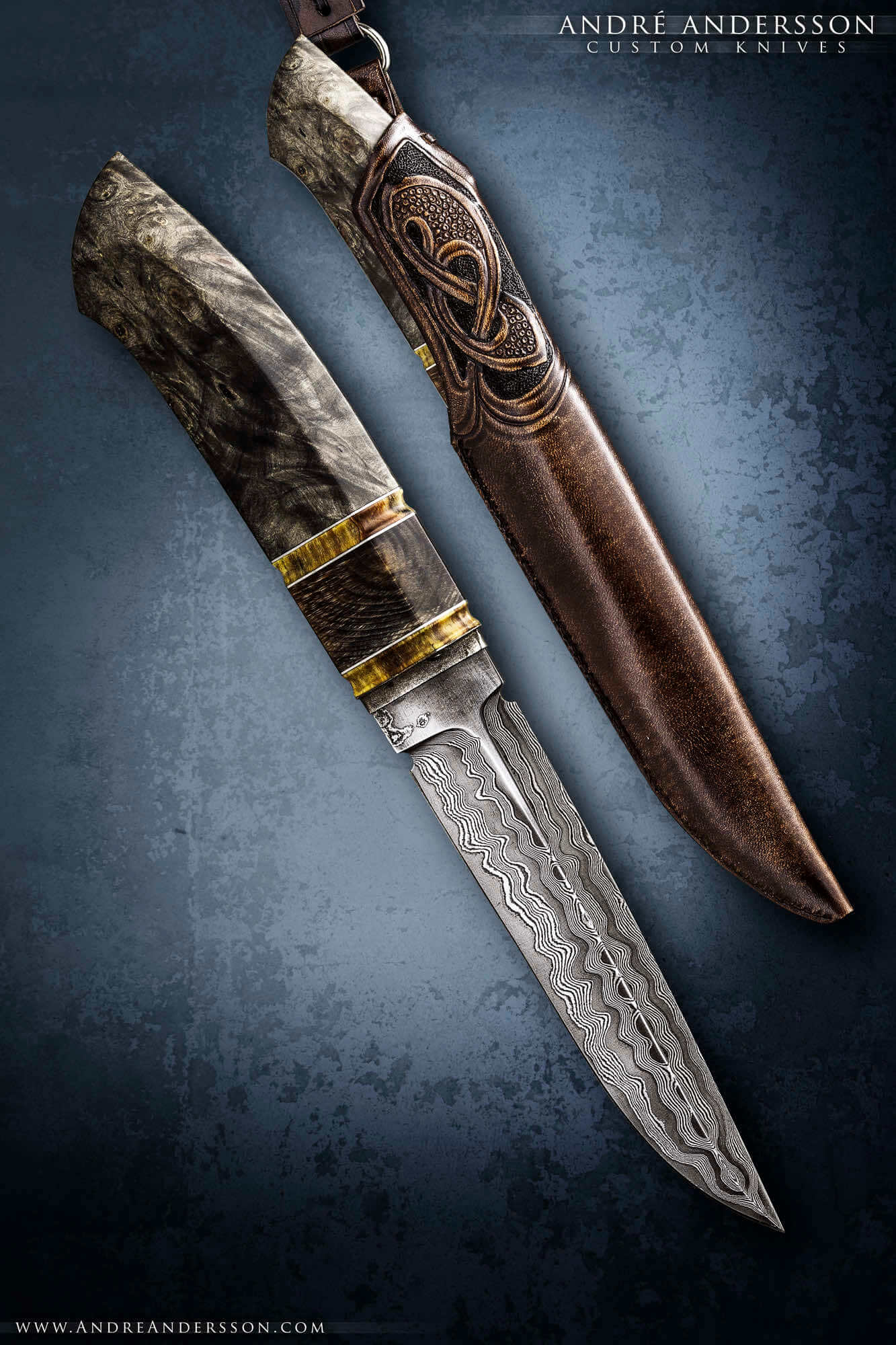
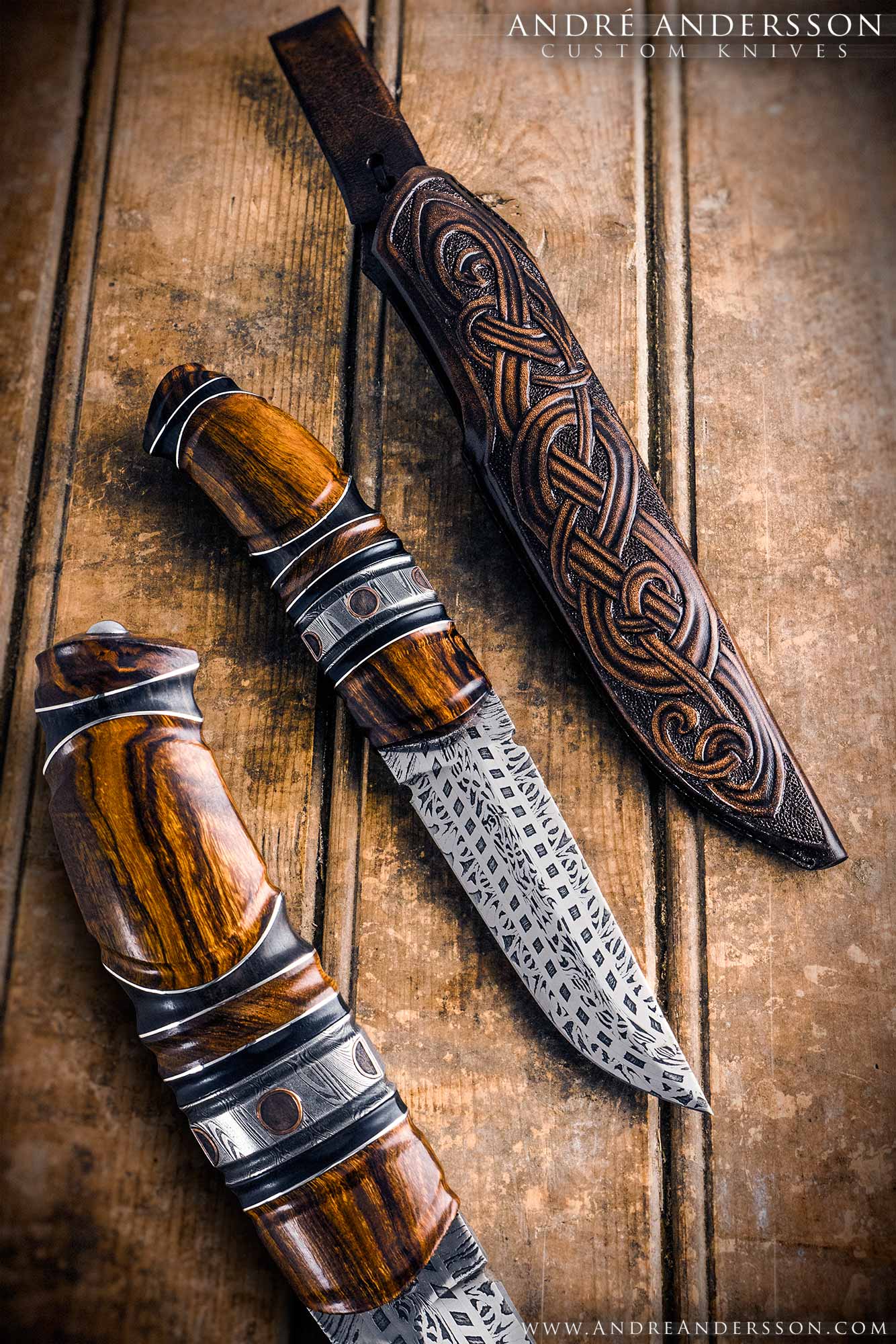
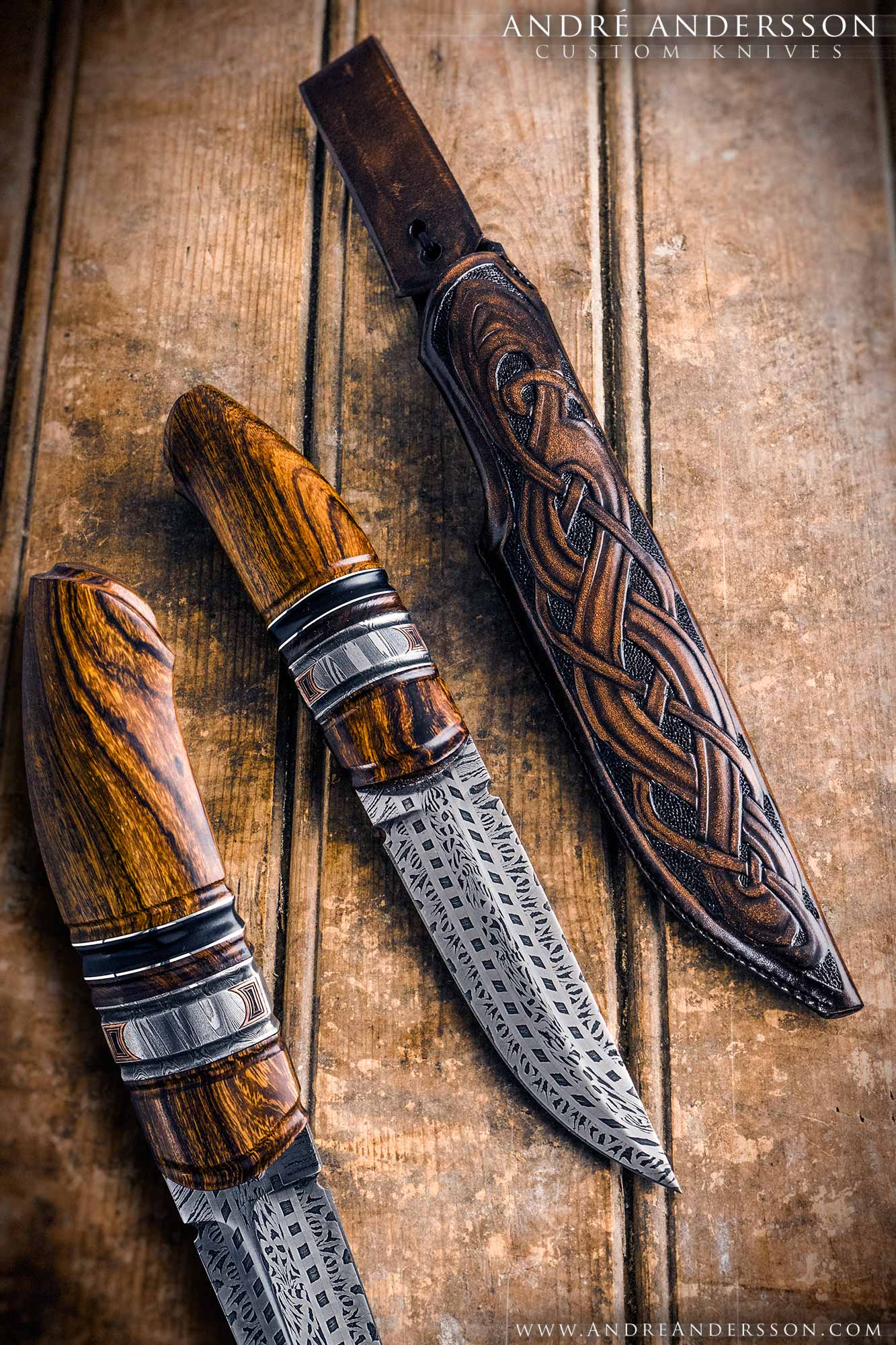
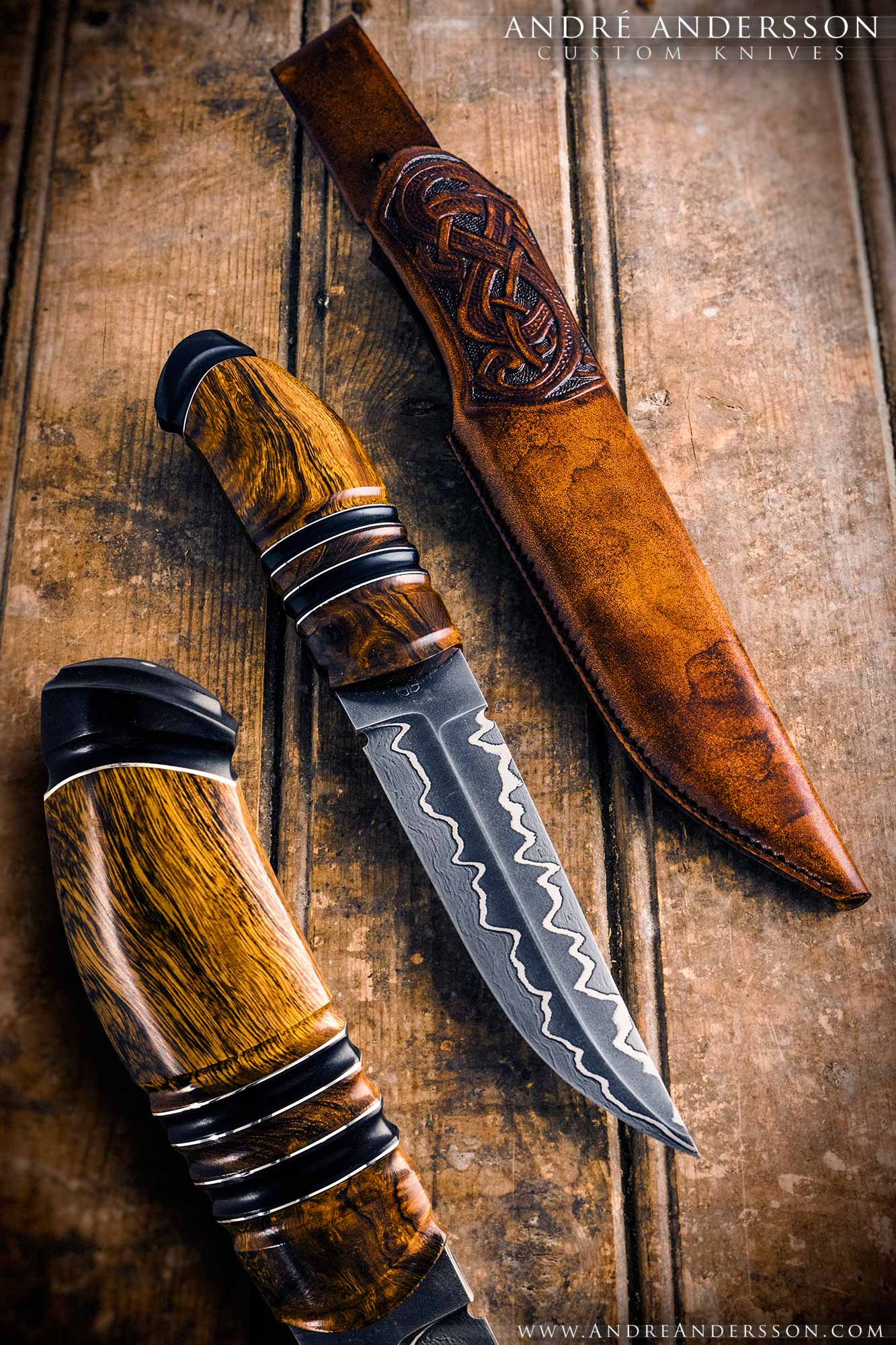
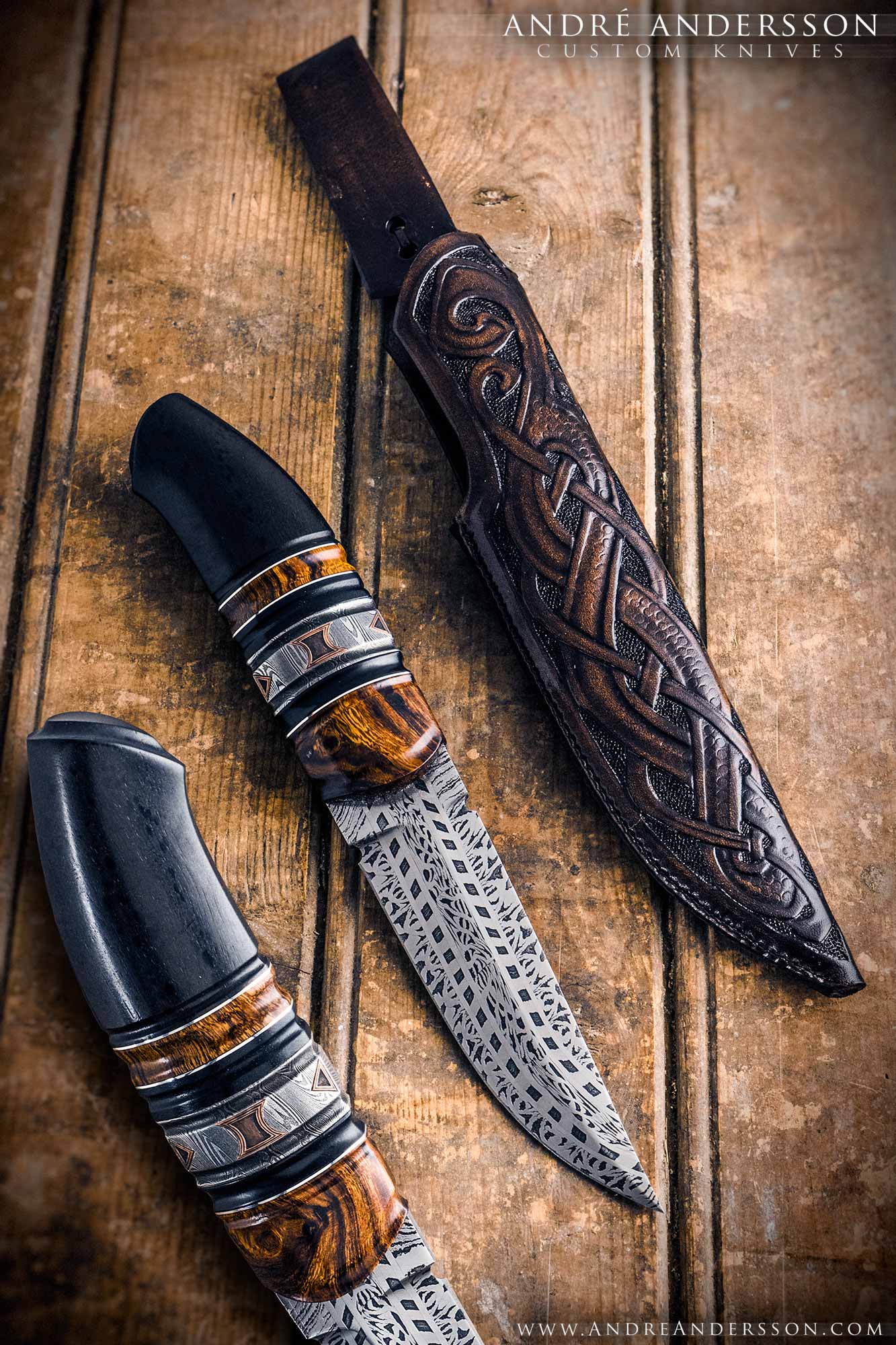
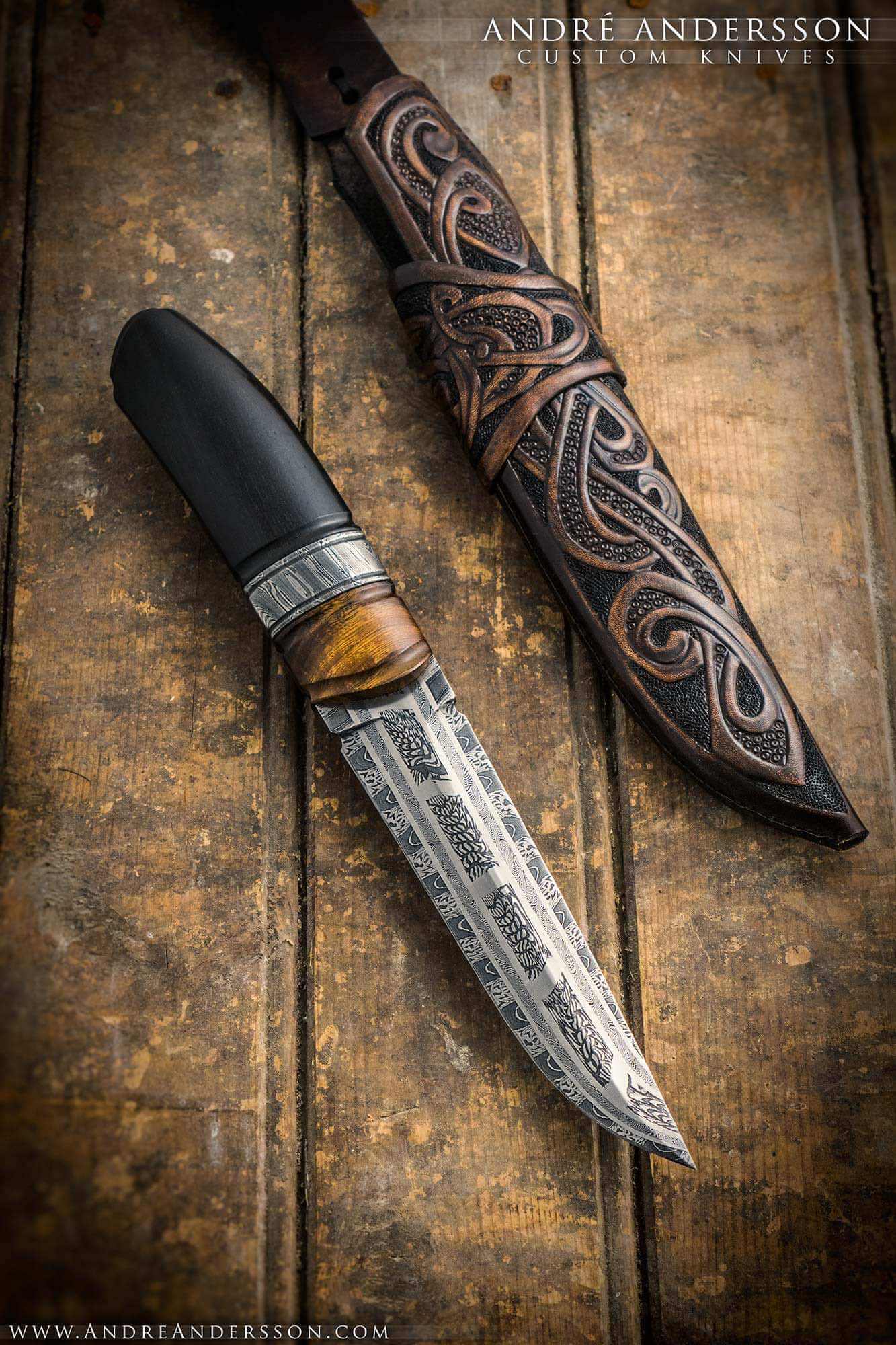
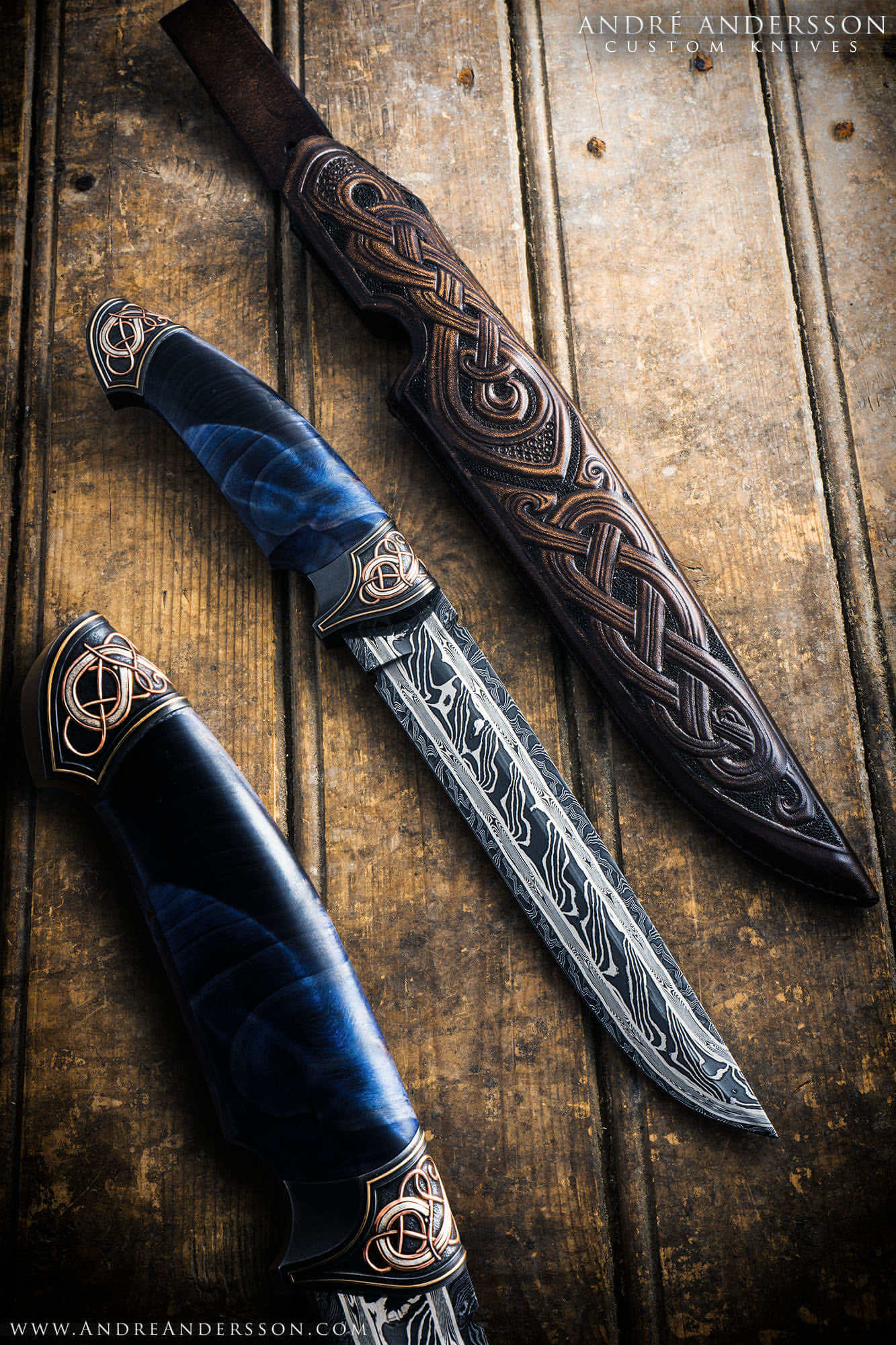
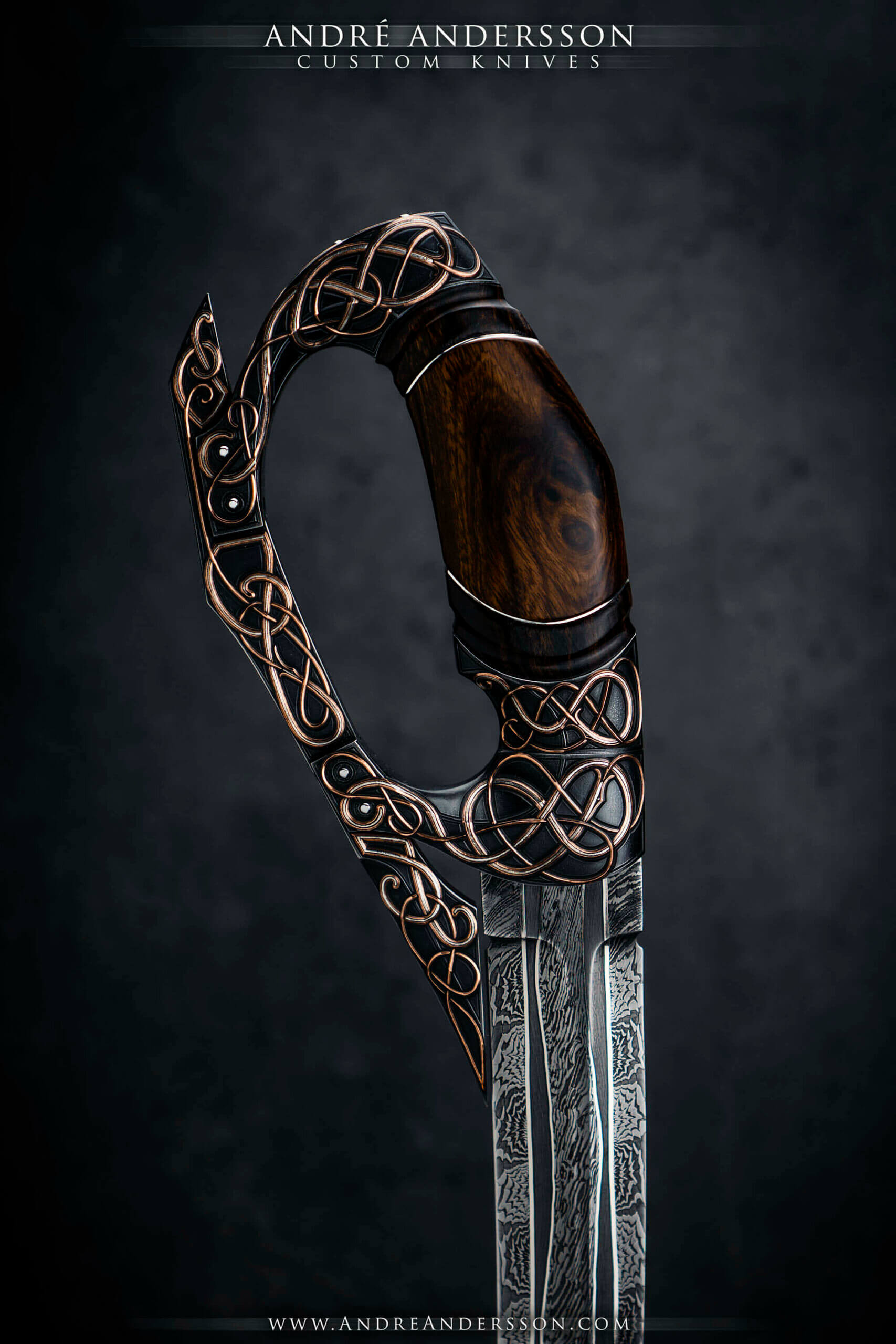
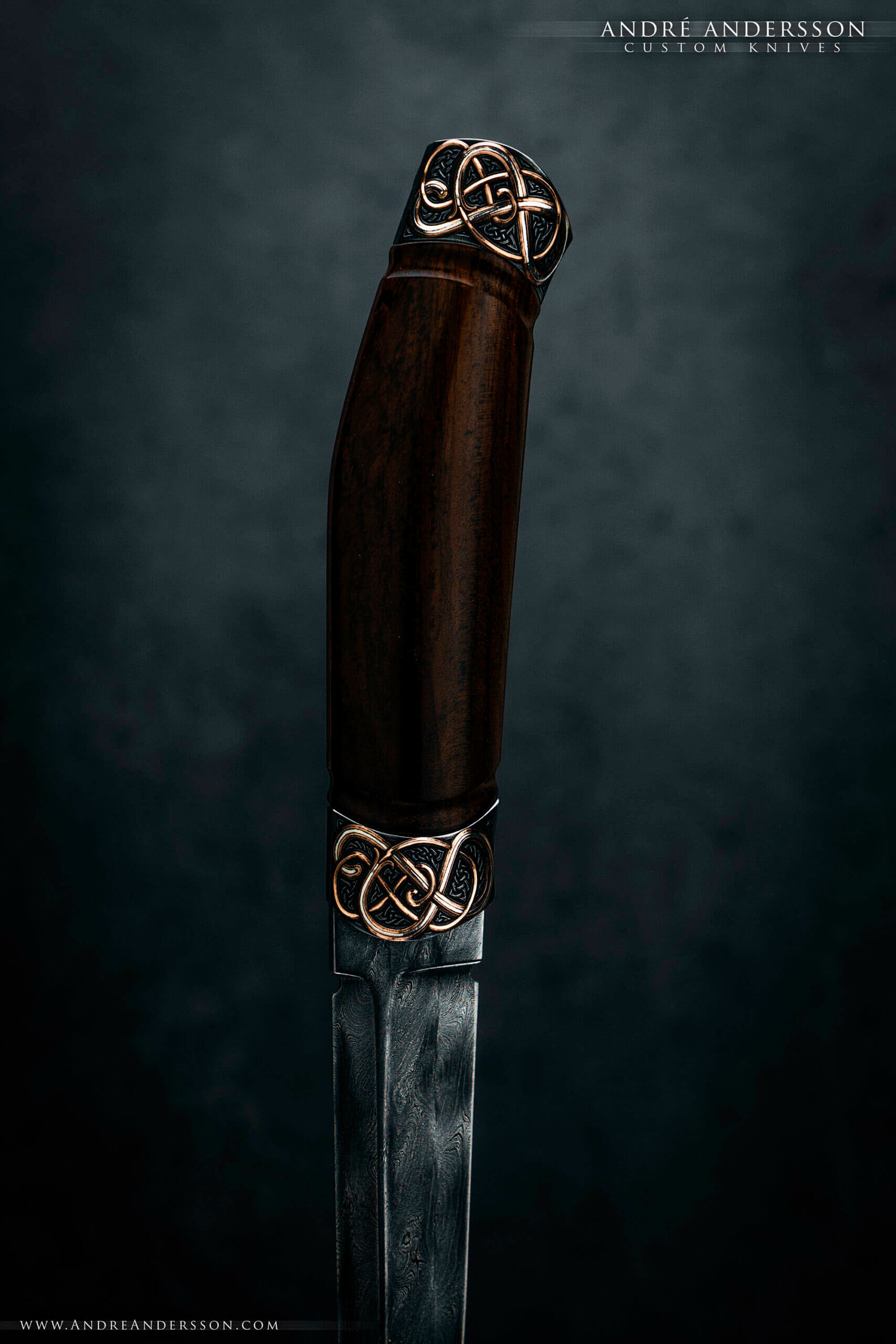
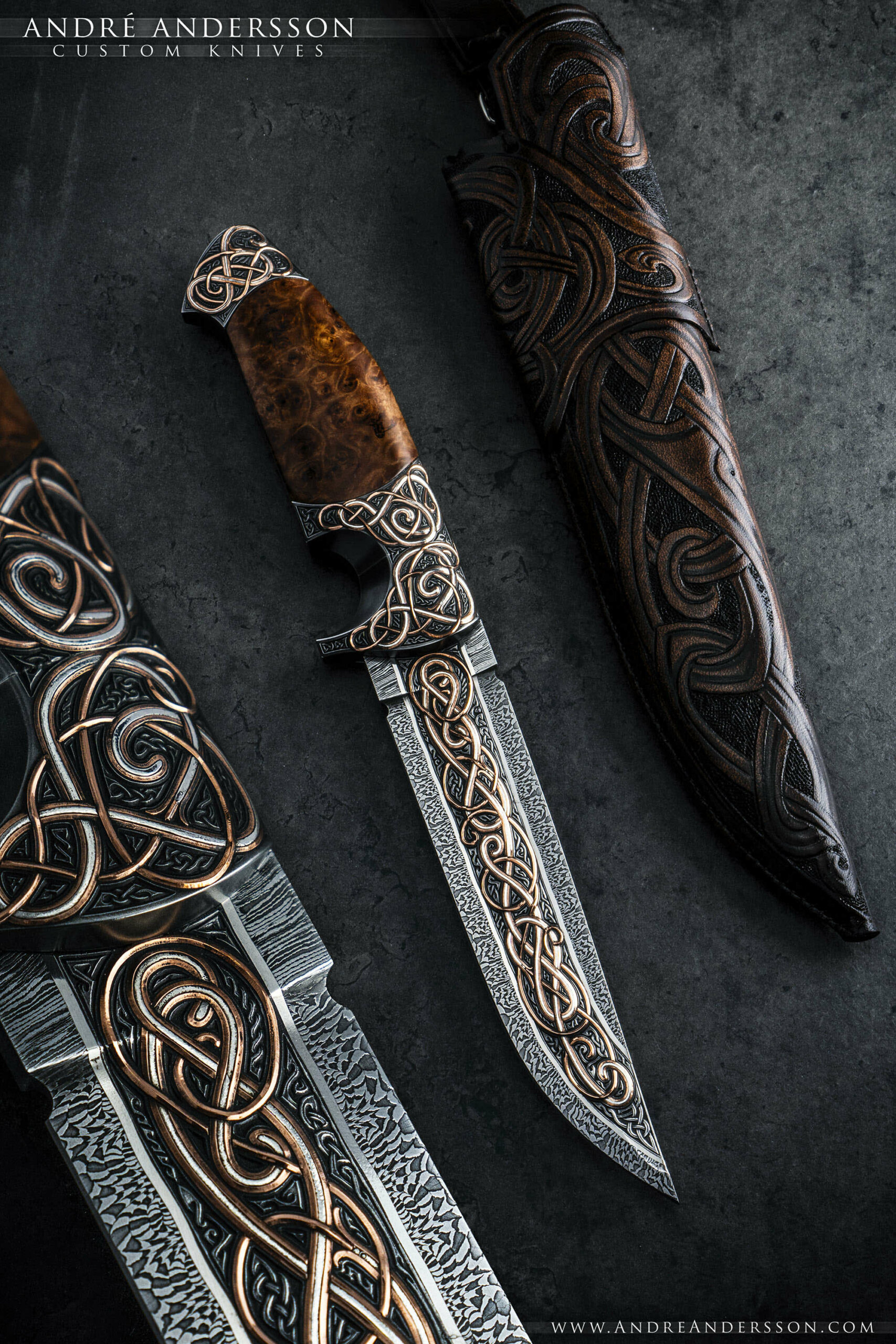
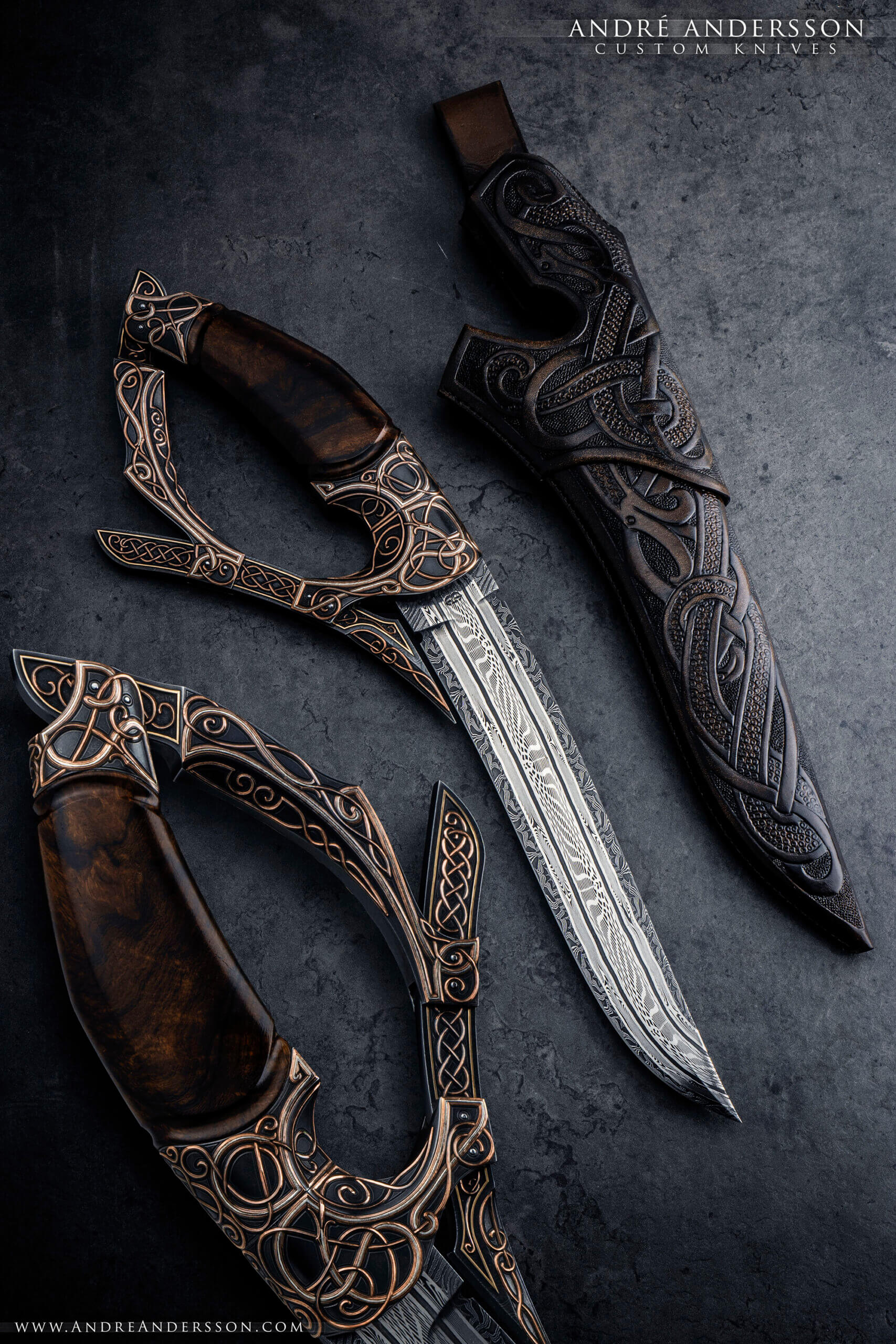
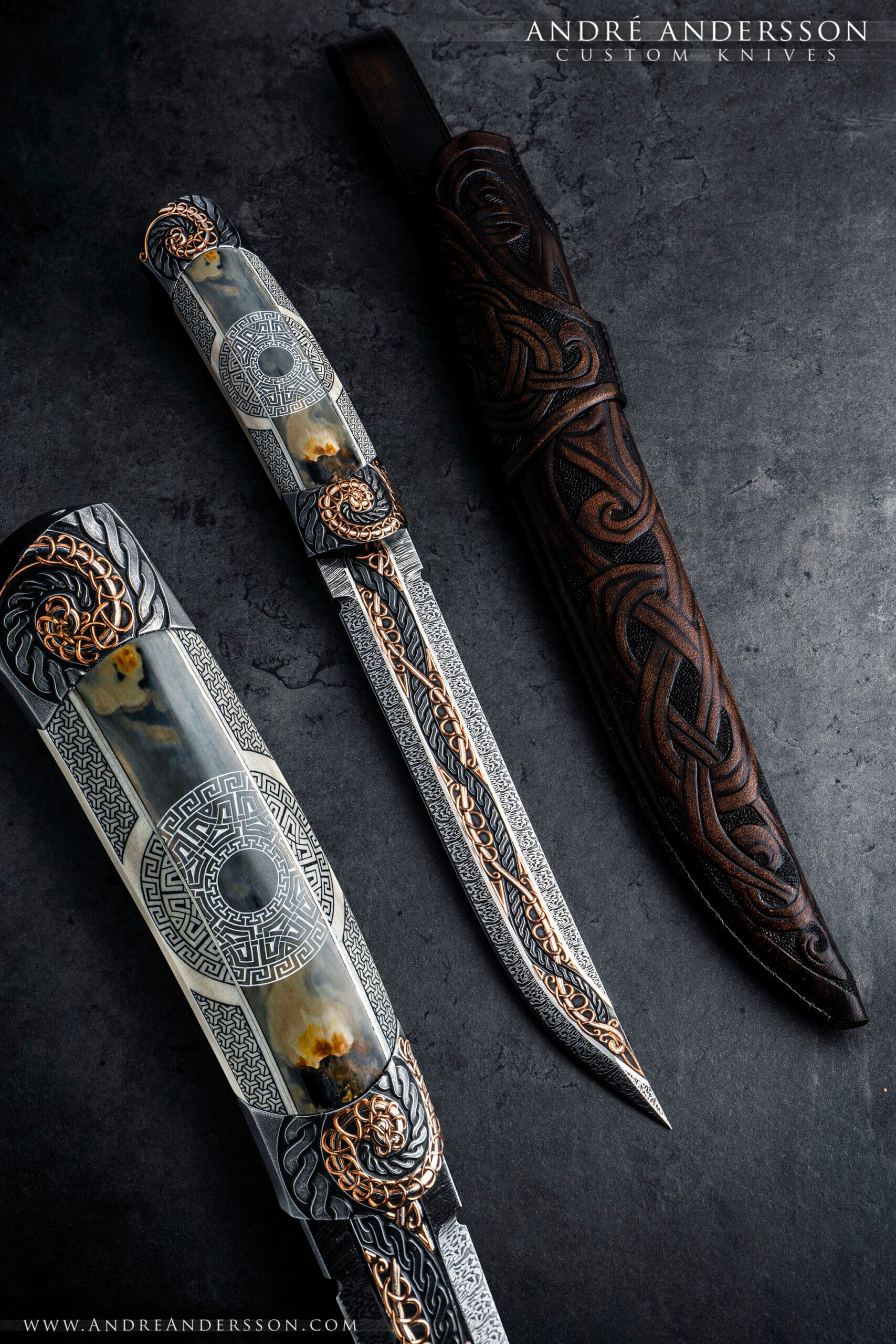
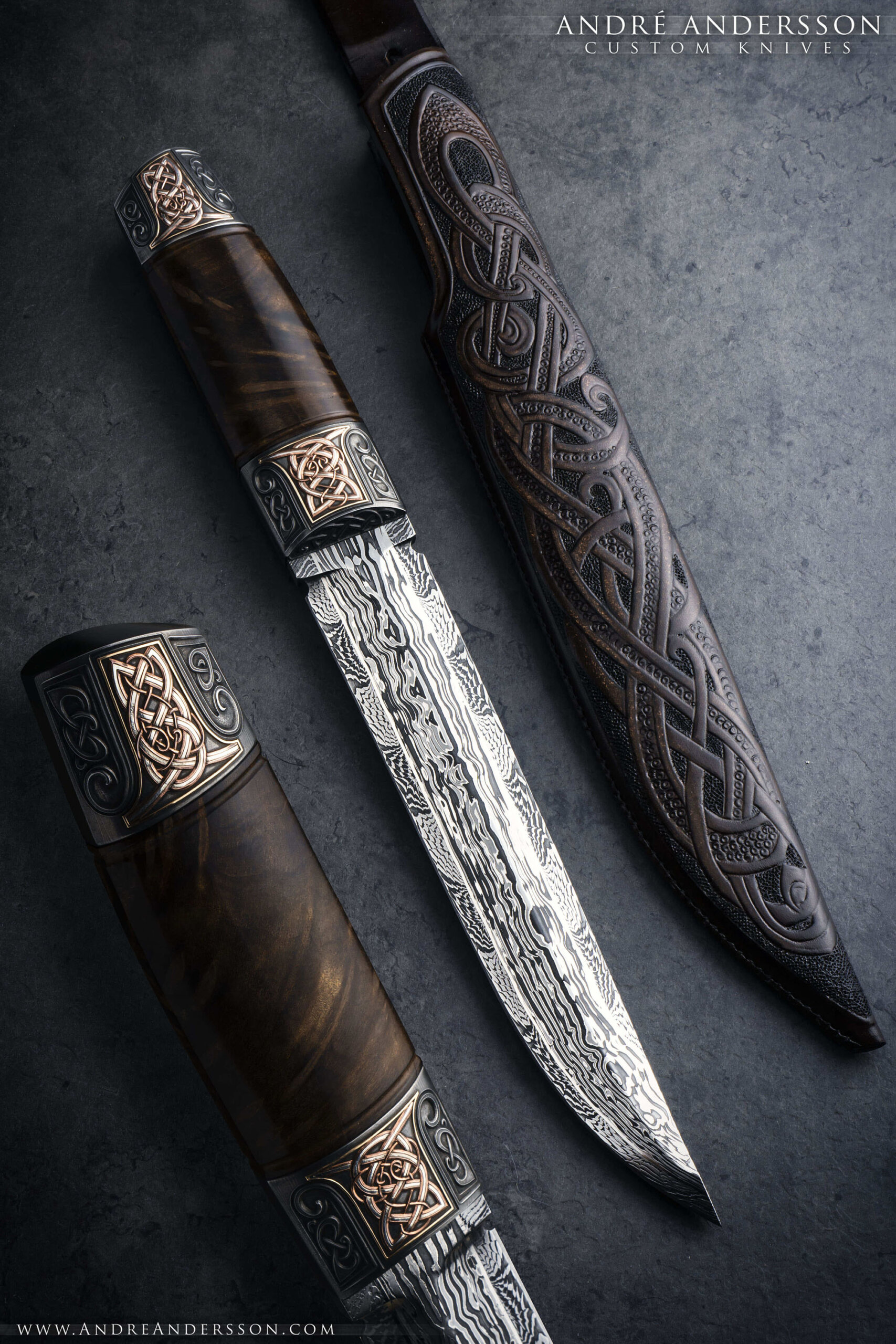
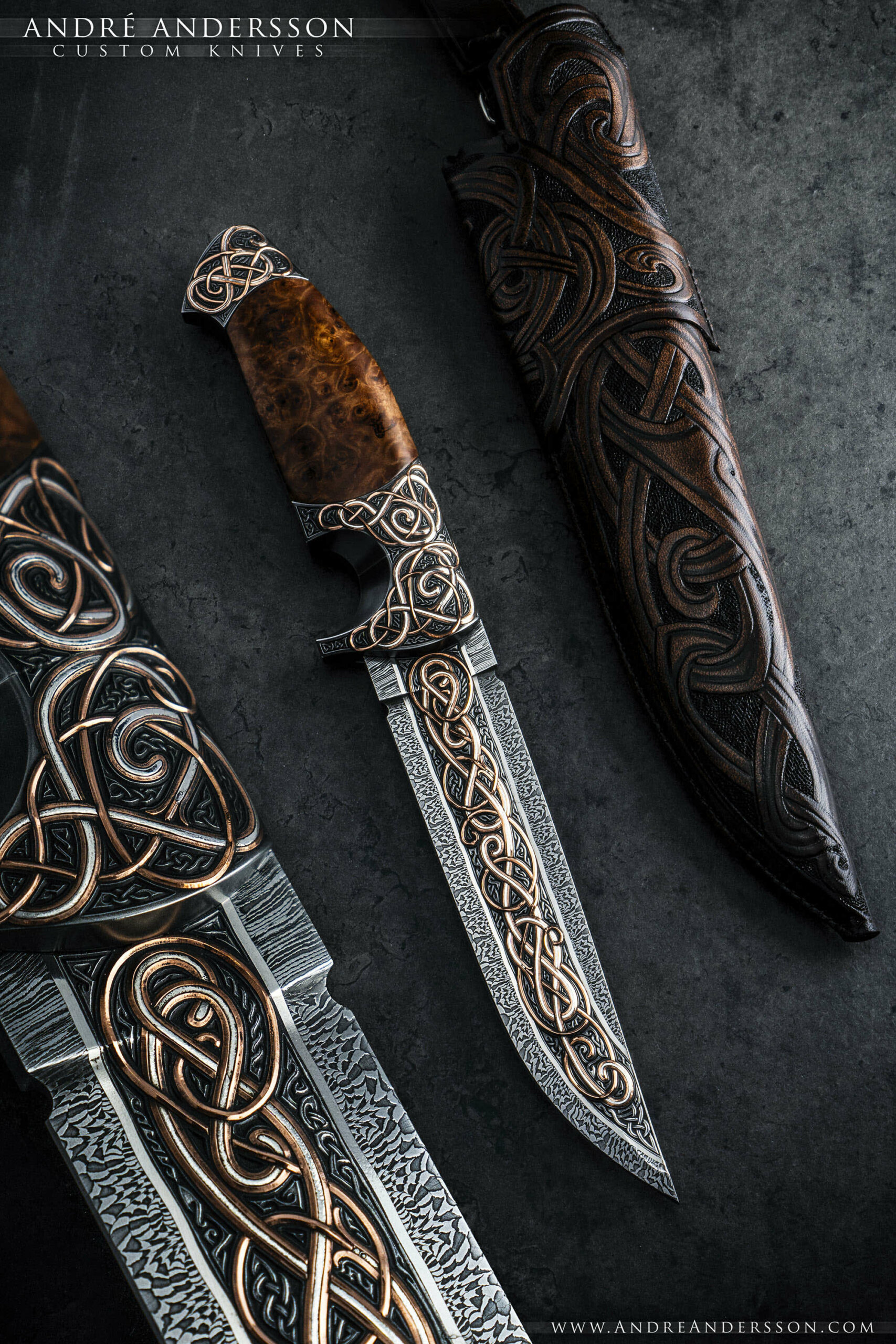
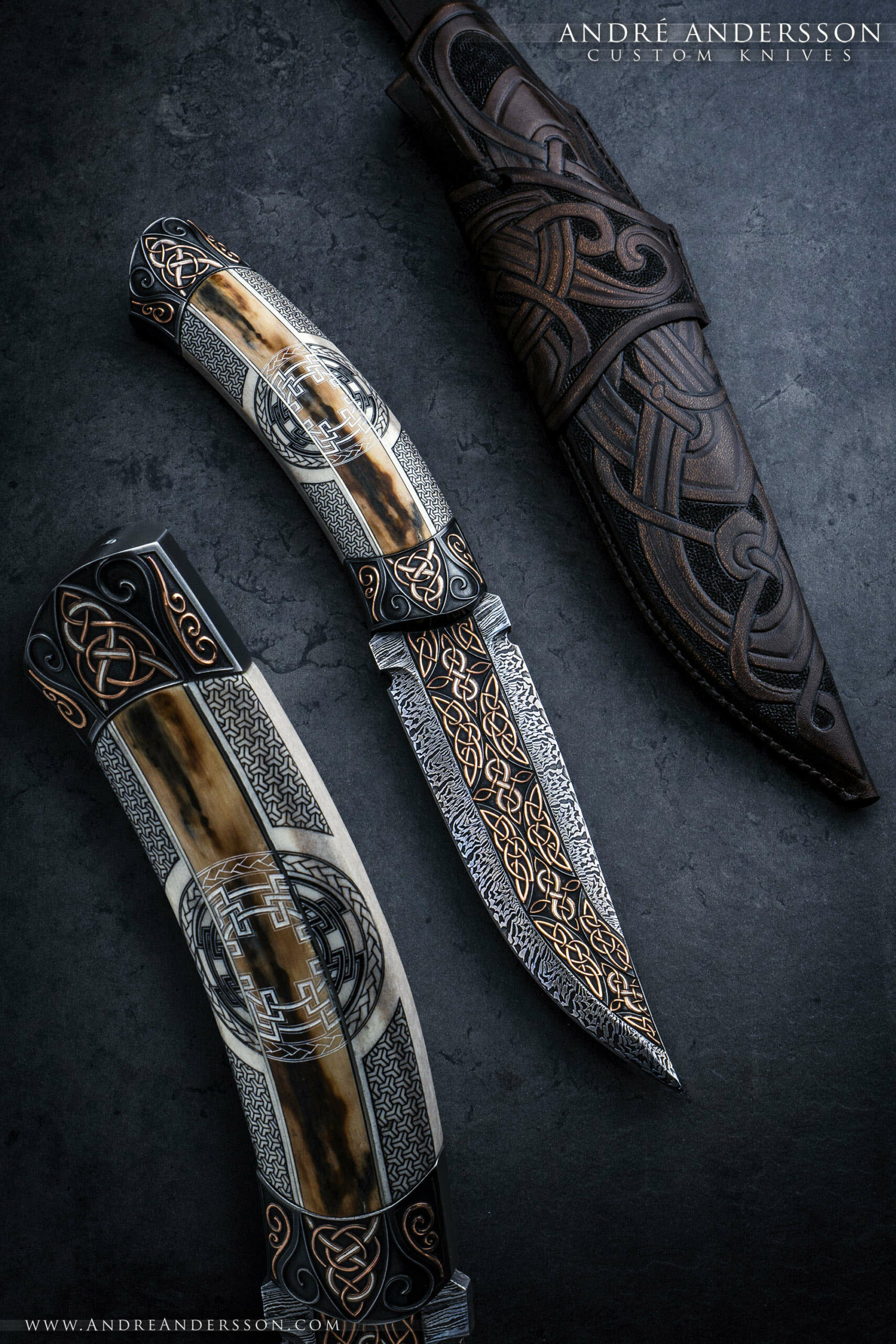
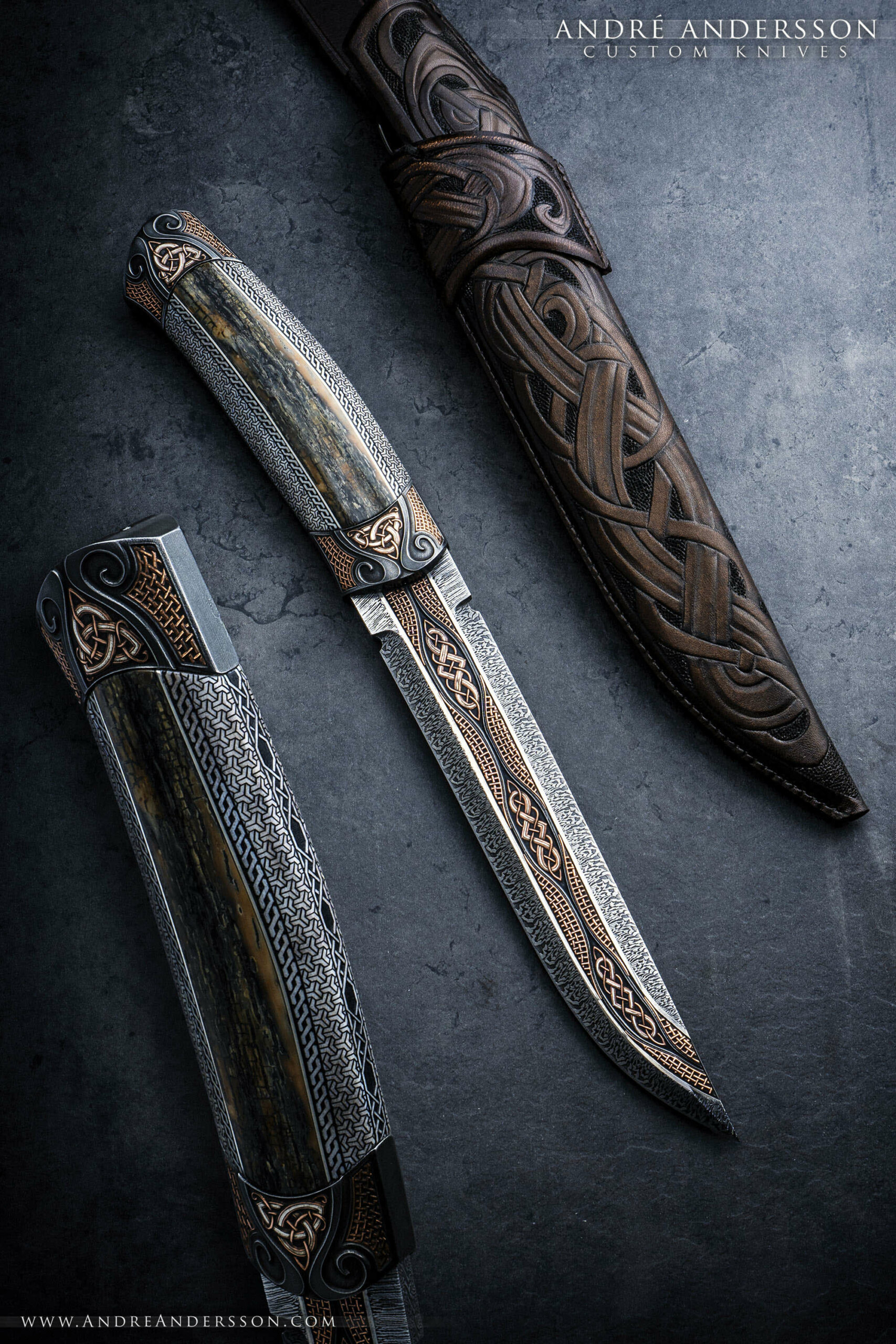
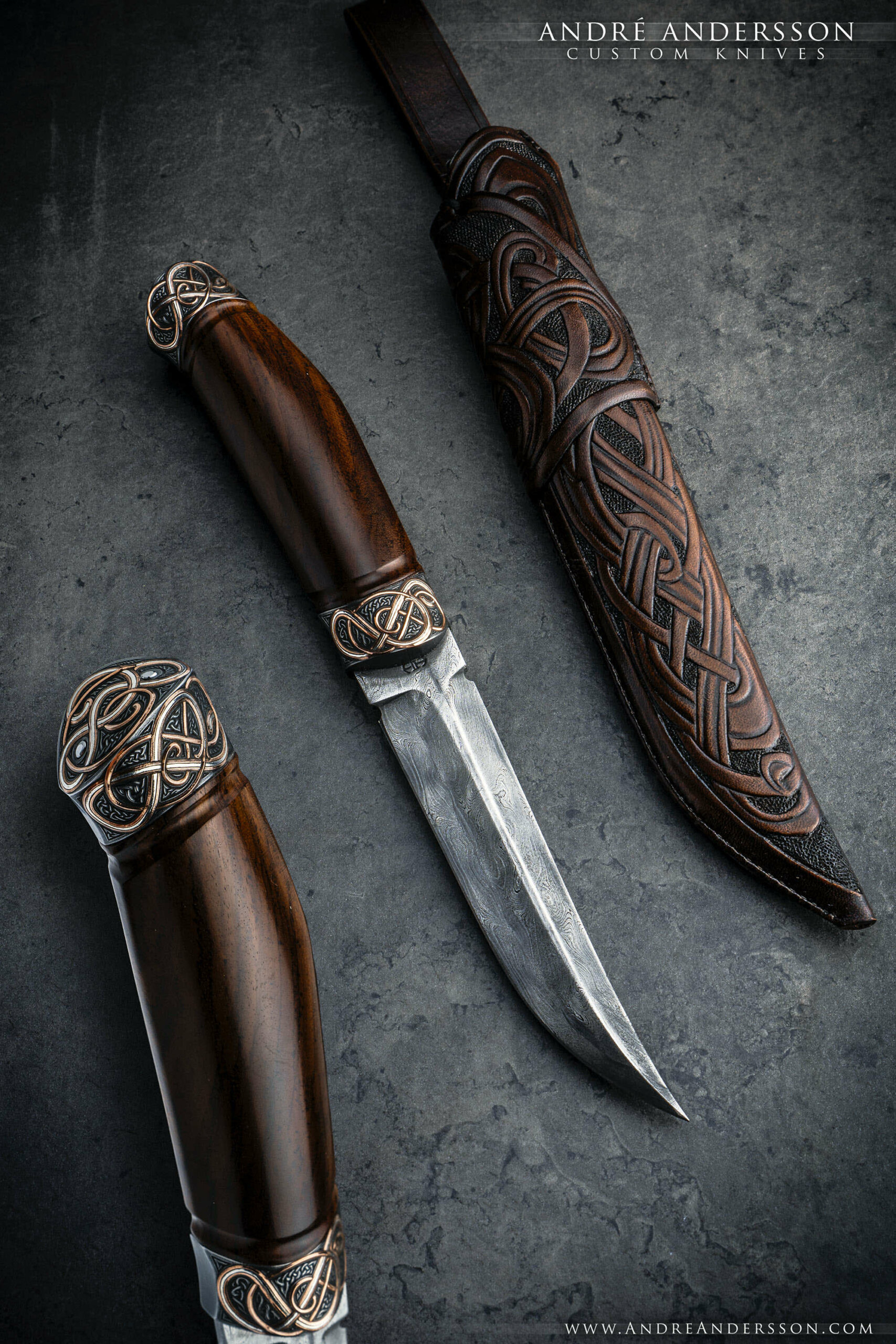
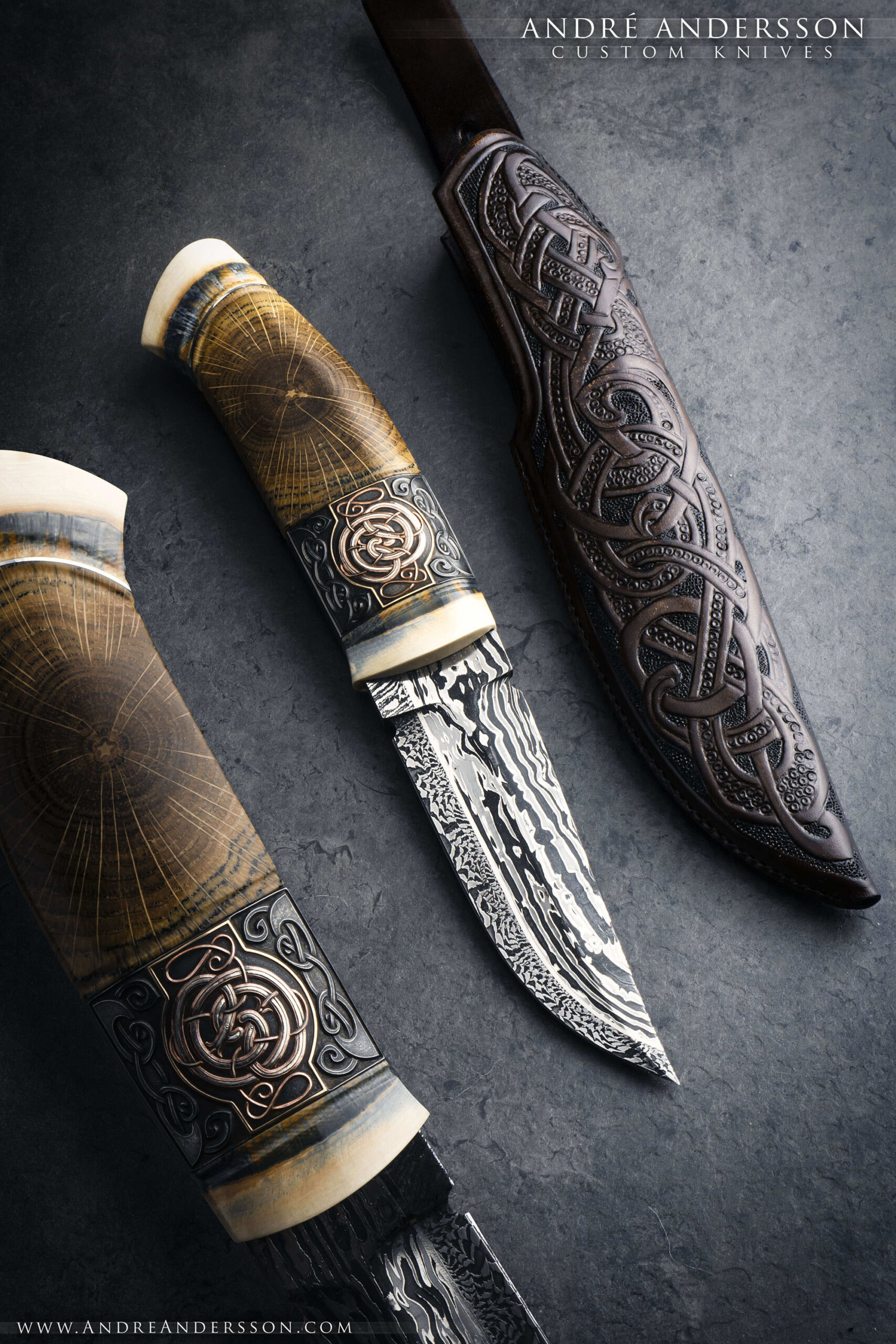
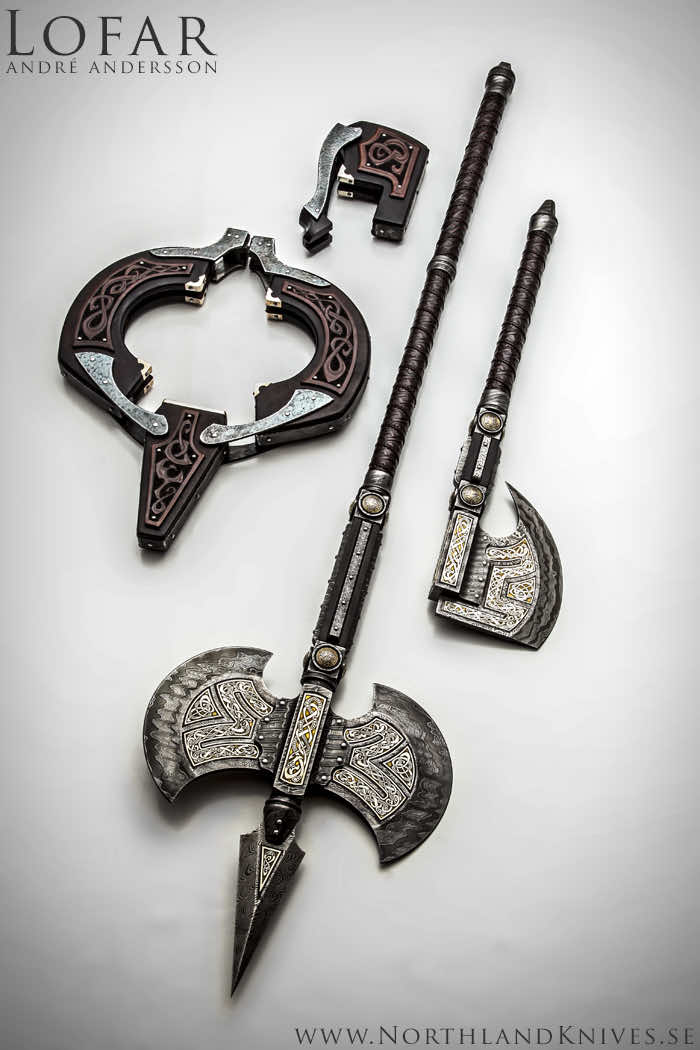
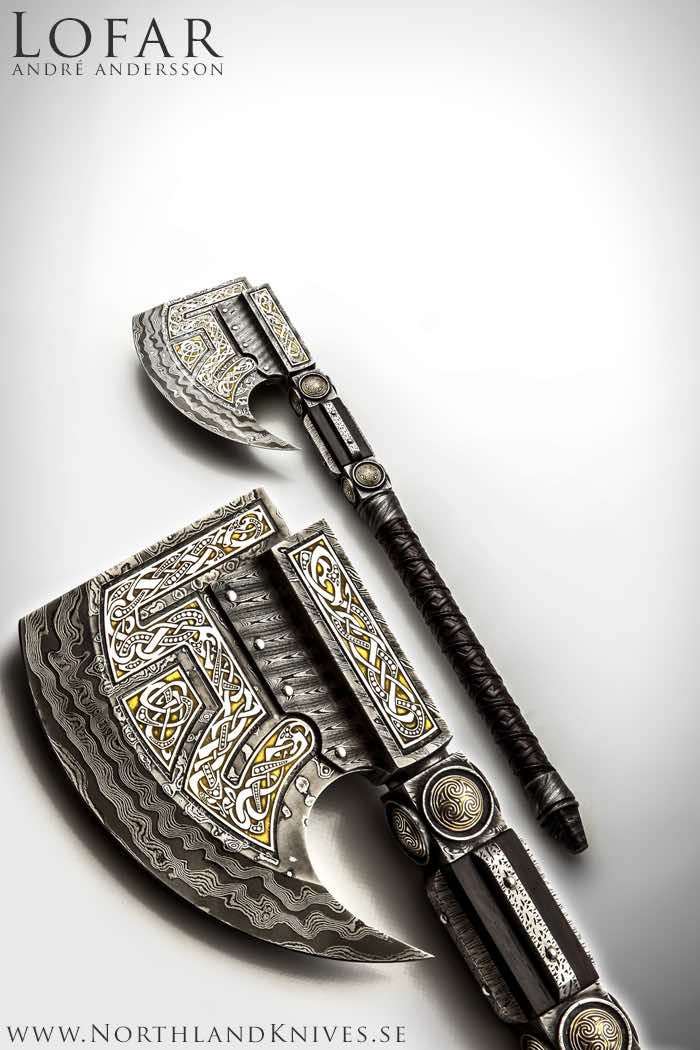
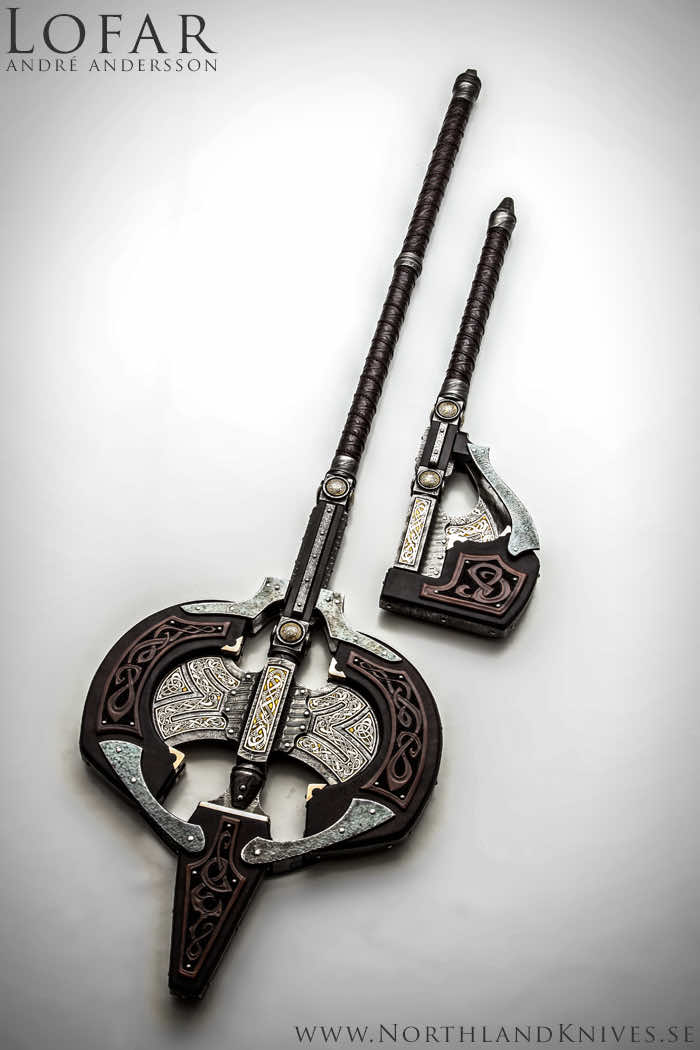
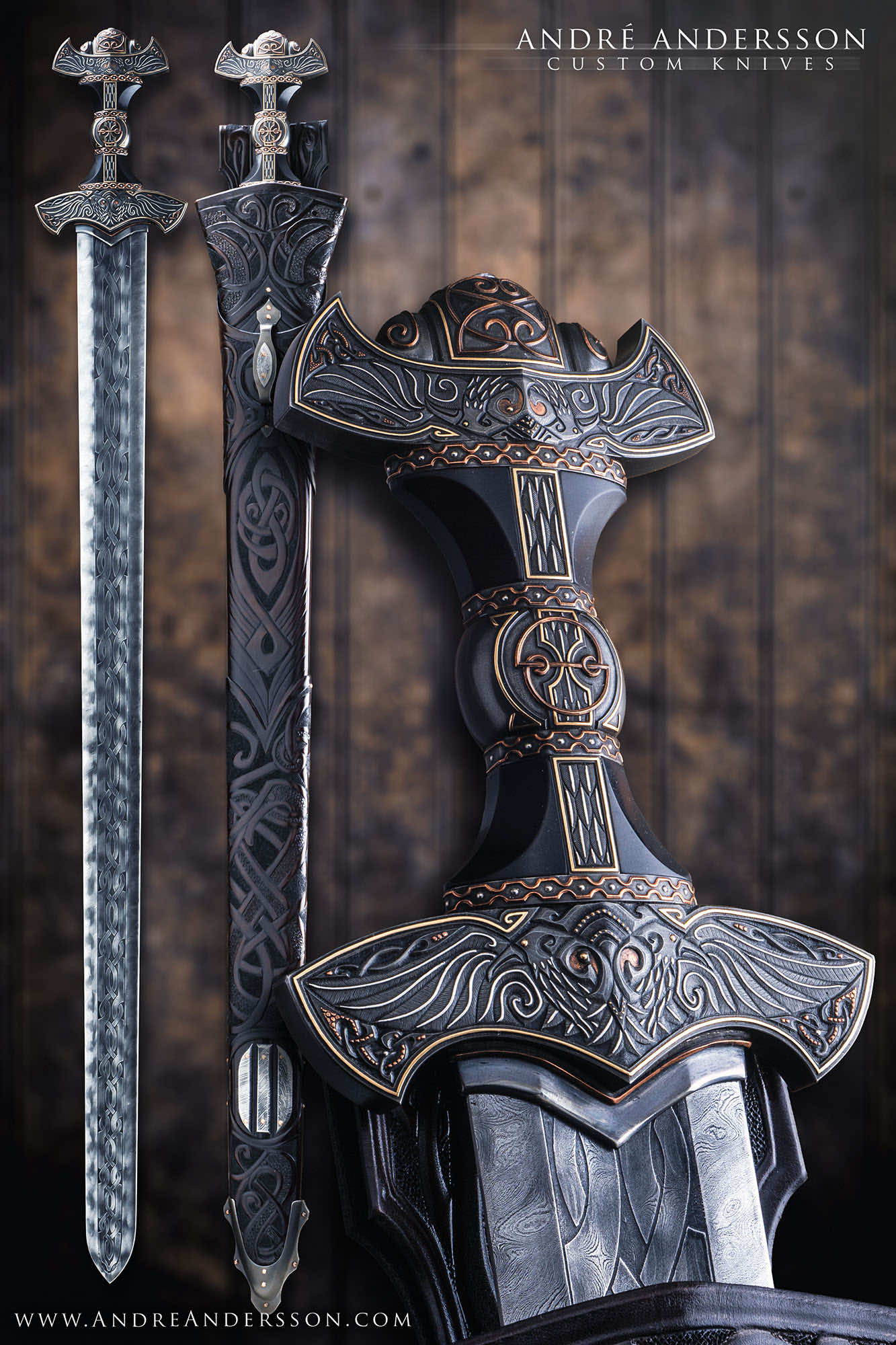
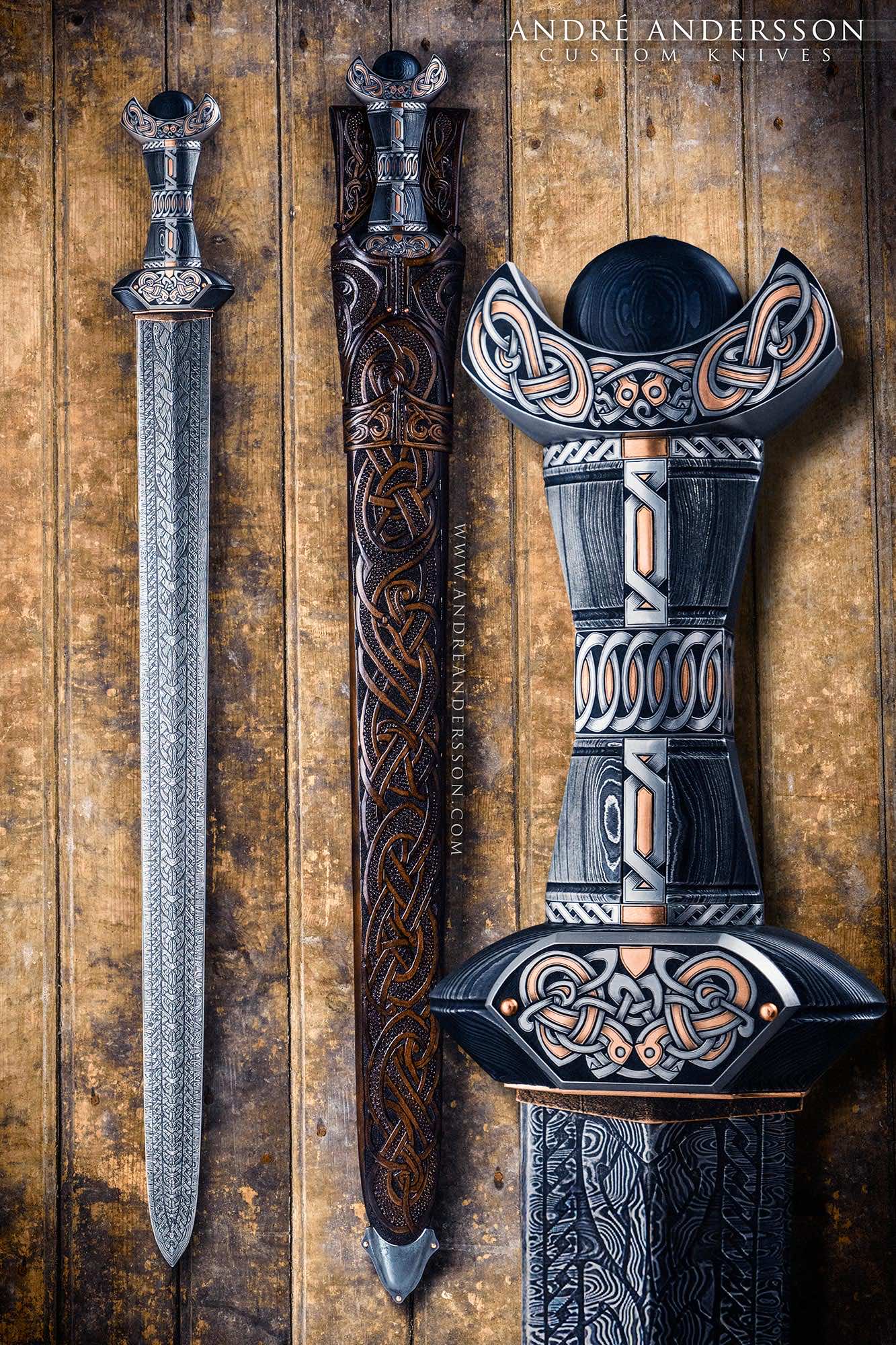
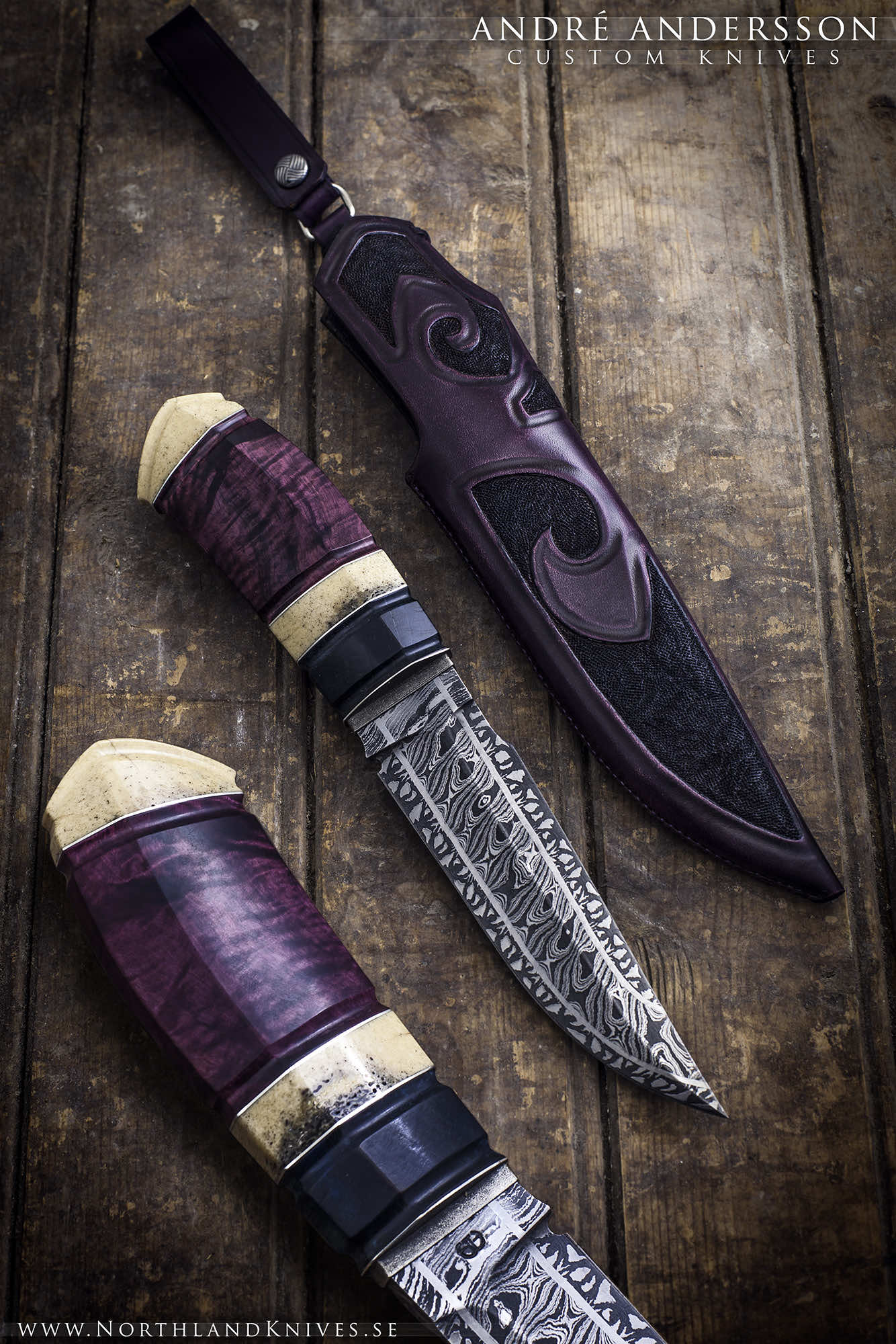
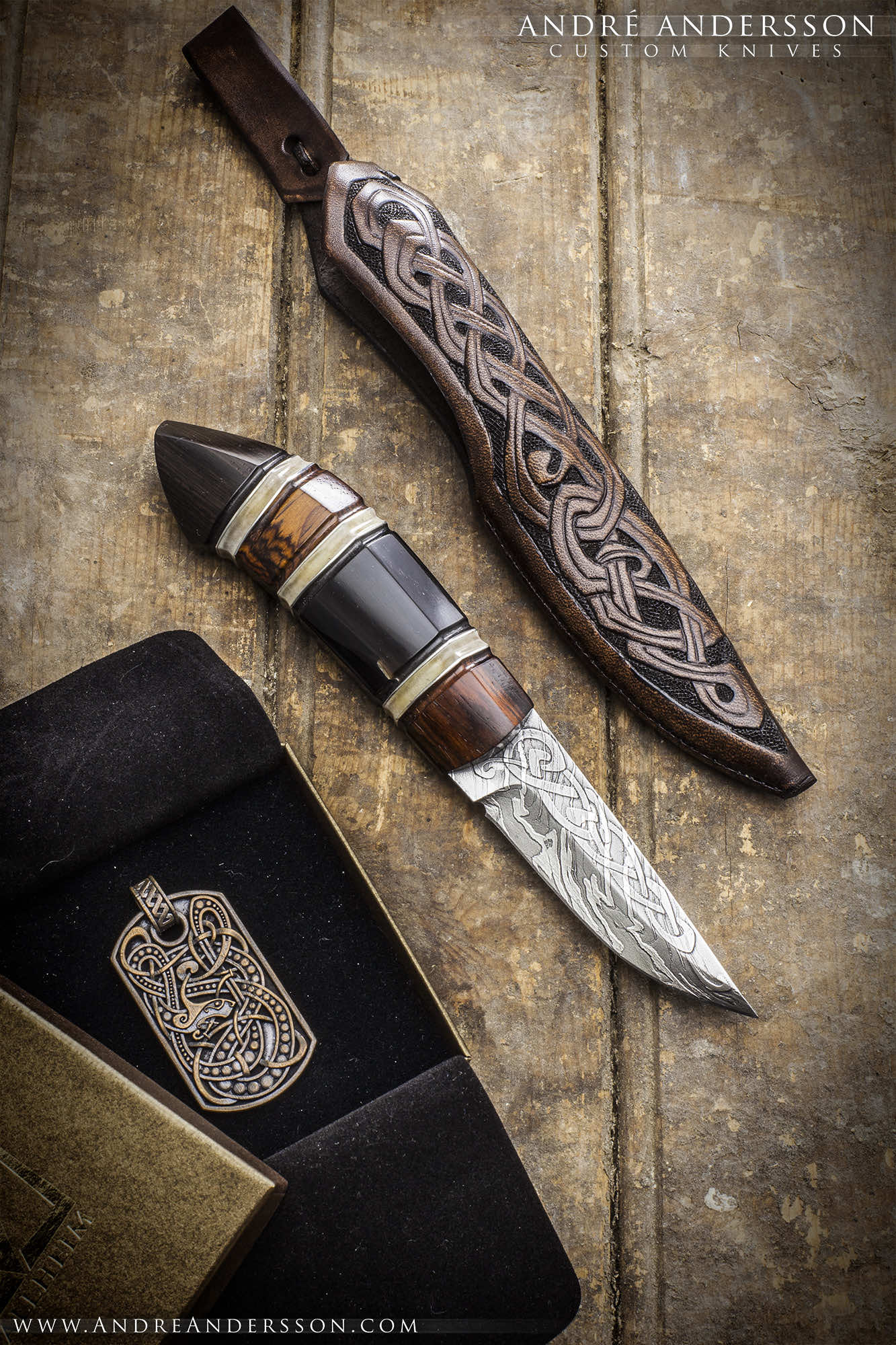
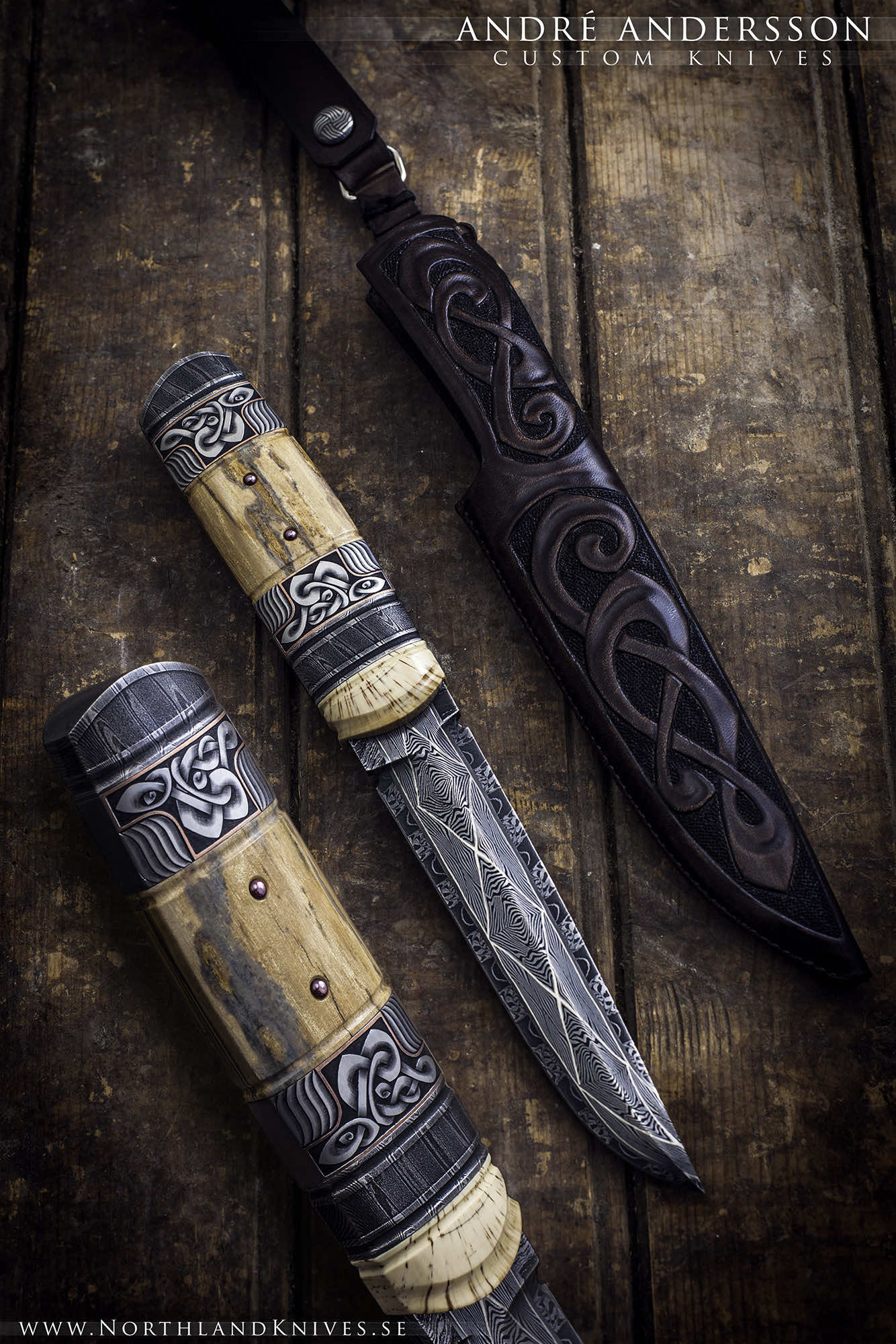
Hello Philippe, When we look at these photos we can only say that André ANDERSSON is not a man, it is Volund the master of the reincarnated Viking forge lined with a magician. Even the simplest of his photographed knives is beautiful.
I dare imagine how many hours he spends for each of his creations. As many visitors to your site I am far from being able to offer one of his creations. But if one day a book is published about this magician of the Nordic knives I will buy it and I will take a real pleasure to browse it every day. I don't know if it's the best cutlery in the world (I own two or three books or there are beautiful creations) but it's probably in the top five.
Bravo for this discovery and for your site where you find excellent artisans, lots of inspirations and it is always a pleasure for the eyes.
Amically.