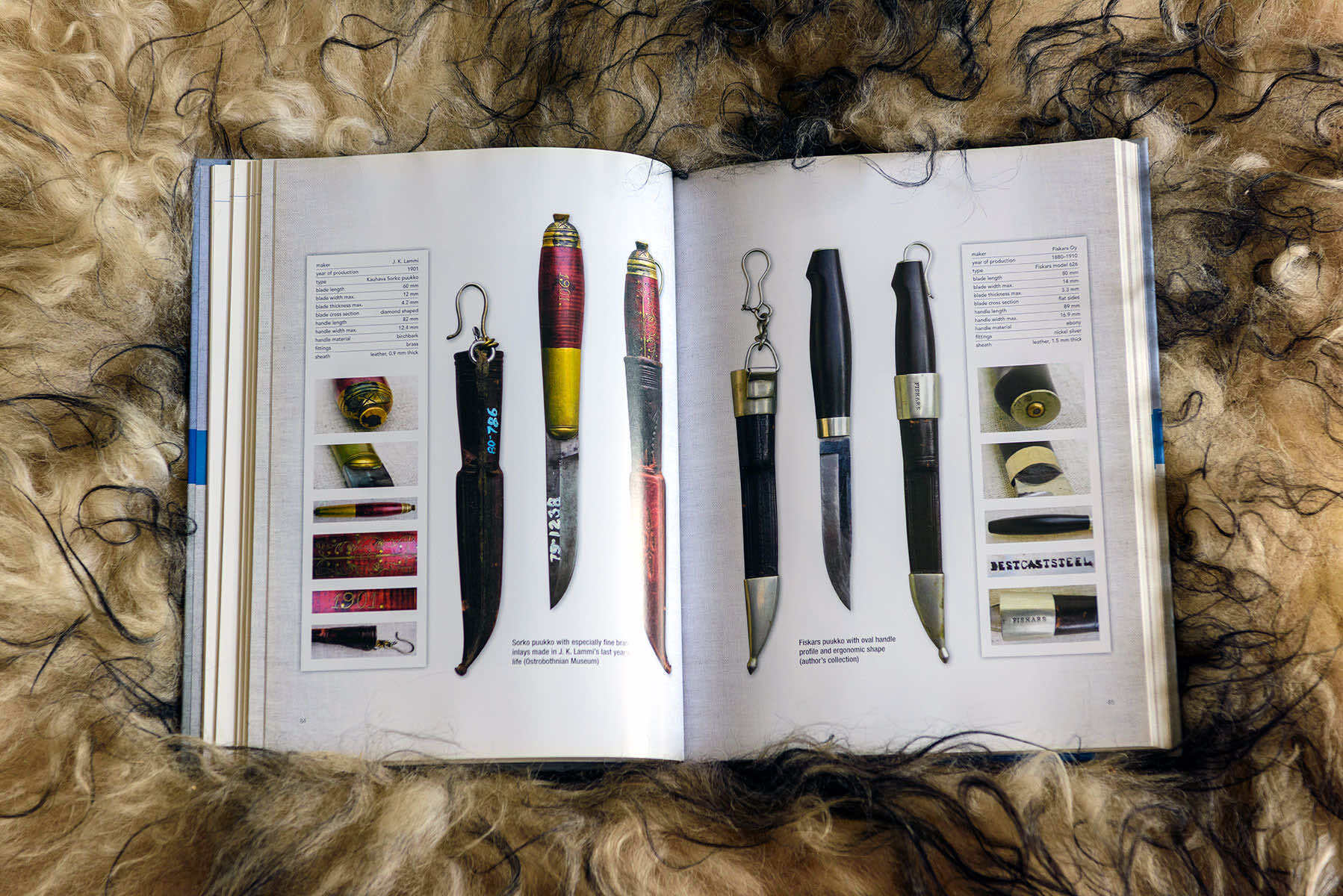
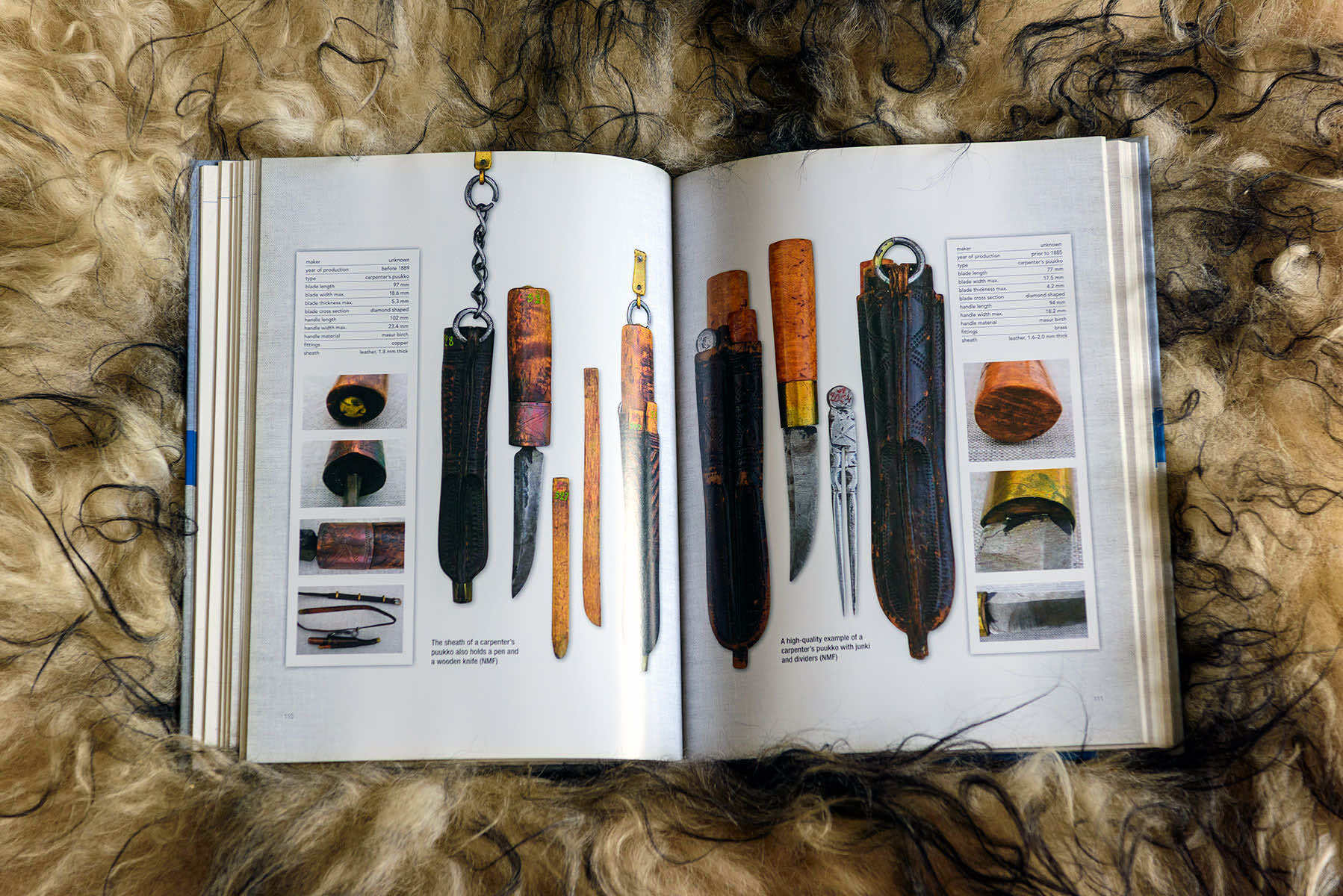
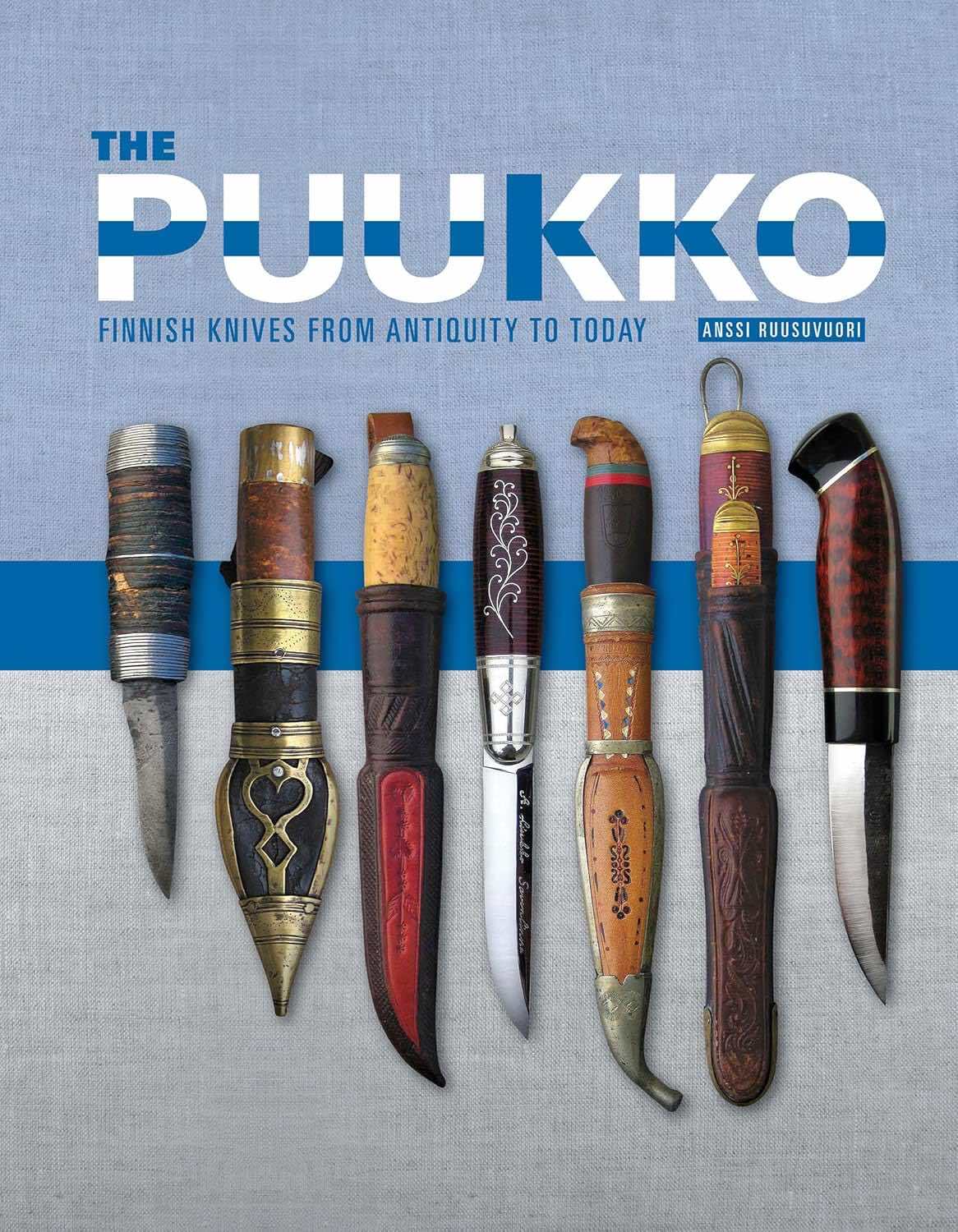
The Puukko : Finnish Knives from Antiquity to Today.
The reference book on puukko
For a Finn, the puukko is both the most important tool and the most feared weapon. One could almost say that the puukko For a Finn, it is as important as the samurai sword for the Japanese.
Anssi Ruusuvuori


For all Finns, the puukko embodies both the most valuable tool and the most respected weapon. It could almost be said that in Finnish culture it occupies a place comparable to that of the samurai sword in Japan.
INTRODUCING
The most comprehensive and serious book published to date remains:
The Puukko : Finnish Knives from Antiquity to Today. Author: Anssi Ruusuvuori
This is the current reference book (more than 200 pages, very richly illustrated). Anssi Ruusuvuori is himself an excellent manufacturer of puukkos and has won several national competitions.
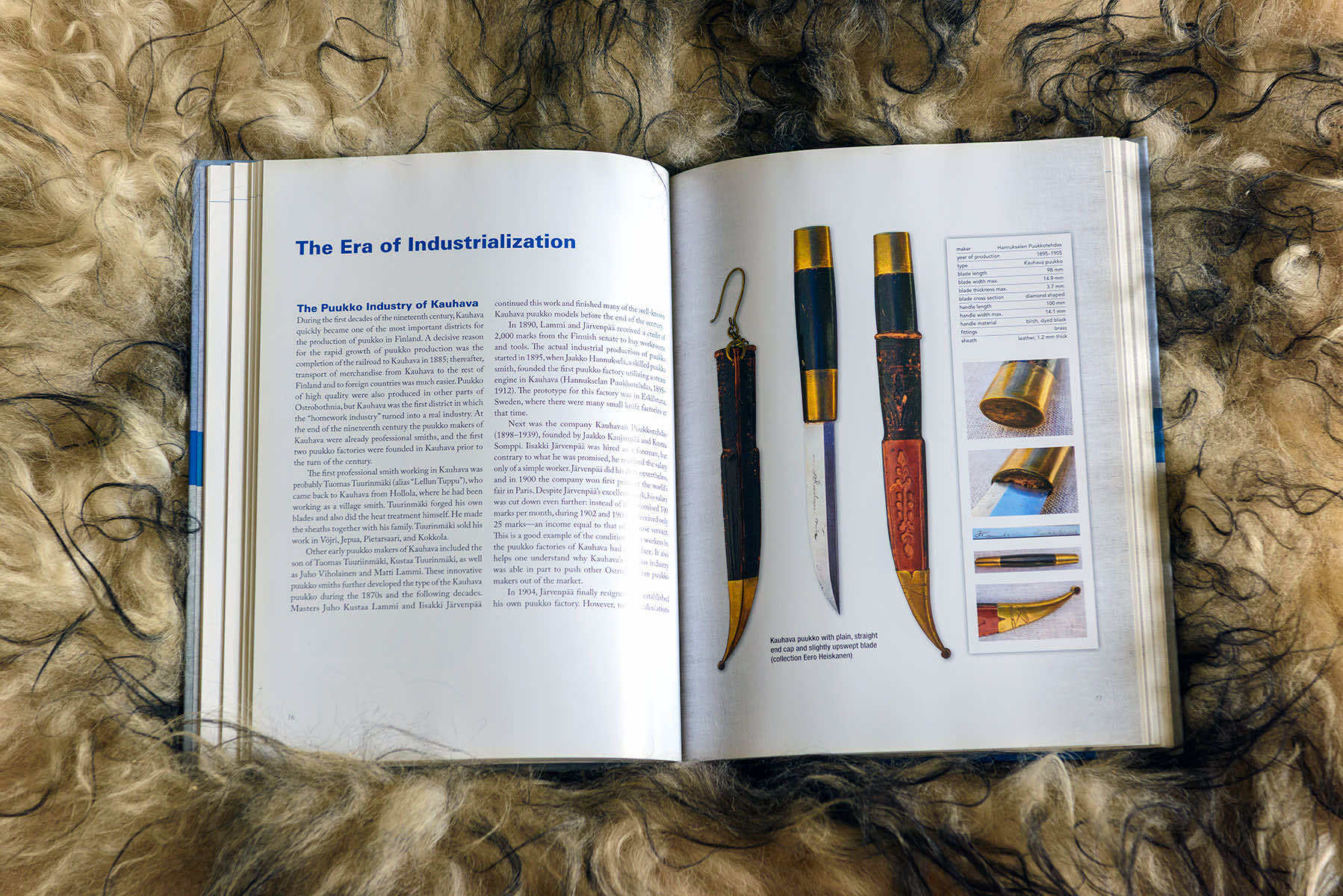
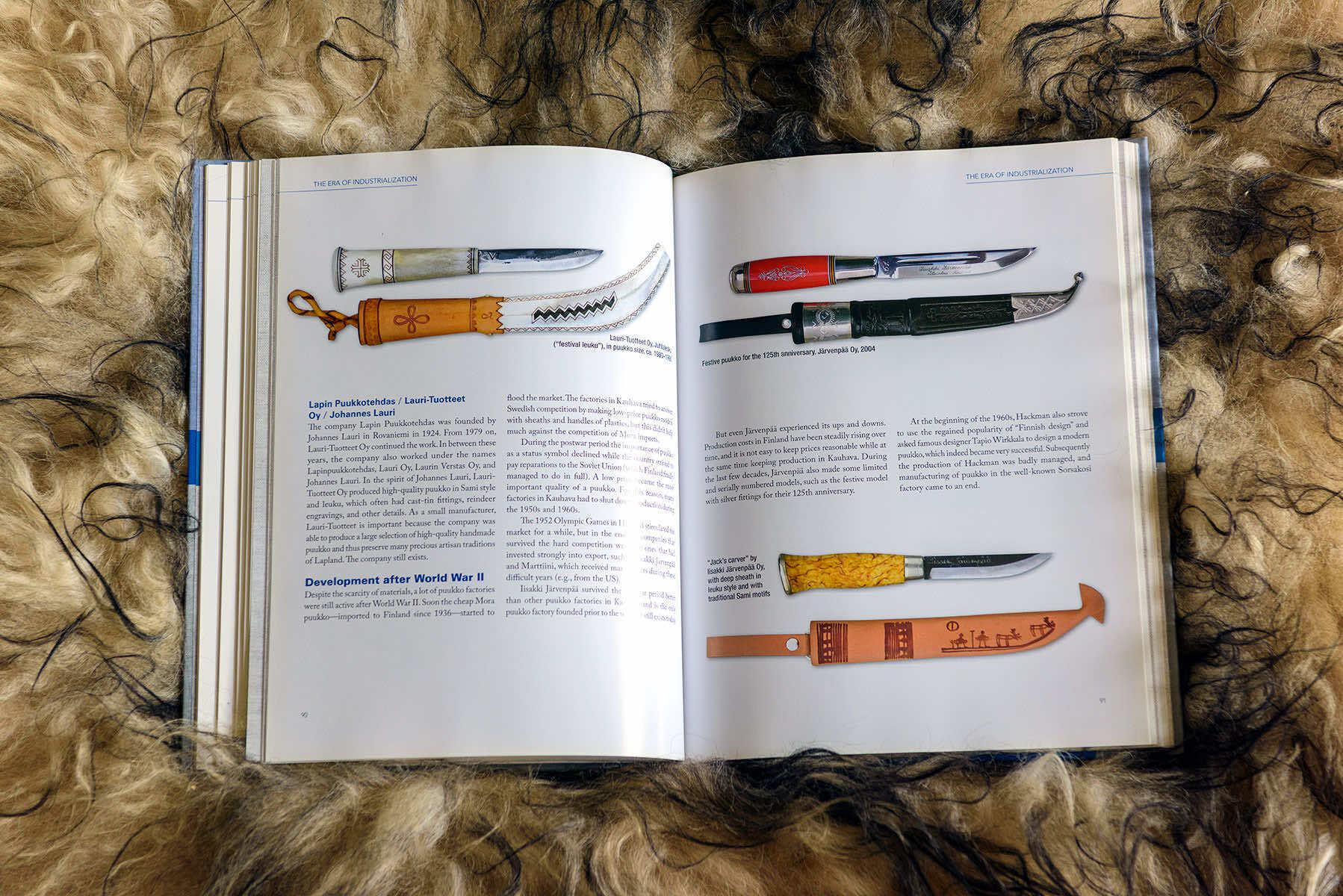
Anssi Ruusuvuori has traced the history of this remarkable type of knife in a previously unpublished form. It addresses the technical and aesthetic aspects of puukko and guides the reader through the history of this legendary tool and weapon, from the Viking era to today. It evokes the great blacksmiths of the era of industrialization at the end of the 19th century, as well as the rediscovery of the puukko in a recent past.


A BIG MORE ON THE BOOK
A mysterious and nearly two thousand-year-old weapon, the puukko has been manipulated over the centuries with the same conviction and dexterity, in times of peace as in times of war.
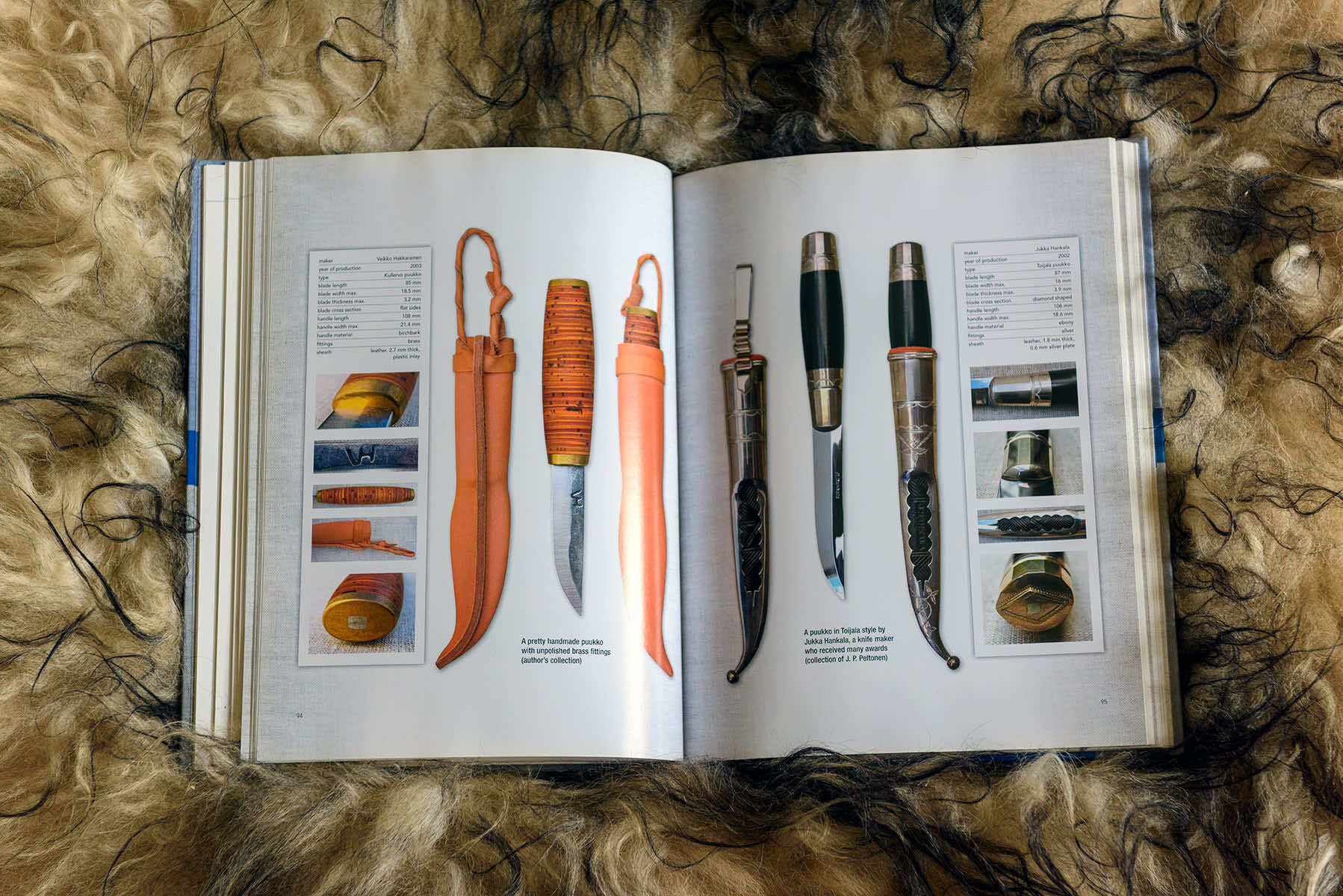
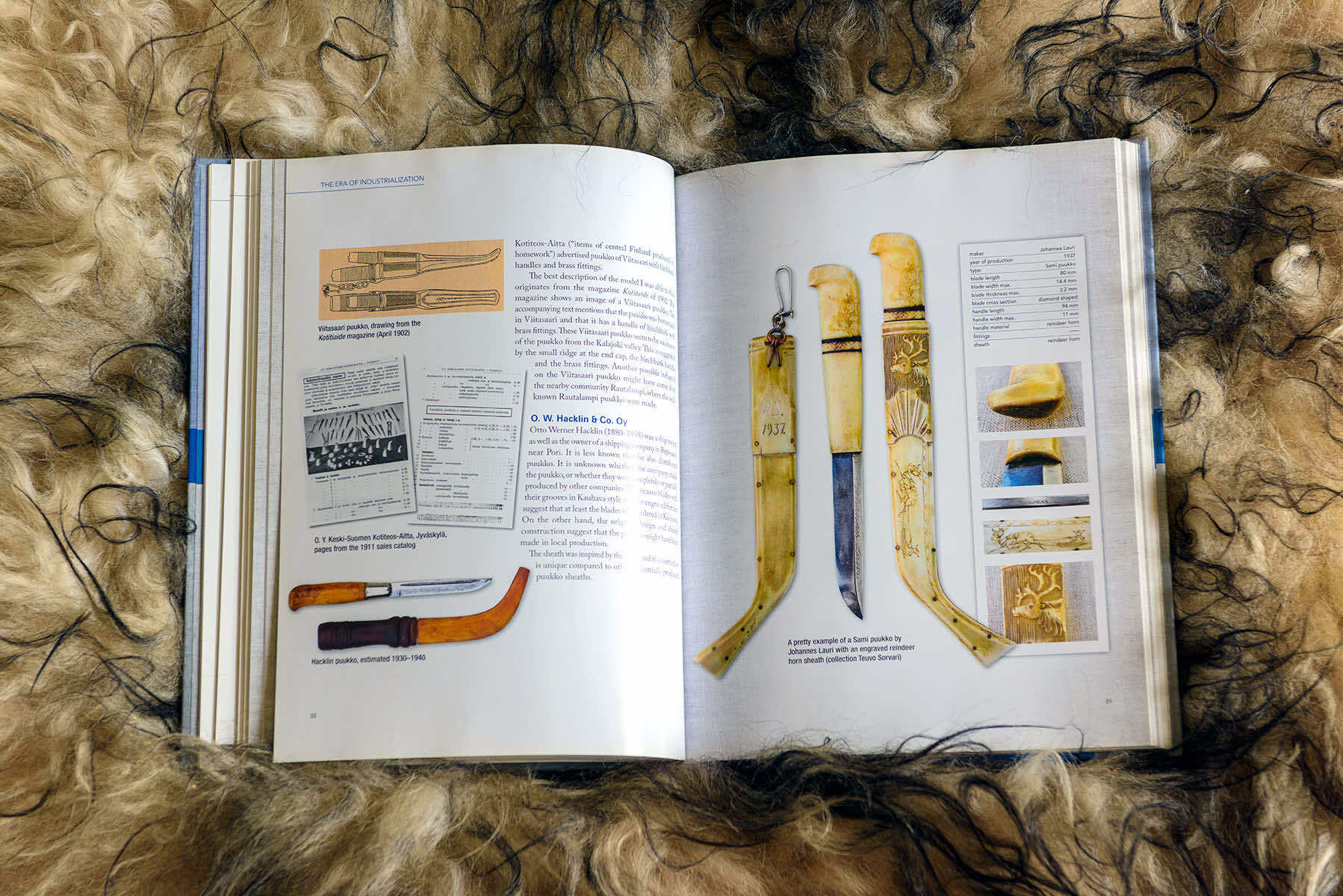
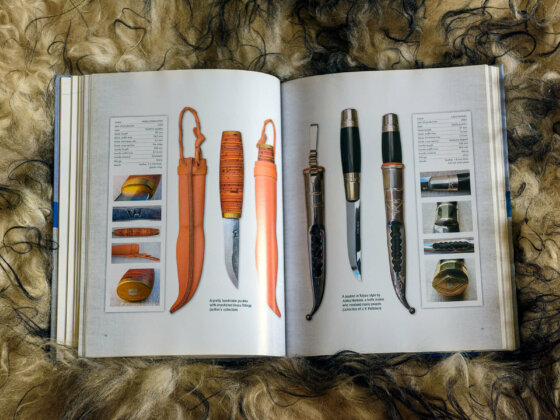
This reference book, the only one available to date, traces in an unprecedented way the history and diversity of the puukko Finnish, enriched with numerous photographs of exceptional copies. Anssi Ruusuvuori guides us with passion and precision through the evolution of this legendary knife, from the Viking era to today. It explores its technical and aesthetic dimensions, pays tribute to the great blacksmiths of the late nineteenth century — period of industrialization — and highlights the recent rediscovery of this iconic object.
The first part of the book the technology and history of puukko. The second presents the different types according to their materials and methods of manufacture, before dealing with regional variants and special models, indispensable to know for any collector or passionate. Over the pages, the reader discovers a real treasure of knowledge about this multifaceted tool.
During his long history, on puukko has been used for a wide variety of tasks: manufacturing household utensils, carving ornaments, scraping ice on cart wheels, cutting food, evisceration and counting game, fish or livestock, or raising a hole in the ice. He also played a role in protective rituals and served for self-defence and duels.
Sources of this study based mainly on the collections of Finnish museums and private collectors. The majority of the pieces examined come from the National Museum of Finland, supplemented by research conducted at the Museum of the Puukko Kauhava, the Peutra Museum, the Turku Regional Museum, the Aboa Vetus & Ars Nova Museum, the Ostrobotnie Museum, the Crime Museum, as well as various special collections.
A BETTER FIGHT ON THE AUTHOR
Anssi Ruusuvuori
Master cutlery

I have been a part-time cutlery since 1993. I make about 10 to 12 knives a year. My knives won several gold, silver and bronze medals at the National Cutlery Championships in Fiskars from 1996 to 2018. I have also often been on the jury.
I am currently vice-president of the Finnish Cutlery Guild and have been the main organizer of the Helsinki International Knife Fair from 2015 to 2019.
I was a lecturer and assessor during the « Finnish blade blacksmith » (2007 and 2012) « master blade blacksmith » (2009 and 2018), and I myself won the title of master blade blacksmith in 2018.
I have written several articles and two books totalling more than 700 pages on the history of puukko Finland. My other interests include training and teaching karate Wado Kai (since 1979), as well as composition and guitar.
Anssi Ruusuvuori
Anssi Ruusuvuori, author of the book on the puukko.
Who is he?
Anssi Ruusuvuori was born in 1963. He lives in Piikkiö (comune of Kaarina, near Turku, Finland).
He is an architect and acoustic consultant. The production of puukko and historical research are for him a part-time passion, which he practices with a very high level of demand.
Master cutlery (puukkoseppämestari)
- He manufactures puukko Since 1993.
- Since 2007, he has been forging almost all of his blades (steel, carbon 0,8 %, oil differential quench; it also tests stainless steels).
- Anssi produces only unique pieces or in very small series (about 10 to 12 knives per year), highly sought after by collectors.
- He won several gold, silver and bronze medals at the Finnish cutlery championships in Fiskars (including the gold medal in 2002 in the hunting knife category).
- He was a member of the jury of these championships (2008-2012), lecturer and assessor of the Finnish master blacksmiths' formations, and director of the exhibition of the Helsinki Knife Show (2015-2019).
- Finally, he is Vice-President of the Finnish Cutlery Guild (Suomen veitsentekijöiden kilta). In 2015, Suomen Puukkoseura named « Puukkoseppä of the year ». In 2011, his municipality of Kaarina awarded him a cultural prize for his contribution to the cultural puukko.
History and author
It is mainly thanks to his research work that he is recognized as the absolute reference on the subject:
- *Puukon Historia (2009/2010, then reissue 2021): monumental work of 704 pages with more than 2,000 photographs in unpublished colours. He was nominated for the prestigious Tieto-Finlandia Prize (best Finnish non-fiction book).
- *Puukon Historia 2 (additional, including leuku and puukko Lappons). More Condensed English Version: The Puukko: Finnish Knives from Antiquity to Today (Schiffer Publishing, 2020, 224 pages). *See banner below.
For these books, he studied in depth the collections of the National Museum of Finland (more than 150 years of acquisitions), the Museum of puukko Kauhava and many regional museums and private collections. It itself constituted an important personal collection of puukko historical.
Style and philosophy
It defends the principle « form follows function » while sometimes bringing elegant innovations (handle, sheath, details). Its influences range from puukko traditional Finnish craftsmanship and modern design (Tapio Wirkkala, etc.).
In summary, Anssi Ruusuvuori is at the same time a craftsman of excellence, a rigorous researcher and author of the inescapable reference work on the puukko Finland. It is a respected and warmly quoted figure in the middle of the Nordic cutlery.
PUUKON HISTORIA
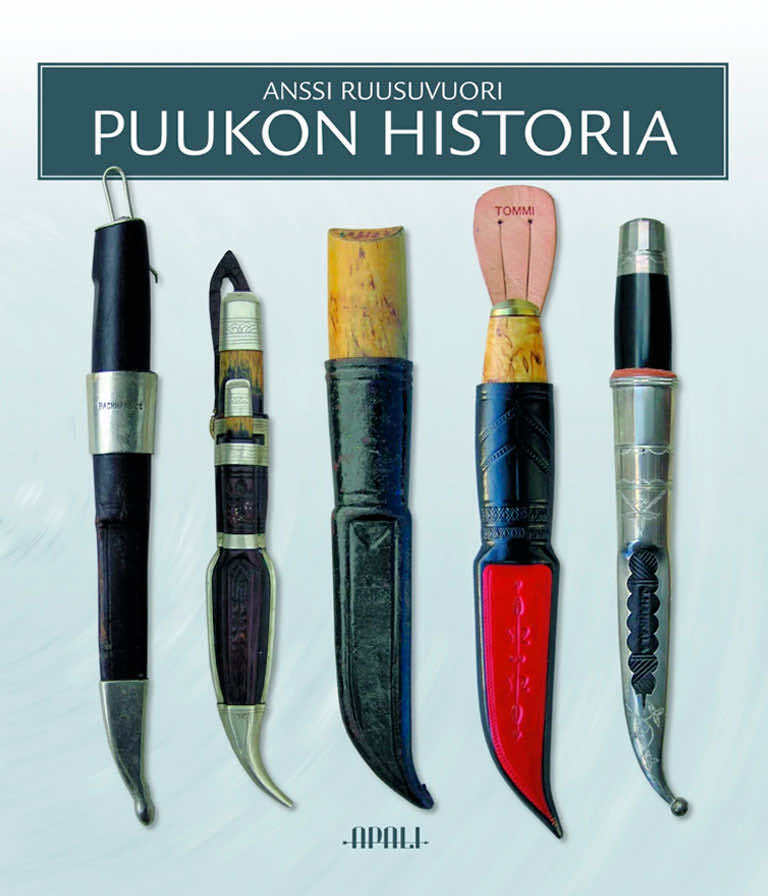
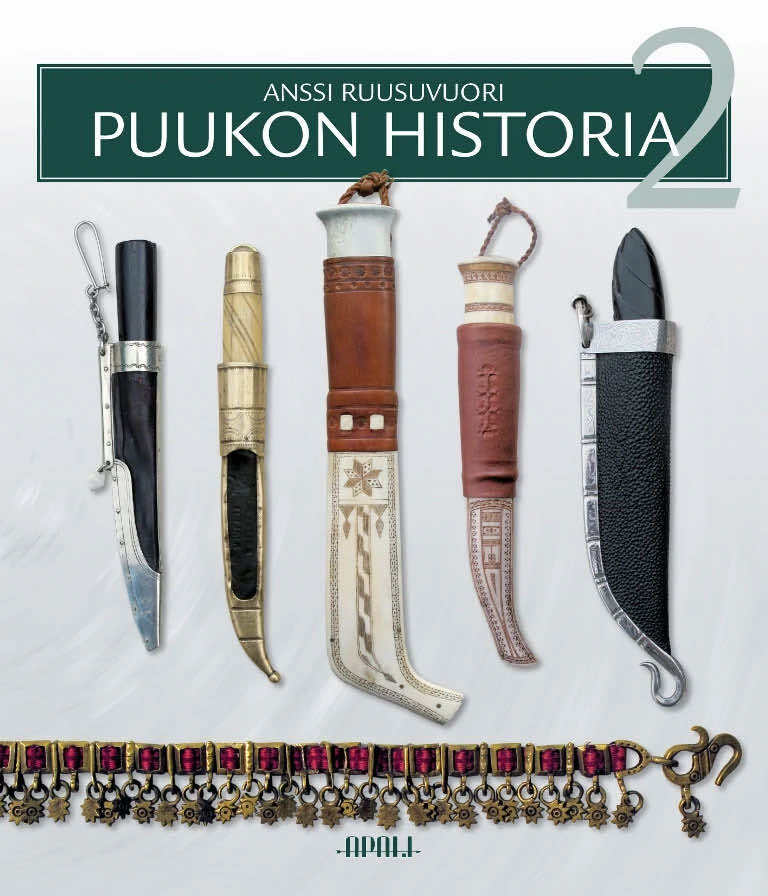
Volumes 1 & 2
Available from Antiquarian, Finland. Delivery worldwide.
Book summary
Puukon Historia 1: ~700 pages, originally published around 2009/2010 (Apali, ISBN 9789525026931), reprinting 2021 (Readme.fi, ISBN 9789523732247). Comprehensive reference book on history and models of puukko Finnish, with more than 2,000 photos.
Puukon Historia 2: ~767 pages, 2012 (Apali, ISBN 9789525877205), reprinting 2021 (Readme.fi, ISBN 9789523732254). Suite with focus on Nordic/Sami models, leukus, decorated belts (helavyöt), etc.
Antikvaari is a Finnish online service for ordering books and other new or used books from many bookstores throughout Finland. Buying is simple, fast and secure. Antikvaari complies with the regulation on distance selling of the Finnish Competition and Consumer Authority.
The books are in Finnish only (no known French version).
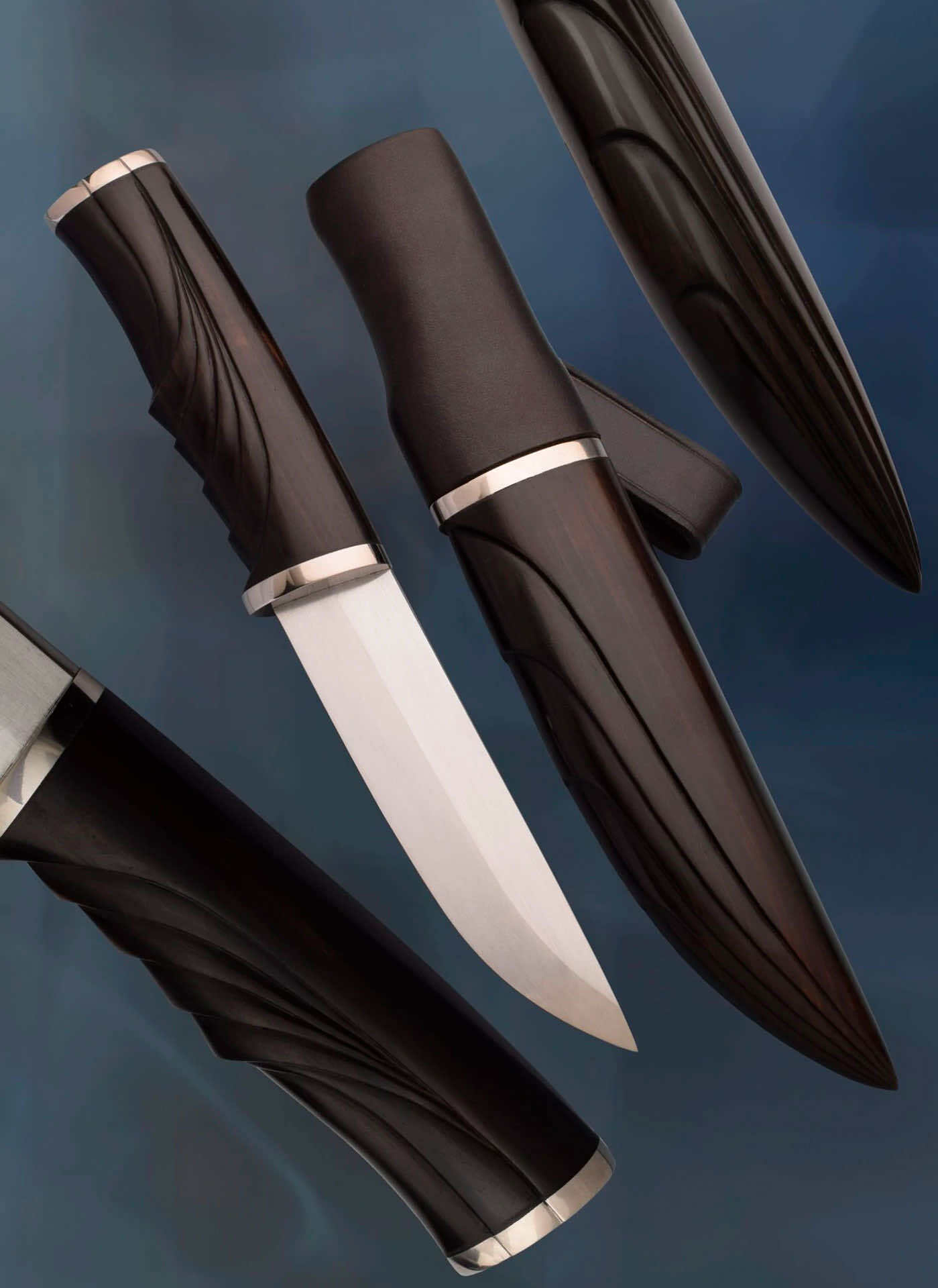
PUUKKOS ANSSI RUUSUVUORI


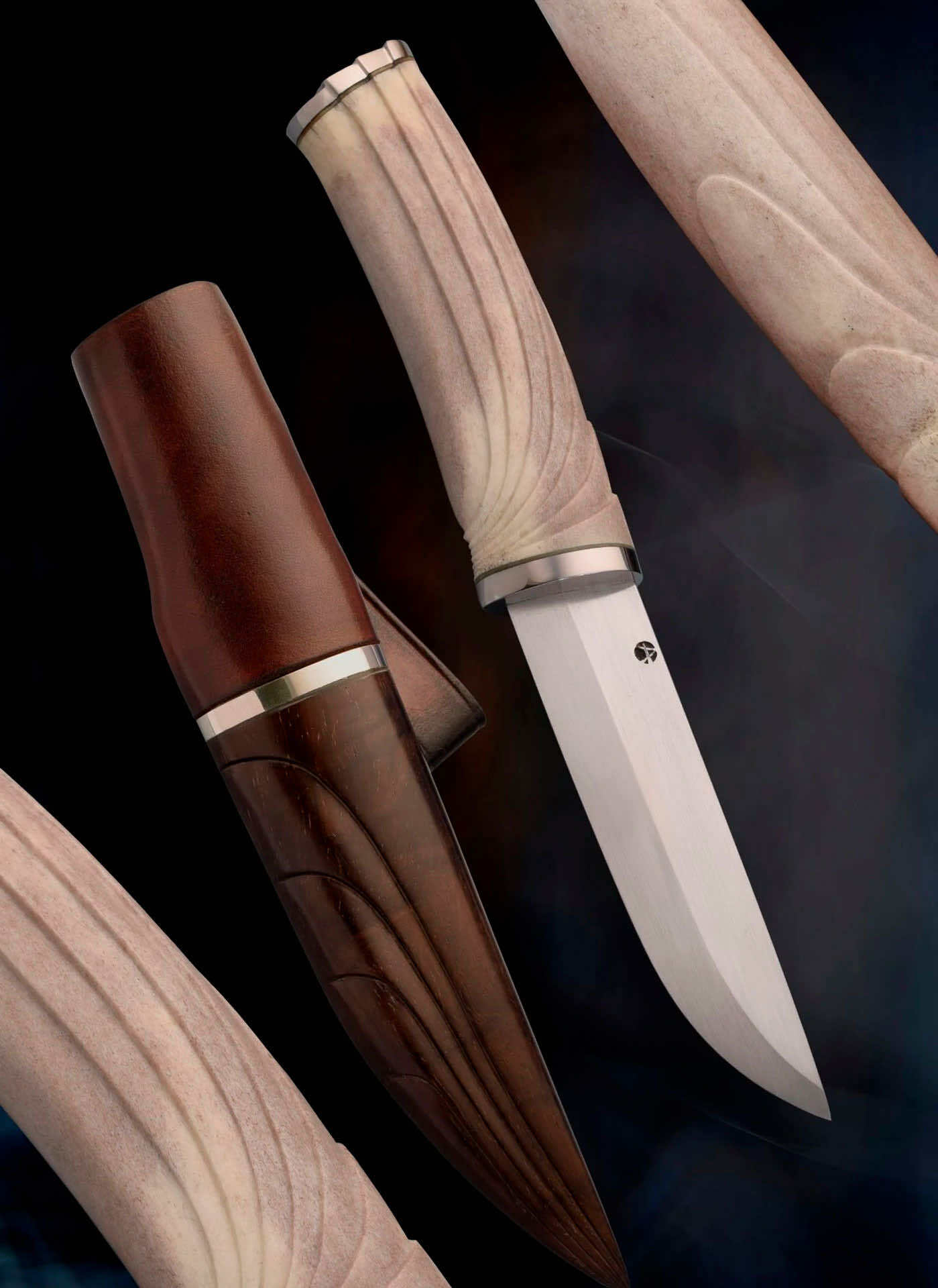
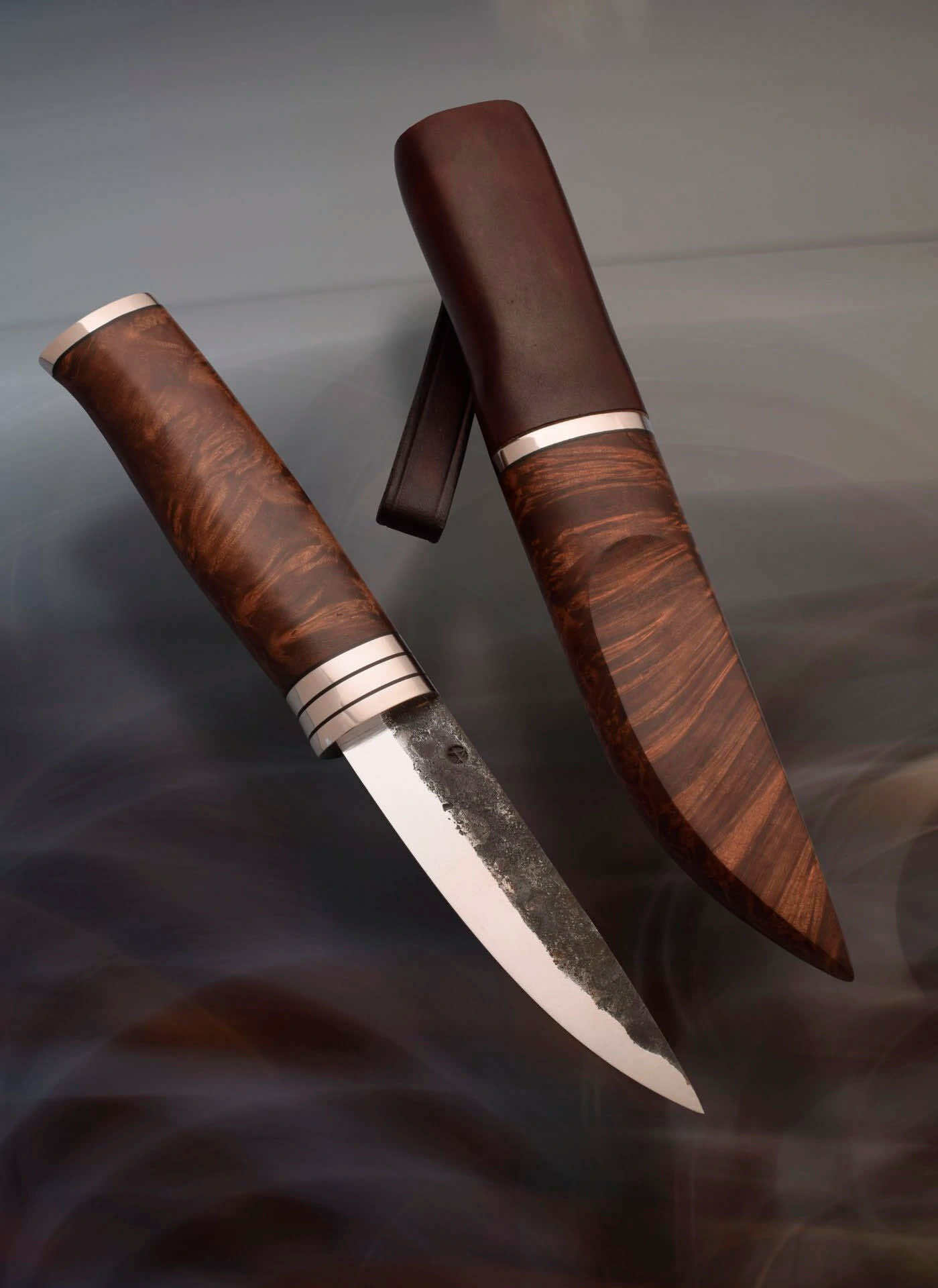
The master cutler Anssi Ruusuvuori is not only a great Finnish cutlery, but also an author whose articles and books deal – quite naturally – with knives puukko and their history. Ruusuvuori perfectly controls knives puukko both theoretically and practically.
Each knife made by Ruusuvuori is a rare piece, because it does not work in series. Each year, he creates around 10 to 12 completely unique collection knives.
Custom knives Ruusuvuori are very sought after by collectors. However, they are not intended solely for exposure; They also offer valuable and versatile help to bushcraft enthusiasts.
FORGE TECHNOLOGIES
Steel used
He works mainly with steel carbon 0.8% (equivalent to 1080 or, very often, 80CrV2).
It considers that nothing exceeds a zoned steel to 0.8% of the carbon for wood carving and fine work.
For some models for hunting or fishing, it also tests stainless steels (ATS-34, RWL-34, etc.).
→ How to recognize different steels
Process of forging and heat treatment
Since 2007, he has forged all his blades himself (except the slabs in damas which he sometimes entrusts to other blacksmiths).
Forge by hand
The blades are entirely forged by hand. It frequently leaves the forge marks visible on the flanks (finish « as-forged » This is an aesthetic signature of several of his pieces.
Differential trempe (zone tempering/differential heat treating)
This is the central point of his technique.
The blade is heated and tempered to obtain a very hard edge while maintaining a more flexible and resistant back.
This gives an excellent balance between lasting sharpness and strength (especially important for a puukko for sculpture and demanding work).
Oil dip
Traditional oil dip.
Documented concrete example: direct soaking from the forge in oil at about 40 °C.
Temperature income
Specific example of one of its blades: one hour's income at 220 °C, with a hardness of approximately 57-59 HRC.
This beach is typical for a puukko high performance: hard enough to hold a razor edge, but tough enough to withstand shocks.
Finishing the blade
Sharpening Scandi (flat bevel, often around 20°) hand made.
He insists much on the geometry of the edge, the straightness of the bevel and the finish of the « mouth » of the blade, which he sometimes considers as important as the choice of steel.
Philosophy
Ruusuvuori remains faithful to a very traditional Finnish approach while bringing great modern precision. It favours functionality (« form follows function ») and estimates that the differential quench on steel at 0.8% of carbon remains unbeatable for the traditional uses of puukko.
In summary: hand forge + oil differential quench + controlled yield on steel carbon 0.8% (especially 80CrV2) is the core of his technique.
Conclusion:
When I started this article, I only planned to talk about the book. Then the work and personality of Anssi Ruusuvuori led to more research. Not only did I discover the passionate writer, but also the meticulous and original craftsman in his approach to designing modern and inspiring puukkos. You can continue reading with another master blacksmith: Pasi Jaakonaho.
Thank you for reading this article and sharing it if you liked it.
Warm regards,
Photo credit: @Anssi Ruusuvuori