Classic knives:
pliant, chasse ou puukko.
A classic knife is a tool that comes out, not an object that is stored.

CLASSIC COASTS

COUTEAUX PLIANT, CHASSE OU PUUKKO ?

Le couteau classique n’est pas une catégorie fermée. C’est un usage. Une lame qu’on sort souvent, qu’on affûte soi-même, qu’on range plutôt que de l’oublier dans un tiroir. En France, l’Opinel et le laguiole ont fixé l’image du pliant. Ailleurs, le fixe a tenu la place : couteau de chasse européen, bowie américain, puukko finlandais. Même idée. Un outil qu’on garde.

COMMENT CHOISIR ?

All puukkos are knives. Not all knives are puukkos.

A classic knife recognizes itself without instructions.

Lame fixe ou pliant simple, manche plein, étui ou virole, tranchant qui sert avant de s’afficher. Opinel, laguiole, couteau de chasse, puukko : la forme change, le rôle non. Couper, tailler, préparer, réparer.

The first good knife is the one we're taking back tomorrow. The rest is a variant.

THREE CLASSIC COAST FAMILIES

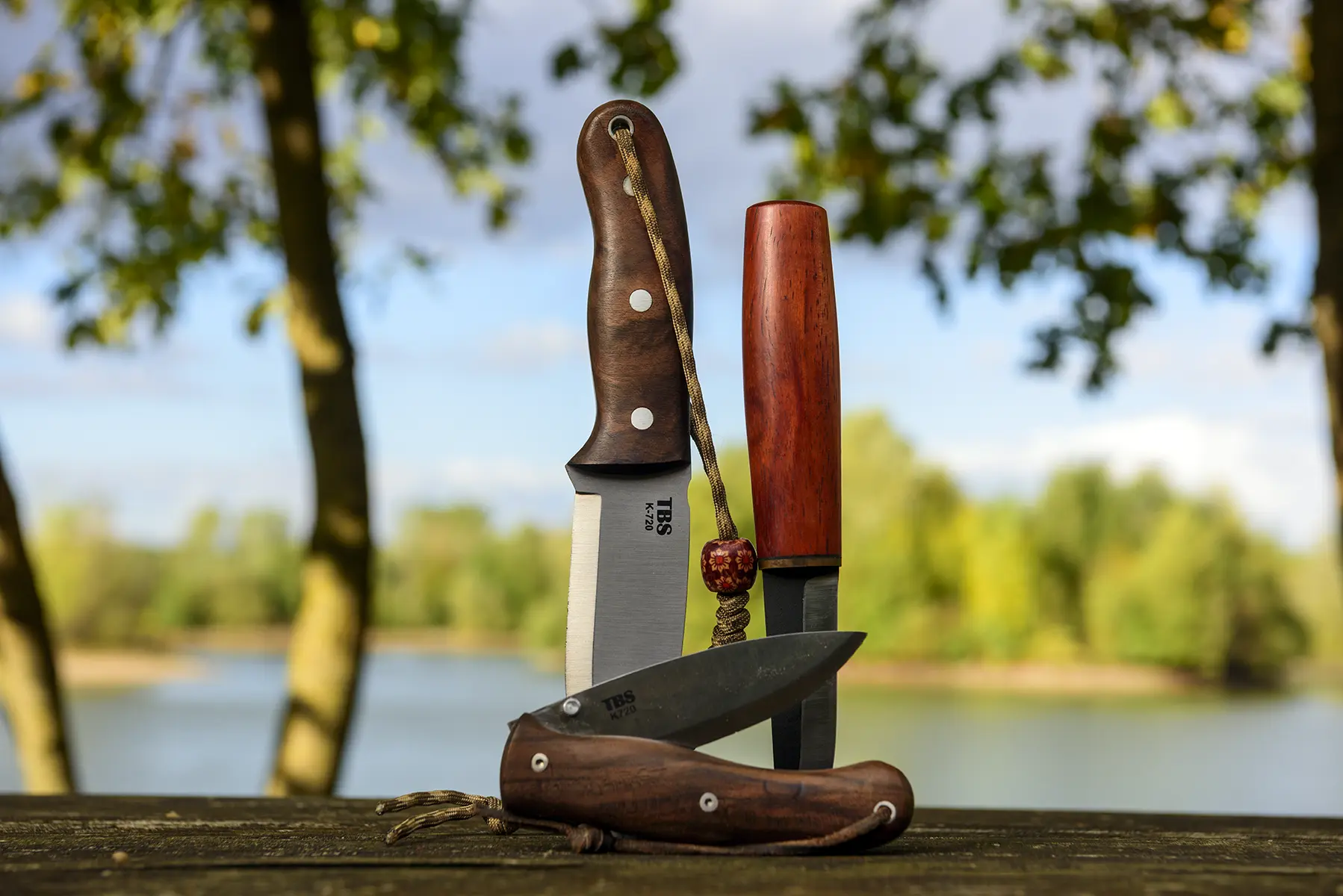
#1 Le pliant

Foldable blade, virole or cran, pocket size. Lightweight, discreet, sufficient at table and for a short cut.

The Opinel remains the entrance: une virole, un manche en bois, un prix bas, une lame qu’on bloque d’un tour de bague.
Laguiole adds spring, the fly and a sharper nod. In France, the two fixed the image of the classical knife.

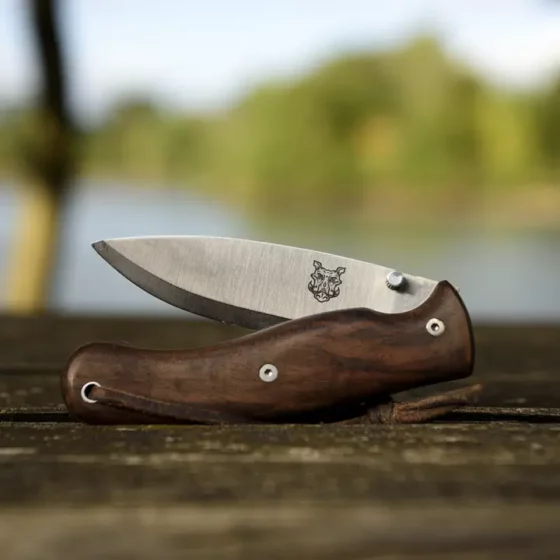
Dans les couteaux classiques, le pliant tient une large part. Il se glisse dans une poche, passe plus facilement dans le quotidien, et suffit pour le pain, la corde, un saucisson, un petit bois tendre. Sa limite apparaît dès que la session dure. Le pivot encaisse mal une torsion. La lame courte manque d’allonge. On ne taille pas une branche comme on ouvre une pomme, et on ne pousse pas dans du bois dur avec un mécanisme prévu pour se replier. Utile en ville. Secondaire à l’établi et au camp. Le pliant ouvre le quotidien. Il ne remplace pas un fixe.

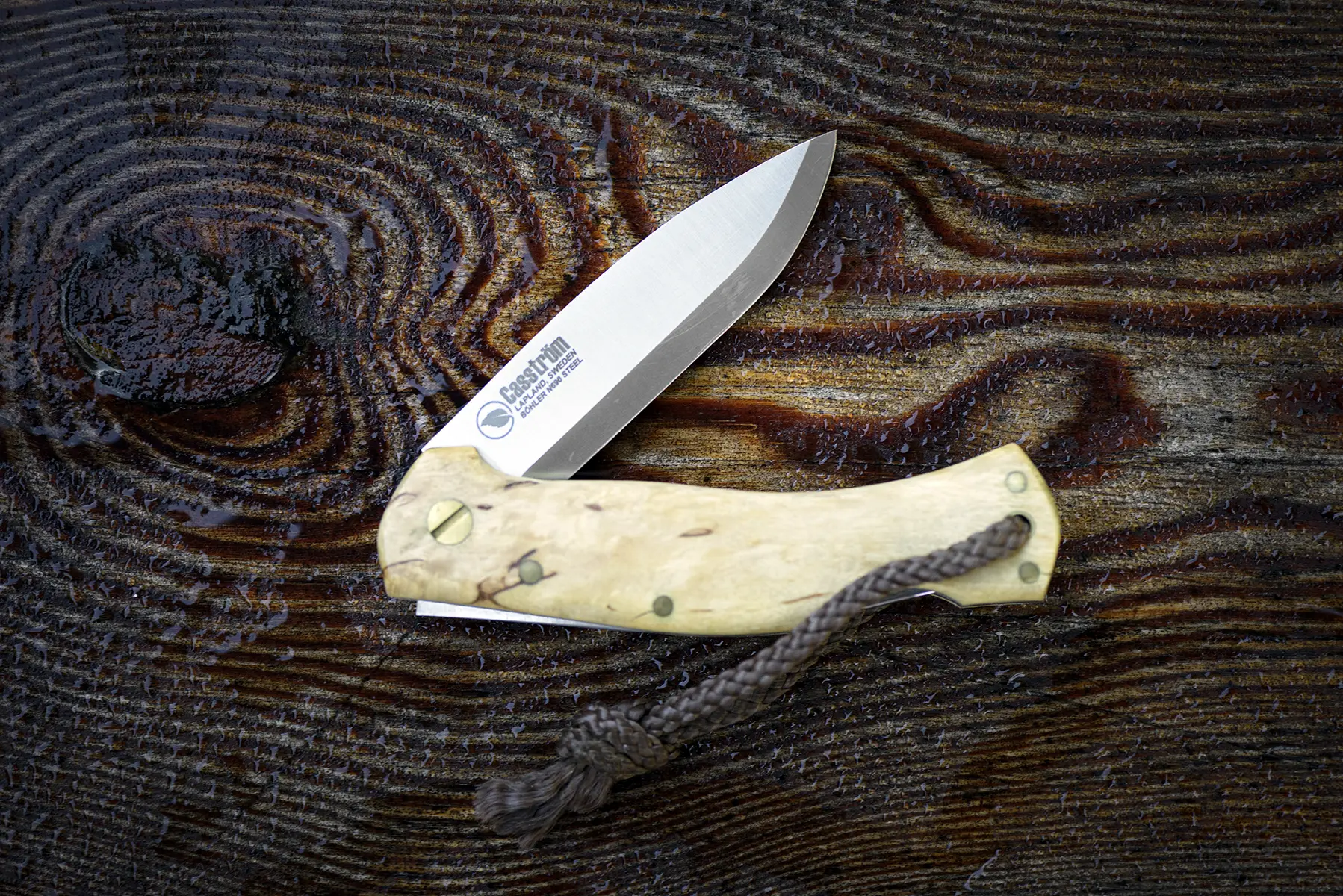
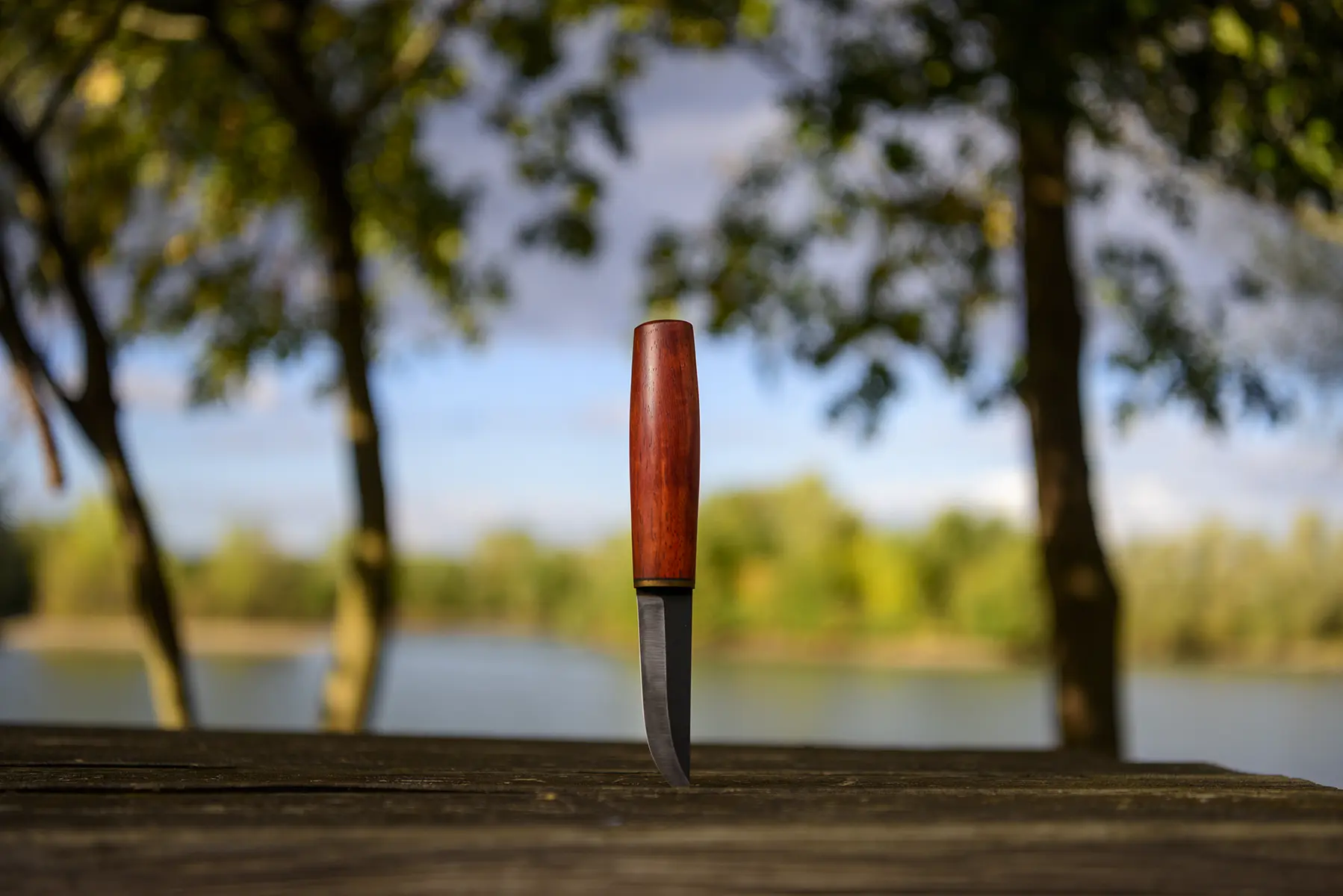
Couteau pliant Casstrom

#2 The hunting or camp knife

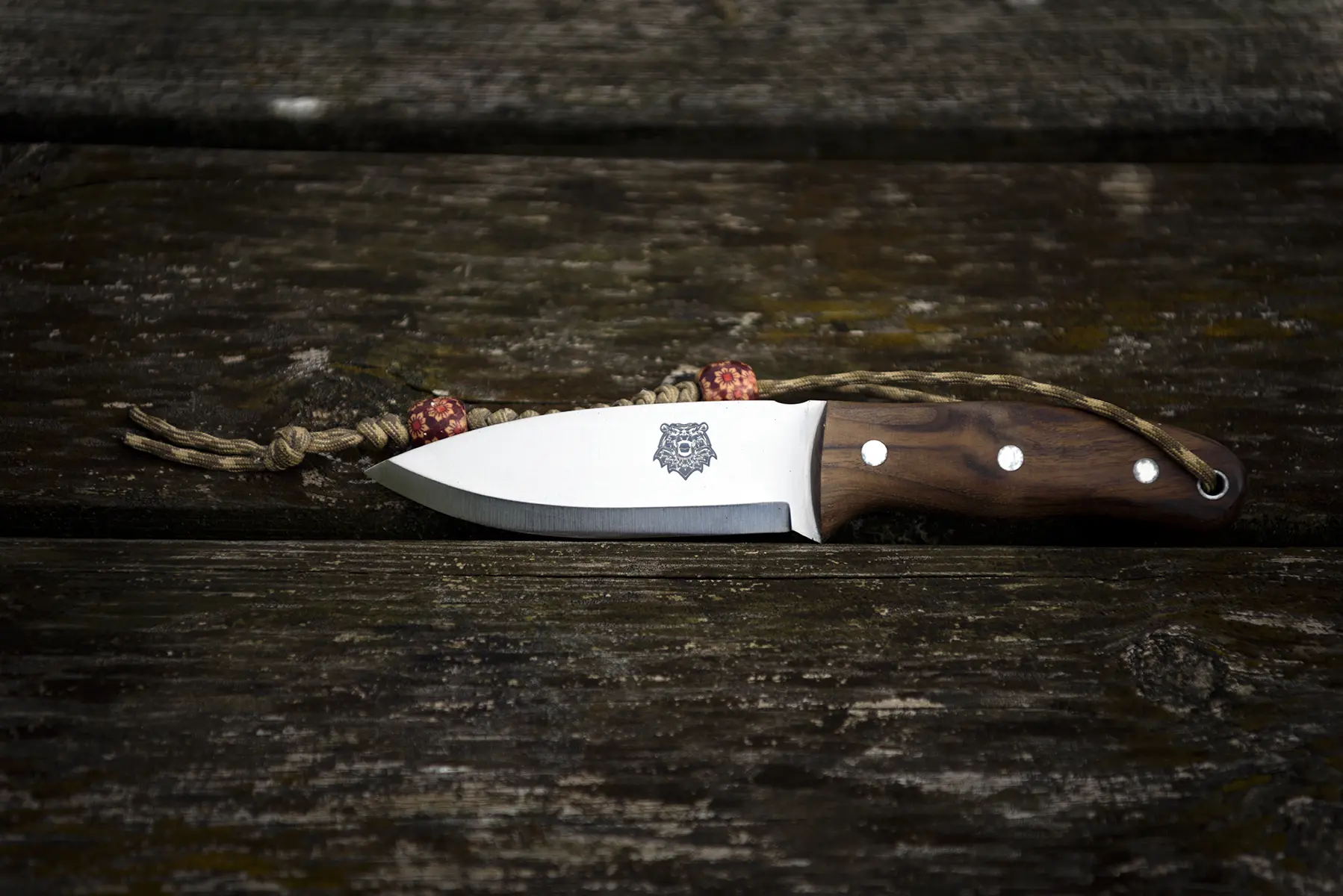
Lame fixe de 10 à 15 cm, parfois davantage, garde ou ricasso, fourreau en cuir ou en synthétique.

Made for the venison, le gros bois, le bivouac, une coupe qui demande du poids et de l’allonge. Plus lourd qu’un pliant, plus présent à la ceinture et moins discret.
This is the European outdoor classic: une lame qu’on sort pour une tâche, pas pour un geste de poche. L’émouture est souvent plate ou convexe. L’affûtage demande de tenir un angle, pierre après pierre, sans le repère du biseau posé à plat.
The guard limits the hand: it protects, it also prevents the fingers from moving on the blade for fine work.

Good choice if the camp is heavy, If it splits, if it prepares game, if the blade has to grow. Too many tools if you only want to sculpt, fish or cook. A hunting fix does not judge its length. He's judging himself that we really do it outside.

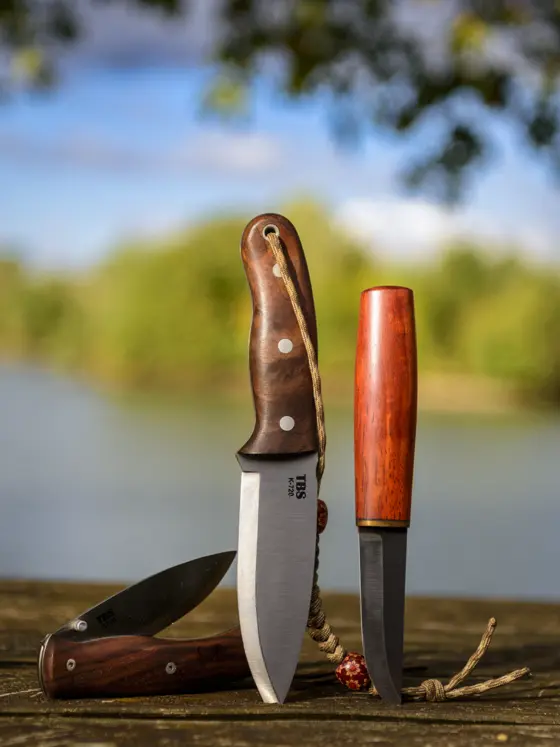
Hunting knife

#3 The Nordic knife

Dos droit, pas de garde, émouture scandi, fourreau cuir porté lame vers le bas.

The hand can move on the blade: c’est le geste du bois fin, de la cuillère, du petit ébranchage. Le puukko finlandais a une lame de 7 à 12 cm, le plus souvent 9 à 10. Acier carbone ou inox, manche en bouleau, parfois corne ou bois de renne. Premier couteau reçu, compagnon de pêche, de sculpture et de camp.
The Swedish Mora repeats the same logic in industrial: often rolled steel, low price, very widespread, excellent for testing flat bevel, less a workshop piece.
→ The Mora company
The Sami leuku, the stuorra niibi, lengthens the blade, usually 18 to 25 cm, wide back, for green wood and heavy camp.
→ Leuku: anatomy, history and technique of the large Sami knife
The little Sami knife, l’unna niibaš, reste proche du puukko. Même famille de gestes, trois outils. L’émouture scandi se pose à plat sur la pierre : l’angle se trouve seul. On marque le biseau, on cherche le morfil, on monte en grains, on finit au cuir.

This is where the classic knives become a Finnish tradition, not just a form.
→ The different types of puukkos


Northern knife

COMPARE BEFORE YOU BUY

CriteriaPliantHunting / campPuukko
Blade8–10 cm, foldable10–15 cm, fixed7–12 cm, often 9–10
GuardNotOftenNot
GrindFlat or hollowFlat or convexScandi
UsePocket, table, cityCamp, venison, big woodFine wood, fishing, daily
MaintenanceSimple, pivot to watchFourreau, affûtage régulierScandi à plat, cuir, huile si carbone
Entry budget15–80 €40–200 €80–250 €

Choisir selon la main

The choice follows the pattern, not the form.

  • Table and pocket: pliant.
  • Carved wood, fishing, belt: puukko.
  • Big camp and logs: hunting knife or leuku.
  • Premier budget pour tester un fixe scandi : A mora.
  • Exhibit we keep: un puukko d’atelier, carbone ou inox, manche en bouleau.

Too short, the fixed loses in versatility.
Too long, He's losing his hand.
The good first knife is the one you want to come out the next day.

Maintenance does not change from one family to another. Sécher après usage. Huiler le carbone. Éviter le lave-vaisselle et l’eau stagnante sur le bois. Affûter avant que la lame morde mal. Une lame vive est plus sûre qu’une lame morte. En France et en Europe, le port d’un fixe demande un motif légitime.
→ How maintain his puukkos

FAQS

Classic knives

  • Une lame d’usage, pliante ou fixe, faite pour couper souvent. Opinel, laguiole, couteau de chasse, puukko. Pas une mode, un outil.

  • Pliant pour la poche et la table. Fixe dès que le bois, le camp ou la pêche comptent. Les deux ne se remplacent pas.

  • No. It is a Finnish working knife, short blade, without guard. The heavy hunting is more like hunting knife or leuku.

  • 9 to 10 cm. Enough for wood and camp cooking, still handy.

  • Flat bevel on the stone. The angle is alone. Get in grain, finish in leather.

  • Yes, with a legitimate motive. The port for no reason, especially hidden, is framed. Tool, no gun.

Conclusion

All these classic knives cut. They're not all the same.

Le pliant ouvre le quotidien. Le couteau de chasse couvre le dehors lourd. Quant au puukko, il reste le fixe nordique le plus simple : pas de garde, biseau large, fourreau cuir, souvent le premier couteau reçu. C’est par là que le classique devient une tradition.
Any questions? Don't hesitate to write (contact(at)puukko.fr). We're passionate and I always answer mail.

Further reading:

Warm regards,

Subscribe to the newsletter.

INTERACTIVE MAP OF PUUKKOS MANUFACTURERS

Finland – Lapland – Sweden – Norway

You want Learn more on the puukkos?

The puukko You're passionate, so these articles should also be interesting.

Pasi Jaakonaho, master blacksmith based in Inari

Pasi Jaakonaho, master blacksmith based in Inari 1798 1200 Puukko - Finnish knives

Pasi Jaakonaho is one of the few contemporary artisans to engage so closely with traditional Sami gestures and a contemporary aesthetic. His engravings on reindeer wood are...

Northern lights in Lapland

Northern lights in Lapland 1800 1200 Puukko - Finnish knives

The Northern Aurora in Spanish Spirit Lapland Towards the end of August, the sun finally descends far enough below the horizon for stars to reappear in the sky above...

Yakut, the traditional Russian knife

Yakut, the traditional Russian knife 1800 1195 Puukko - Finnish knives

What is a Yakut knife? Nordic Spirit The Yakut is the traditional Yakut knife in Yakutia, Siberian region. Yakut is used to work wood, leather,...

Buy a puukko in memory of your trip

Buy a puukko in memory of your trip 1798 1200 Puukko - Finnish knives

Although souvenir purchases are a universal standard for tourists, a knife may not be the first thing you think about when buying souvenirs...

    EnglishenEnglishEnglish