Sami, Puukkos and Large Spaces

More than 10,000 years of history
The People of the Far North
The Sami are an indigenous people of an area covering northern Sweden, Norway, Finland and the Kola Peninsula in Russia, known as Lapland.

Photography: Granbergs Nya Aktiebolag.
Indigenous people
Sami in front of two tents lavvu (tipis), 1900-1920, Norway-Sweden.
Puukkos & Sami
An old story
An old story
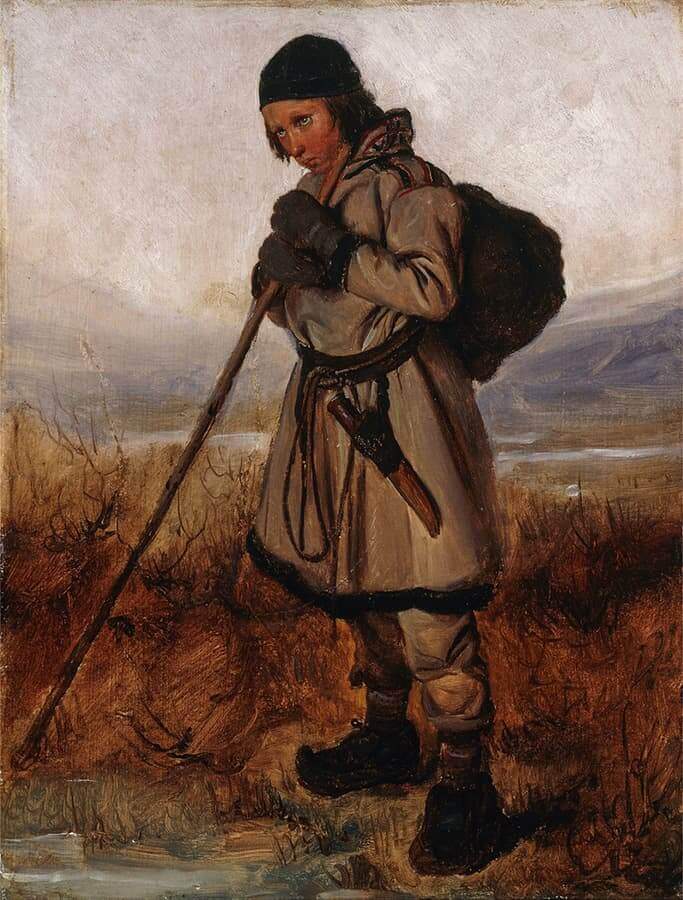
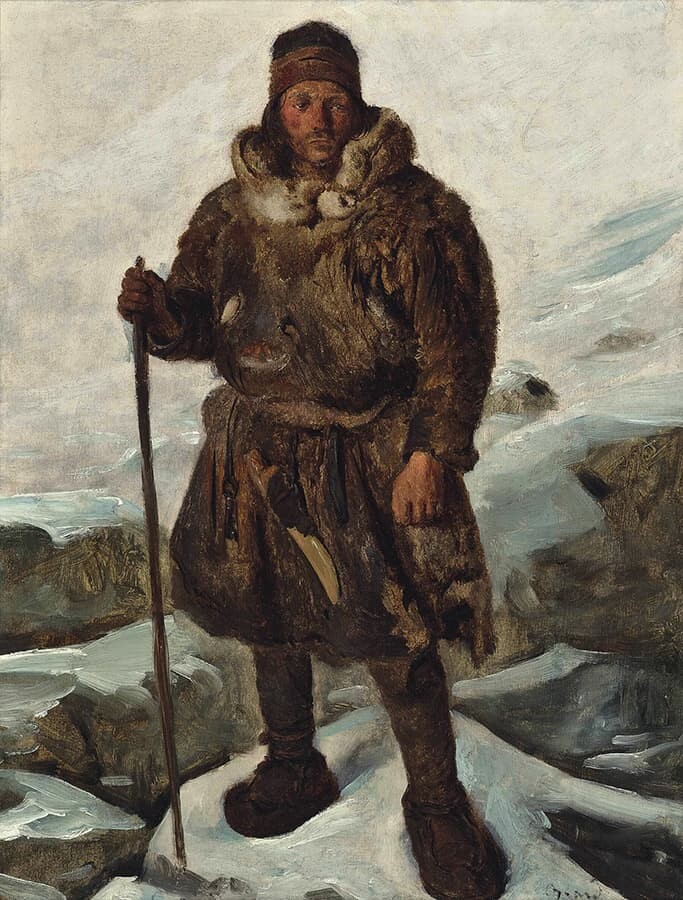
History and artistic reception of Puukko in the 19th century: some photos of French painter François-Auguste Biard (1798-1882), allowed to participate in a scientific expedition in Lapland in 1839.
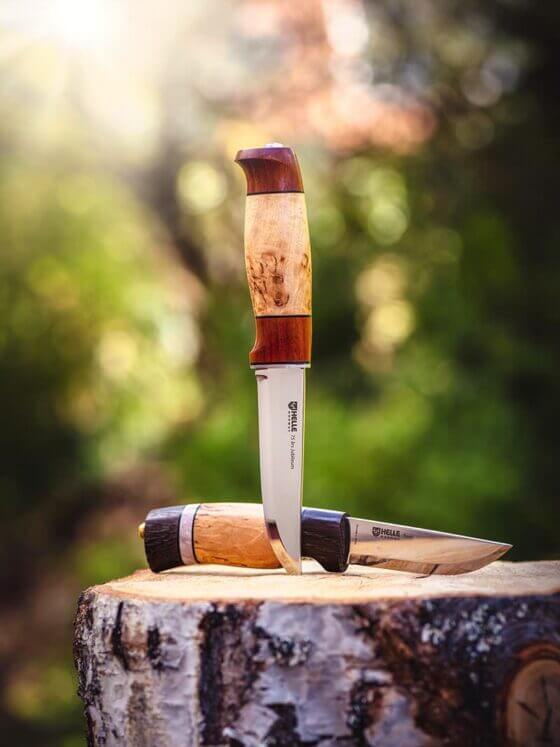
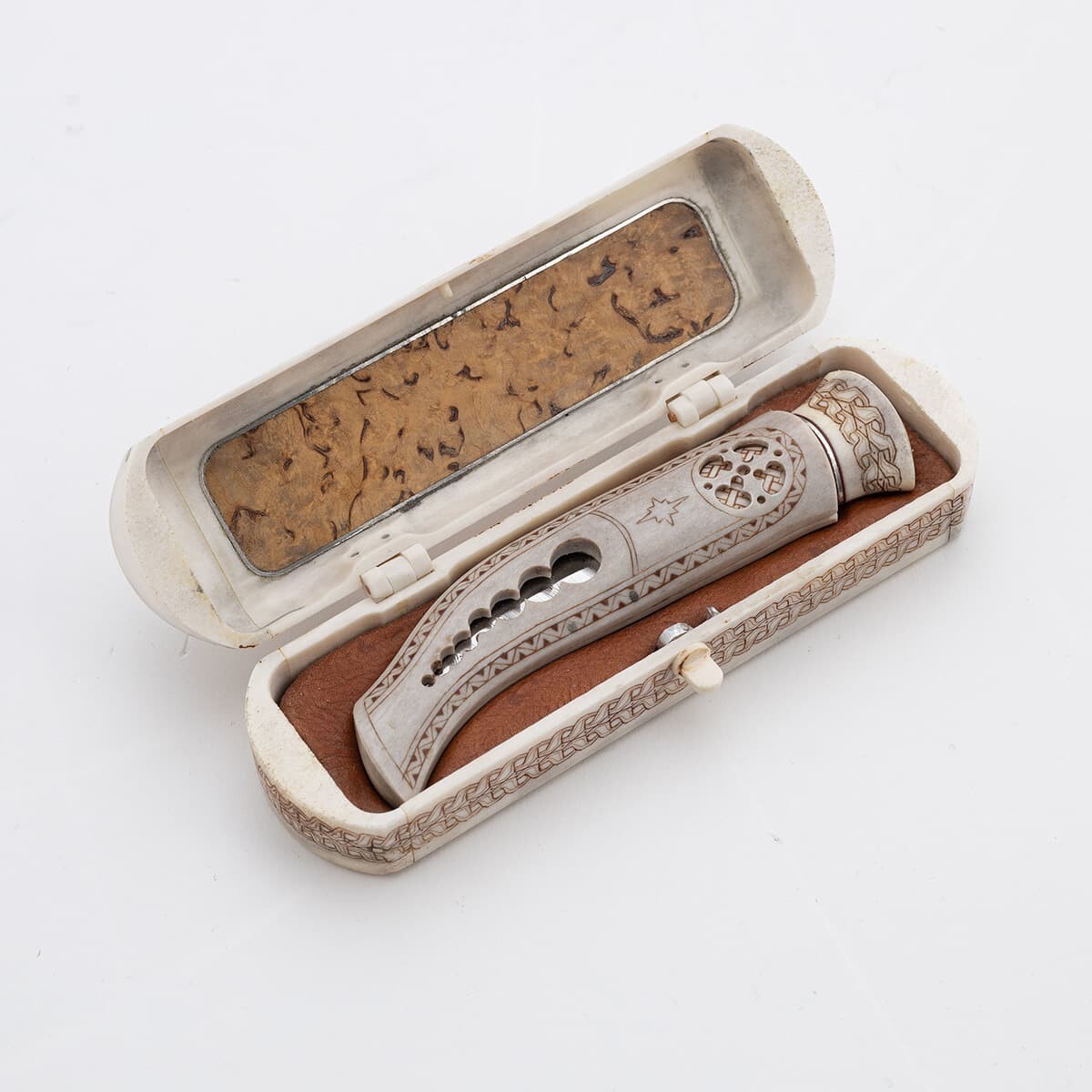
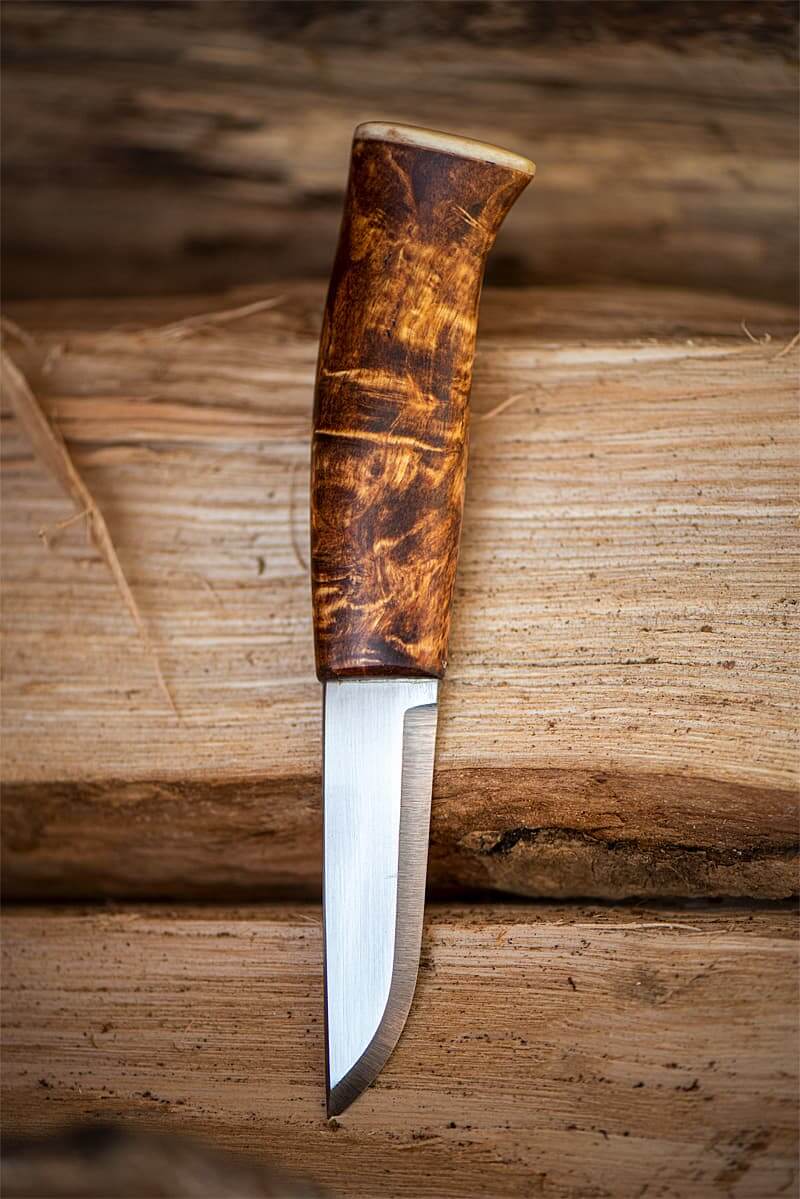
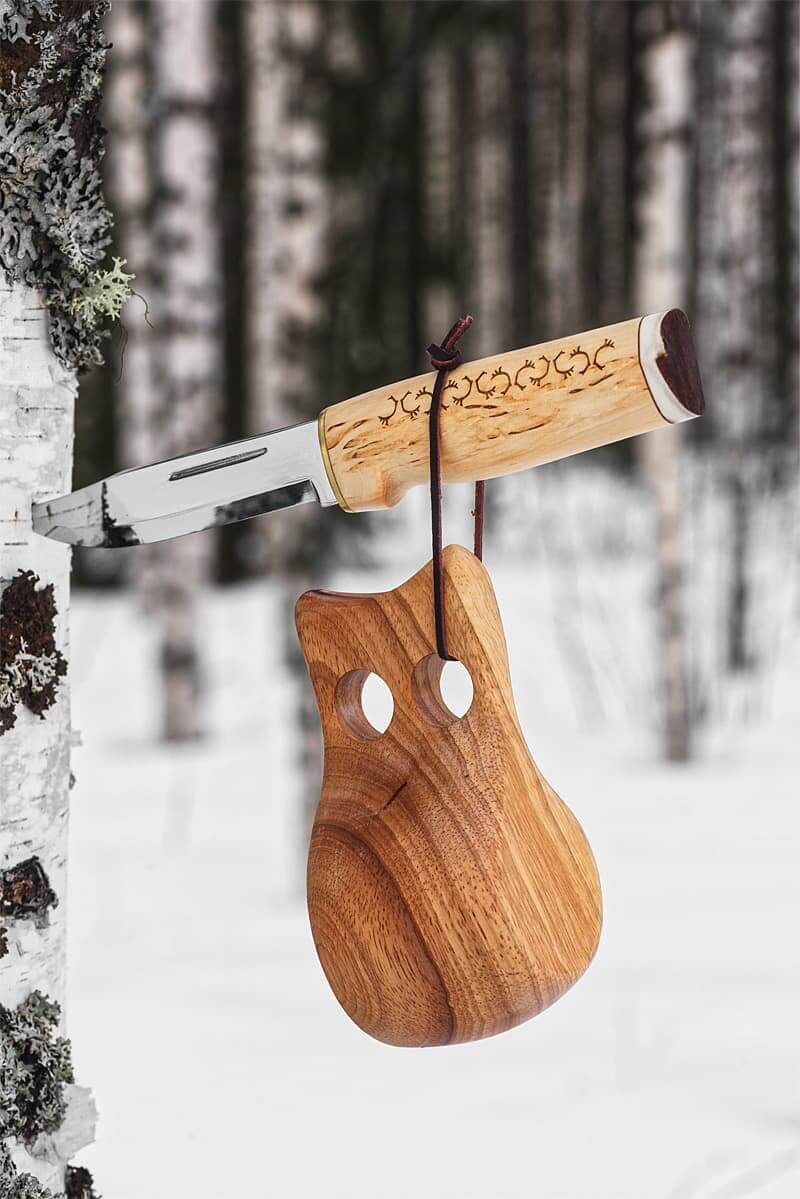
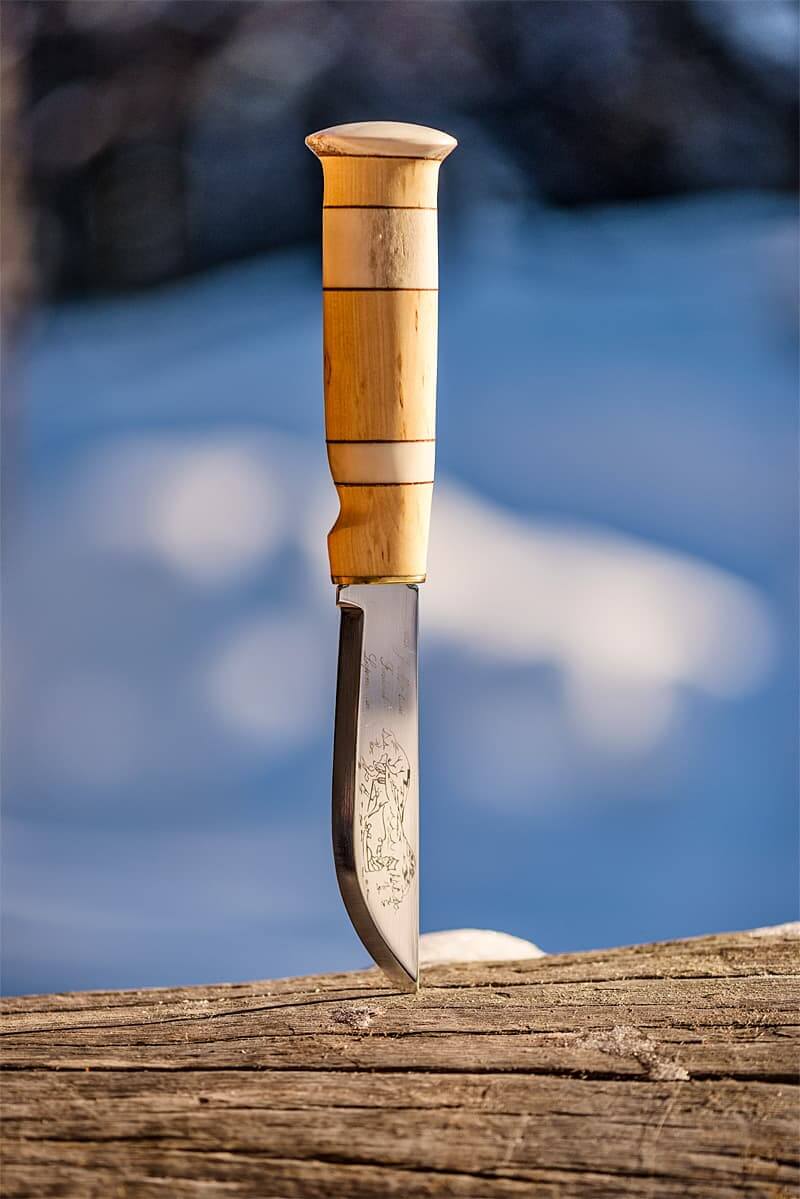
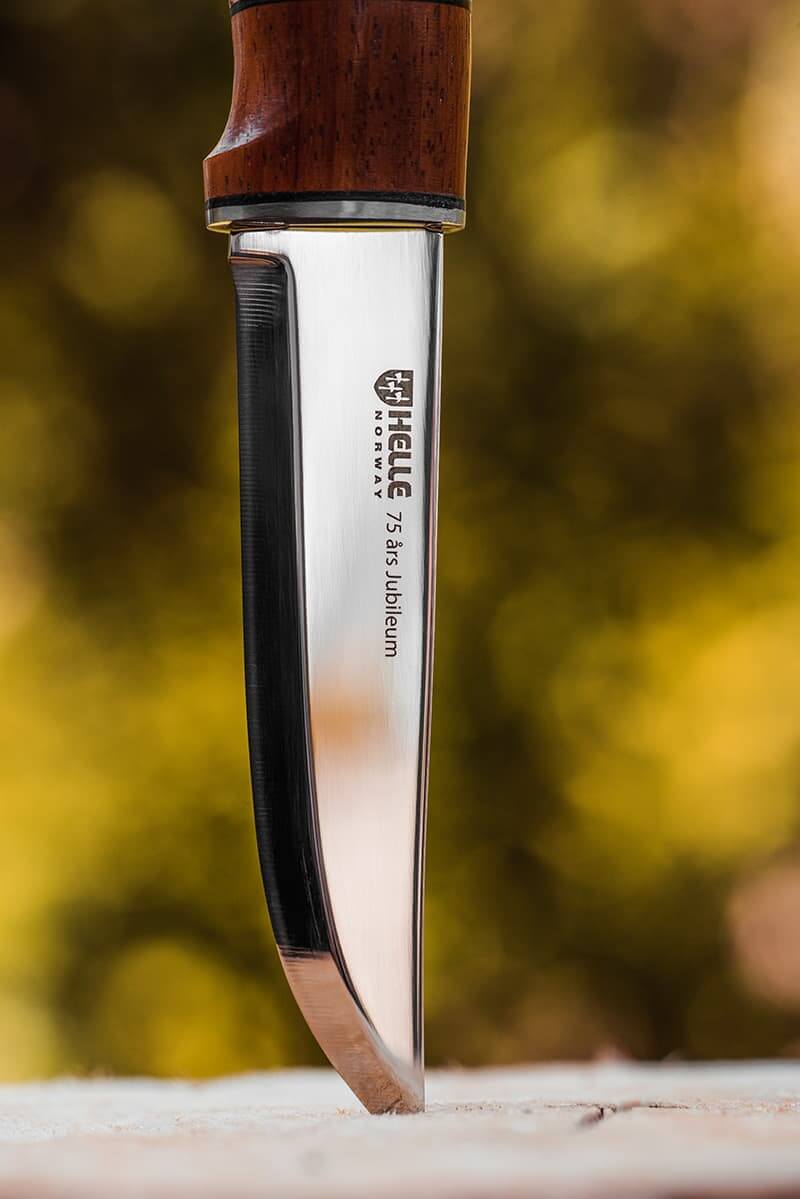
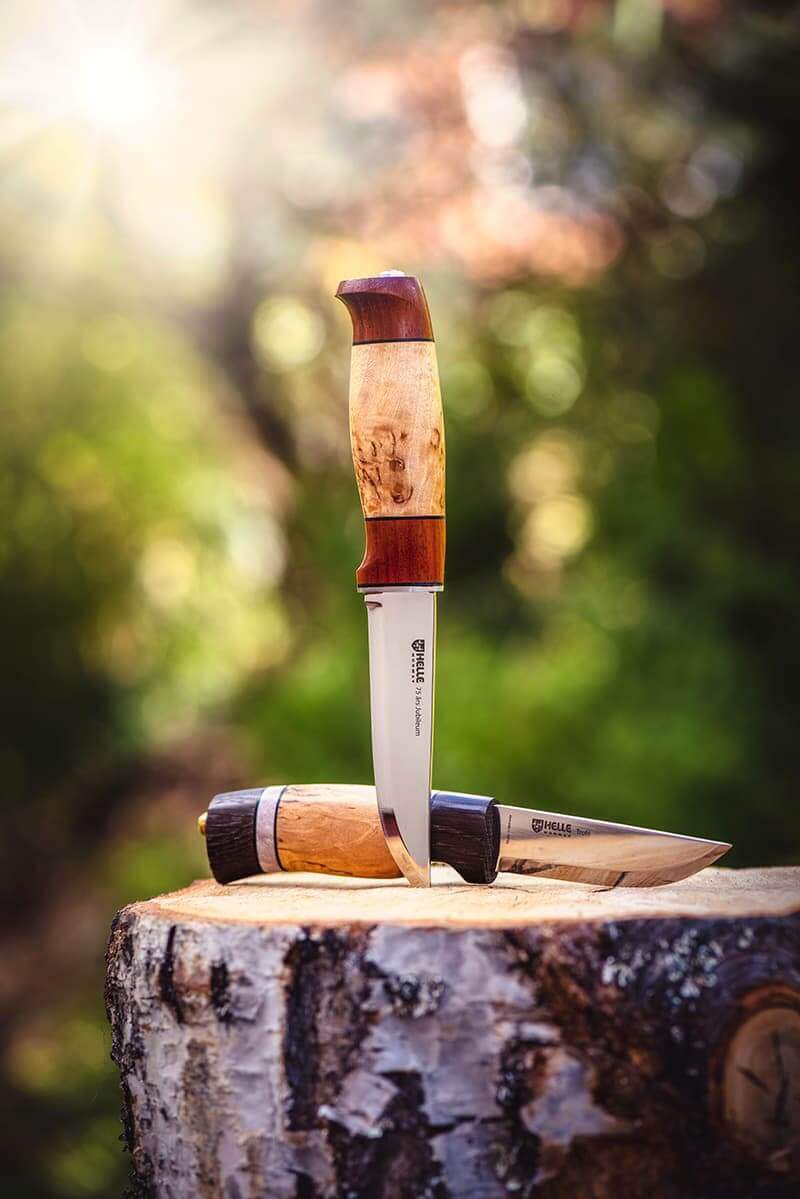
Can't talk about puukkos without talking about the Sami. This knife is the result of generations of use and development by the Sami people. It has become a symbol of honor for this people and the life they lead. These knives are known worldwide for their practical design and function. The puukko is used for all kinds of tasks in the forest, farm or workshop. It's a versatile knife. He excels in wood carving because of the grind and shape of the handle which allows a complete but controlled power to be applied during sculpture.

Beyond the Arctic Circle, some 80,000 Sami live.
A feuded people of hunting, fishing, gathering and breeding of reindeer. Why do we say Sami and not Lapons, as they are commonly called? Sami comes from Sapmi, which means all their territories, and Lapon gets closer to the Finnish lapp, more or less synonymous with « carrier of rags ». The Sami are united by the same Finno-Ugrian language with nine dialects and the same history over ten thousand years old.

The first human traces of the northern parts of Scandinavia date back about 11,000 BC. No one can claim that these first inhabitants were identical to the Sami today, but some historians agree that the Sami culture descends from that of these first inhabitants and that it has enriched itself, over time, with contacts with several other cultures. In the 9th century, the Vikings began to move to Lapland and to raise taxes in kind (pets of beasts) among the Sami.
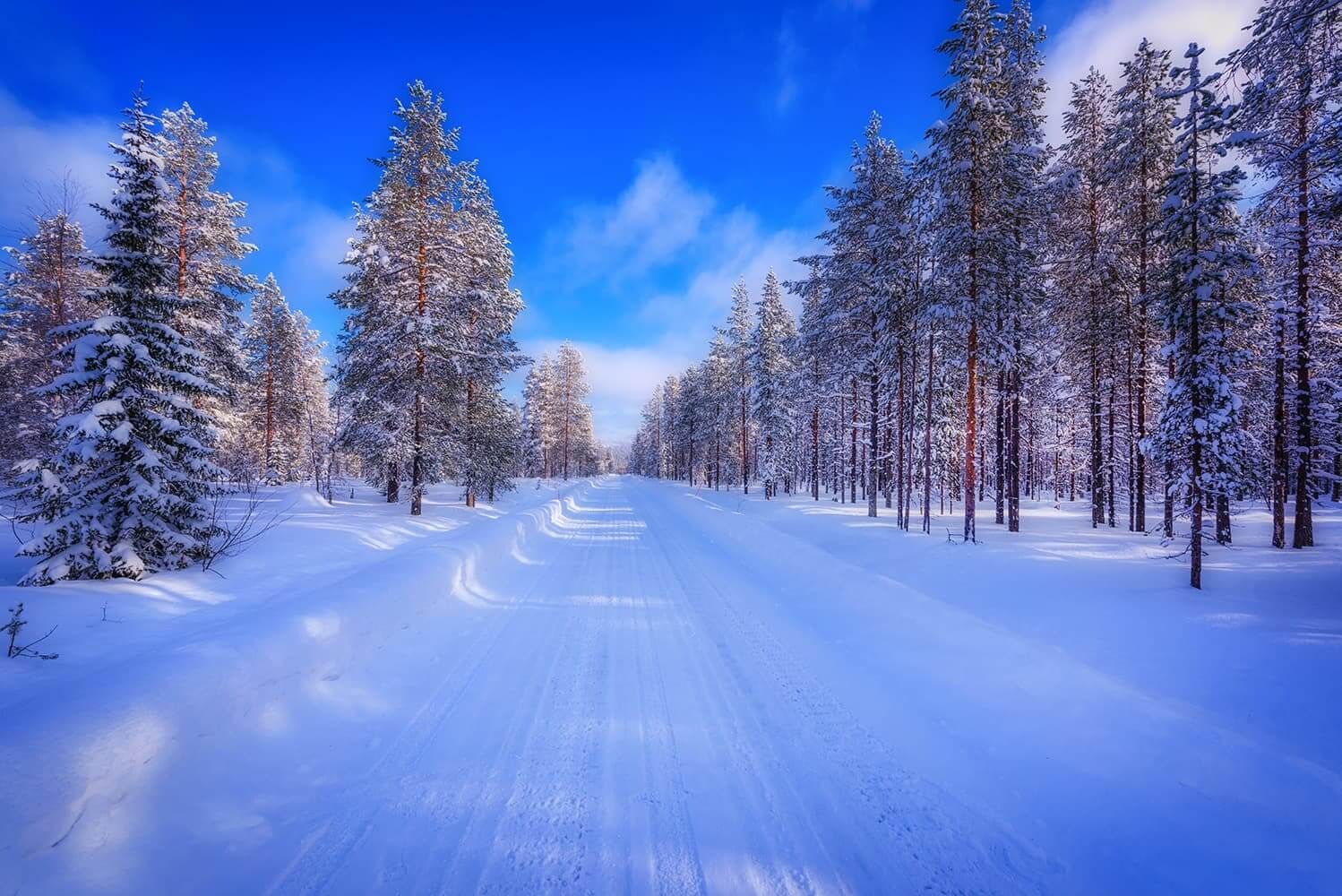
A territory made up of snow-covered peaks, wild rivers, pure-water lakes and forests.
Sápmi is the earth, the people, nature, reindeer, animals and light. It is an area of exceptional beauty and tranquility.
Northern people
The midnight sun and the northern lights. The heat of the fire by a sparkling winter day and the freshness of a mountain stream after a long day of walking. Sápmi is food and products. But also human rights and Sami names. Duodji (crafts), fishing and tourism Sami. The flag and the Sami colors. The desire to travel and respect all that we see around us. Young and old. And everything else.
The Arctic way of life
The Swedish Lapland is the hills and roaring rivers. Large forests and rural romanticism.
On February 6, it's the Sami national holiday. The date was held in commemoration of the first Sami Congress held in 1917 in Trondheim. A day to celebrate throughout the Sápmi and beyond. This photo was taken in Jokkmokk, at the market.
A feuded people of hunting, fishing, gathering and breeding of reindeer. Over the centuries, Protestantism / Lutheranism, colonization, free trade, progress have transformed their reality.
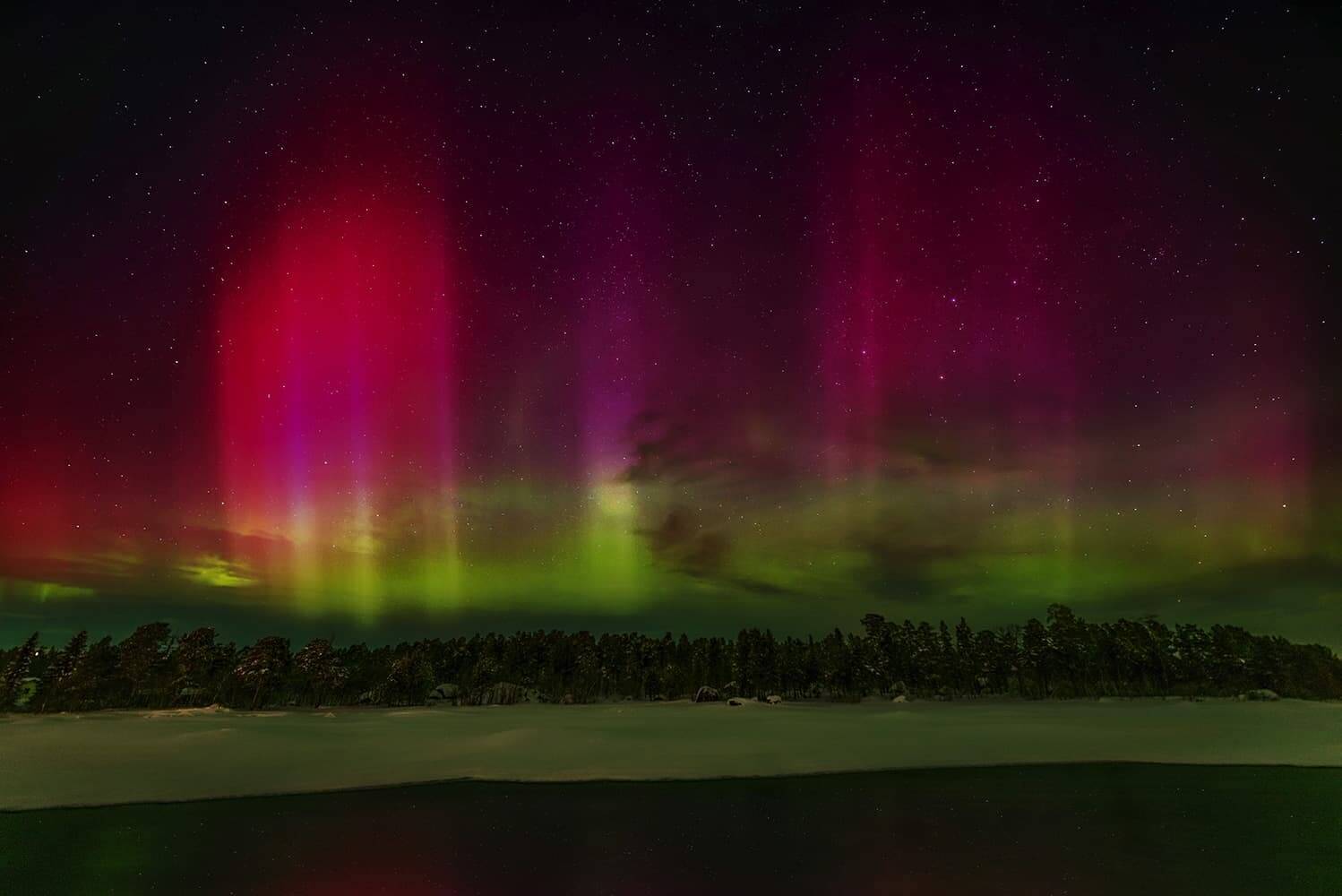
In Finnmark, in the extreme north of Norway, the power of the Earth falls under the meaning. Winter, the polar night envelopes everything. The northern aurora ignite and drape the sky with deep red, soft green, milky white. Summer, the midnight sun shines. Suddenly, the clouds are anthracite grey or powdery pink, the wind cracks the faces, the fog encases the bodies, the waves break against sharp cliffs or pour on pebbles.
A nomadic people
If you travel through Sápmi or Swedish Lapland, you may encounter the Swedish term sameby, which means « Sami village ».
The term is a little misleading, you can easily interpret, because there are special villages where the Sami live. A Sameby is run as an economic and administrative association that organizes reindeer breeding in a certain geographical area for the benefit of its members. Land is used, among other things, for reindeer rearing, hunting and fishing. For example, there are 51 samebyar in Sweden.
The Sami are a nomadic people who followed the reindeer through the vast pasture area from the mountain to the coast. Today, the nomadic lifestyle belongs to history and the Sami are residents, but reindeer still migrate from their winter habitat to the summer grazing area. Year after year, as they have for centuries.


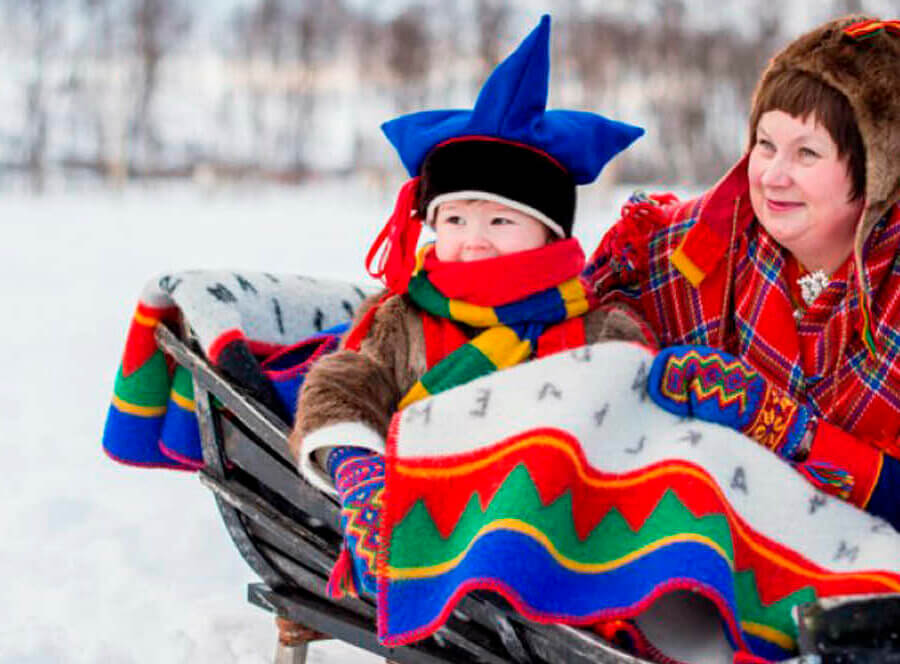
The Sami are a nomadic people who followed the reindeer through the vast pasture area from the mountain to the coast. Today, the nomadic lifestyle belongs to history and the Sami are residents, but reindeer still migrate from their winter habitat to the summer grazing area. Year after year, as they have for centuries.

Sami flag
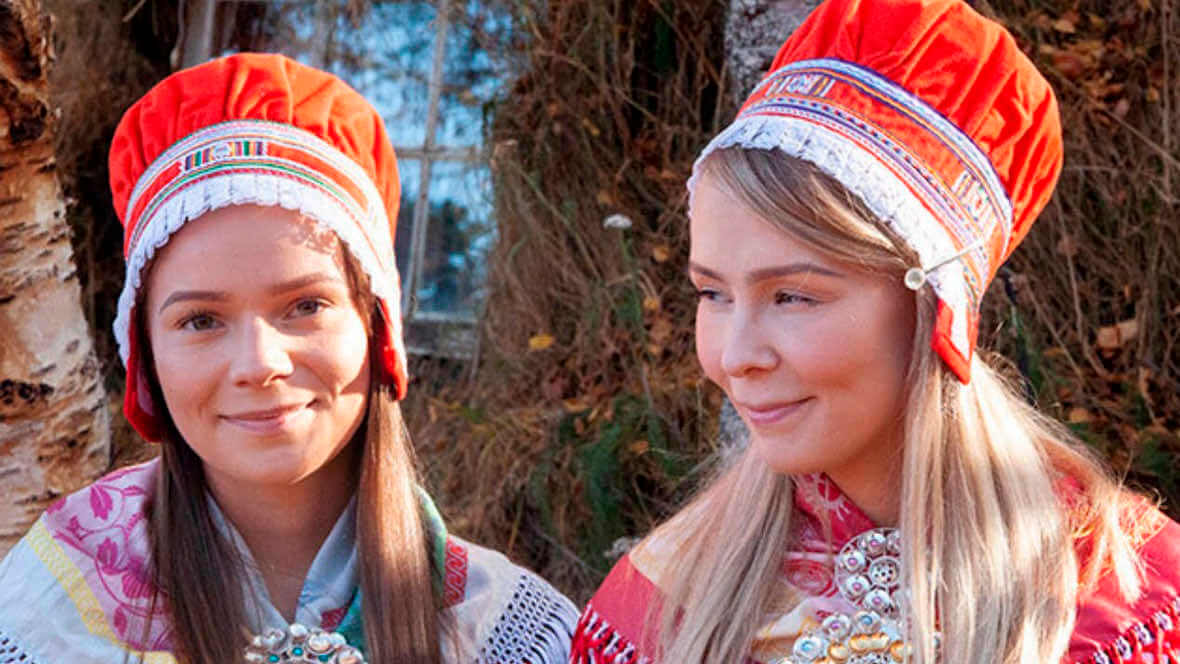
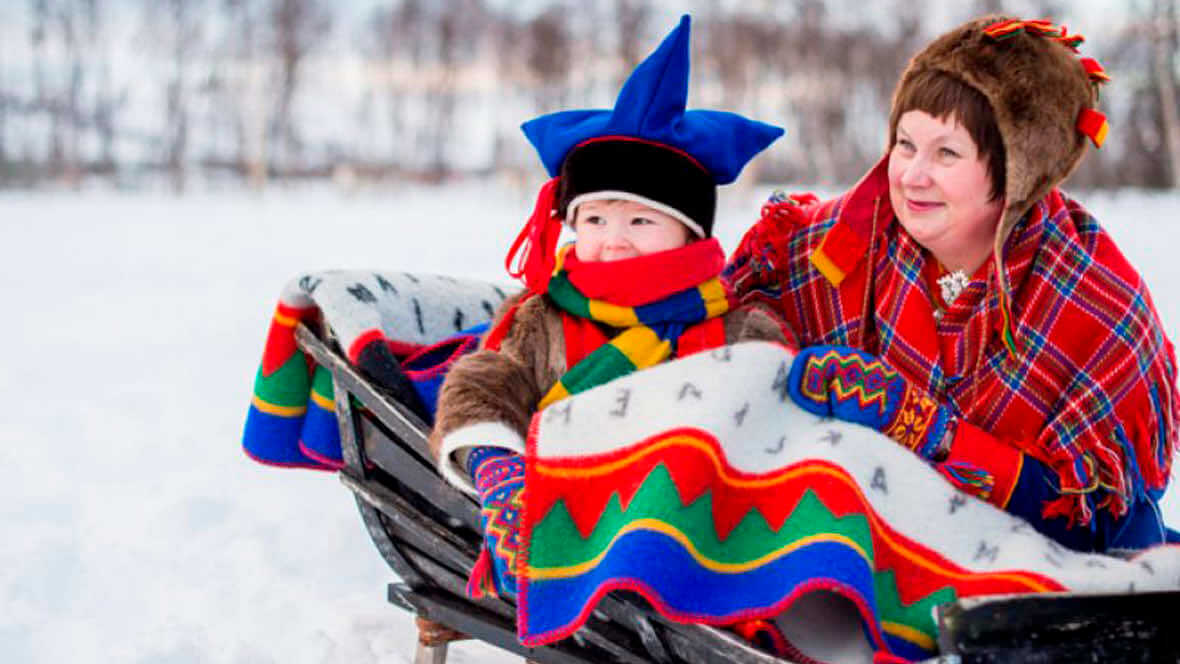
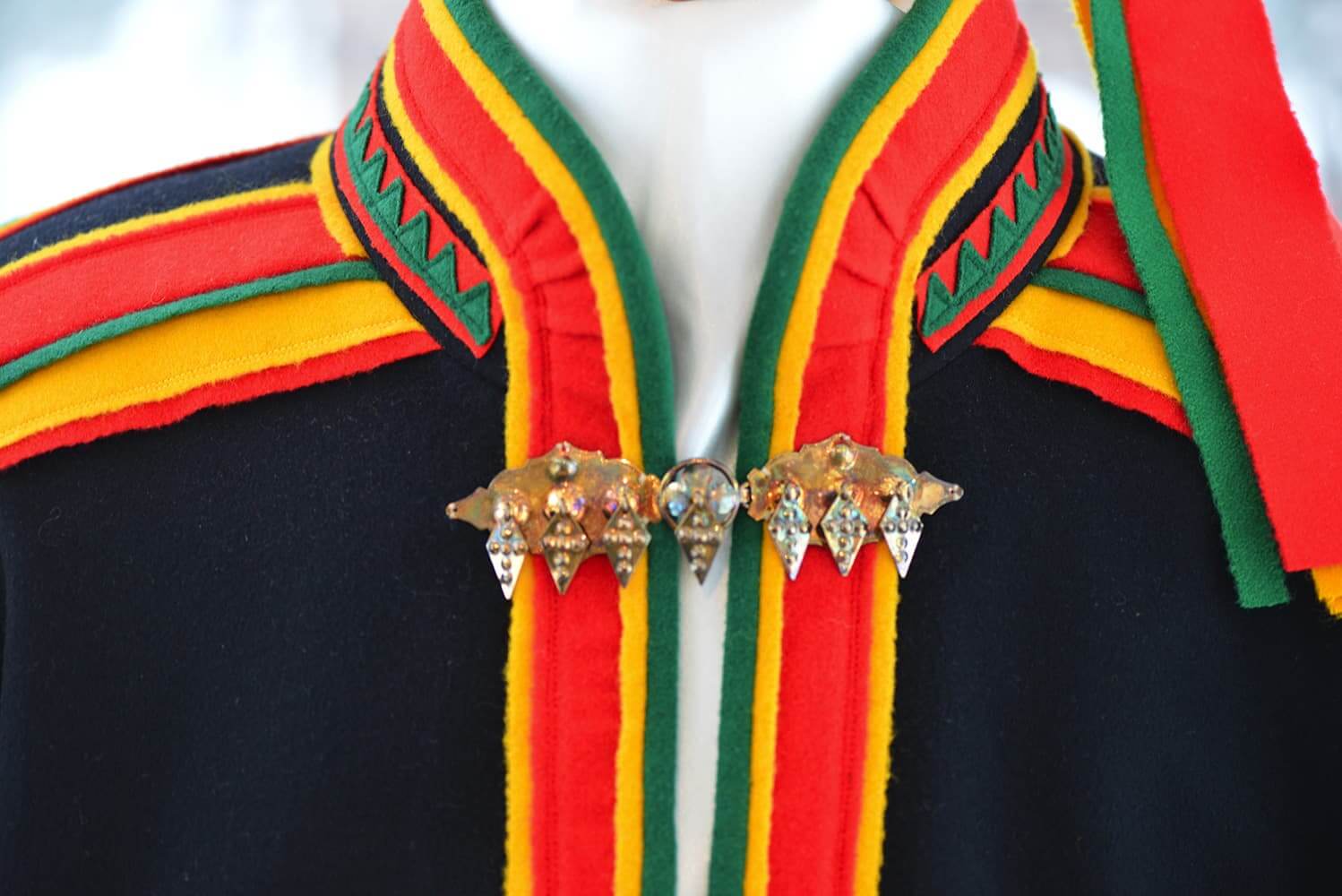
Since 1988, the Norwegian authorities have preserved the Sami language, culture and way of life. In 1989, they obtained Sametinget, the Sami Parliament, their first consultative assembly. Four years later, on February 6 (in memory of the meeting between the North Sami and the South Sami organized on February 6, 1917 in Trondheim), they organized their first national festival... raising the flag they had validated, in 1986, whatever their country of origin. The ring represents the drum shape of the Sami shaman and the sun. Red and blue symbolize the moon and the sun, or the four elements: red for the fire; water blue; green for the earth and yellow for the air. These colours are also included in the traditional Sami costume, called gákti. Depending on the region of Lapland, the predominant colours of the costume vary.


What is the Duodji?
Sami Duodji is all traditional handicraft made by the Sami people. It is a decorative art form of Sami peoples mainly for everyday objects.
Traditionally, the objects are red, green, blue or yellow and divided into two sub-groups:
- Men's objects, mainly of wood, horn or bone
- Women's objects, mainly of skin or wood from roots.
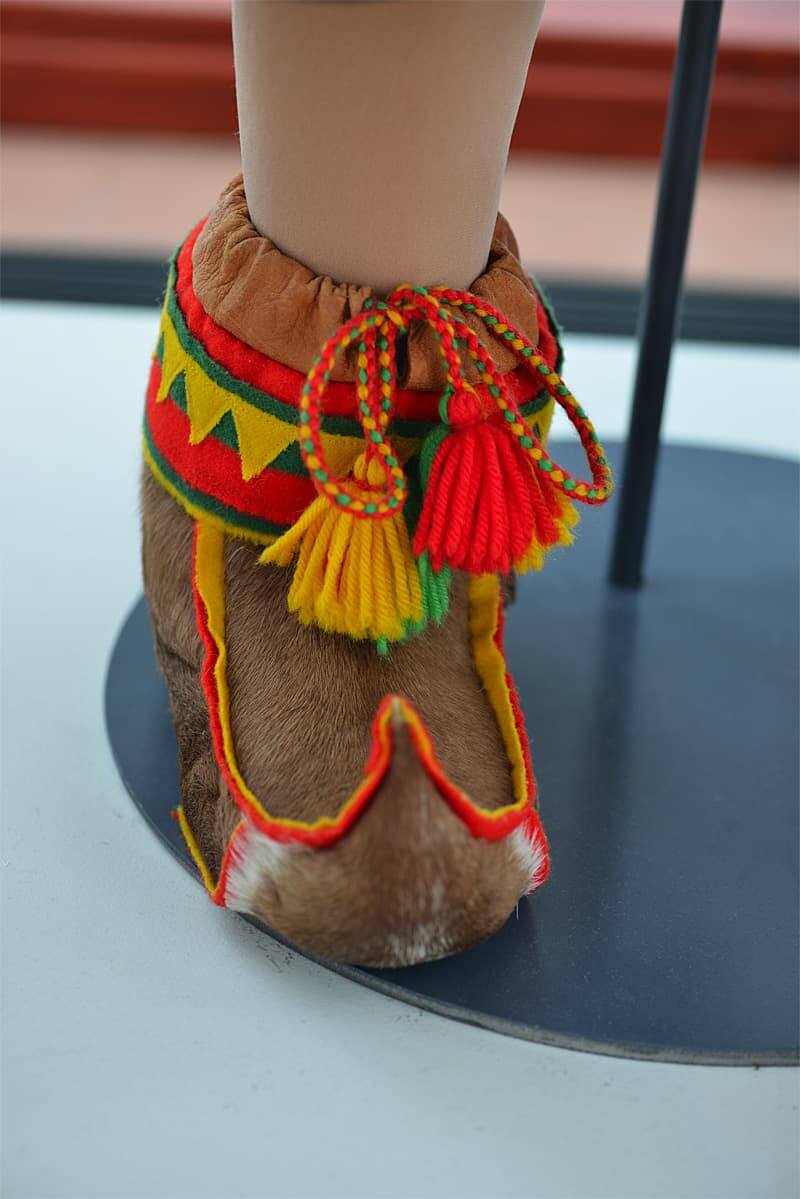
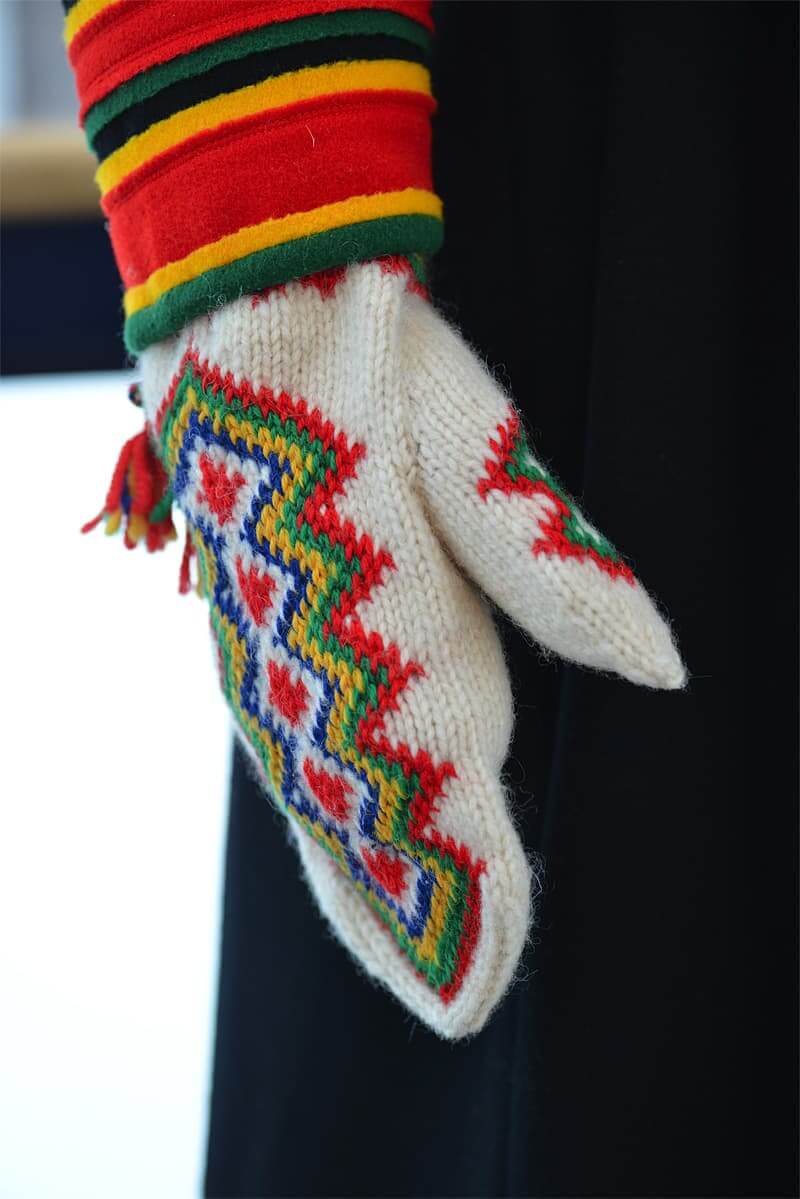
Handcrafted objects are simultaneously artistic and functional, such as tools, clothes, knives, cups, bags, hats, belts, laces. These items have been hand made for many centuries and have been used in the daily life of the Sami.
Recently, there has been a growing interest in Sami crafts worldwide. I think it's wonderful that other artisans learn craftsmanship and traditional Sami style techniques.
Duodji – Traditional Sami Crafts


Sami crafts
Sami word for crafts – duodji – refers to creation with your hands from different materials. The Sami have always created with their hands, and the duodji is an integral part of Sami tradition and identity. Whenever something was needed in everyday life, everything was used – leather, tendons, roots, birch bark or wood – and manufactured by hand.
The art of Sami crafts has been transmitted for generations; children learn by seeing parents and grandparents continuously at work with their hands. This type of collective knowledge and tradition is known to the Sami under the name of "árbediehtu", and it is almost as if the whole Sami society were taking it with it and sharing it with the next generation. Without really knowing it, children inherit it until Sami culture is naturally part of their identity. Today, duodji Sami, even if it is influenced by modern lifestyle and other cultures, still has to be accompanied by a certain type of values and style to be called duodji.
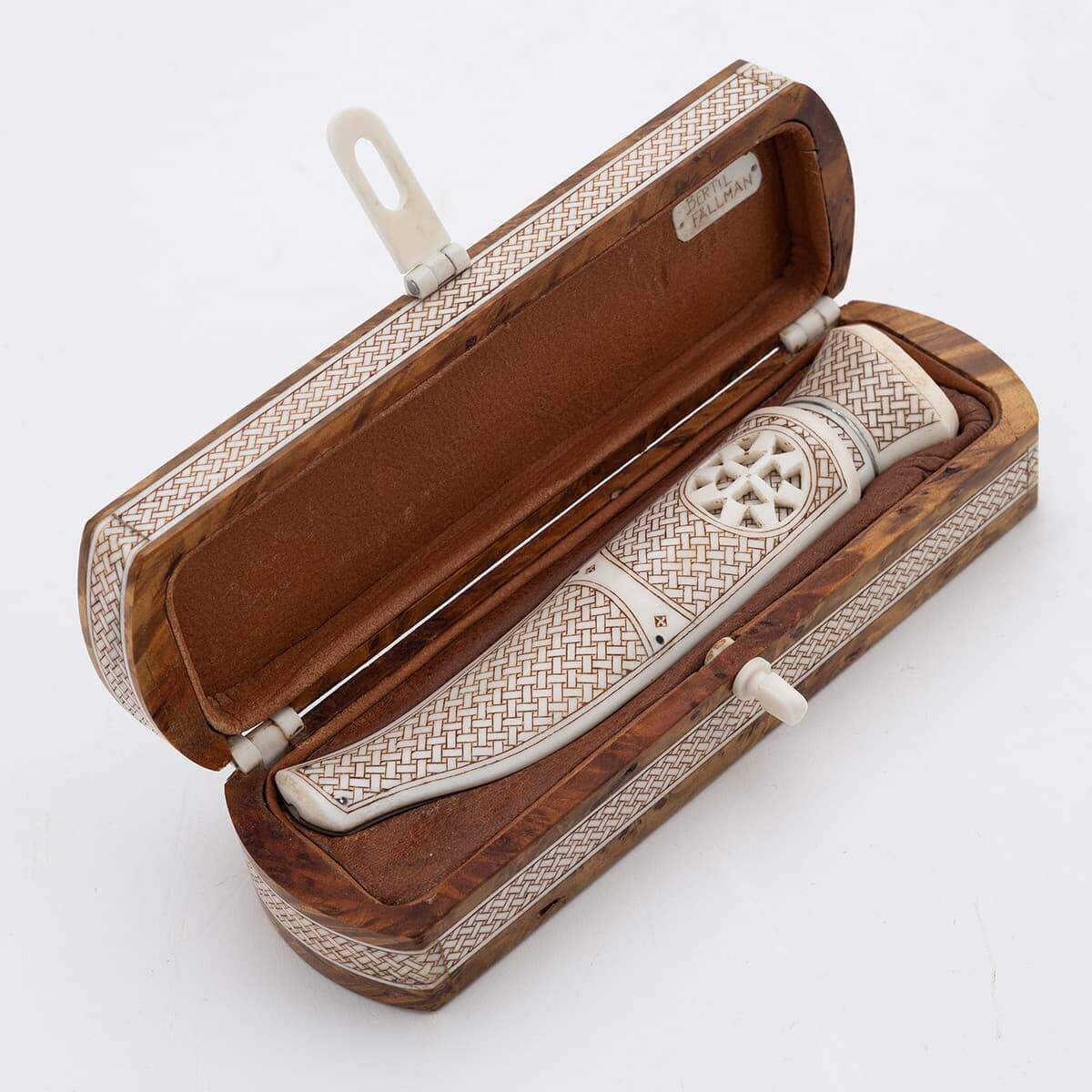
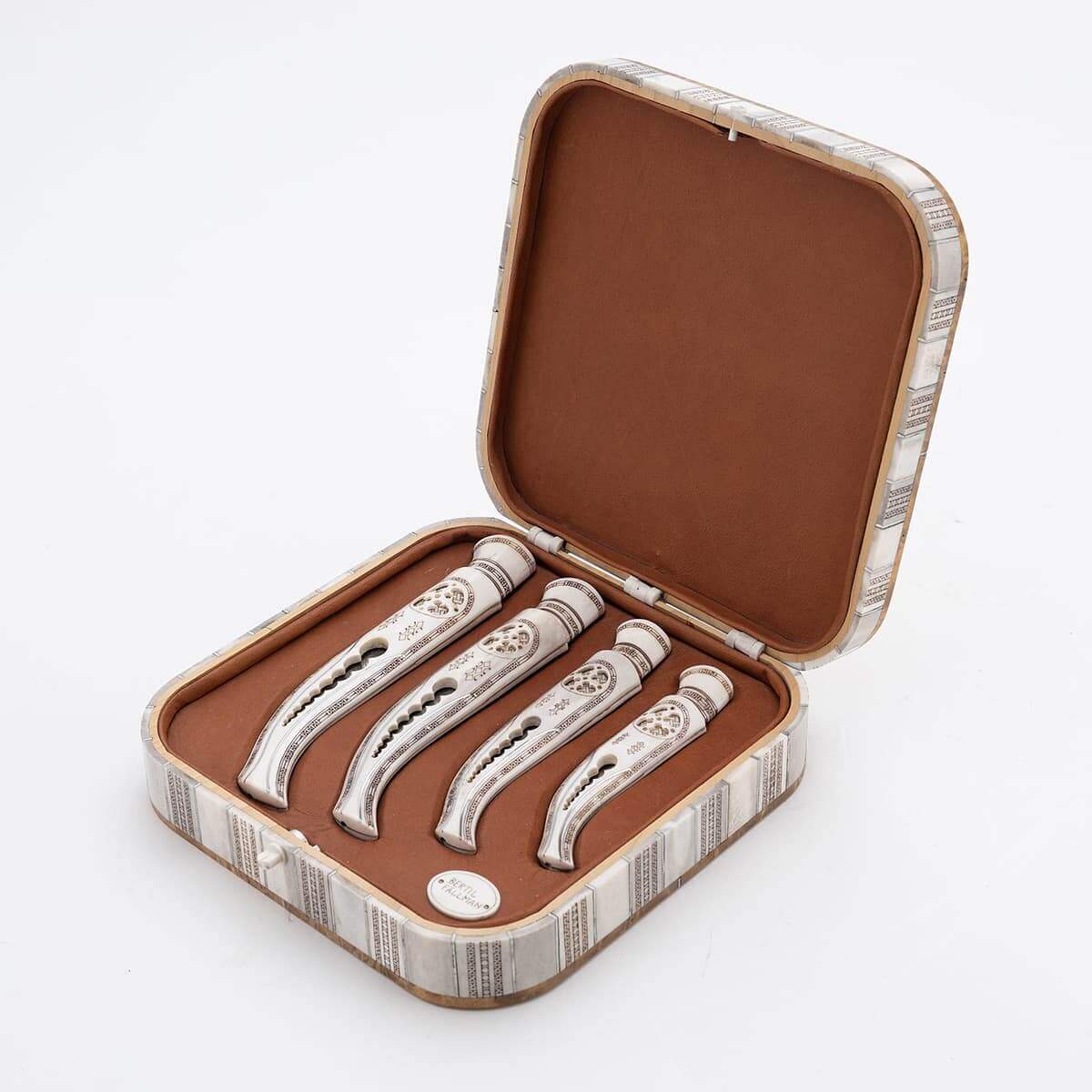
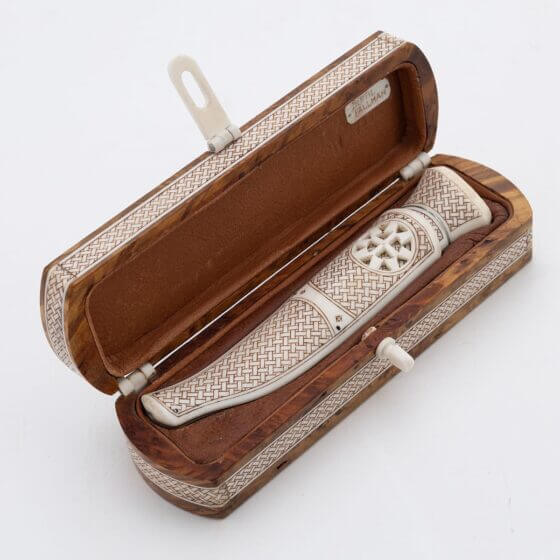
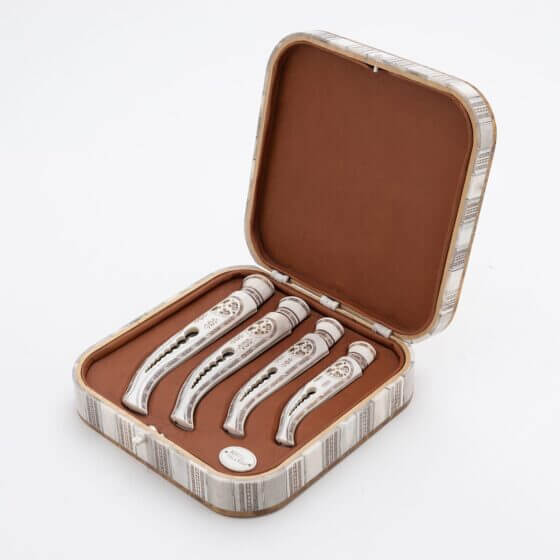
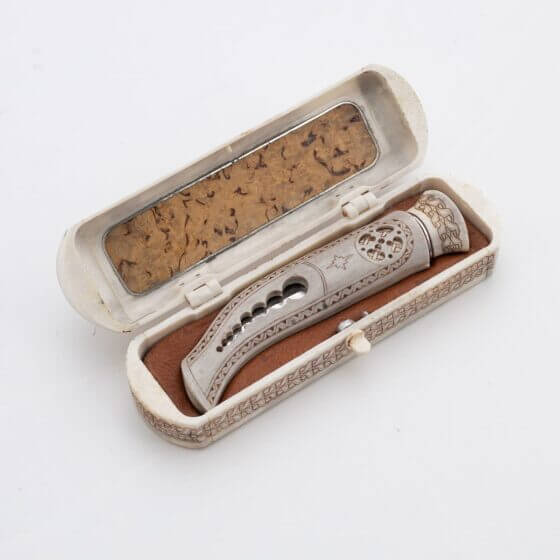
Cannot write about Sami crafts without mentioning Bertil Fällman's puukkos (1920-2020). One of the greatest cutlery masters who made puukkos for thirty years and eventually acquired an international reputation. Some of his most beautiful pieces were put on sale in early 2022. You will find its history and a few knives in the portfolio by clicking on the link below.


The famous winter market of Jokkmokk
For more than 400 years, the annual winter market of Jokkmokk in northern Sweden has been a major event in the Arctic region.
Jokkmokk is a central city for the Sami people and they come from all over the Sapmi the first week of February each year to meet, exchange and celebrate their culture. Many artisans come to present their productions of puukkos and some are real works of art!
Those of you who are interested in art and design have a lot to discover in Jokkmokk. At market time, Sami Folk School (Samernas Utbildningscentrum) becomes a focal point for art and crafts, with exhibitions by a number of artists. The school forms the next generation of Sami artists, and the graduation exhibition presents students' talents through a range of styles and materials.
Cold like...
Often it's cold like, well... Hell. It is not uncommon for temperatures to fall below the -30 degree mark. To make the most of your market experience, it is important to have the right clothes. Wear several layers of warm materials such as wool or other functional fabrics, covered with a resistant down jacket and put on a solid pair of winter boots. Add a fur hat and the warmest gloves you can find, and you are ready for the Jokkmokk market.
Eight seasons
If you live your life close to nature, you will eventually recognize that the four seasons of the calendar are not enough.
The twelve months named after the ancient gods and royalties of the ancient Roman Empire have nothing to do with you. Therefore, the Sami people have eight seasons, as there is always a season between seasons. At the end of the winter, the sun in Alvve is back and the days extend and warm. Spring is not far away, but due to cold nights, the snow will remain for a long time. It's spring-winter, Gidádálvve, and probably the best time for many of us who live in the north. Then came the month of May, a period which the Sami know as Miessemánnu, that is, the period when calves were born.
Every new day is a day closer to next winter
Everything in the life of the Sami people revolves around the reindeer and the eight seasons are also a way to describe the migration of the animal, from winter pastures to summer pastures. After Gidádálvve comes the spring Gidá, followed by Gidágiesse, and Giesse, meaning spring-summer and summer. But, it all ends, and the summer heat is followed by autumn, the time called tjaktjagiesse, a time for harvest and forage before tjaktja n Because, as the saying says here, every new day is a day closer to next winter.
Magic of the Northern Lights
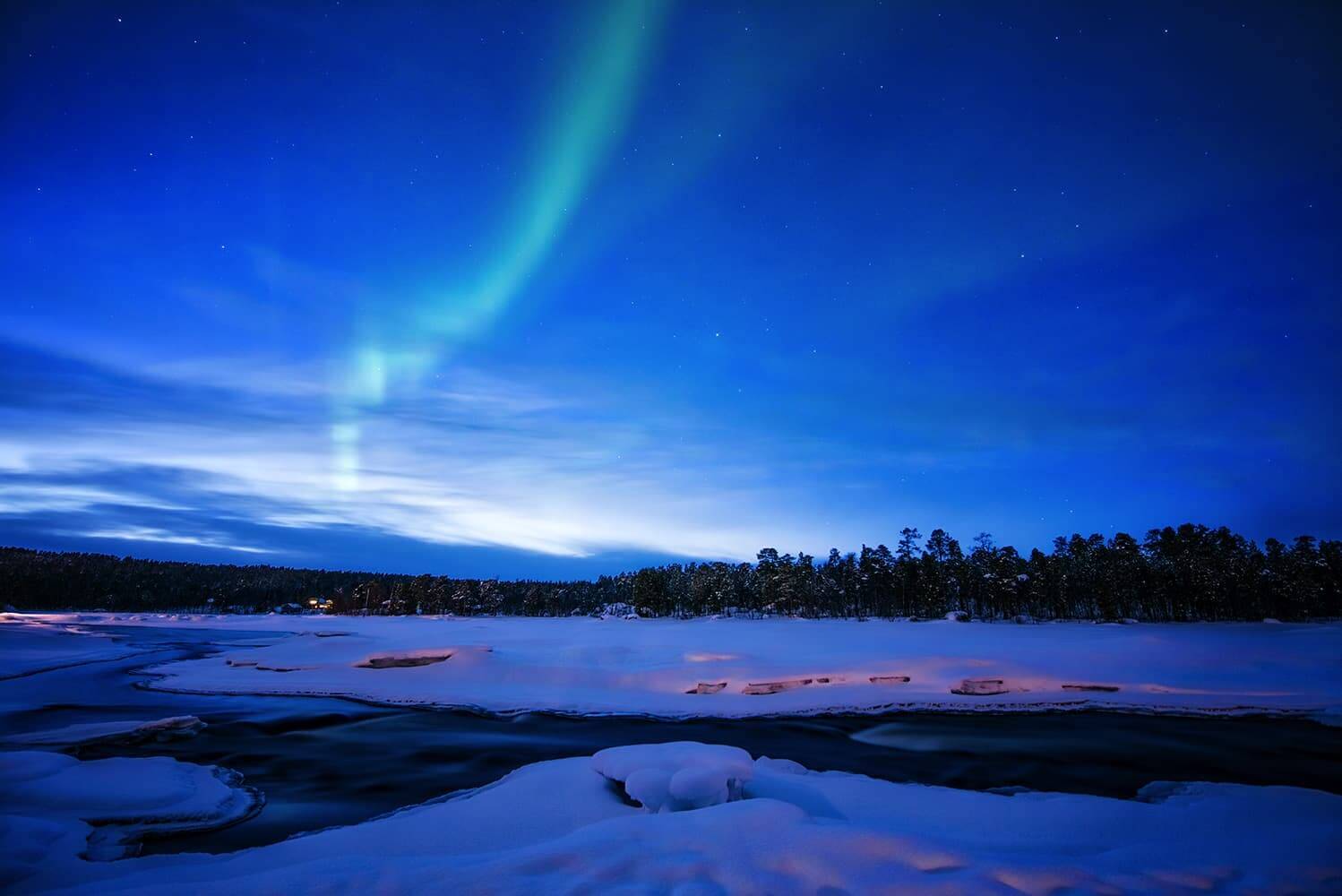
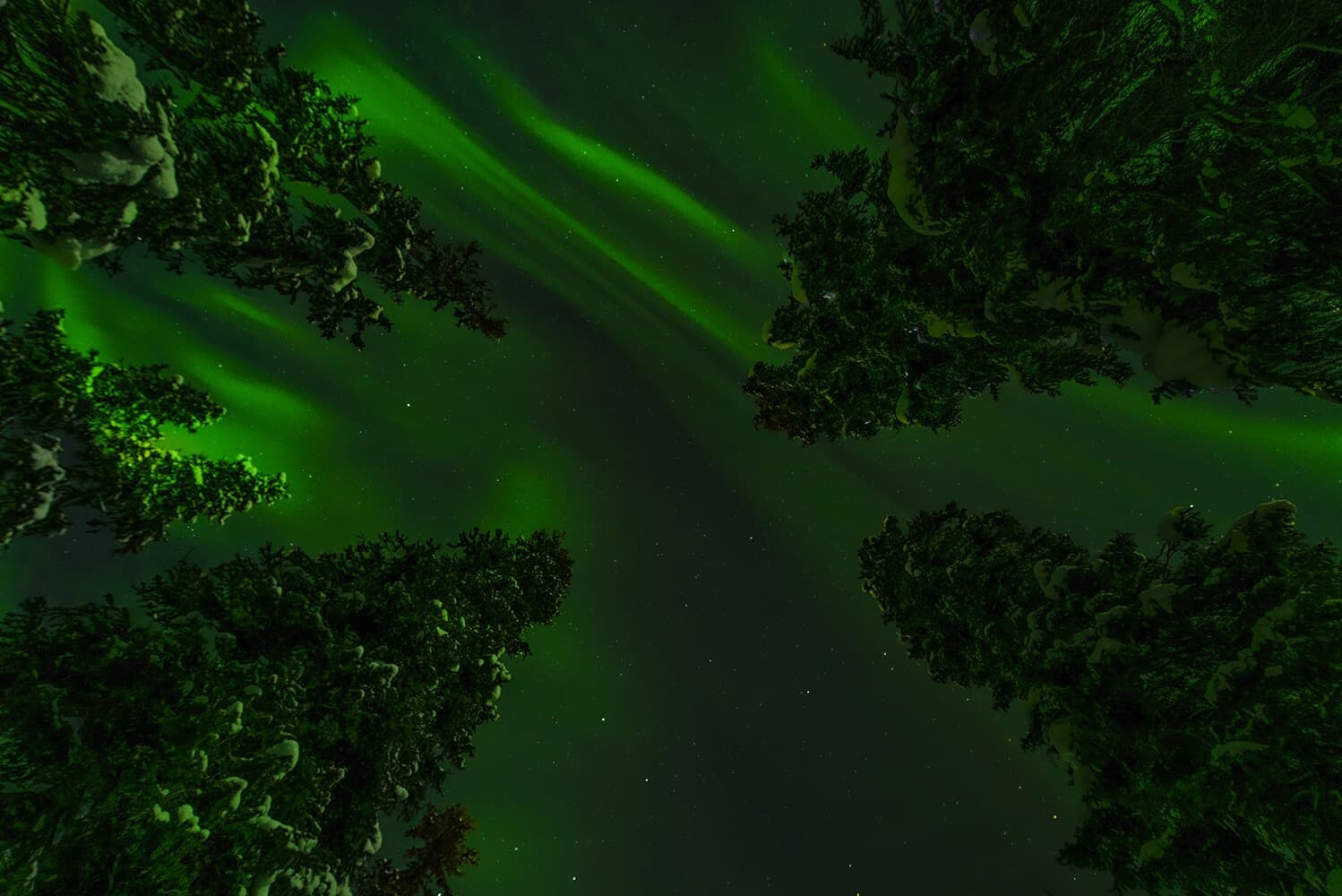
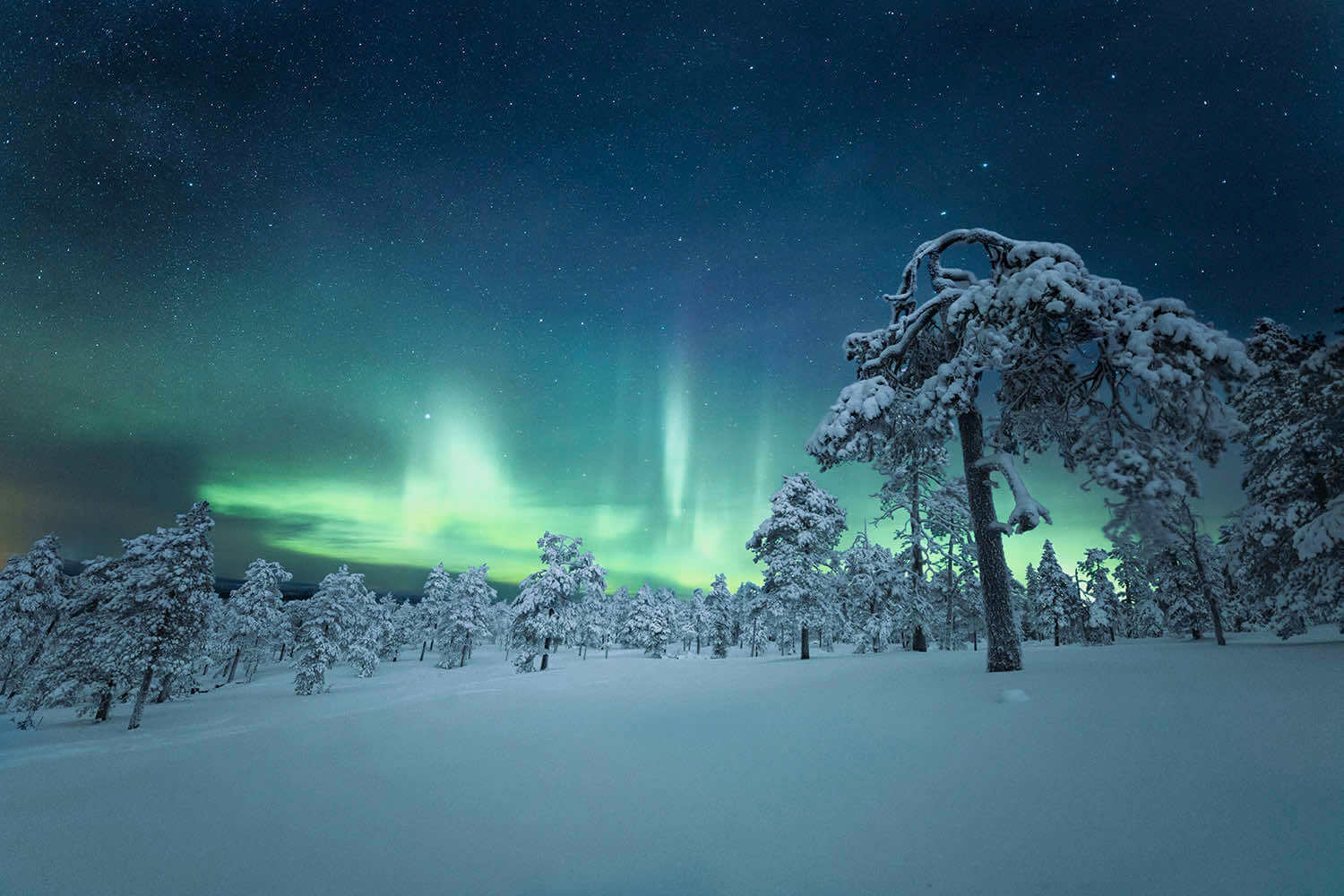
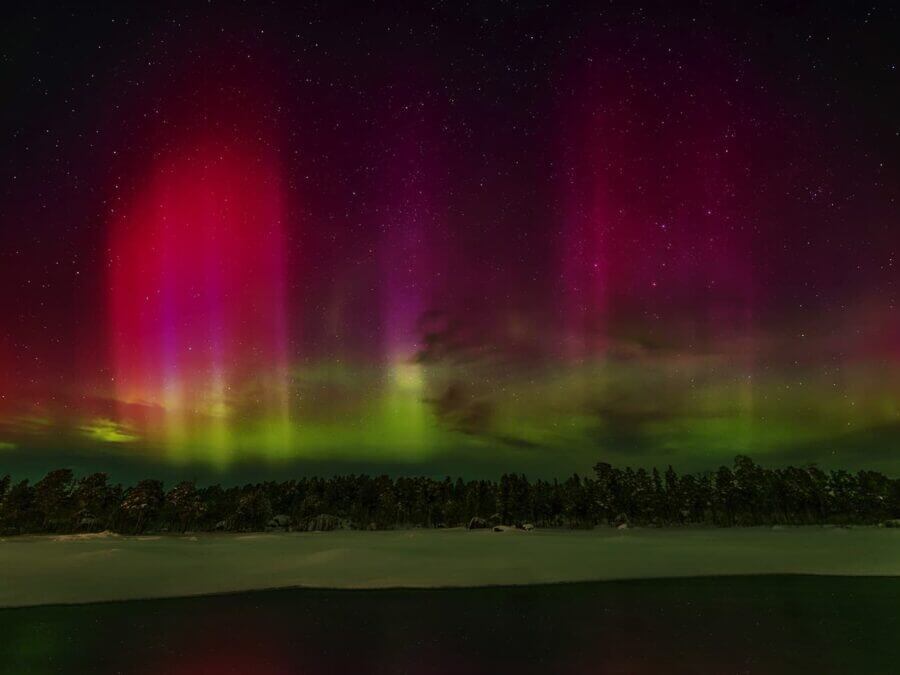
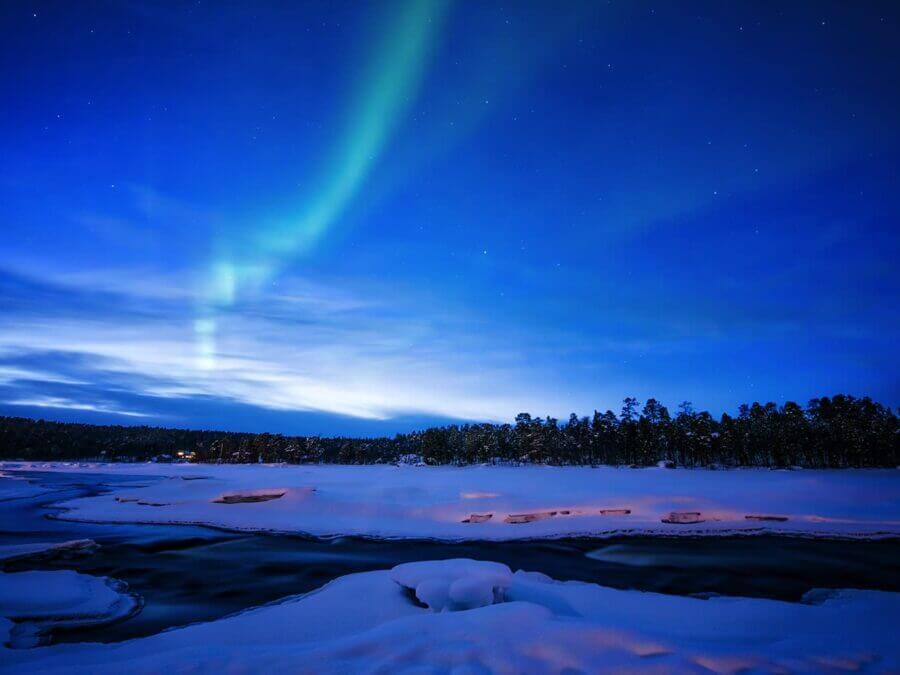
Between late September and late March, above the Arctic polar circle, it is dark from early afternoon until late morning and the northern aurora frequently unfold in the sky. Boreal aurora occur when particles from the sun, charged with electricity, collid with the Earth's atmosphere. They usually occur on a clear night, with optimal conditions in cold and dry weather. It is a breathtaking adventure for all nature lovers, photographers and outdoor enthusiasts.
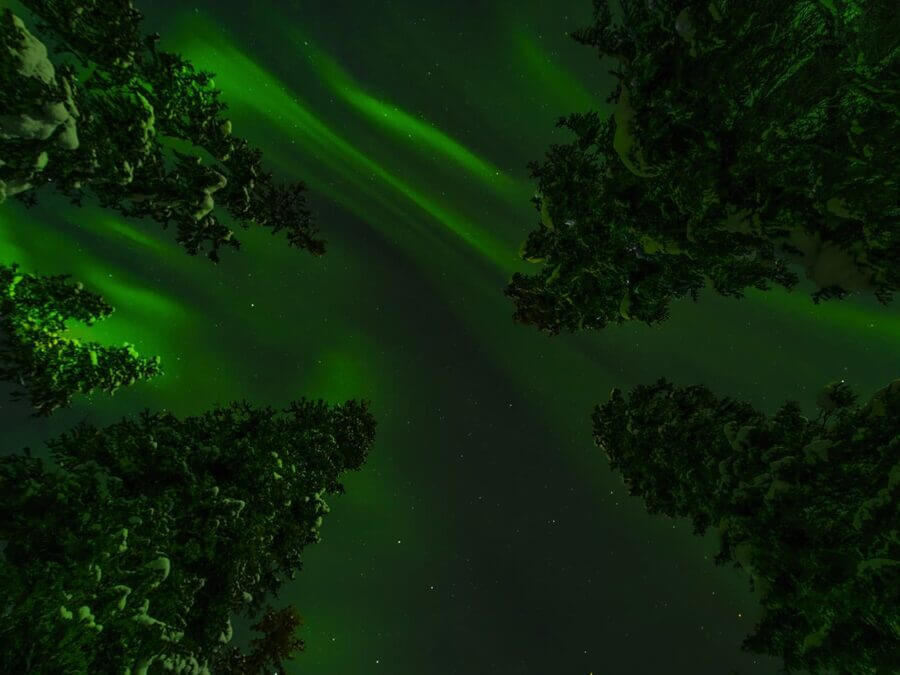
Tromsø is a town in northern Norway.
Located in Troms County, north of the Arctic Circle, it has an area of 2,558 km2 and has 76,734 inhabitants as of January 1, 2019, making it the eighth largest city in the country. She's nicknamed « Northern Paris » and is the northernmost city of more than 50,000 people in the world.
Easter Festival in Kautokeino
The Sami meet there by thousands to celebrate many weddings and... participate in the world reindeer racing championship! In 2009, Norway had 38,470 Samis, of whom 3,010 breeders owned 60,000 reindeer. Among the breeders, almost as many women as men. The others were employed in health and social services, commerce, hotel and catering, agriculture, forestry and fisheries. The Sami have always adapted to change, whether imposed by nature or by men!

Boazu – the reindeer
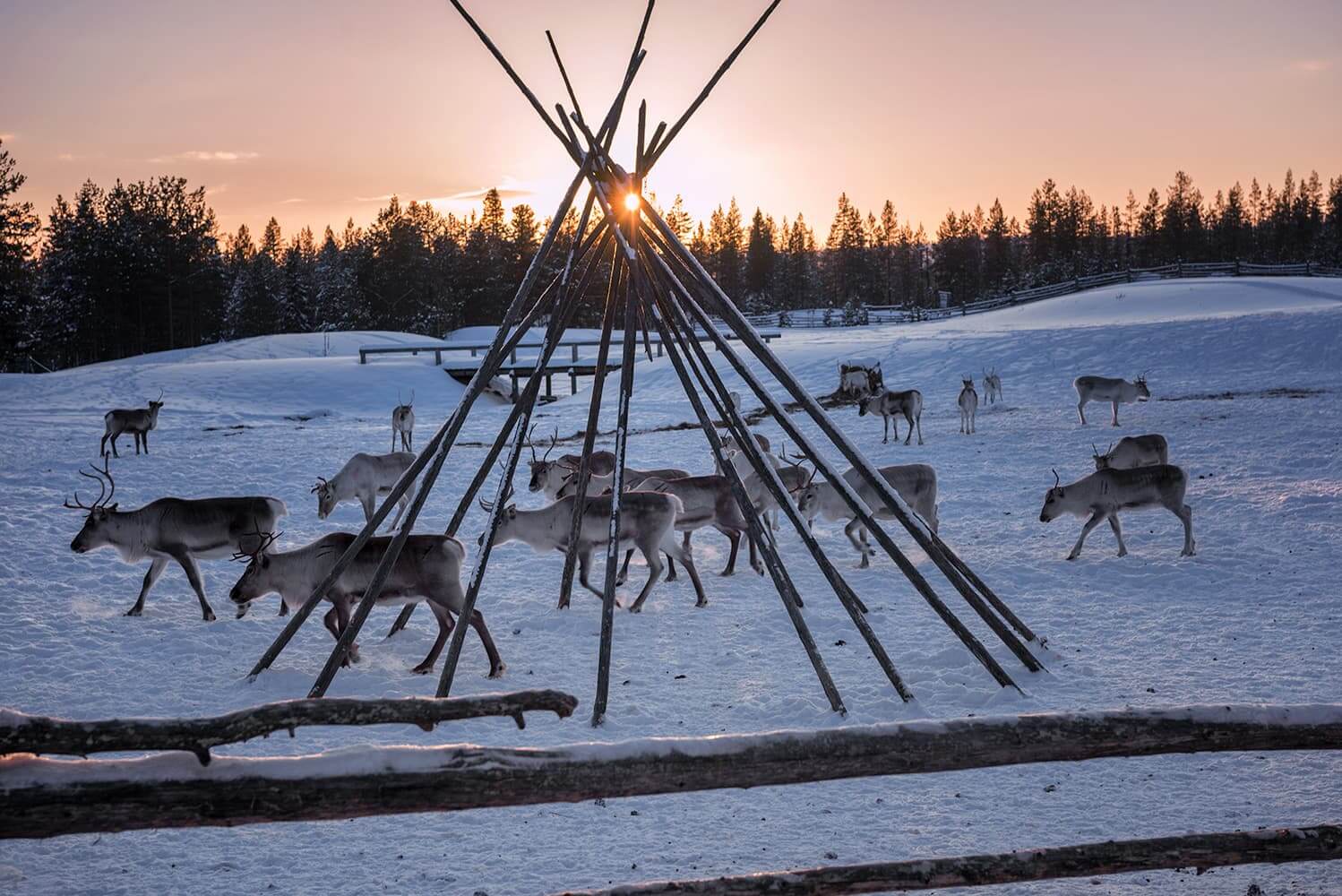
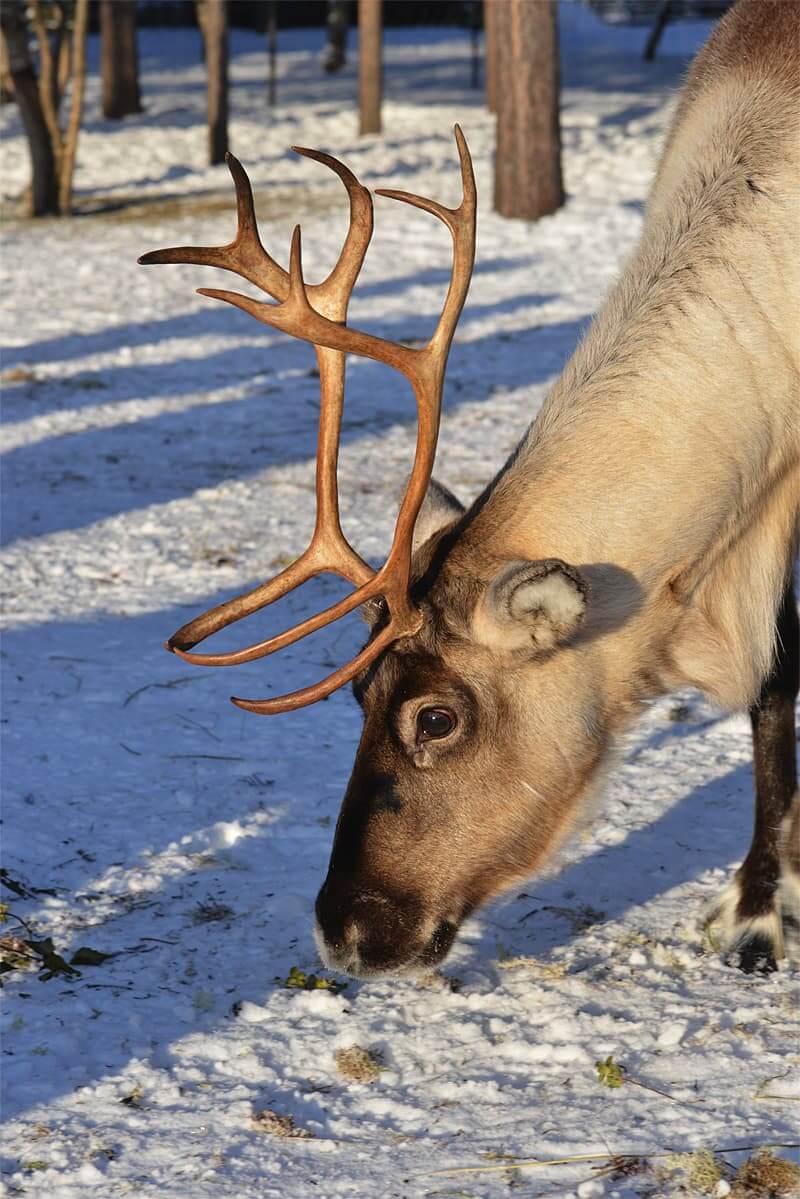
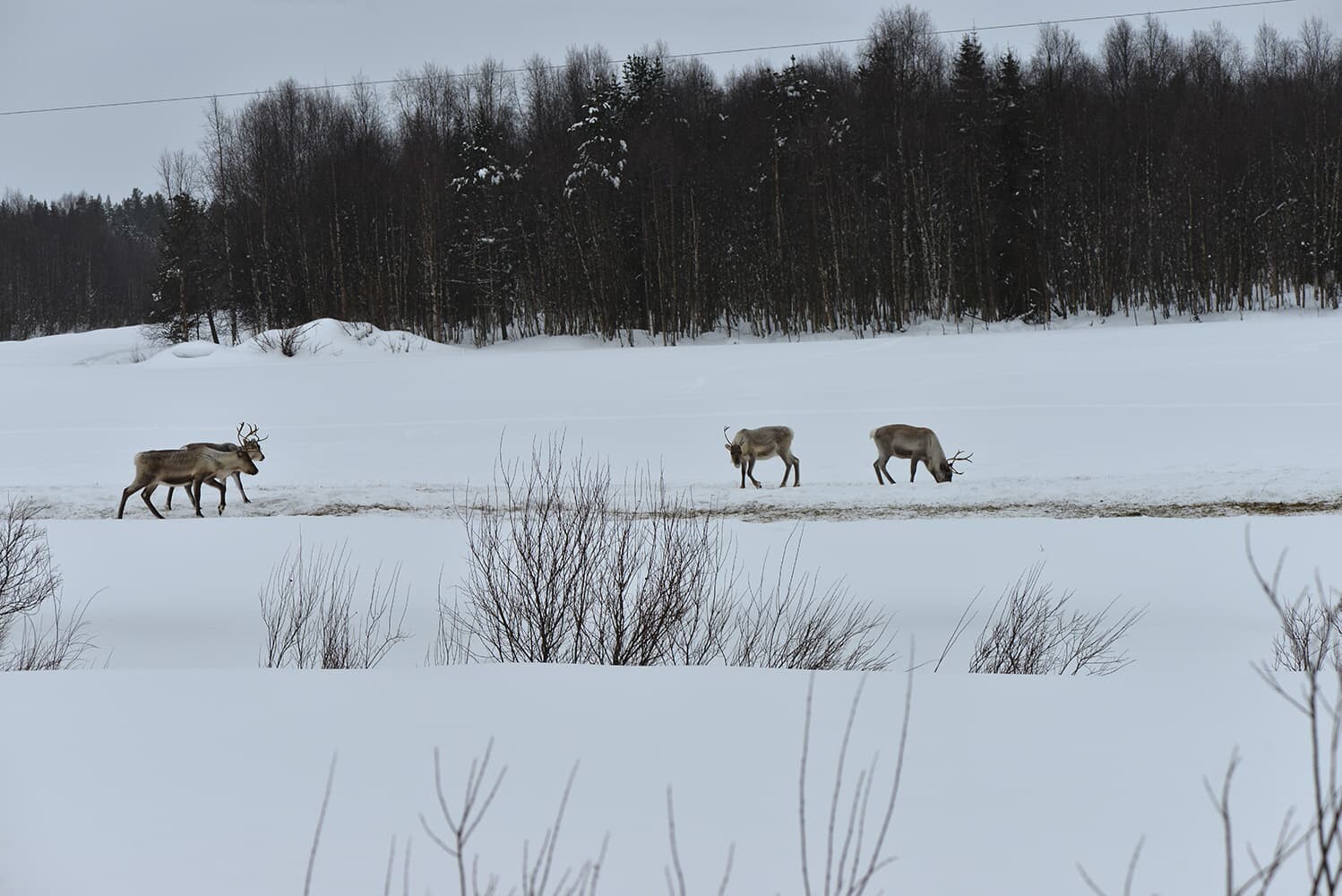
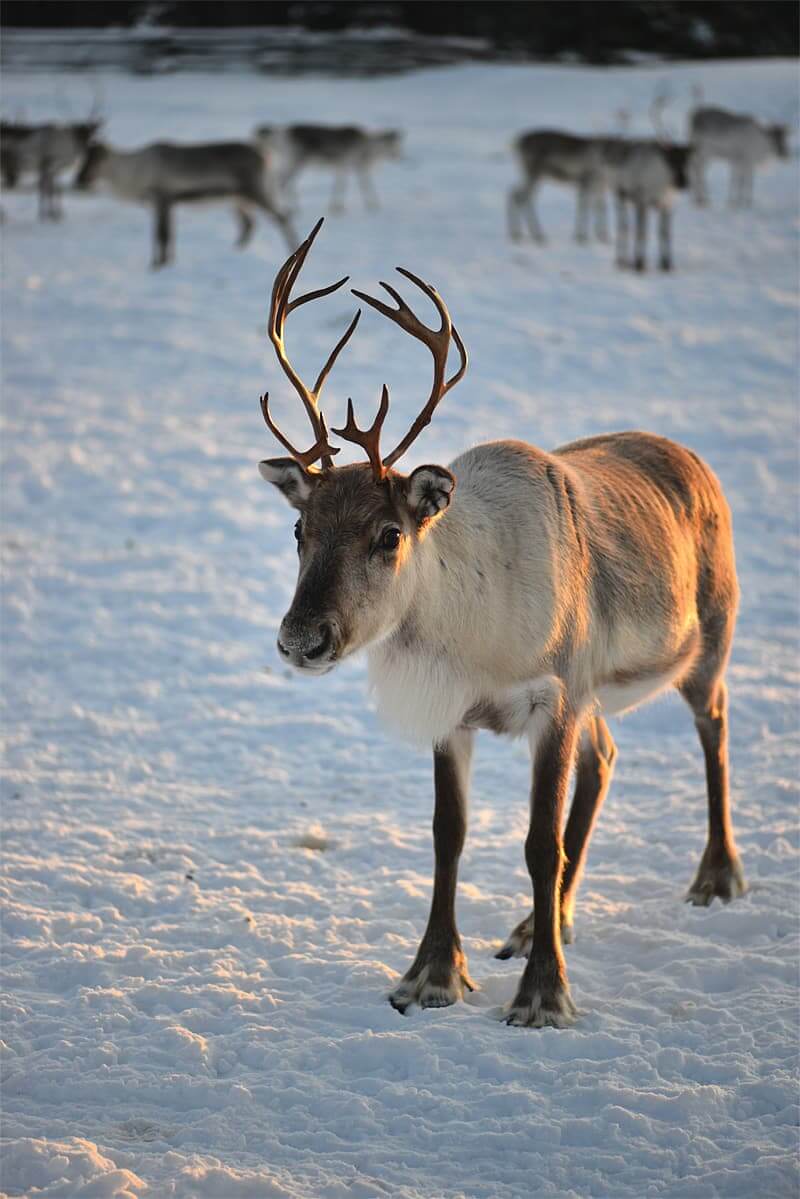
The reindeer boazu occupies a very special place in Sápmi. It's a totally Arctic-friendly animal. Depending on the season, the bottom of their retina changes color from blue to yellow and then to blue again. As a result, reindeer change their way of thinking. In winter, they are more suitable to see contrasts, but in summer they are more sensitive to colours. Throughout history, the reindeer provided food and clothing to the Sami and was also useful in the trade. This began with wild reindeer hunting and evolved into a herd for thousands of years in coexistence with animals and with nature. Still today, nature controls the rate of reindeer breeding. In fact, the animals roam freely on vast open spaces all year round.

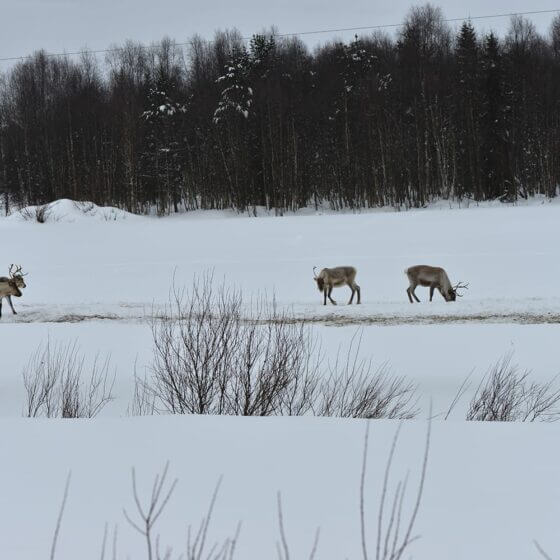

Lapland
LAPANIA WAS FORMED BY THE GLACITY, SEASONS AND RENNES.
For the Sami, reindeer is not a disposable object.
The skins were tanned for clothes, the tendons became sewing thread, the woods were ideal for the handles knives and other tools, and the hooves were boiled for glue. Nothing was worthless, everything was useful.

When they feel threatened, reindeer engage in a swirling (cyclonic) movement that makes it impossible to target an individual and protects the fawns in the middle.
There are about 250,000 to 280,000 reindeer in Sweden alone
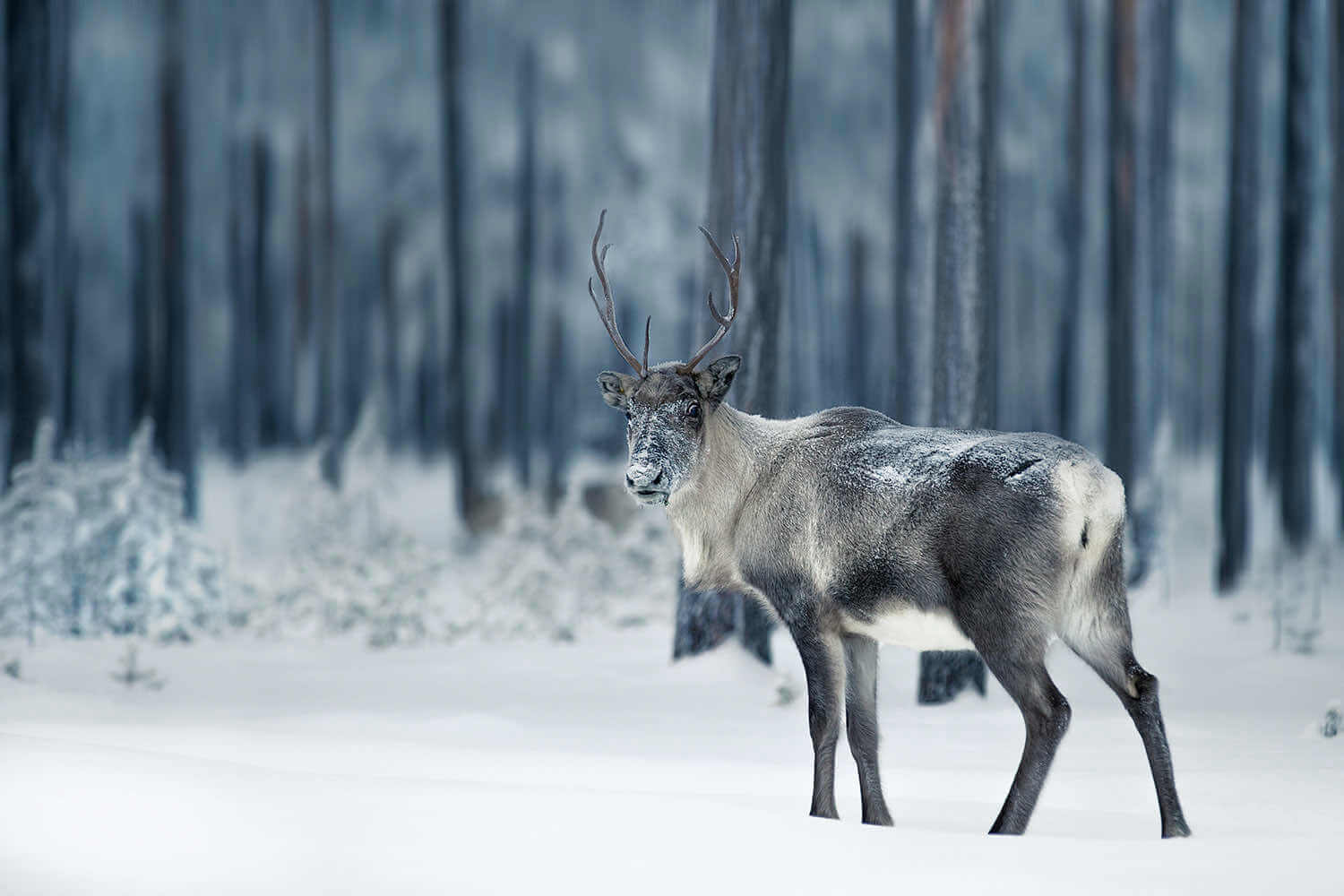
Male and female reindeer grow woods, which fall once a year. While the male reindeer loses its large horns in early autumn, so that they can dig deep into the snow to feed in winter, the females keep their small horns. The reindeer fur is very thick and dense, which licks well during the cold winter months. Its hooves are large, allowing them to run over the snow and dig into the snow to find the lichen, their favourite food. Once a year, in May, the female reindeer climbs into the mountains to lay down. The calf stays with her until the following year when it is time for the mother to give birth to a new calf.
A life in harmony with nature
Many Sami settled in conventional houses only in the mid-20th century. Others have chosen to follow reindeer as nomads.


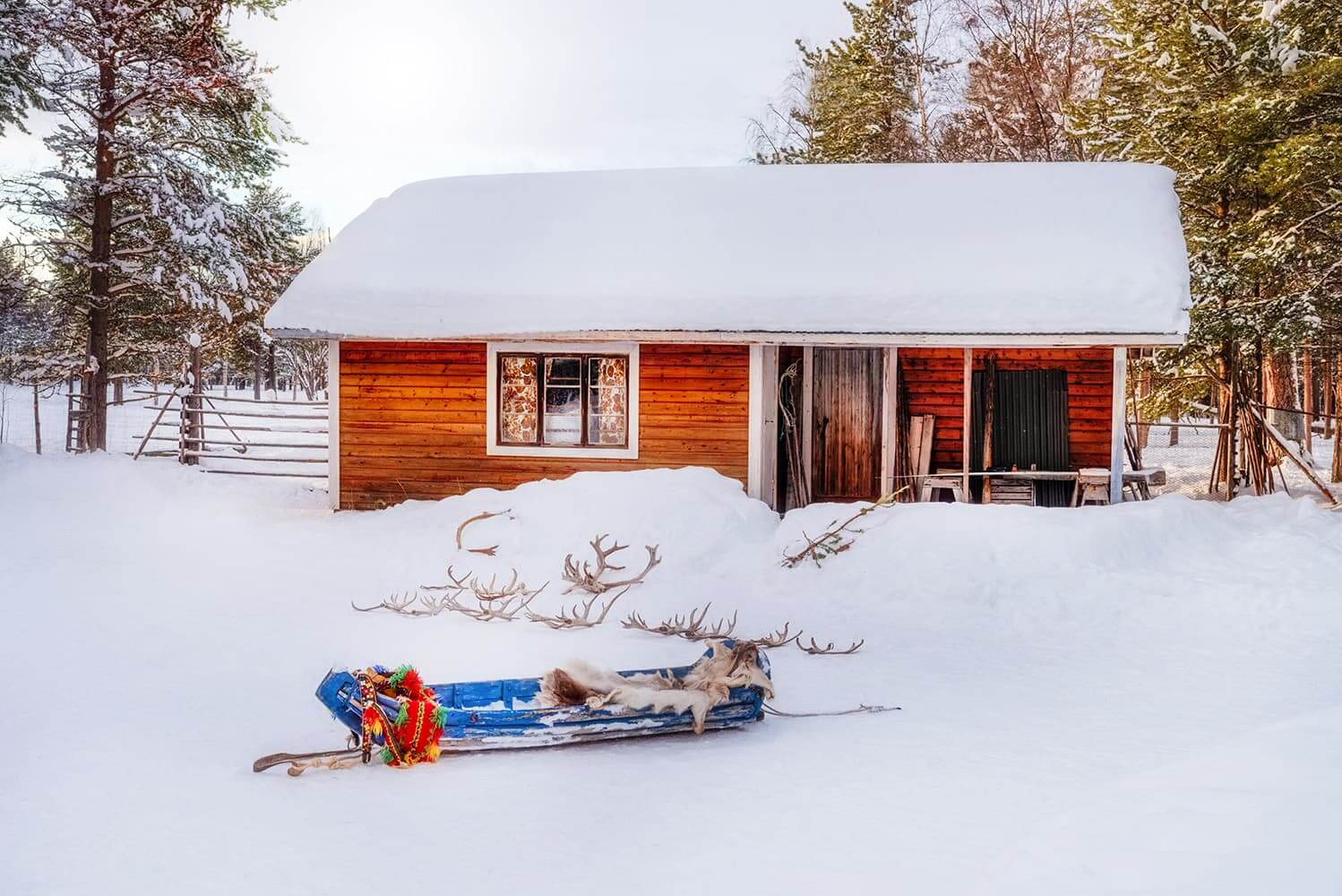
Today, people have more stationary settlements, even in summer pastures in the mountains. In the past, lávvu – a Sami tipi – was the main home, deconstructed every time people moved to another place. But the Sami have also built similar wooden houses that have been left over the years, called goahti. These buildings have always been built with identical interior and design, which also gives us an overview of life in Sápmi. The lávvu, as well as the goahti, were always turned so that the entrance was facing east, to greet the sun – beaivi.
Beavivi is the sun, but also a goddess. For Sami woman, some of the goddesses were more important than others, and they were all related to goahti or lávvu. The mother goddess, Máttaráhkká, lived under the goahti or lávvu while her daughters Sárahkká, Uksáhkká and Juoksáhkka also had their own tasks and designated places. Sárahkká was the goddess of birth, both for reindeer and human babies. Uksáhkká was the guardian at the door of the dwelling, protecting the newborns and the people who passed through and out the door. Juoksahkka was the god who decided whether it would be a boy or a girl during pregnancy. And another goddess of the house was Påssioakka, who protected the kitchen and she was also the goddess to please if you wanted a successful hunt. Hence a God with whom to stay on the right side, if you live your life near nature.