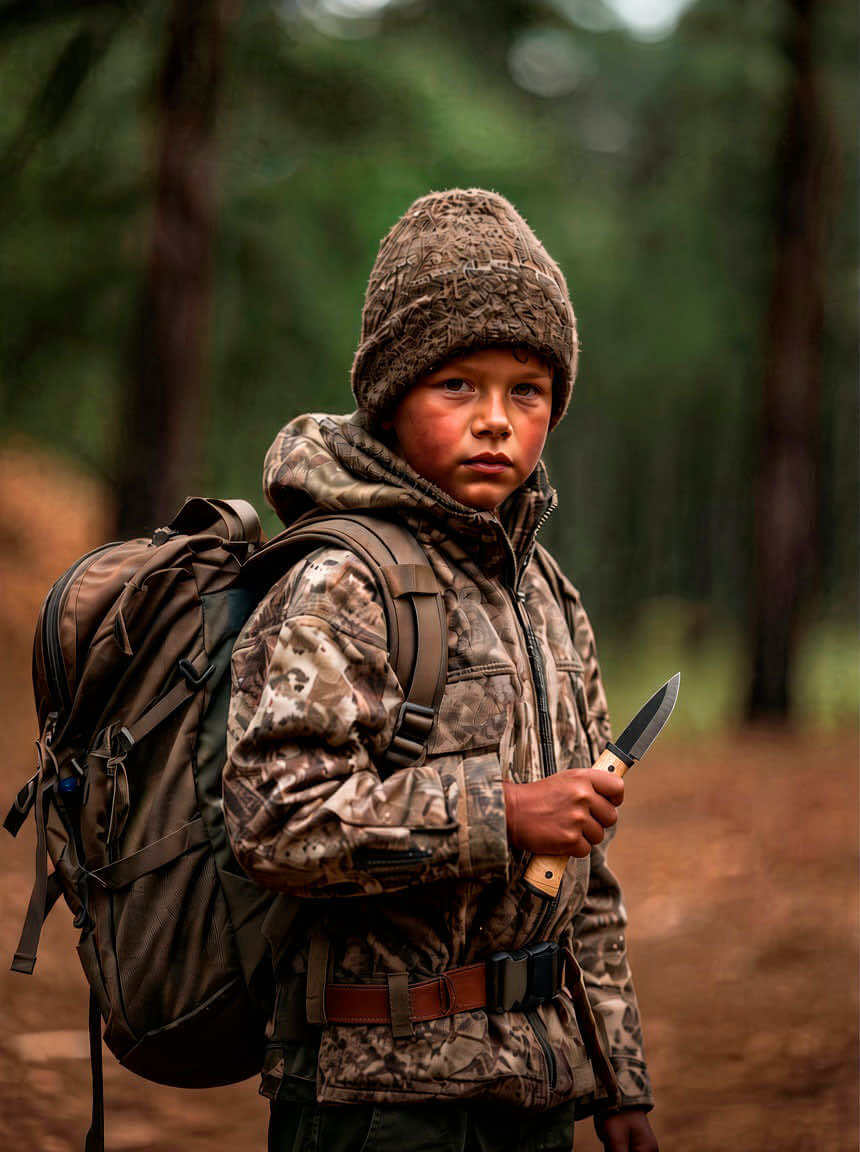
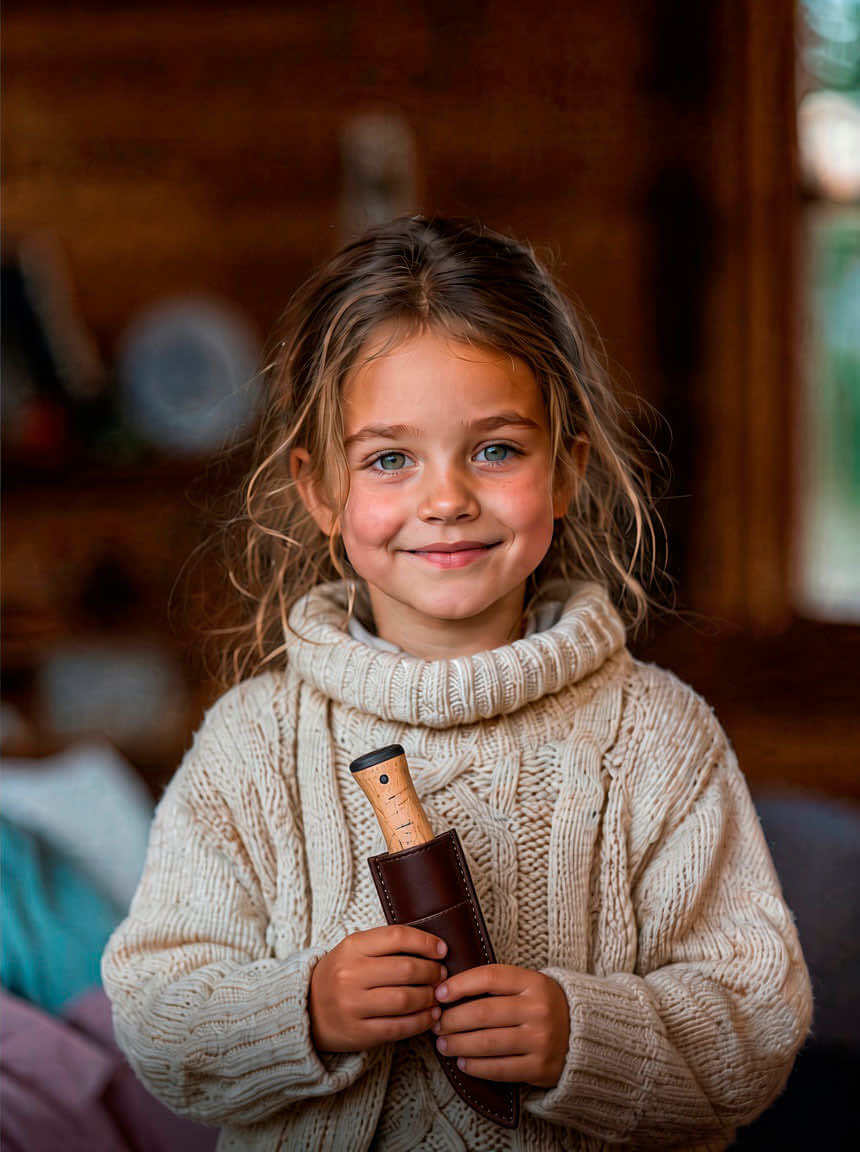
1. The 5 non-negotiable gold rules
First of all, let us set a clear and firm framework. These five rules are not advice among others: they are basic principles that must be known and respected by all adults in the home. They help to avoid the vast majority of accidents related to curiosity or a moment of inattention.
- One puukko never left unattended within reach of a child
- One puukko is never placed on a table, a work plan or a low piece of furniture
- One puukko is always tidy in its sheath when not used
- A child never touches a puukko without the presence and authorization of an adult
- You never run, you never play and you never make sudden gestures with a puukko
2. Storage: the basis of security
| Situation | Recommended solution | Security level |
|---|
| Daily use | Sheath + height storage | High |
| Young children | Lockable box or locked drawer | Very high |
| Collection / several puukkos | Closed window or dedicated cabinet | Very high |
| Temporary travel | Sheath + closed bag out of reach | High |
→ How maintain your puukkos
Important advice: on sheath alone is not enough with young children. Always add a physical barrier (height, lock or closed box).
3. Responsible introduction to the child knife
To prohibit the puukko can reinforce the child's curiosity. Conversely, a gradual initiation, supervised and adapted to his age, allows him to pass on respect for the tool. The aim is not to put a knife in the hands of a child too soon, but to build a healthy and prudent relationship with this object.
We don't hide the danger. We learn to respect him.
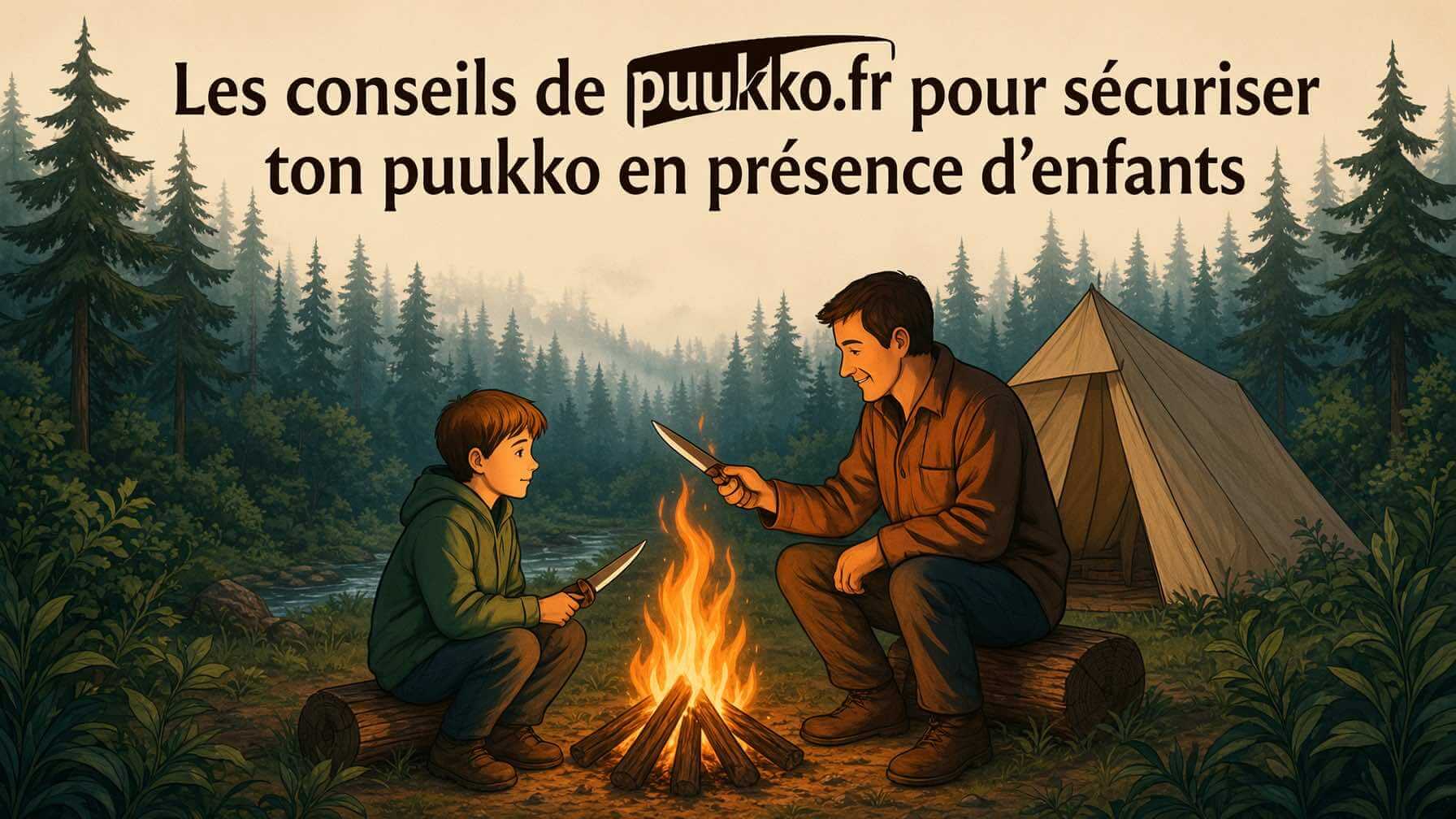 Before 6-7 years
- Never let the child handle the puukko
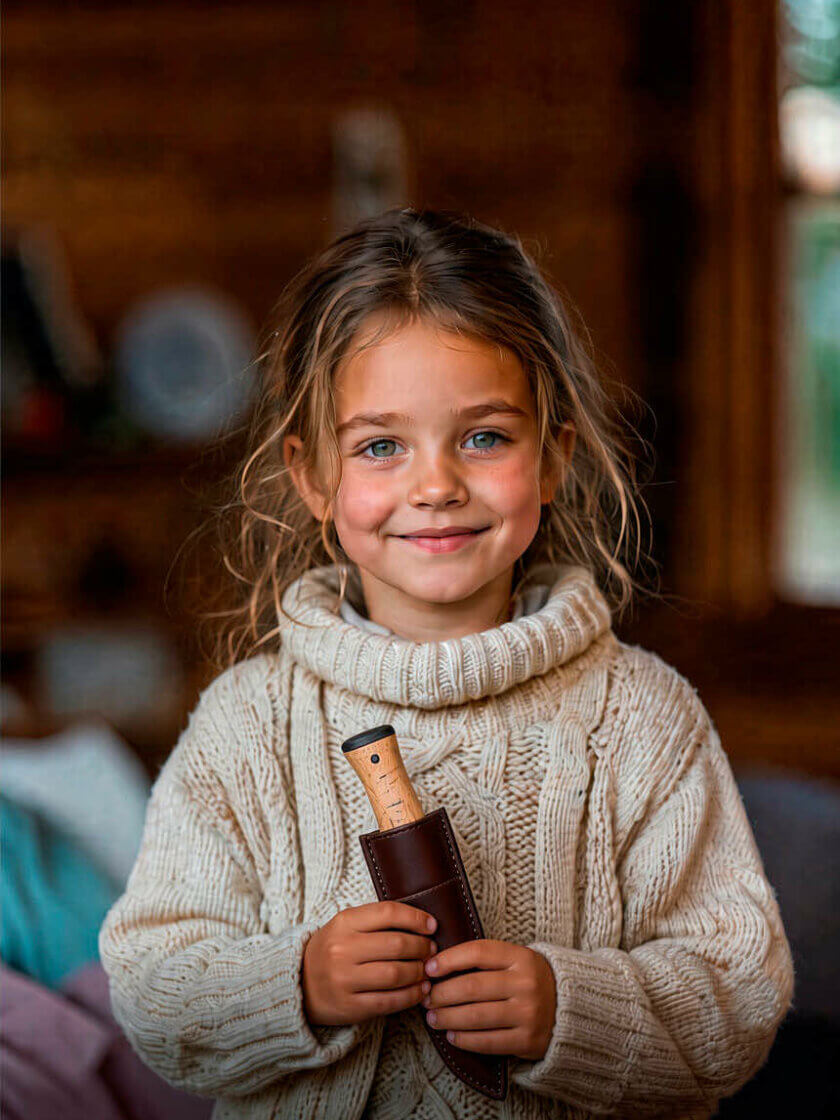
- Show him only the sheath closed
- Simply explain: « It's a very strong cutting tool. We only touch him with an adult. »
From 7-8 years (depending on maturity)
- First approach only under total adult control
- Start with very simple gestures (keep the sheath, look at the blade without taking it out)
- Always in a quiet area without distraction
- Stop immediately at any sign of fatigue or excitement
Kauhavan Puukkopaja in Finland, where Roselli offers good puukkos with blunt tip for children:
→ Kauhavan Puukkopaja
→ Roselli
Later (10+ years depending on the child)
- Progressive learning of basic gestures (far from the body, attention to others)
- Always with an adult present and attentive
- Use limited to very simple and controlled tasks
4. During activities
- Adult keeps complete control of the tool
- Explicitly defined work area
- Only one puukko output simultaneously
- No distraction (telephone, conversation...)
- Safety radius around the cutting person
5. Quick security checklist
- The puukko Is he in his sheath ?
- Is he out of reach of children?
- Is there a physical barrier (height, lock, box)?
- Were the rules recalled?
- Am I fully attentive during use?
6. What to do in an emergency?
Even with every precaution, an accident can happen. Here's the way to go.
If cut off
- Keep calm.
- Lying or seated the child.
- Apply direct compression to the wound with a clean cloth or compress
- Keep compression for several minutes without interrupting
- If the bleeding is significant or does not stop, call immediately for help (15 or 112)
When to call 911 without waiting
- Bleeding abundant and not stopping
- Deep or very wide cutting
- The child is unconscious or very pale
- The wound is in the face, neck or joint
Better call one time too much than not enough.
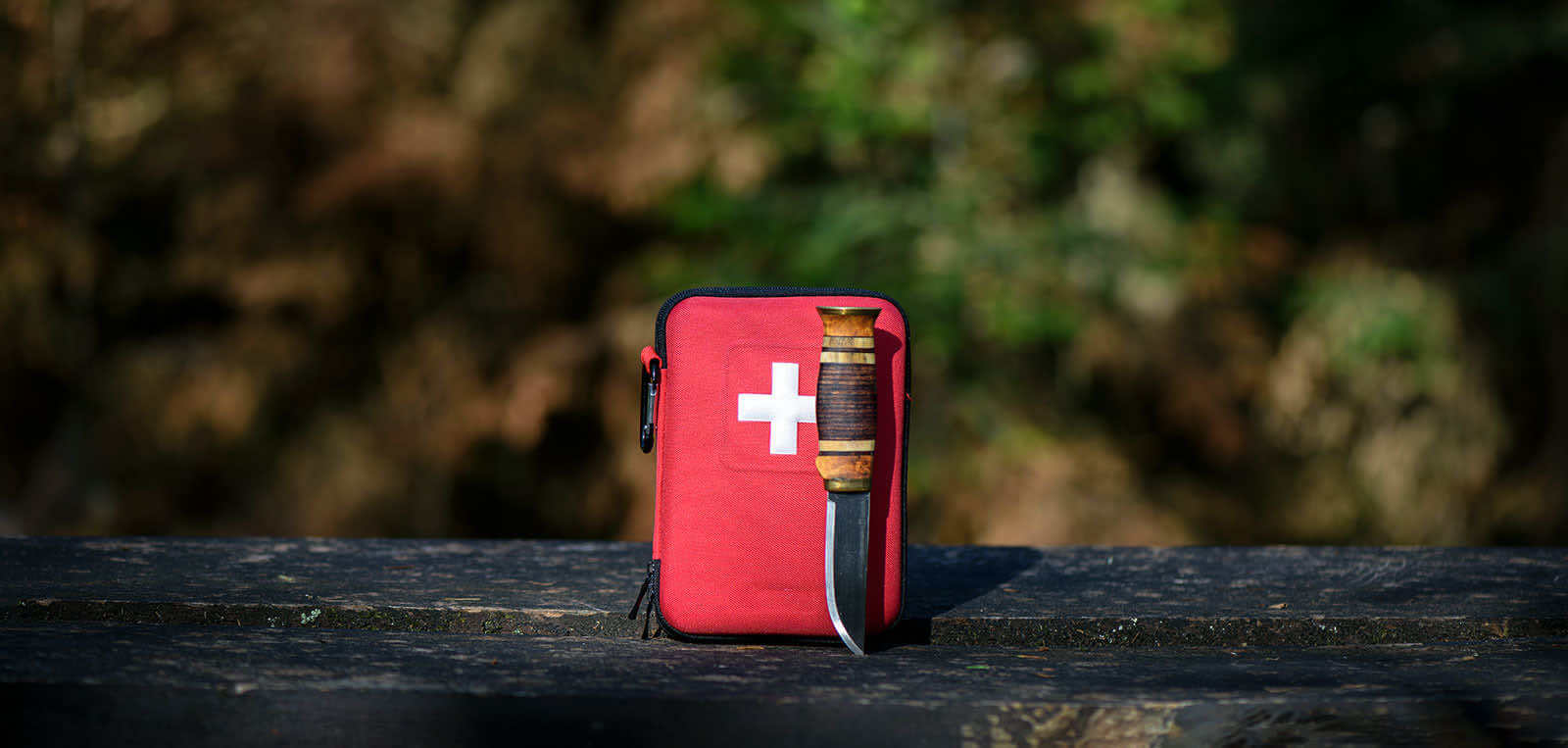
7. Recommended emergency kit
Having a small, easily accessible emergency kit is essential as soon as sharp tools are handled in the presence of children.
Recommended minimum content:
- Sterile compresses
- Tapes of gauze
- Hypoallergenic sparadrap
- Bandages of different sizes
- Antiseptic (Bisegin type or equivalent)
- Pair of round toe scissors
- Disposable gloves
- Survival coverage (optional but useful)
Tip: Put this kit in the same place as your puukkos (out of reach of children) so you can react very quickly.
Summary table of key points
| Theme | Key points |
|---|
| Gold rules | Never without surveillance • Still in the sheath • Out of reach • Prohibition of playing or running with |
| Storage | Sheath + height or lockable box • Vitrine/ wardrobe for collections |
| Introduction to children | Before 7 years: only the sheath • 7-8 years: under total control • 10+ years: progressive and limited gestures |
| During activity | Adult in total control • Area defined • One blade exit • No distraction |
| Emergency | Direct compression • Call 15 or 112 if severe bleeding or severe wound |
| Emergency kit | Compressions, dressings, antiseptic, sparadrap, gloves, round toe scissors |