The history of the puukko
The traditional Finnish knife.

The term puukko originally means "cauteau with handle wooden".
In Finland, as soon as you leave Helsinki and go north, the port of the puukko is a great classic. All reindeer breeders have a knife attached to the belt. For a Finn on puukko is the most important tool and at the same time a formidable weapon. I think I can say that puukko has the same importance for a Finn as the sabre Samurai for a Japanese. That's to say...
Quick history of the puukko
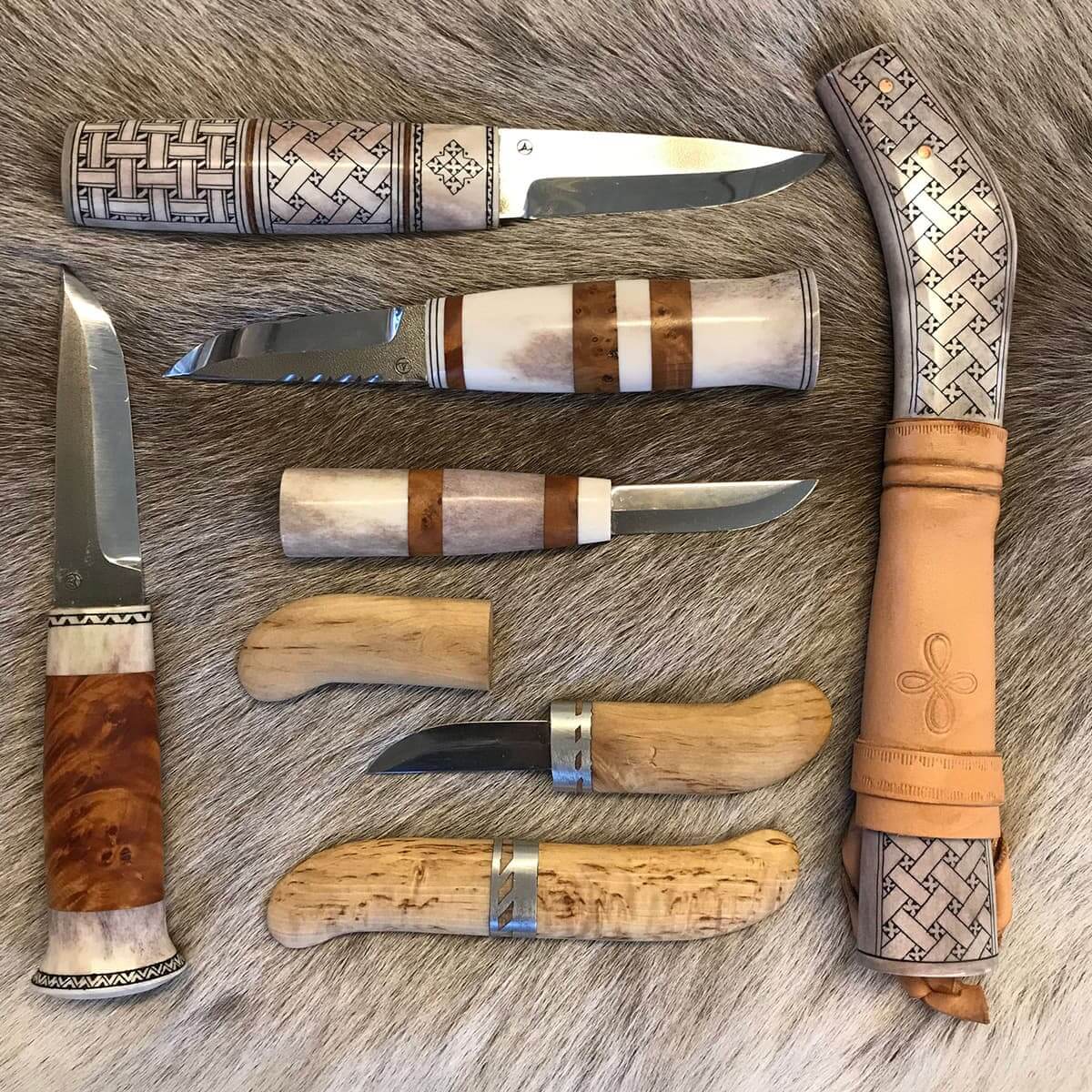
The knife puukko a/ handle solid and round, made of an elegant birch or reindeer wood, with a short to simple sharp blade. It has been a fundamental tool for life in the Arctic for thousands of years. Today, it is even more than that: it is a symbol of Finnish pride.
The Finnish and the knife have been an inseparable combination for more than 2500 years. Historical discoveries prove the existence of this type of knife since the Stone Age. It is considered a simple tool or precious object, used today for hunting, fishing, sculpture or as a jewel. In the past, it was forbidden to manipulate knives in the sphere of Russian influence. For the Sami, an exemption was announced on May 10, 1935 in Russia. (The Sami are an indigenous people of an area that covers northern Sweden, Norway and Finland as well as the Kola Peninsula in Russia known as Lapland).


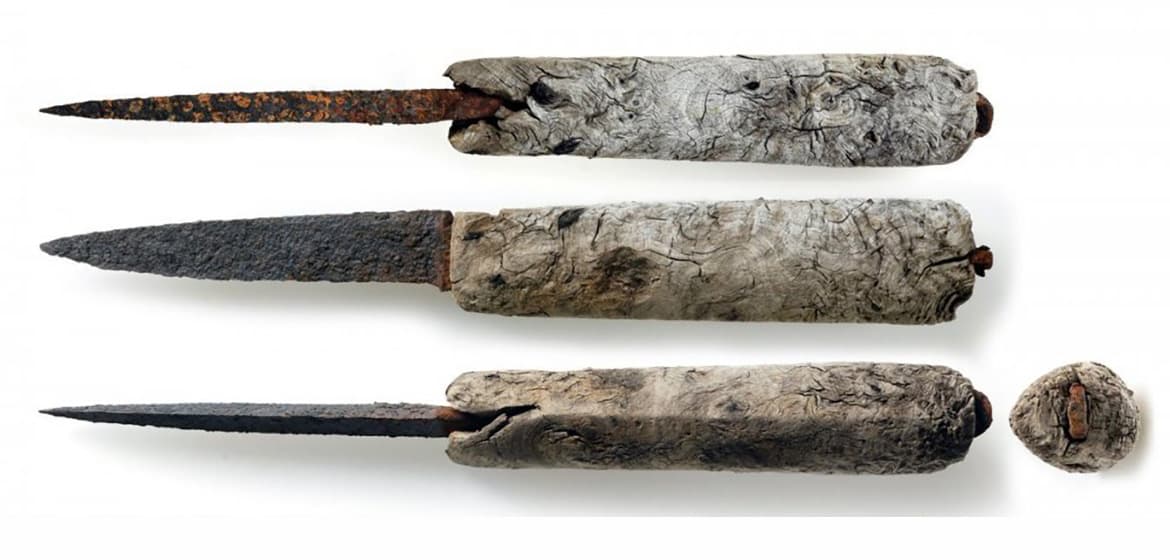
In addition to the thickness of the blade and minor cosmetic details, the puukkos have remained unchanged for at least 2000 years. The blade became thinner as the metallurgy improved, although the edge angle remained the same, where it was grind «scandi» modern. This example of a Norwegian knife is about 1000 years old.
Utility knife or work of art.
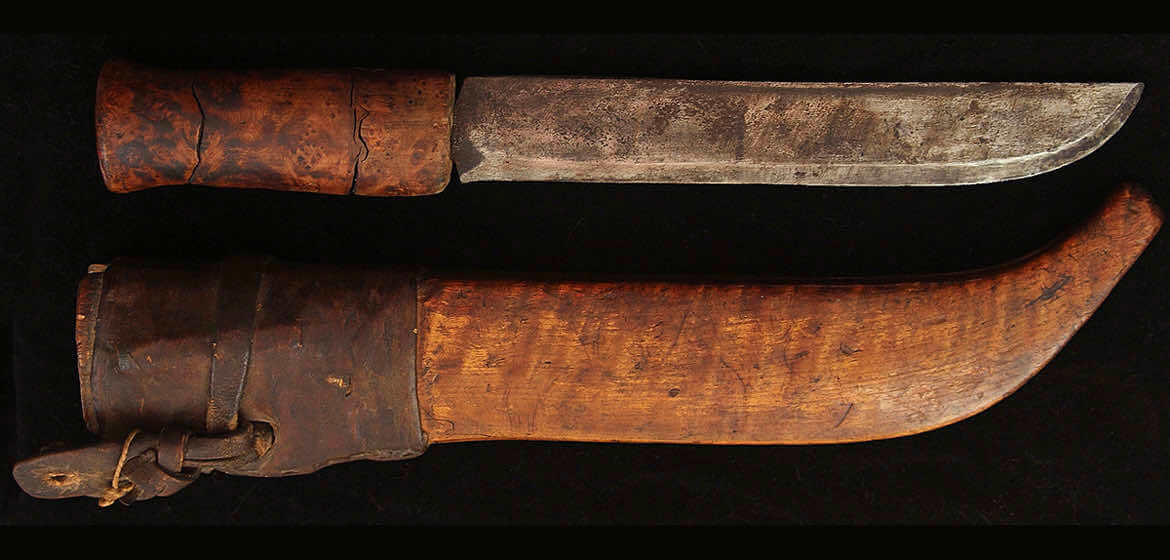
The puukko is, depending on the model, a hunting knife, an art piece or a utility knife with a robust blade and a wooden or plastic handle covered with rubber. The common characteristic of the original forms is the absence of a hand protection and a sheath who receives and locks the knife like a quiver. Some precious puukkos have a handle very elaborate. Usually, simple constructions are preferred. Historical puukkos were mainly made by users or their blacksmiths.
Modern finishes use bladed steels such as mono or laminate steels (three-layer steel) with soft outer layers and a central hard edge (Rockwell hardness up to 63 HRC). Particular importance is attached to the ease of sharpening (under conditions as given in nature). The blade length is typically 10-13 cm.
01. Simplicity & Robustness
The puukko It's the Finnish knife par excellence!
To understand Scandinavian knives, you must understand the people who developed them. They perfectly reflect the cultures that created the basic conceptions. Like the inhabitants of the regions, they are simple, robust and free from fioriture. They are neither fanciful nor pretentious.
What is a puukko ?
One puukko is a small traditional Finnish knife for general use with a blade length generally less than 12 cm. The handle is made of birch, curly birch, deer wood, d'os, leather or birch bark. L sheath is made of wood, leather, daos and deer wood. These knives have been used in Finland, Sweden and Norway for centuries.
Although there are regional differences, there are characteristics common to all Scandinavian knives, such as a narrow and straight blade with little or no belly and the edge curving to meet the tip in a modified clip-point. The spine is straight and there is usually no finger protection. The blades are very often short, compared to the other outside knives, from 8 to 13 cm. The handles are made of wood, mostly birch, but can also be made of horn, bone or other local wood.
How to wear a puukko ?
The Puukko is traditionally worn on the opposite side to the dominant hand, so that the dominant hand can handle the knife, while the weakest hand can hold the knife sheath. This one is carried with the tip at the bottom of the sheath, facing back. If the point is headed forward, the Finns call it a « erection »...


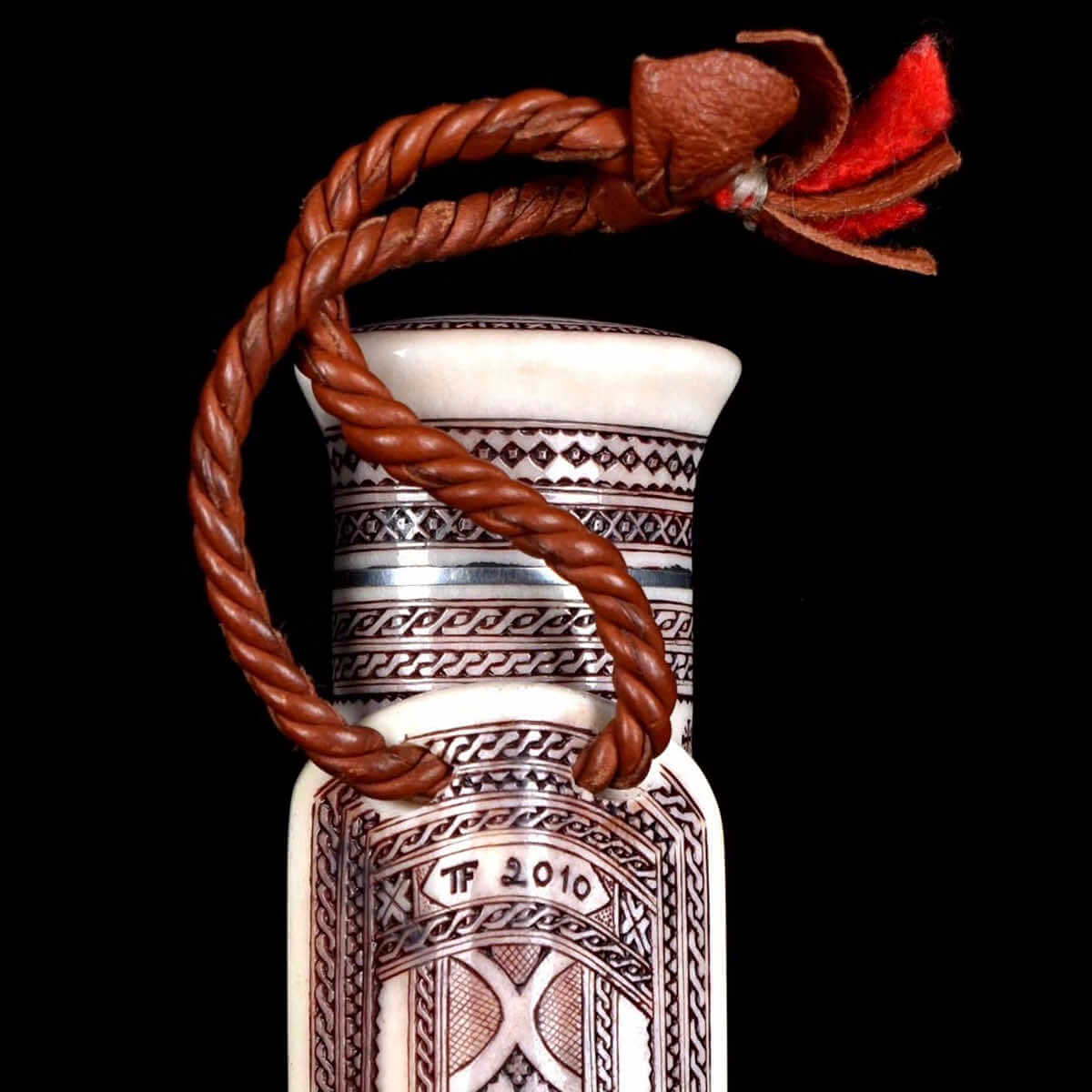
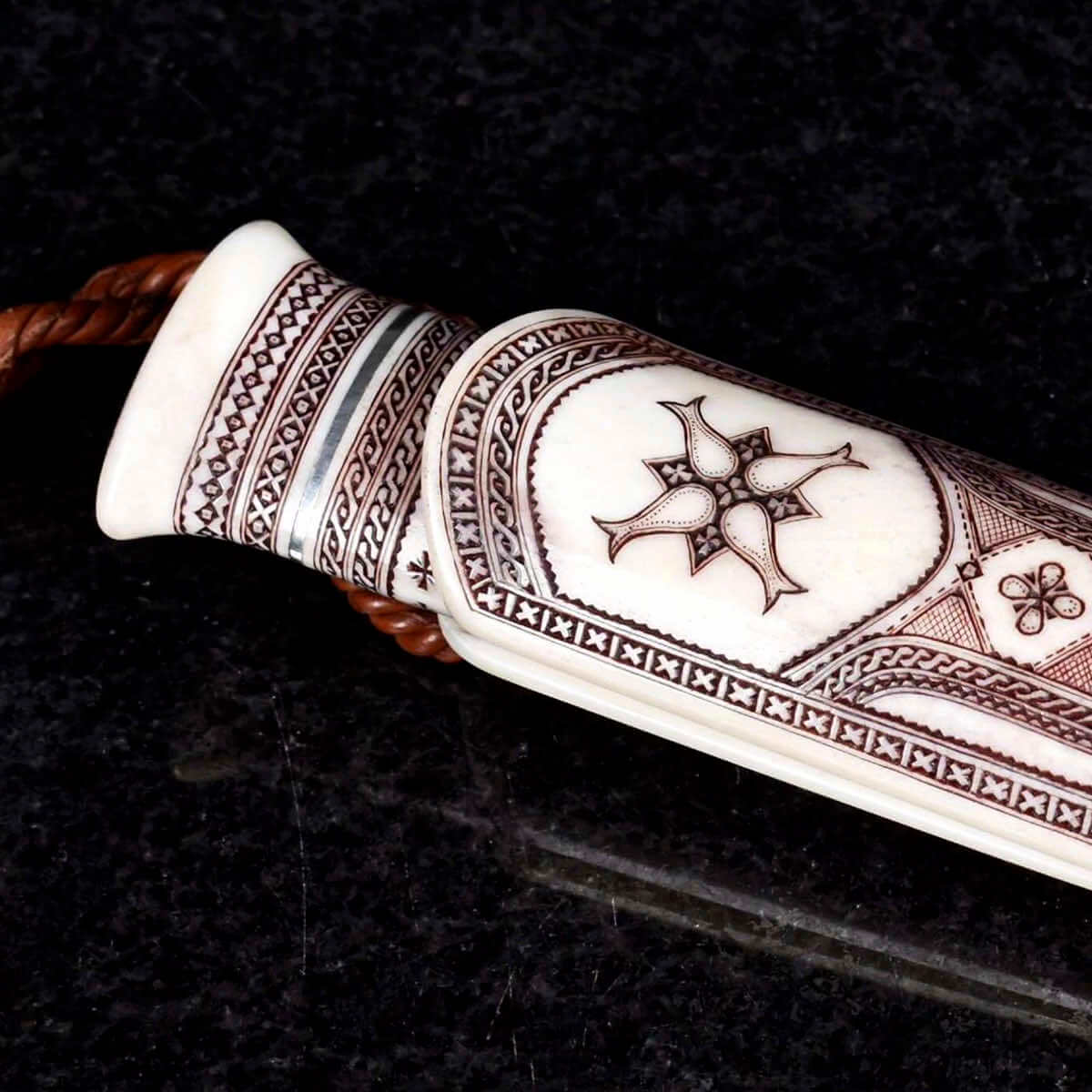
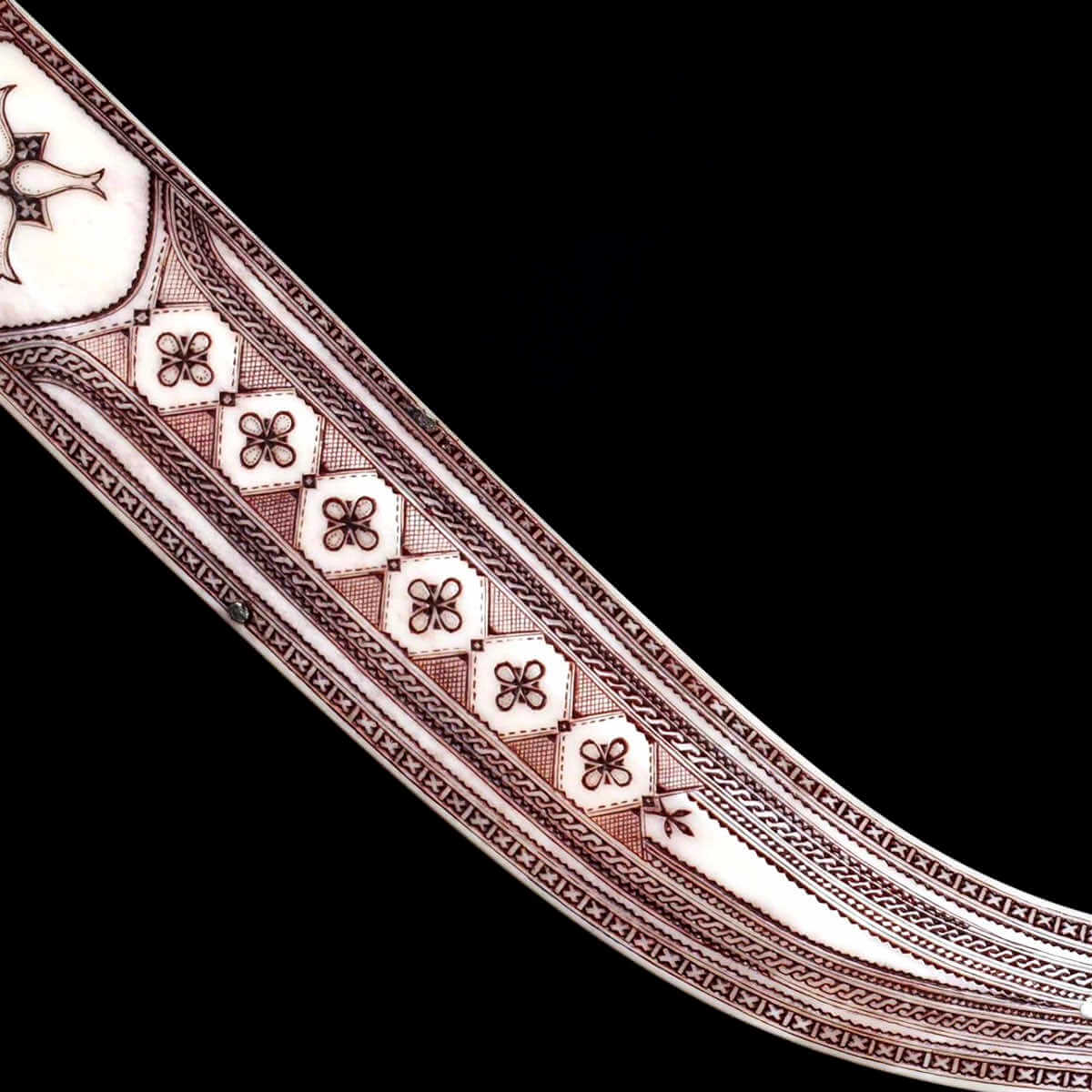
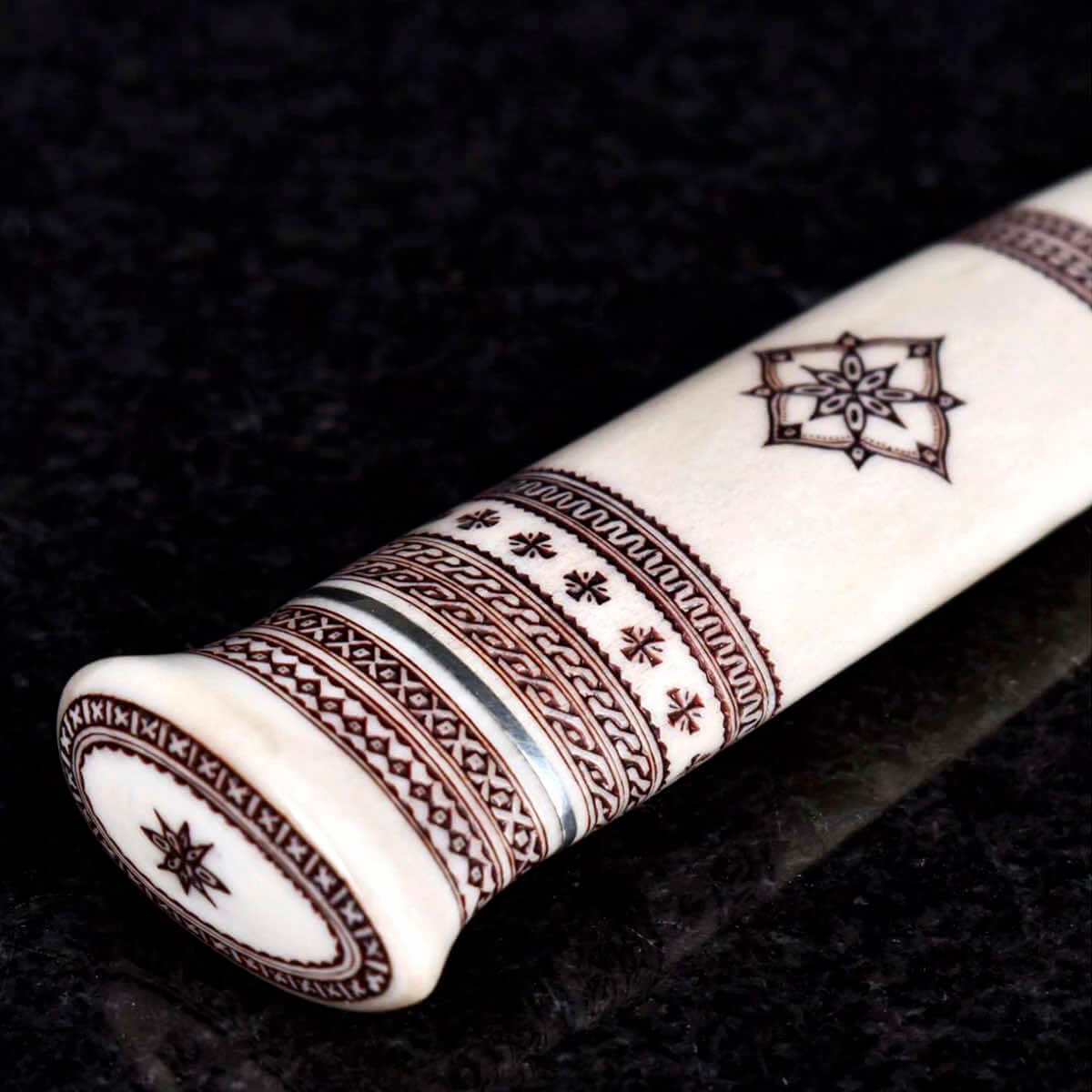
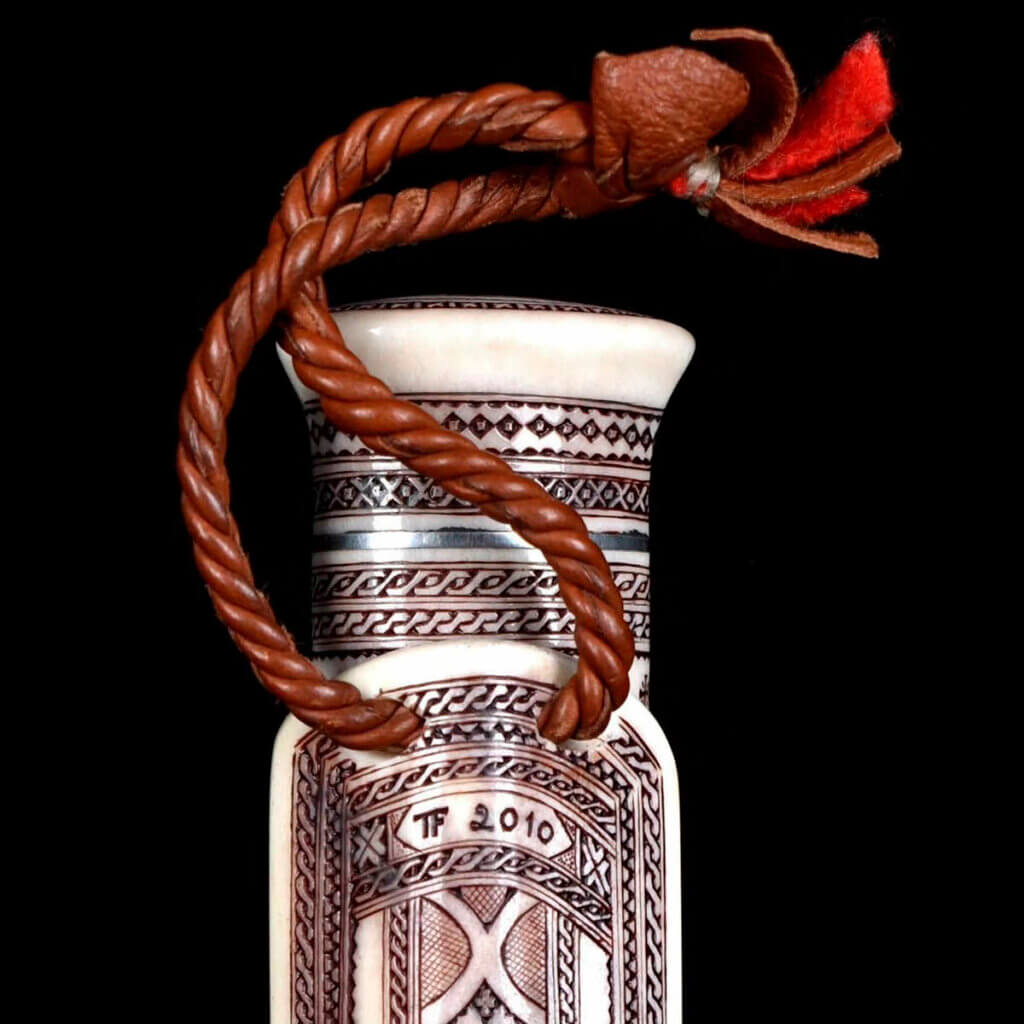
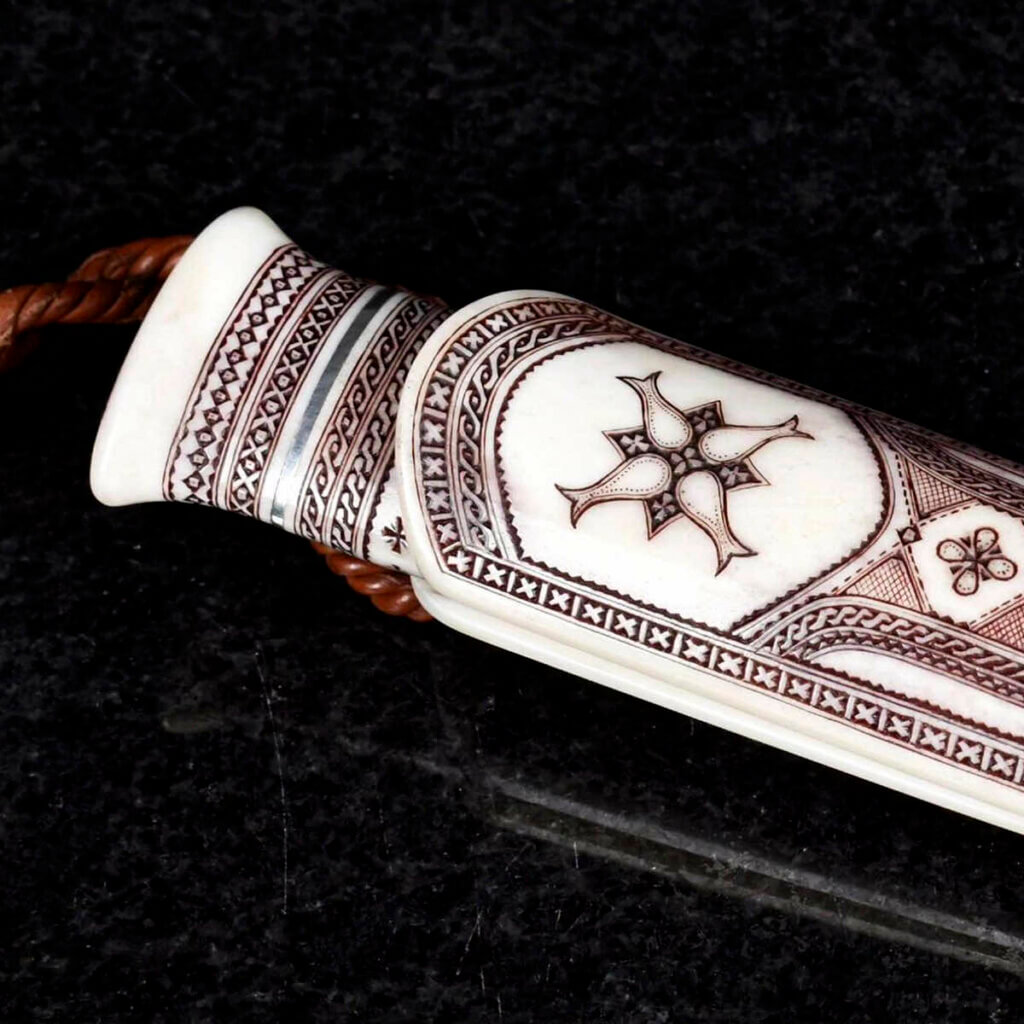
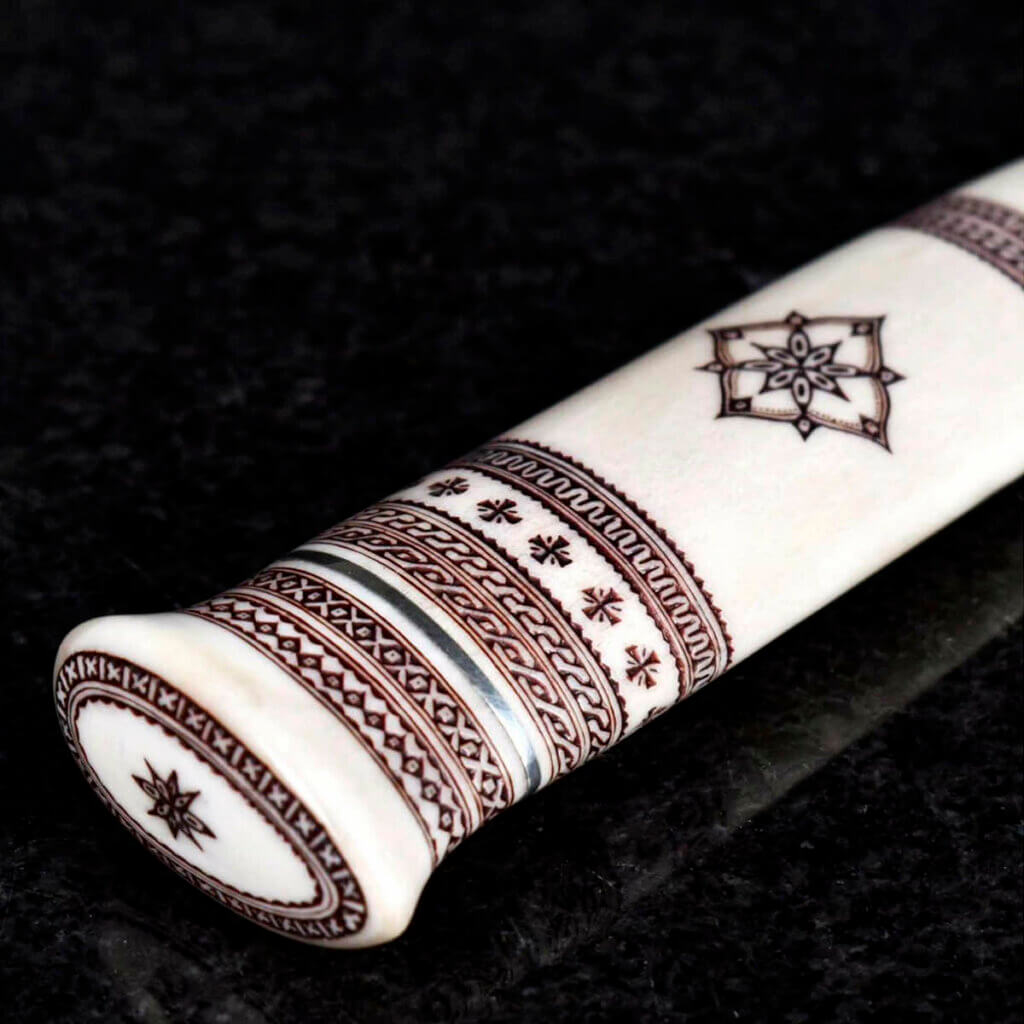
Puukkos can be richly carved with scrimshaws.
(The English term scrimshaw refers to crafts made by whale hunters on products from different marine mammals. Bone, teeth, snails or walrus defences....
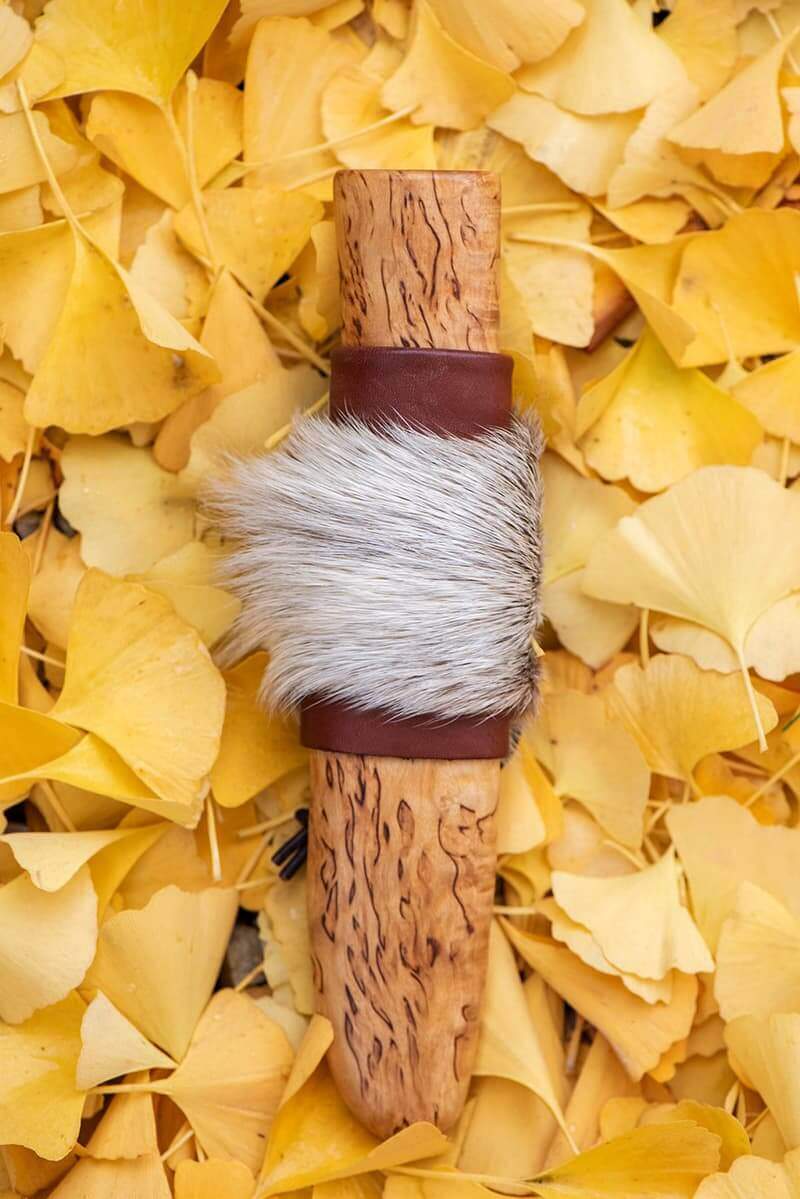
Today the scribeshaw is a well known word of knife collectors. Indeed, this technique is widely used in cutlery to decorate the handles. It is usually made on noble materials such as ivory, horns, deerwood or bones. But, most of the time, pukkos remain simple. The cases also cover a large part of the handles and are traditionally made of leather. However, many modern versions now use polymers.

What distinguishes a Scandinavian knife from all the others is the grind.
Most knives have a main bevel and a secondary bevel that goes towards the cutting edge. The Scandinavian moults are just a bevel, starting near the centre of the blade and shrinking to the edge. This gives the blade a sharp angle that creates an incredibly sharp edge and is also very easy to sharpen. You don't have to worry about getting the right angle when you're at it.sharpening. You simply put the blade on the stone with the edge against the surface, and you automatically get the right angle.
The puukko Its roots lie in the encounter between the Germanic and the indigenous peoples of Scandinavia at the beginning of the first millennium. Its special shape makes it unforgettable. It is a real tool dedicated to hunting and woodworking. It is very effective in cooking too. The puukko has an excellent grip. Its steel carbon is easy to sharpen, maintain And his thread is tenacious. These knives have also become those of the Finnish army and are very effective in difficult conditions.
At the beginning of the 19th century, the industrial manufacture of knives Puukko started in Finland, first at the Fiskars steelworks under the direction of qualified cutlery from England and later in other parts of Finland. After the middle of the 19th century, the province of Ostrobotnia and in particular its southern part became an important manufacturing centre for the Puukko.
02. Beautiful & Custom
A knife for life!
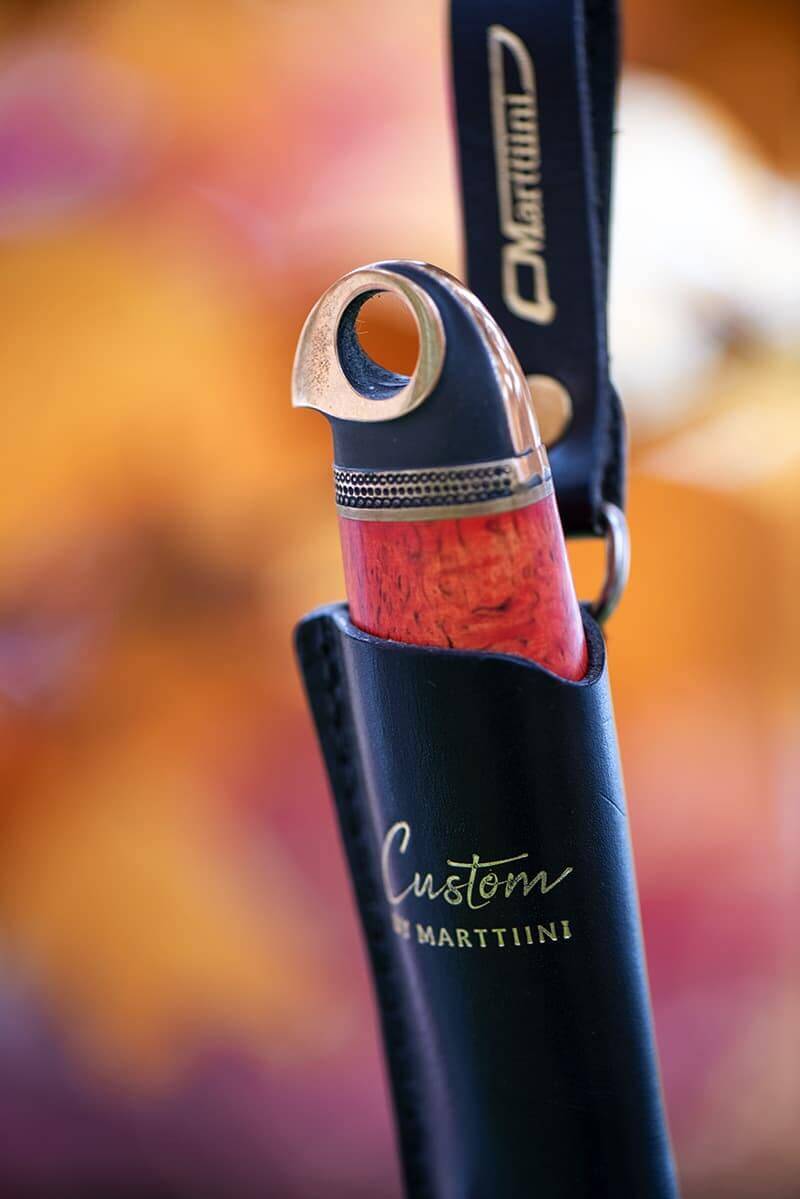
Materials used in the production of puukko personalized are selected by hand by experienced cutlery. These also follow all production, through a long series of processes, until the knife is finished and can be inserted into the sheath.
Scandinavia is not a country in itself, but a reference to a region.
It includes Denmark, Sweden, Finland and Norway. Scandinavia has referred to many countries over the years, depending on the political whims of the time. Three countries have always been considered Scandinavians, and have preserved their cultures and heritages: Finland, Sweden and Norway. Each of these countries has developed a knife style unique to their cultures, but always reflecting the community of the different peoples of the region.
The region that was to become Scandinavia was populated by groups of Homo sapiens hunter-gatherers shortly after the last glacial period, around 15,000 BC, from southern Europe. It was the Ahrensburg tribal culture. The tundra became a lush forest around 10,000 years BC, and the Ahrensburg culture was supplanted by the Maglemosian and Fosna-Hensbacka cultures. Between 9000 B.C. and 5000 B.C., several crops settled in the area, mainly hunter-gatherers following reindeer herds, salmon ascents, seals, etc. These people eventually crossed the Bering Strait land bridge to North America. Around 5000 BC, the area is dominated by Funnelbeaker culture, which had begun to pottery and develop agriculture.
Copper, bronze and iron!
The Germanic tribes moved to the region, outside and inside, several times during the following millennia. The stone knives have given way to the copper, bronze and iron versions, but the original designs have changed little. For some reason, the Roman Empire never tried to acquire the region, perhaps knowing in advance that the inhabitants would be very difficult to break. It was probably a good choice, because even today the Scandinavians are known to be very hard, stoic and persistent. Shortly after the collapse of the Roman Empire, the region evolved into the three main cultures of concern: Norwegians, Swedes and Finns (Lapons or Sami).
Iceland and Greenland are also Scandinavian countries, but not cutlery factories.
Puukko Grandpa
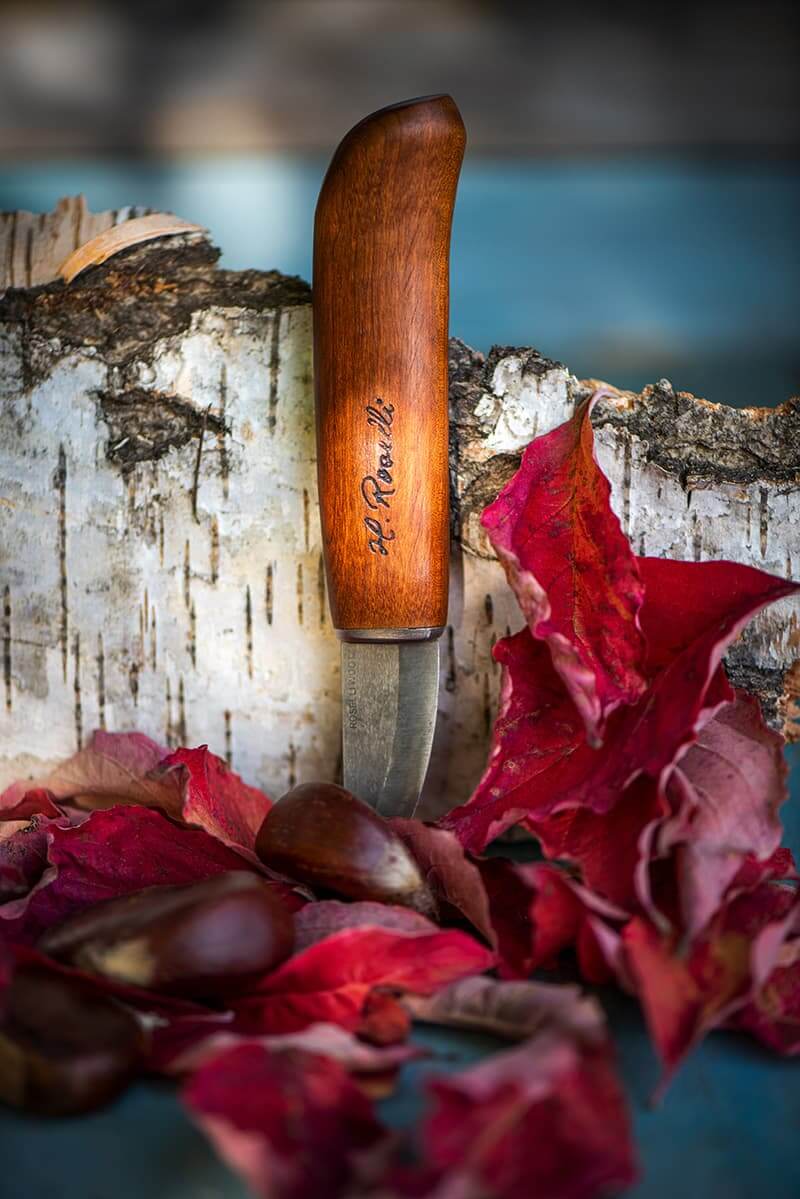
Production H.Roselli
Norway is, of course, the most famous for Vikings.
Thousands of articles were written on their swords, their battle axes, etc., but very little on their knives. Many people do not realize that Vikings were in fact a complete culture, with farmers and artisans. Their knife is in fact considerably antecedent to the Vikings. It has a style similar to other Scandinavian knives. Simple and short. But what is distinctive in the Norwegian version is that it is more in the eyes and details than other regional cultures.
Their knives and sheaths tend to be more decorated. In Norway, knives were worn for both public declaration and utility. One of the greatest honours was to give someone a knife. Today, Norwegian knives cost more than Finnish or Swedish blades, but they are worth it because they are real works of art. Norwegian companies that now manufacture exceptional knives include Brusletto and Hell.
The famous Brusletto...
One of the most famous Nordic knives is the hunting knife Brusletto Kniven Birch, model BRU15002. With an incredibly sharp Sandvik 12C27 stainless steel blade and a handle in an absolutely beautiful curly birch, topped by a nickel mitre, this knife is as beautiful as it cuts.
Another large Norwegian knife is the Norwegian hunting knife Helle Harding model HE99. It may be one of the most beautiful Scandinavian knives. This starts with a very resistant 10 cm stainless steel blade. She's associated with a beautiful handle Stacked with curly and maple birch, with brass spacers. The cherry on the cake is that it comes with a fantastic sheath in genuine leather.
03. Unique & Distinct
It all starts at the forge!
The knives played a very important role in the history of the Far North, with its cold and rebarbatory environment. The cutlery of these cultures has evolved into unique and distinctive styles that today represent some of the most remarkable versatile blades available.
Sweden is the home of Scandinavian knives...
Of course, there are more expensive models made in Sweden, but none can surpass a Mora. Nothing on the planet cuts like the Mora. It is a cheap knife, with an excellent grip and an incomparable edge. One puukko Really fantastic!
Mora is not a brand name, but actually a knife style. Basically, a puukko Swedish with modern design made in Mora district, Sweden. They were produced by two main knife manufacturers, KJ Eriksson and Frosts Knivfabrik. In 2005, they merged into Mora Knives of Sweden. Although they continue to create the classic design with handles birch, they also manufacture several models with handles and polymer sheaths. Their steels are exceptional, among the best in the industry, and all Moras have an incredibly sharp blade and easy to sharpen.
Timeless marks.
Casstrom Sweden is a distributor of several brands of Scandinavian knives and related equipment for some time. More recently, they started manufacturing and marketing knives under their own brand. They're all fixed blade knives. Most Casström knives are contemporary in design, with only a few winks in traditional styles puukko or Sami.
Karesuando Kniven takes its commercial name from the village of Karesuando, at the northern tip of Sweden and 250 km north of the Arctic Circle. Unsurprisingly, the knives made by the company reflect Scandinavian Nordic styles and traditions. More than half of the 40 or more Karesuando knife models or variants use Sandvik 12C27 stainless steel; a dozen have steel blades in carbon and a Damascus steel handle. All blades are corrected scandi, with the exception of flat floor net knives.
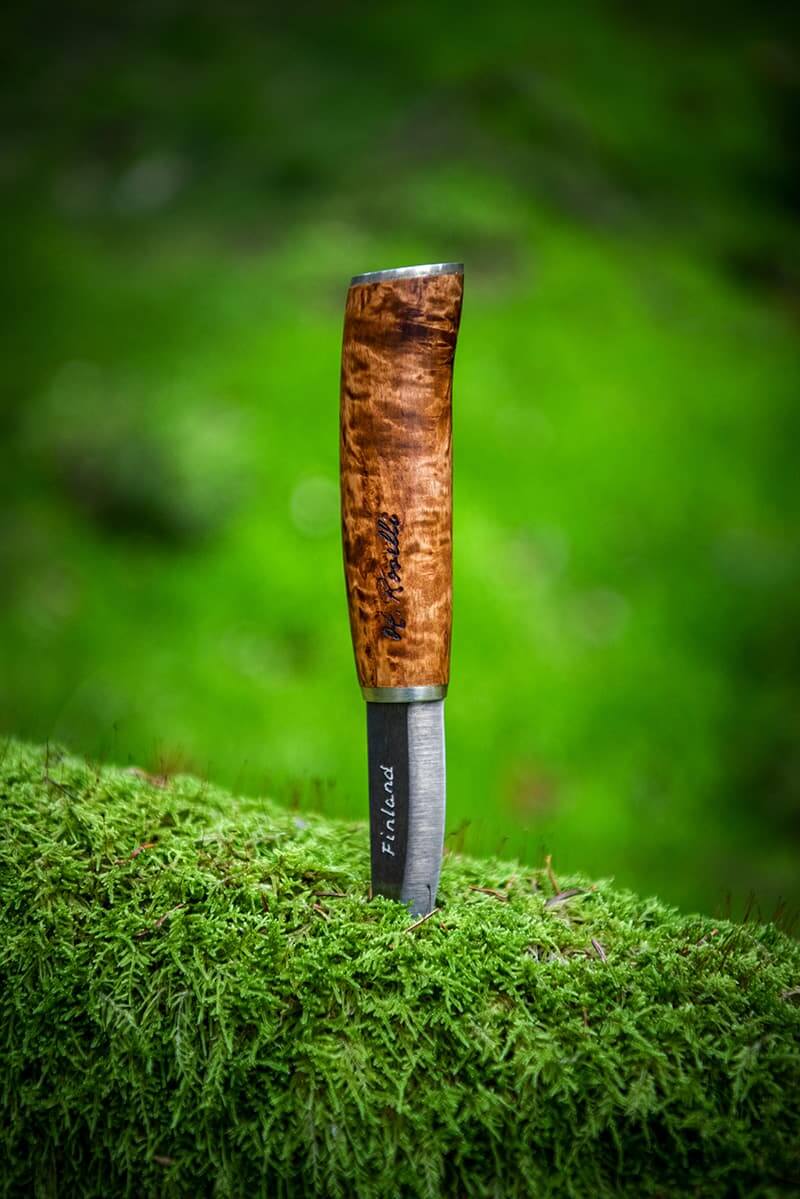
The curly birch, natural or tinted, is the most commonly used material to produce the handles of the puukko. A large number of knives have handles with reindeer wood sections to accentuate the curly birch.
Fallkniven is another great Swedish knife manufacturer. They make many modern designs based on the traditional Scandinavian knife using modern materials. A model, F1bz, is the official knife of the pilots and air crews of the Swedish Air Force. It's kind of like the best of both worlds between tradition and modernity.
04. Art & Tradition
The magical power of puukko Hey!
The puukko is deeply rooted in Scandinavian countries where the knife is both tool and art form. Indeed, the puukko plays a key role in northern culture. Often included in traditional cultural life, puukko is a historical symbol. Sometimes buried in the earth as a prayer of blessing. Sometimes it is a gift of transition from adolescence to adulthood.
Finland, cradle of the most famous Scandinavian knives... on puukko.
The puukko This is the knife on which all the others are designed. The knife was designed by the Sami at the time they were still semi-nomadic hunter-gatherers. Some models are simply timeless. The difference between puukko and the other Scandinavian knives is the degree of appearance they put there.
Puukkos lie between the adorned Norwegian blades and the simple and utilitarian appearance of Swedish knives. One of the main producers in Finland is Kellam Knives. They have a range of traditional puukkos of the best quality possible, with their own high-grade steels carbon and stainless. These blades are among the sharpest in the world and the traditional style of most of their models is a pure pleasure for the eyes.
Marttiini, a must in Finland.
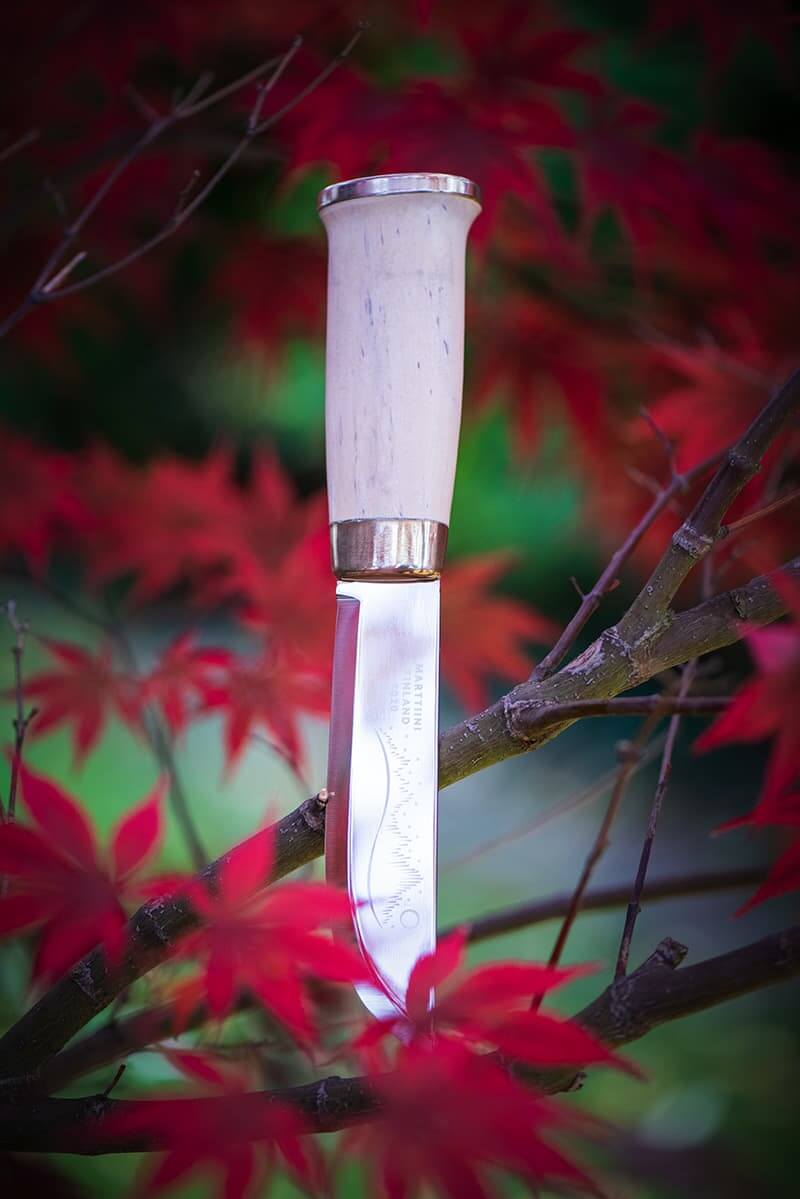
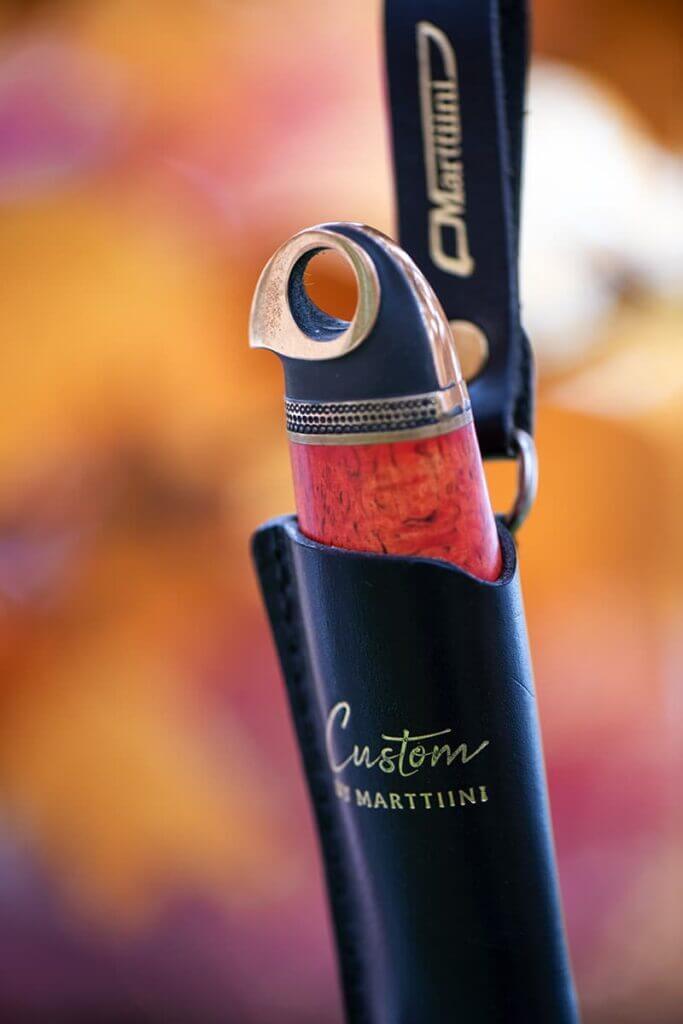
Another Finnish manufacturer is Marttiini Knives. I had the opportunity to visit the factory during a visit to Rovaniemi, it's just happiness. They've been making knives since 1928. They are not meant for intensive use in the field, but are pleasant and relatively inexpensive. Most puukkos of very good quality.
Marttiini, which began its activity in 1928, is now a member of Rapala VMC, the Finnish conglomerate for fishing and outdoor gear. In addition to the knives produced under its own brand, the company manufactures Rapala-branded nets and other fishing and outdoor knives.
The Marttiini knives are divided into seven categories. In fixed blade categories, those labelled Outdoor and Traditional are mainly style knives puukko, plus a few with Sami style handles. The category of hunting knives presents more contemporary designs. The steels used in fixed blade knives may be in carbon or stainless steel, depending on the model, as well as some selected knives in Carbinox T508 or Damascus steel and some blades receive what is called a Martef coating. The materials of the handle are mainly curly birch, with pakaw wood or rubber (thermoplastic) used here and there. The cases are made of leather.


For more than a thousand years, Finnish loggers have been using knives puukko to exercise their profession. The knife is the result of generations of use and development by the Sami people. It has become a symbol of honour for these people and the life they live. These knives are known worldwide for their practical design and function.
The puukko is used for all kinds of tasks around the forest, farm and workshop. It is a versatile knife that can be adapted to many different tasks to meet the needs of owners. He excels in wood carving because of the grind flat and the shape of the handle that allows to apply a complete but controlled power during sculpture.
Roselli, a great classic!
The knives Roselli are a modern example of Scandinavian knife style. It is a design without fioriture, with a forged blade and a handle solid wood, with a thin mitre to protect the front end. The typical Scandinavian leather cover is often very simple, but sometimes artistic steering wheels are added. Dressed knives can have adorned sheaths. The puukko simple, robust and efficient. I love this big concept handle and small blade.
There is also a set of four top-of-the-range knives made with a proprietary steel called Roselli Wootz UHC (ultra-high-grade carbon) and two collection knives with the same steel. Roselli, like Ahti, uses knife designs and materials that accurately reflect the character of the type knife puukko.
Among the sellers just mentioned, Brisa list nine Ahti knives. The knives have steel blades to carbon or stainless steel, of handles in curly birch and a minimum of brass parts. Leather pouch-type belt cases are delivered with all models.

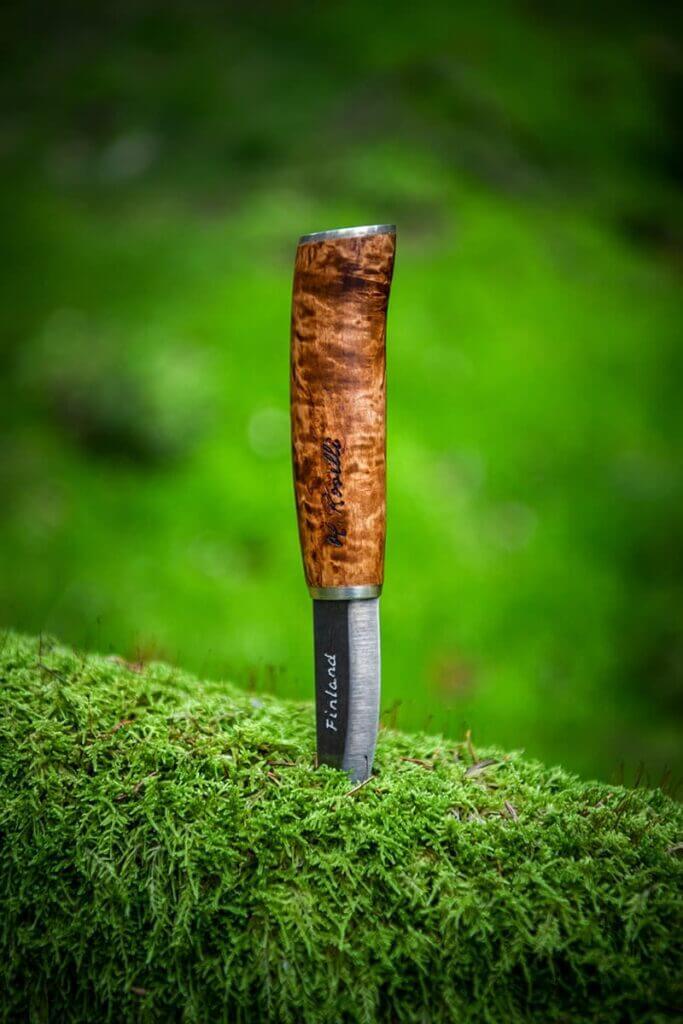
Manufacture Puukko and a Leuku
Traditional Finnish knives may have different models, but their common characteristics are always the same:
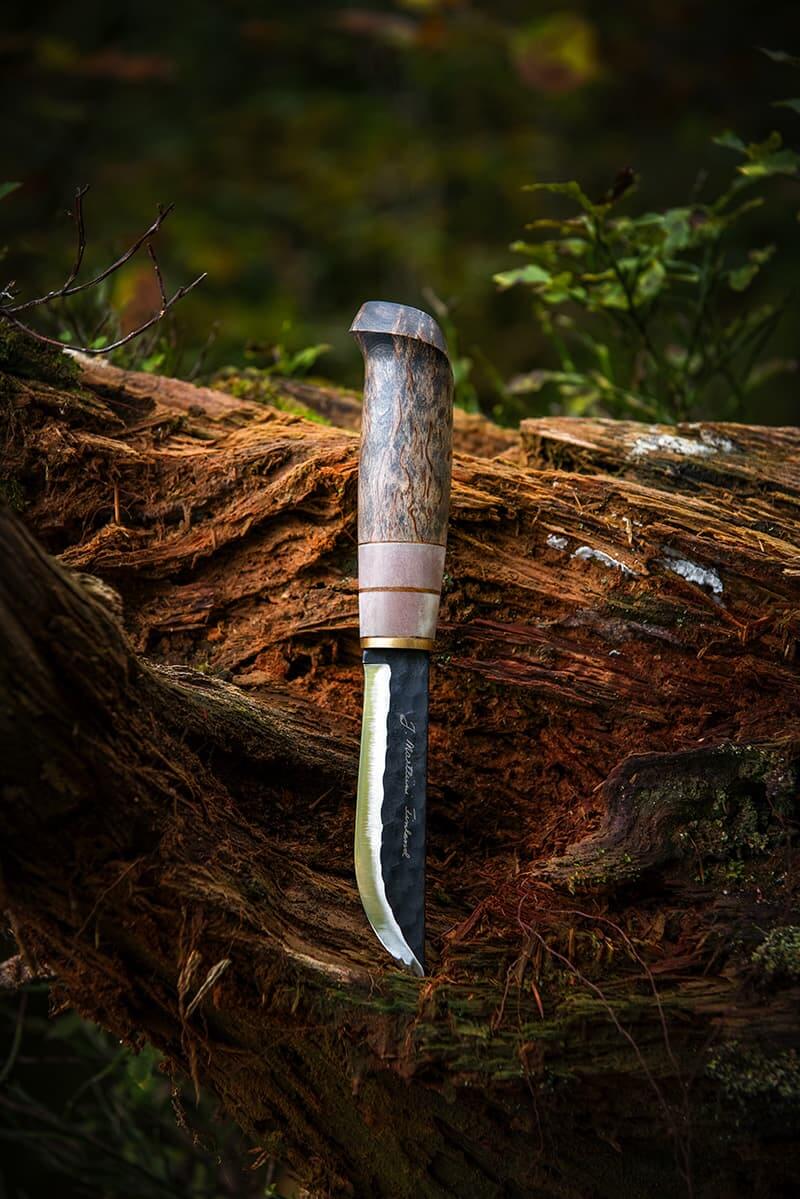
- Right blade without butt with Scandinavian descents.
- The blade length is about 10-15 cm, usually 12-13 cm.
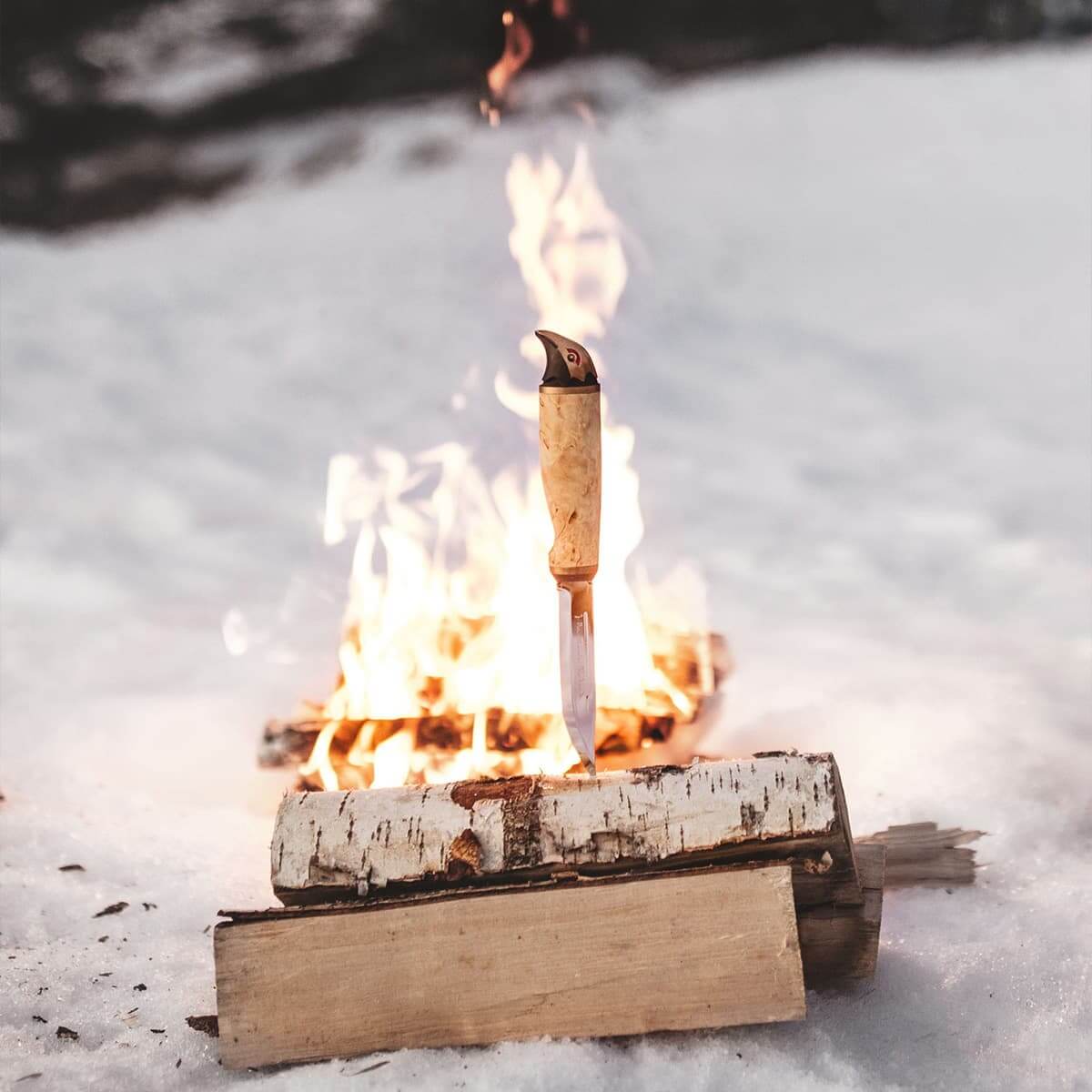
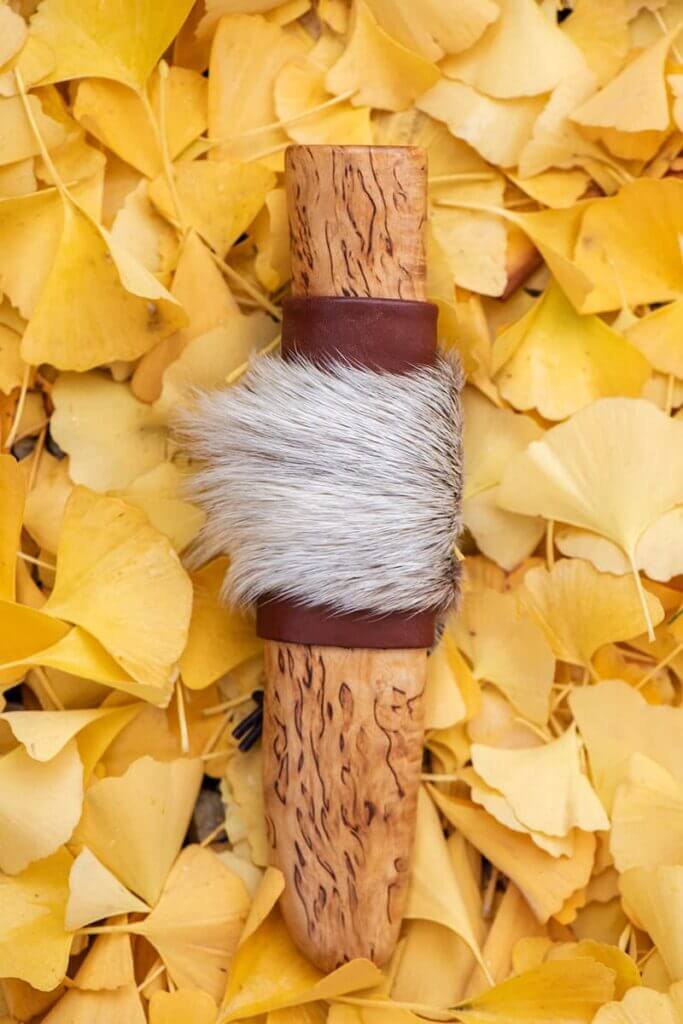
- The handle is in Karelia birch. Apart from the aesthetic appeal of this material, wooden handles do not cool the hand in winter. The shaft used for handles was soaked with oil.
- Traditional Finnish knives have a manilla where the blade enters the handle.
- The handle He himself is in the shape of a barrel. At its end, there may be a specific elbow, called fungus.
The Puukko of the Sami
The knife of the peoples of the north
The magical power of puukko for the Sami.
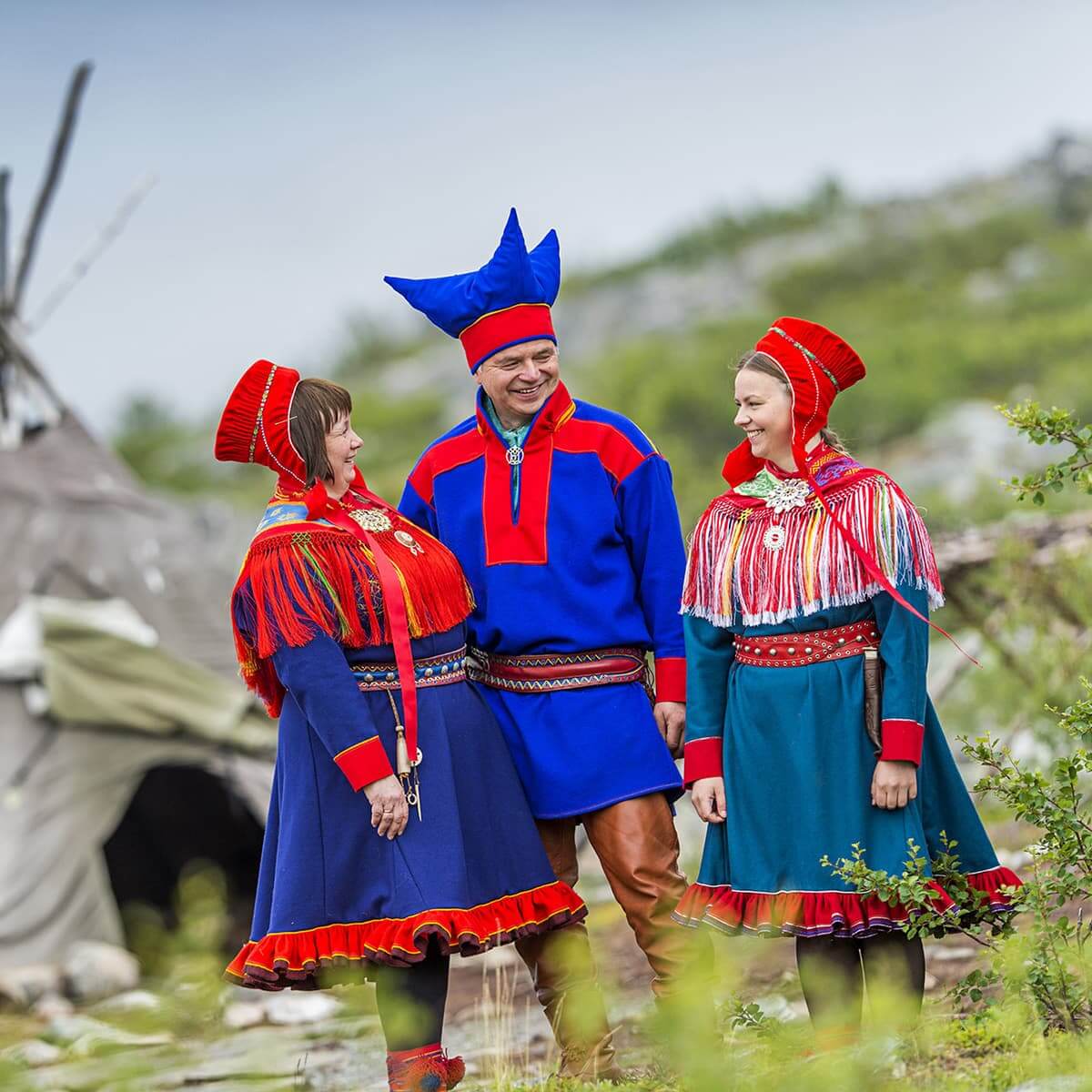
The Sami have always worn the knives with them. This universal tool was used, among other things, to skin martens and beavers, to cut the reindeer meat, to make rams and to defend against the assailants. They felt powerless without their knife in their pocket. The knives have a long history.
So much a necessity today and before
Many Norwegian Sami are still engaged in reindeer rearing or other outside activities. Today, the knife is as much a necessity as it was for their ancestors centuries ago, when the Sami were exclusively engaged in hunting and fishing. They travelled hundreds of kilometres along the chosen routes, where they were sure that there were enough fish and game.
The knife was a very important tool. The women of the time used the knife for leather work and household chores. They went further and the knife is still actively used in their daily lives. The Sami are one of the indigenous peoples of the world and have lived close to nature for centuries. Although the way of life has developed with the rest of society, their culture and traditions are still strongly present.
The knife is probably one of the most convenient hiking equipment available. But the Sami knife also has its own «Magic power». Since antiquity and in popular Sami medicine, the knife has a magical healing power that was used to stop blood, relieve gout and eliminate boils.


The Sami knife is pretty to look at, practical and made to last many years, but did you know that it also has a magical power?
Sami people can come into contact with sacred gods and powers. It was said that the knife has a magical and curative power. The brass used in the casing and the assembly of the knives also had magical properties. According to old popular beliefs, it has been said that brass protects the owner from the forces of evil and accidents.
The Sami knife design ensures that it can be used for most things – from slaughter, body and food production, to wood processing and as a weapon. Without the knife, it was easy to feel powerless. Women used knives for different types of handicrafts and household chores. For many Sami, the knife is as important a tool today as it was a hundred years ago.
The real Sami knife has a soul
The knife has deep roots in the culture and remains an important tool for most Sami. Those who lived outside for much of the year could not bring many different tools with them. Thus, they needed a large and powerful knife that could be used for many different things, such as making campfires, shooting down and marking reindeer.
For reindeer breeder, it is always unthinkable to do without a knife. The Sami knife is a practical tool with multiple uses, and has recently become a regular companion for people who spend a lot of time outdoors, whether travelling, hunting or fishing.
To learn more about the puukko, I recommend you the site of : Taisto Kuortti


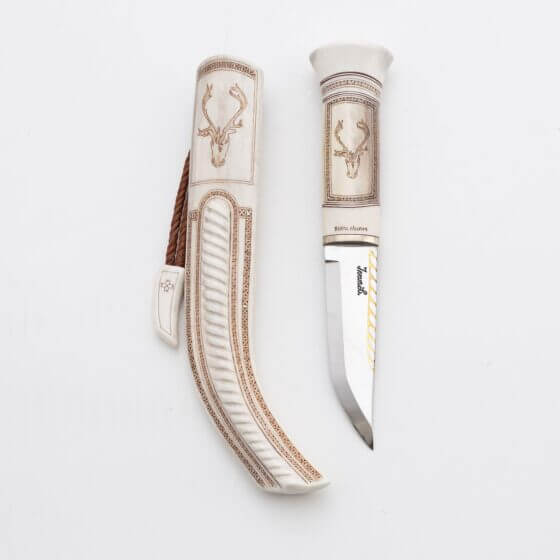
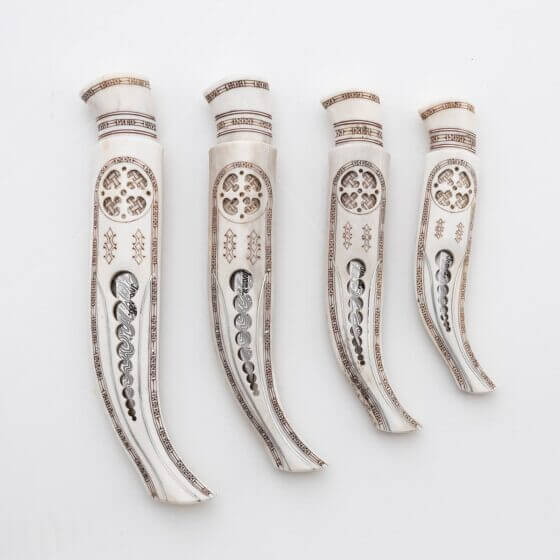
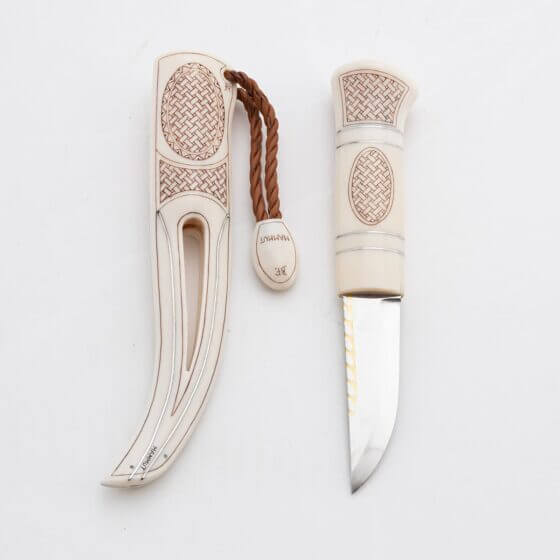
Photographs Puukko Sami @ Bukowskis
Though these knives Puukko They have become popular around the world because of their versatility, performance and resistance. People in many countries use them as tactical knives, survival knives and EDC.
BEGINNER'S GUIDE
HOW CHOOSE YOUR FIRST PUUKKO