Duodji Sami

Traditional crafts and the puukko

SANDINAVE CULTURE SYMBOL!

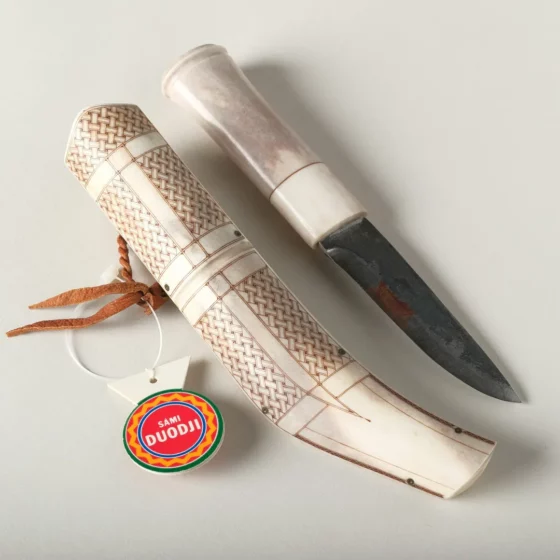
Among its most emblematic objects, the puukkos combine everyday tools and cultural expression.

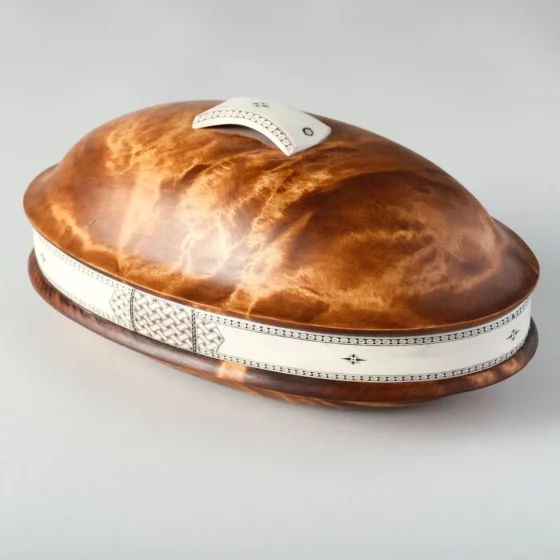
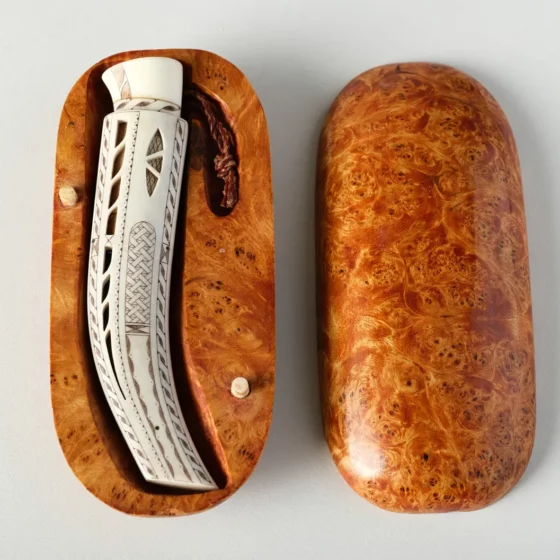
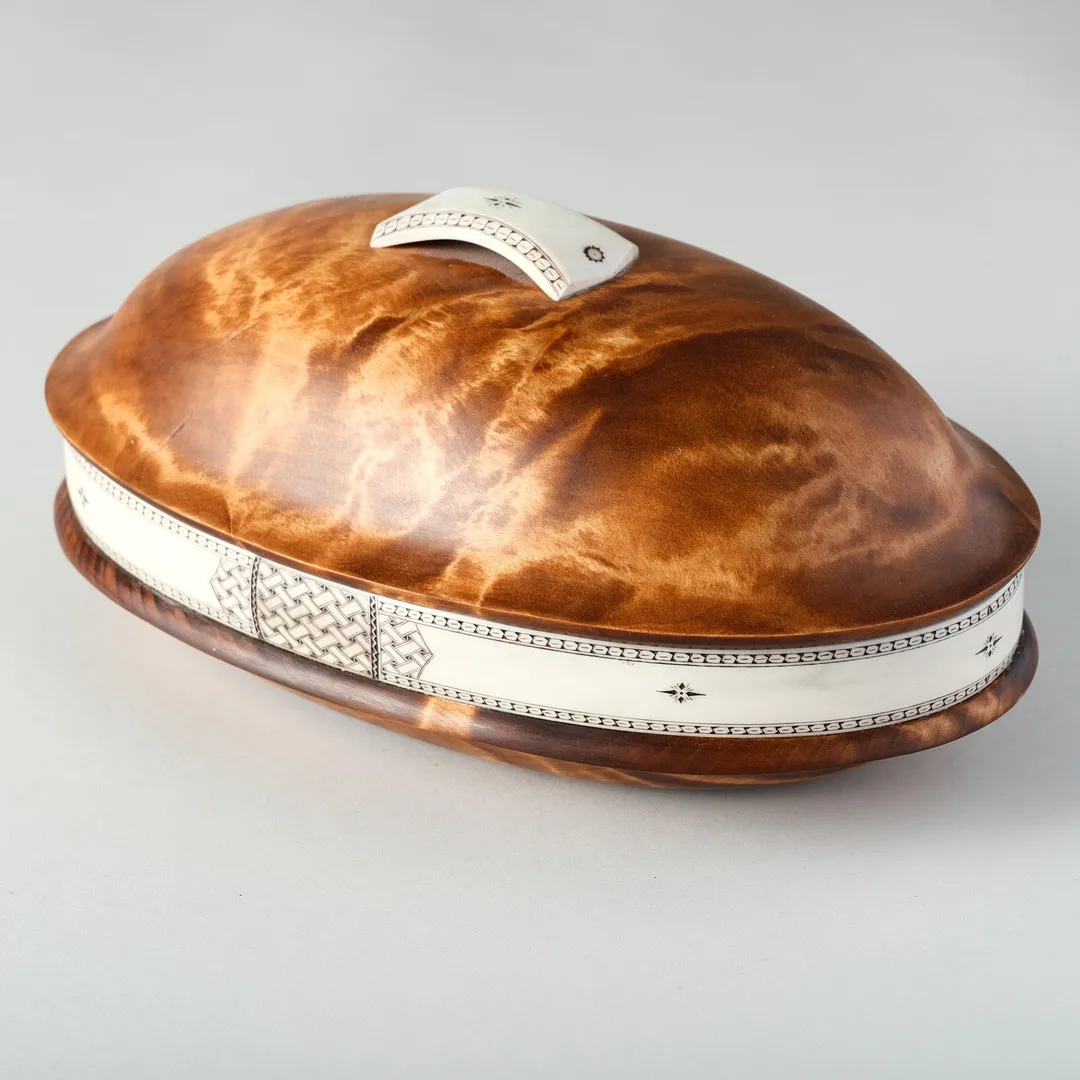
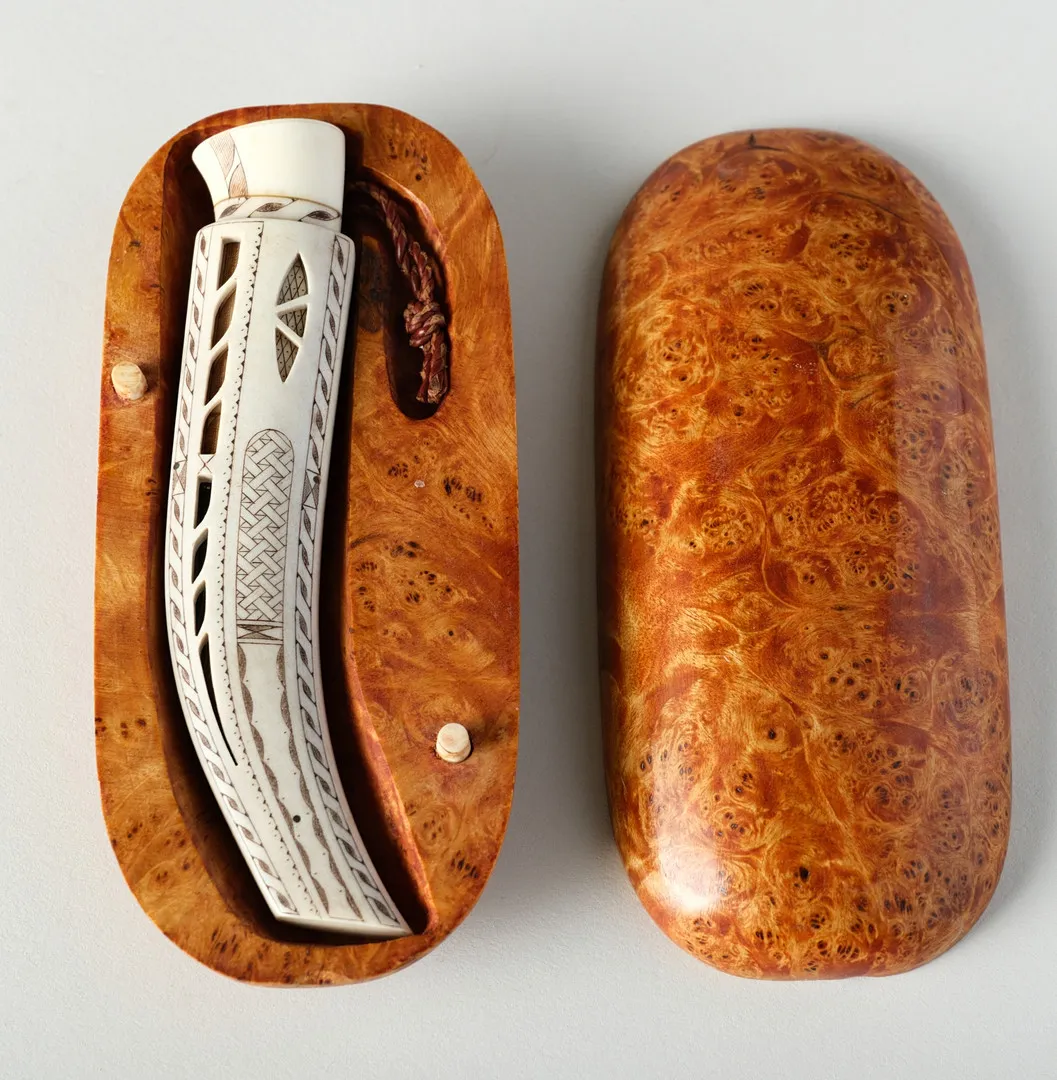
The duodji designates the traditional Sami craft, transmitted from generation to generation in the Sápmi. Between utility objects and collectibles, it is based on local materials (reindeer horn, madré birch, leather) and precise know-how.
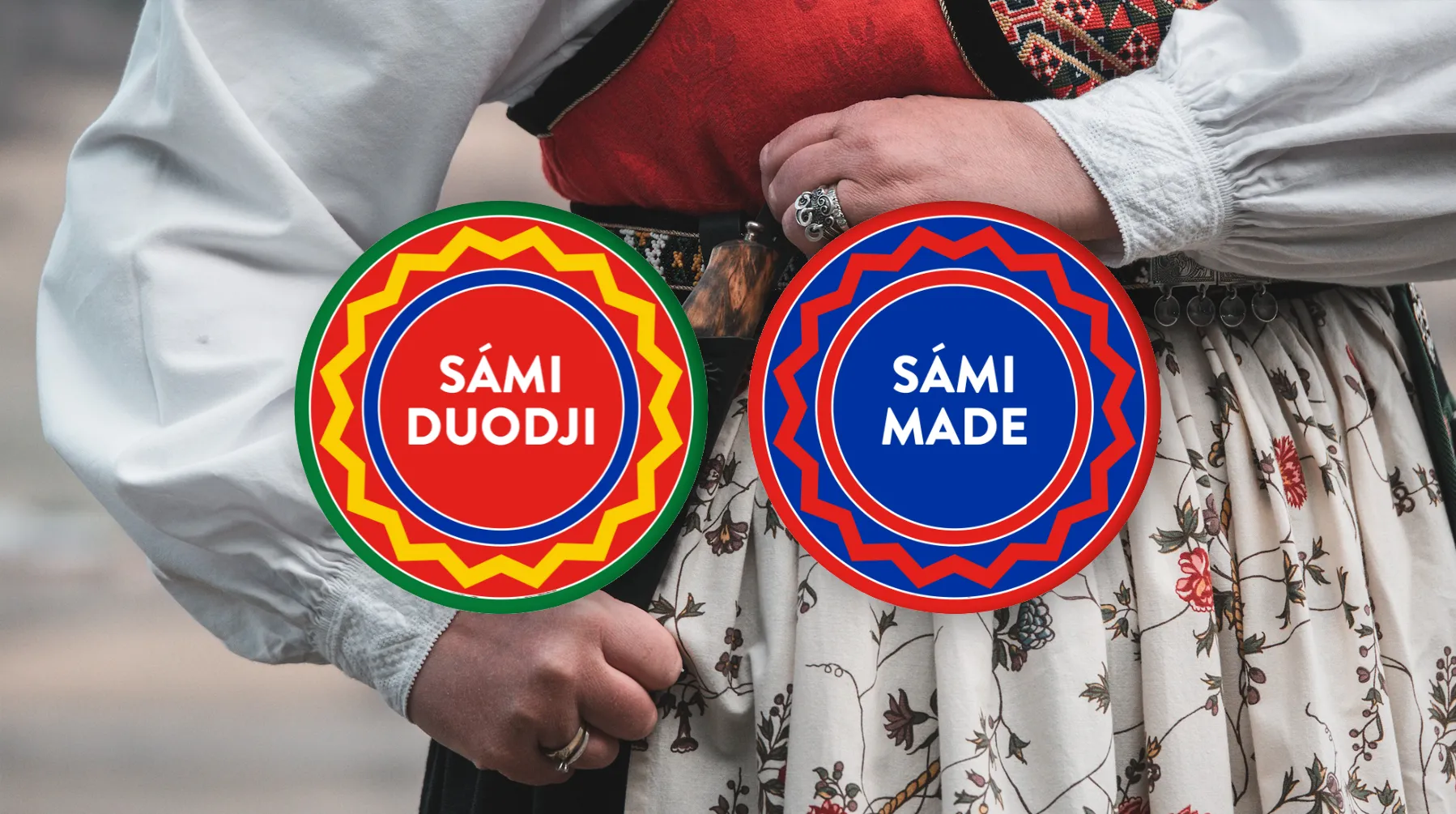
The Sámi Duodji label guarantees the authenticity of creations made by duojár. This page presents the duodji as a whole and focuses on knives, their regional forms and the craftsmen who perpetuate them today.

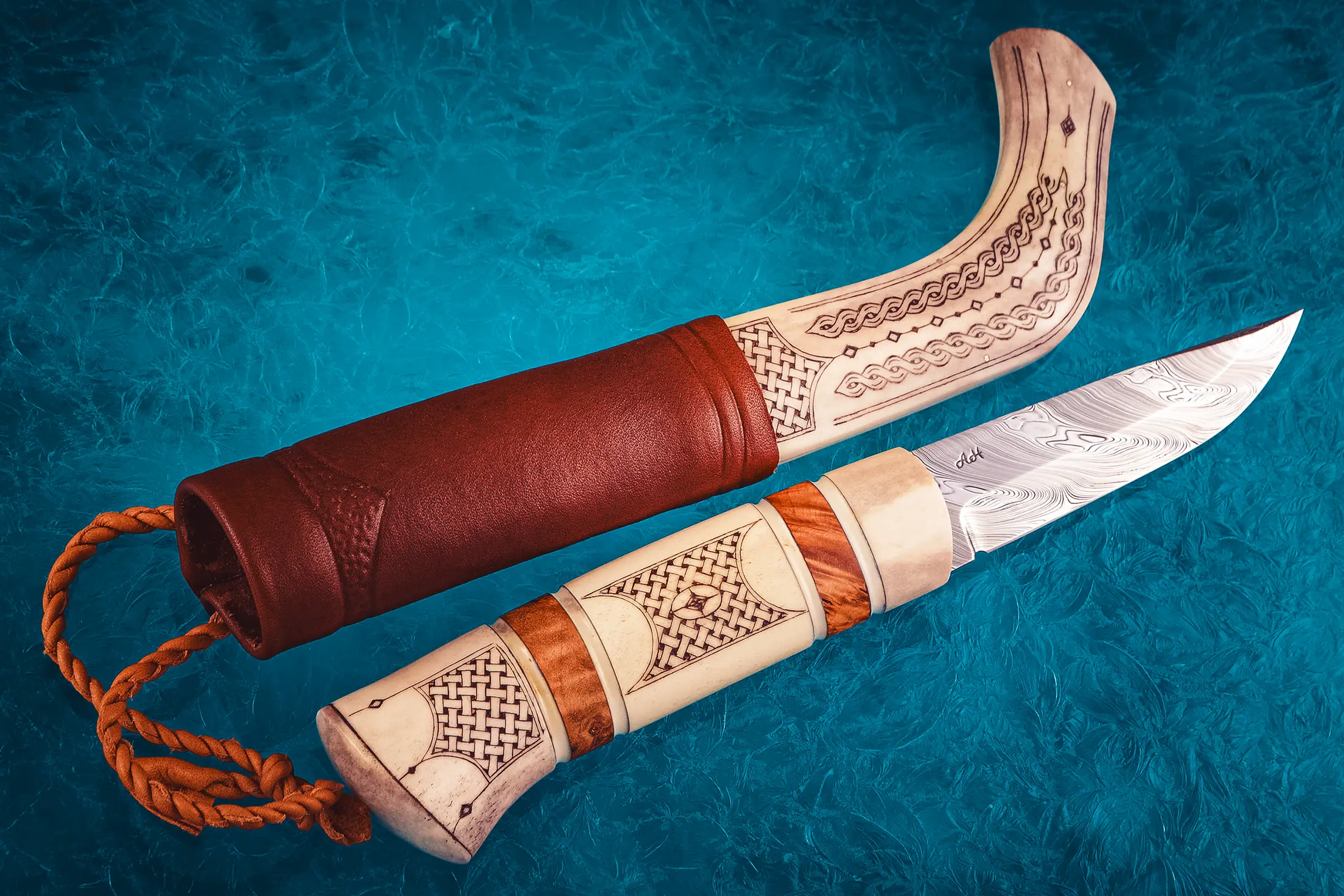
Puukko with signature Erik Nilsson

1. What is Sami duodji?

The duodji designates traditional Sami crafts. It simultaneously covers the gesture of creating and the finished object. It is a know-how transmitted from generation to generation, closely linked to nomadic life, reindeer rearing and the materials available in the Sápmi (reindeer antler, birch, roots, leather, tin, etc.).

Two categories of duodji:

  1. Garradiodji (duodji hard): reindeer antler, horn, bone, metal → knives, kåsor, boxes, skis, sleds.
  2. Dipmaduodji (soft duodji): leather, skins, textile → clothes, belts, bags, embroidery.

The puukko is one of the most emblematic objects of the hard duodji.
It is at the same time universal tool (cut, fire, woodworking, sløying) and identity object, often richly engraved.

Official bodies

Certification

  • The label Sámi Duodji (regulated by the Sami Council / via regional offices) ensures that an object is made by a Sámi according to traditional materials, forms, techniques and uses.
  • There is also the label Sámi Made (broader, for Sami enterprises). Licensees are listed on samitrademarks.com

2. Handicraft Sami (duojár)

The duojár (plural duojárat) is the Sami artisan who practises the duodji. Traditionally, knowledge was transmitted within the family or community, often according to a division between duodji hard (men: reindeer antler, horn, metal) and duodji soft (women: leather, textile). Today, this distribution is less strict. The duojár work mainly with local materials — reindeer horn, birch, roots, leather — and respect forms and patterns specific to their region (north, lule, south). Many of them are Sámi Duodji certified, which guarantees the buyer that the object is made by a Sámi according to traditional criteria. Beyond production, the duojár bears a cultural responsibility: preserve, transmit and sometimes renew identity know-how in the face of industrial copies.

3. Main craftsmen and workshops (puukko)

Assets and easily accessible

  • Sven-Åke Risfjell (Risfjells Sameslöjd, Vilhelmina, Sweden) — South-sami specialist (helhornskniv, halvhornskniv, forged blades, traditional engravings + pattern « nåjd » rediscovered). Certified. [Sameslojd. se] – Webshop [sameslojd.myshopify.com]
  • Knivsmed Strømeng (Karasjok, Norway) — Reference for samekniver. Family tradition since the end of the 18th century, 6th generation, important production (~10 000/year). [samekniv.no].
  • Pasi Jaakonaho (Inari, Finland) — Puukkoseppämestari trained at the Sami Institute. Puukkos and leukus in poronsarvi / birch, artisanal and contemporary approach. Already well represented on puukko.fr: read the article.
  • Karesuando Kniven (Karesuando, Sweden) — Traditional knives in reindeer horn and madré birch, local style. View the detailed information sheet.
  • Per Isak Juuso (Mertajärvi, Sweden) — Duojár known for his North-Sami knives. Instagram perisakjuuso

Other references

  • Ingvar Svonni (Sweden) — Horn knives, especially visible on auction.
  • Per Henrik Simma (Lannavaara, Sweden) — Sameknivar certified.
  • John William Hallin (Övre Jovattnet, Sweden) — Certified Sámi Duodji, knivar and kåsor (list samitradedemarks.com).
  • Jørn Are Keskitalo (Kautokeino, Norway) — Artisan duodji (cutlers, kuksas).

Many other duojár work in short circuit or through associations. Certified stores (e.g. Duodji Shop in Inari).

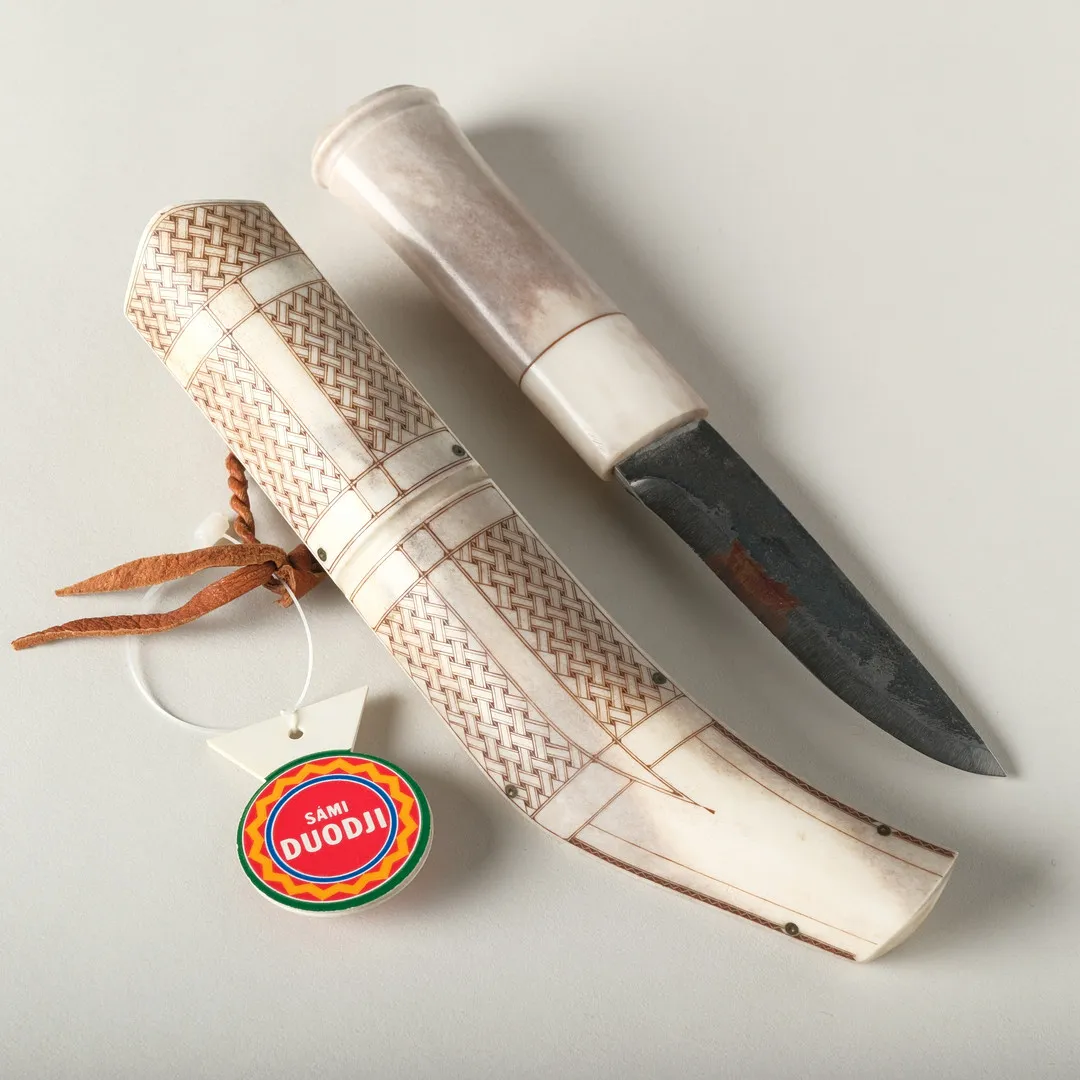
Sámi style hunting knife to handle Of semi-corned steel, with blade of damas with twisted pattern

4. Traditional patterns

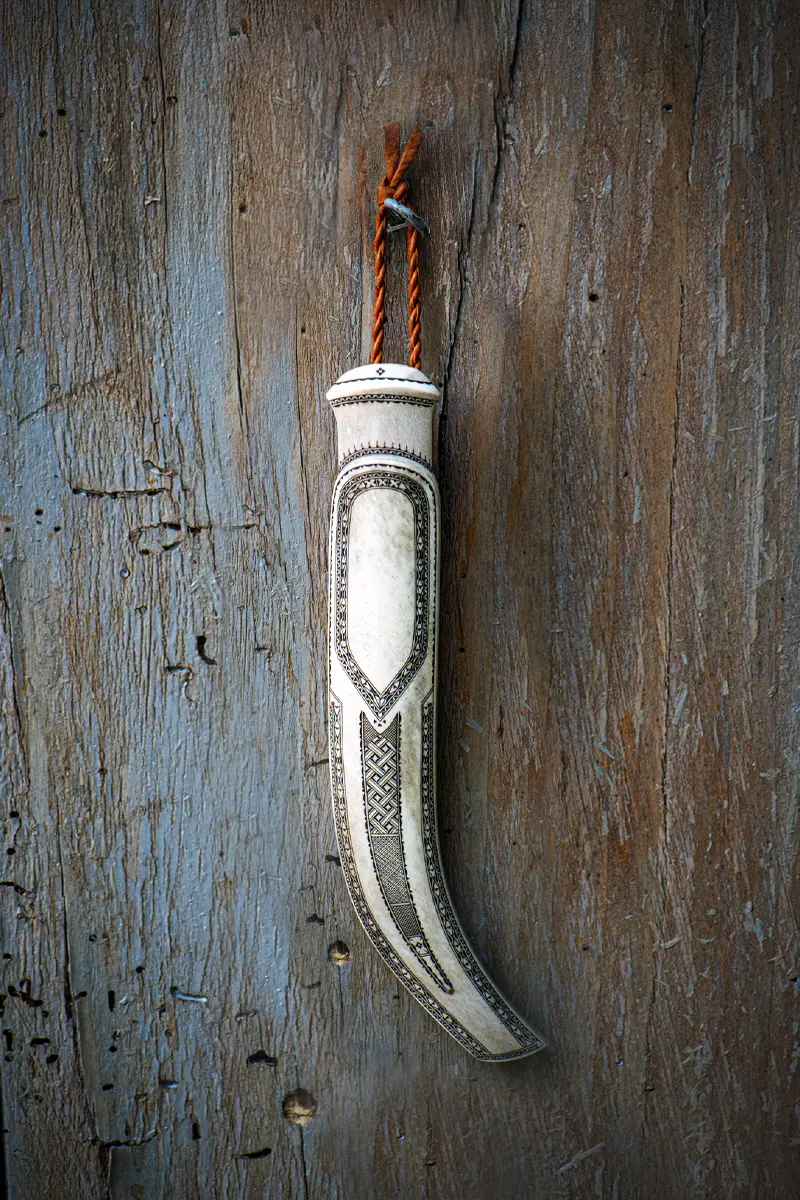
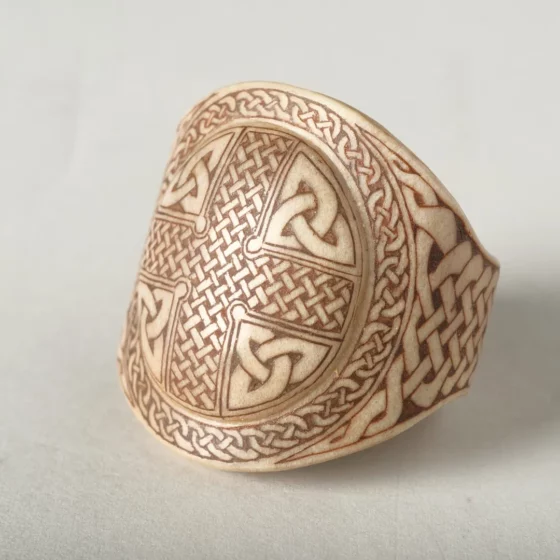
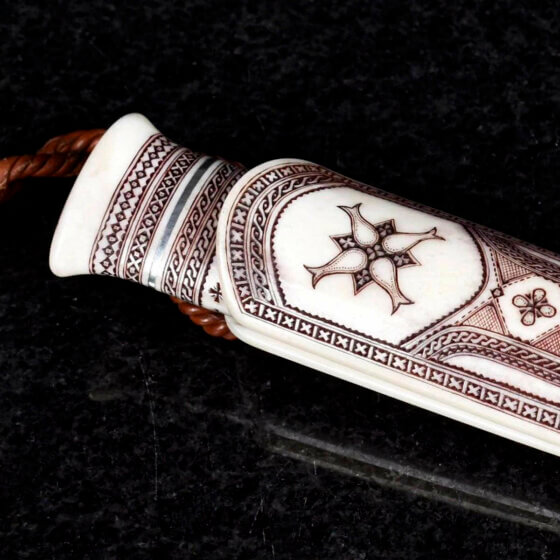
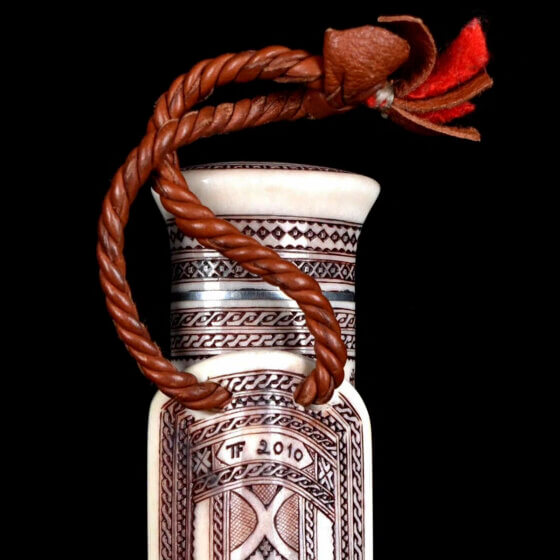
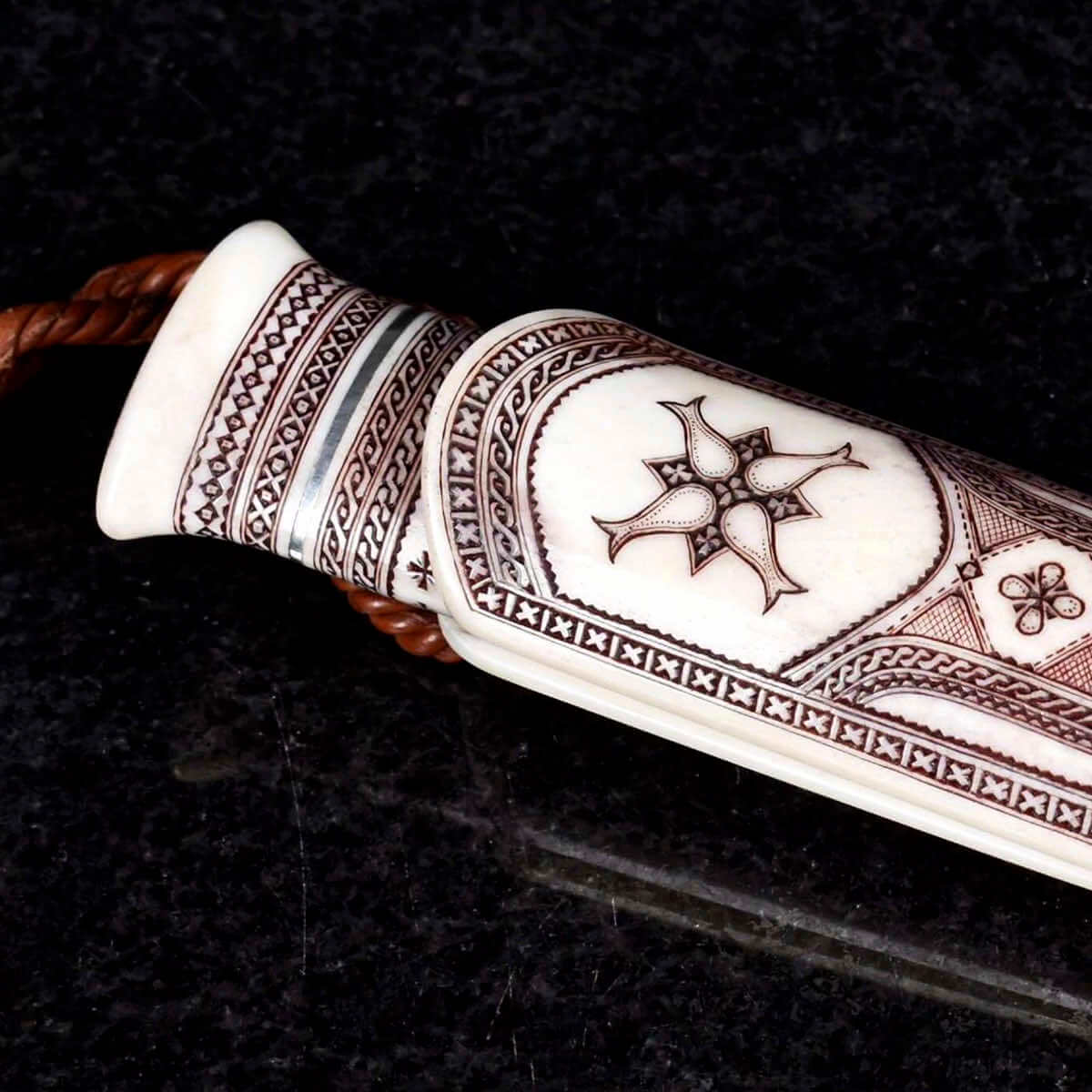
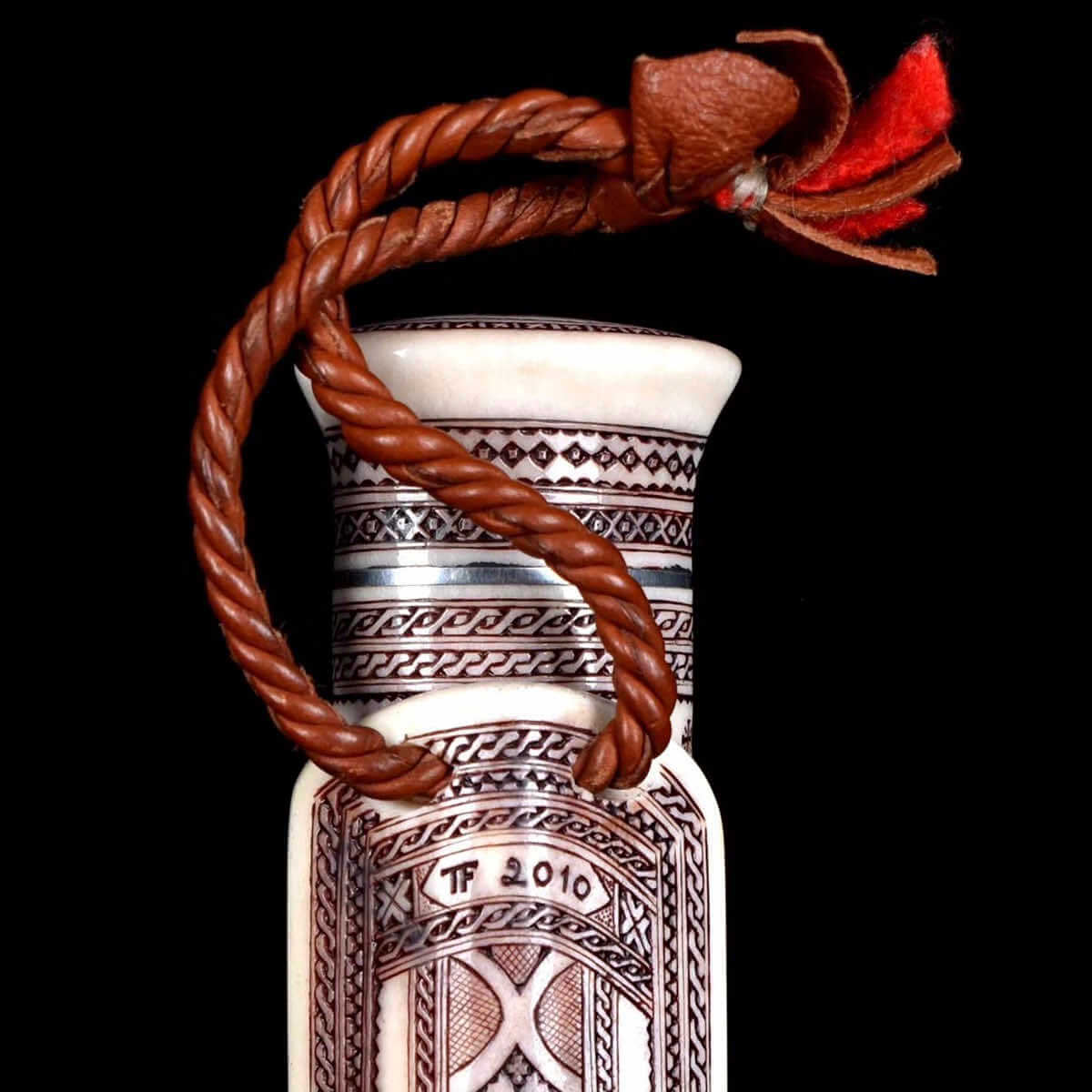
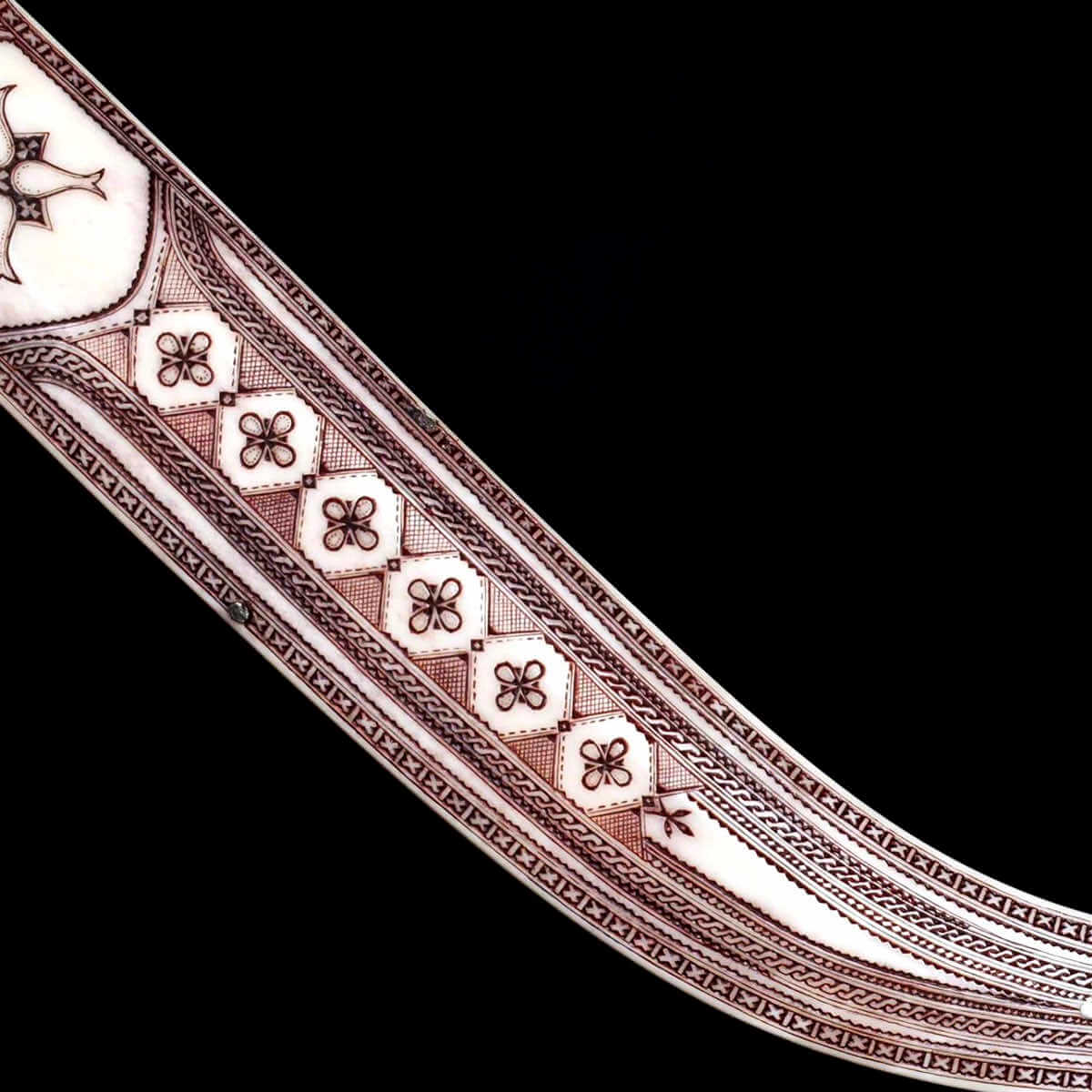
The duodji motifs are almost always geometric and stylized. On the knives, they are engraved or incised on the reindeer horn (handle and sheath) : parallel bands, triangles, zigzags, stars, simplified flowers and reindeer silhouettes. Each region has its peculiarities: denser and floral motifs in the North Sámi, more refined forms and sometimes openwork in the South Sámi. These decorations are not purely ornamental: they identify the geographical and family origin of the object, while respecting a functional aesthetic. Contemporary duojár rely on these traditional repertoires, which they faithfully reproduce or interpret in a personal way.

5. Traditional engraving

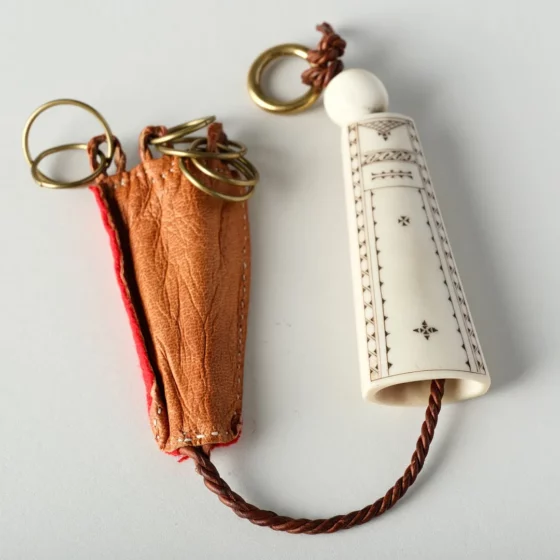
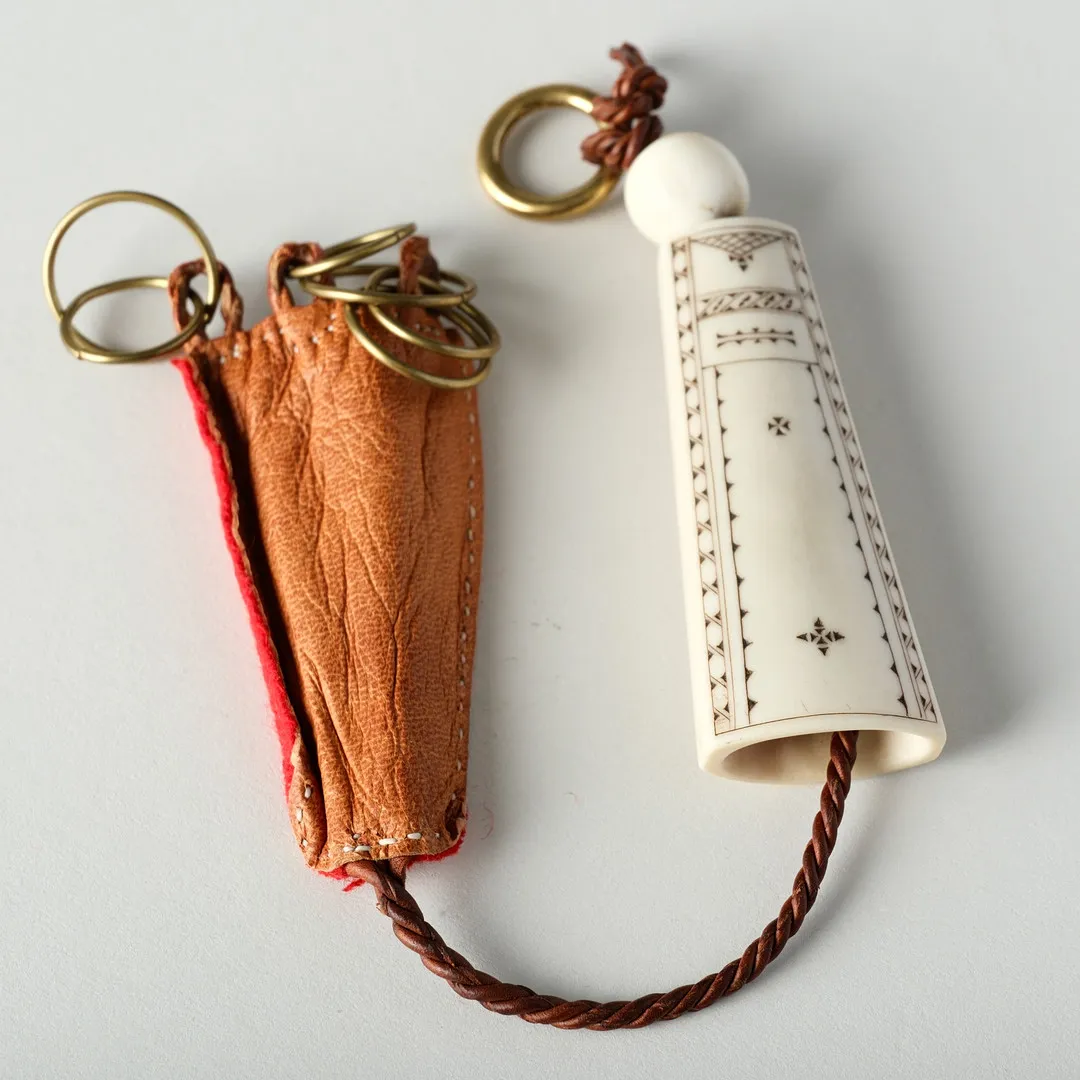
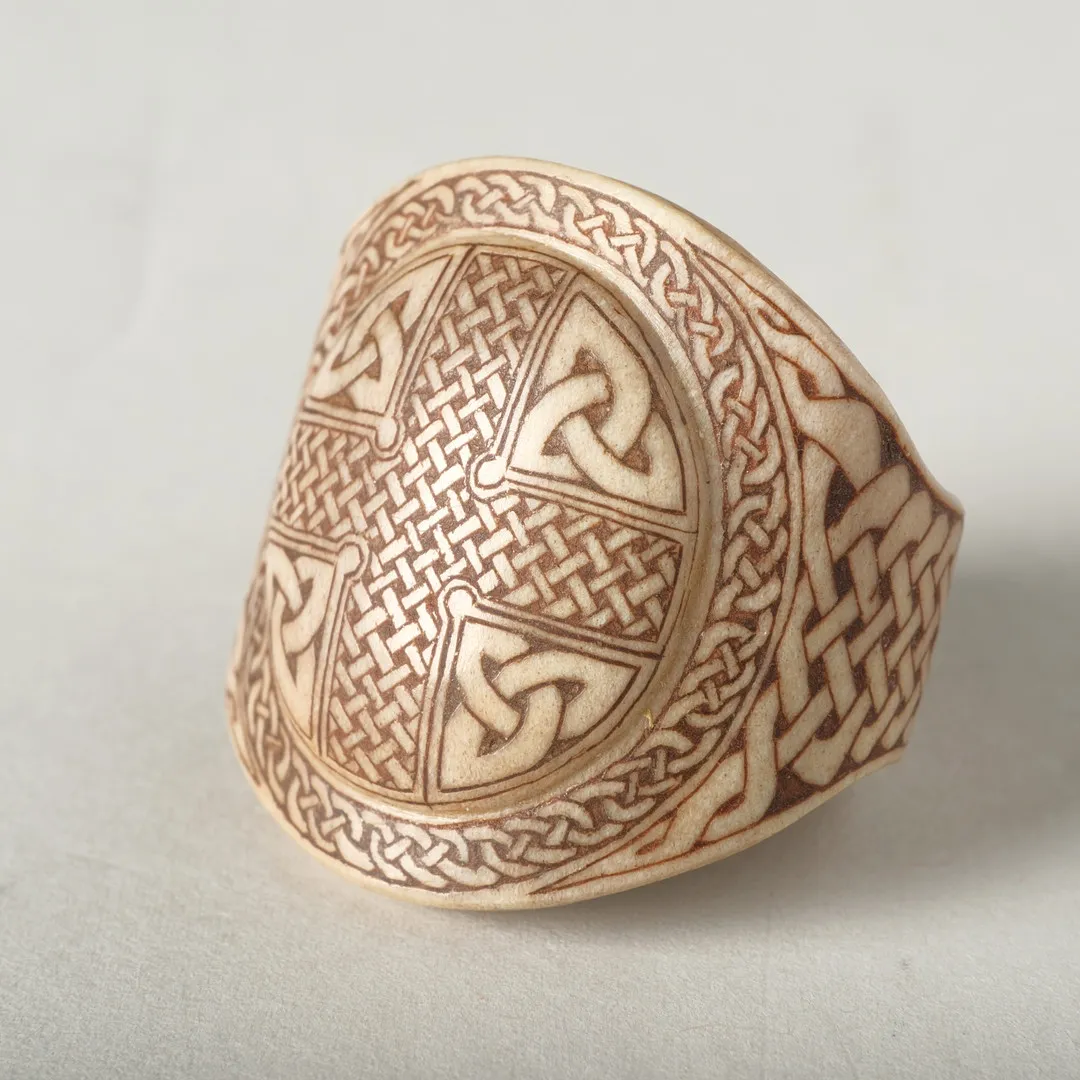
The engraving (or incision) on the reindeer horn is one of the most characteristic techniques of the hard duodji. The artisan works the material by hand, with fine tools (burins, engraving knives), to draw geometric patterns: strips, triangles, zigzags, stars, stylized flowers and reindeer silhouettes. By region, styles vary — denser and floral in the North Sámi, more sleek or openworked in the South Sámi. These decorations are not only decorative: they mark the geographical and sometimes family origin of the object. Each piece remains unique because the natural shape of the horn influences the final drawing.
→ Original engraving on reindeer antler and bone

6. Manufacturing

The production of a duodji knife usually begins with the choice of materials: carbon steel blade (often forged or treated by the artisan), handle and sheath in reindeer horn and/or birch madré. Then, the horn is selected for its density and natural nuances, then cut, hand shaped and engraved according to regional patterns. The handle is assembled (sometimes in several elements: horn, reindeer antler, leather or metal interlayers) and attached to the silk of the blade. The sheath, leather and horn, is adjusted to hold the knife firmly. Each step remains manual, making each piece unique according to the shape of the horn and the artisan's gesture.
→ Maintenance sheath

Puukko Stig Sjunesson Women's Version

7. Duodji Sami, spirituality and relationship to gesture

Dualji is not a spiritual practice in the sense that we often hear it today, nor a form of meditation « Zen ». First of all, there remains a utilitarian craft, rooted in everyday life, family transmission and available materials. Its primary purpose is to produce objects that serve, last and fit into a culture.

That said, it carries a deep dimension, related to the Sami worldview. Working reindeer antler birch or leather requires a fine knowledge of materials, seasons and places. Joar Nango thus speaks of the duodji as a « Local material flow cycle ». Other voices (especially in contemporary texts) evoke the possibility of transmitting, through gesture, stories, knowledge and sometimes a spiritual dimension. The choice of a reindeer antler, the time when it is harvested, the way in which it is sheath may be respectful of animals and territory.

This is not contemplation for herself. Rather, it is a practical, physical and cultural attention: the right gesture, the material that responds, the memory that is transmitted in the hands. Some duojár describe a feeling of obvious or pleasure in work (*vurogas*, « Nice »), close to a state of concentration, but always oriented towards the object and its use.


In summary

The duodji can affect a form of spirituality for some practitioners, because it connects the body, materials and territory.
However, it is not limited to this. Presenting it as a practice « Zen » His heart is still useful, cultural continuity and know-how.

FAQ

Duodji: Sami handicrafts
  • Presence of the label Sámi Duodji, signature of the artisan, traditional materials (reindeer horn, madré birch, leather), shape and patterns consistent with the region, manual manufacturing.

  • The puukko is the generic Finnish term. The samekniv / stuorra niibi is the large sami knife (often 20–25 cm of blade). Leuku is the large working version (close to a camp knife / machete).

  • Directly at listed craftsmen, via their webshops, or in certified shops and associations (samitrademarks.com). Avoid objects « style Lappish » without clear origin.

  • Both. Strømeng models remain common tools; those of Risfjell, Juuso or Jaakonaho are often closer to the collection.

  • Yes, through the formations of Jokkmokk and Kautokeino, or in internship with artisans. Certification remains reserved for Sámi.

  • The puukko is the traditional Finnish knife (often handle birch, carbon blade, sheath leather). The duodji knife is made by a duojár Sami, with traditional materials and patterns (reindeer horn, regional engravings) and can bear the label Sámi Duodji.

  • No. Many Sami artisans work without the label, but it guarantees that the object is made by a Sámi according to traditional criteria. Without a label, it is more difficult to distinguish a true duodji from a copy « style Lappish ».

  • Yes, most accept custom orders (size, patterns, materials). Delays are often long (several months) and prices vary greatly depending on the complexity of the engraving and the rarity of the horn.

Conclusion

The Sami duodji is not a simple « Nordic style » It is a Sami identity craft, anchored in local materials, functional forms and oral transmission. The knives are the most visible and collected part of them, as they combine daily use with cultural expression. Focusing on Sámi Duodji certified artisans or explicitly identified as duojár helps to support tradition and avoid copies.

Update: October 2026.
The list of duojár is not exhaustive.

To go further:
Sami, Puukkos and Large Spaces — Interactive map of puukko manufacturers – Anatomy and history of leuku

If you have any questions about duodji, please feel free to write to me at: contact(at)puukko.fr.
We’re all enthusiasts here, and I always reply to enquiries.

Warm regards,

Subscribe to the newsletter.

MANUFACTURERS’ DIRECTORY

15 manufacturers identified

Would you like to find out more about puukkos?

Are you passionate about puukkos? So these articles should also be interesting.

Puukko Aito signed Iisakki Järvenpää

Puukko Aito signed Iisakki Järvenpää 1798 1200 Puukko - Finnish knives

We can translate Puukko Aito by: real knife. We are here in the pure tradition of Scandinavian knives. The puukko Aito is a true masterpiece in the range of...

Express Quiz on the puukko : 10 easy questions

Express Quiz on the puukko : 10 easy questions 1792 1008 Puukko - Finnish knives

Express quiz in 2×5 questions. Introduction: The puukko is a real tool dedicated to hunting and woodworking. It was designed by the Sami at the time...

Puukko Ahti – Finland

Puukko Ahti – Finland 1798 1200 Puukko - Finnish knives

Ahti offers a range of Finnish puukko knives to suit your needs, whether you’re looking for a utility knife, a hunting knife or a general-purpose knife whilst you’re out enjoying the great outdoors…

Grand Quiz of Puukko : 20 questions to test your knowledge

Grand Quiz of Puukko : 20 questions to test your knowledge 1792 1008 Puukko - Finnish knives

The Grand Quiz of Puukko Introduction: The puukko sounds simple. Too simple, sometimes. This time we get out of the express quiz. Twenty questions, one map, four themes: the...

    EnglishenEnglishEnglish