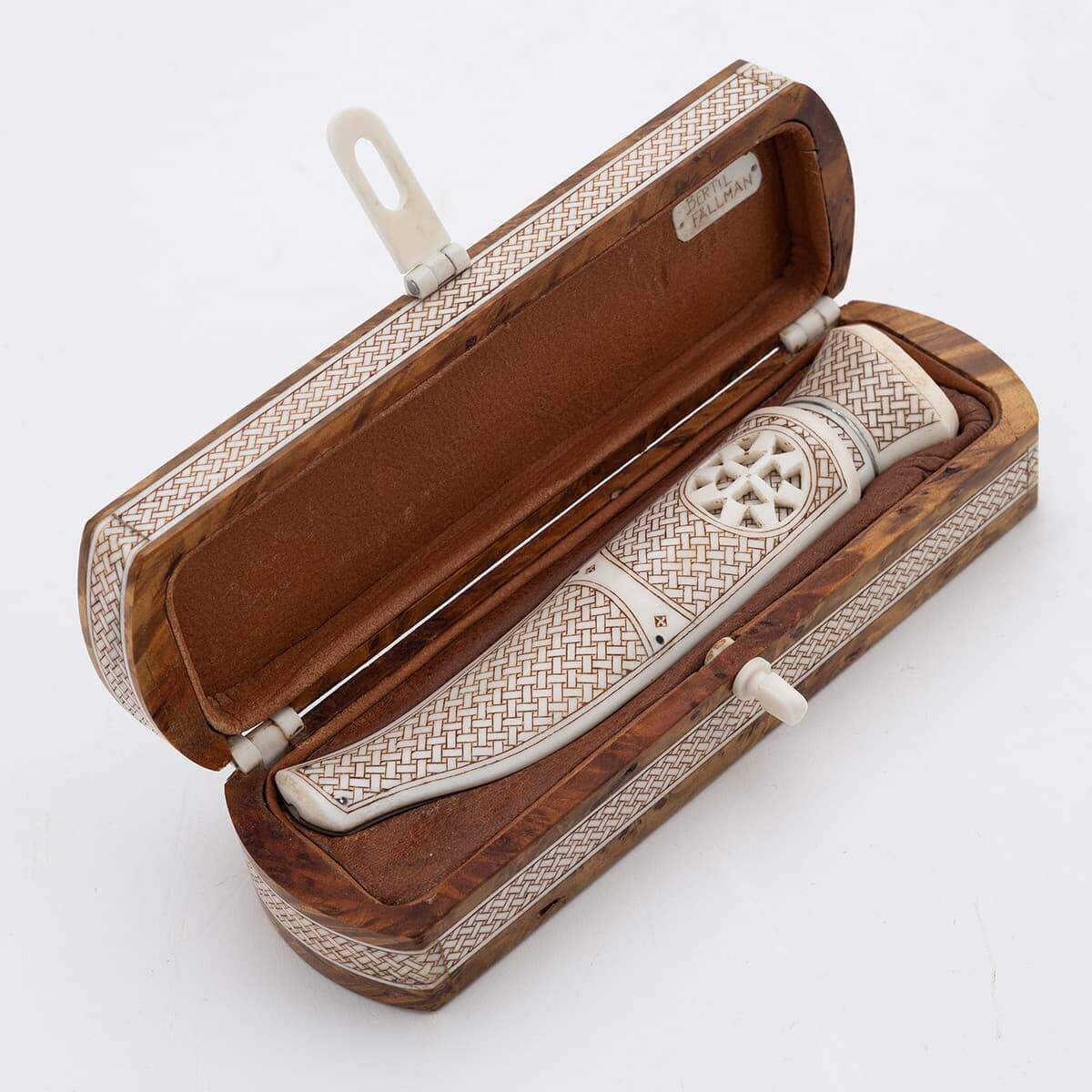
Burning techniques on reindeer wood and bones
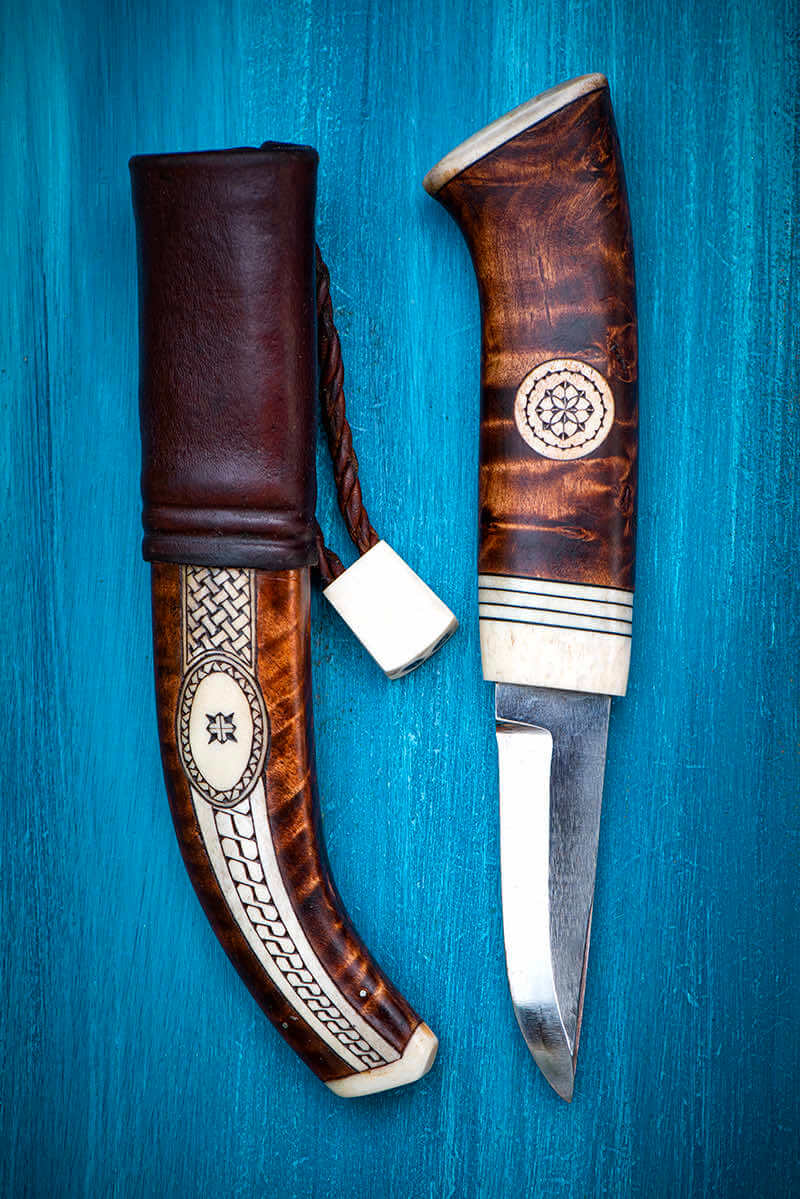
Renal wood and northern bone adorn handles, sheaths and interlayers of the most beautiful puukkos. Two dense and brittle materials: the line remains fine, the razor tool, the light pressure. From the sami trail to the scrimshaw pointillism.
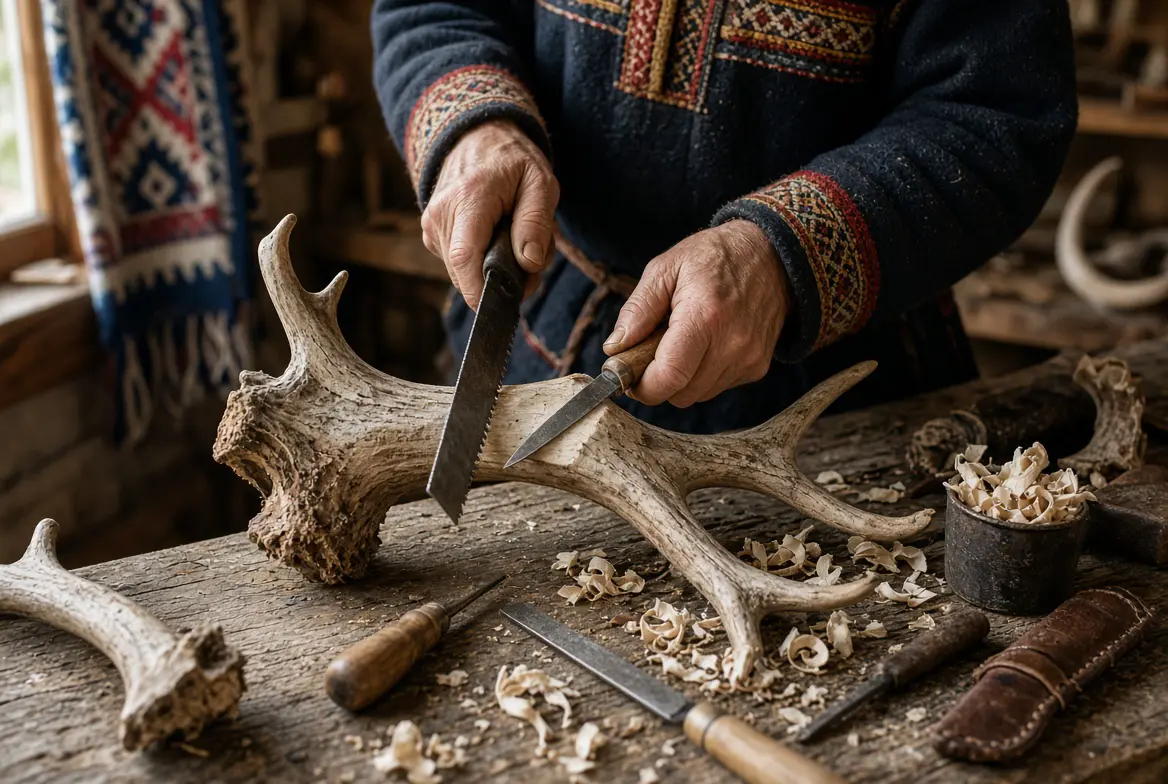
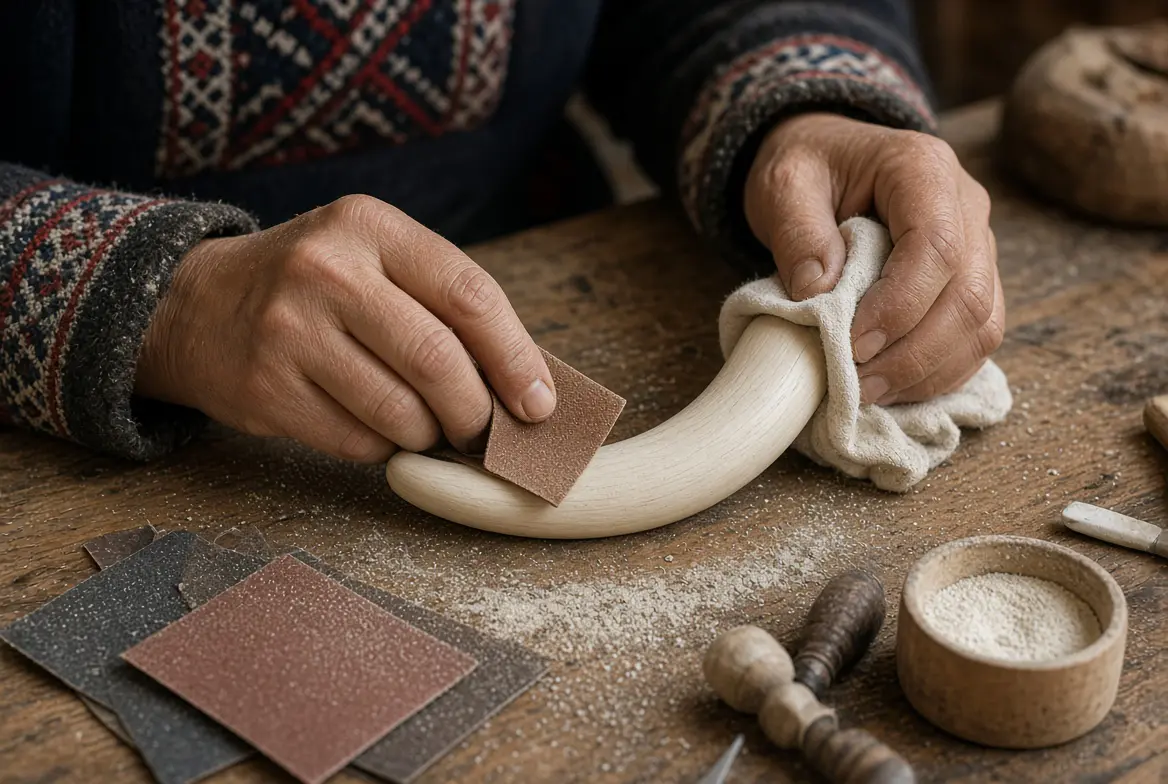
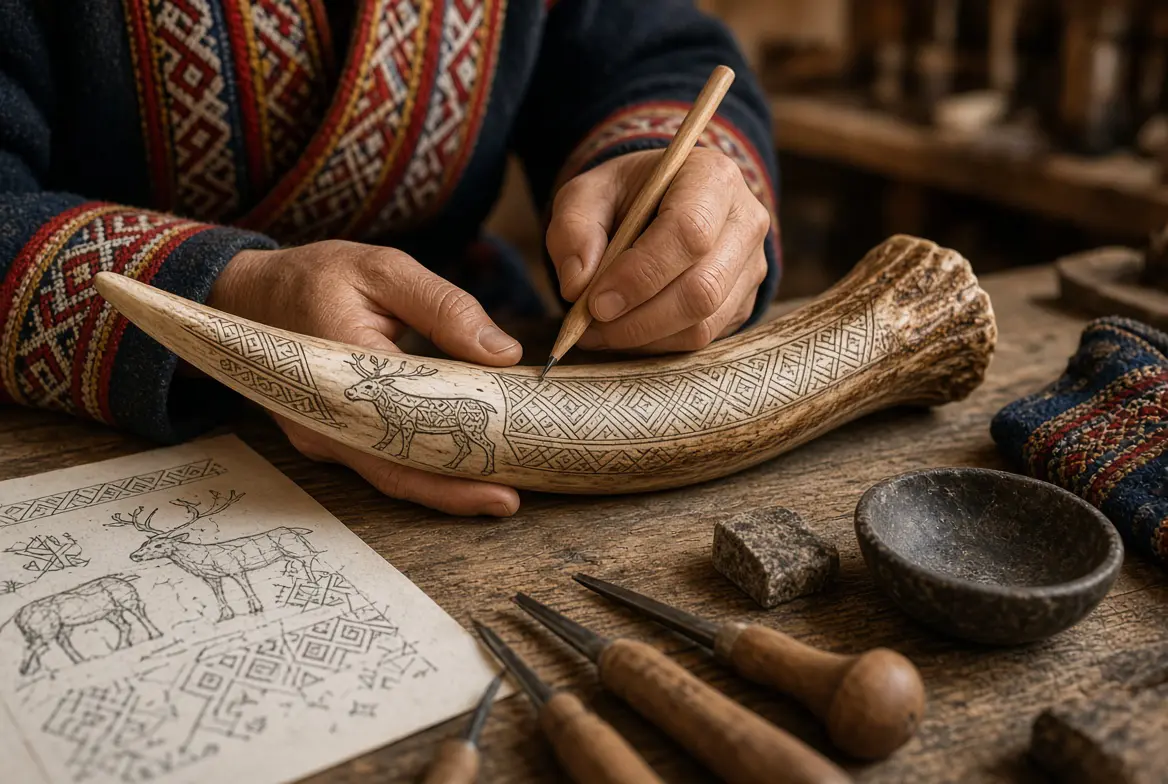
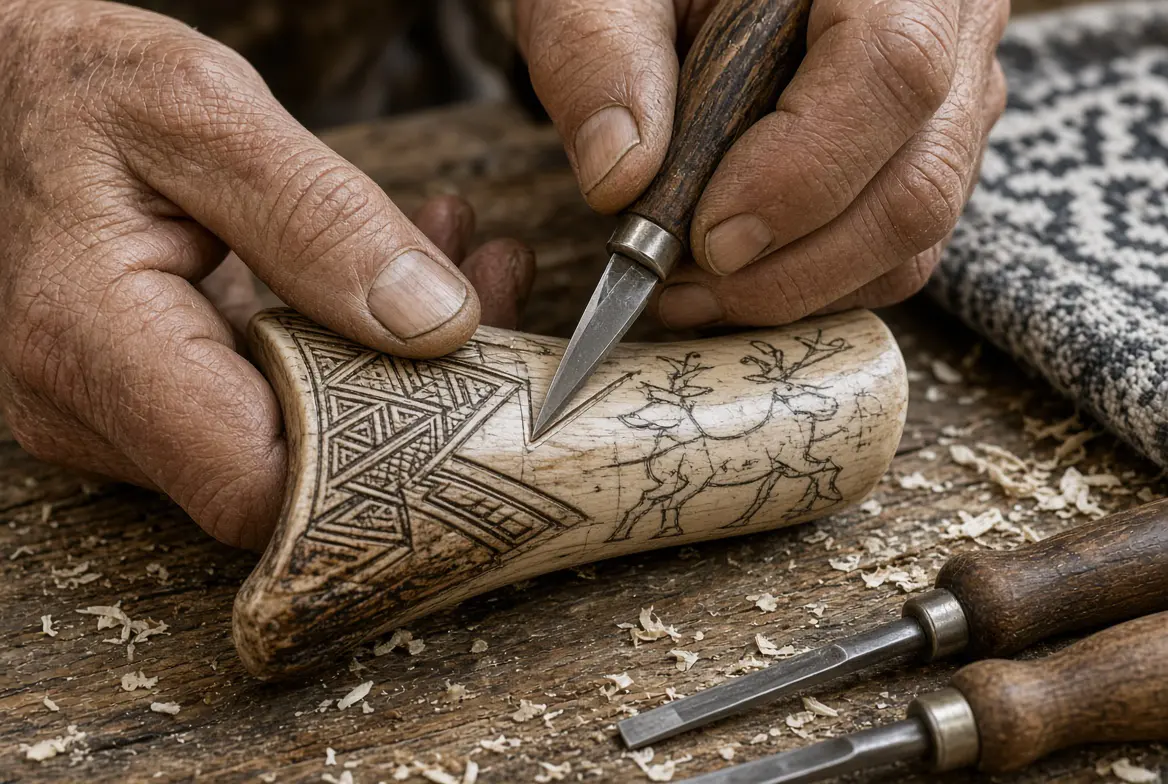
Step by step summary before discovering details
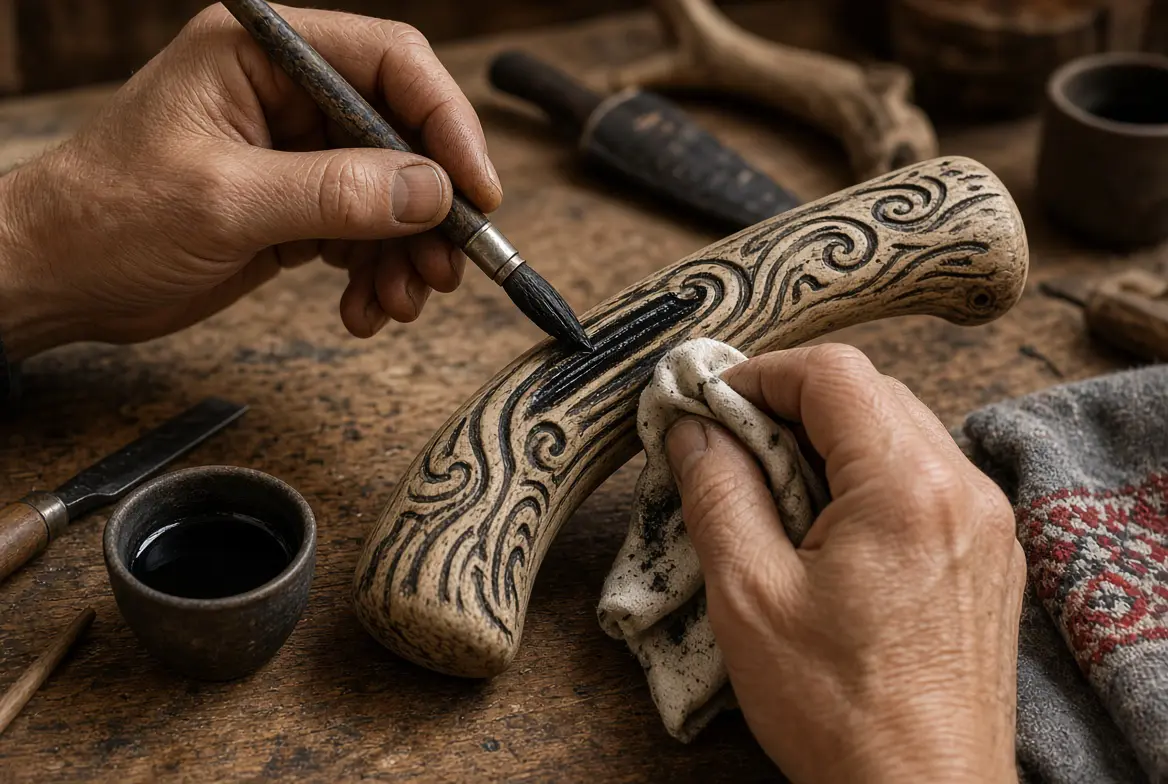
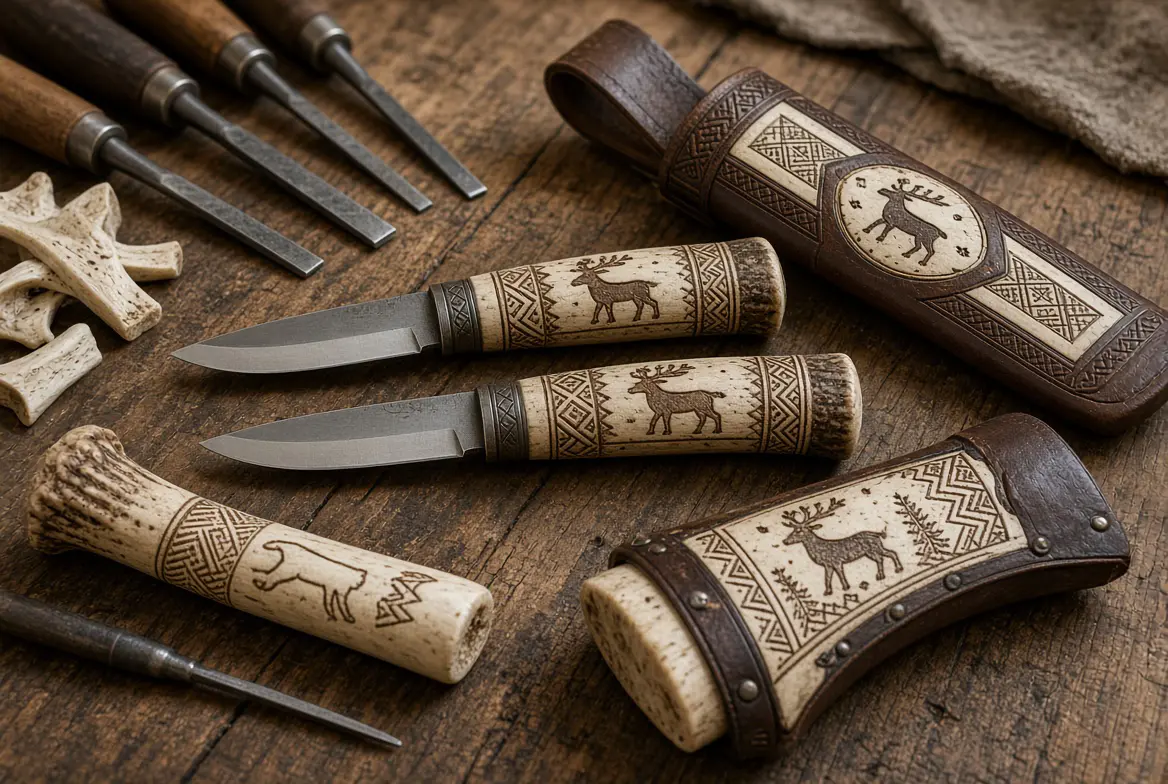
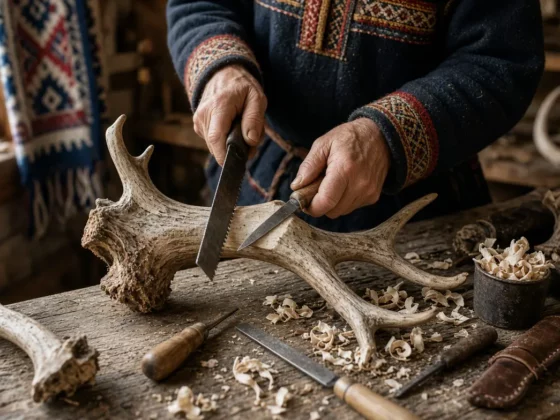
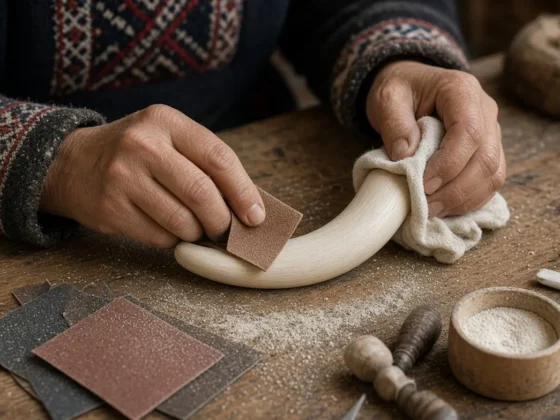
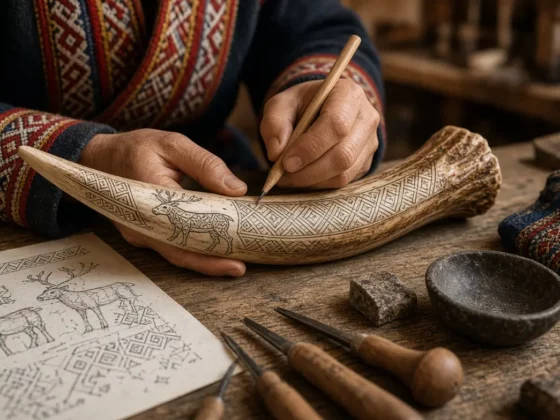
Illustration images generated by Grok-Imagine
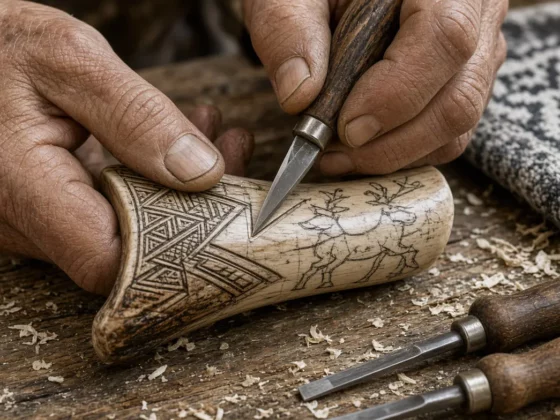
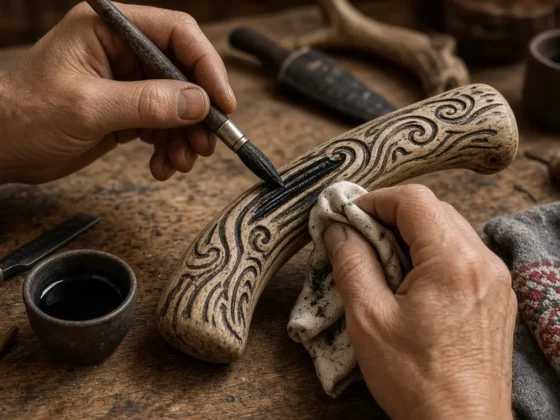
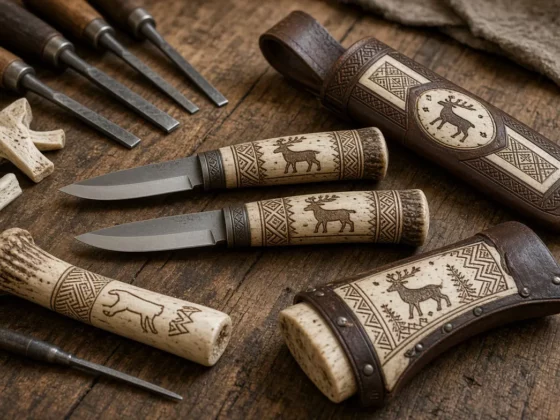
Material
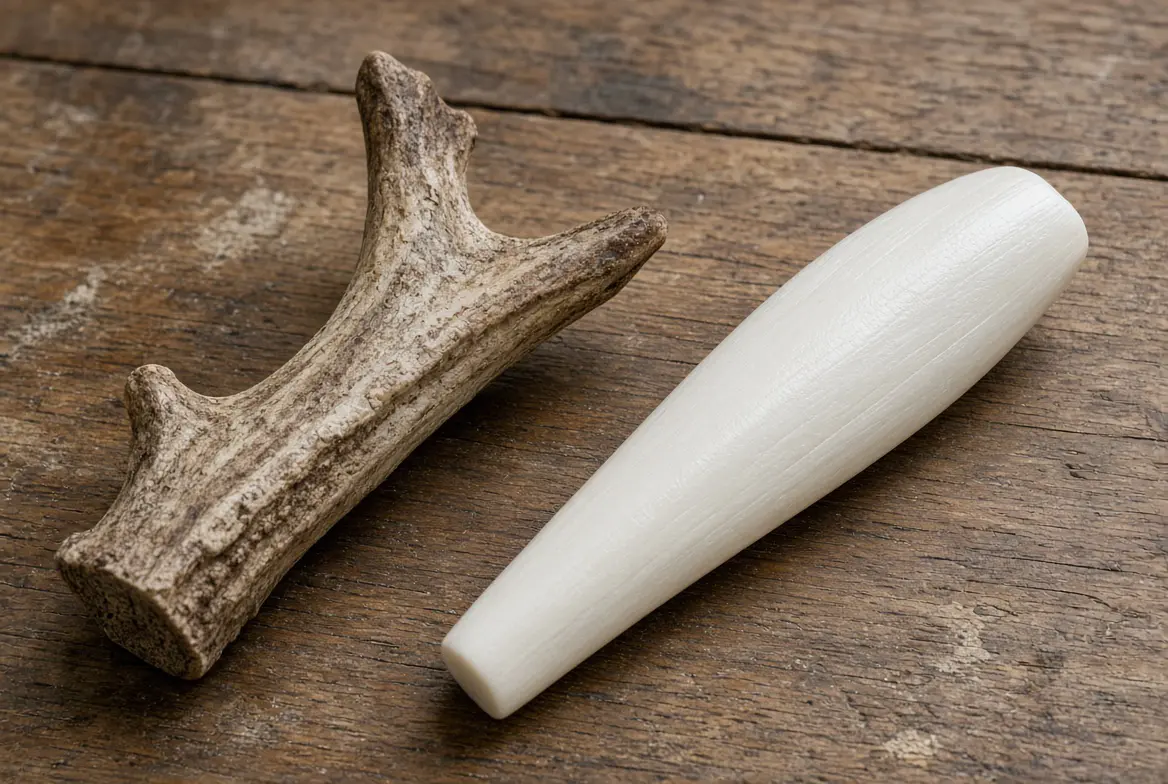
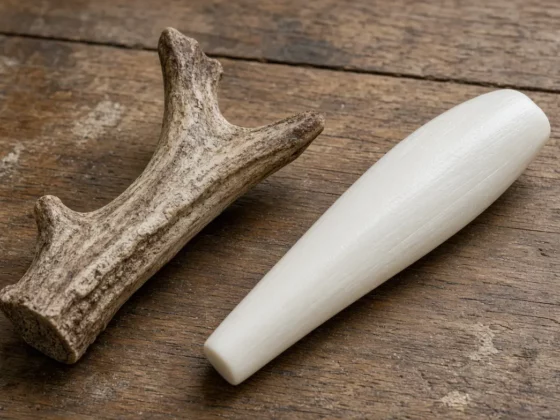
The reindeer wood (poronsarvi) and the northern wood (renne, moose) are used for handles, sheaths, interlayers and decorations of puukkos. The reindeer wood is hard, dense and somewhat brittle. It is denser, whiter once polished, almost without visible grain, and splits even more easily. Both require an ultra-sharpened tool and a light pressure.
The reindeer wood is not horn. It's bone, pushed every year and then fell. The horn is keratin and does not fall. In reindeer, males and females bear wood: the male loses them after the rut, around November-December; The female often keeps them winter, useful for access to food. Under velvet, wood is alive and irrigated; Once the velvet is rubbed, late summer, it is mineralized, especially calcium and phosphorus.
In Finland, the subject comes from two sectors. The cutting wood, recovered from the cutting, and the moulted wood collected, the jättösarvet. We harvest over 100 tons a year. The duojár sort: whole male wood (hirvas), the densest and most useful, especially the base near the skull, for shrouds, lasso rings, large pieces; female or young wood, smaller; Castrated male wood, usually large but porous and brittle. Food reads in the cup: poor food, broad spongy heart, little dense matter to burn. Nothing flows; falls are used for interlayers and trials.
The handle is not a fallen wood. It comes from the animal slaughtered, reindeer or momentum: cannon, metapod, sometimes tooth. Whiter, more homogeneous, more brittle. It must be degreased, dried for a long time, occasionally bleached.
Retention: dry, stable, sheltered from cracking gel and dry heating. An already dry moult wood keeps itself as it is, cleaned of the earth, without early varnish. Fresh bone must lose its fat before being worked, otherwise the stain comes out months later. Once mounted, oil or wax nourishes; hot water and heat shock open the old cracks.
Rating
Reindeer wood Wood falls every year; Is from the animal; Elephant ivory is prohibited (CITES). Mammouth and micarta are substitutes, not ivory.
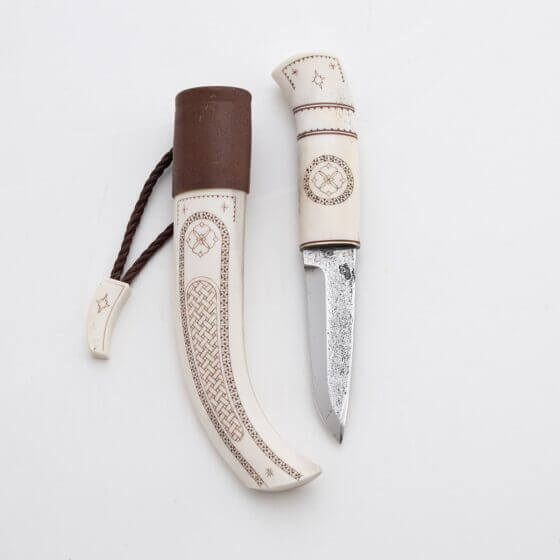
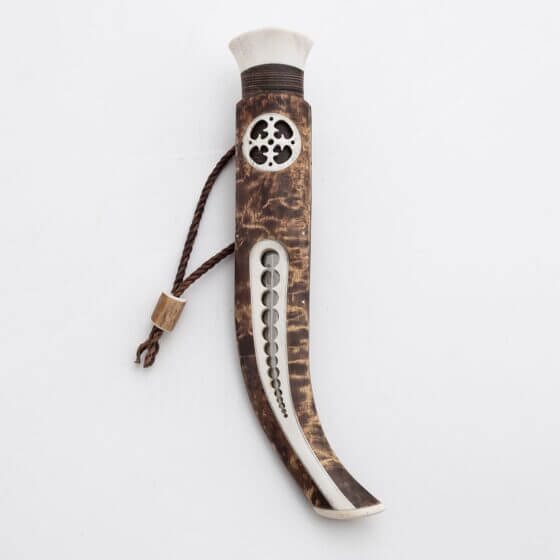
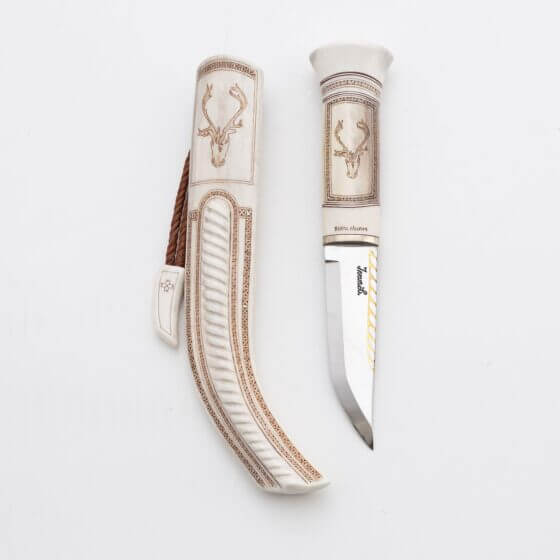
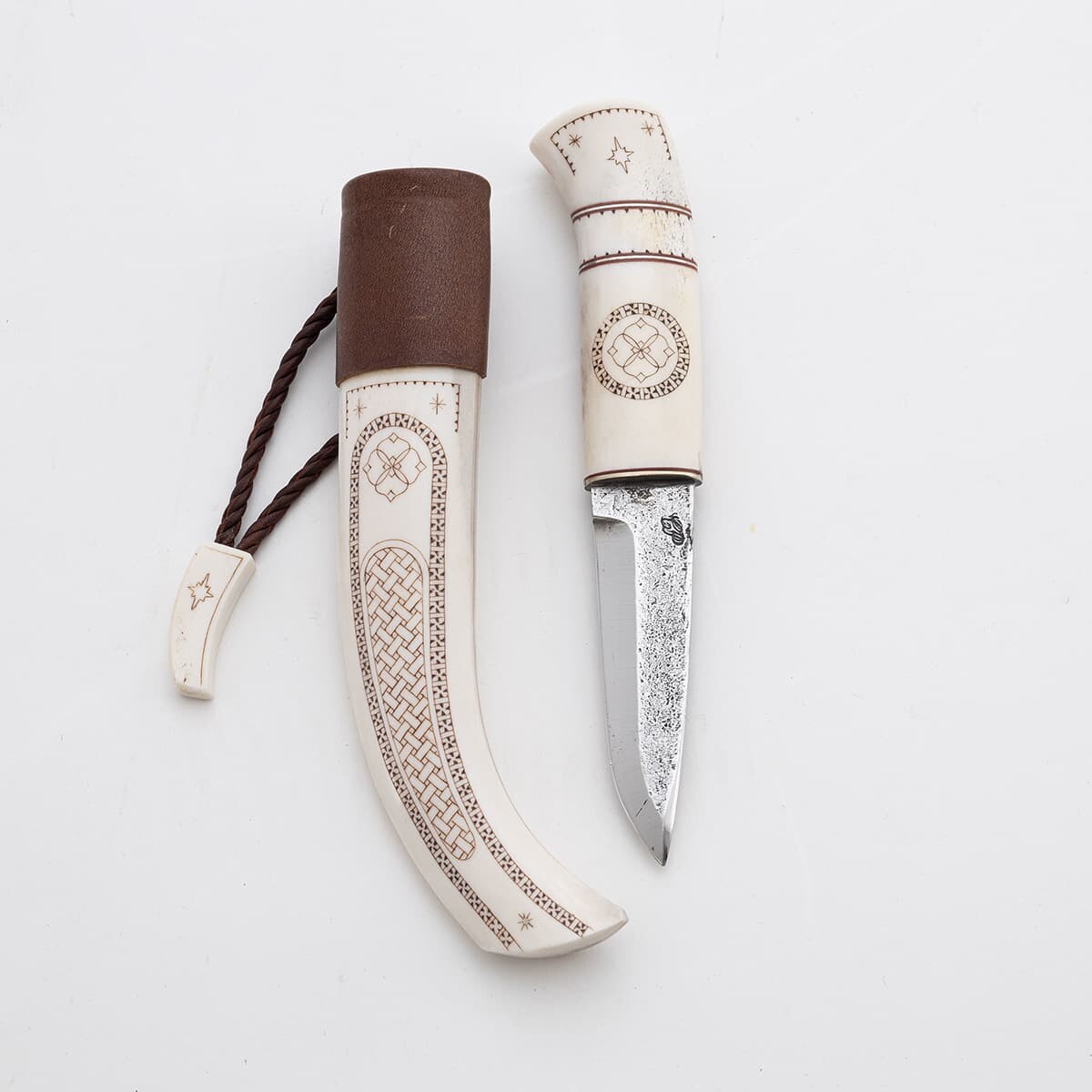
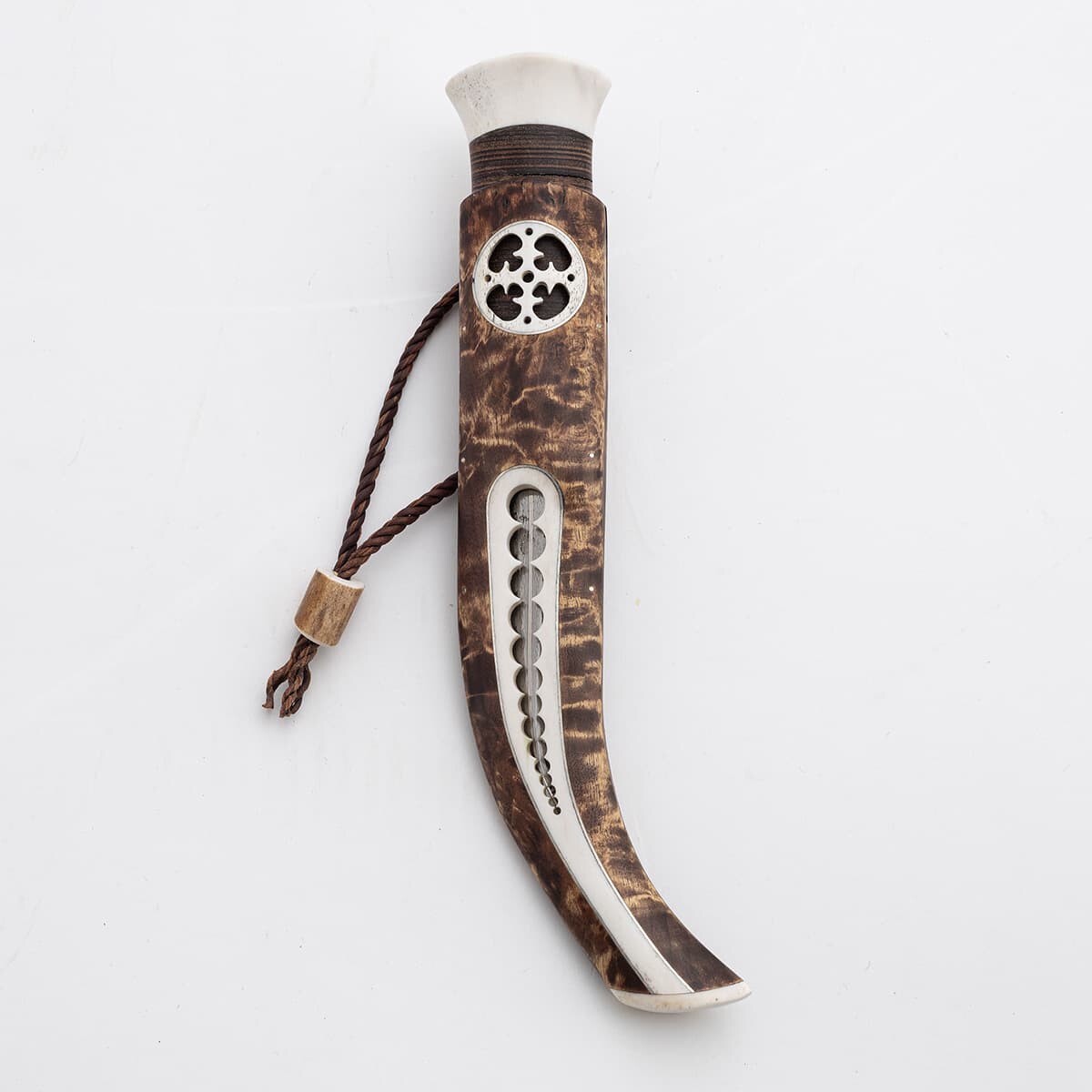
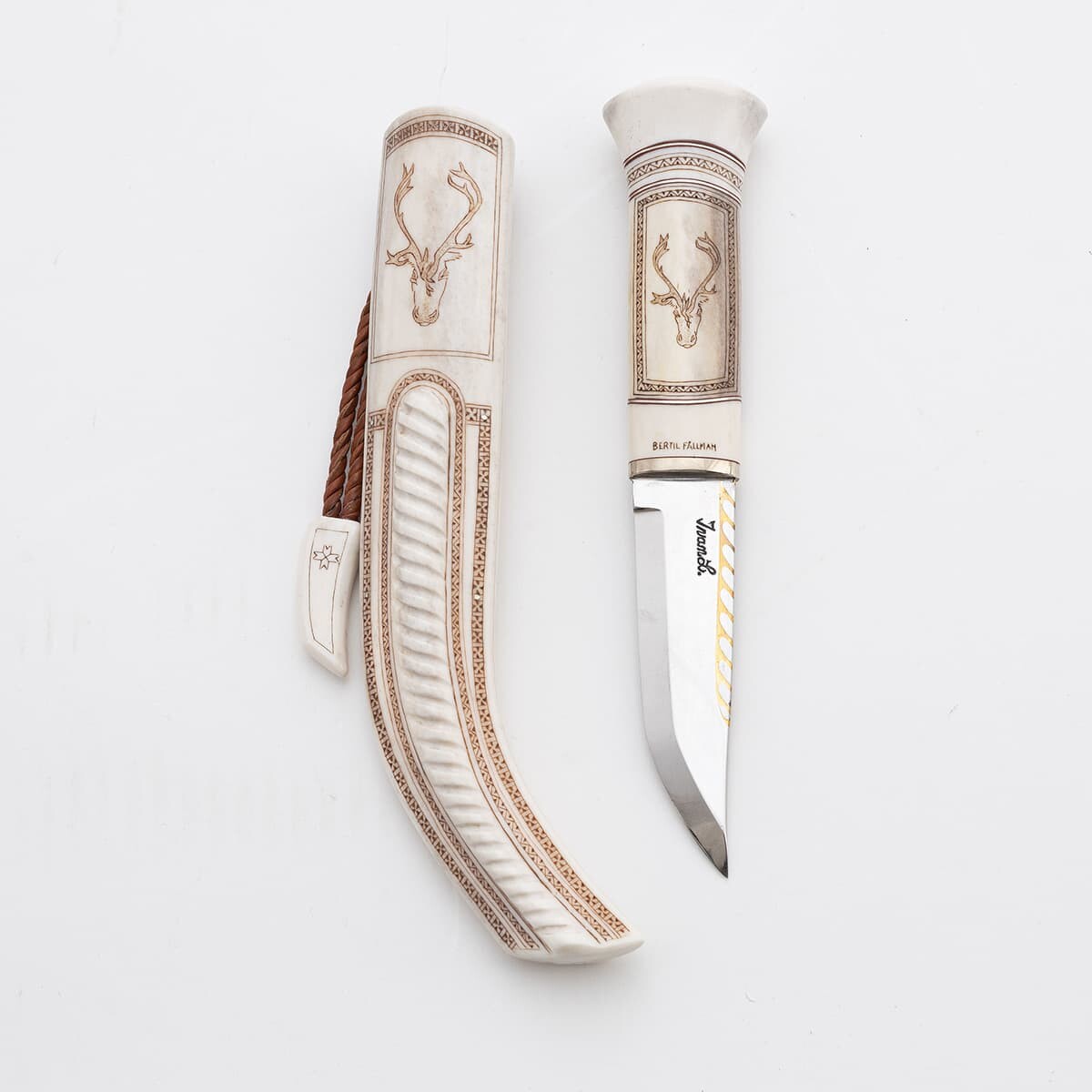
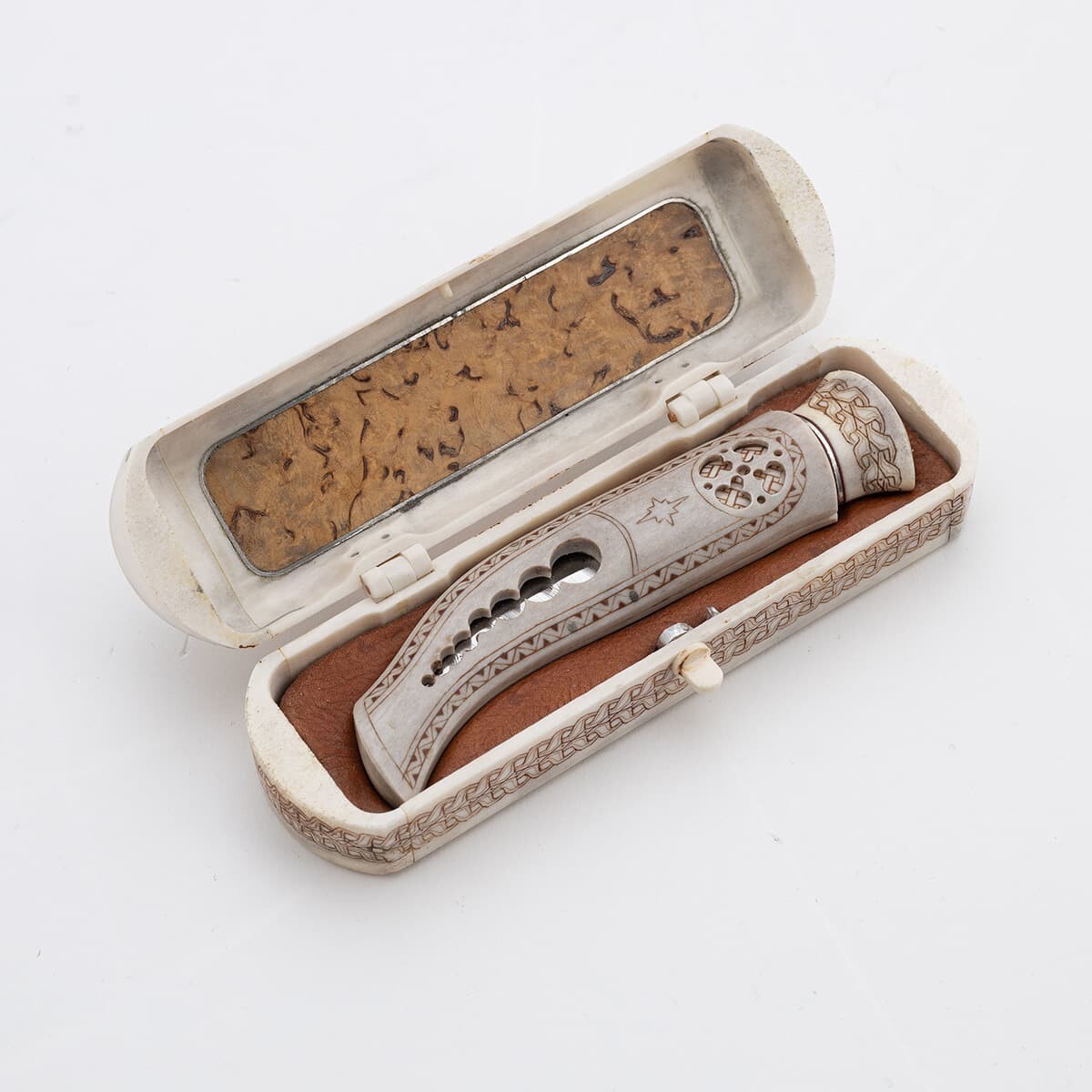
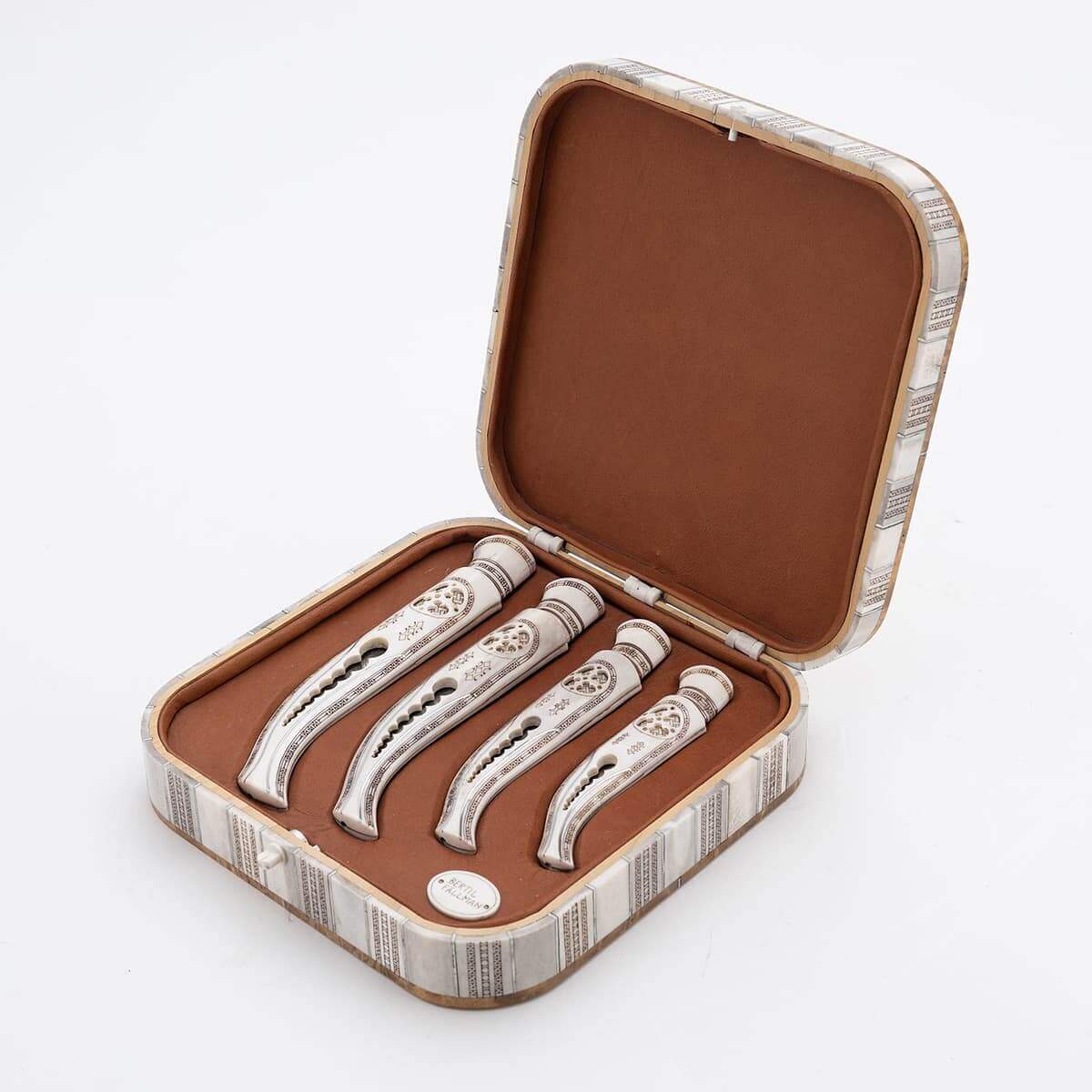
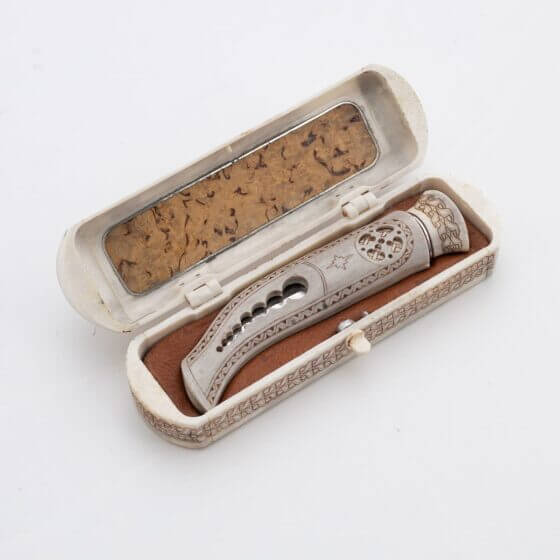
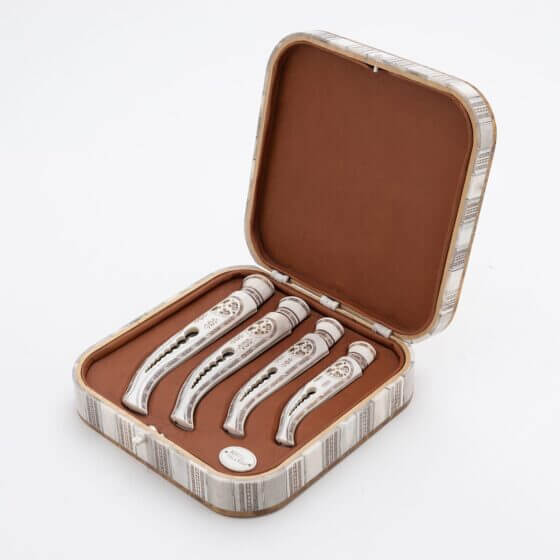
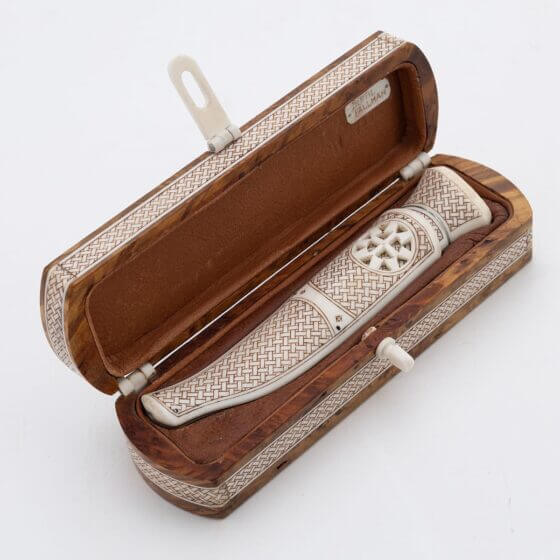
© Collection Bertil Fällman
Preparation
Choose a dry room, without cracks. Degrease and, for bone, bleach if necessary, then dry for a long time. Sand up to a smooth surface: grain 400 to 800 for reindeer wood (matt appearance), 600 to 1000 or more for los (gloss appearance). For the scrimshaw, polish to the mirror: the first shading has the slightest scratch. A slight passage of clear pigment reveals the defects. The unmounted room can be moistened or heated very gently to soften a little. Trace fine pencil (medium hardness) or eraseable pen. On a very clear surface, a watercolor touch helps to see the drawing.
Rating
Reading a room: Sami furrow (continuous) against scrimshaw (points). Don't call anything scrimshaw.
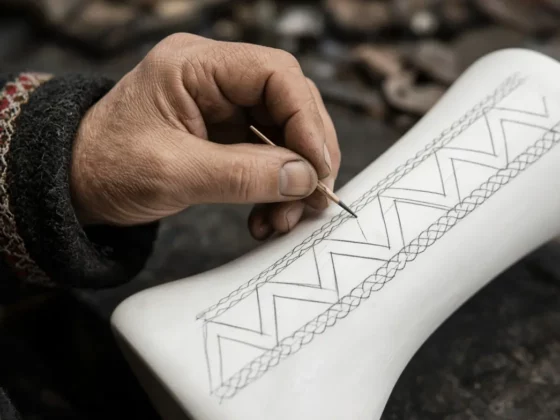
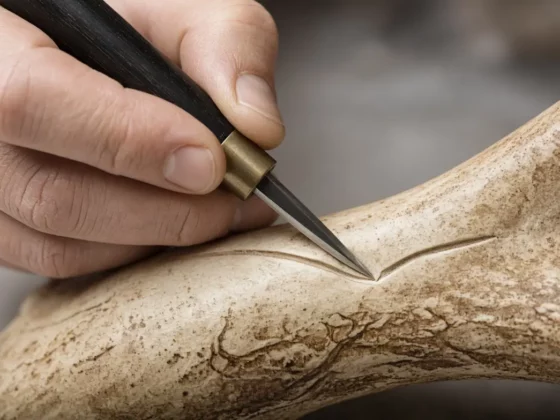
Linear engraving (classic Sami style)
Most common technique on reindeer wood and bone.
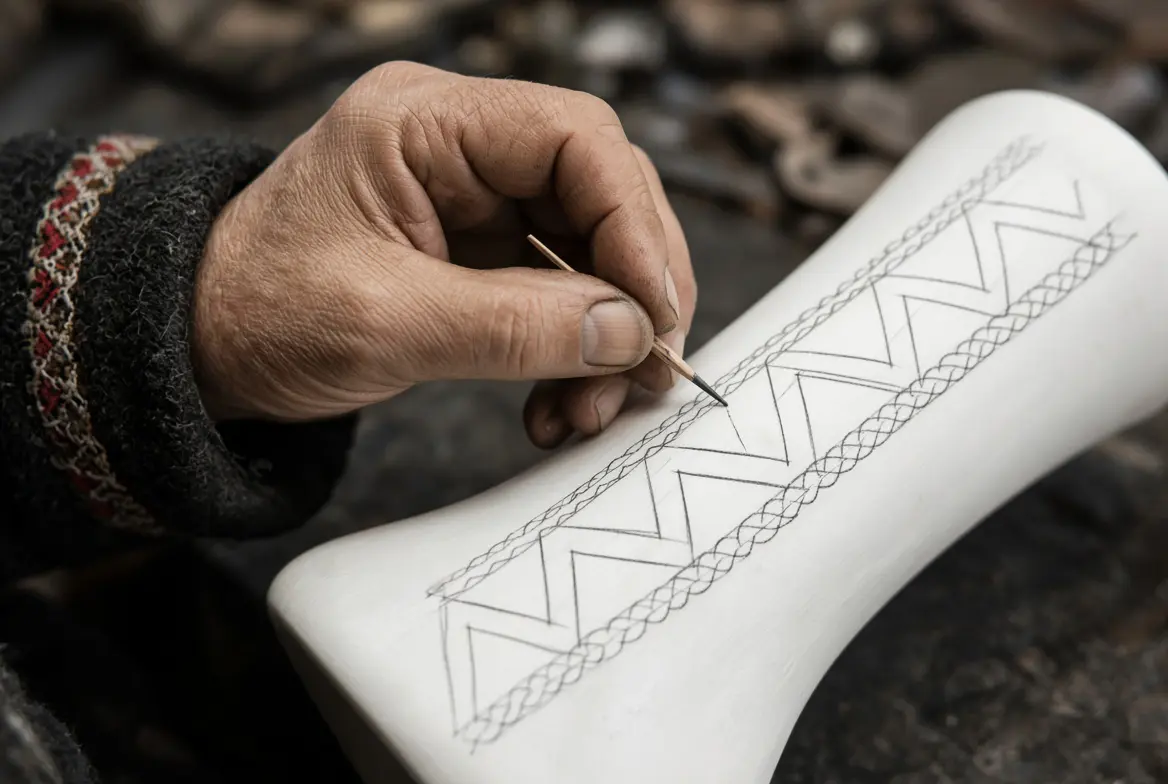
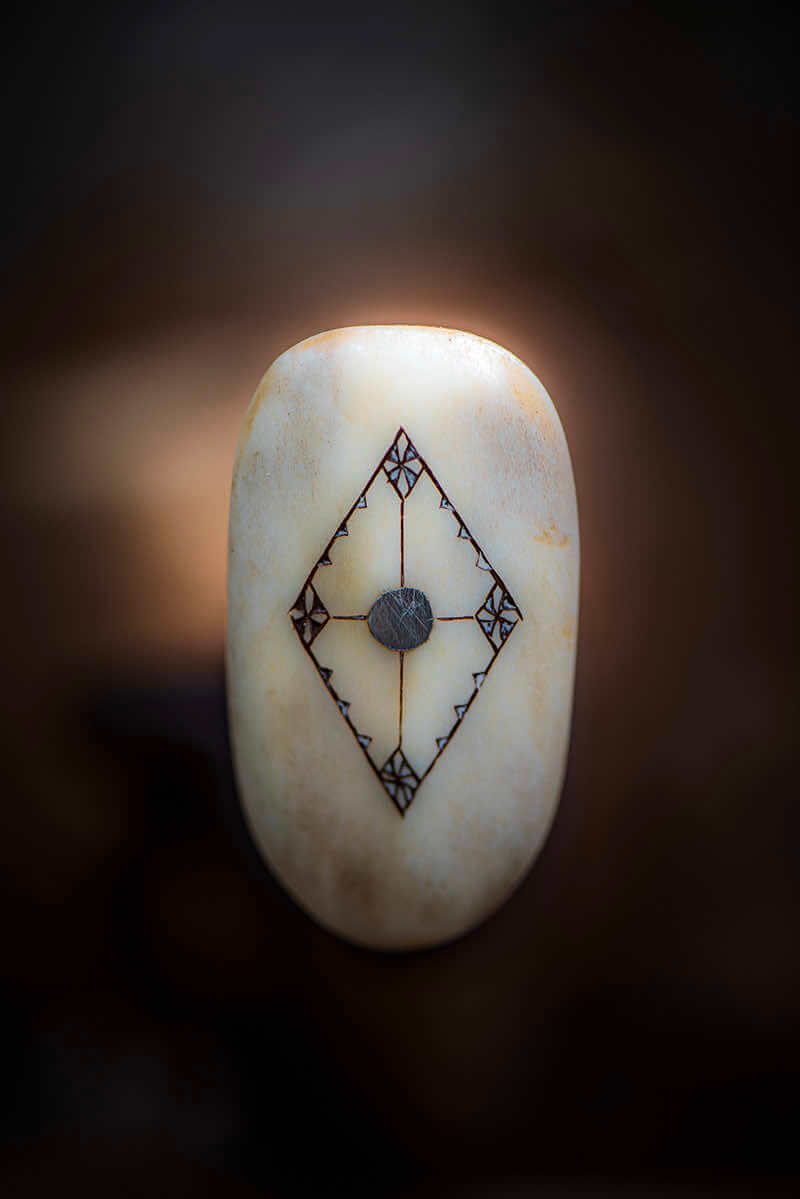
V engraving (kolrosing / carving) with a pointed tool, often ink or black/brown paint to bring out grooves, then polishing.
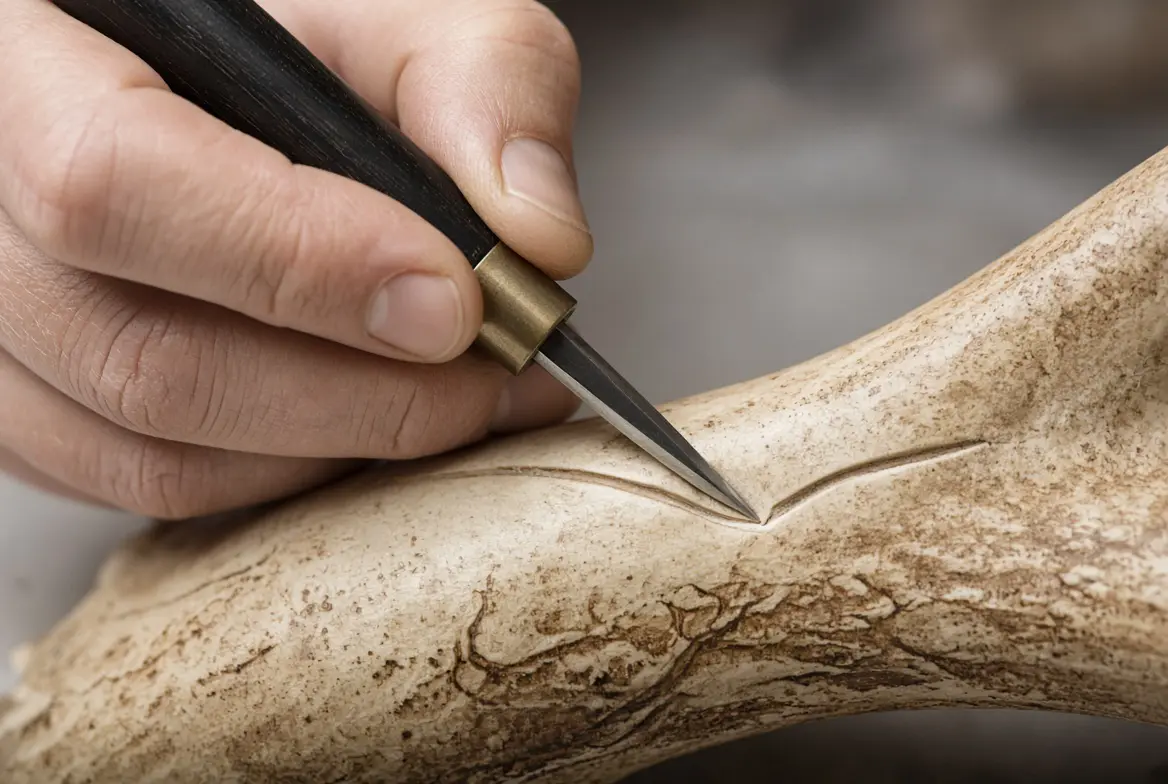
- Tool: very sharp engraving knife, tip of puukko Well sharpened, or jeweler tip. Hold like a pencil. Push the tip along the line for a fine V-row (0.2 to 0.5 mm on reindeer wood, 0.1 to 0.3 mm on bone), then iron reverse to clean. More inclined knife for a wider line, almost vertical for a very fine line.
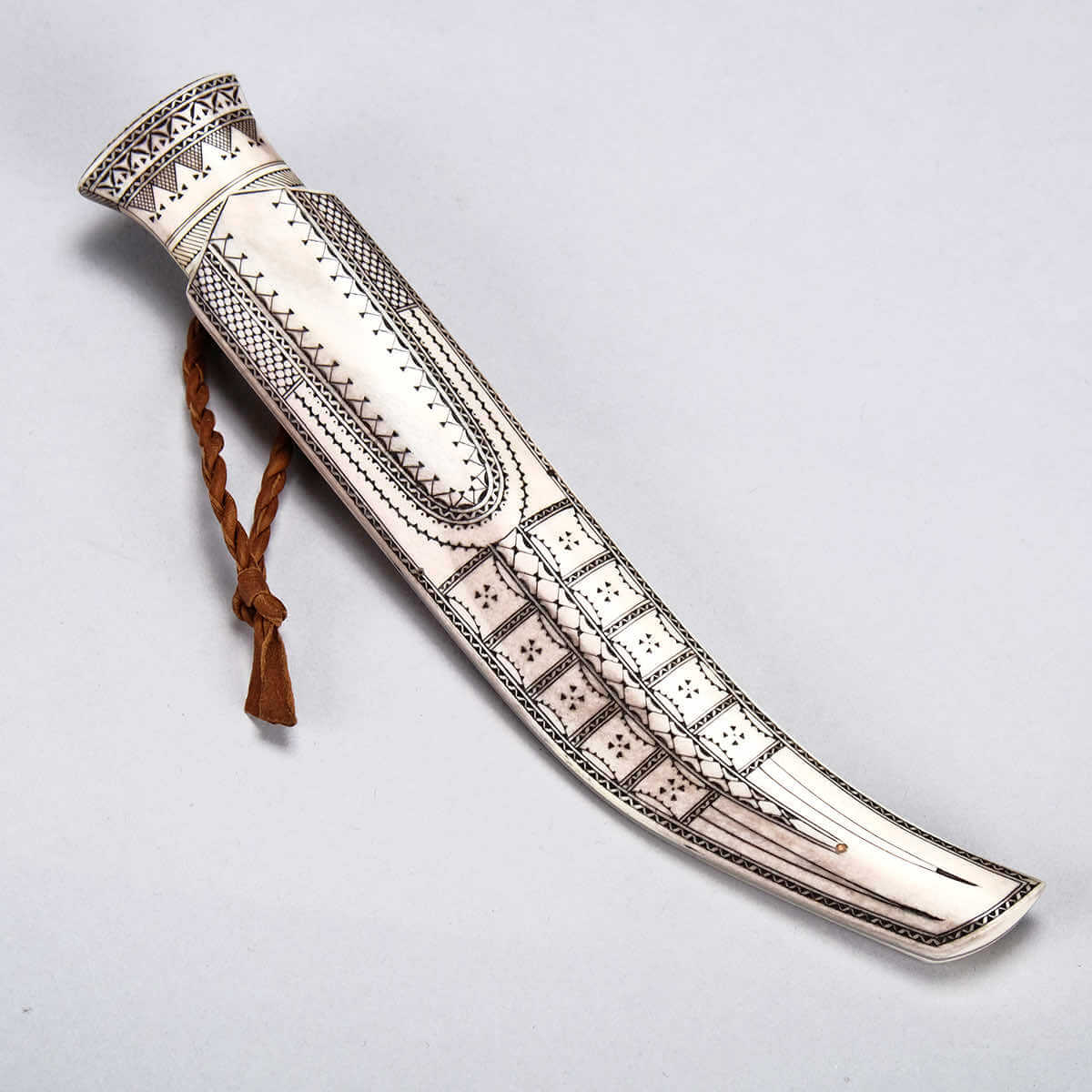
- Reasons: zigzags, braids, diamond, stars, hearts, rope edges; More frequent stylized flowers in northern Lapland.
- North Sami: flowers and stars. Center and South-Sami: braided and narrower geometry.
Chip carving
For borders and relief. Draw the base of the triangle or diamond, put the tip at the base and push a gesture towards the top to detach a small shaving. Repeat in regular rows. Boneless, shorter gestures: the material breaks quickly.
The chip carving, on reindeer wood or on bone, is not a sculpture in relief. It is a suite of small triangular or diamond shavings, removed at the tip, especially for edges and pattern bottoms.
First we trace the base of the triangle, I've never had a piece of paper. The tip sits on this base, the bevel slightly inclined, and only one push goes towards the top. The shaving must be clear. If it removes or bleachs the edges, the iron is soft or the angle too open. On the bone, the gesture is shorter: the material breaks before cutting.
Three adjustments are enough.
Vertical and light: narrow triangle, almost a notch. More inclined: wider triangle, more present border. Two pushes face to face, same top: diamond. Alignment counts more than depth. A 0,3 mm regular row is better than irregular relief.
It is used for twisted rope, the rows of South Sami crosses, the teeth that frame a braid, and the geometric dotilla that borders the stars and hearts of the North. The linear groove draws the pattern; the chip makes it border. The two are not confused: iron a shaving like a V-shaped trait crushed.
The pigment comes after, not before. It stays in the triangle angle and blackens the border without closing the bottom. Too much sanding after the blow erases the edges: only the bash is removed, with the tip of the finger or with a very fine abrasive.
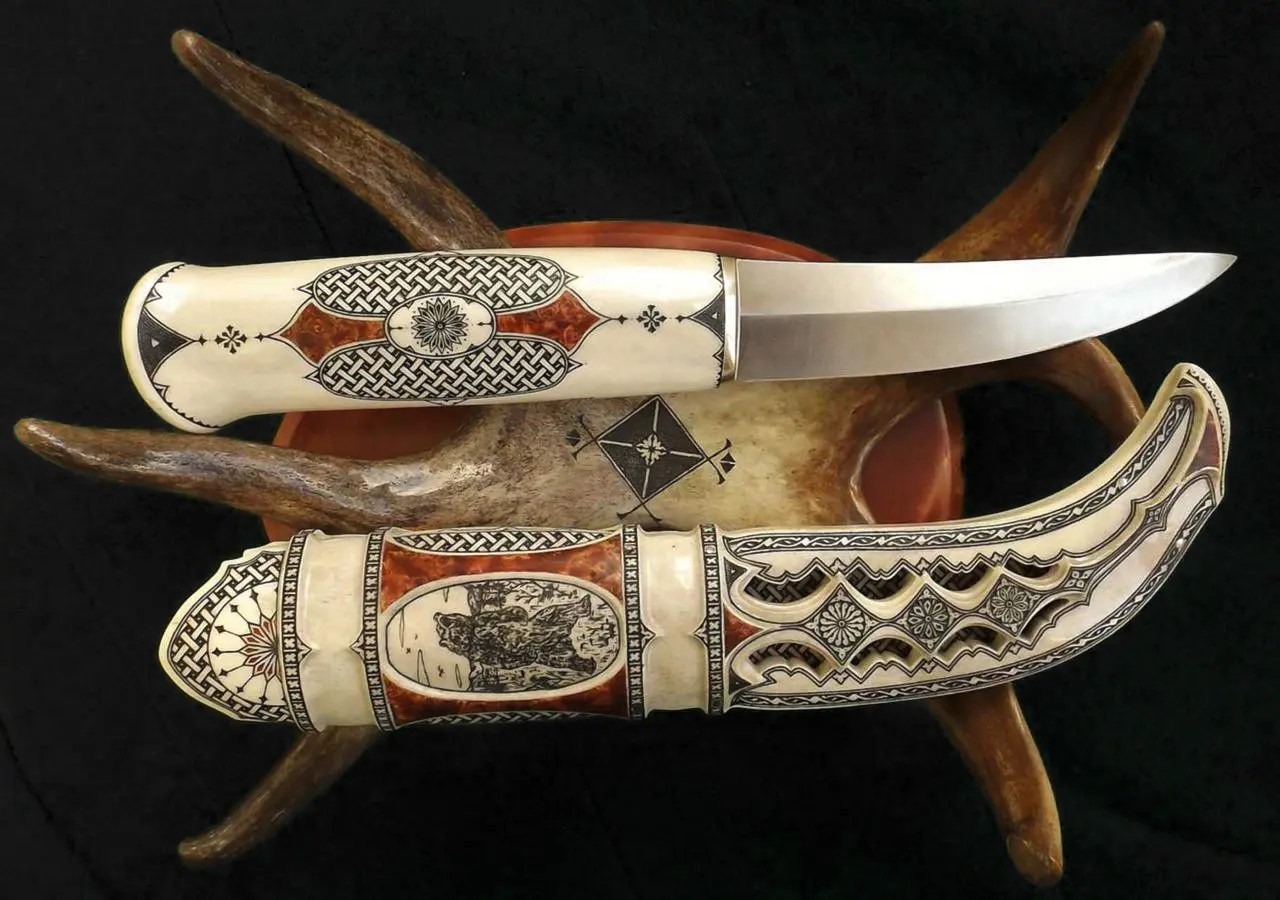
Scrimshaw (pointillism)
Point decoration technique, known to sailors on whale's fanon and walrus defence (sail needle), now common in Norway, Wales and American magazines, and practiced in Finland on bones and substitutes. Ideal: moderately hard and homogeneous bone (mammouth; elephant ivory prohibited). Also Micarta, buffalo horn (clear rendering). The beef horn is often too hard.
Sewing needle reshape on fine diamond stone. Draw up, then sting thousands of small points, first contours. Do not sting at random: the needle falls back into the previous hole and makes irregular spots. Shadows: oil paint well pigmented (or ink), from dark to light, spread with cotton swab and wiped with cotton cloth. The pigment stays only in the dots. We can recharge. More points, darker. Once laid, the color does not fade. After a few days, an antique wax colourless for water repellent.
Contrast and finish (gravure in furrow)
Scrub coal, cinnamon, roasted coffee or black or brown pigment in grooves, wipe immediately. Sometimes slightly dye the piece before engraving. Slightly sanding fine around the lines for burrs. Flax oil, reindeer oil or reindeer wood oil, or bee wax. Final polish to cloth or wool. On bone, a stronger polishing of unengraved areas brings out the furrows.
Rating
Maintenance handle engraved: Dry oil, no prolonged hot water, no dishwasher, iron a dry cloth after rain.


Drawing by region
Patterns are not a unique directory. They report an area, sometimes a family, and the rule of the Duodji is not to mix models from different regions on a single piece. You can vary within your own tradition. Geometry (line, triangle, diamond, « Weaving »), animals (rennes, elks), occasionally life scenes or floral motifs depending on the region (more figurative to the north, more geometric to the south).
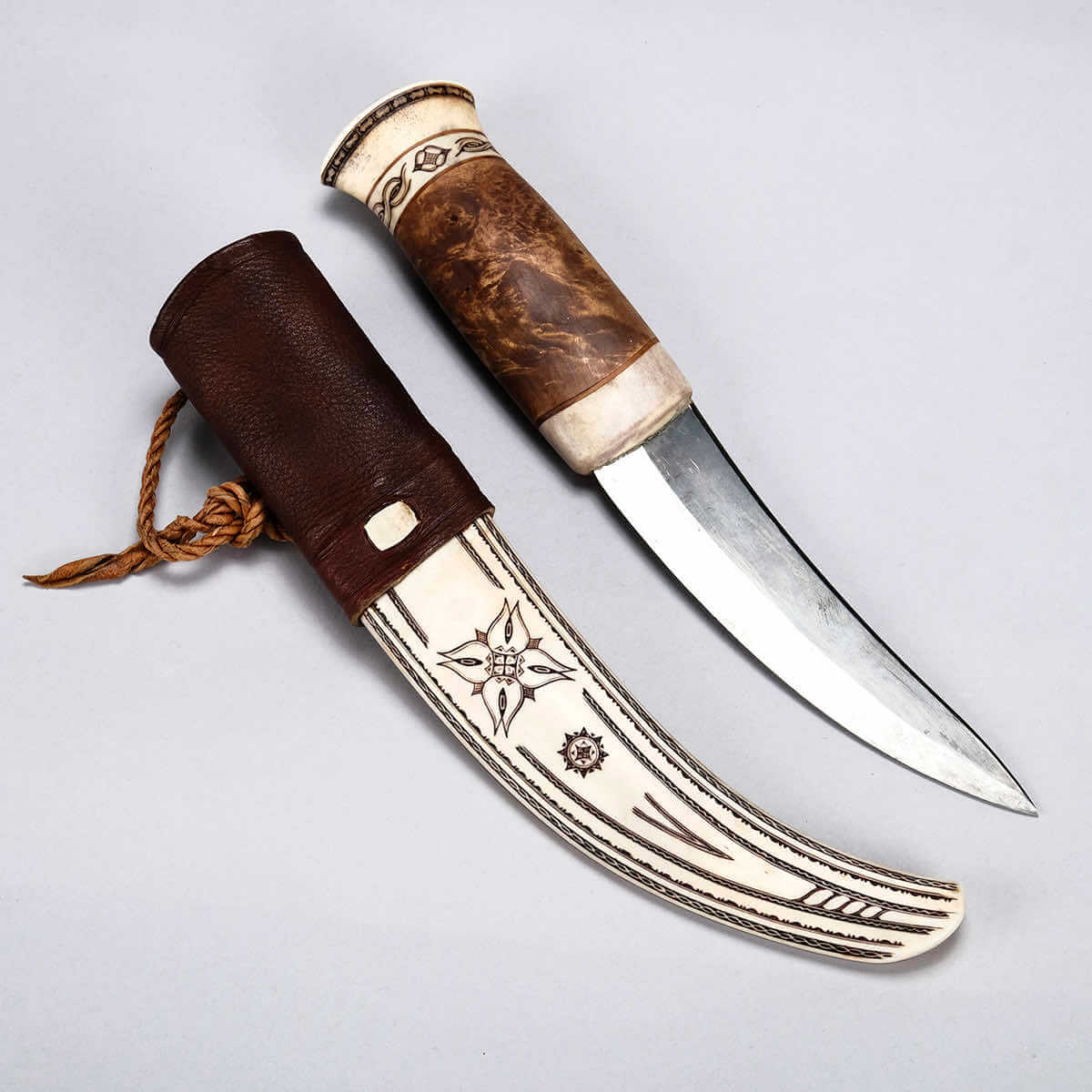
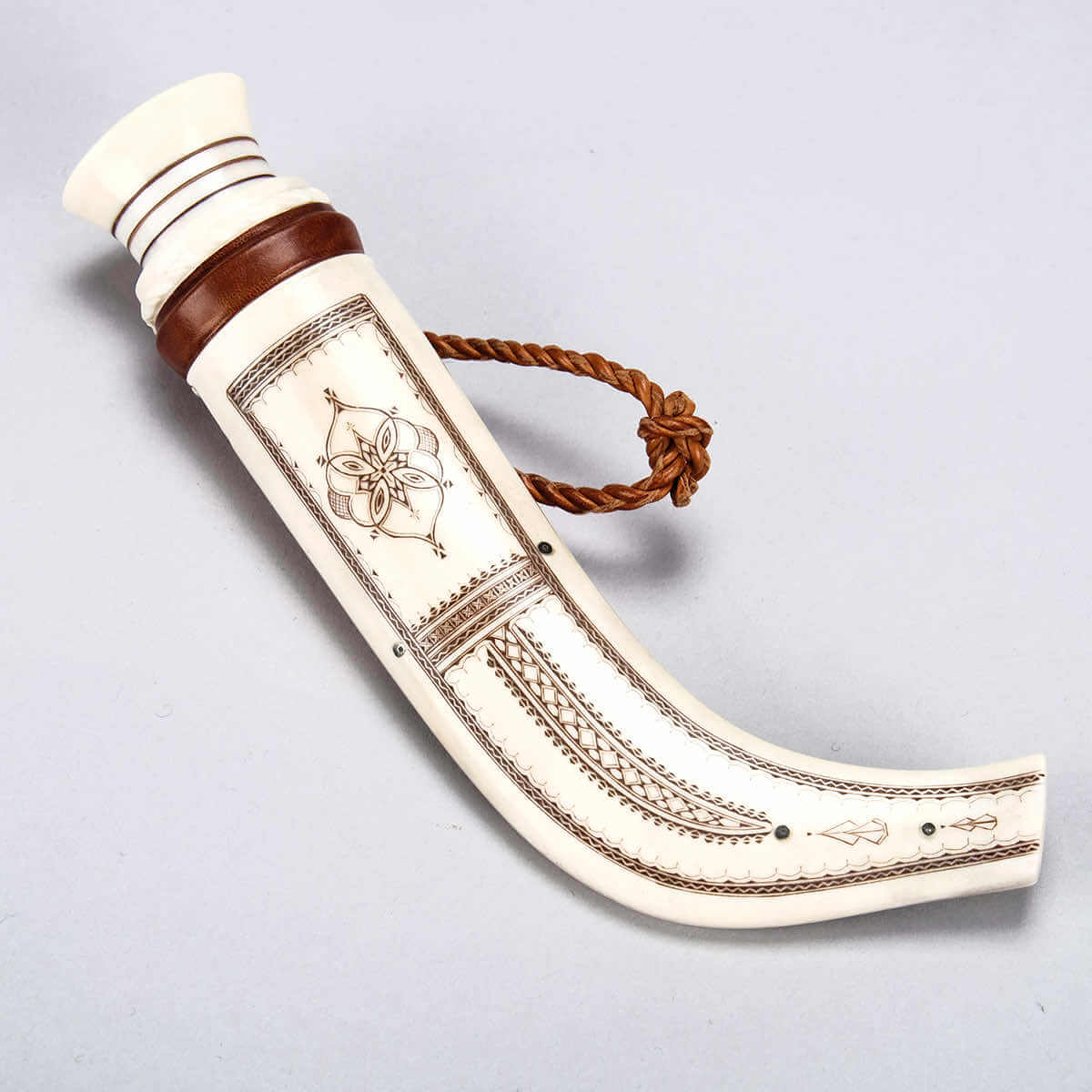
North Sami (Finnmark, Troms, northern Finland and Sweden). Stars, flowers, hearts, curved lines, shadows. Strings in twisted rope, or small geometric tips. The apple of the handle is more marked. The handle it is often smooth; the engraving reads above all on the sheath. The sheath usually has a more frank curve.
Sami Centre (Lule, intermediate zone). The braids of the south find themselves there, with shaded curves, but also simpler stars and crosses, which reach the north. Area of passage, not a closed style.
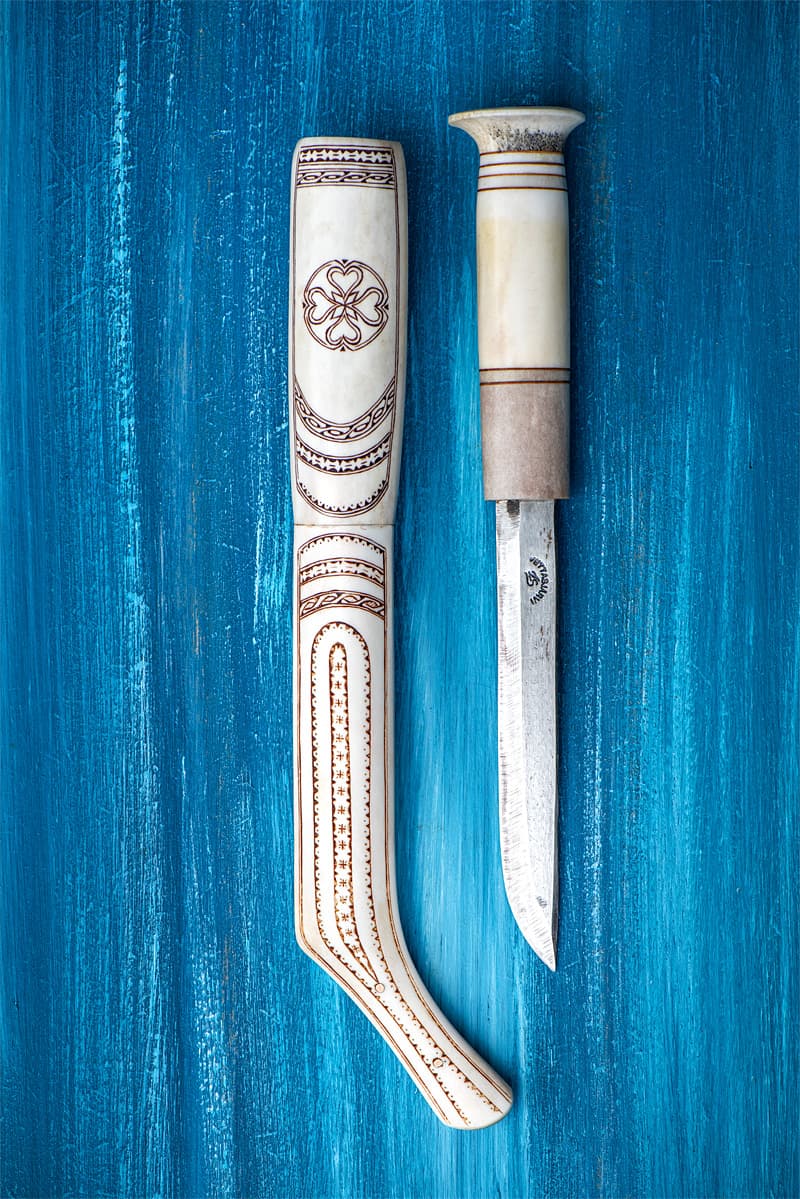
South Sami. The braid dominates, in lines or at peaks, usually over the entire surface of the handle or sheath. Strict borders, single or double rows of small crosses. The apple is less pronounced, the curve of the sheath softer. Wear variants transmitted to families; Some are sufficient to recognize a workshop.
Everywhere, the basic vocabulary remains the same: braid, zigzag, diamond, star, heart, border, sometimes reindeer or reindeer head. What changes is the combination and the place of the decor. The black pigment in the furrow (sweet, bark) is common to all three areas.
Not to be written as a fixed map: families move variants, and the duojár today experiment in their region, not by sticking north and south on the same reindeer wood.
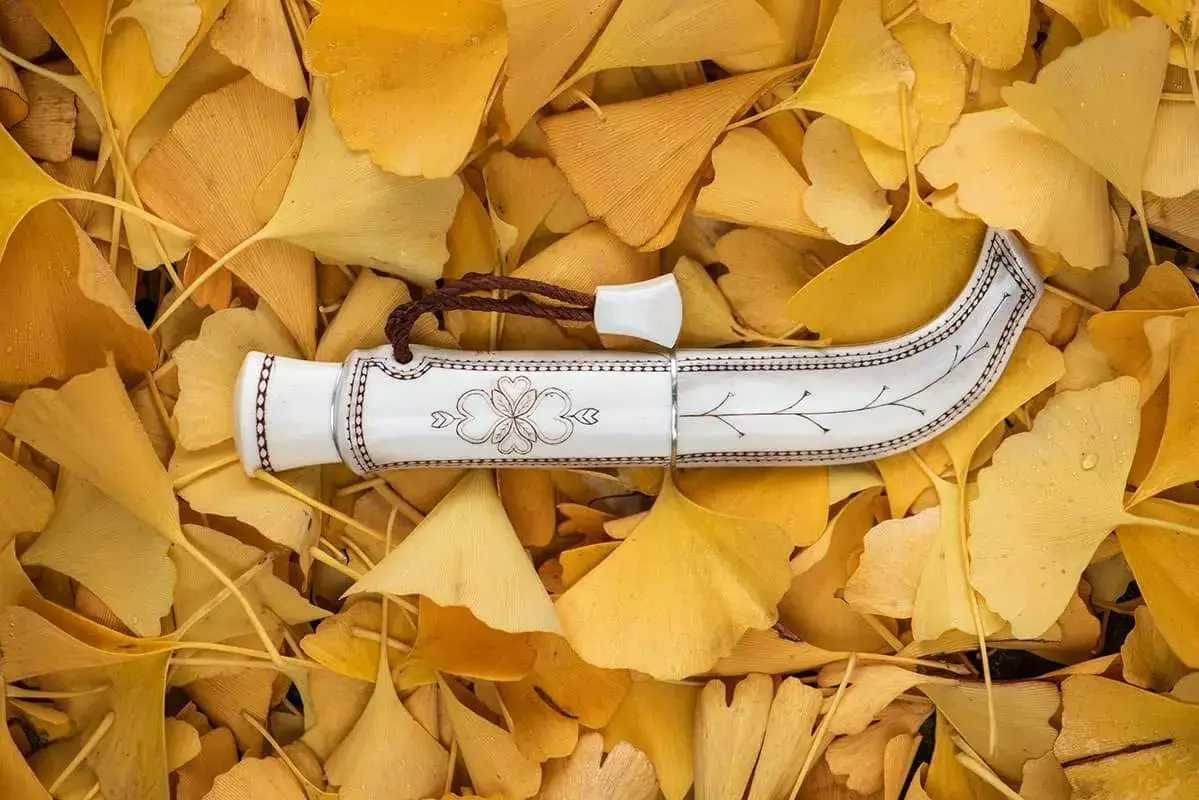
Hard duodji tools
- Hard duodji: wood, reindeer wood, bone, metal.
- Soft duodji: leather, fur, fabric, wool.
- Cut and engraving: engraving knife (often forged by the craftsman, saw blade or steel recovered, sometimes a single bevel); punch for points, triangle primers and rivet holes; tip of puukko daily.
- Layout: rapes and limes (plates, semi-rounds, needles); fine metal or bone saw; bow drill or modern for silk and rivets.
- Finish: natural stones, green and red compounds, leather sharpening, abrasive until grain 2000, rags and wool.
- Leather: Alenas, needles, leather knife, marking and embossing tools.
- Traditional tools were simple and generally homemade; A good sharp knife served almost everything. Many duojár today combine tradition and modern tools (Dremel, strawberries) with regional motifs.
Advice
Always razor tool: A blunt iron rips out. Never force. Fix the room well, especially the sliders. Start with lines and triangles on falls before compositions. It is this mixture of precision and Sami patterns that is found on the handles and pots of masters as Pasi Jaakonaho.
Rating
What we don't do: Dremel alive on a finished piece, deep trait in theos, food pigment not fixed on a handle Hand contact.

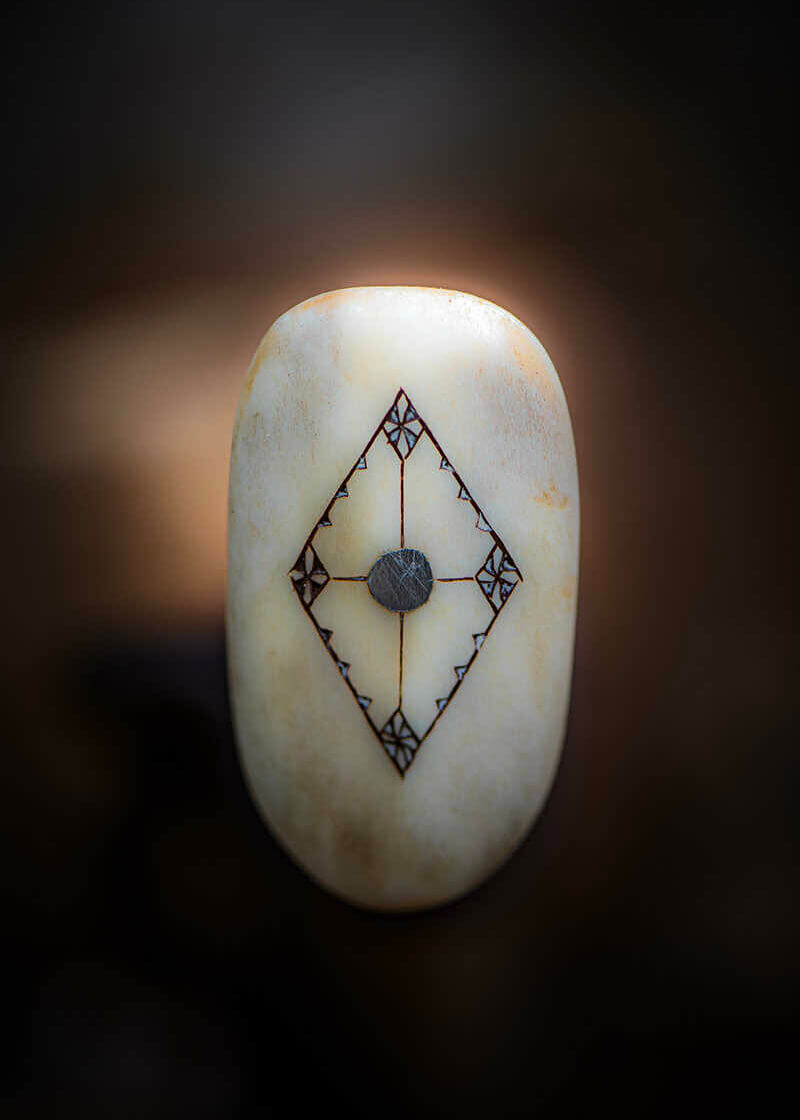

Portfolio: Puukko Collection
Masters and references
A few landmarks, not a closed list. The duojár often sign little on the web.
- Pasi JaakonahoInari. Finnish coutelier trained at the Sami institute, engravings and chip carving on poronsarvi. Not a duojár: a master of puukko who works this tradition. Article on Pasi Jaakonaho · Lamnia
- Risfjells Sameslöjd, Vilhelmina. Knives all made of reindeer wood, south-sami engraving (streezes). Sameslojd. se
- Aslak Rist, Finnmark. Sheath in reindeer wood with a North-Sami motif, quoted by the Store norske leksikon. snl.no/duodji
- Nils Nilsson Skum (1872–1951), Kautokeino then Gällivare. Drafter and duojár; Wraps engraved, sometimes in the reindeer. Nordiska museet
- Ingvar Svonni (born 1943), Sweden. Reindeer wooden knives signed, sold in the room. Bukowskis
- Petter Eriksson Svonni (1903–1985), Svappavaara. Original knife on horn and wood, at the kitchen table. Family reference more than just an online showcase.
- For the living gestureThe Sami Institute of Inari (Sámi oahpahusguovddáš) still forms garraduodji. The Sámi Duodji brand distinguishes the certified Sami craftsmanship from the knife « lapon style ».
- Arctic Museum of Rovaniemi (Finland): direct link
- Nordiska Museet (Stockholm): direct link
Here are authentic examples of traditional Sami engravings (duodji) on puukko.
Conclusion:
The engraving does not decorate the puukko After that, she's part of it. On reindeer wood as on the bone, the line remains thin, sharpened tool, light hand. The pigment only serves to make the furrow read; oil or wax protects the material without locking it in. It is this restraint that is recognized on a handle or sheath Sami, and that artisans like Pasi Jaakonaho still carry in the Duodji.
Thanks for the visit... And, most importantly, Subscribe to the newsletter not to miss the next articles. You can also comment and share this article on your favorite social network.
To go further:
• The puukko Over the seasons – Full guide + seasonal checklist + PDF to download
• I am cultelluphilist but I treat myself
• Quiz on the puukko
Warm regards,

Subscribe to the newsletter.
The puukko A to Z
ALL GUIDES
A complete journey:
choose sound puukko, do it its own, sharpen,maintain, handle it, and secure it with the children.