Craftsmen

Pasi Jaakonaho, master blacksmith based in Inari

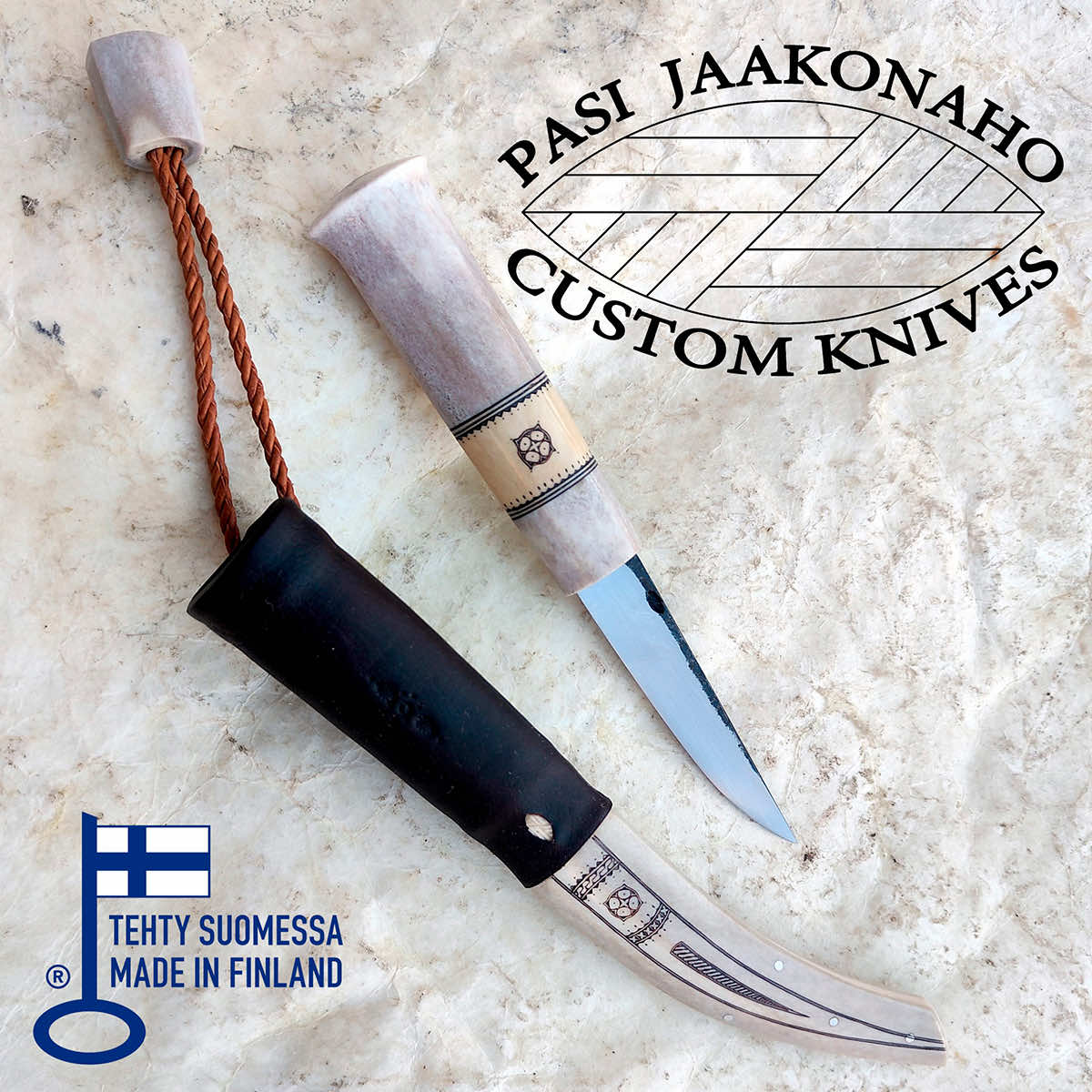
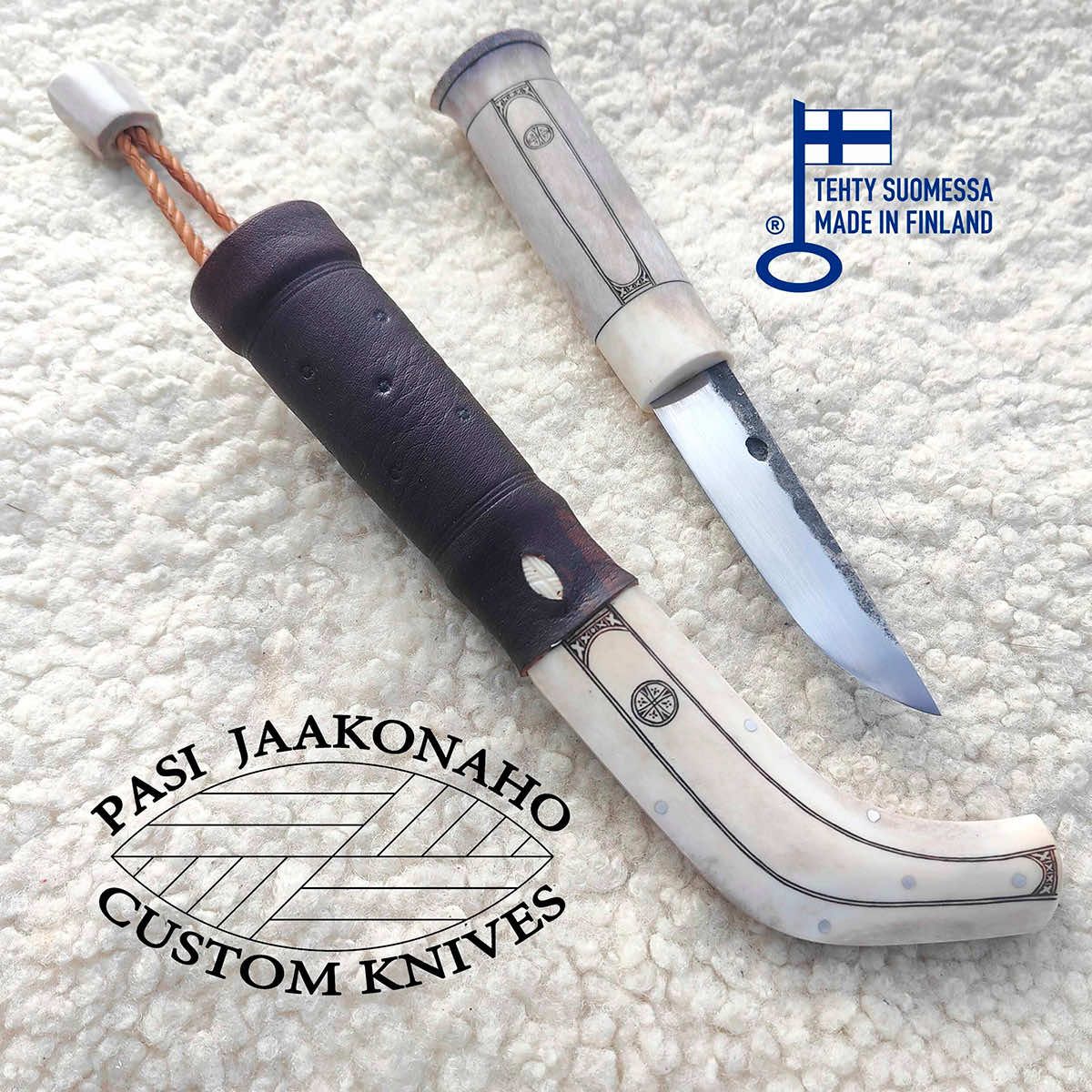
Pasi Jaakonaho, master blacksmith based in Inari 1798 1200 Puukko - Finnish knives

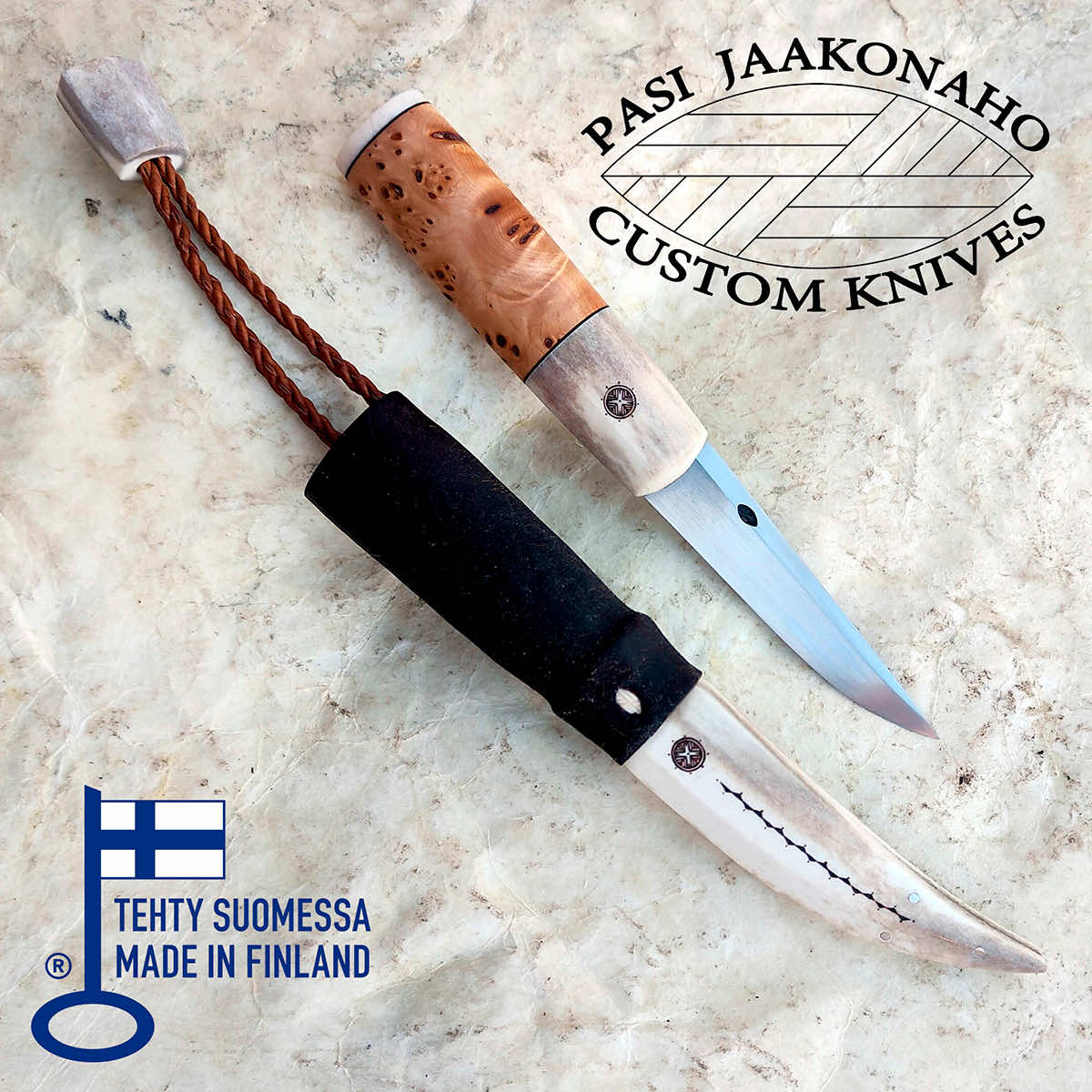
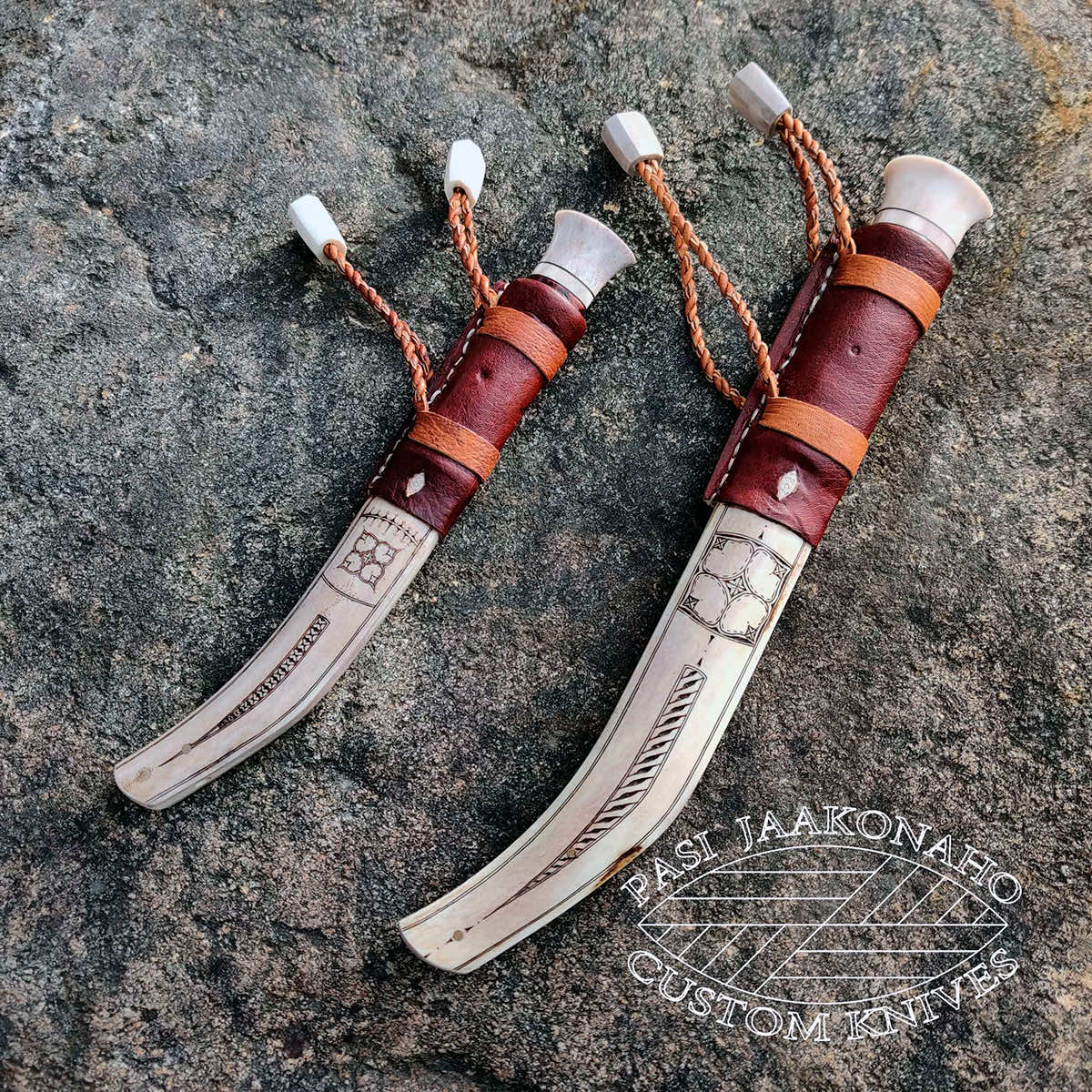
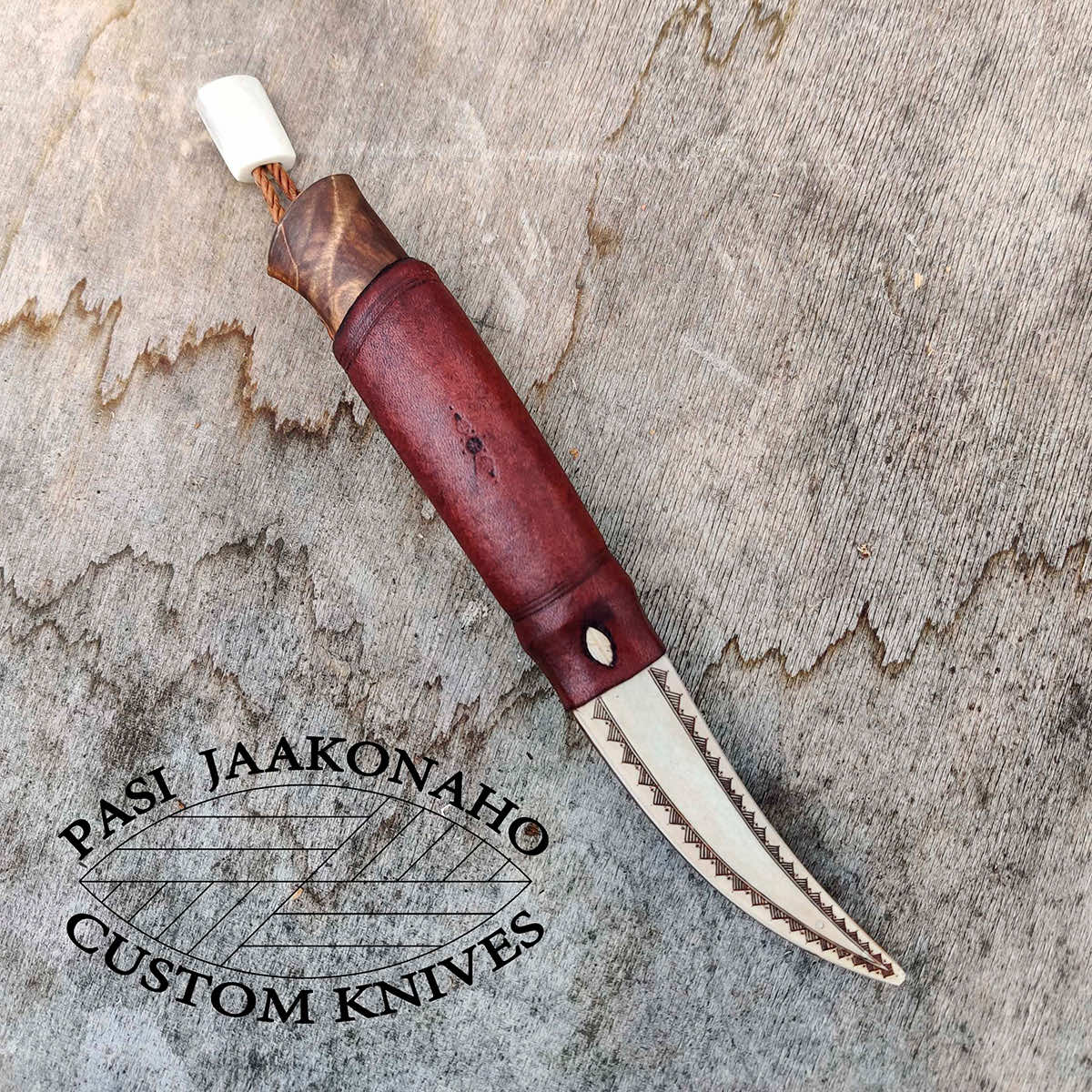
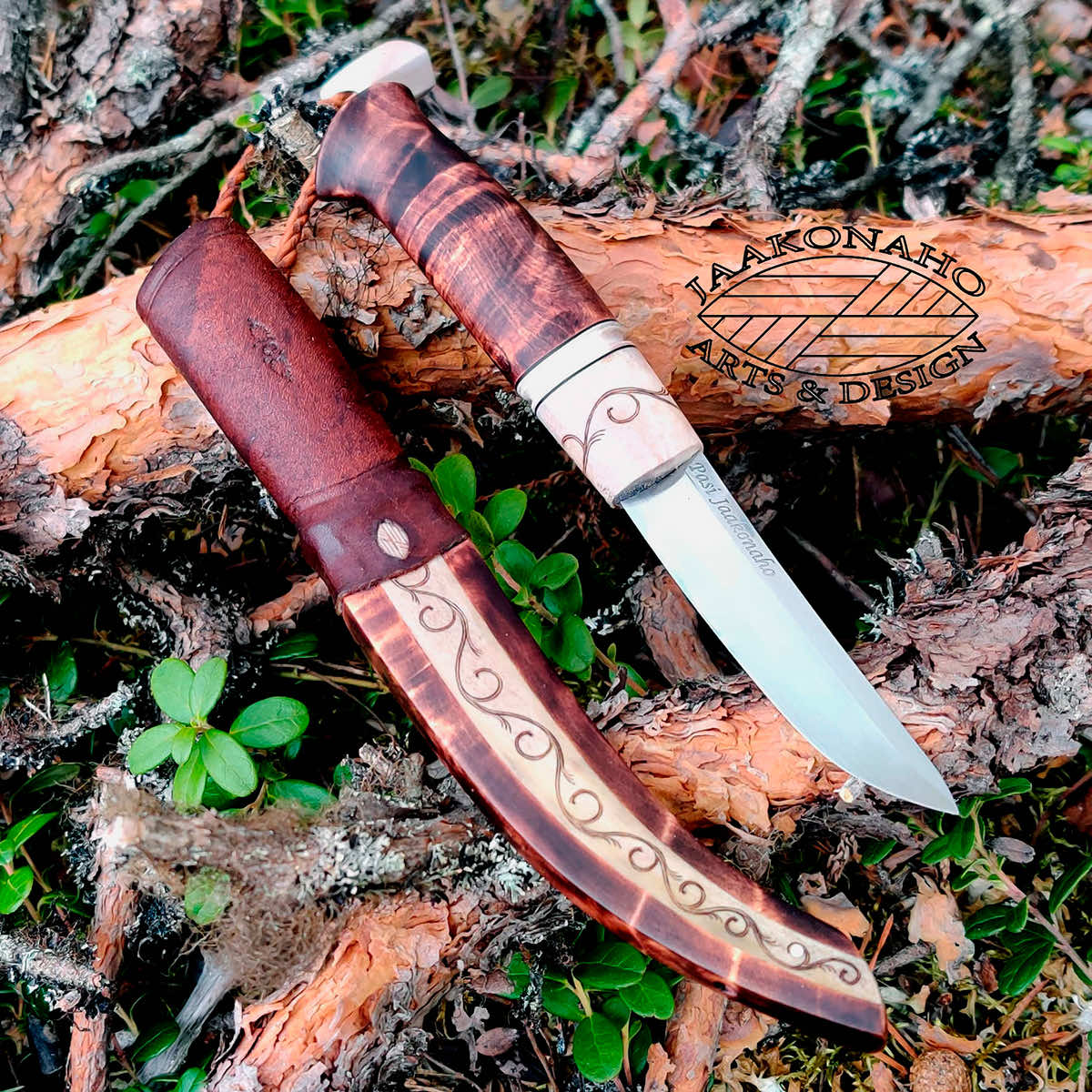
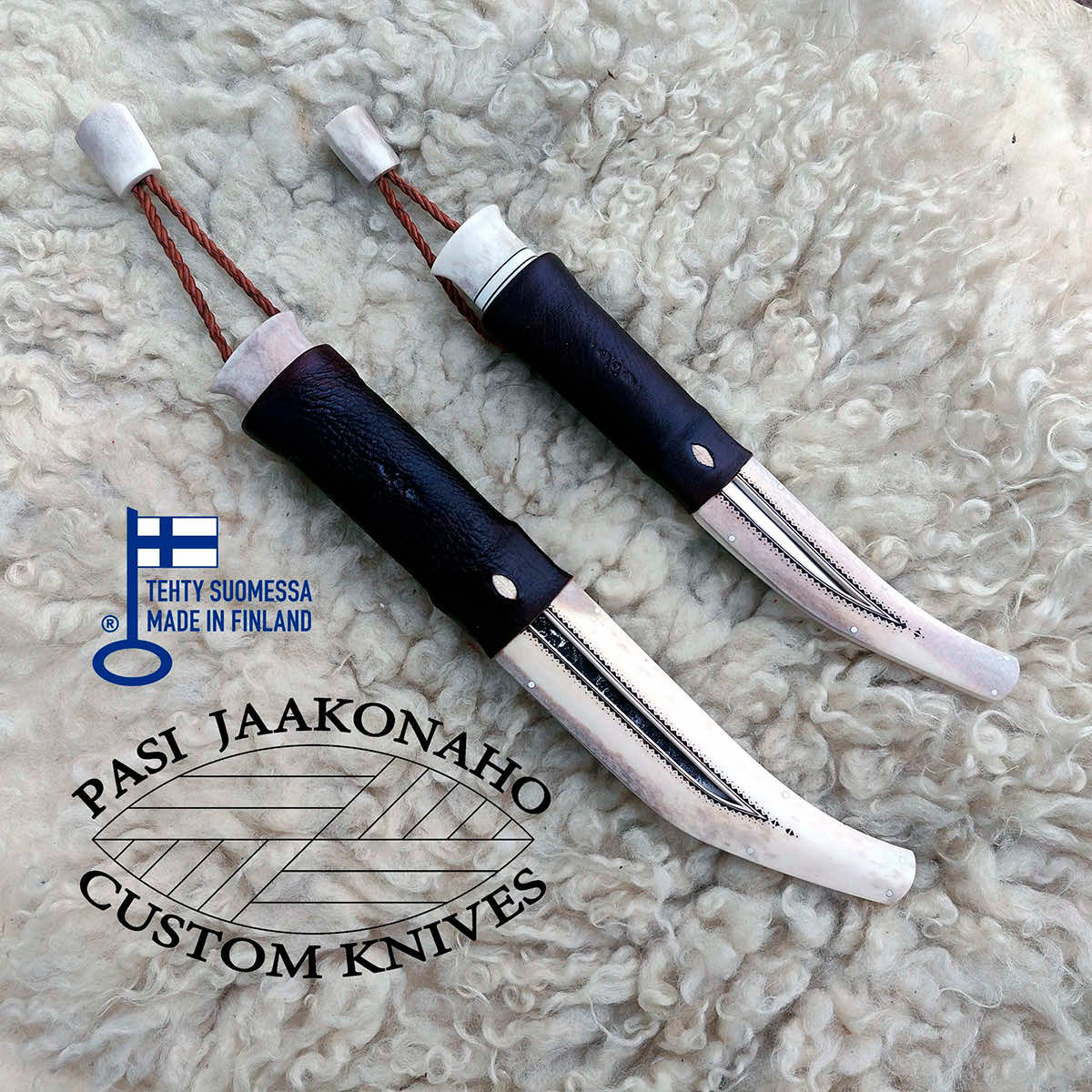
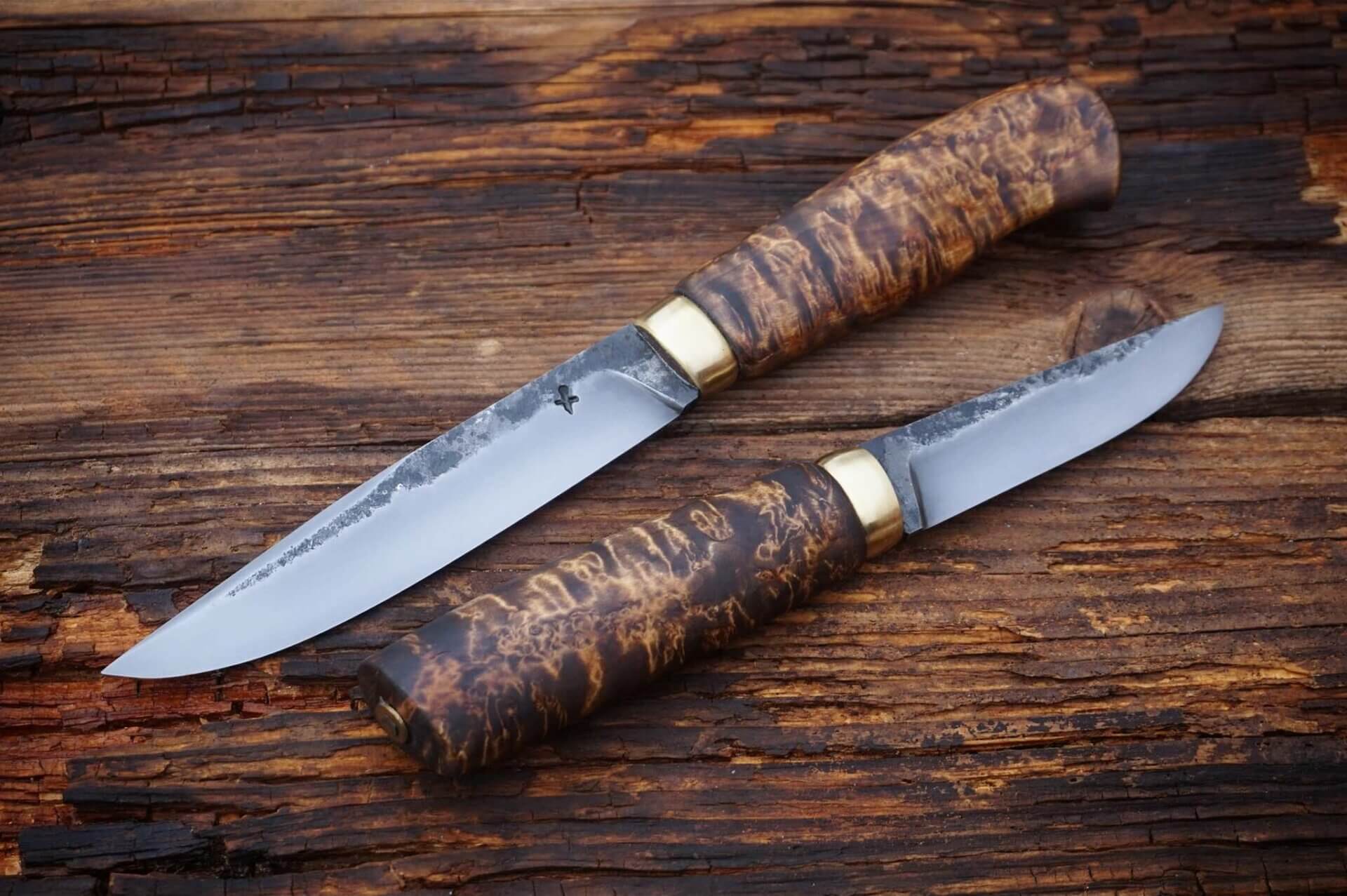
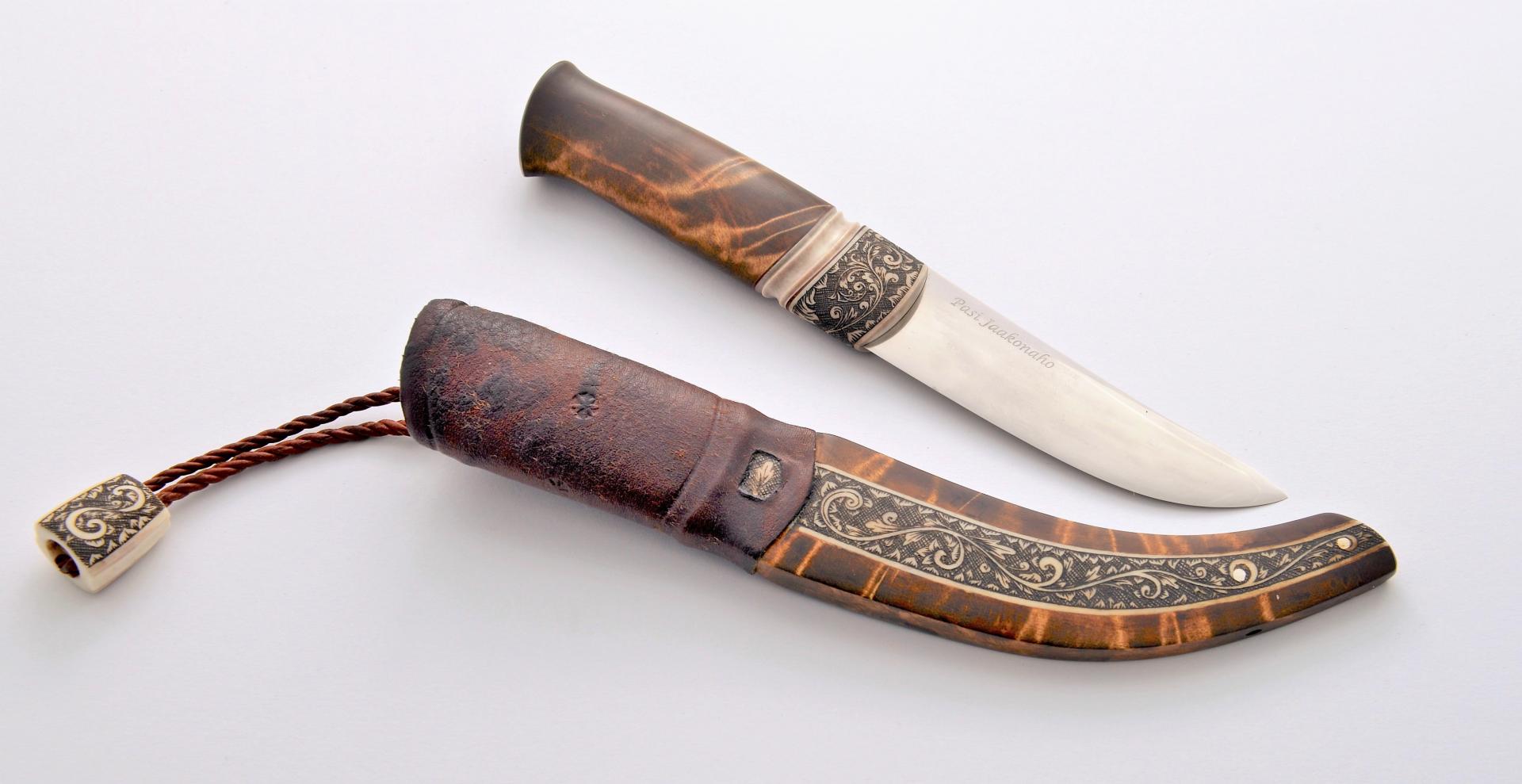
Pasi Jaakonaho is one of the few contemporary artisans to engage so closely with traditional Sami gestures and a contemporary aesthetic. His engravings on reindeer wood are a living demonstration of the mastery of his art. An art mastered by the best artisans.

INTRODUCING

I was born in Haapajärvi, North Ostrobotnia, and I currently live and work in Inari, northern Finland. I am master cutlery and designer (graduated from a university of applied sciences). I am currently a researcher at the University of Lapland and my doctoral thesis focuses on the puukko.

My goal is to design and manufacture high quality and sustainable consumer goods and works of art. I want to contribute to sustainable development and I try to use mainly Finnish natural and recycled materials in my work.


FOCUS ARTISAN: PASI JAAKONAHO

Exploration of its work

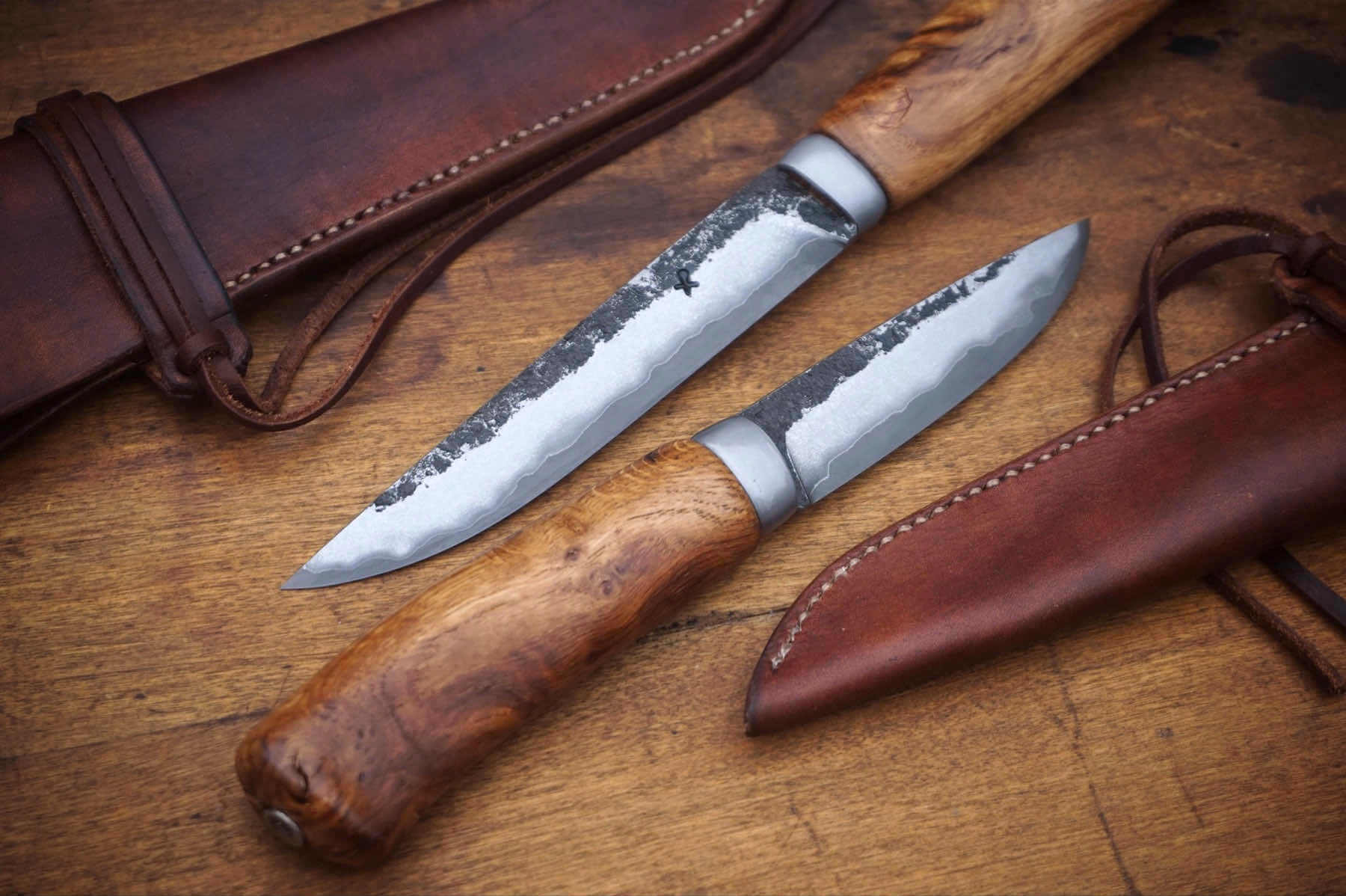
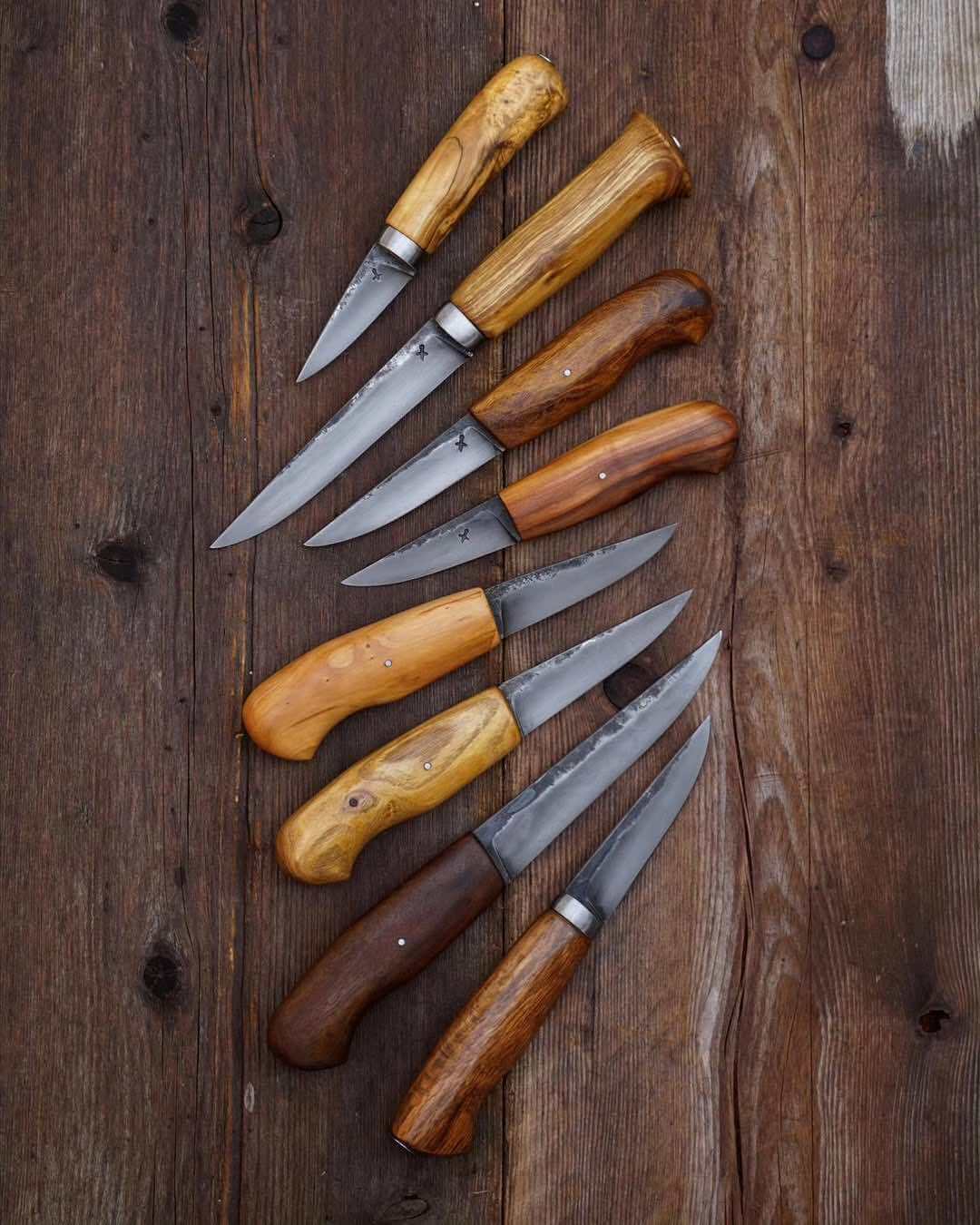
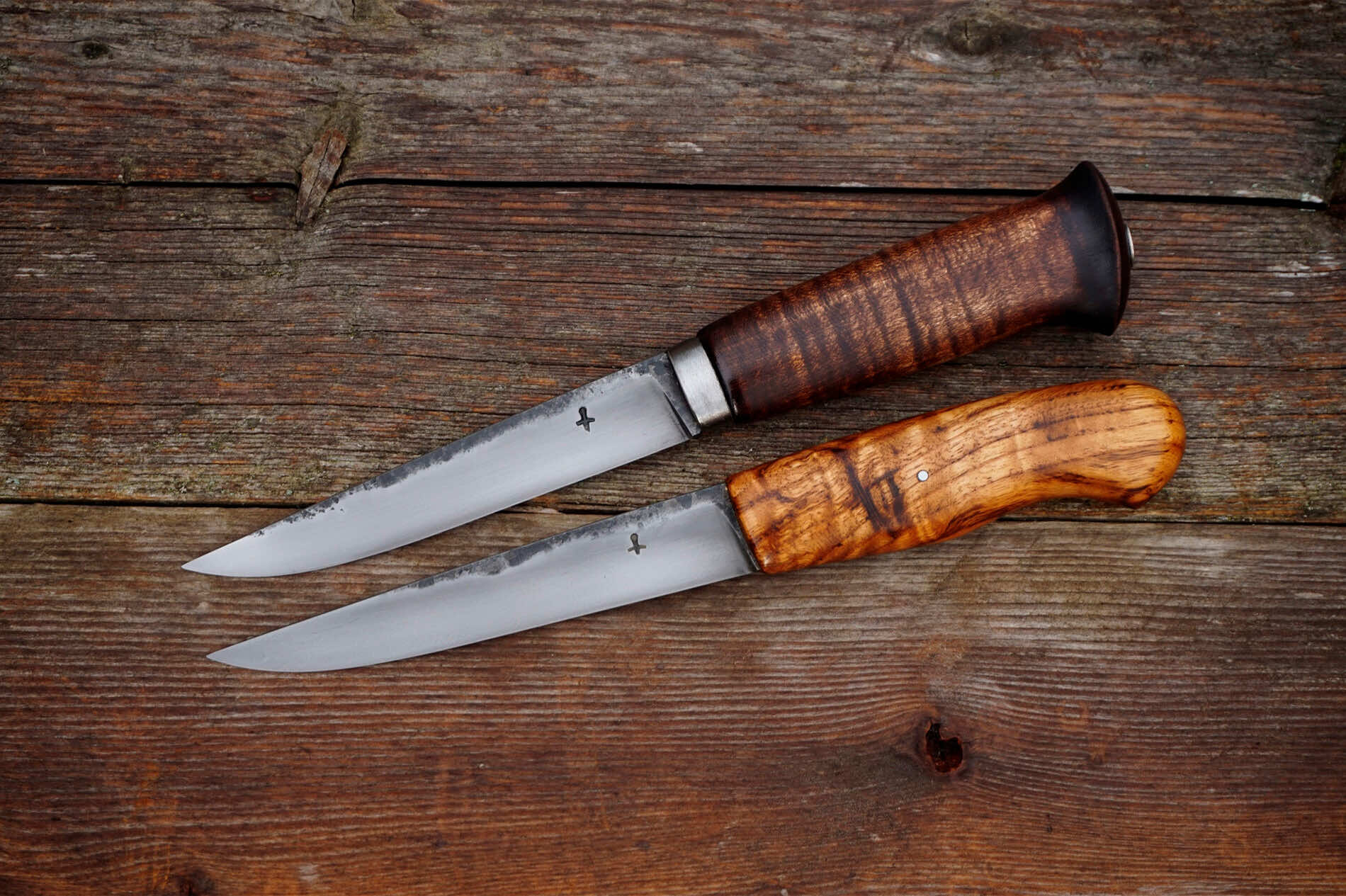
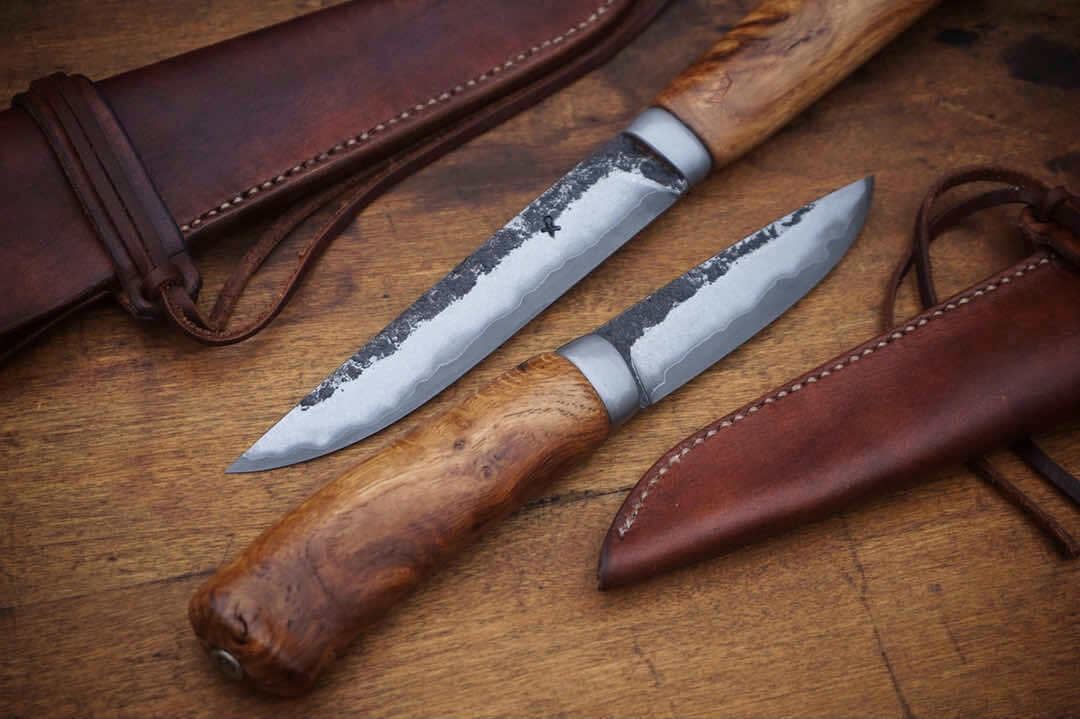
Pasi Jaakonaho (Jaakonaho Arts & Design) mainly produces unique pieces or in very small series. His work is at the crossroads of Finnish/Sami tradition and a sensitivity of contemporary designer.

General characteristics of his work

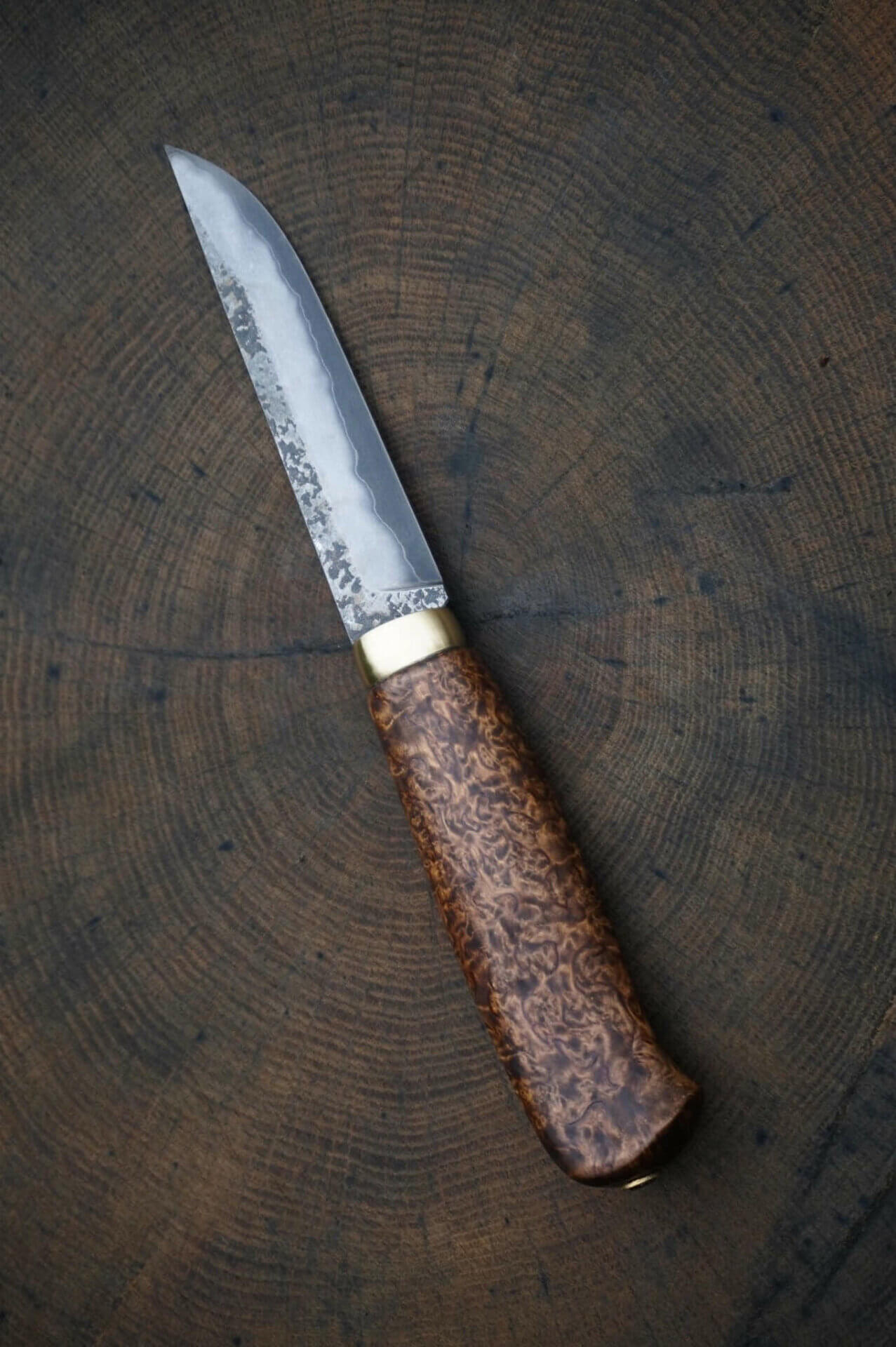
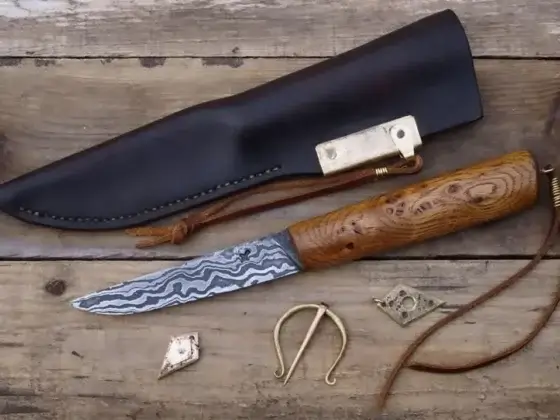
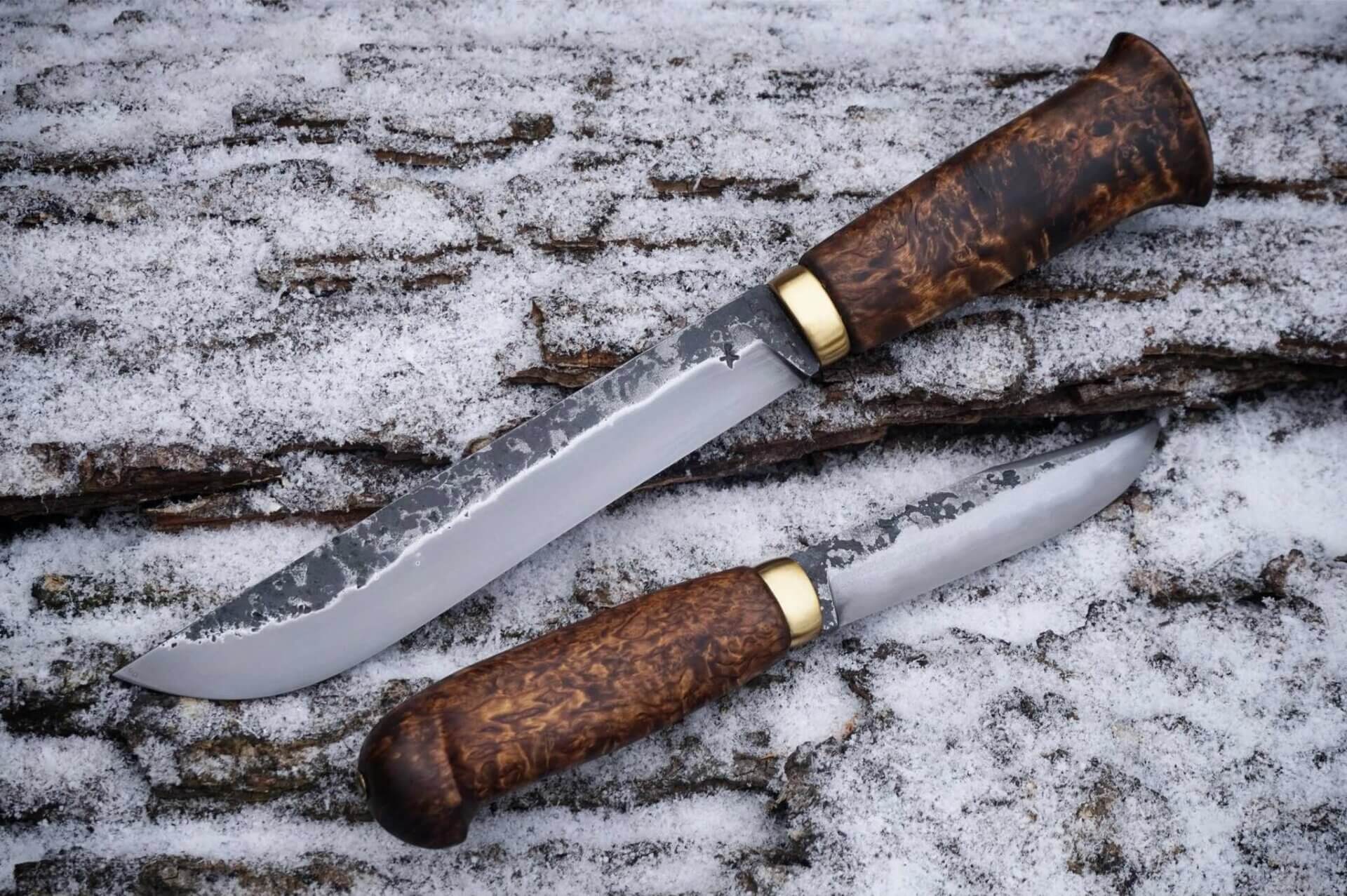
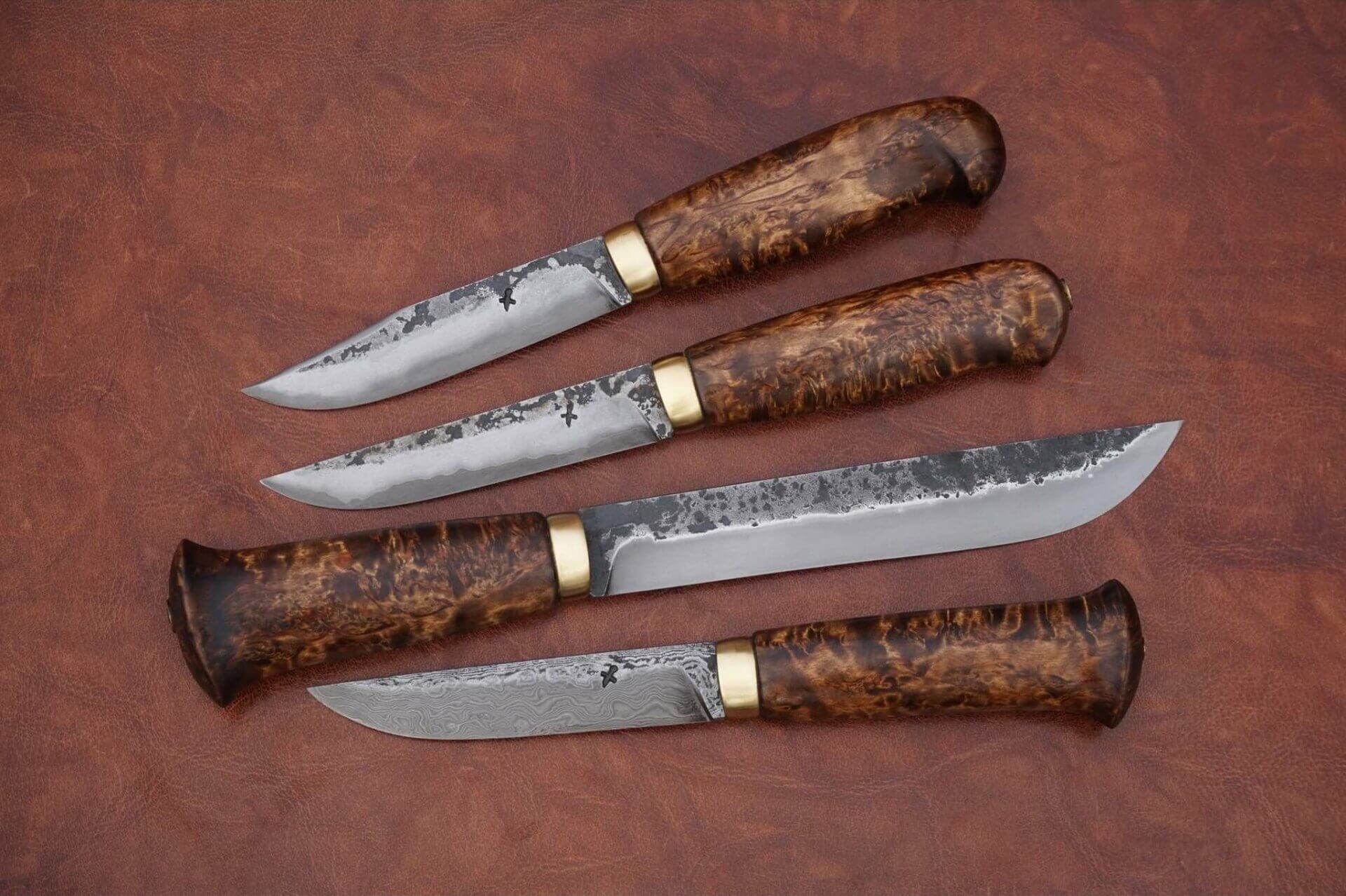
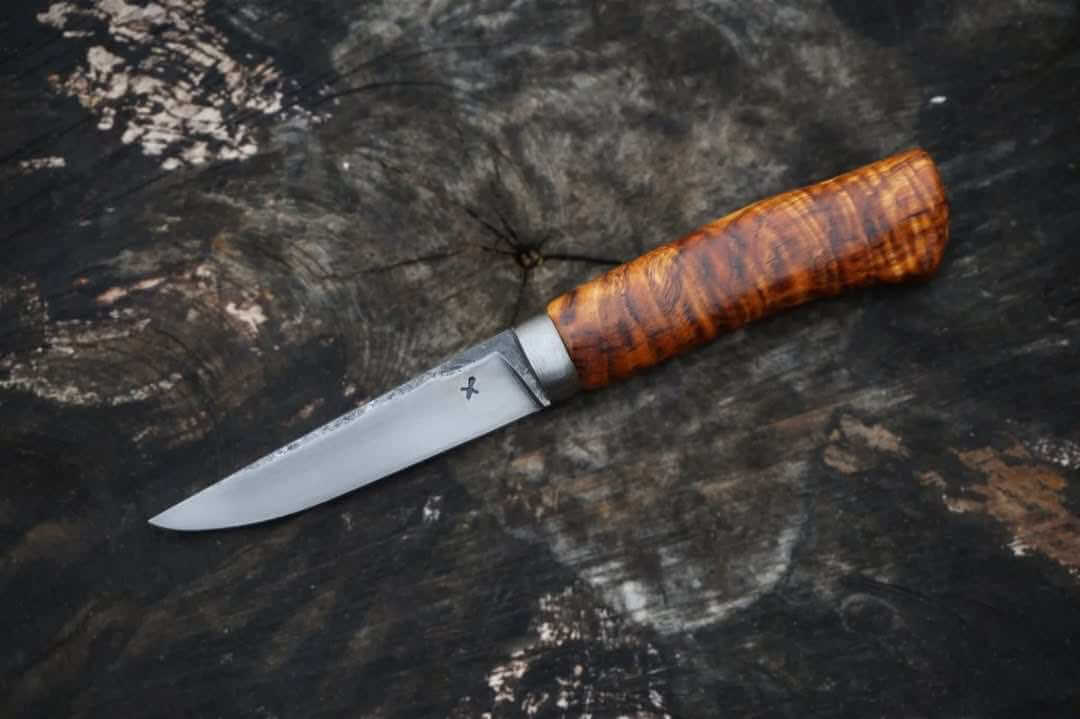
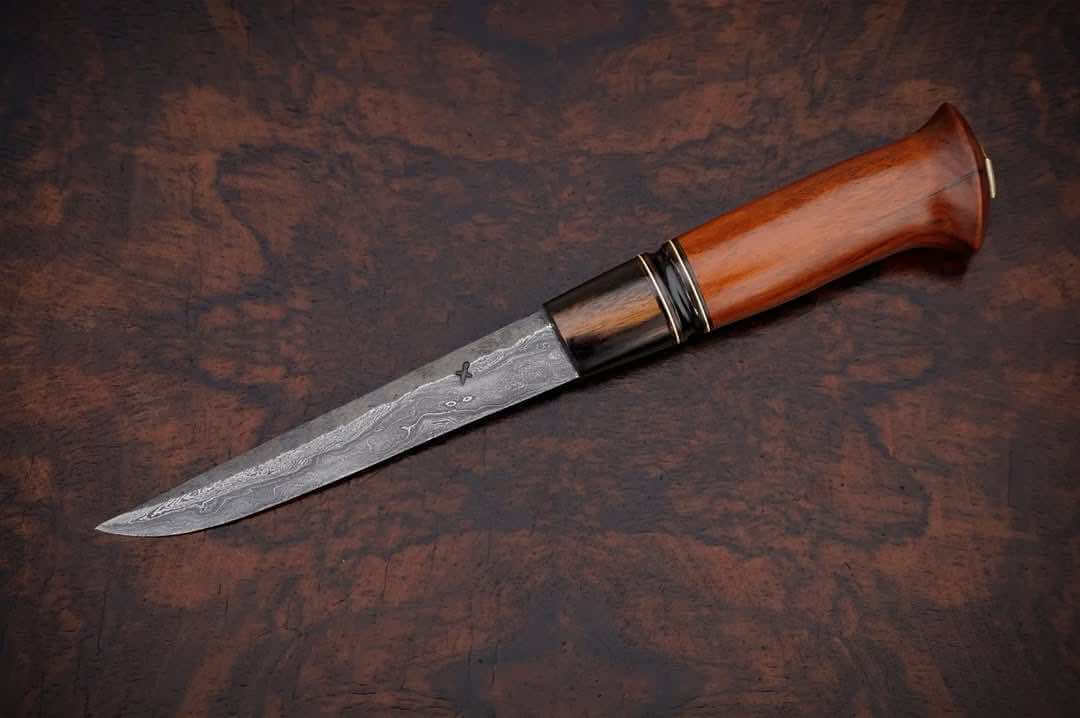
  • Blades: Almost always forged by hand (steel) carbon classics like 80CrV2, 100MnCrW4, 115CrV3, sometimes damas, N690, Elmax, RWL34...).
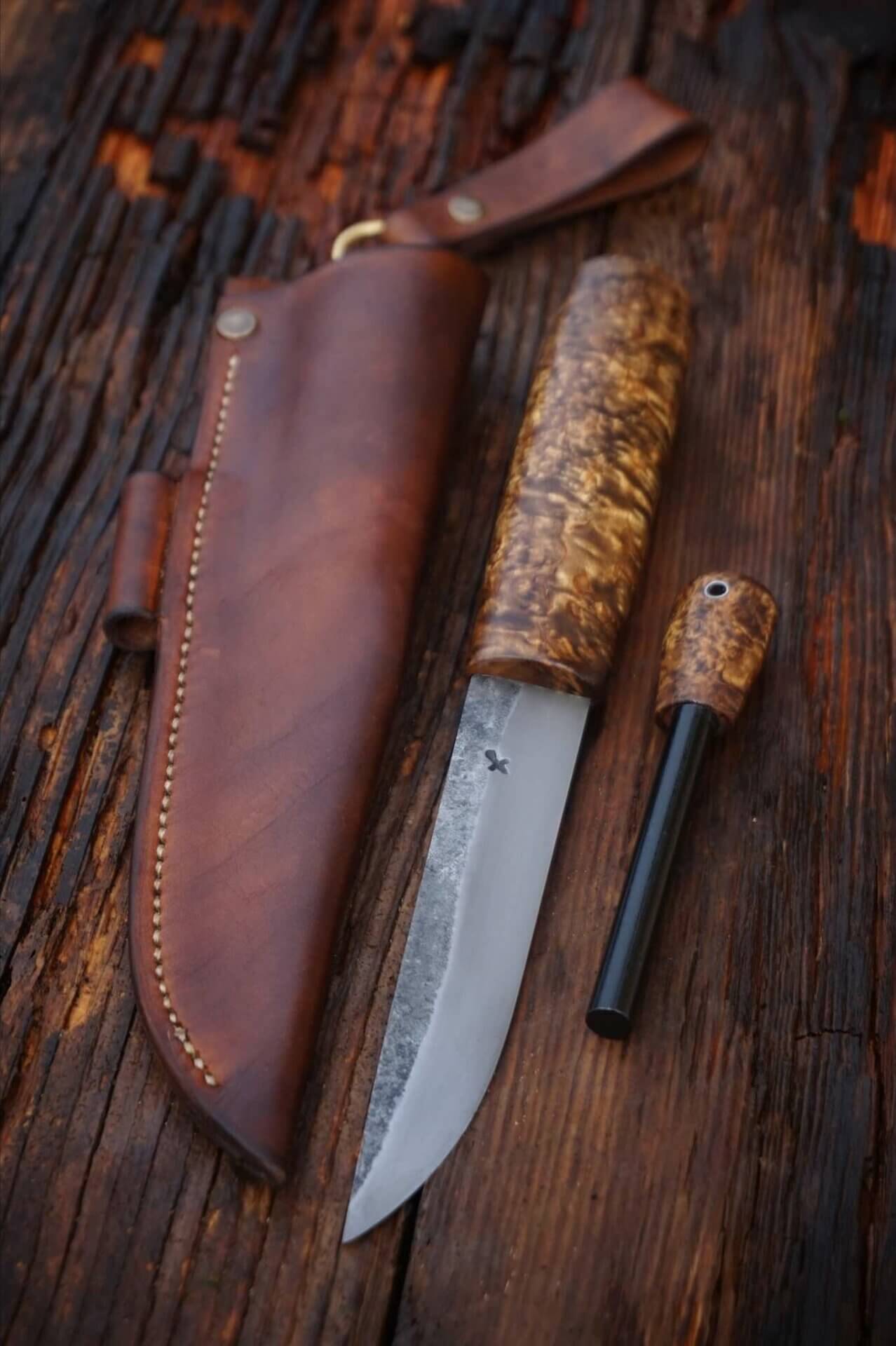
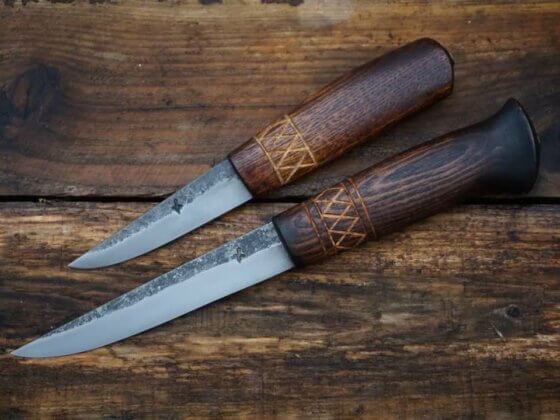
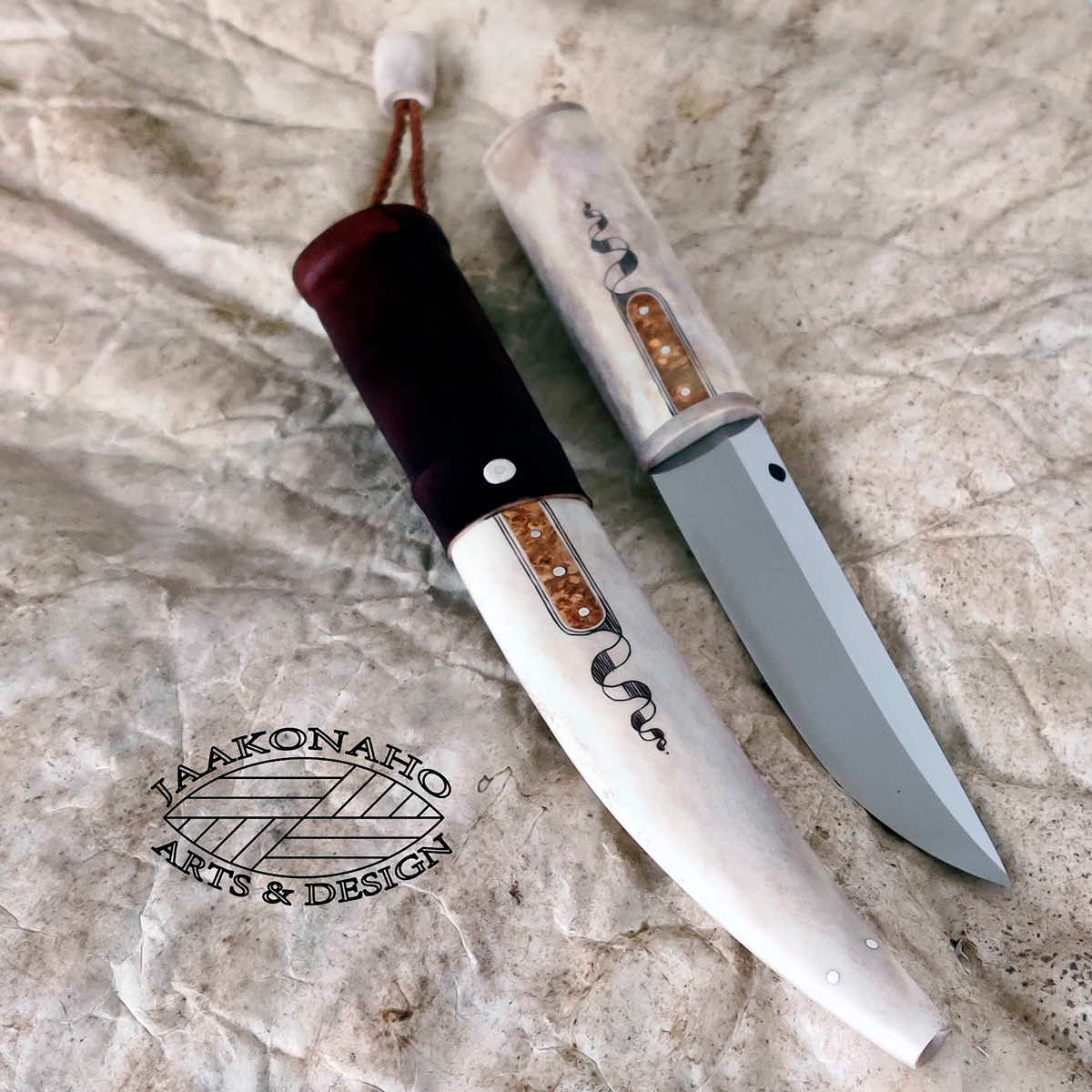
  • Handles : Very often in reindeer wood + curly birch + interlayers in leather reindeer hand tanned.
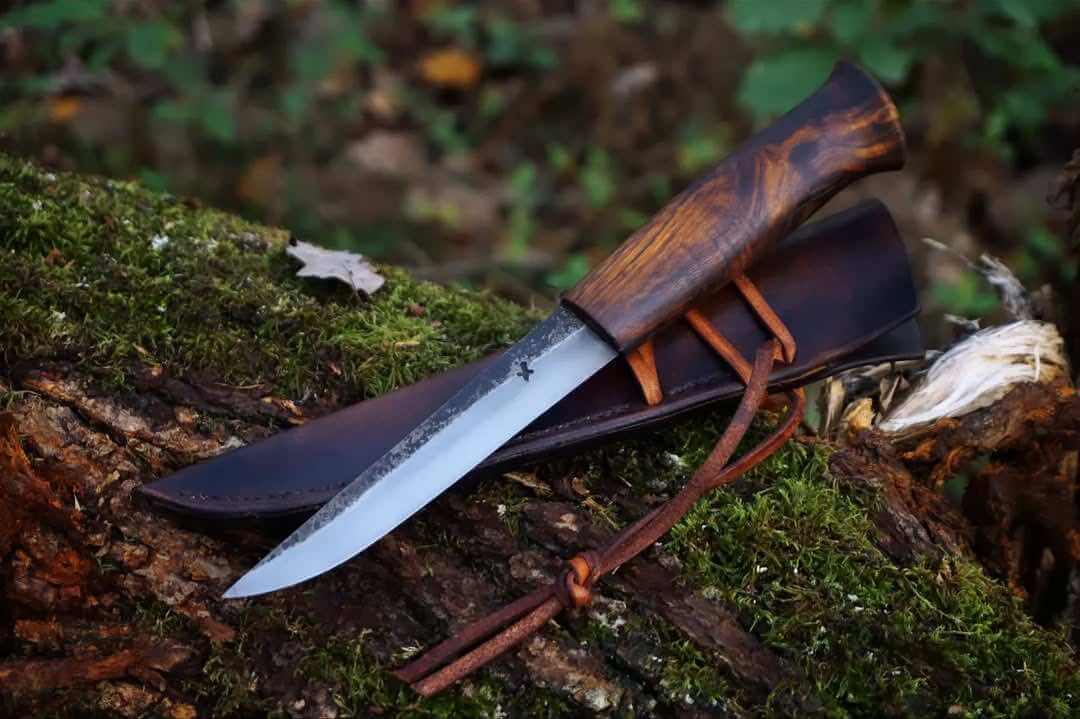
  • Furs: leather tanned by itself, often with reindeer wood inserts or birch, silver rivets 925, hand engravings.
  • Aesthetic: clean lines, excellent proportions, neat details (gravures, chip carving). Each room is unique.
  • Philosophy: local and recycled materials, durability, respect for laponne nature.

Types of pieces he most often makes

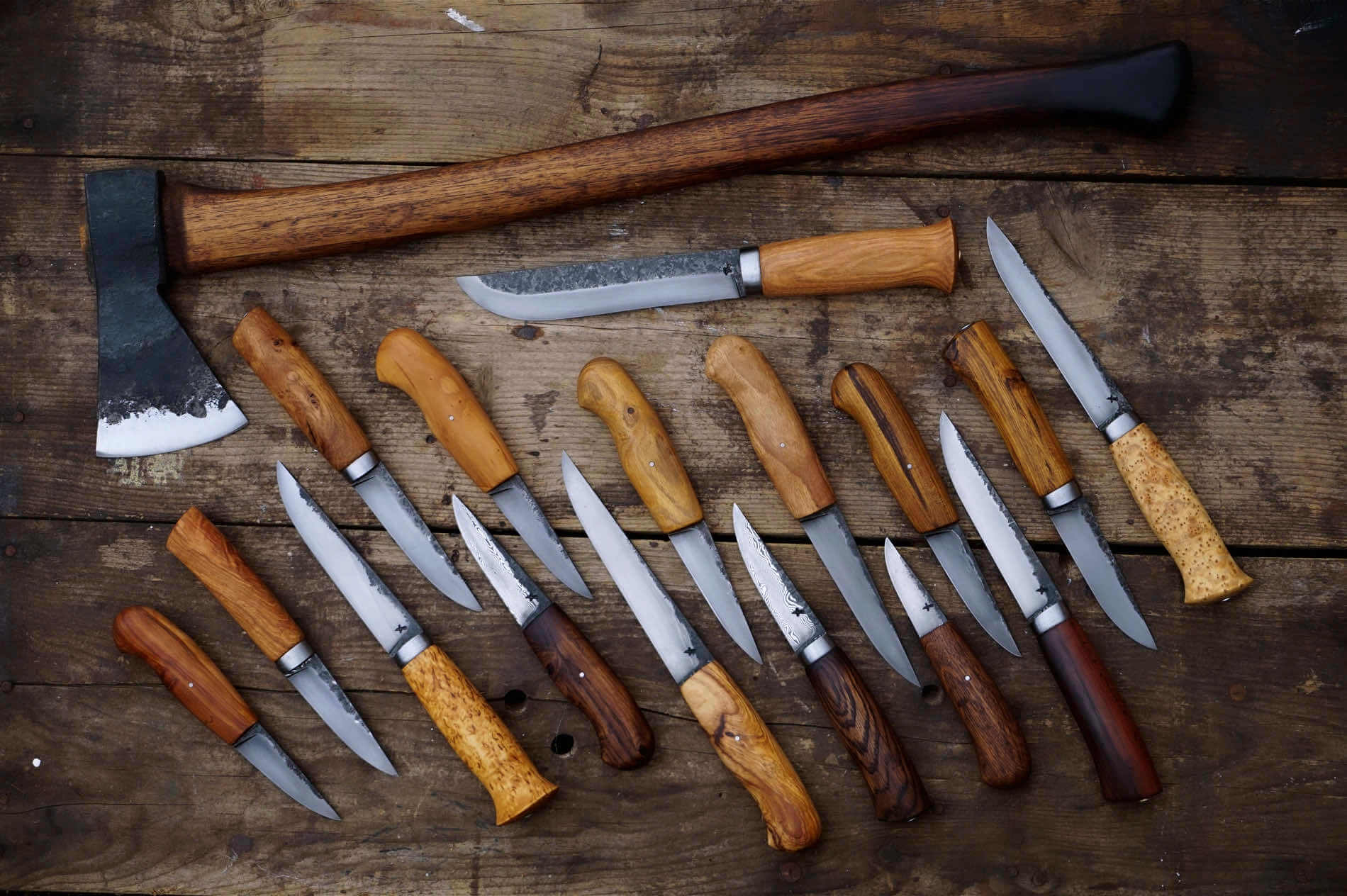
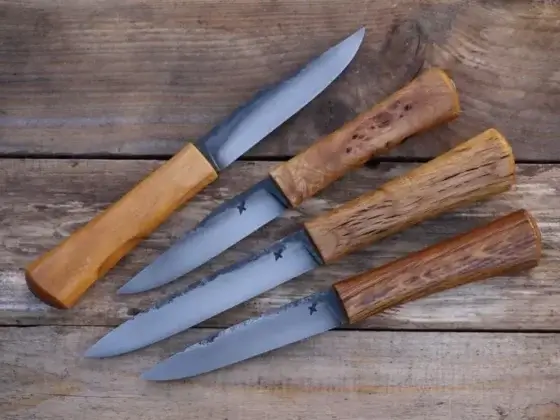
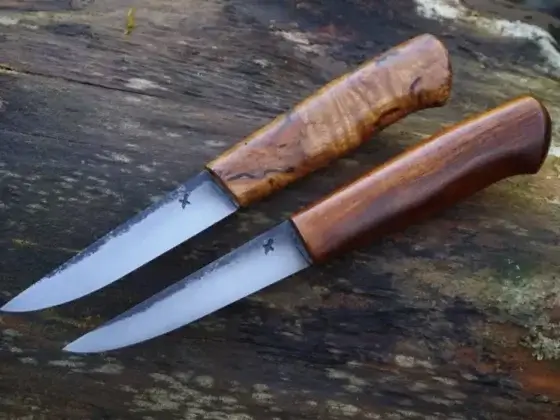
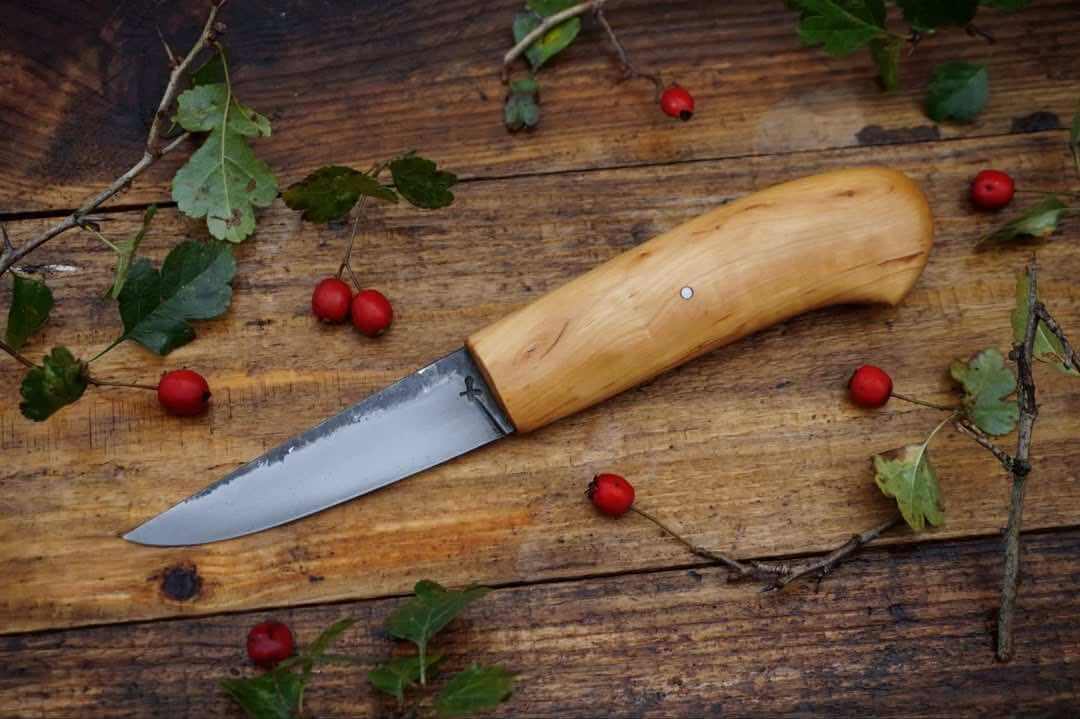
  • Puukkos classics (8–10 cm of blade) – its main production.
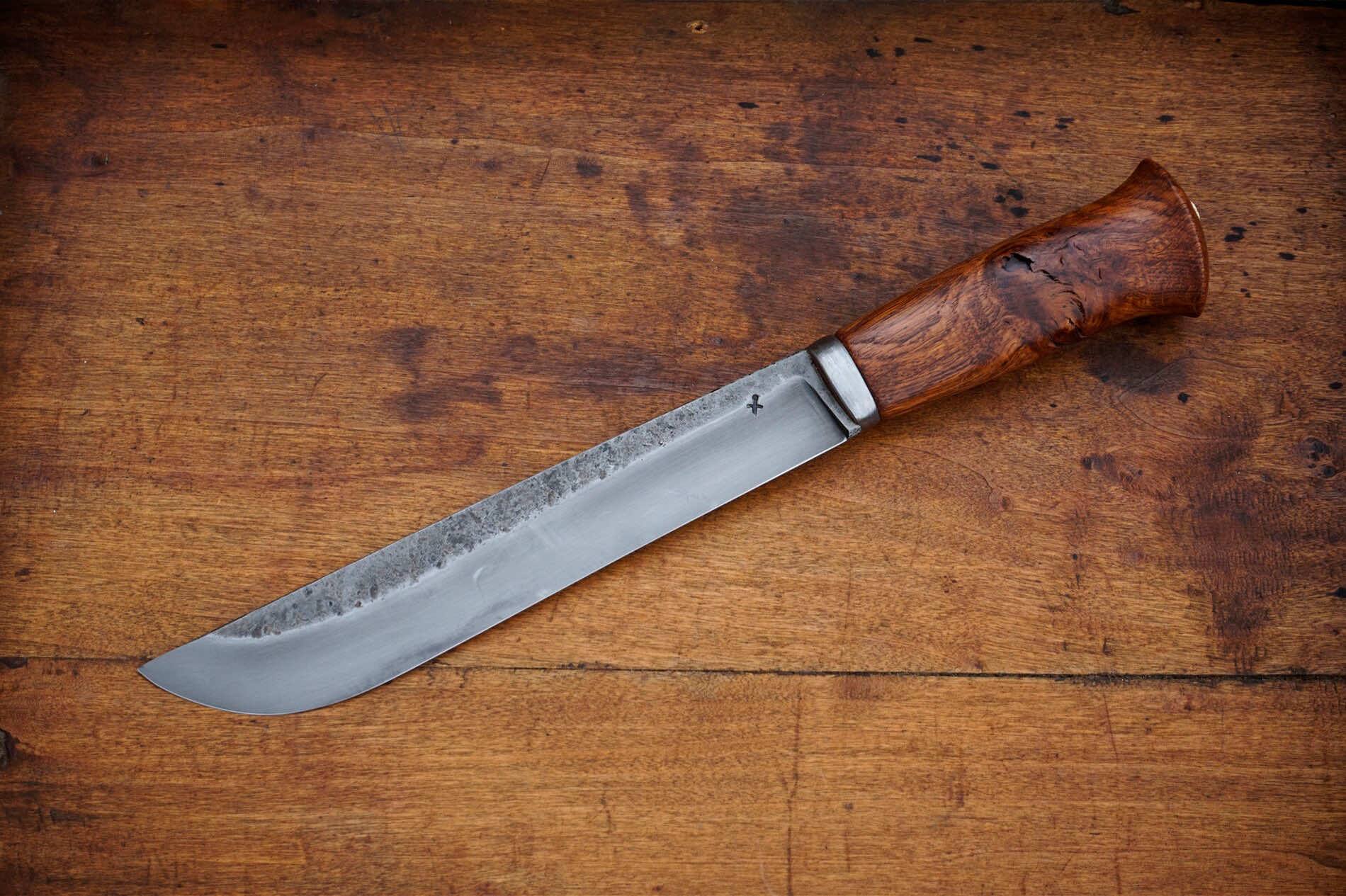
  • Leukus (larger Sami knives, 13–18 cm). (Article on leuku)
  • Artistic pieces / collector (names like Lilja, Flower, Goth, Cor, Liana, Näpsä, etc.).
  • Double knives (set puukko + small knife). Occasionally, daggers or more experimental pieces.
  • Dagger 2025 – RWL34 blade, handle reindeer wood + birch, silver rivets.
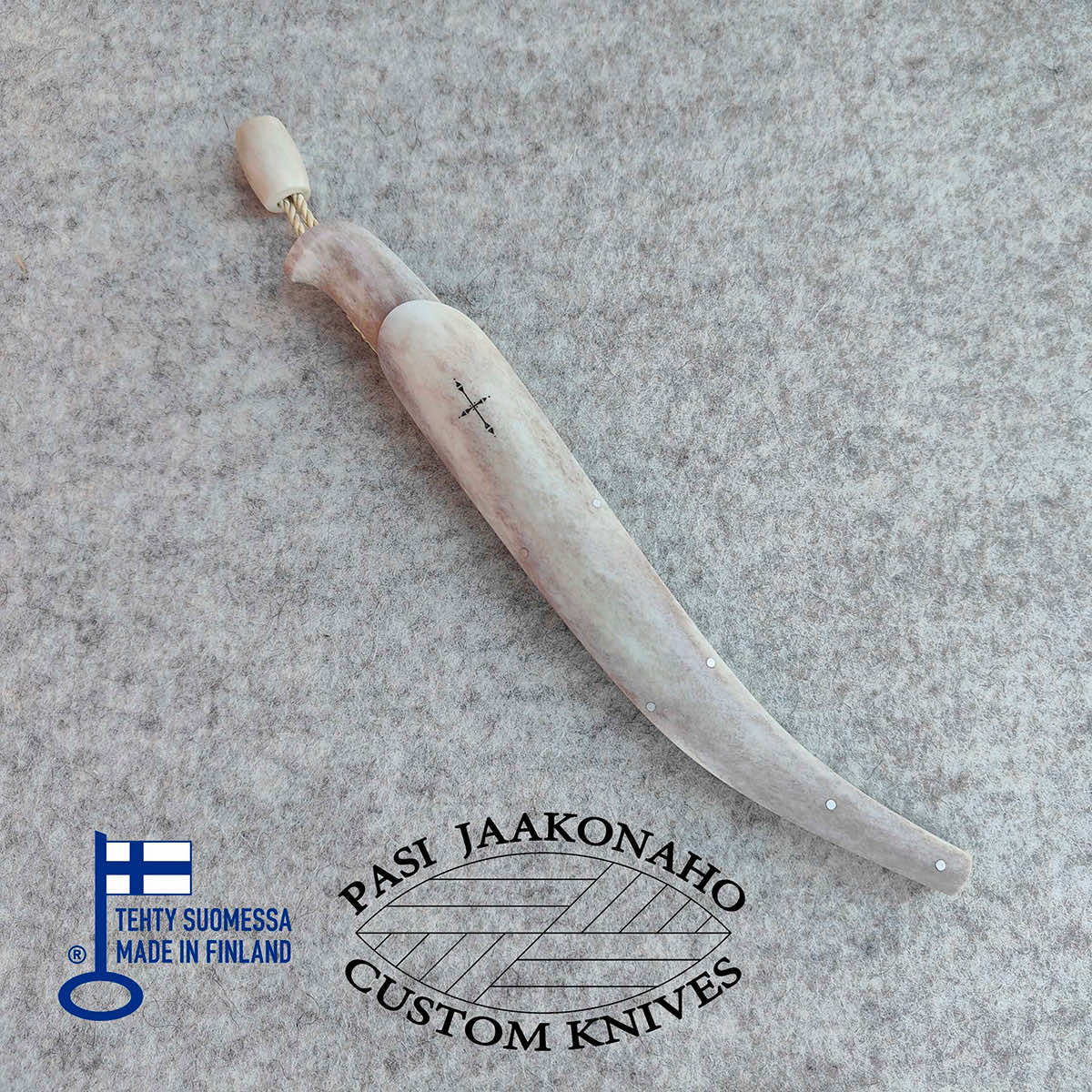
  • Kokosarvituppipuukko – sheath Made entirely of reindeer wood.

Where to see his work

Reputation

It is regularly listed among the best Finnish makers today. His puukkos are highly sought after by international collectors. They are found in Lamnia (the Finnish reference distributor).

Pasi Jaakonaho perfectly embodies the spirit of puukko Modern: anchored in the Nordic and Sami tradition, but with a very high artistic and technical requirement.


THESIS ON THE PUUKKO FINLAND

The main doctoral research in progress on the subject is that of Pasi Jaakonaho.

Pasi Jaakonaho's thesis

  • Title / subject : Doctor of Arts puukko Finland.
  • University: of Lapland (Rabbit yliopisto), Rovaniemi.
  • Status: PhD student since 2021. In his 2023 CV, the defence was estimated for May 2025. (To date, the thesis is not yet published, I have found nothing on the website of the University of Lapland...)
  • Particularity: he is described as the first researcher in the world to conduct a doctoral thesis specifically devoted to the puukko Finland.
  • Approach: as a puukkoseppämestari (master blacksmith), designer and teacher, his research probably combines the technical/craft, cultural, historical and design aspects of the puukko. He won the Finnish National Knife Championships in 2016.

See article: The cutlery of the year in Finland since 2011

Pasi Jaakonaho is therefore both a high-level practitioner and academic researcher on the subject.

At present, the only doctoral thesis specifically identified on the puukko Finland is one of Pasi Jaakonaho at the University of Lapland. It is an important step because it raises the puukko a subject worthy of in-depth academic research at the highest level.

For a Finn, the puukko is both the most important tool and the most feared weapon. We can say that the puukko For a Finn, it is as important as the samurai sword for the Japanese.

The engraving on reindeer wood requires patience, precision and a great knowledge of the material. Few artisans reach a level where the gesture becomes almost invisible and the pattern perfectly integrated into the shape of the object.

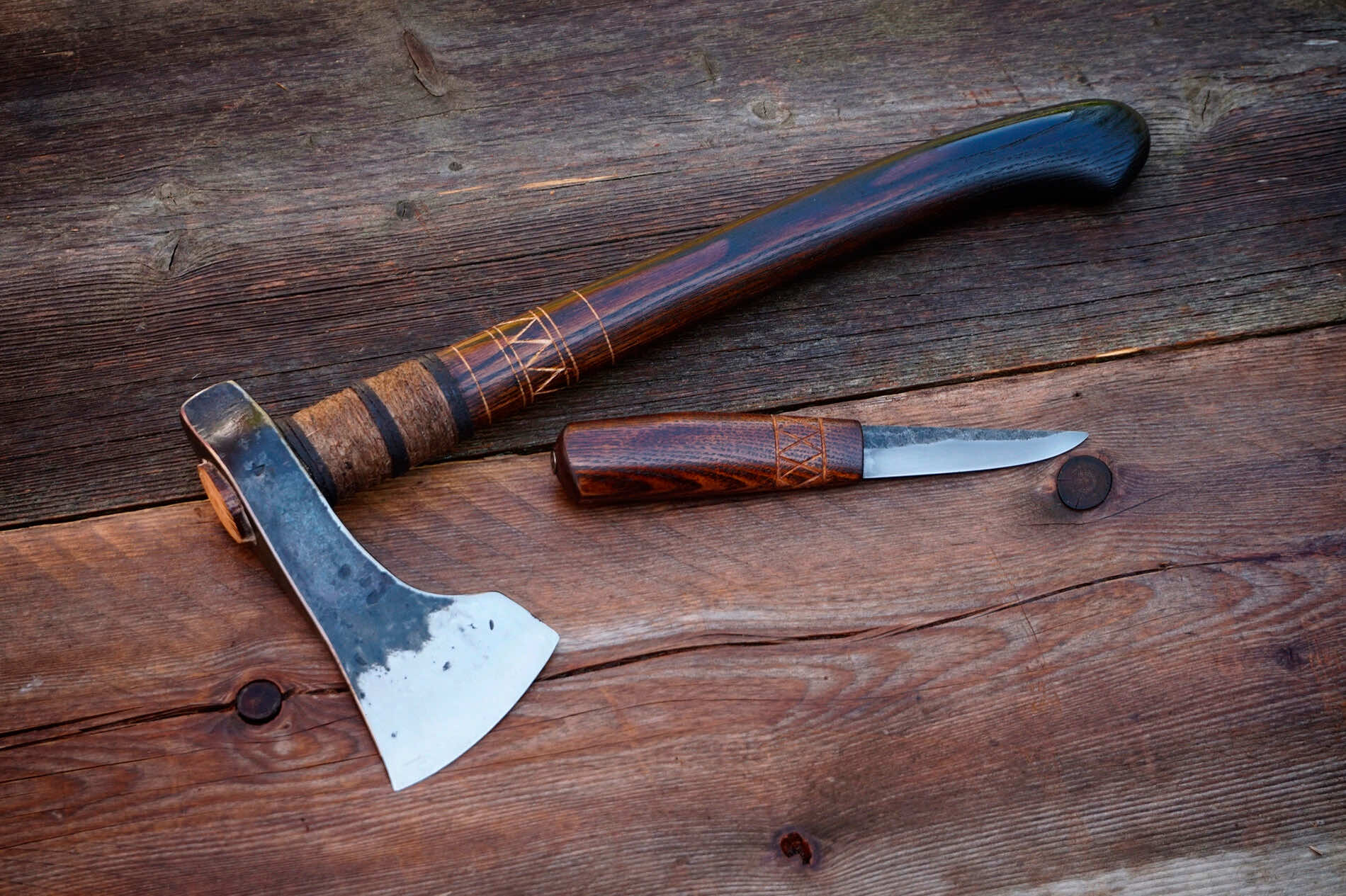
Pasi Jaakonaho, master blacksmith and designer based in Inari, Finland, is one of these rare artists. On its handles and reindeer wood sheaths, we observe an exemplary mastery of traditional Sami techniques: extremely fine linear engravings and subtle use of pigment to highlight patterns.

His work perfectly illustrates what these techniques can give when pushed to their highest level: a balance between Nordic authenticity and contemporary refinement.


JAAKONAHO PASI GRAVURE TECHNOLOGY

In the pure Sami/Finnish tradition

Pasi Jaakonaho mainly practices hand engravings (handmade engravings) and chip carving on reindeer wood (poronsarvi), sometimes combined with birch. Here are the detailed techniques, in the most common order at home and in the Duodji (Sami craft).

See article: Duodji or craft excellence Sami

1. Classic linear engraving

This is the most widely used technique on reindeer wood.

Process:

  • The pattern is first drawn in fine pencil.
  • A very sharp knife (or a special engraving tool) is used, held like a pencil.
  • The tip is pushed along the line to create a very fine V-row (a depth of only a few tenths of a millimetre).
  • The reverse direction is used to clean and deepen the furrow slightly.
    The thicker lines are made by tilting the knife further; thin lines holding it almost vertical.

Typical reasons:

  • Geometrics (losanges, zigzags, braids, stars, hearts)
  • Floral or stylized (especially in North Sami style)
  • Border « braided rope »

After engraving, a pigment (coal, cinnamon, coffee, or commercial pigment) is often rubbed into the furrows to bring them out in contrast to the white of the reindeer wood.

2. Chip carving (cut of chips / triangles)

Very present in the descriptions of the pieces of Jaakonaho (« handmade engravings and chip carvings »).

Technique:

  • First we trace the base of the triangle with a line.
  • With the knife tip held like a punch, one makes a unique cut from the base to the top.
  • The small triangular shaving is removed.
  • Repeat to create rows of triangles, borders, or relief patterns.
  • This technique gives a more sculpted and three-dimensional effect than the simple line.

3. Other complementary techniques

  • Engraving in relief / light sculpture: for deeper patterns or organic forms.
  • Combination with wood: on the inserts of curly birch, one sometimes finds larger chip carving.
  • Finishes: 925 silver rivets, sometimes light tints or oils to protect and highlight contrasts.

Tools used

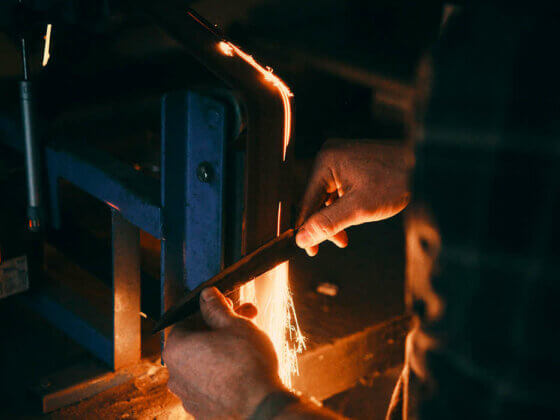
  1. Very sharp engraving knives (often homemade)
  2. Small scissors or fine gouges
  3. Sometimes dentist or jeweller tools for very fine details
  4. Fine abrasives for polishing around engravings

Jaakonaho Style

It remains true to the Sami spirit (geometrics + nature) while bringing a designer sensitivity: the patterns are often more airy, modern and perfectly integrated into the shape of the handle or sheath. He never overloads the room.

These techniques require great control: the reindeer wood is hard and brittle, and the slightest error is visible. That's what makes Jaakonaho's pieces so precious.


SUMMARY

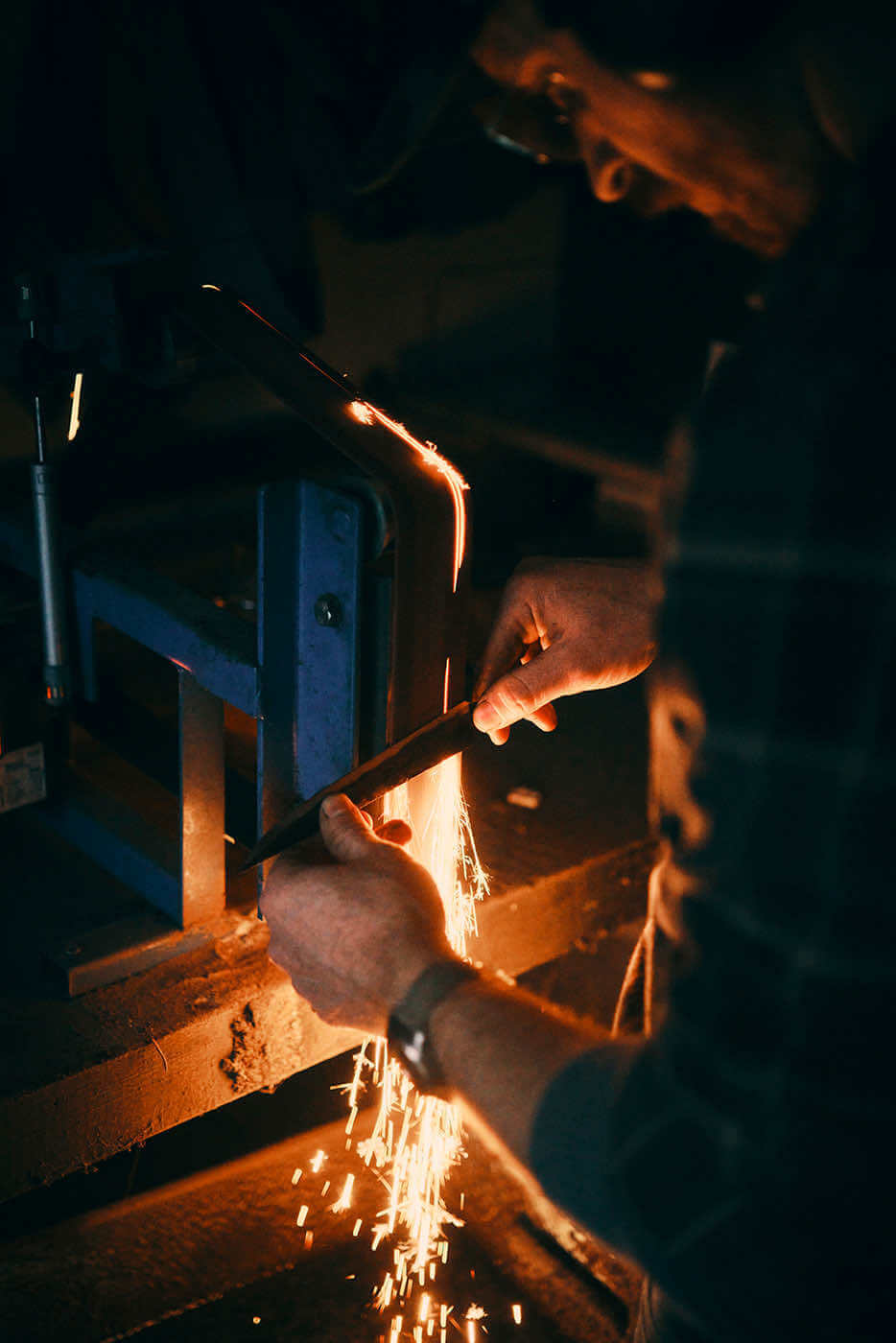
In Inari, in Finnish Lapland, is Pasi Jaakonaho's forge.

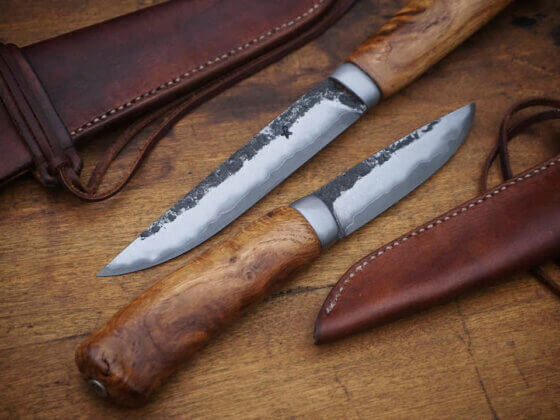
Master of Arts and Crafts, He is an exceptional cutlery, renowned for his innovative spirit. In his workshop, Jaakonaho creates real collection pieces. Limited editions, materials used and hand forged blades make knives puukko Jaakonaho's unique objects, both suitable for a collection and for everyday use.

Jaakonaho combines the Nordic cutlery tradition with creative solutions. It favours recycled and natural materials. When designing and shaping, he often gives free rein to his artistic inspiration. He drew inspiration from the harmonious fauna of Lapland, his native region. During his hikes, he finds not only inspiration, but also materials that can be used to make his knives. Jaakonaho collects reindeer wood in these areas.


Conclusion:

By buying a knife puukko Pasi Jaakonaho, You have the certainty of owning a single piece and not found elsewhere. Each creation of Jaakonaho is the result of exceptional Finnish craftsmanship and an artistic vision of rare precision. The knives puukko Jaakonaho is an ideal gift, even for the most demanding collectors.

In a parallel life, I am a professional photographer specializing in landscape and nature in general. I invite you to discover a road trip photos of 4,000 kilometers in Finland on my site Nature Photography. It was during this trip that I fell in love with the puukkos.

Thank you for reading this article and sharing it if you liked it.

Warm regards,

Photo credit: @Pasi Jaakonaho

Subscribe to the newsletter.


Norway – Sweden – Finland

WHO MAKES THE BEST PUUKKOS?

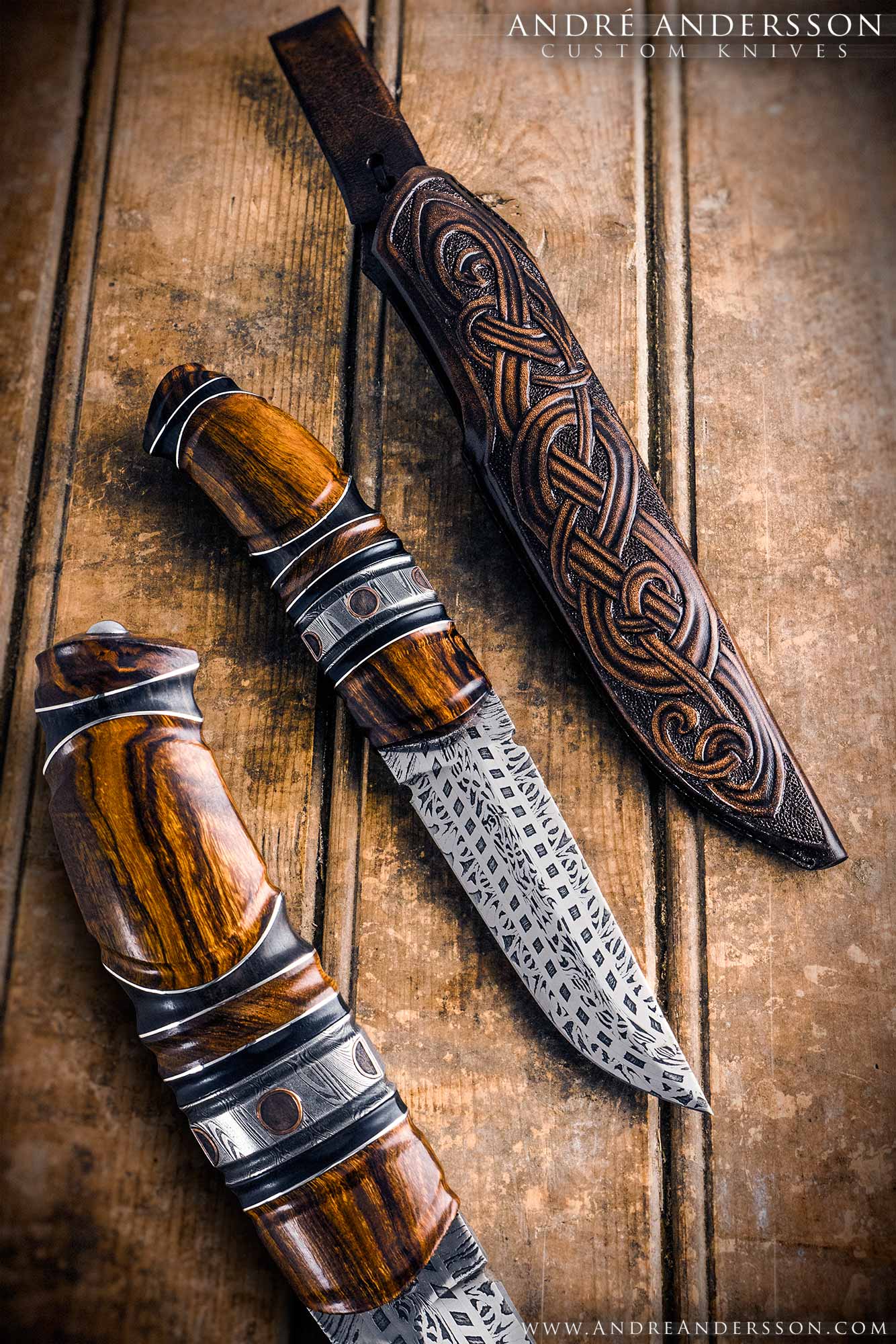
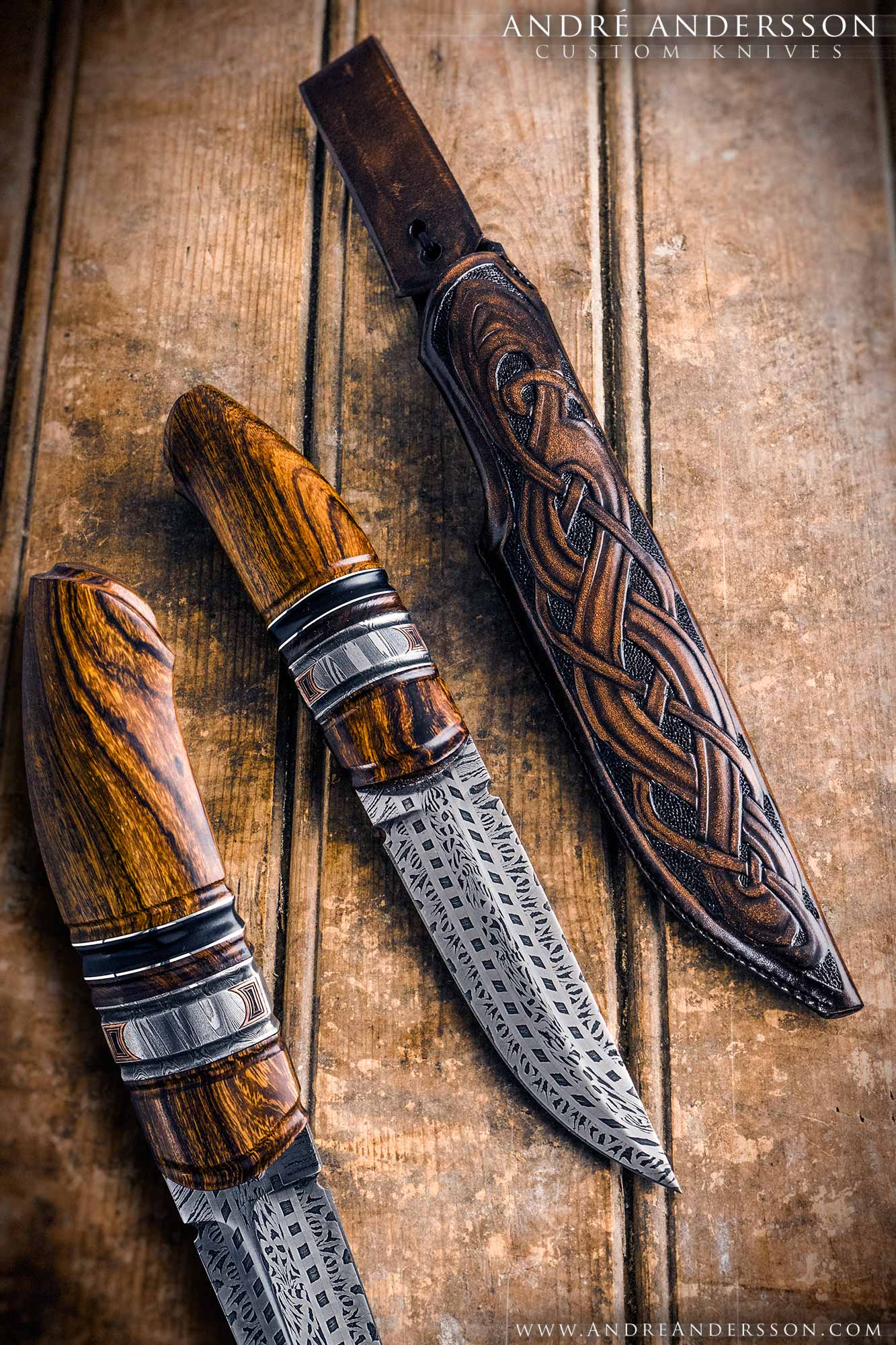
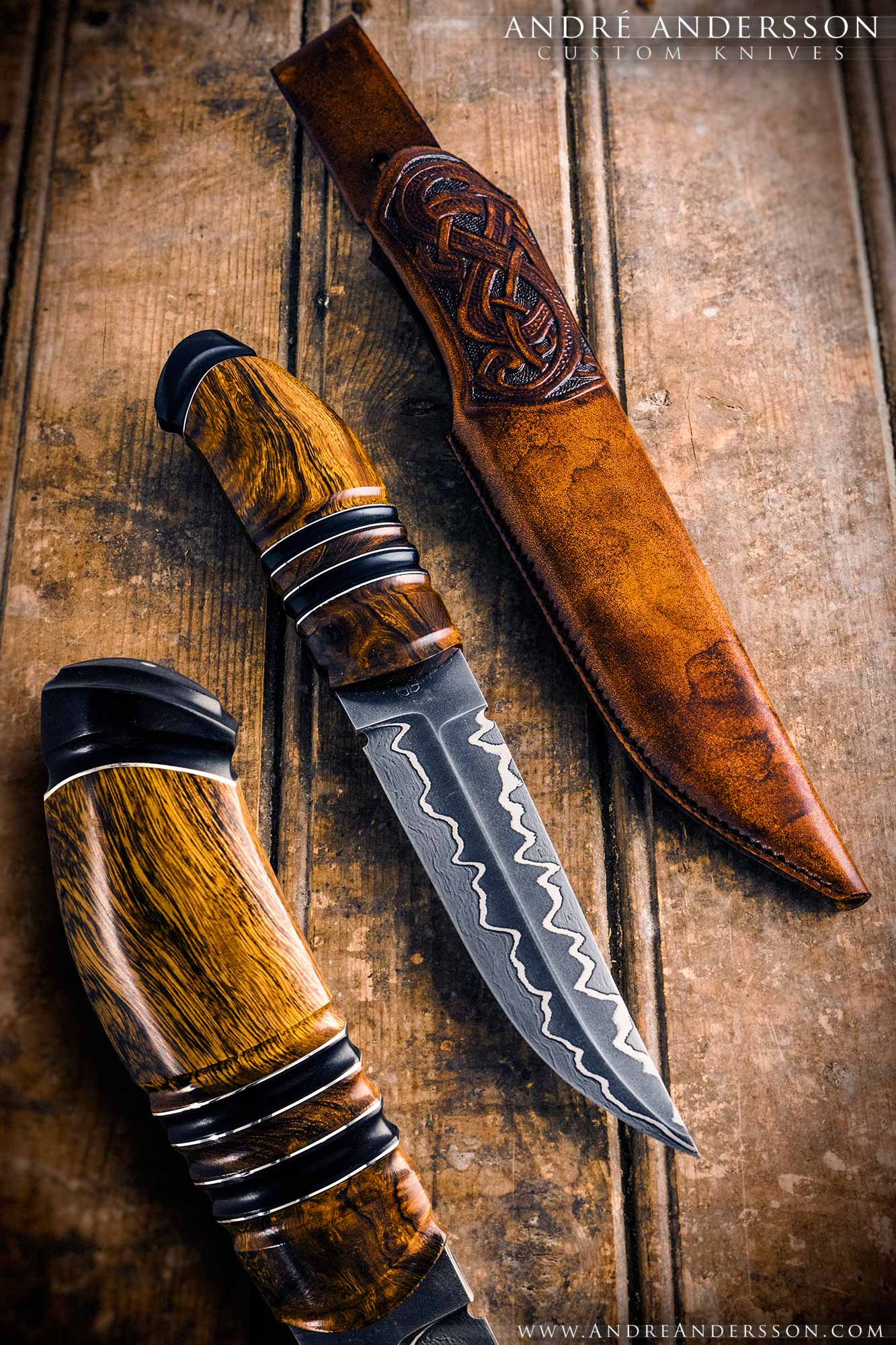
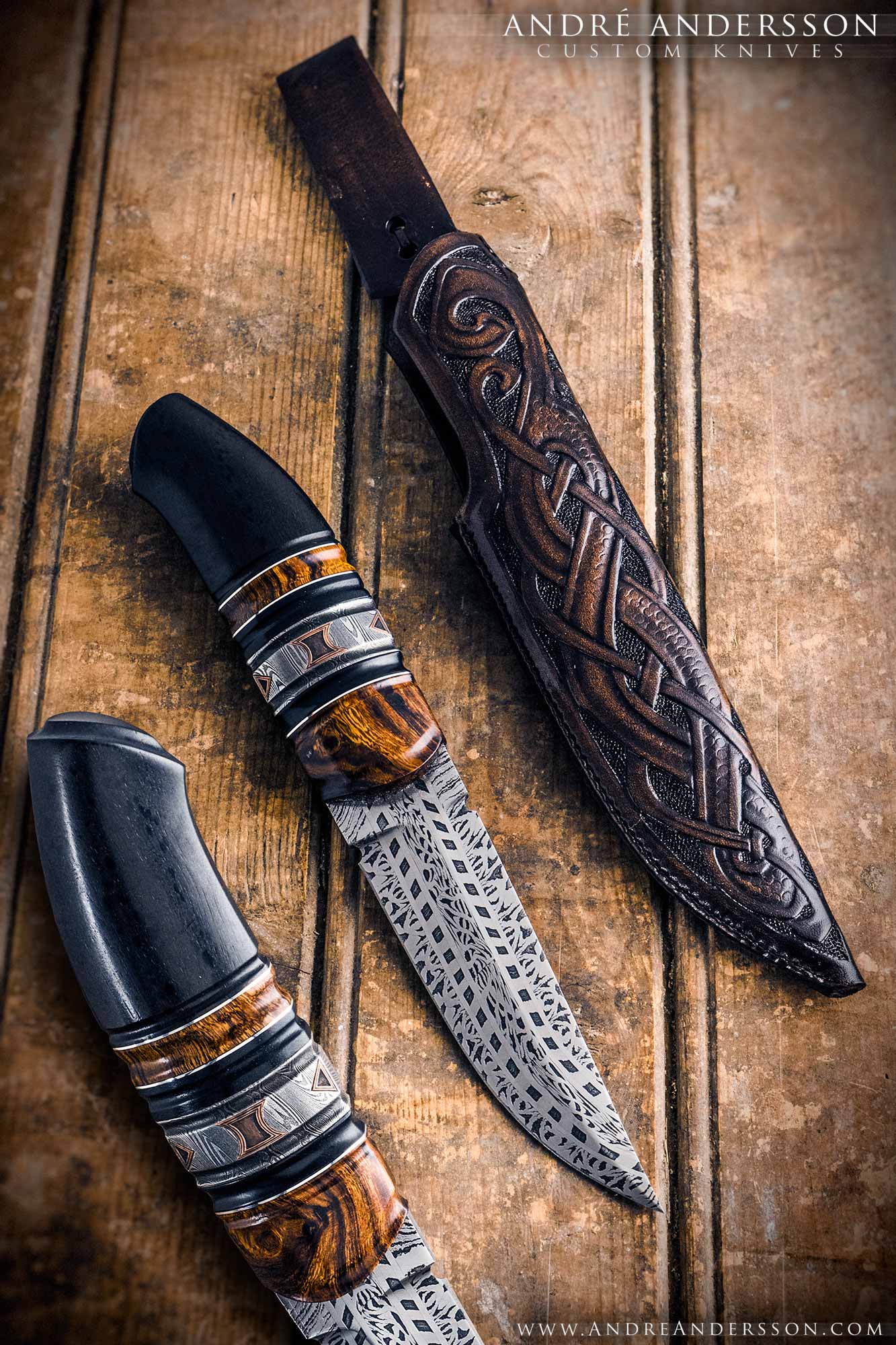
Does André Andersson create the most beautiful knives in the world?

Does André Andersson create the most beautiful knives in the world? 2560 1707 Puukko - Finnish knives


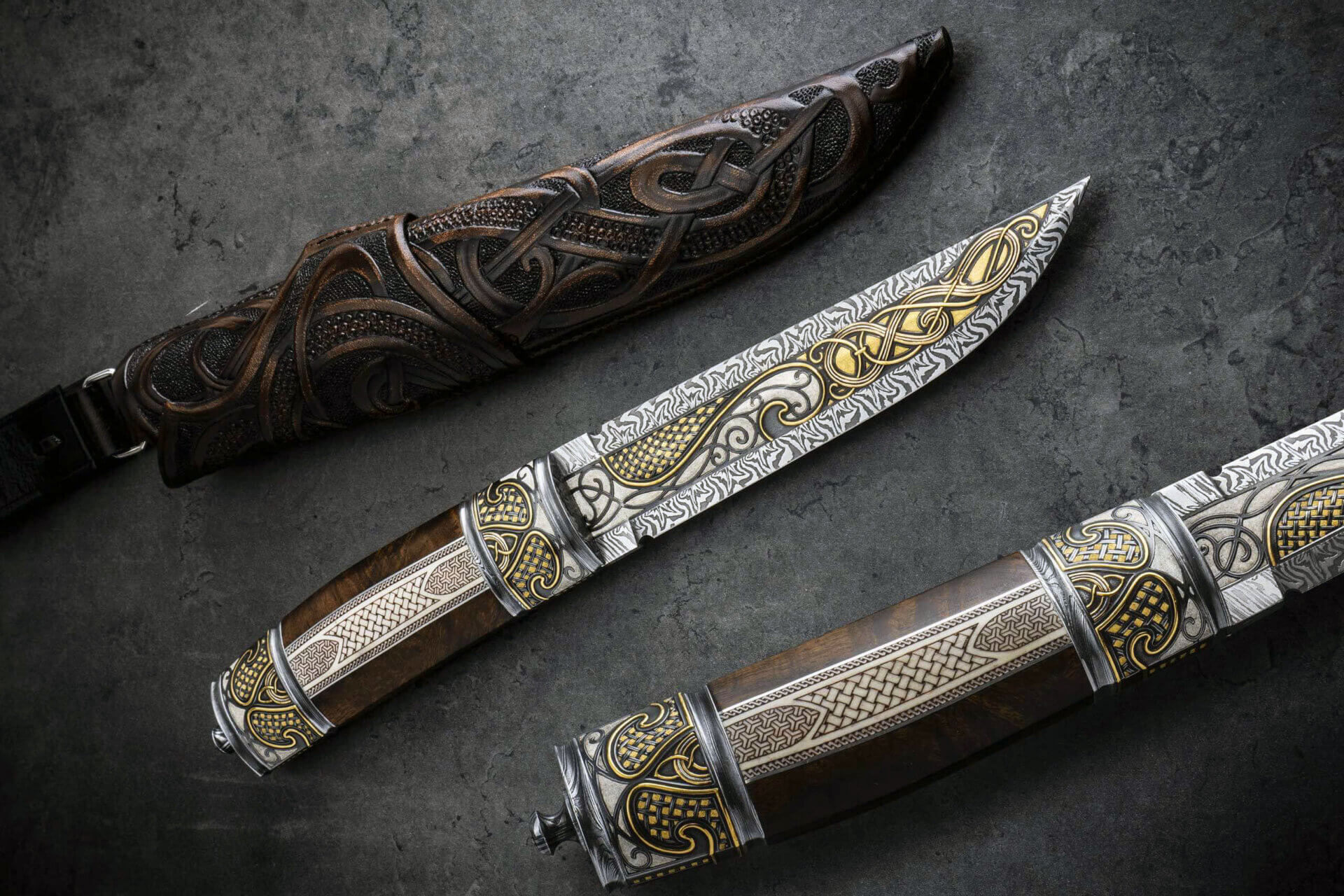
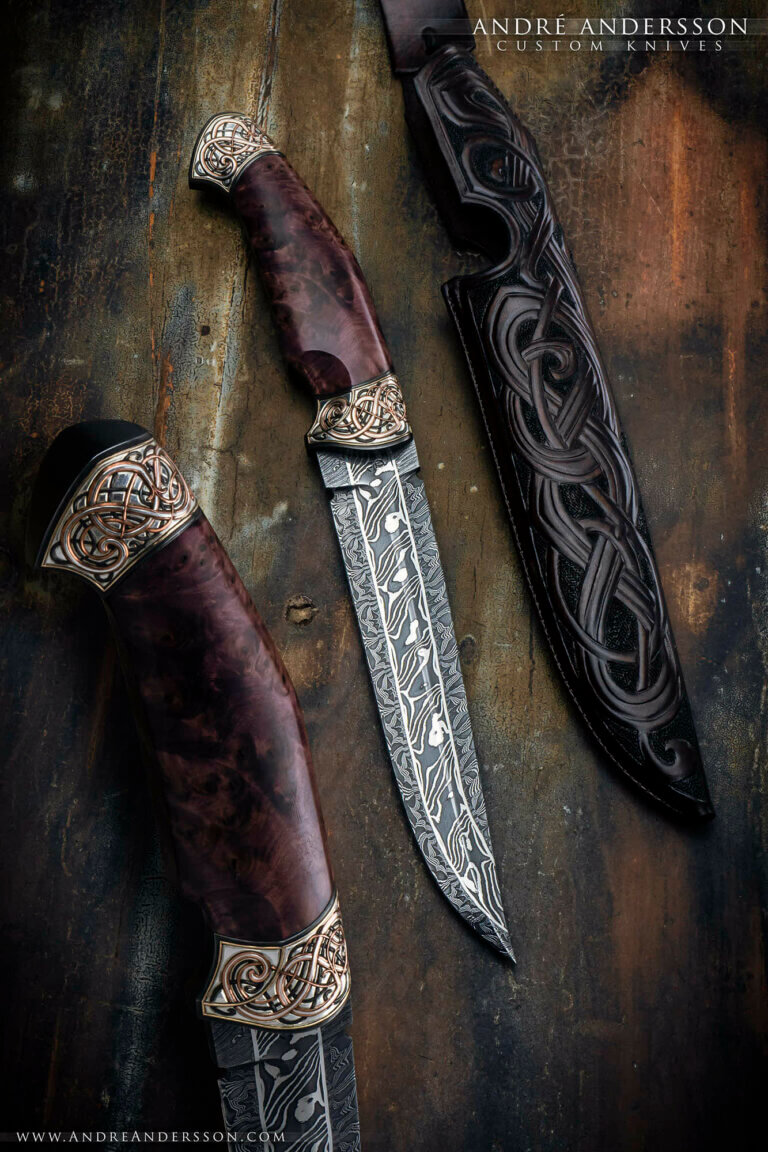
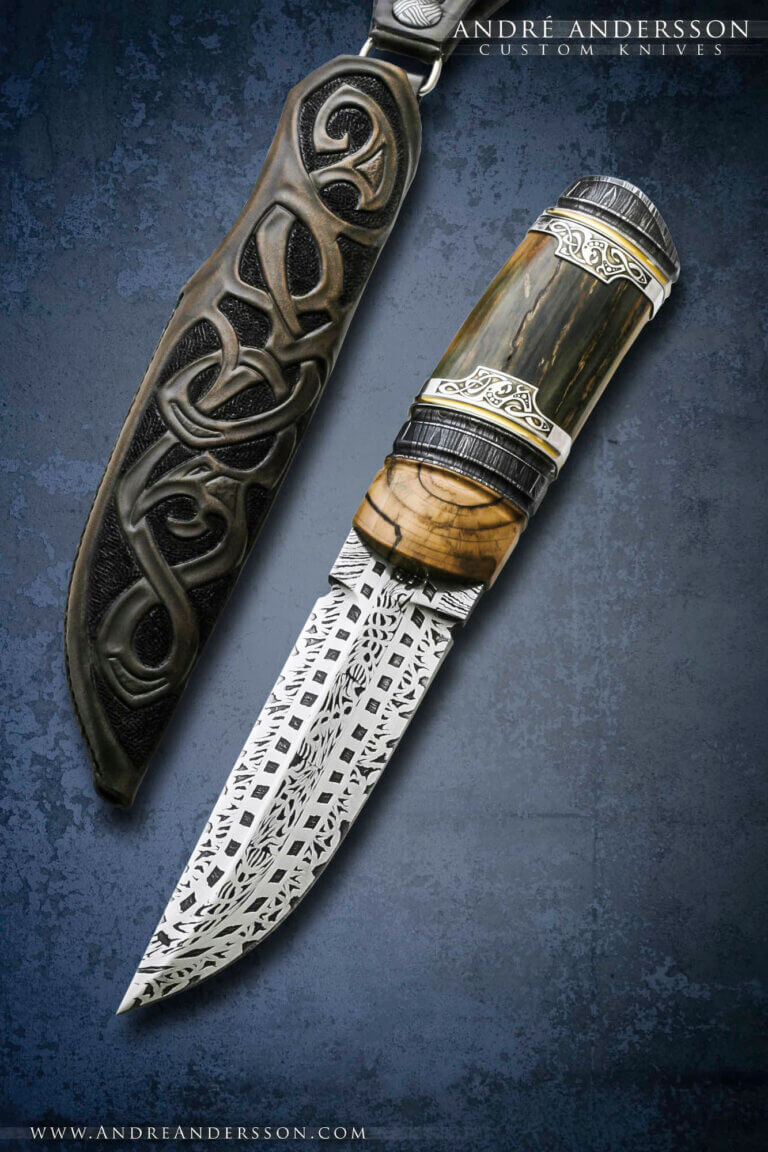
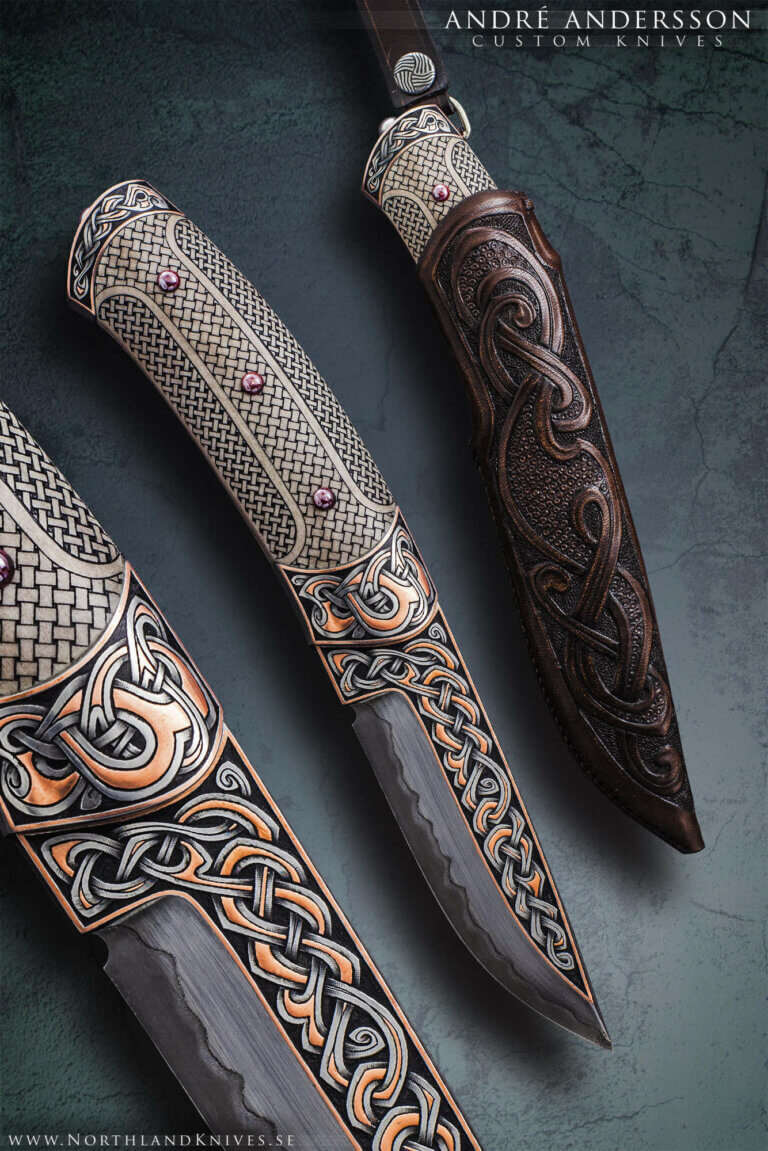
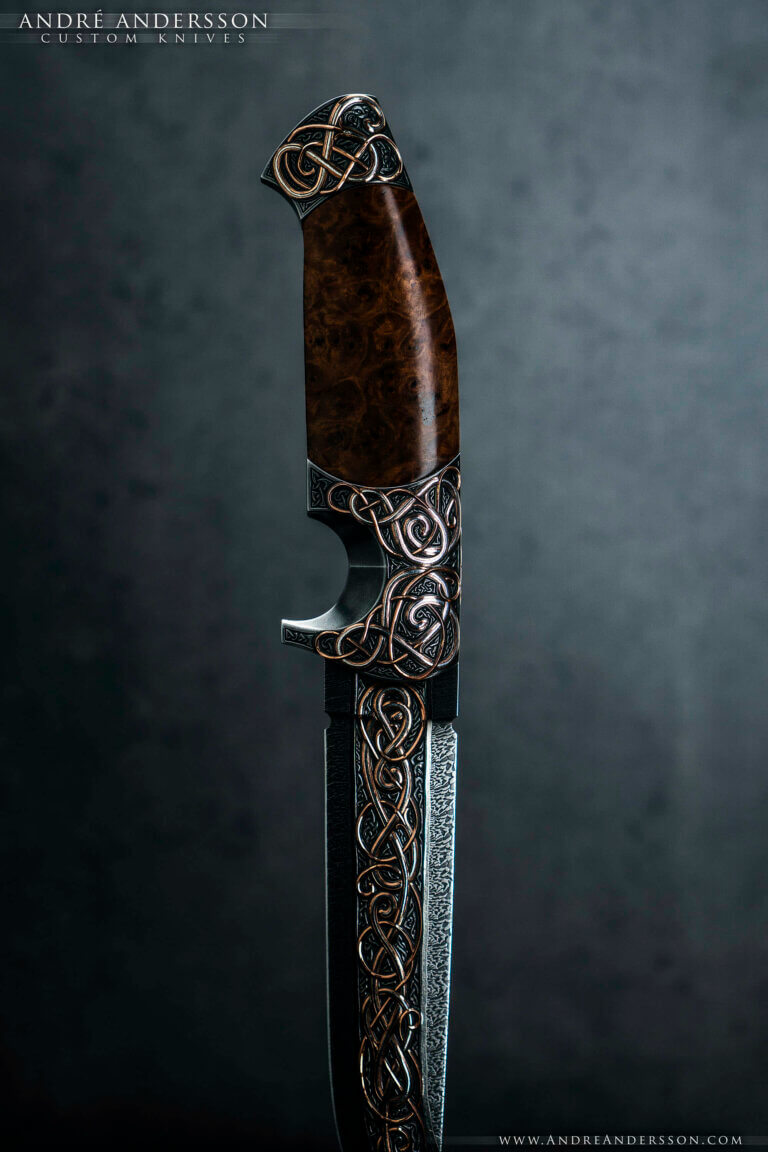
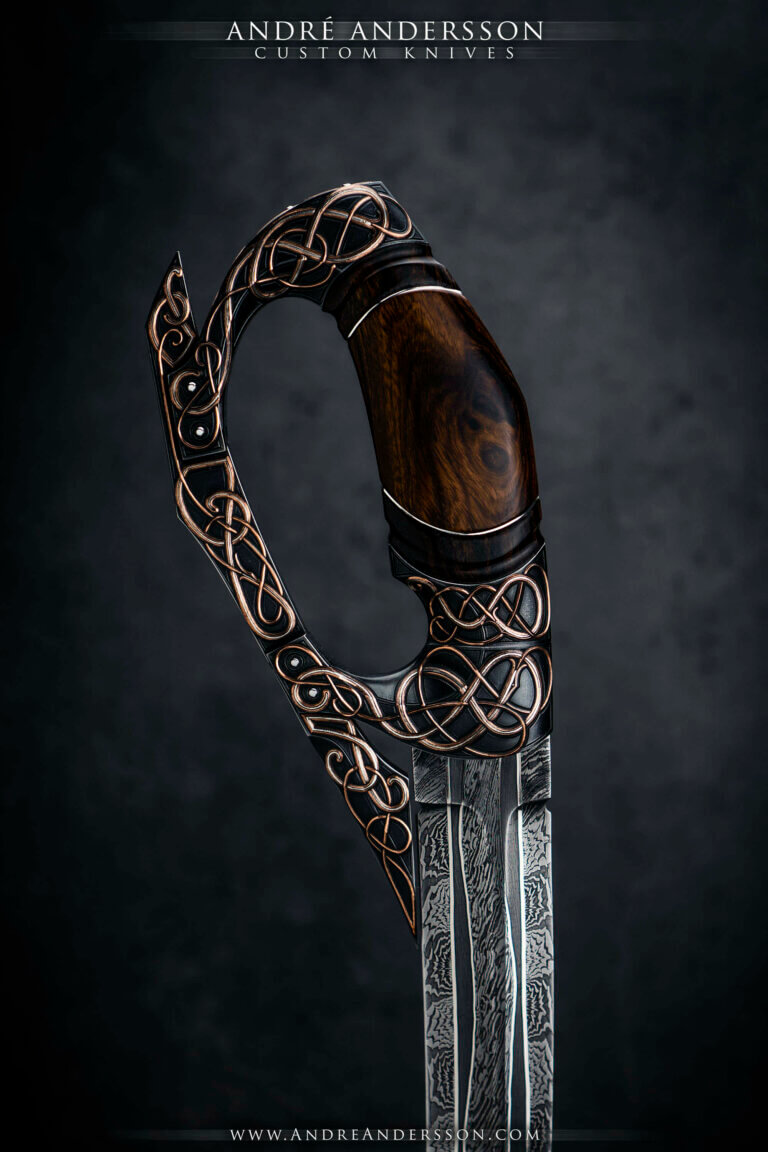
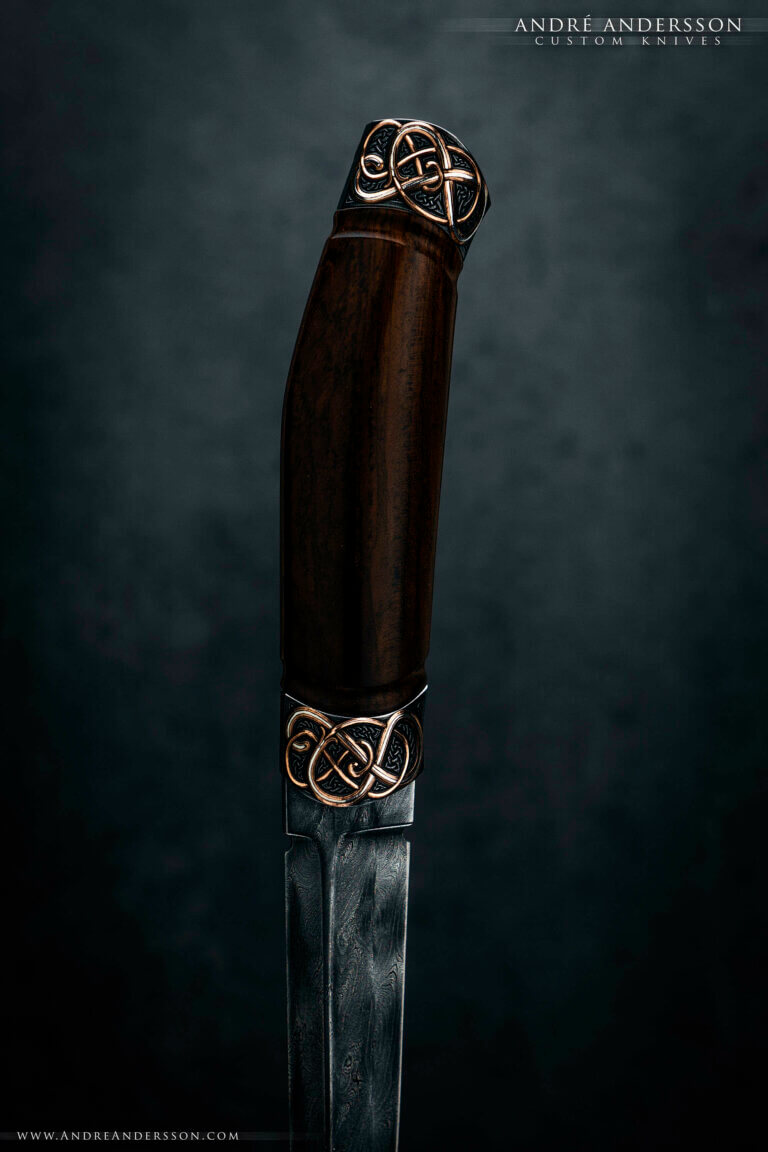
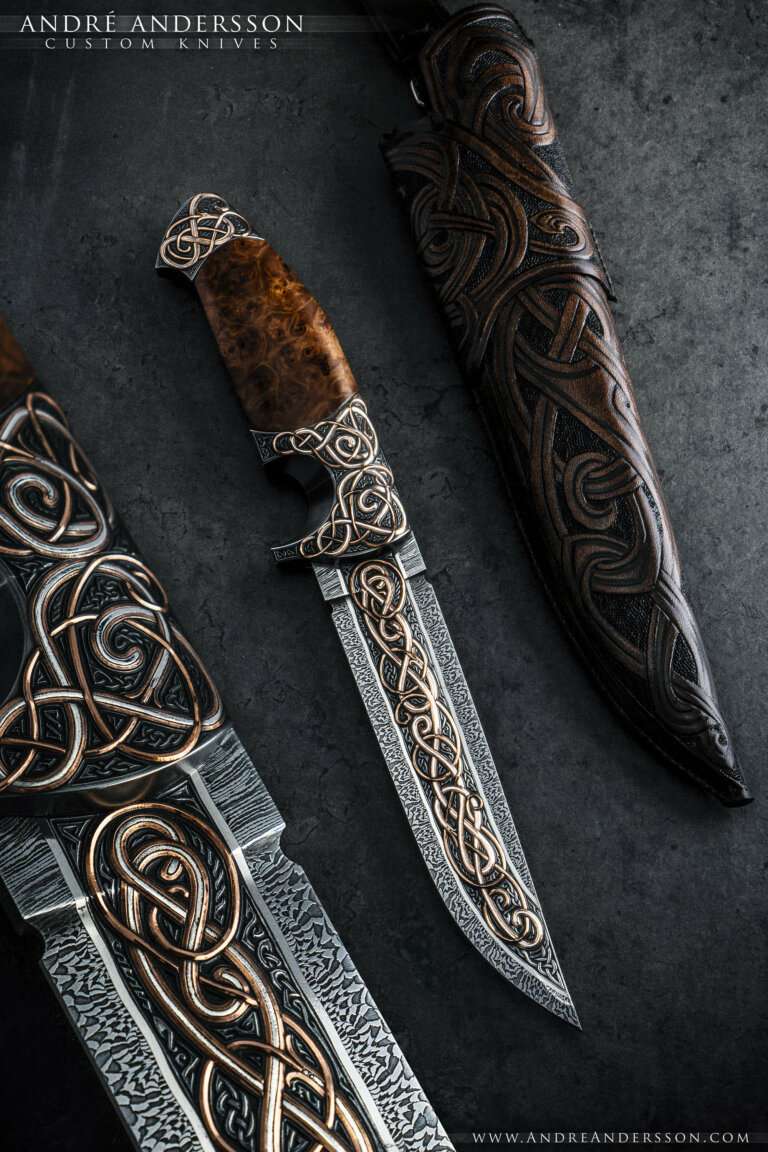
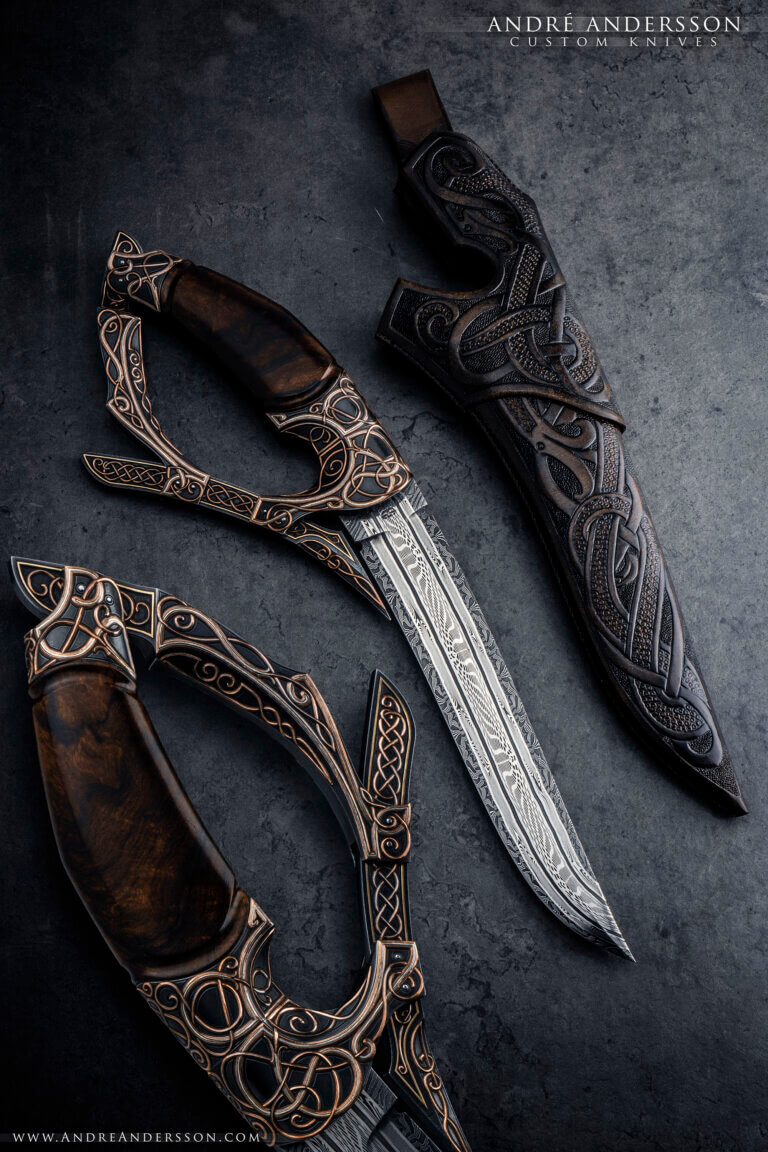
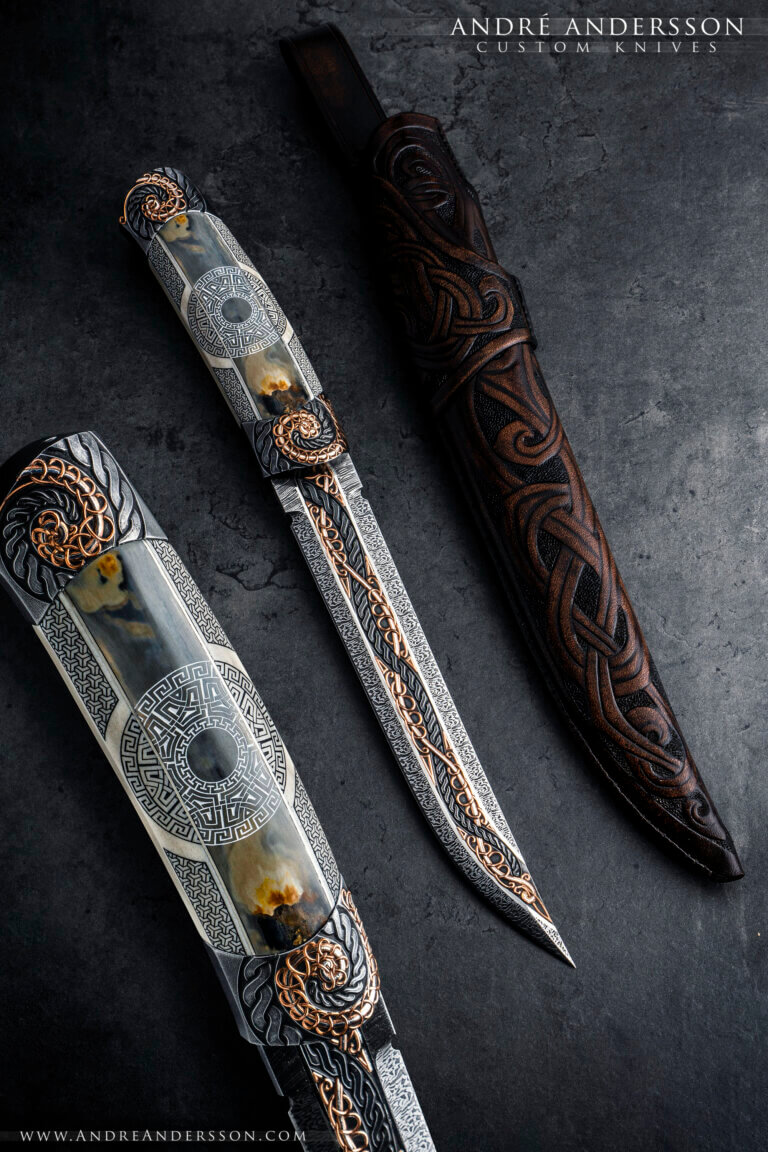
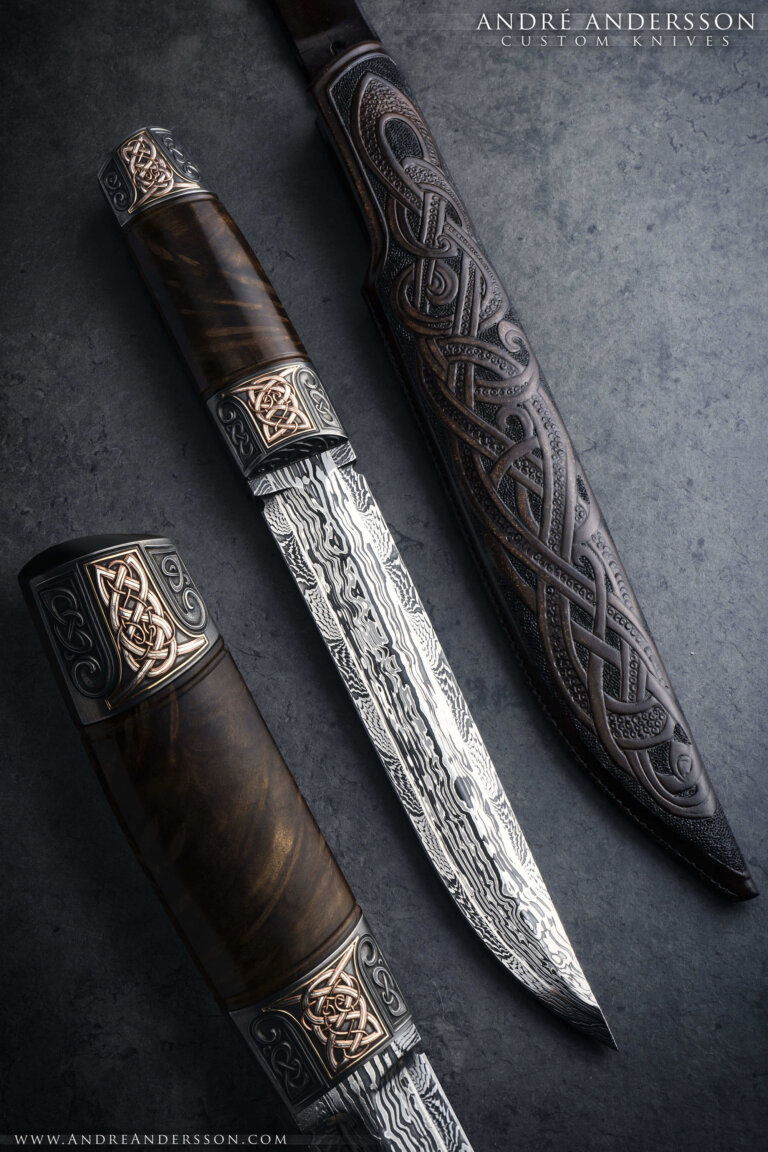
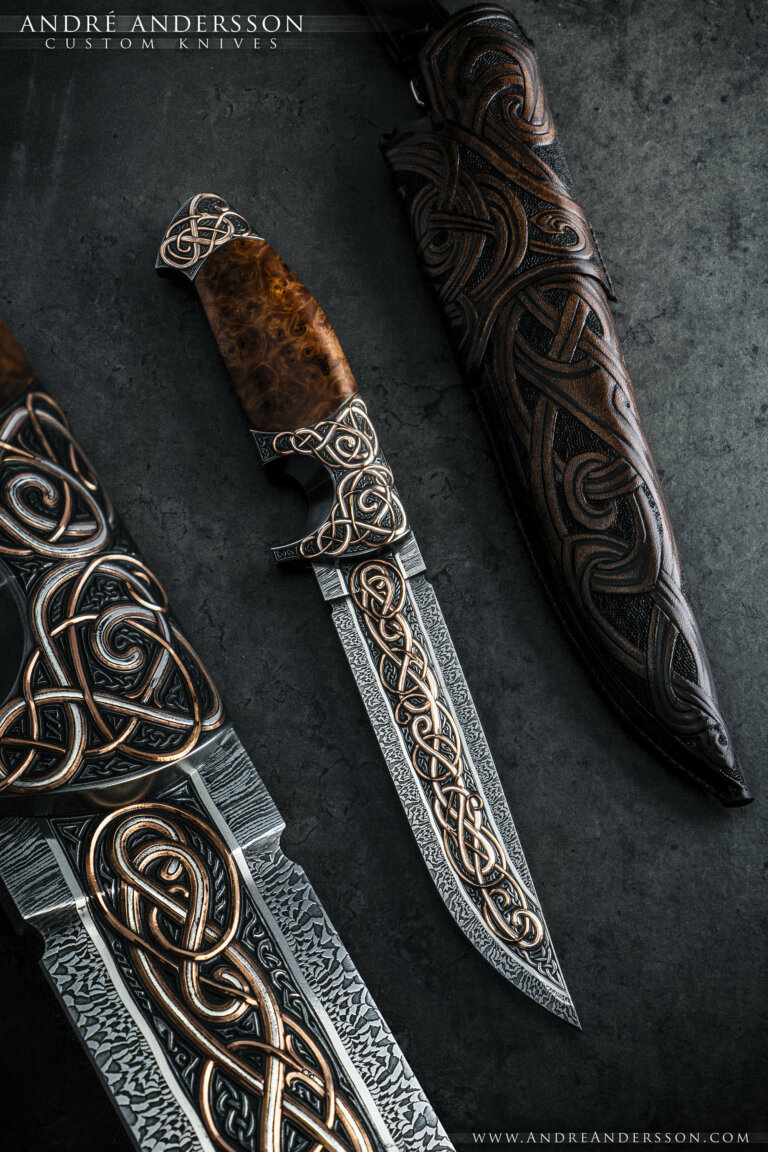
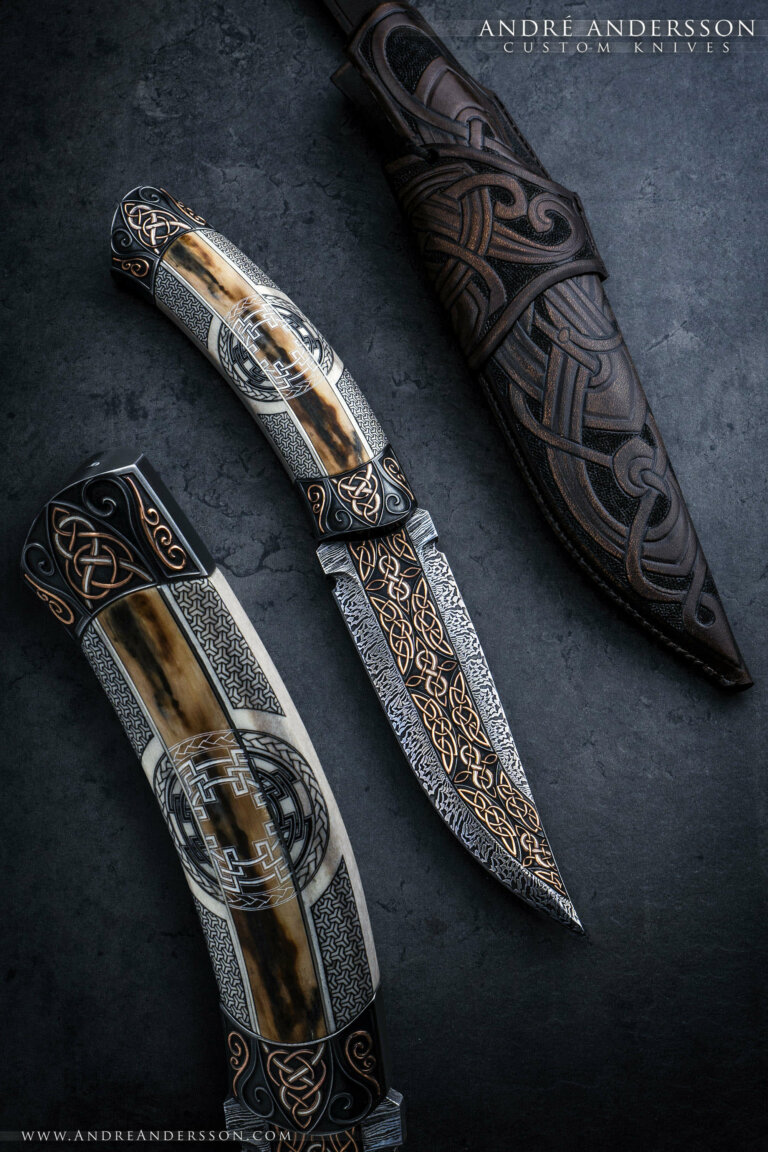
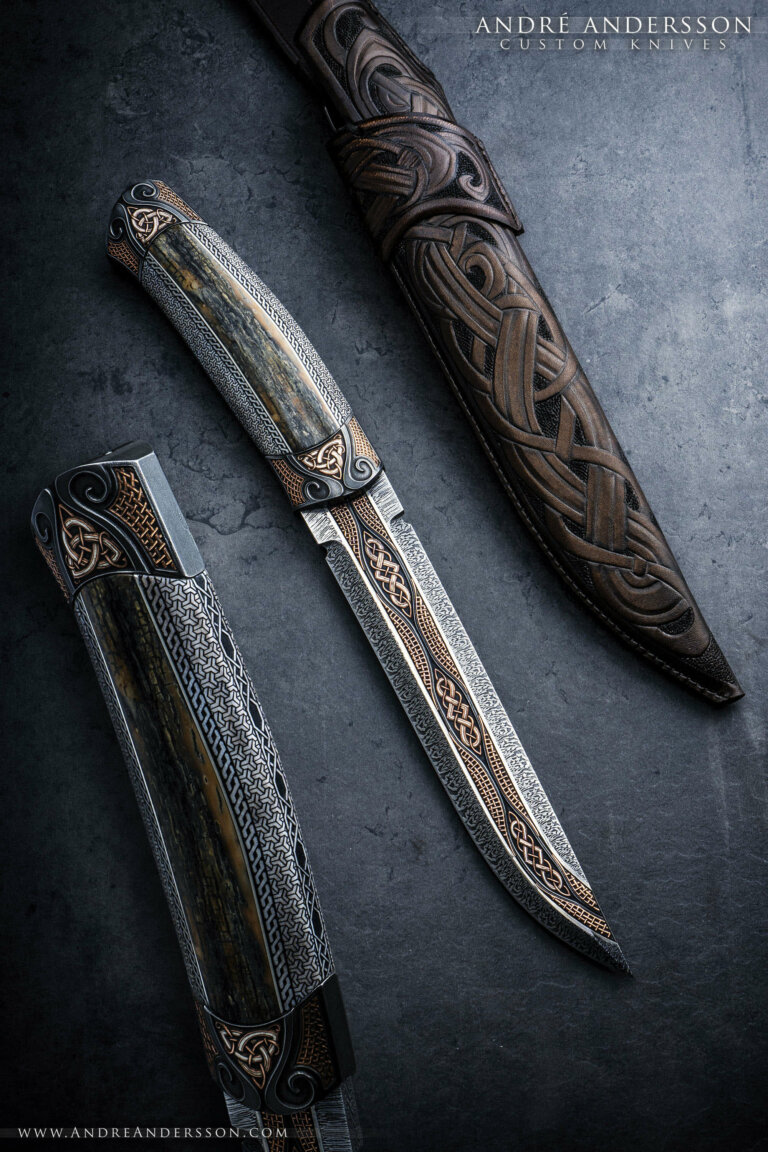
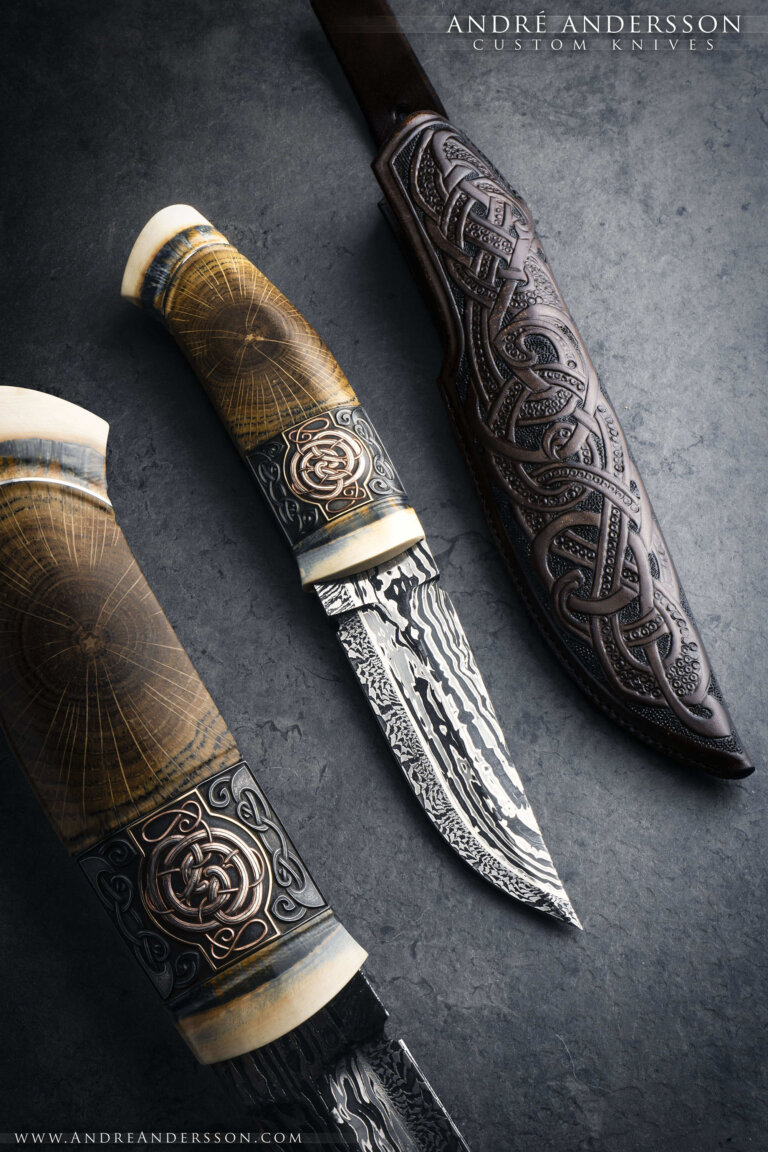
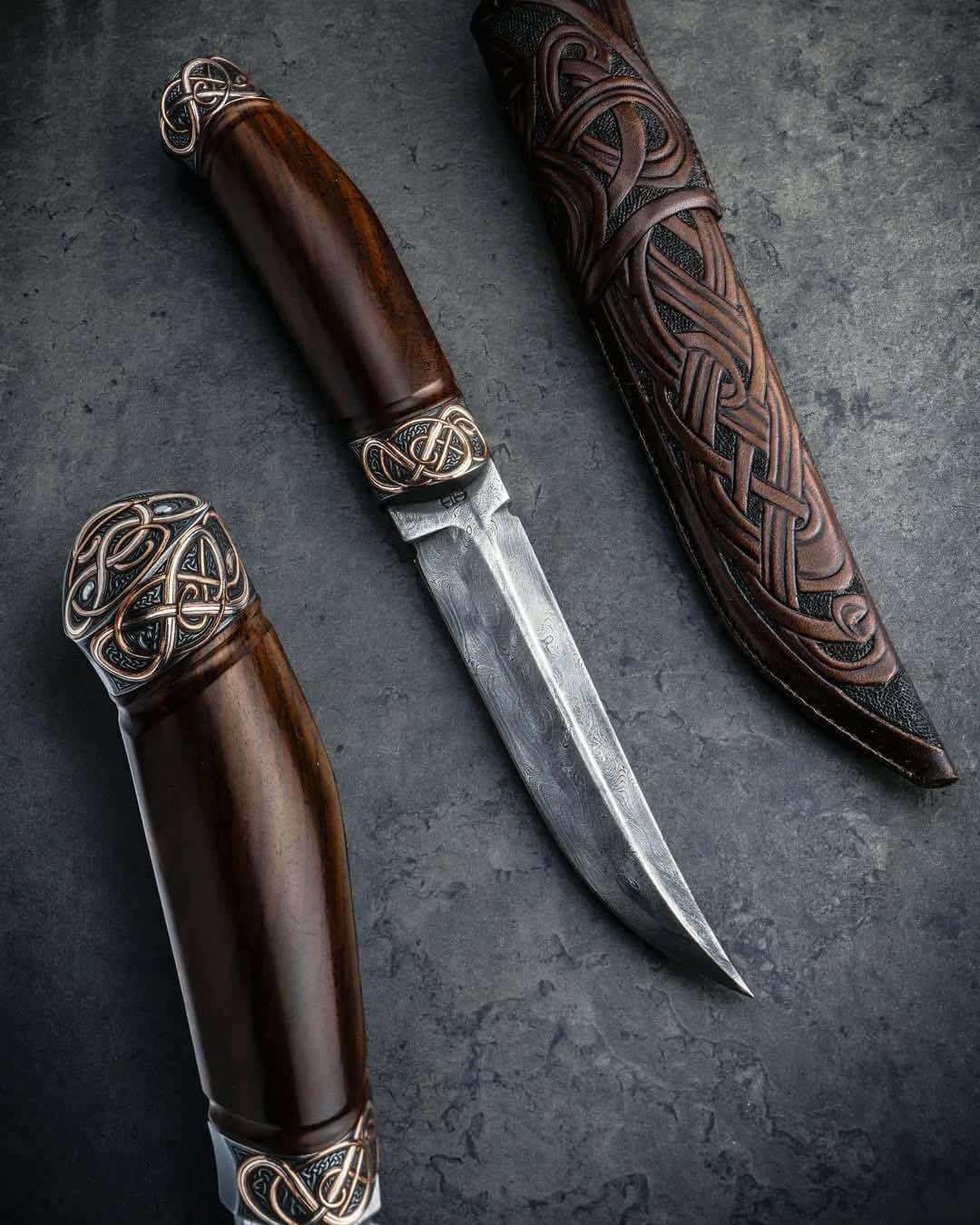
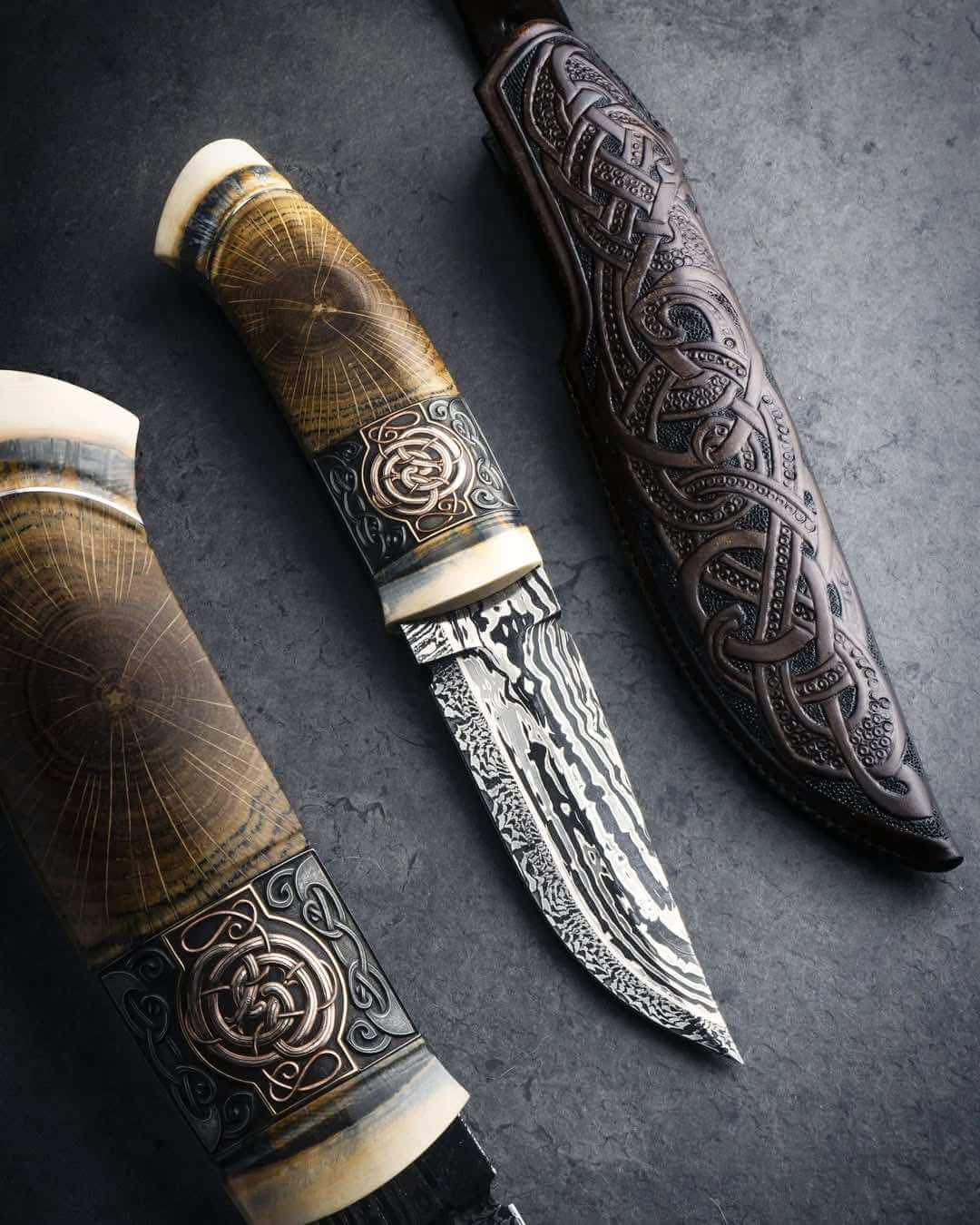
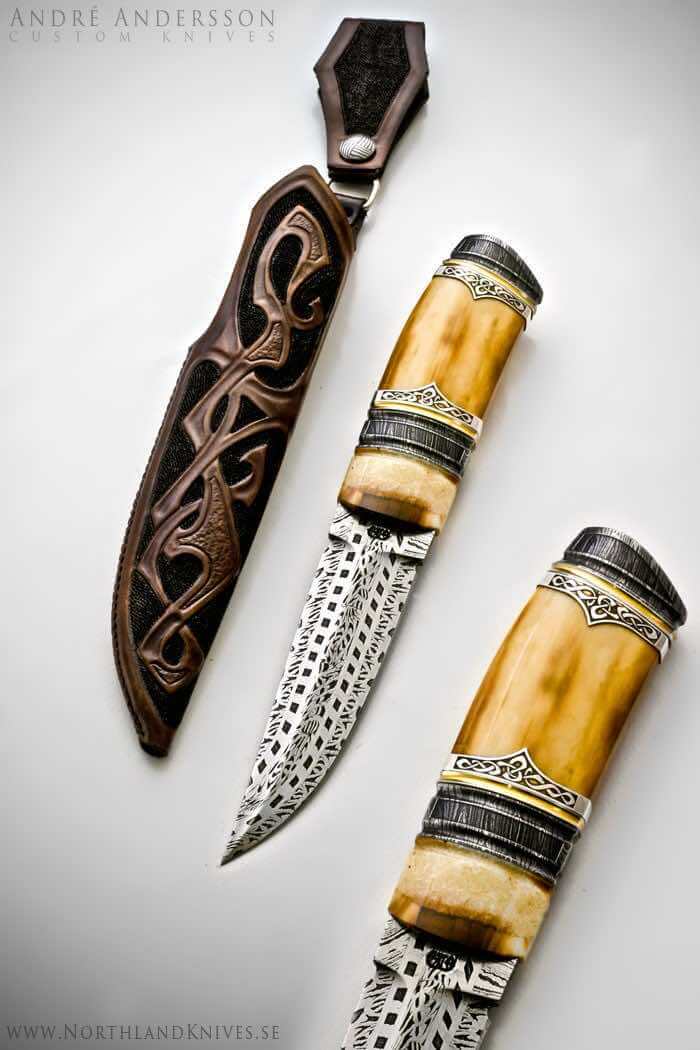
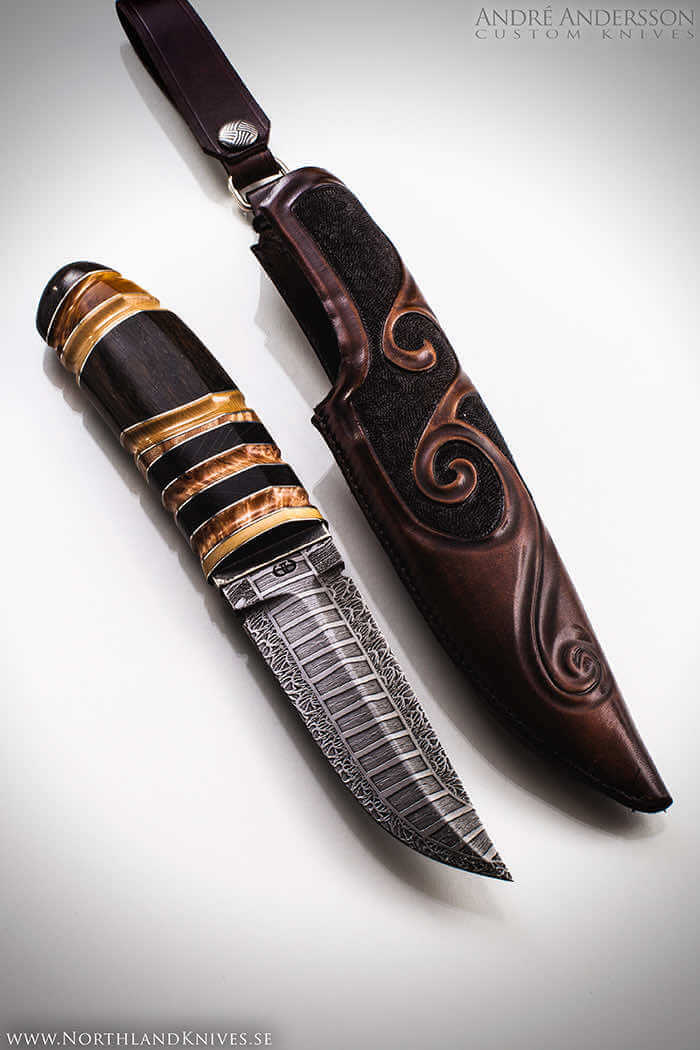
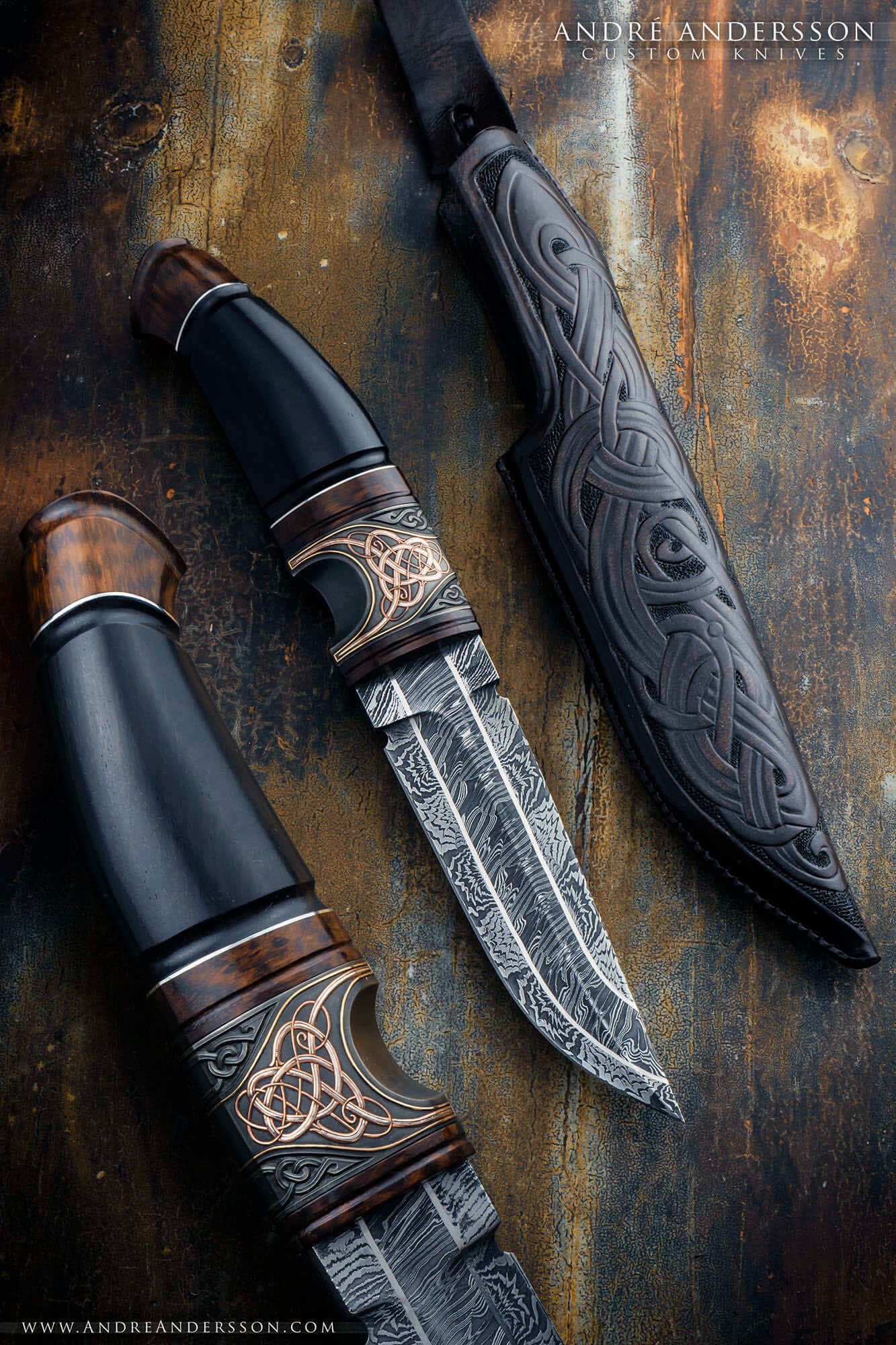
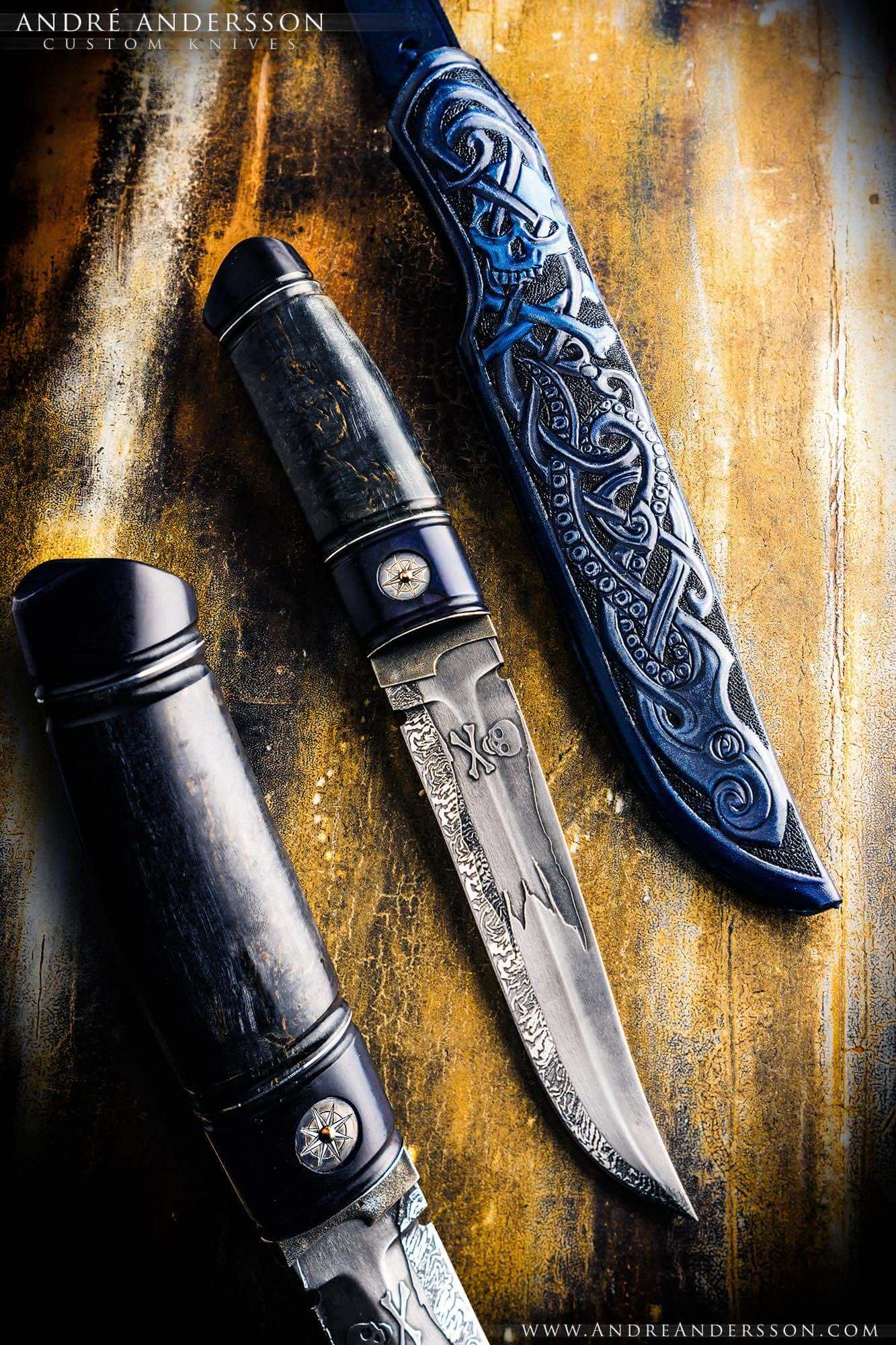
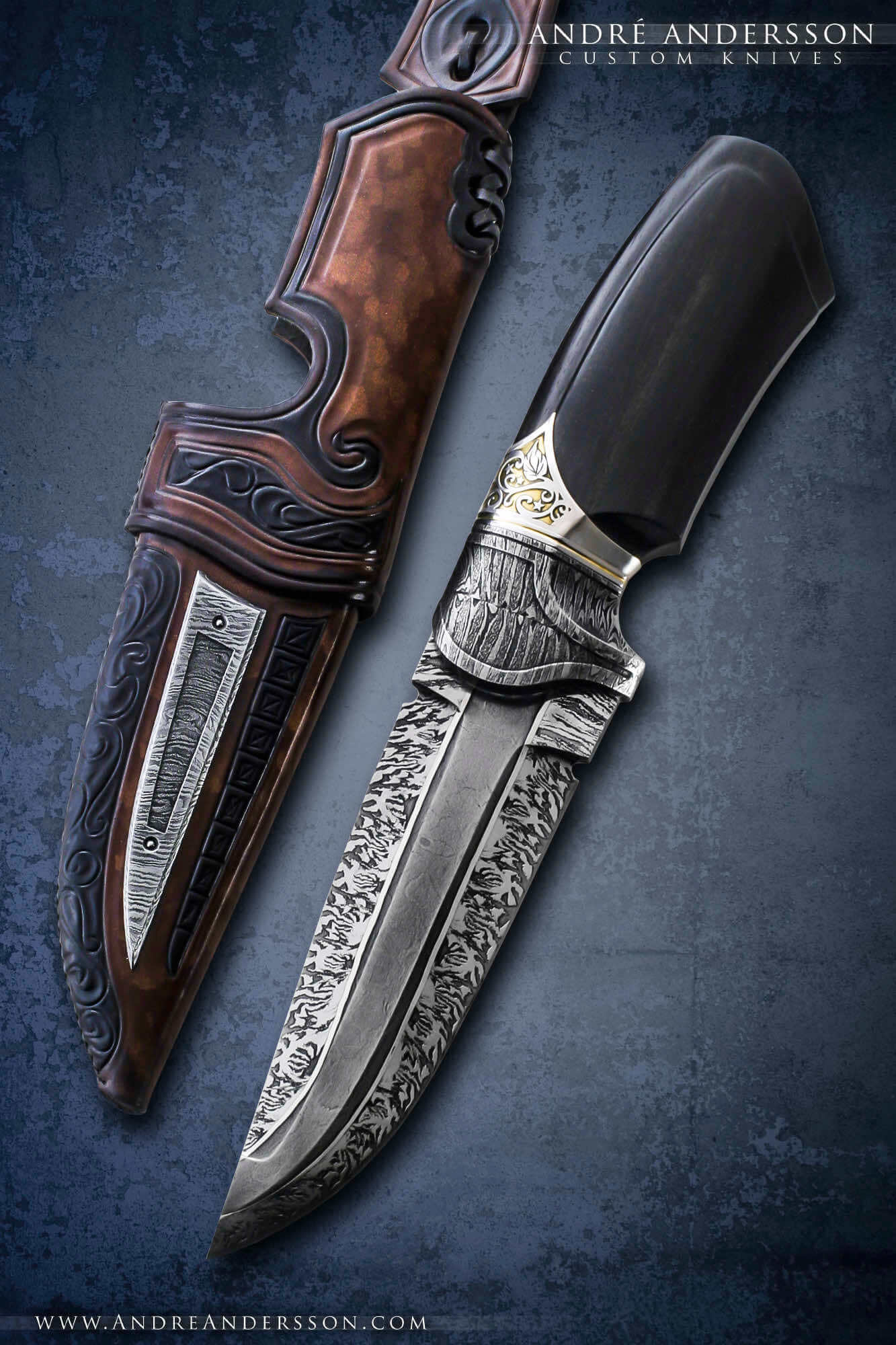
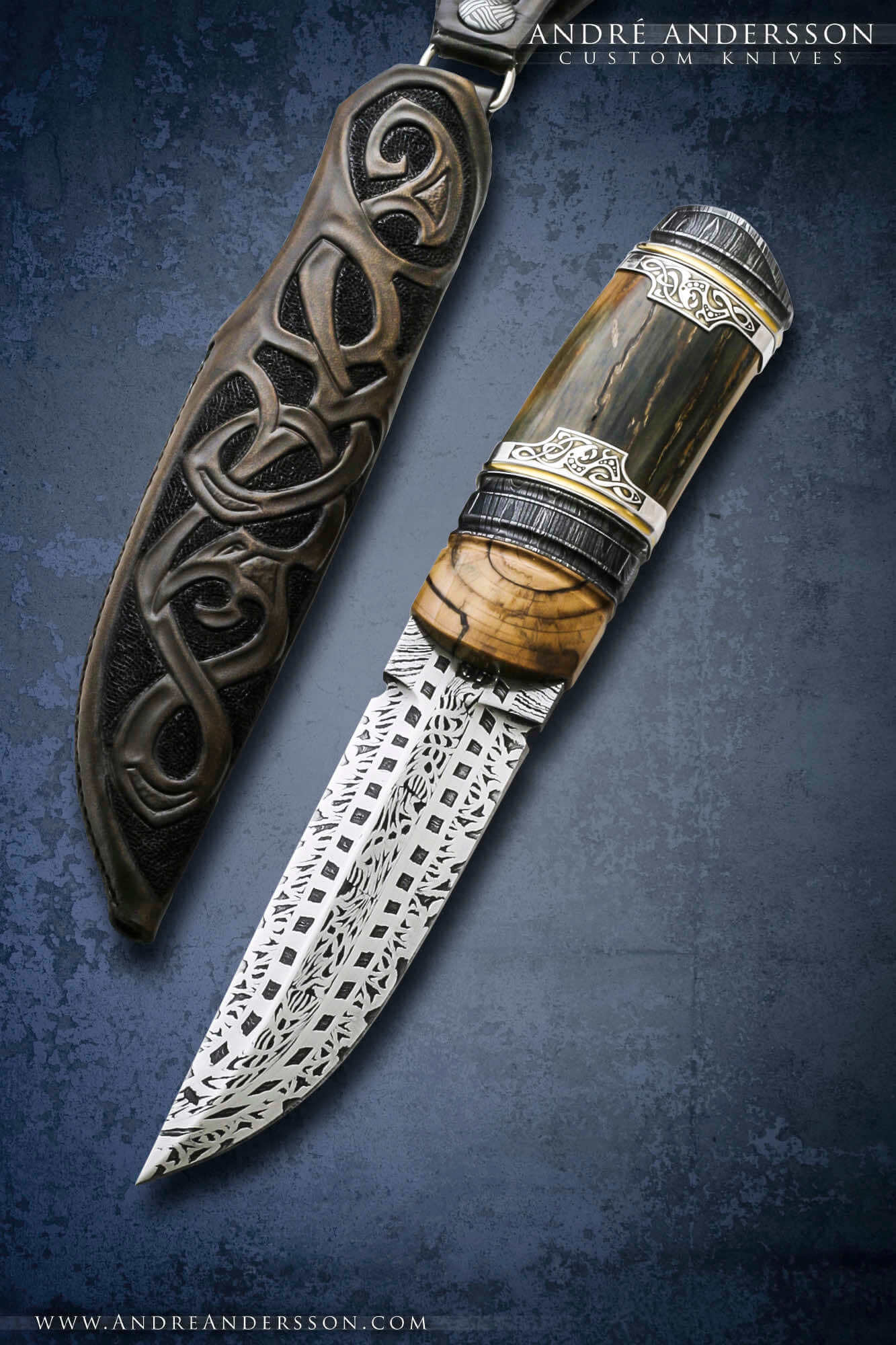
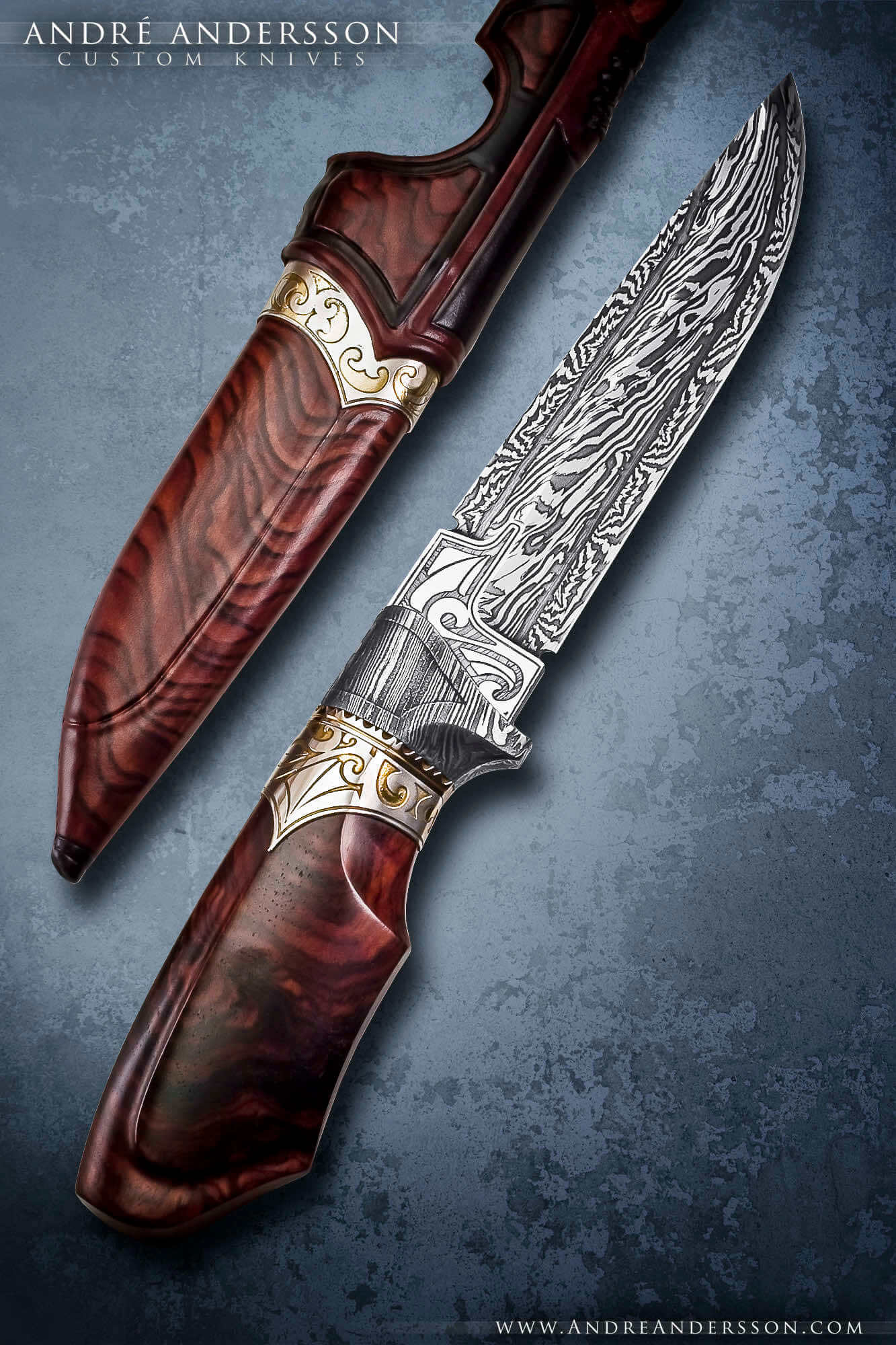
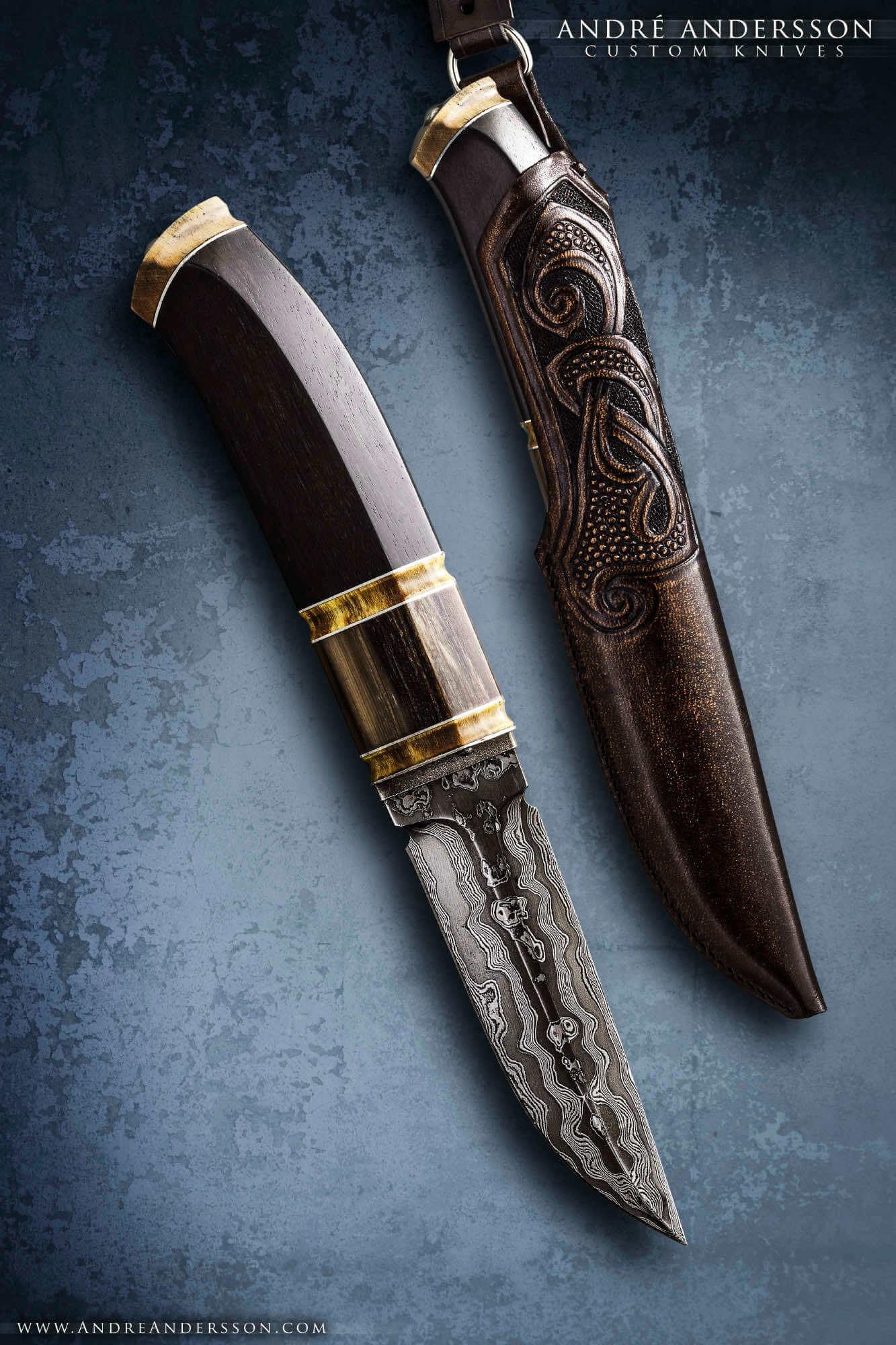
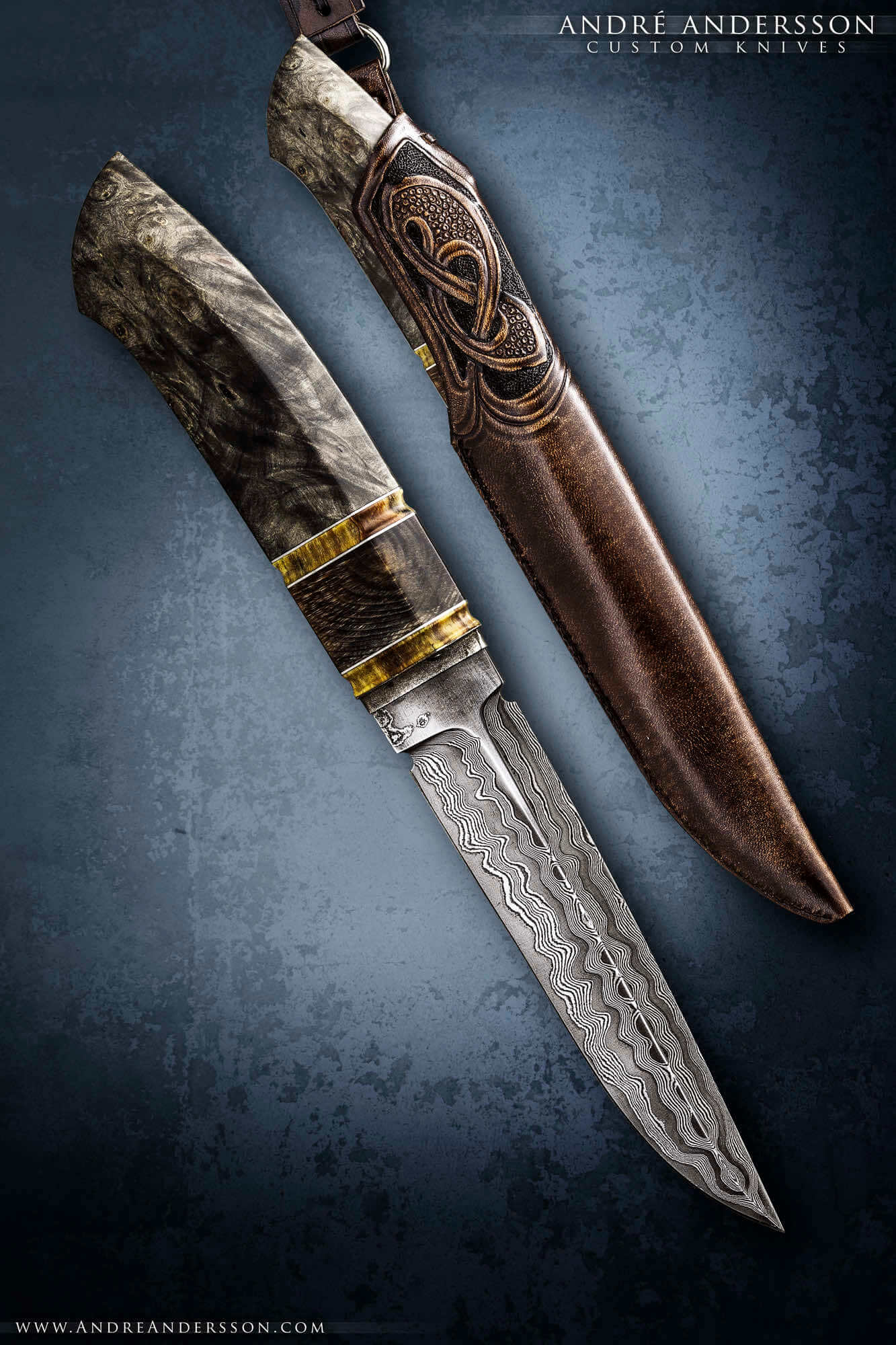
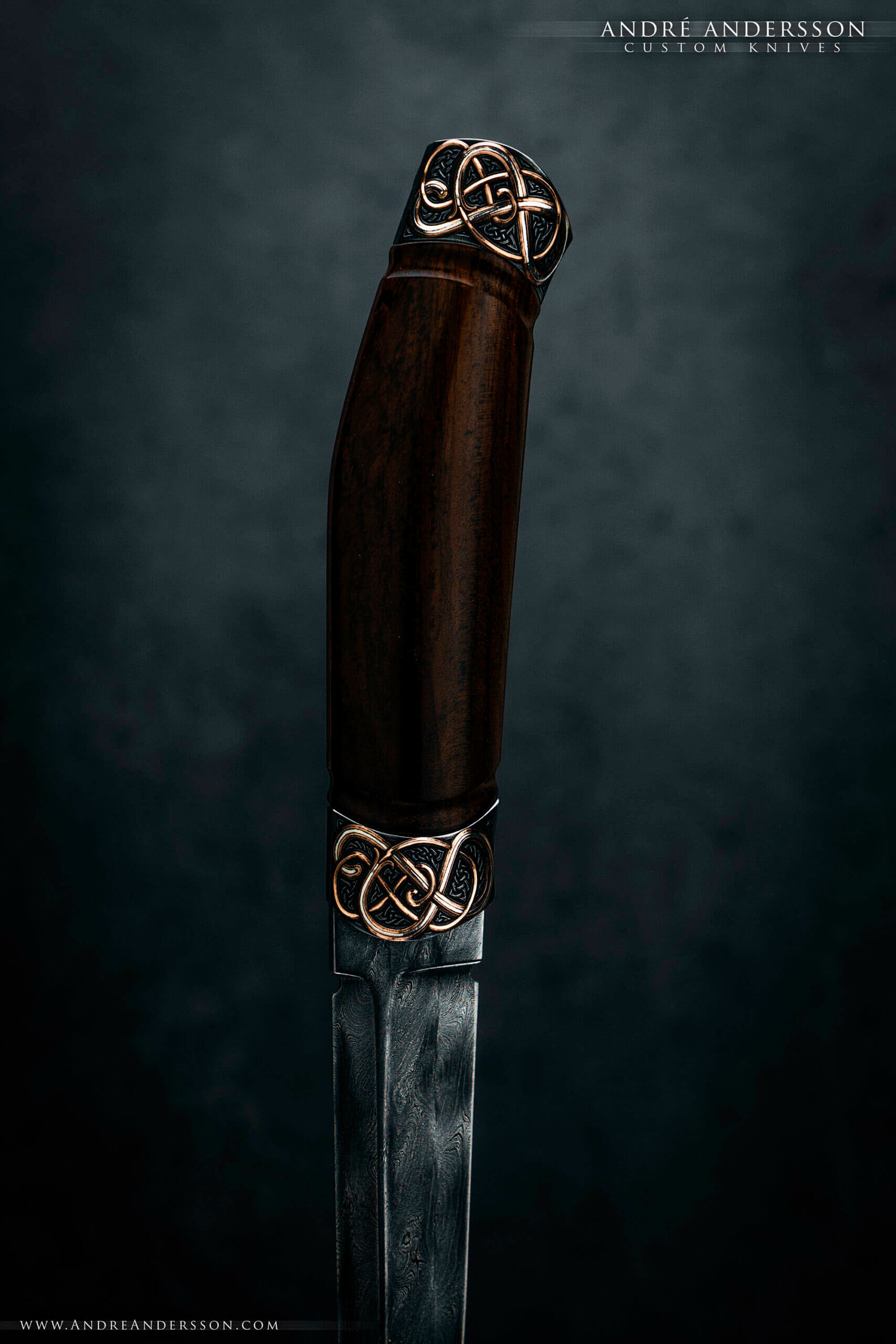
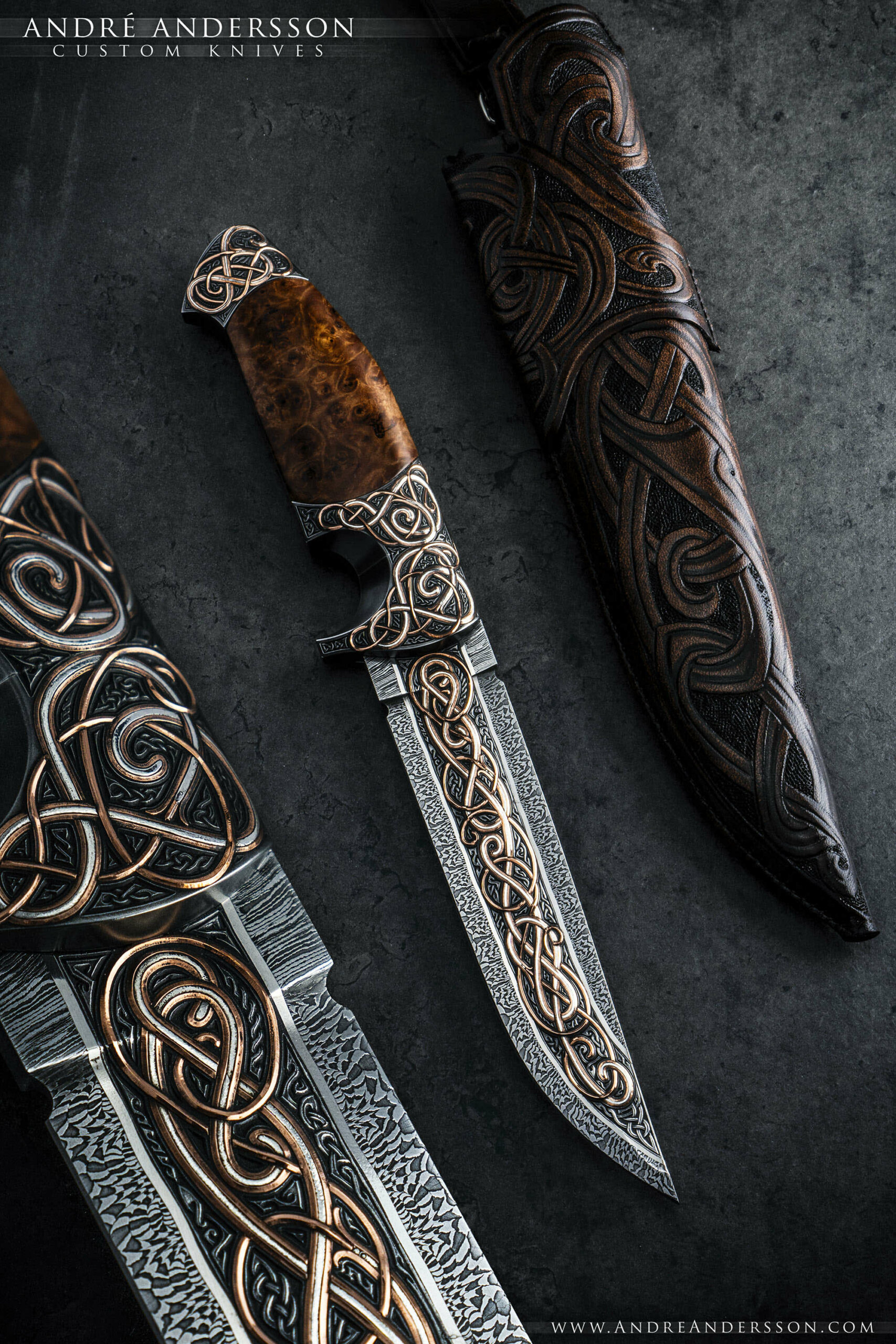
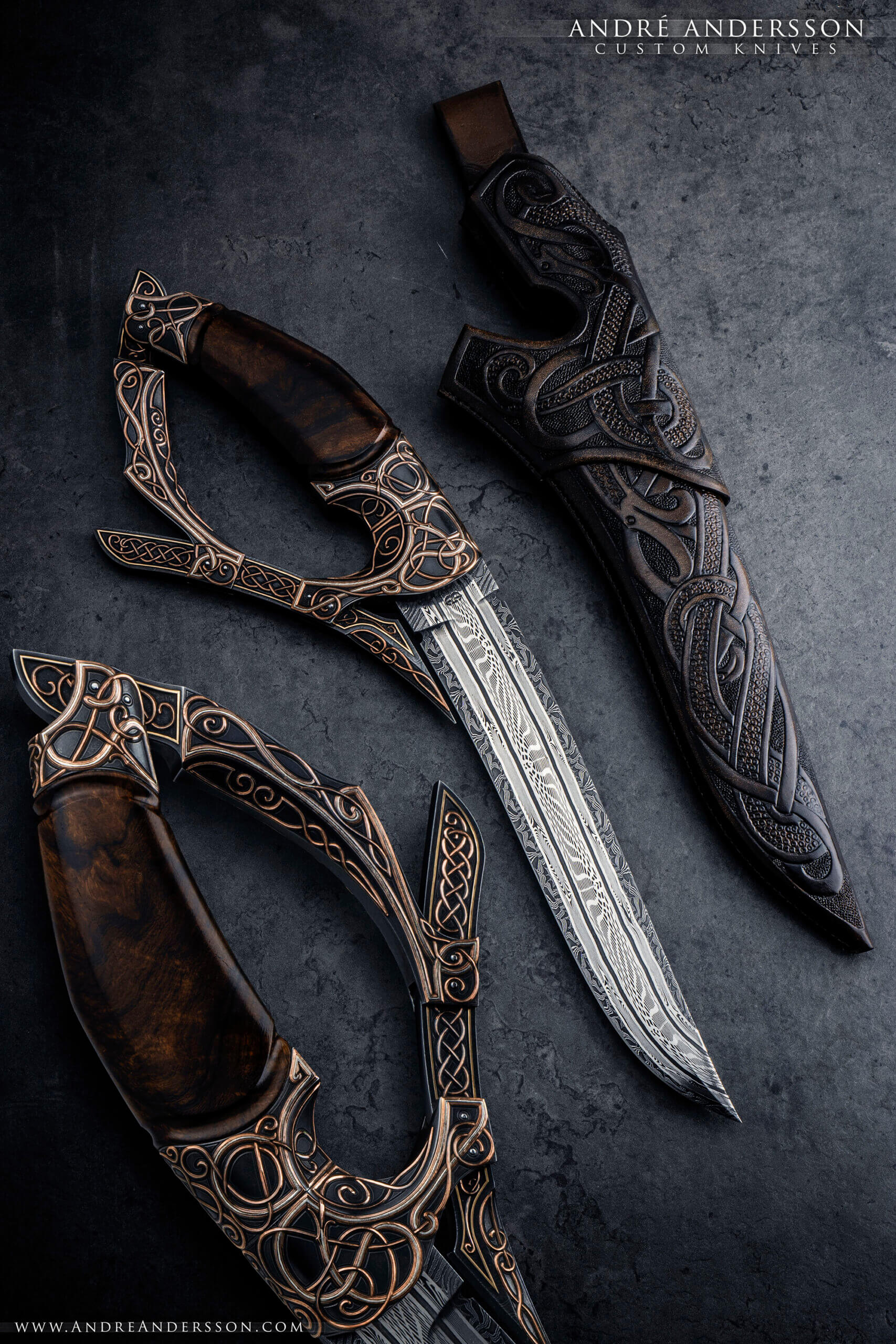
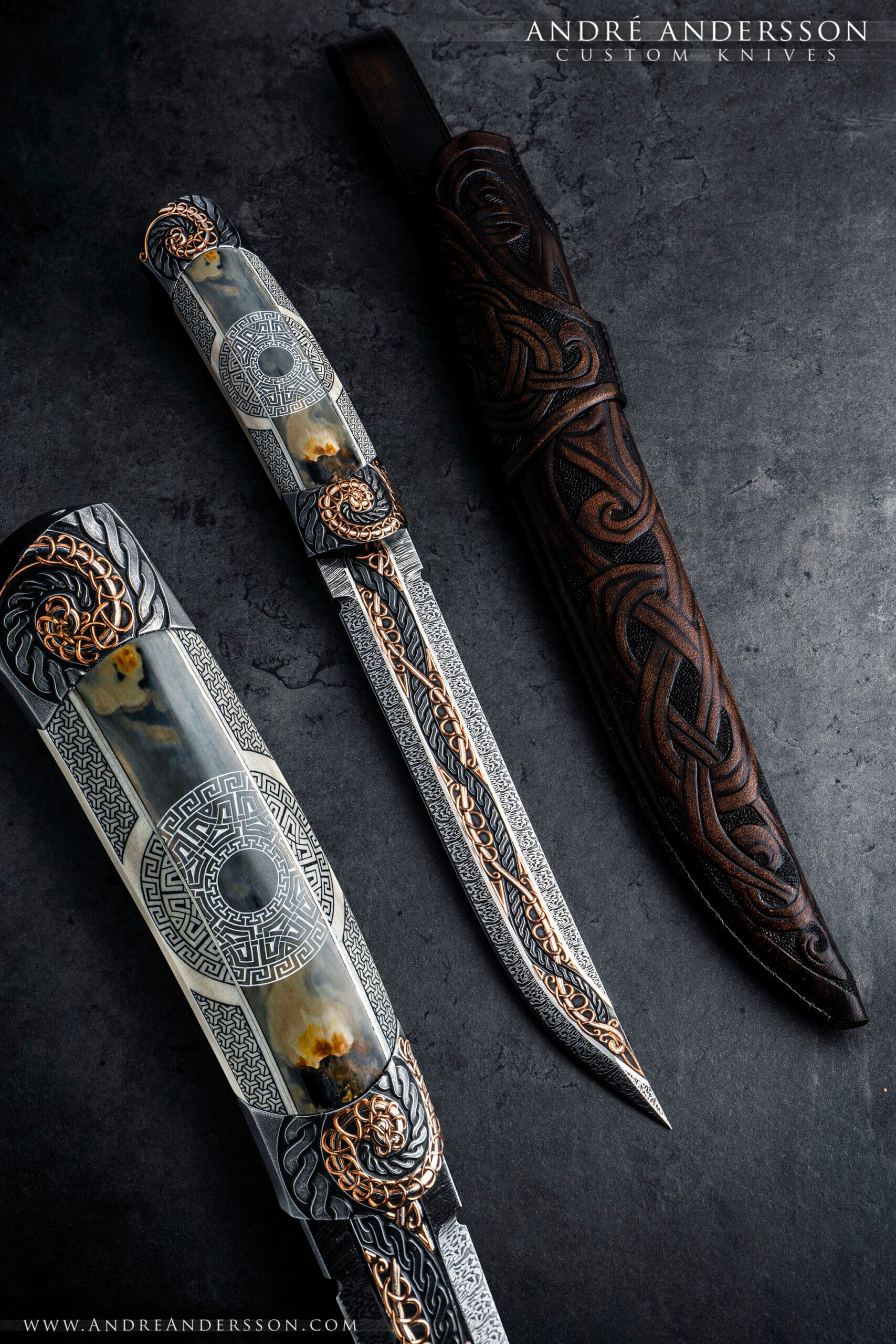
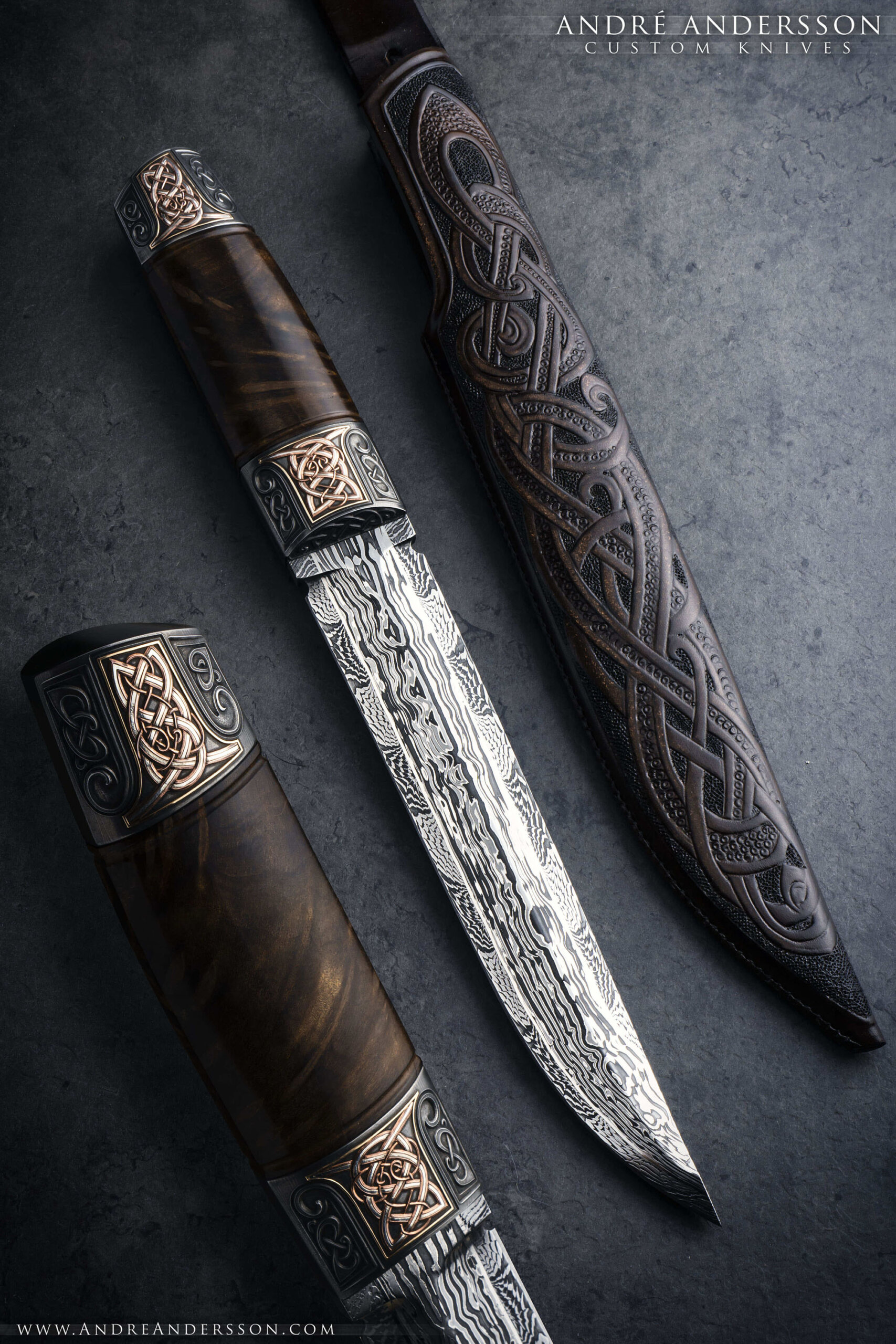
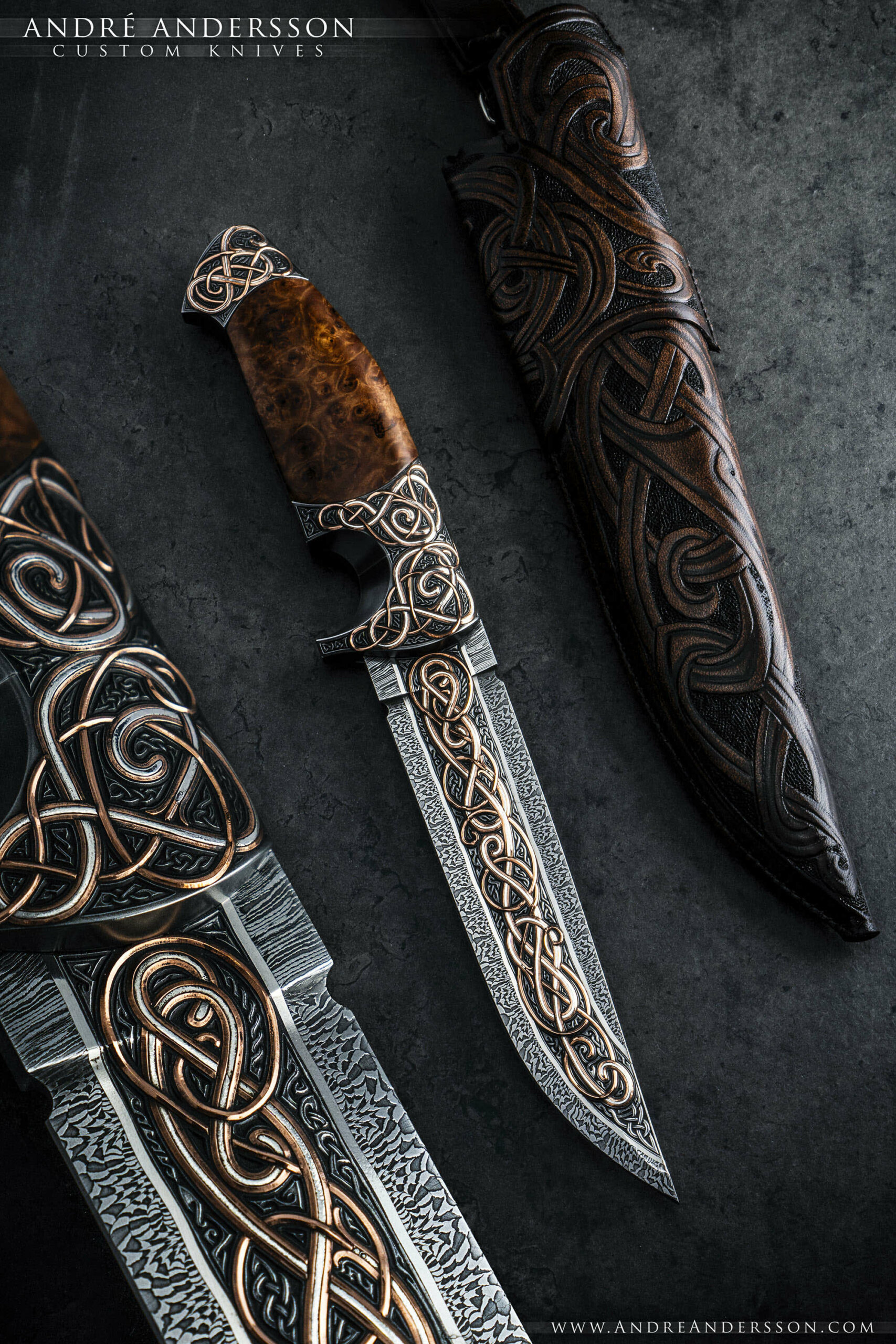
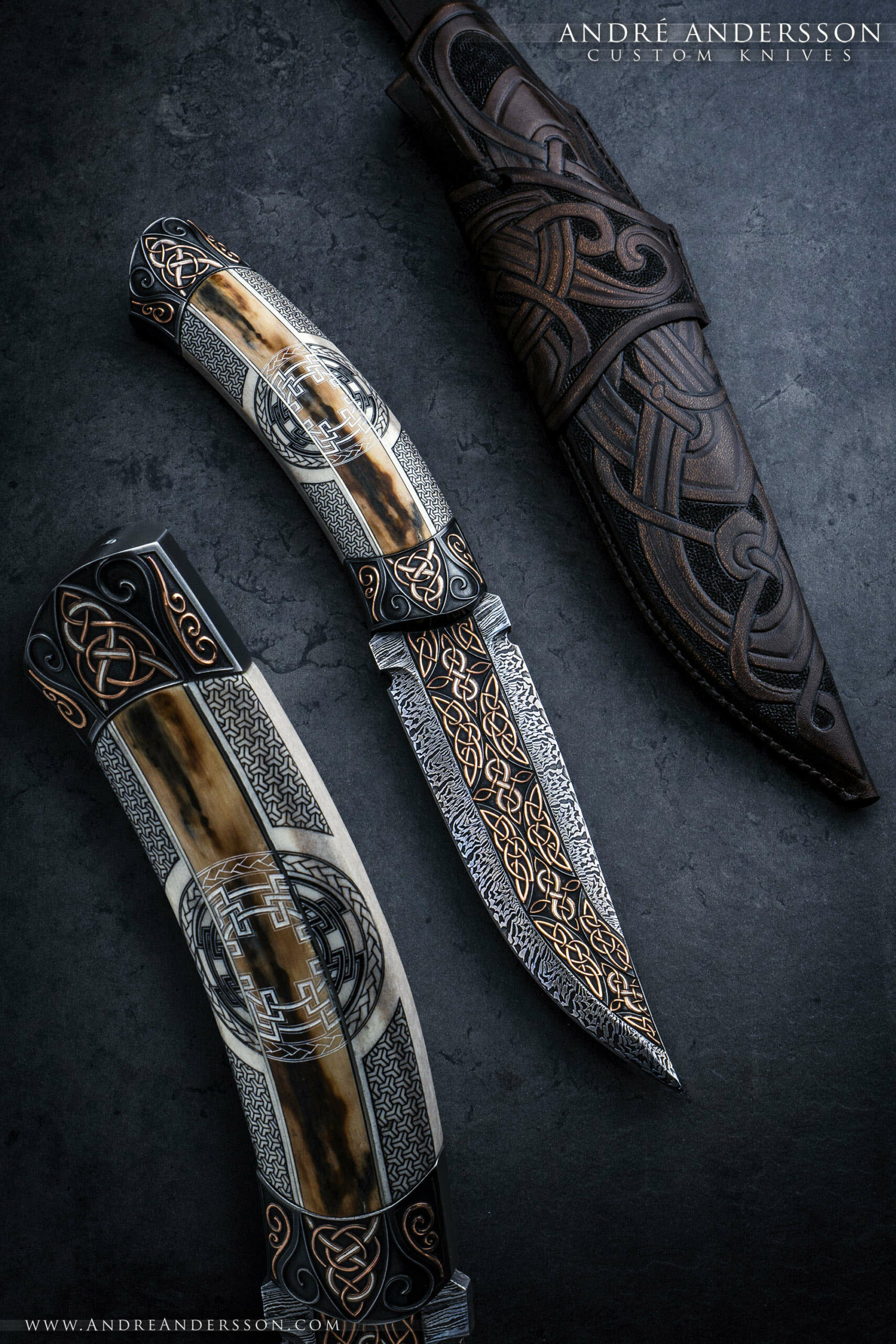
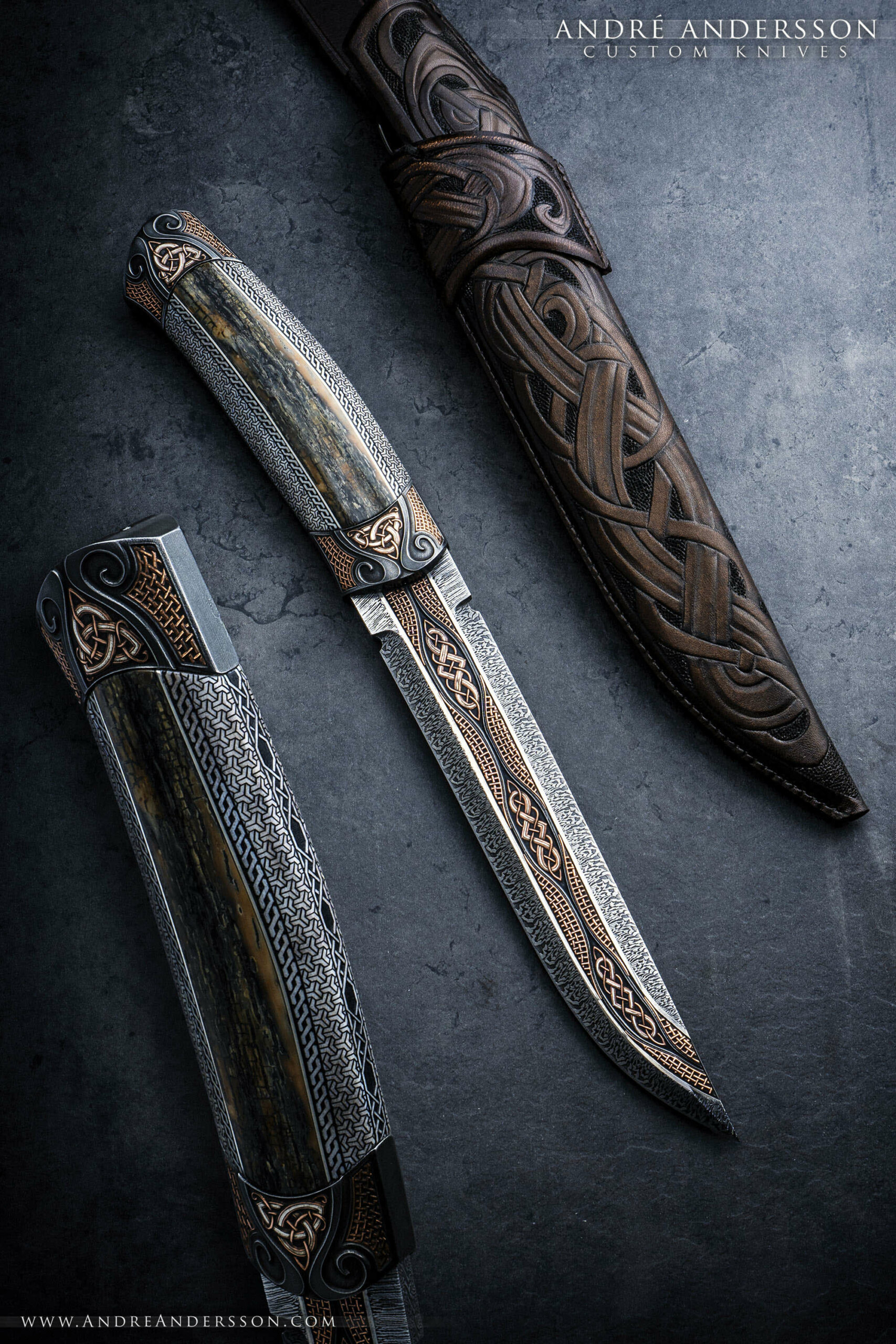
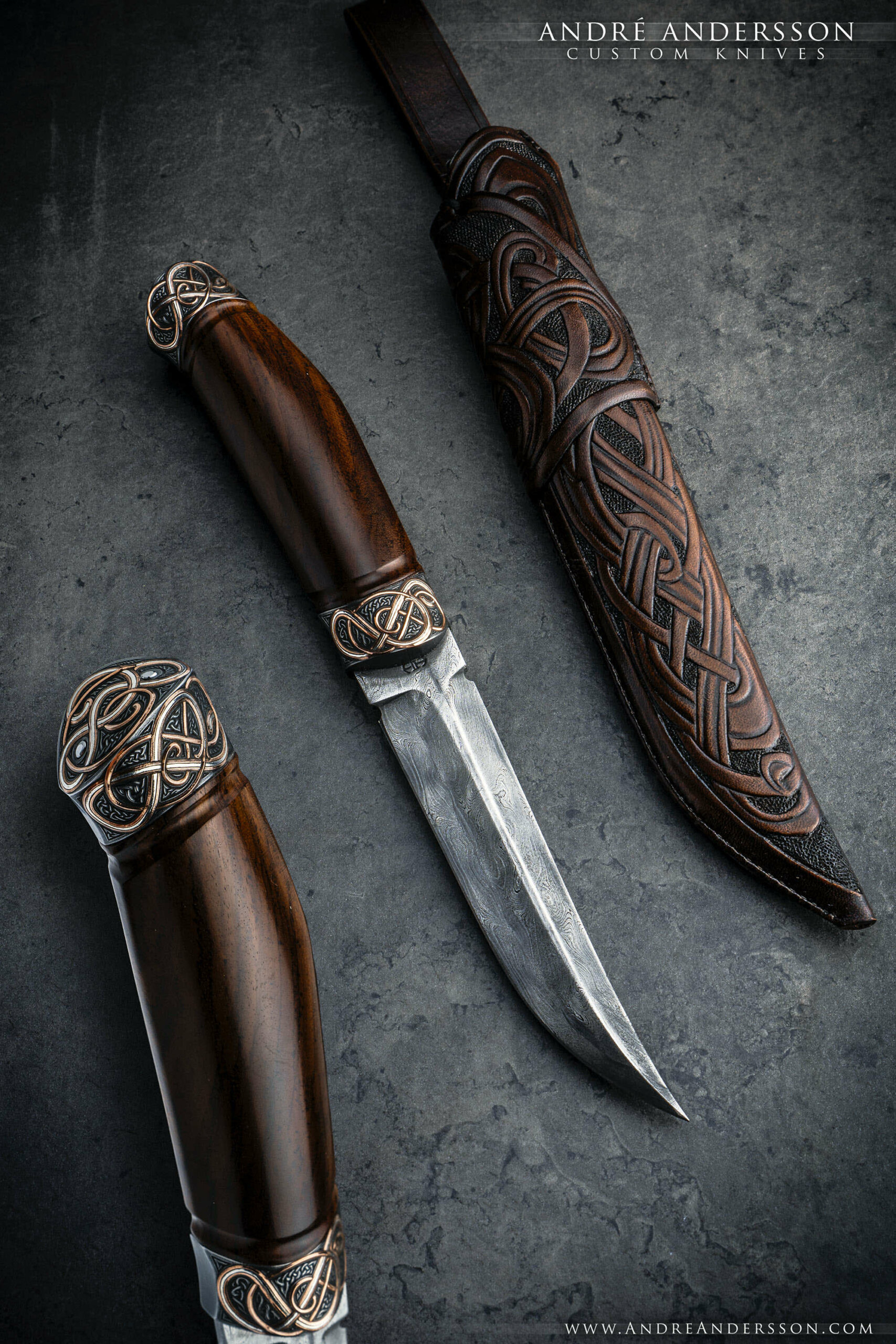
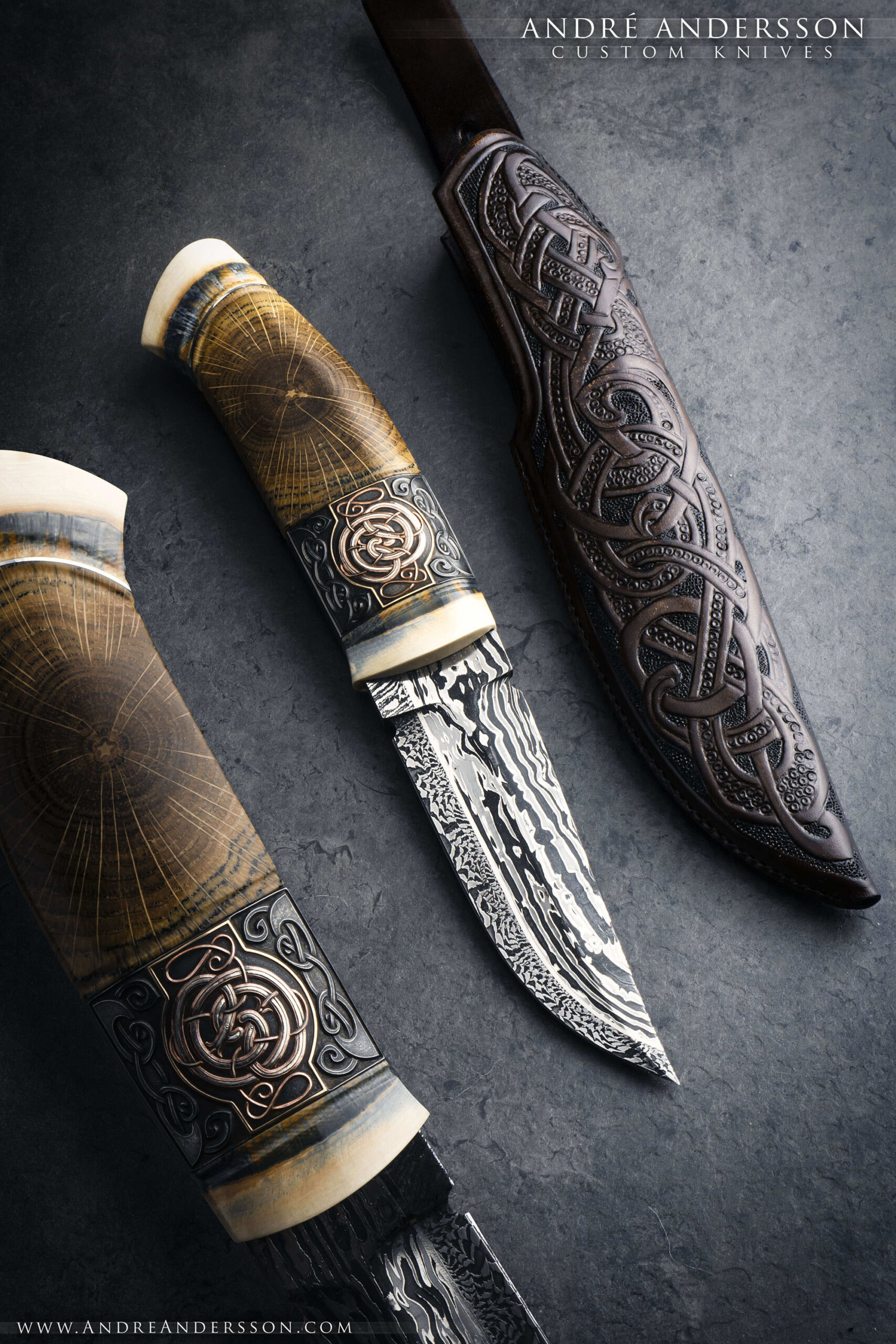
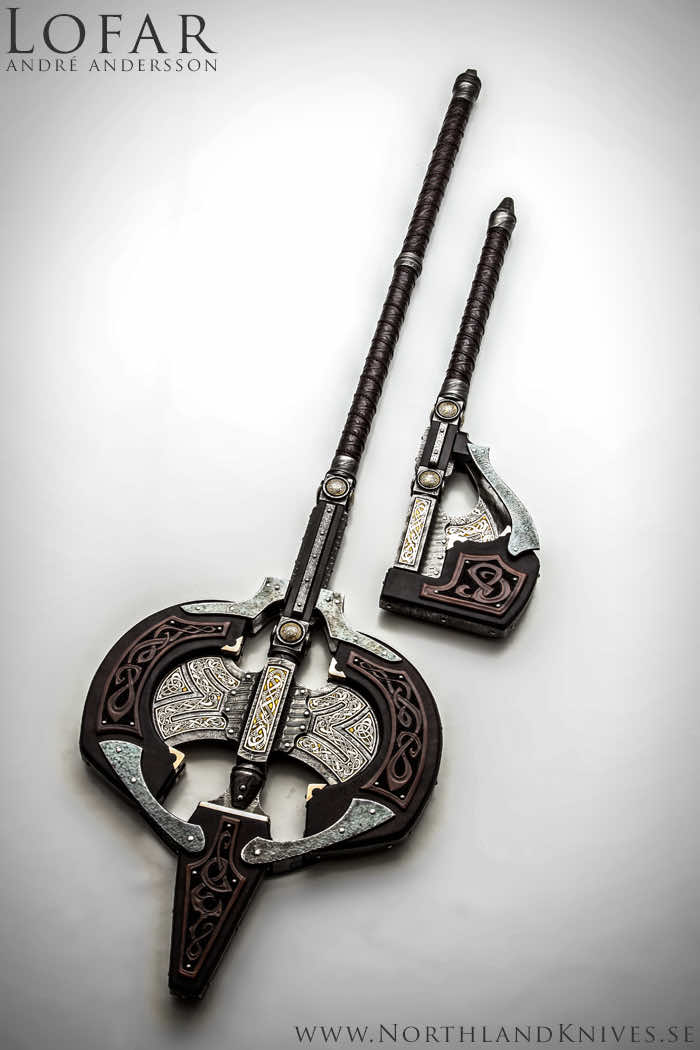
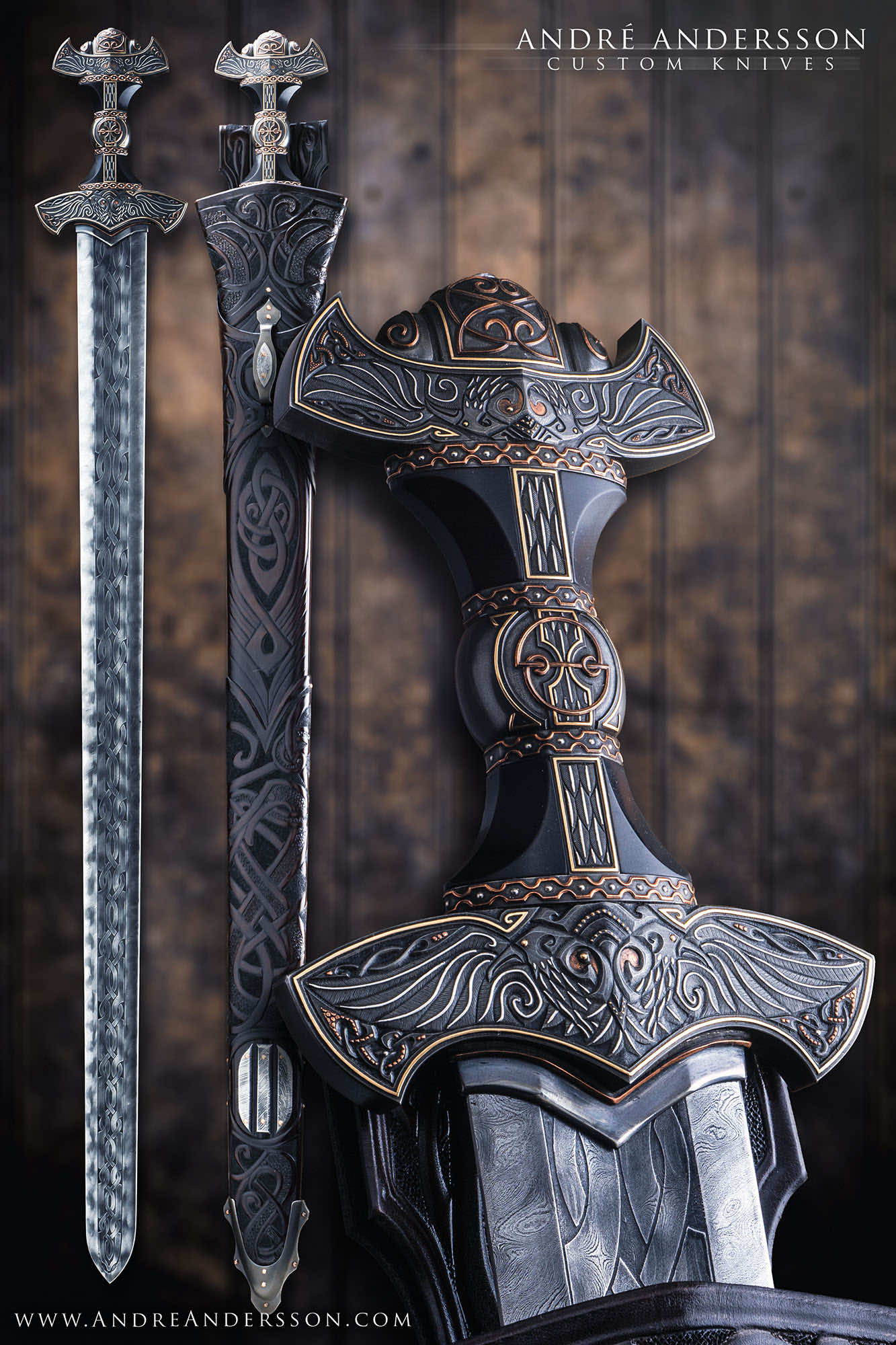
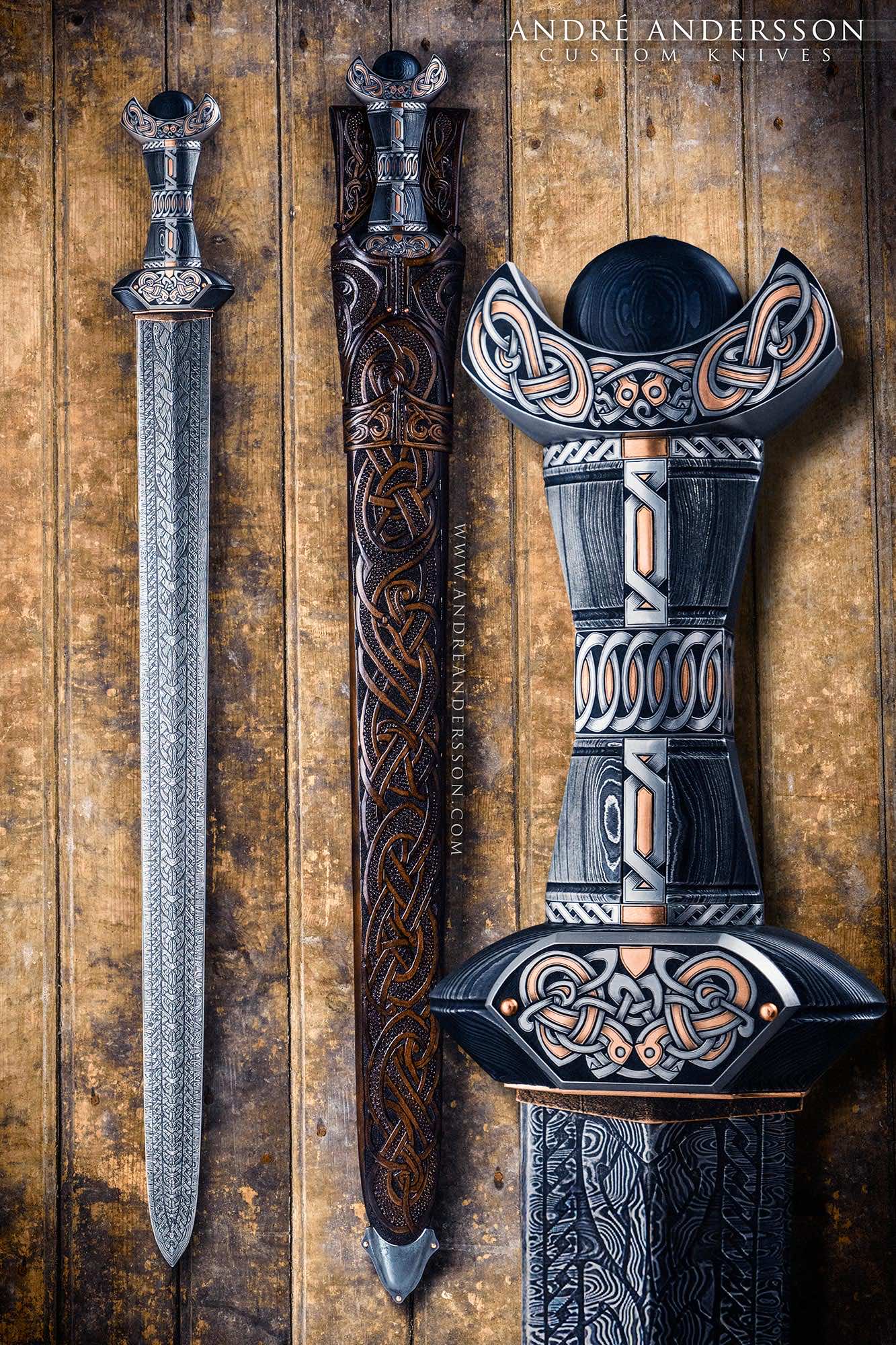
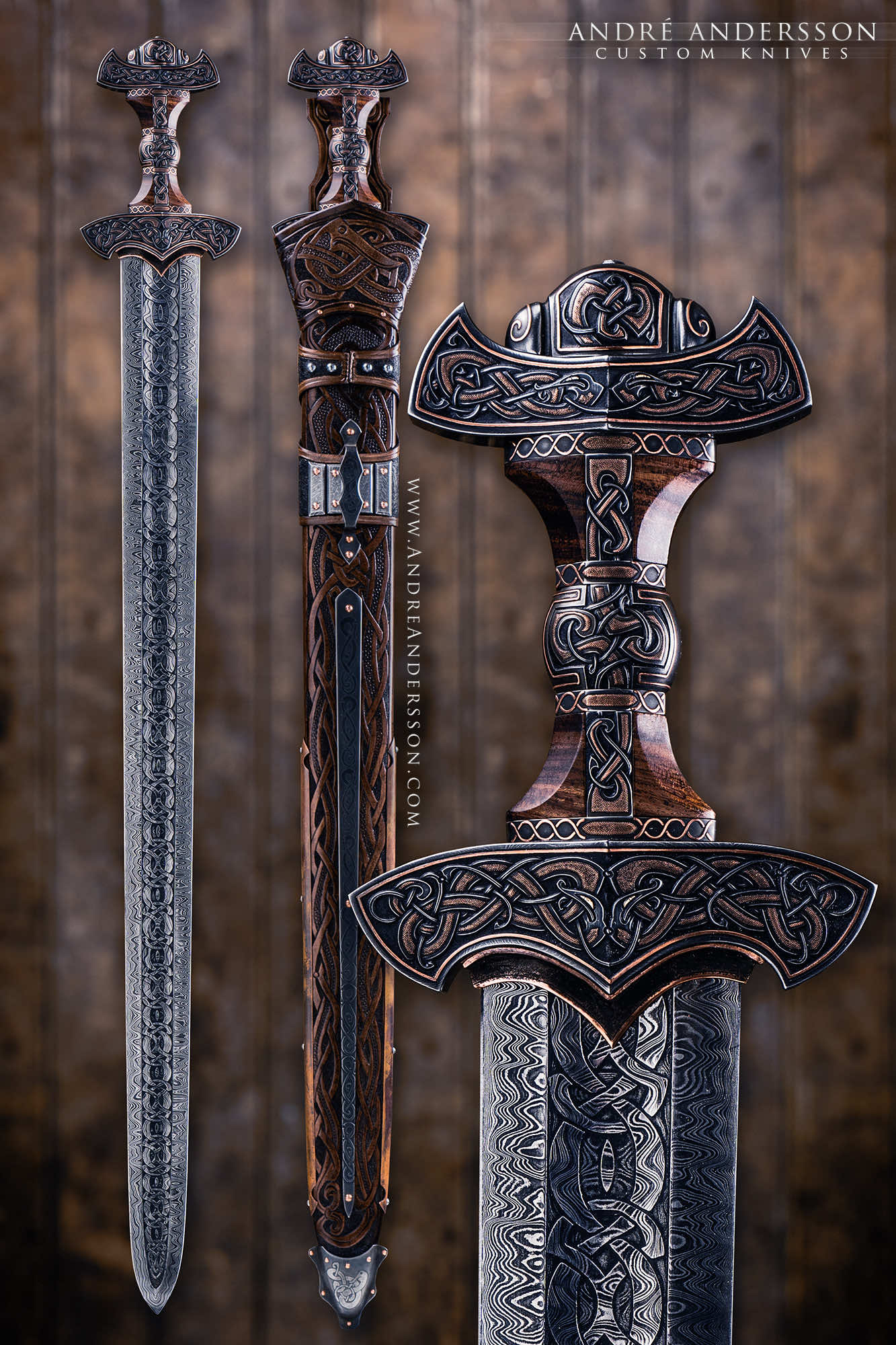
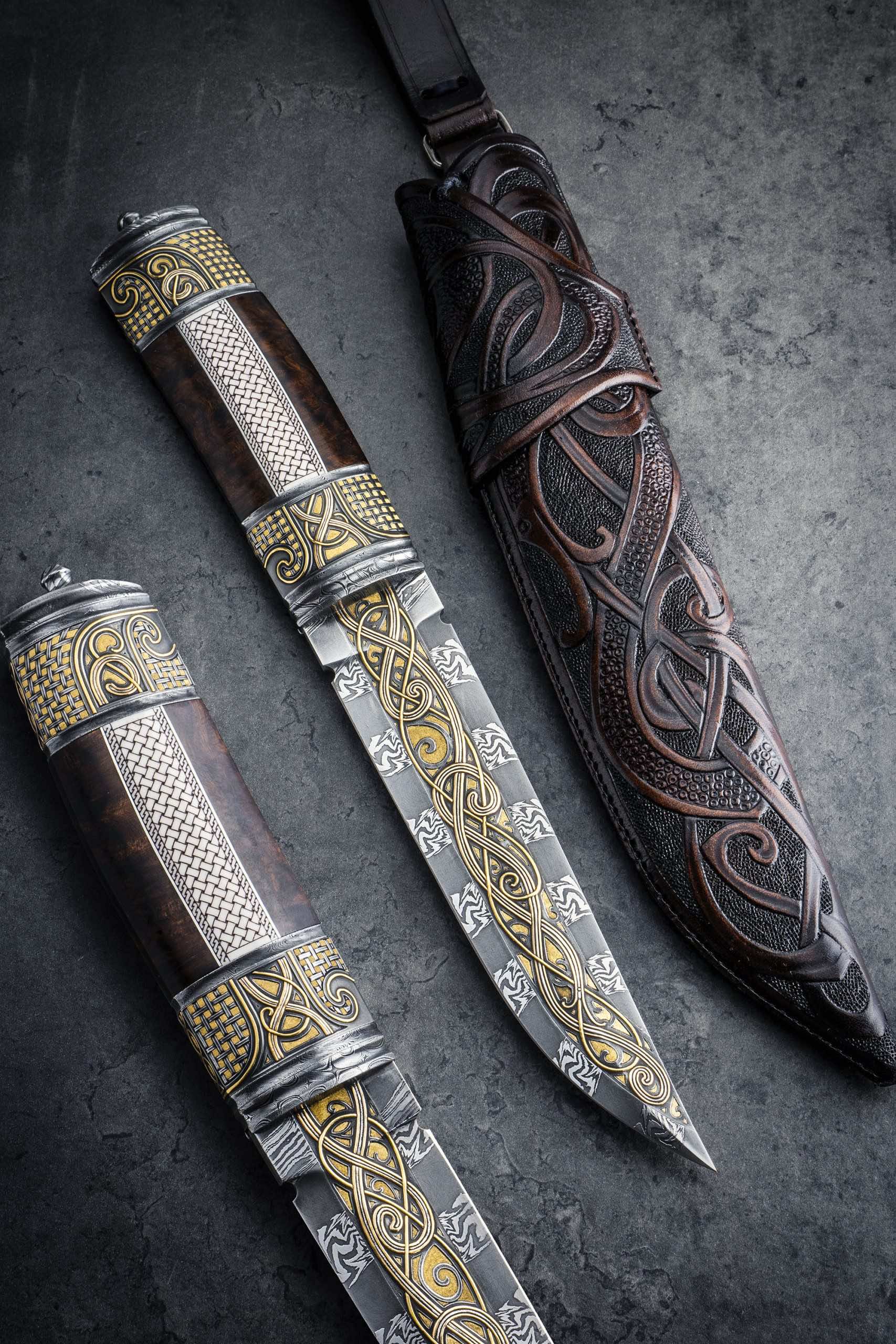
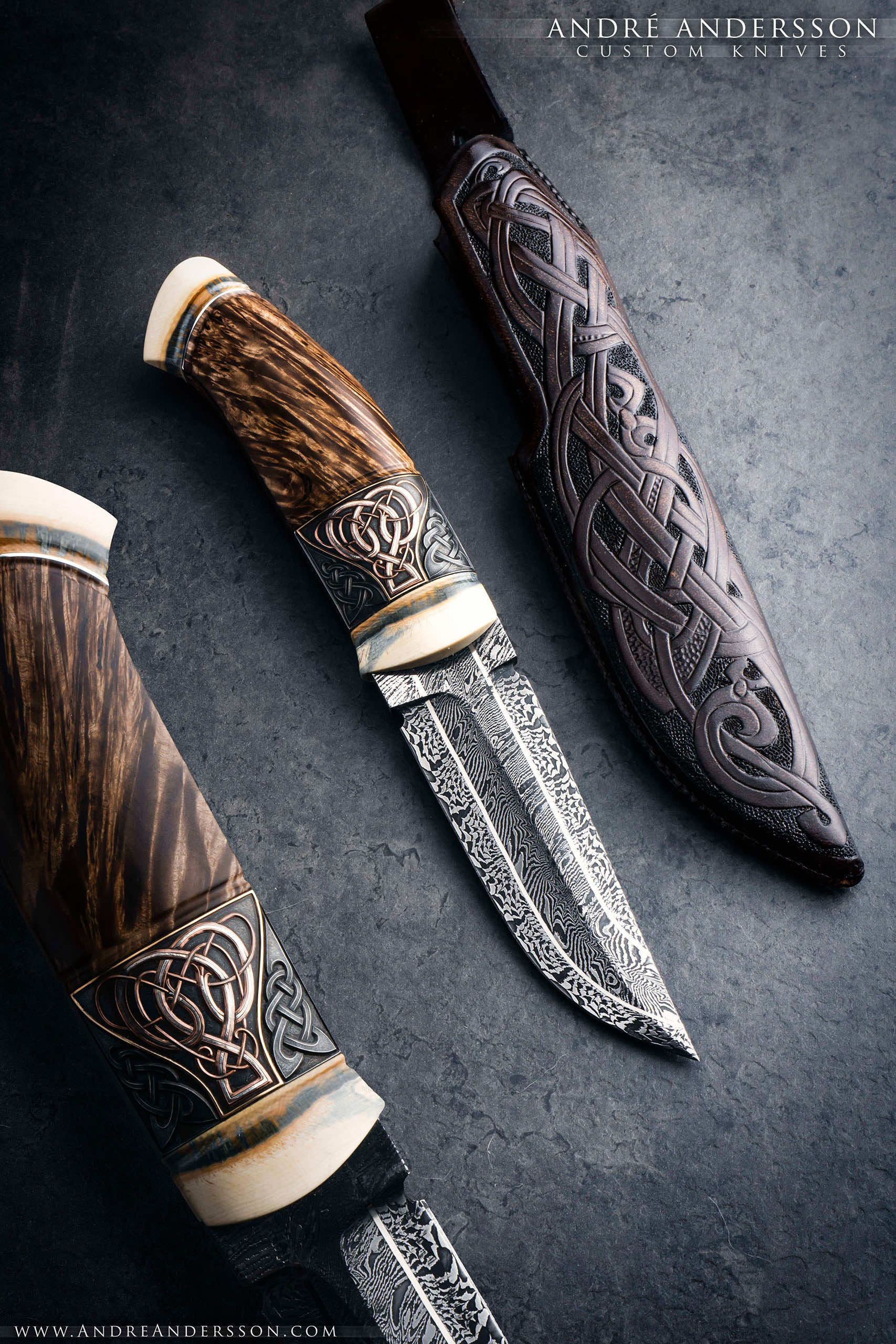
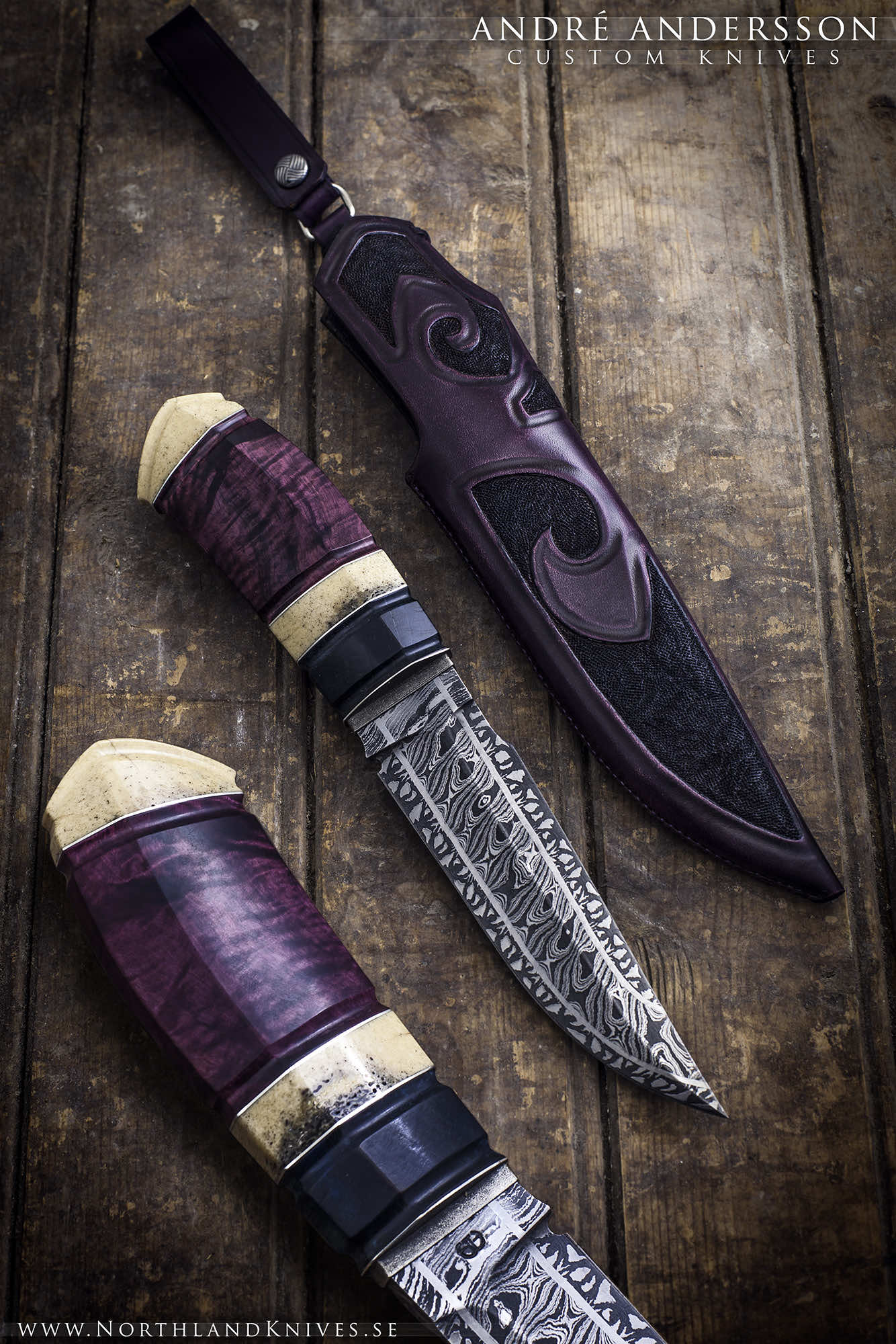
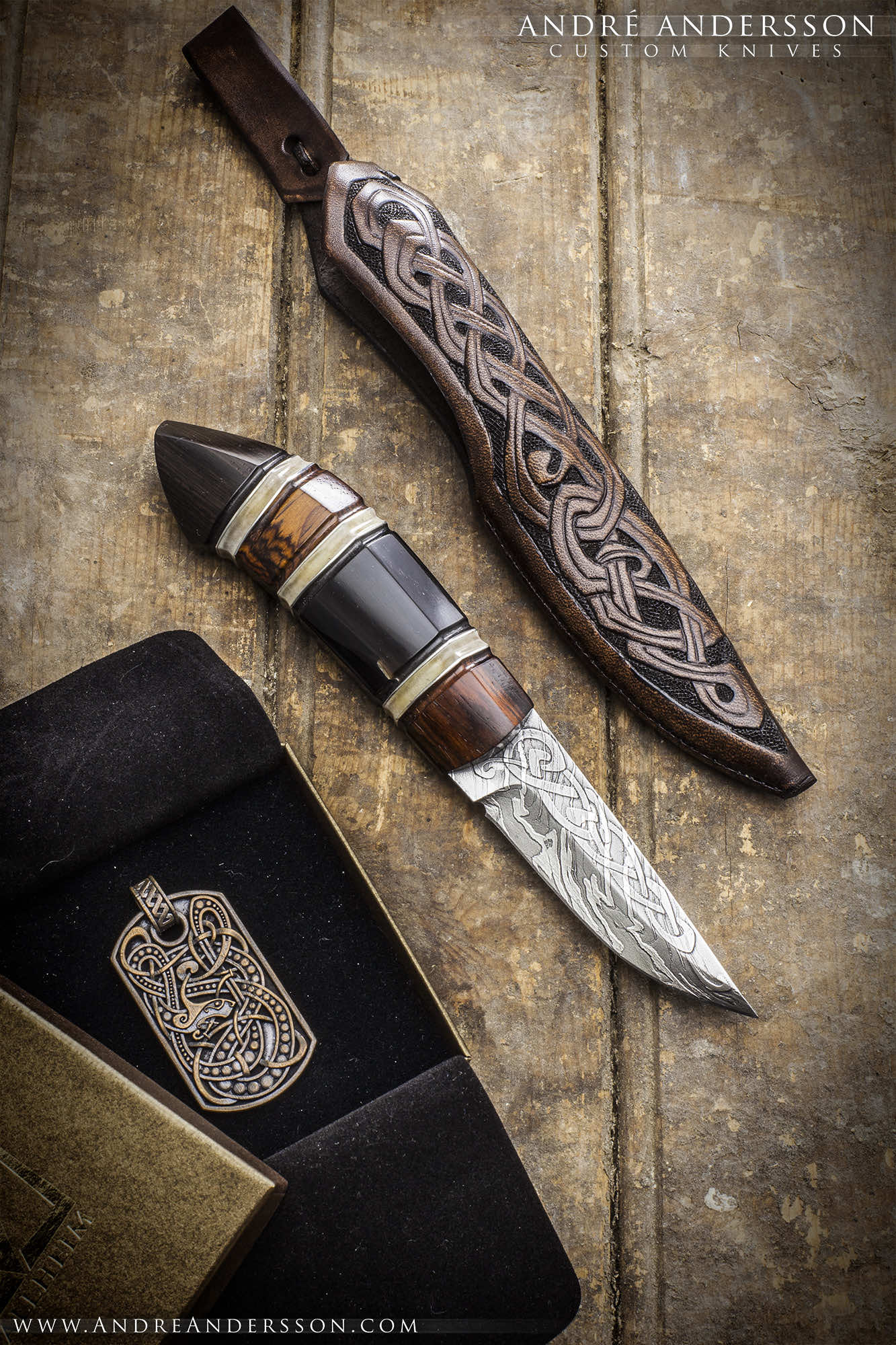
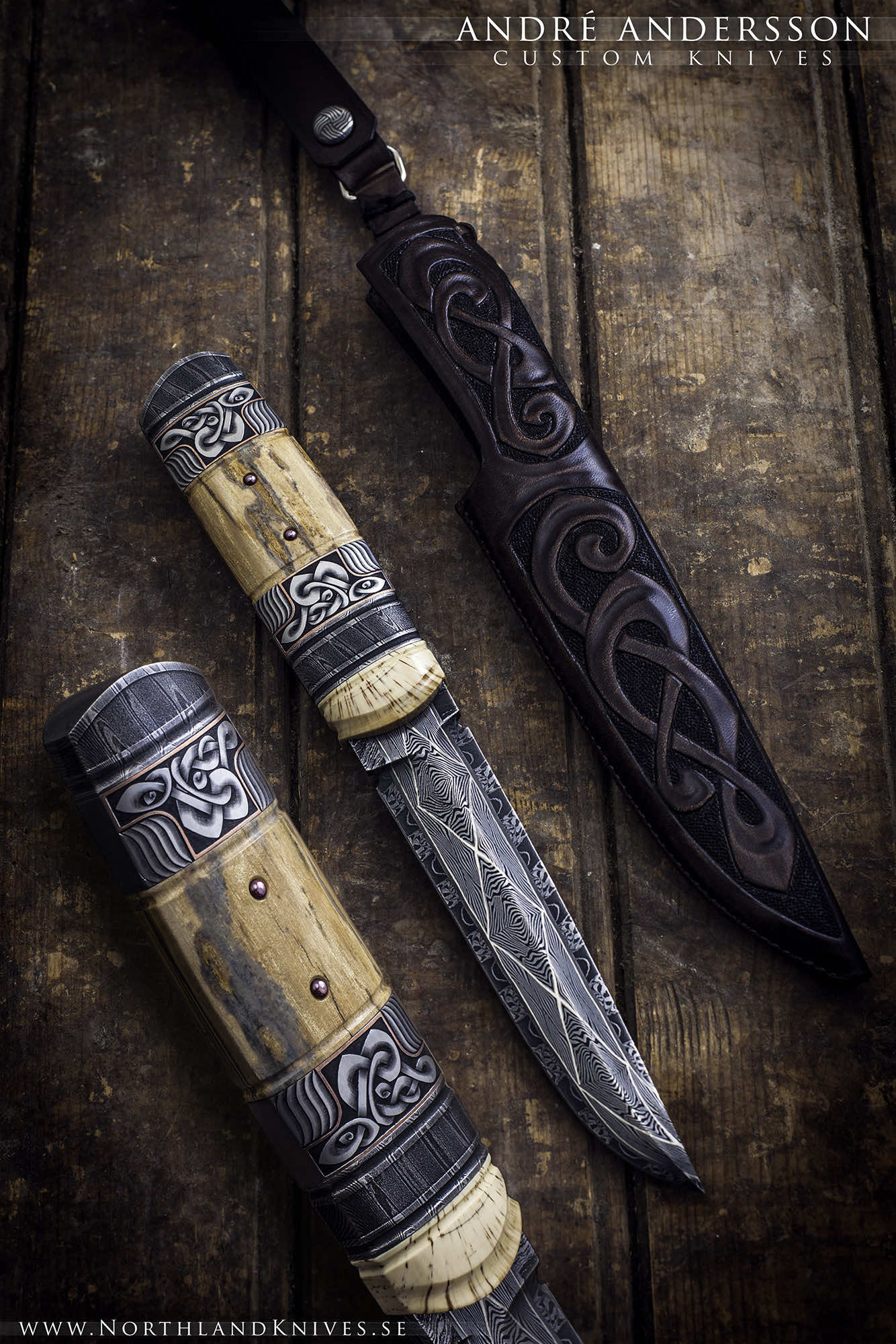
André Andersson is an award-winning craftsman from northern Sweden who creates art works inspired by ancient Nordic mythology and modern design.

Scandinavian Spirit


To the question: Does André Andersson make the most beautiful knives in the world? The answer is in the question!

Good morning, everyone. Today, I share with you a discovery I made during a long winter evening to do research on puukkos. The heavy eyelids, I scrolled pages and pages on sites in Northern Europe hoping to find information on the « scrimshaw ». A technique of engraving or decoration on horn used by Sami artisans.

At the turn of a click, I arrive at the site of André Andersson. I thought I was hallucinating! The first photographs, moreover of very good quality, were considered, I had not yet seen anything like it. What originality, know-how and mastery! Certain, I am moving away from the primary vocation of this site which is mainly centered on the puukko, but sometimes you have to know how to make exceptions.

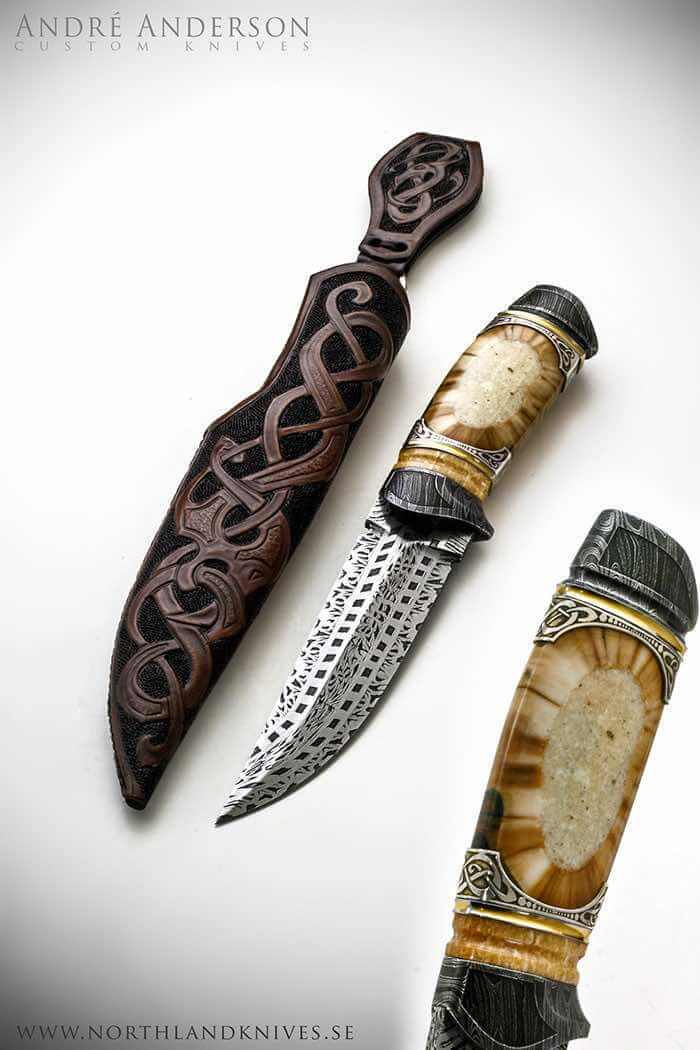
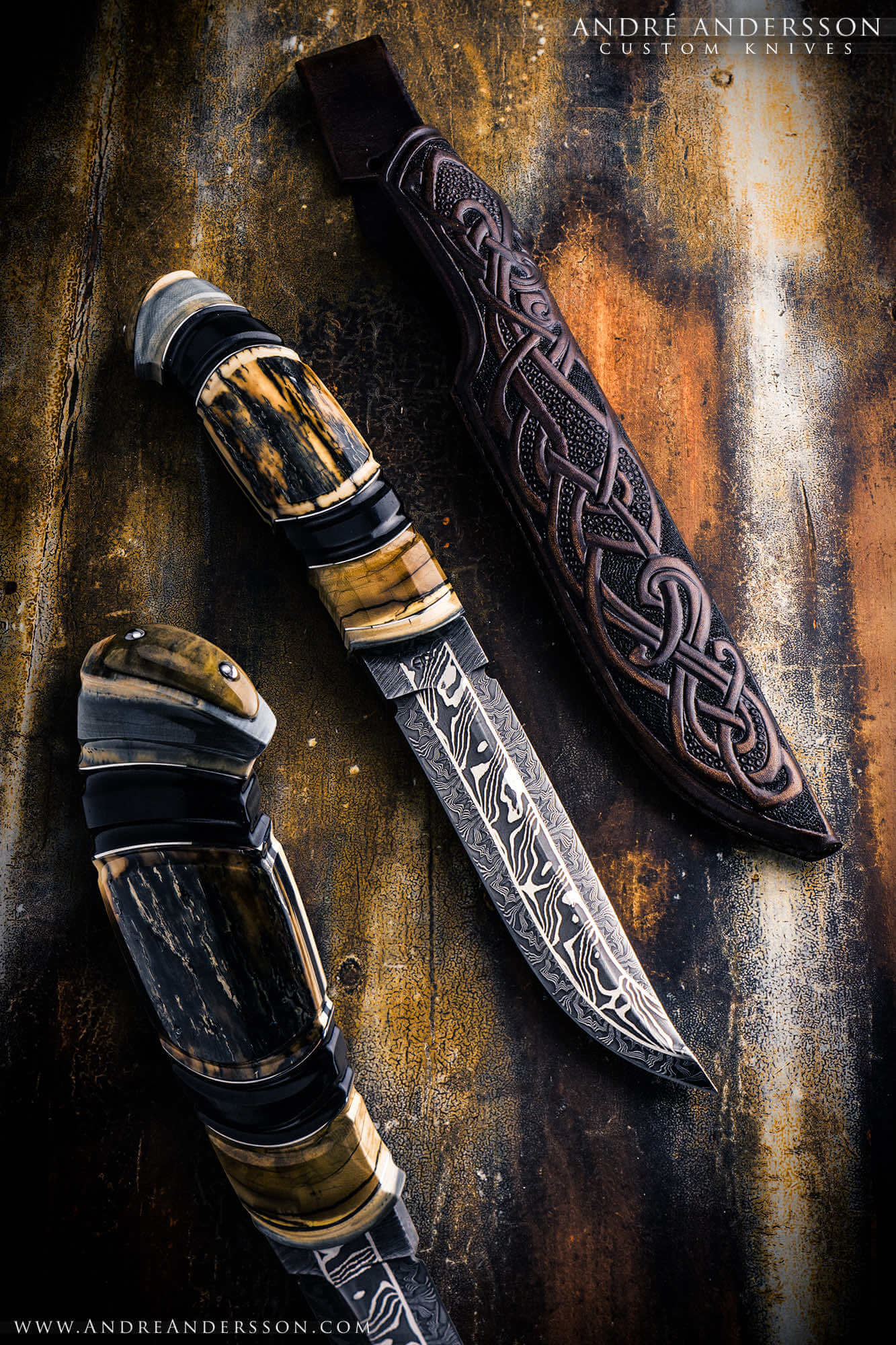
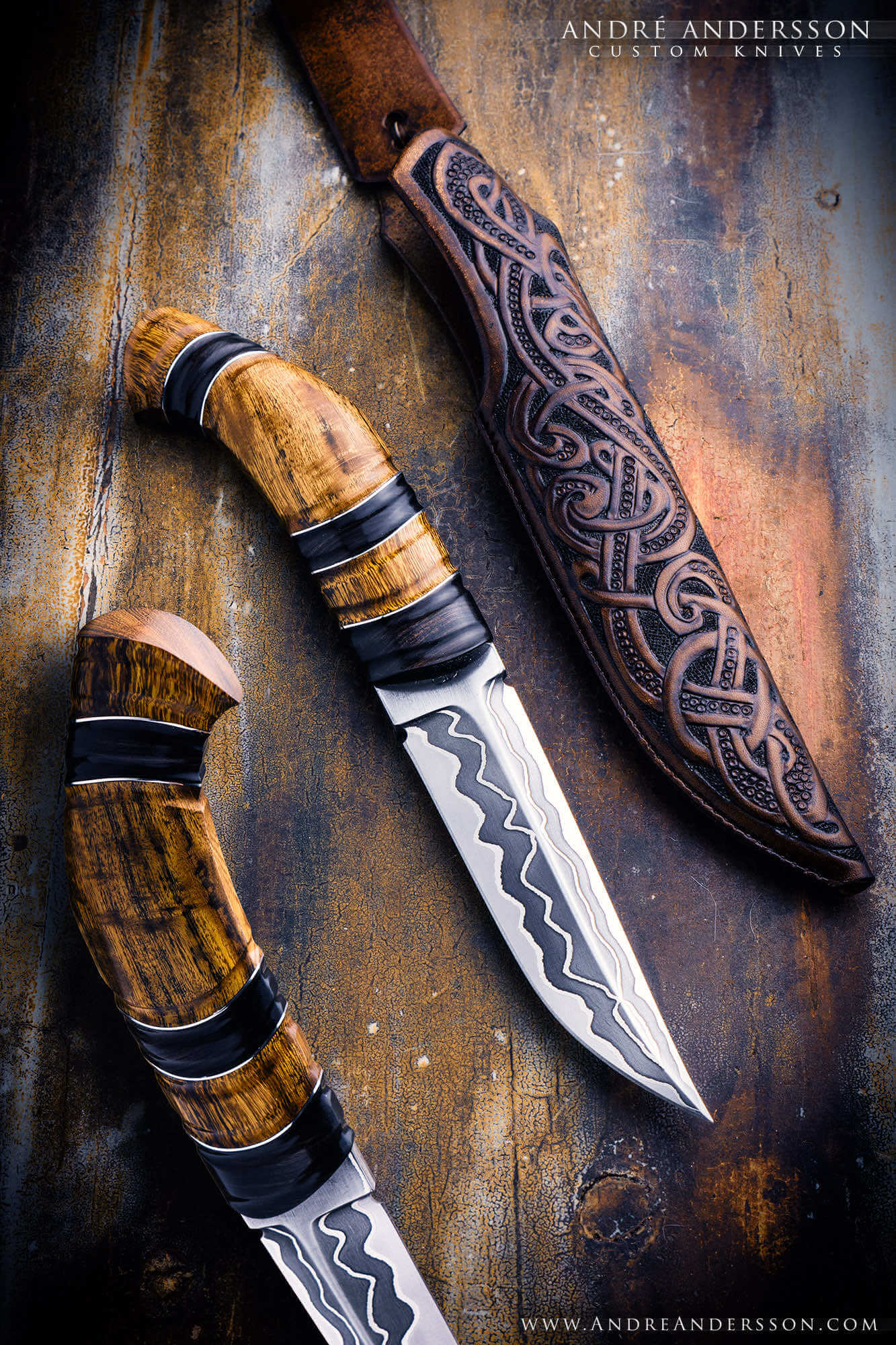
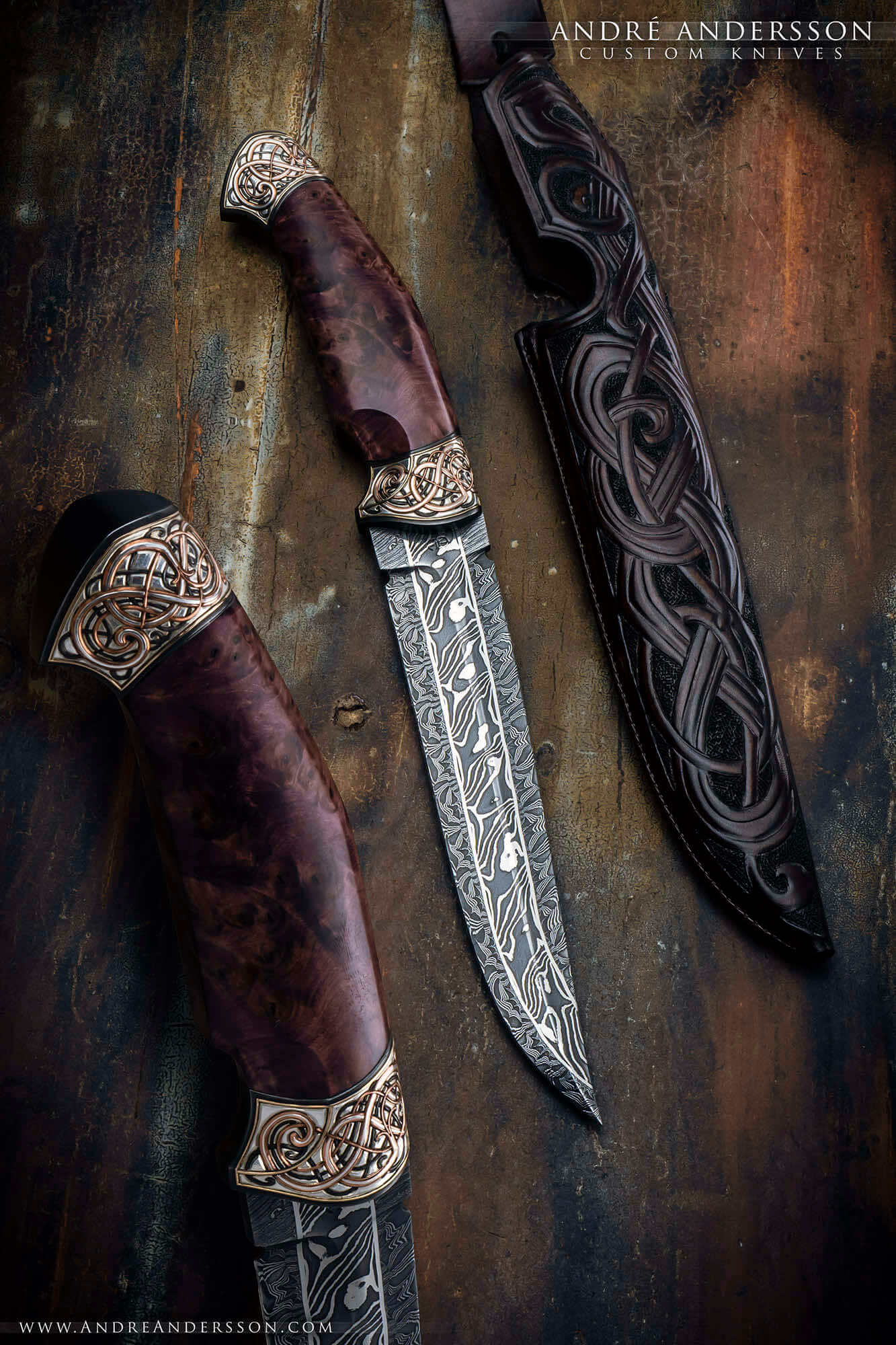
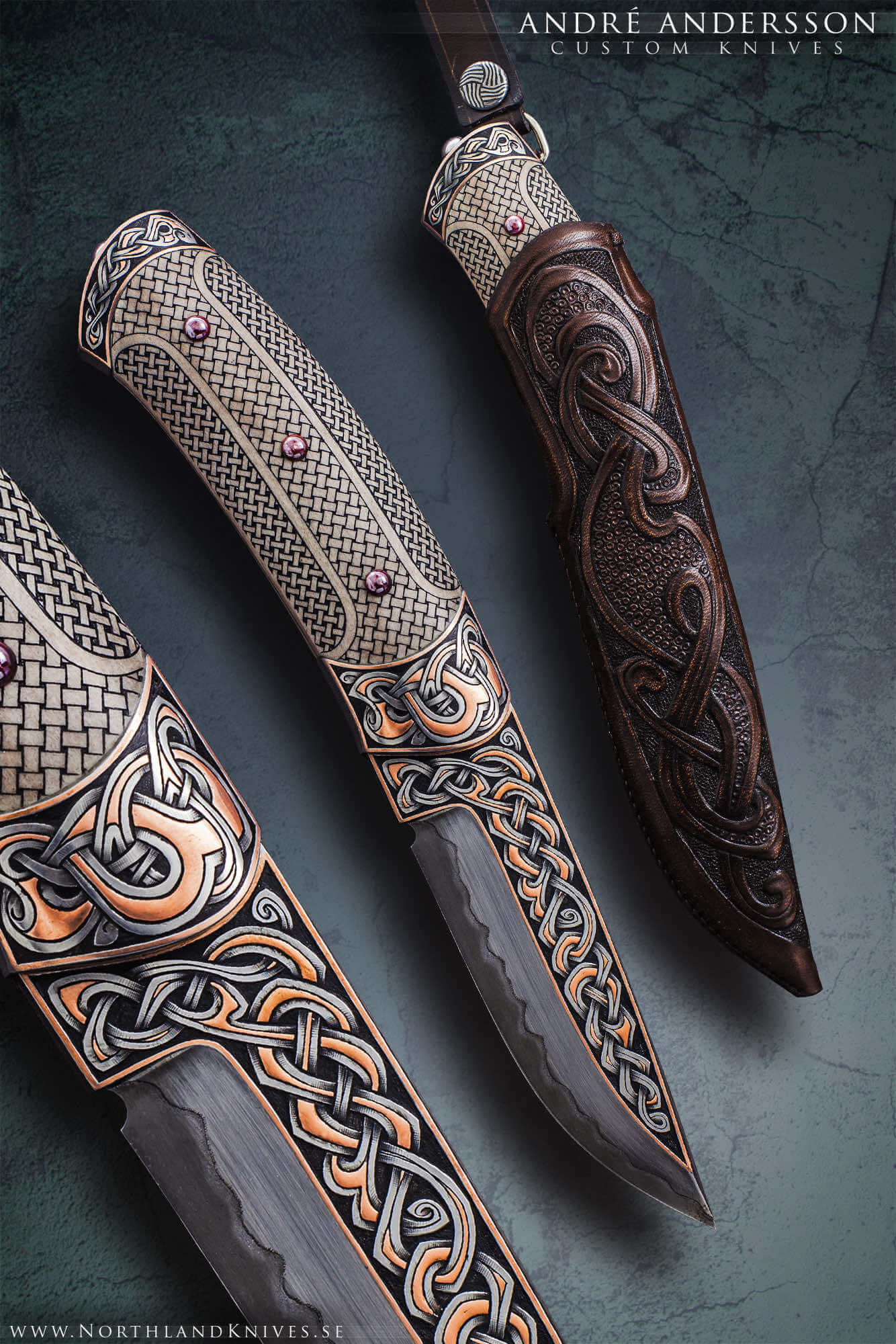
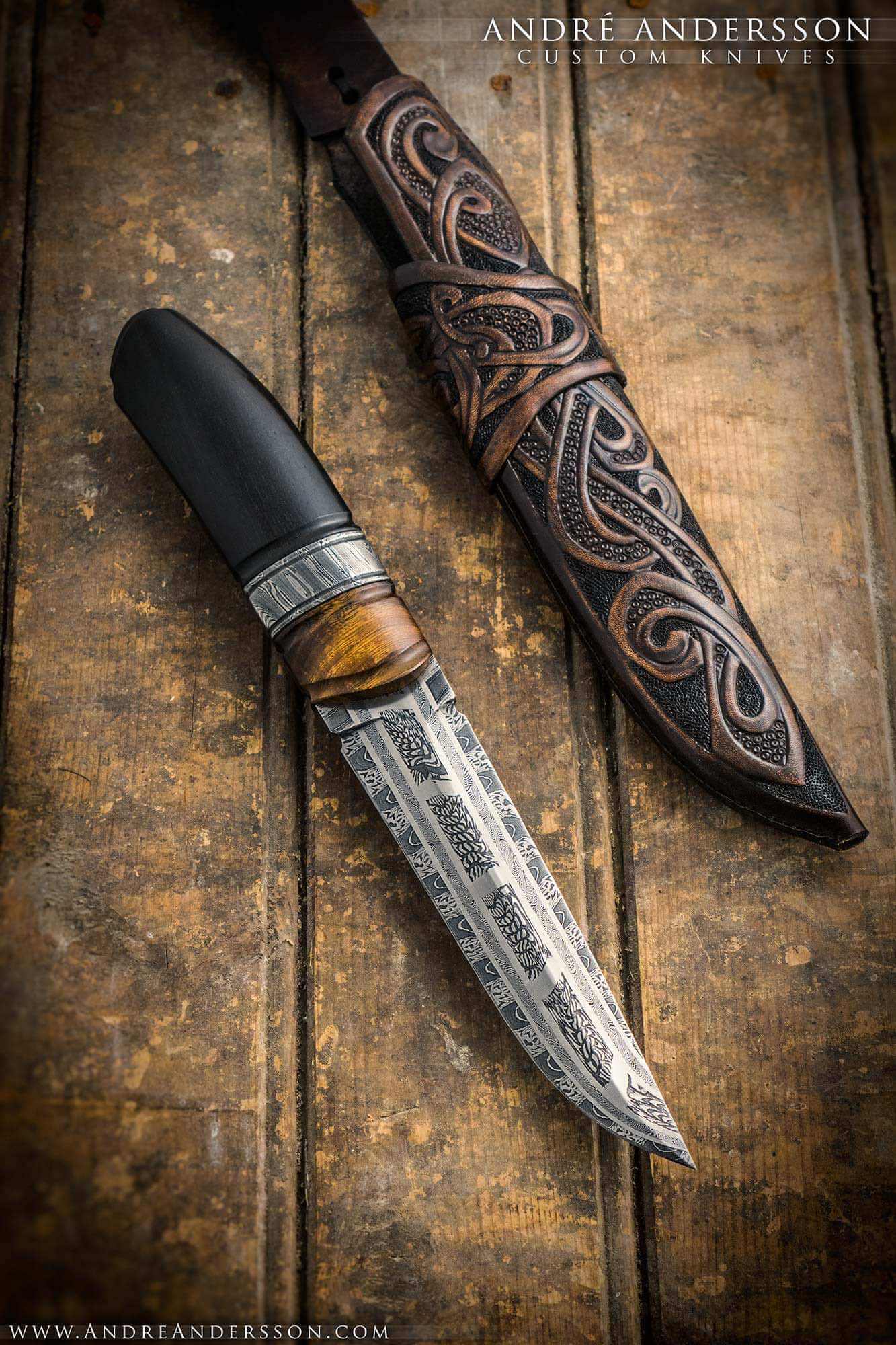
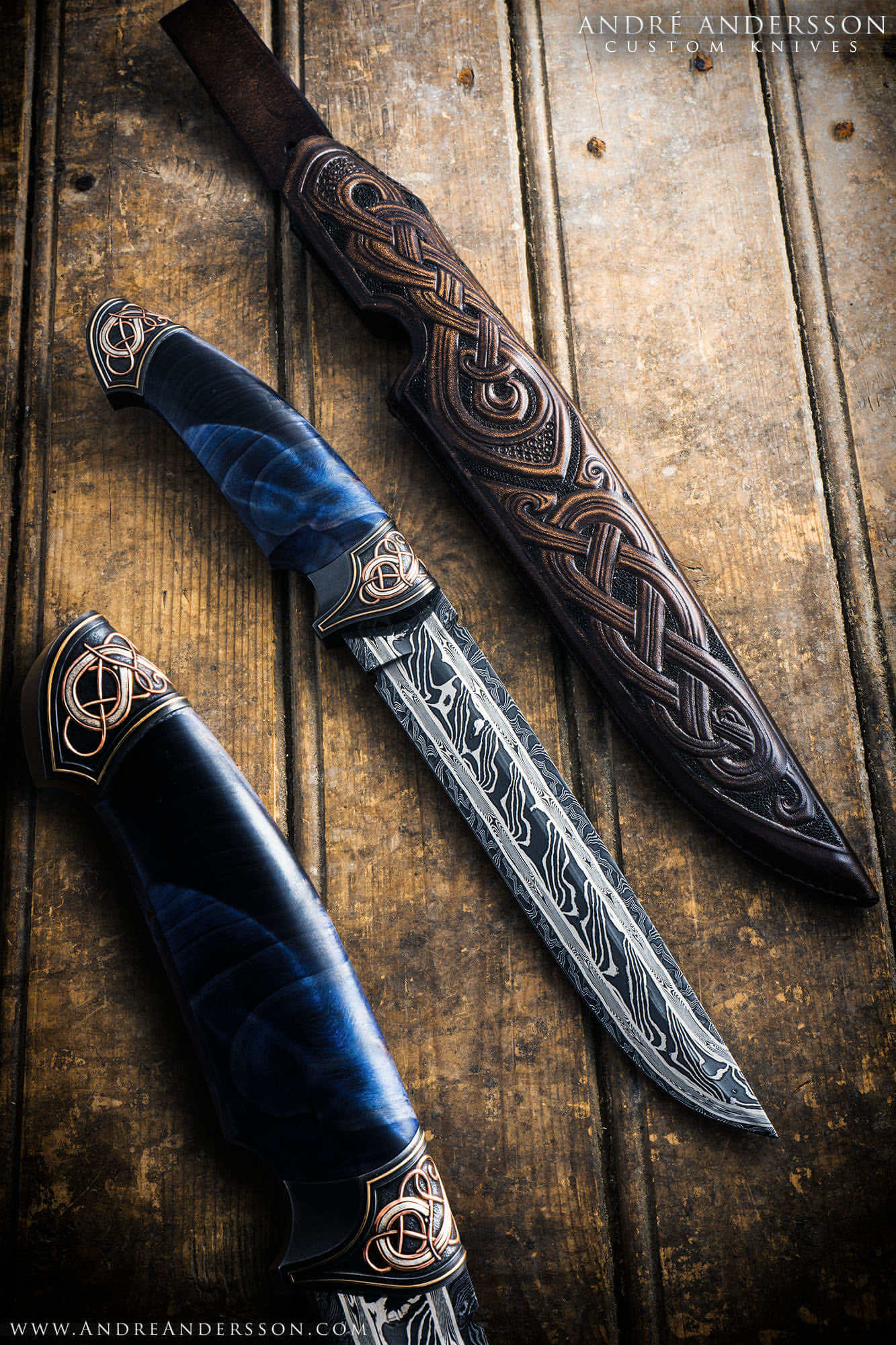
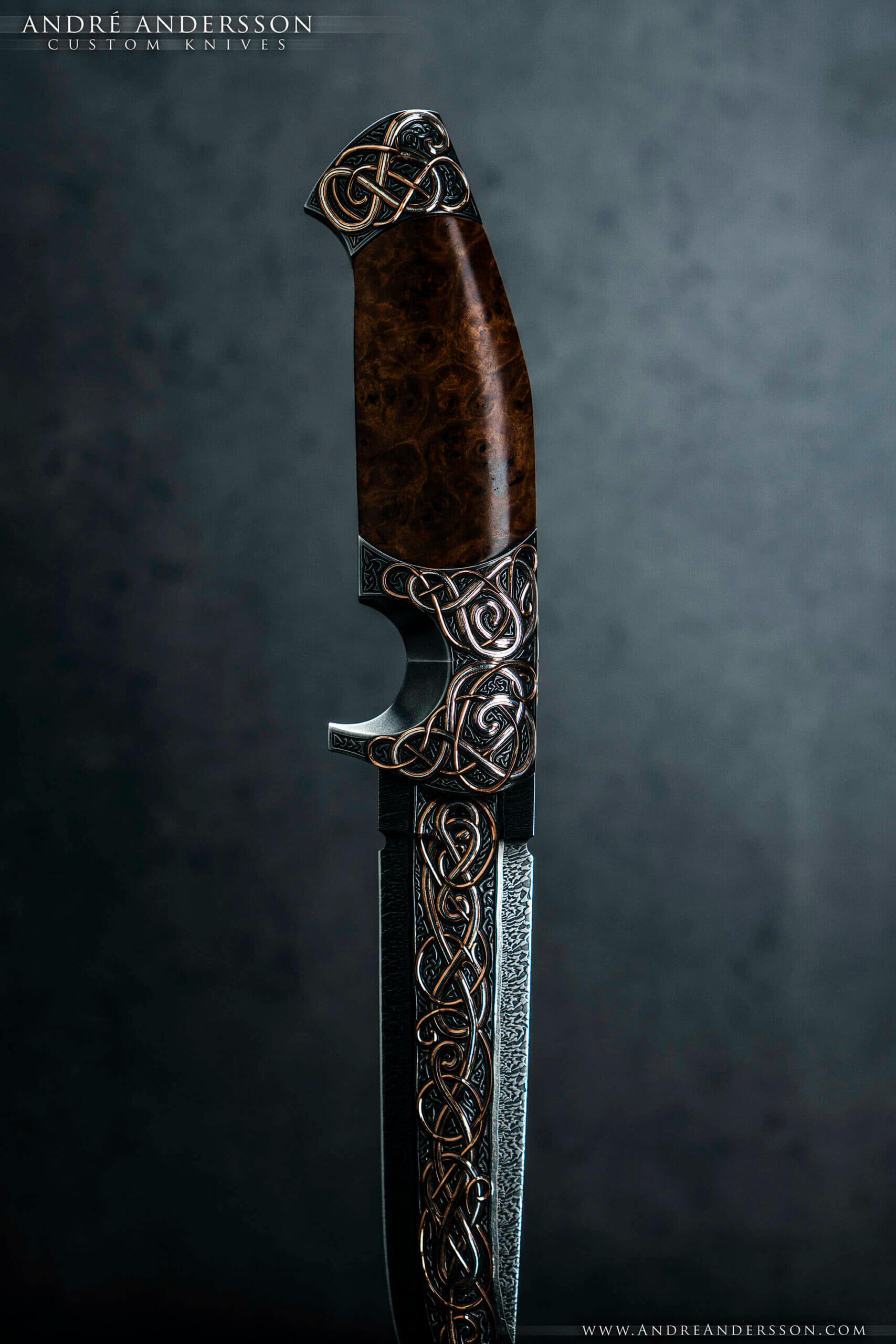
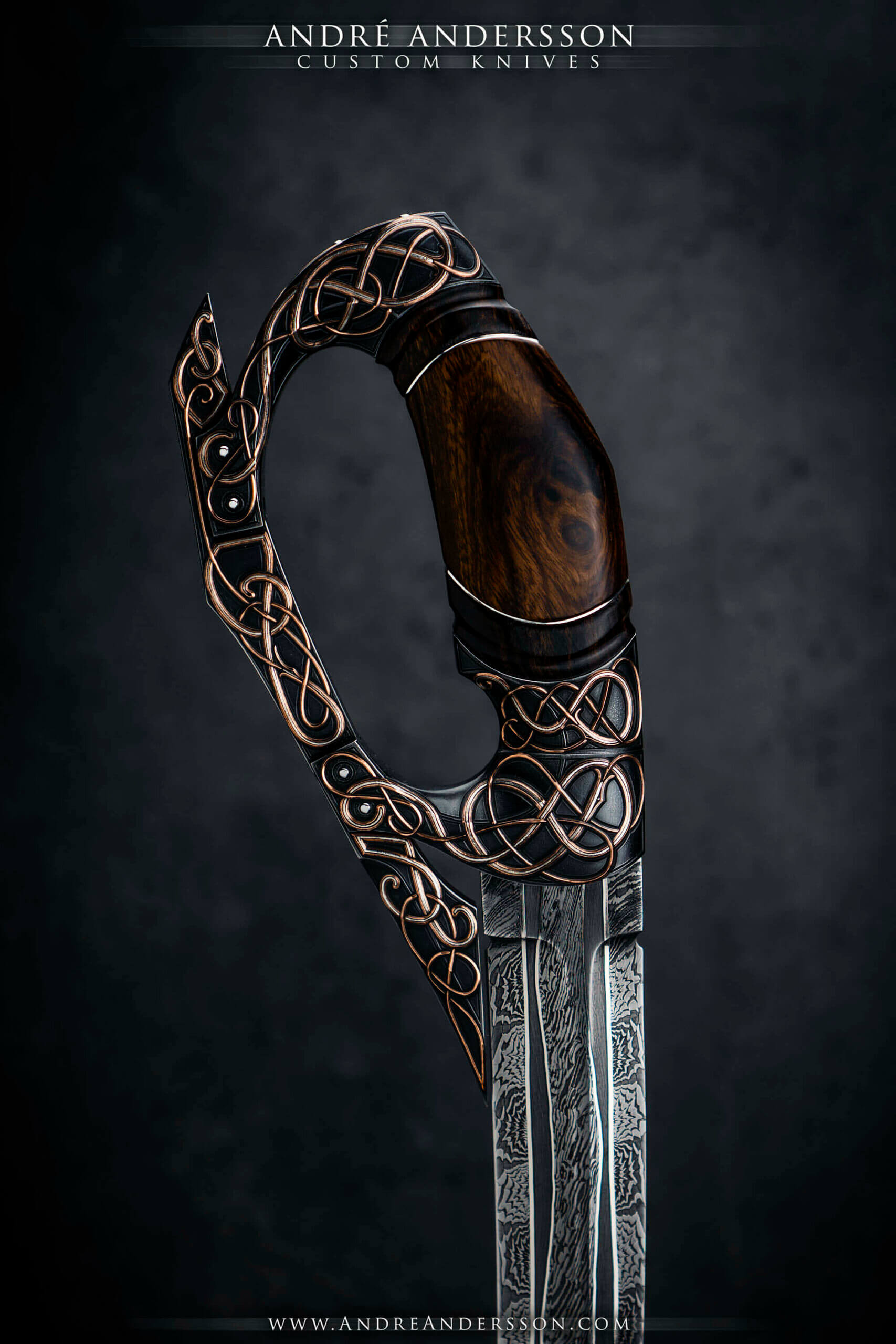
In this new article, I leave a great deal of room for the image, because they are all worthy of interest. Isn't it said that an image is worth a thousand words? After going through this page, you can tell me in comment if you think André Andersson actually creates the most beautiful knives in the world. For my part, I think he's in the lead platoon.


Who's André Andersson?

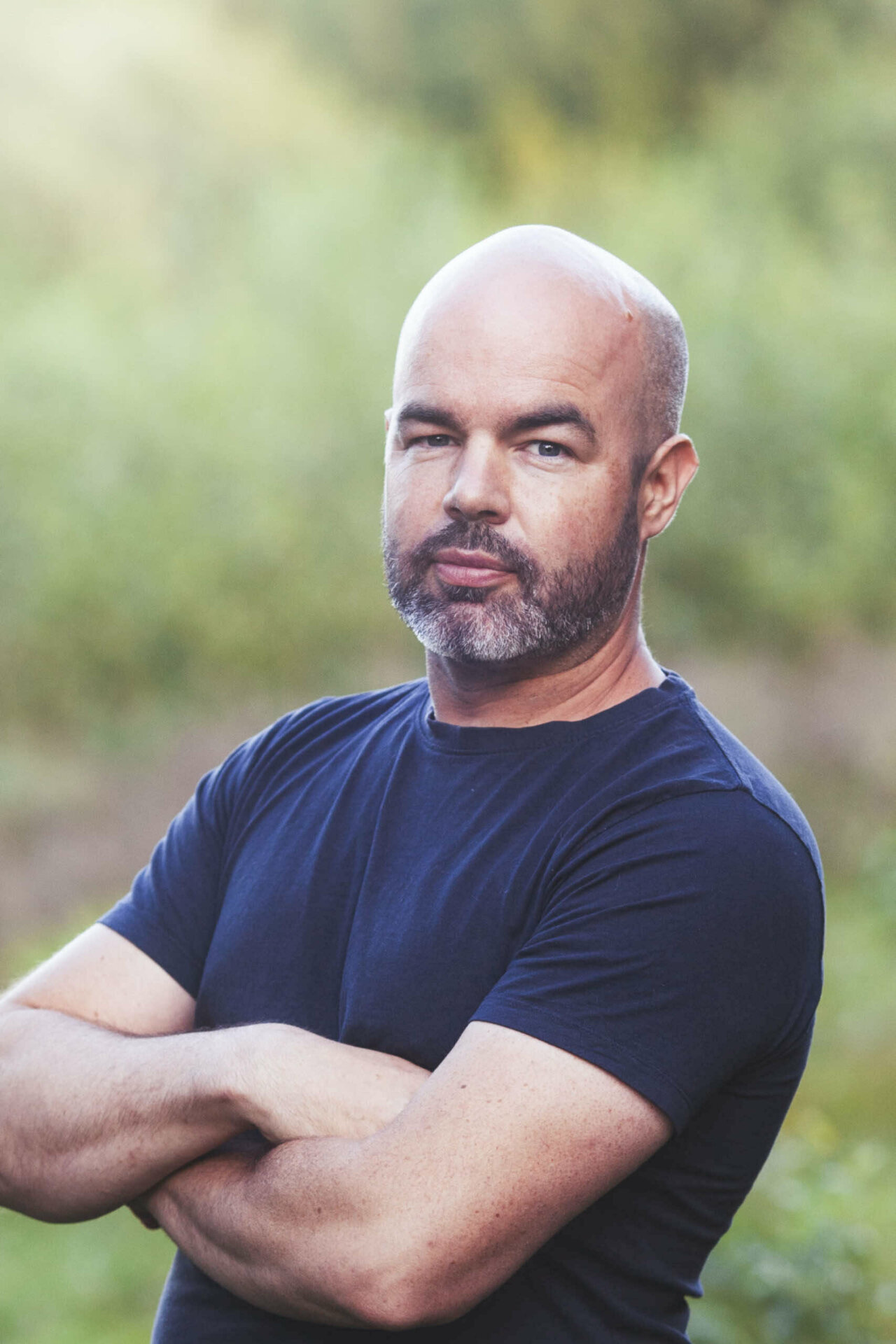
My name is André Andersson and I am an artisan cutlery from northern Sweden, a small country in the far north of Europe with about 9.3 million inhabitants. I was born on a cold day in December 1980 and have since lived in Umeå and its surroundings, a city nestled between the rock formations of the Baltic shield and the Baltic coast.

My career as a cutlery began in 1999 after a weekend internship with blacksmith Roger Bergh, in which I participated with my father. I didn't plan to go, but my father, who wanted to start the forge, convinced me. However, I had never held a blacksmith hammer and my experience with knives was limited to the one I had made years before in school. I also had a small collection of cheap knives, bought during a holiday in Europe, but nothing, even in my wildest dreams, could have prepared me for what Roger Bergh showed this weekend.

Gradually, my father and I set up a small workshop equipped with the necessary equipment. At the same time, we have tried to learn the techniques of pattern welding and the basics of knife manufacturing. Passionate about drawing, I quickly understood the potential of the knife. I am among those who need to find inspiration in the challenges and constantly evolve so that my work remains exciting.

Every knife I make is unique, and I don't like to do it again. My best creations are always the ones I make from A to Z, where I enjoy total artistic freedom. I constantly strive to improve my skills and creations, without aiming for perfection. Creating a perfect knife is not my goal, because I don't believe in absolute perfection. I always try to express something, an expression that reflects where I am at this very moment. If I move, I feel the need to create another expression, because life around me is changing. A wise man seeks answers; A fool is the one who thinks he's found them all.

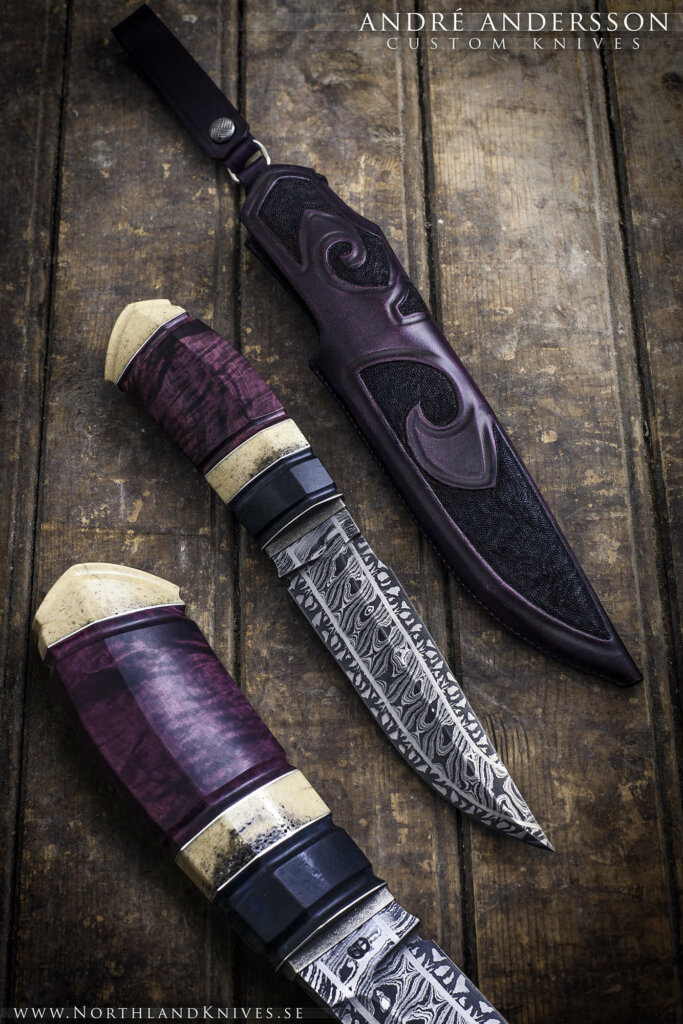
Thus, I work with very exclusive materials such as damaged steel, fossils, gold, silver and exotic wood. When I make a knife, I do not want the materials to define it, that it perceives its value only by the materials themselves. No, I want the material to sublimate the knife, leaving its shape and design to define it.

André Andersson

My creations are unique and I dare say that what you see on this page can only be acquired at home.

Yours,
André Andersson


Interview and presentation of the work of Swedish cutlery André Andersson. Directed during the first edition of FICX, the International Forum of Contemporary Knife at the Brongniart Palace.


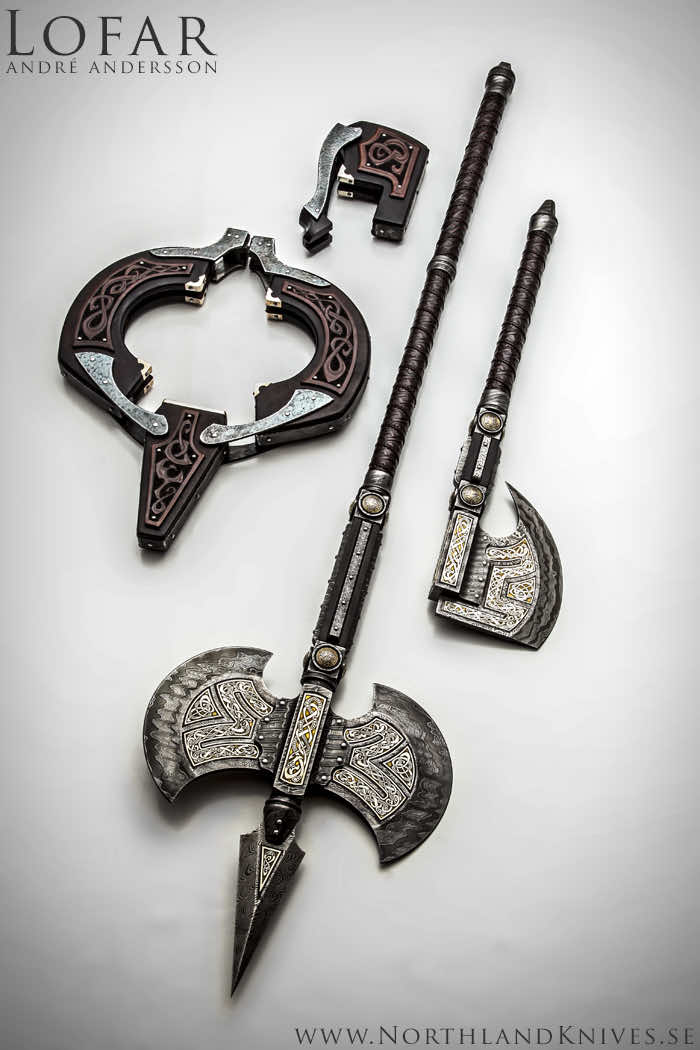
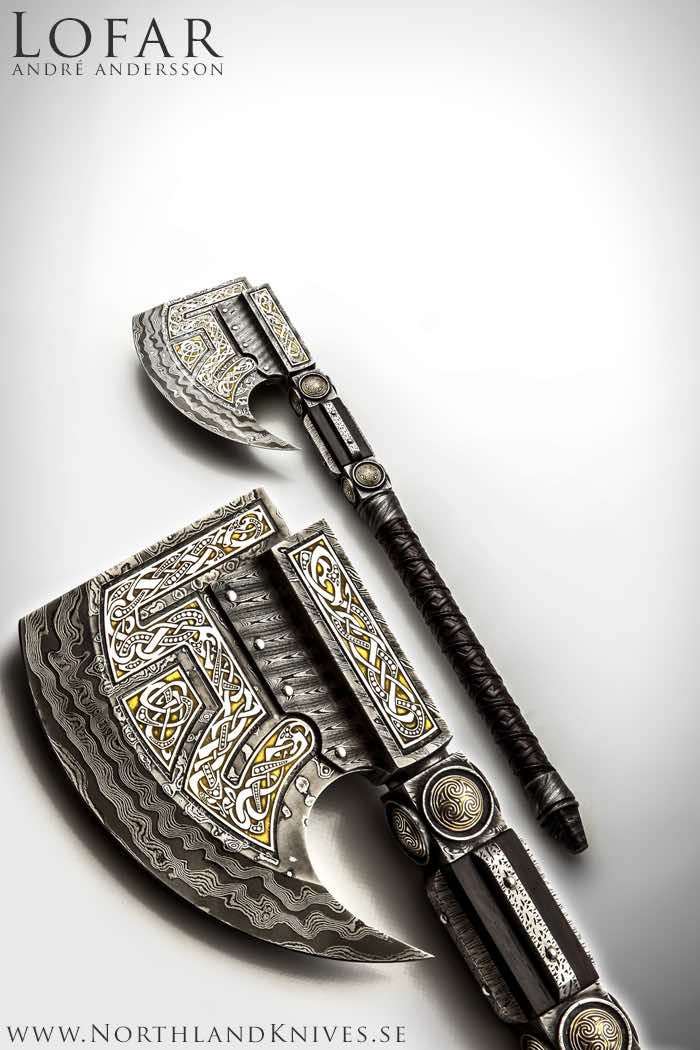
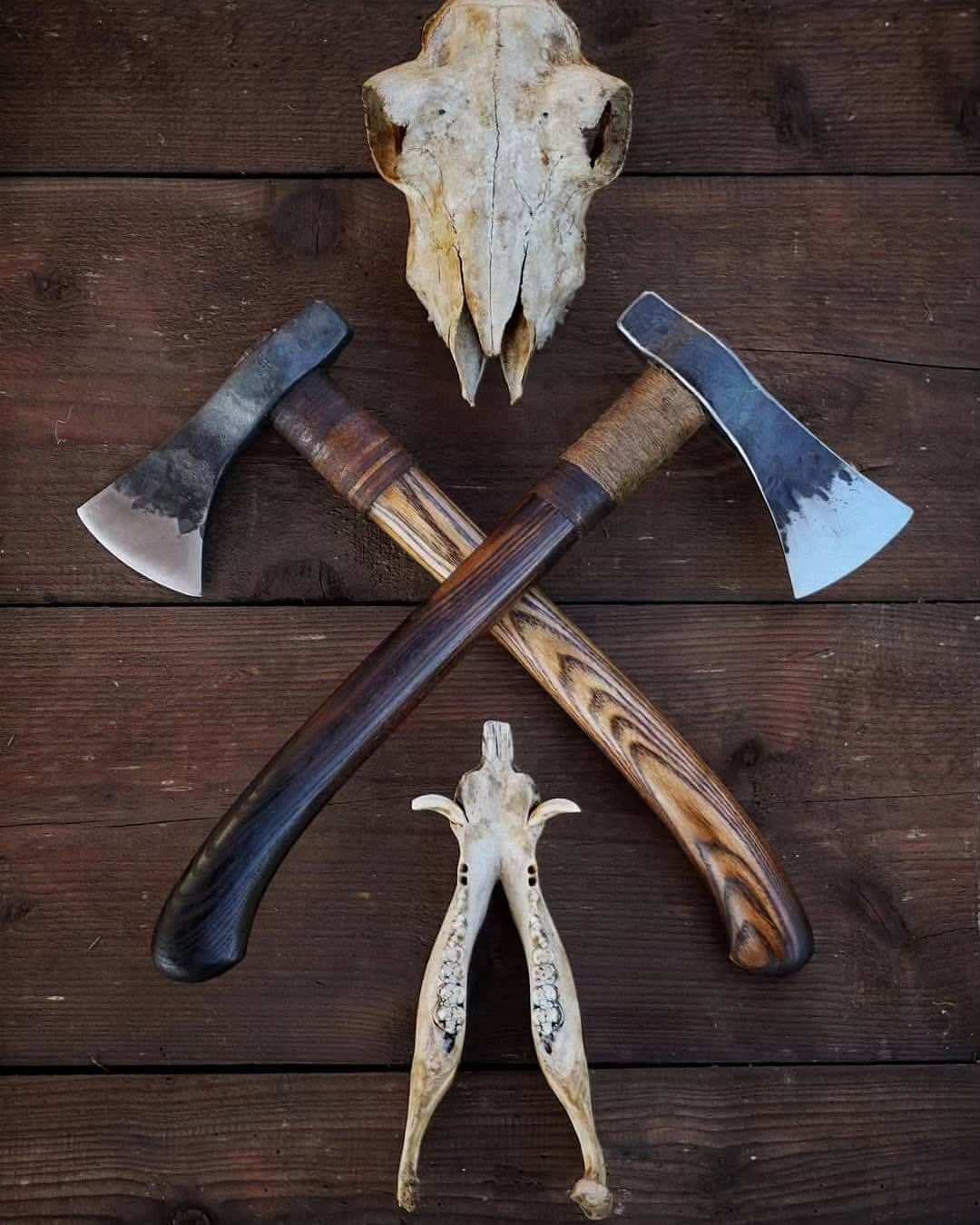
Andre Andersson, it's also axes...


... And swords.

Scandinavian Spirit


Here is the technique that I use to simultaneously solder several steel billets welded to the wheel.

Of course, not everyone proceeds in the same way. Some may even disapprove of me, but I found that this method was the most effective in terms of time and resources.

The process begins with the forging of steel, involving tools such as old avils, hammer-pilons and a hydraulic press built by himself and his father, to shape and solder complex patterns. He particularly appreciates the mosaic Damascus for its aesthetic reasons, and integrates thermal treatments to ensure the durability and sharpness of the blades.

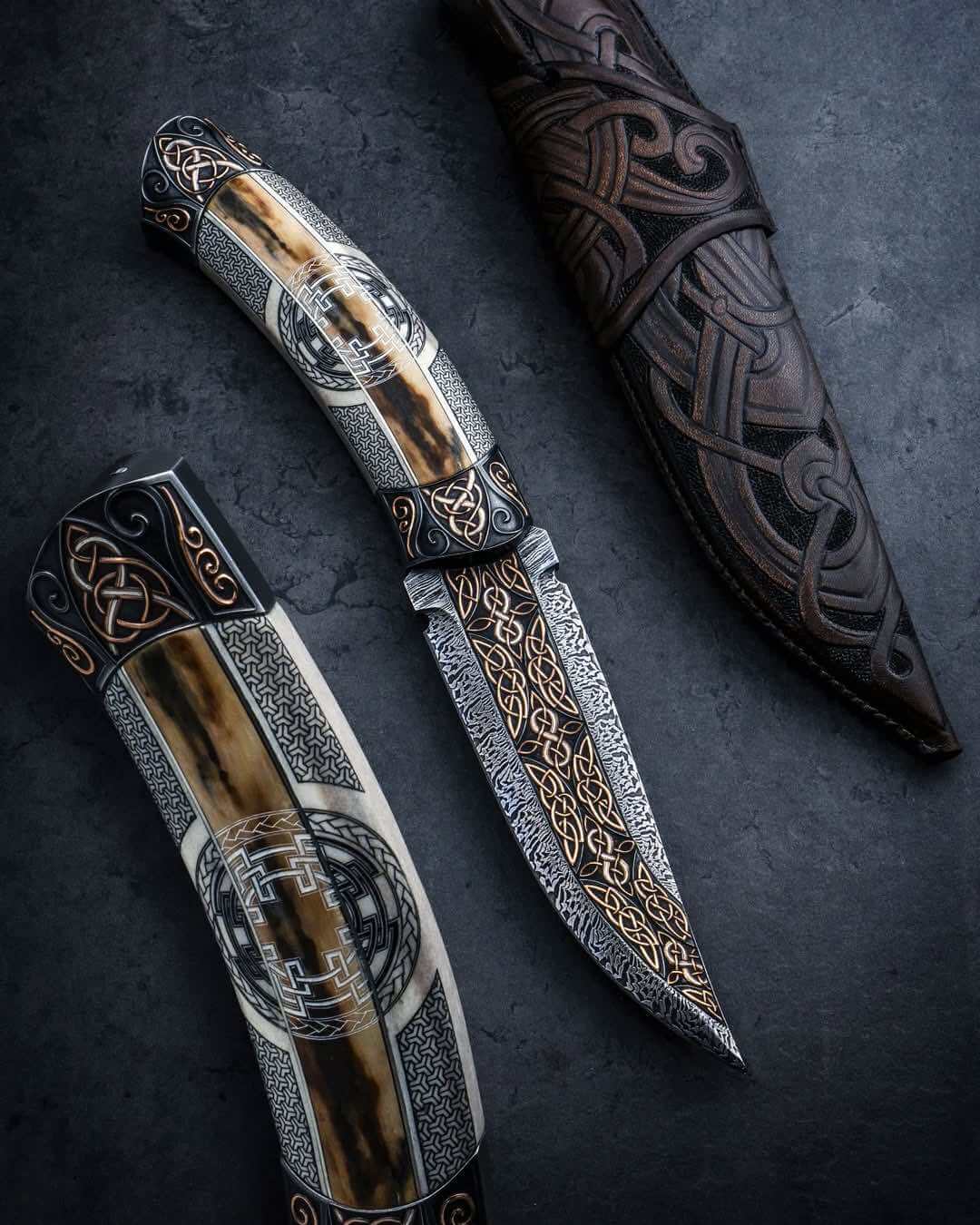
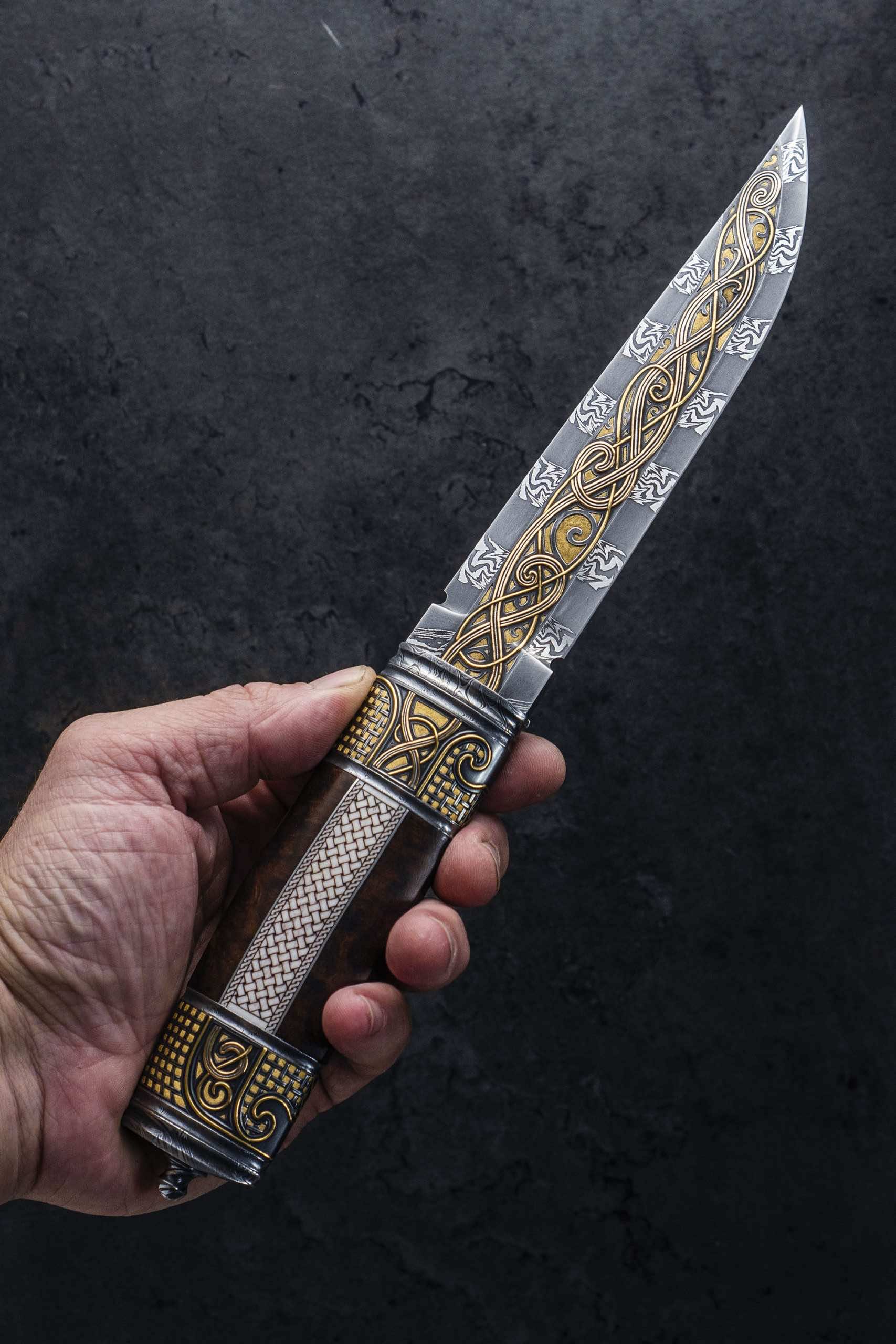
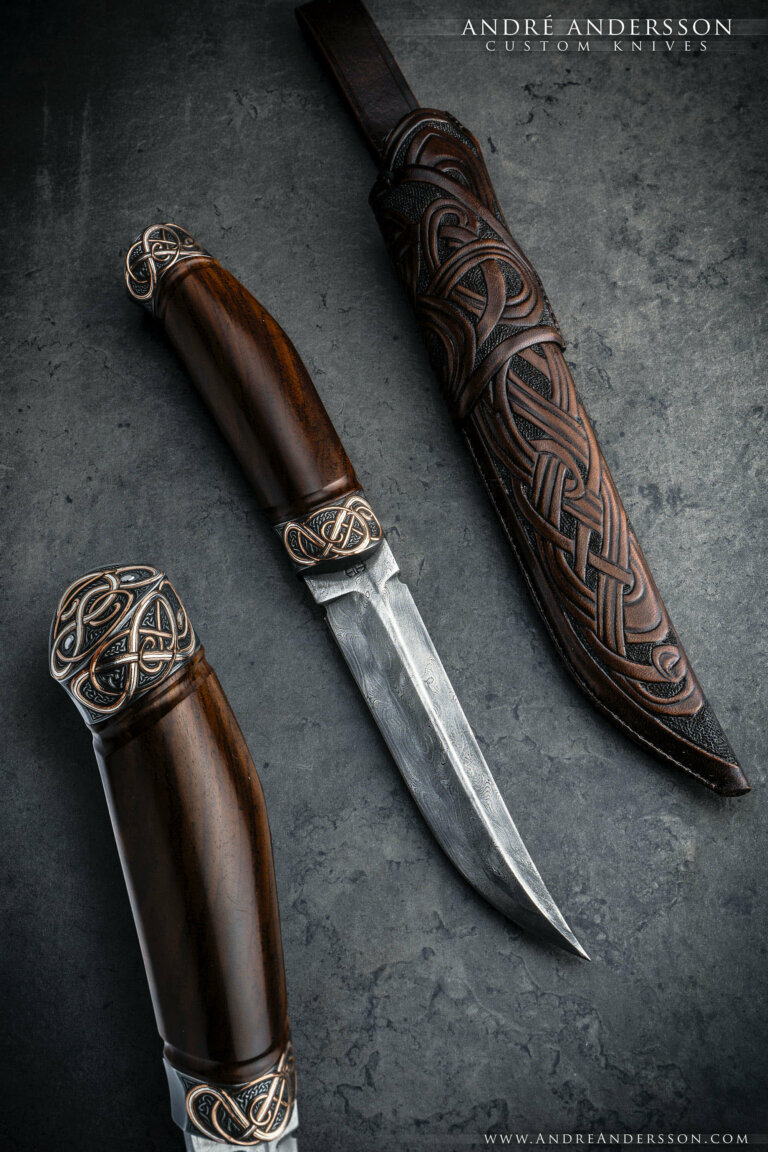
Its unique methods include the integration of incrustations and superpositions (overlays) of precious metals such as 24K gold, pure silver, 21K pink gold, copper or even semi-precious stones, which are inlaid in blades, guards and even semi-precious stones. handles to create designs inspired by Nordic mythology and Viking.

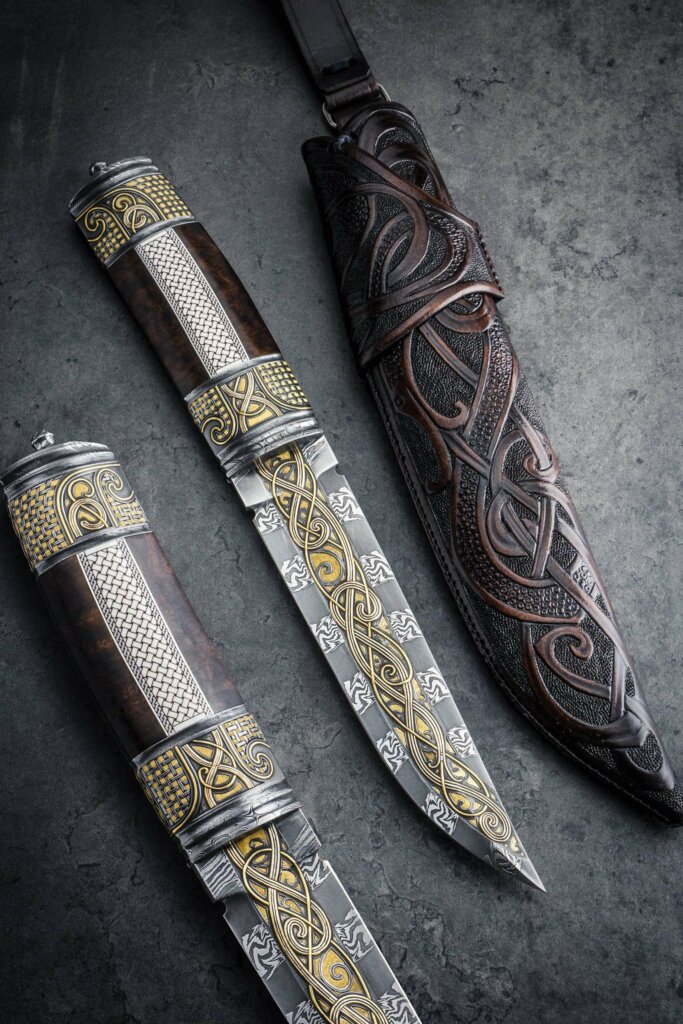
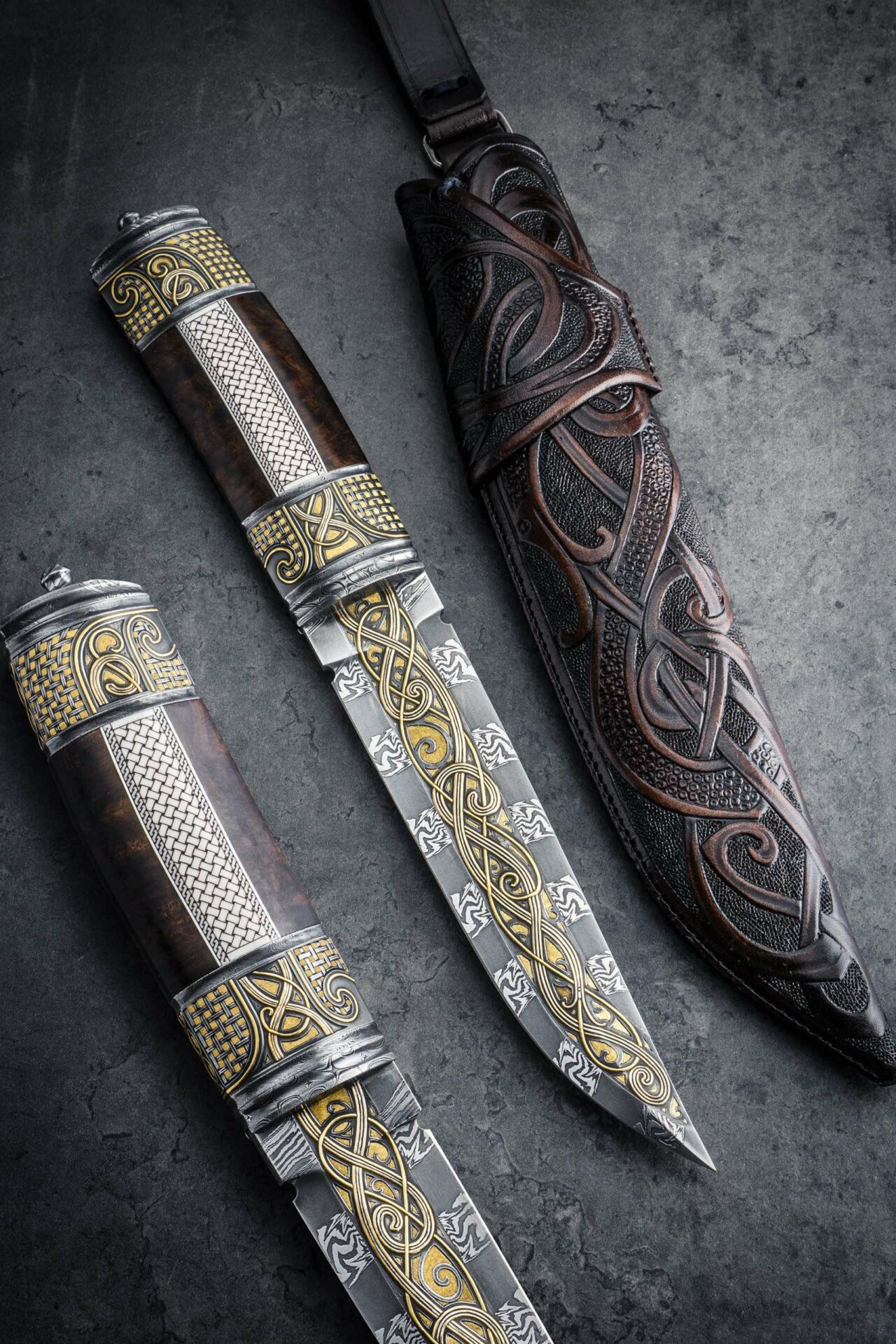
A distinctive technique is overlay engraving: the inlaid materials exceed the surface of forged steel (often blue for contrast), then are hand carved for a pronounced 3D effect, as in a Viking snake pattern using copper, silver and 18K gold. This approach combines raw forging with meticulous planning of engravings, via detailed sketches, as the engraved lines cannot be erased.

Complementary materials include exotic wood such as desert ironwood for handles (frequently engraved with patterns such as reindeer), fossils, and hand tanned raw leather for shingles, decorated with Viking patterns. Each knife is unique, avoiding repetitions, and aims to transcend materials to produce functional artistic pieces.


Original engraving on the knife blade.


Example price

Knife : Golden Trails

Total length: 30 cm.

Robust Scandinavian lines decorated with complex Viking engravings. Hand forged blade with several bars and serrated edge. Handle of desert iron wood inlaid with a completely engraved reindeer horn. This engraving is made according to several techniques: superimposition of precious metals, inlay on gold background and sculpture on steel. The 24 carat gold, 21 carat pink gold and pure silver make up this striking work of art.

Blade: Three-bar Damascus with fully engraved central soul. Gold 24 carats and pure silver.
Mitre: sculpted and engraved steel, inlays and veneers 24 carat gold and pure silver.
Handle : Desert iron wood with engraved reindeer inlay.
Sheath : In two-piece raw leather, hand-worked, with Viking pattern by André Andersson.

Price:
EUR 12 400 (EU customers, VAT in addition).

Conclusion:

I'll give you a moment to get over the price shock... Here, quality and the exception have a price that, for the majority of us, will remain in the category: dream inaccessible. But, what a pleasure for the eyes!

It's time to comment on what you think about the work of this extraordinary artist. Also think about signing up for the newsletter so you don't miss out on future articles. Thank you for your visit and very soon.

Loved,

Photos and presentation text: @AndreAndersson

Discover another cutlery craftsman, Finn this time: Pasi Jaakonaho


The Blog of puukko.fr

Articles on puukkos, Scandinavia, nature and large spaces.


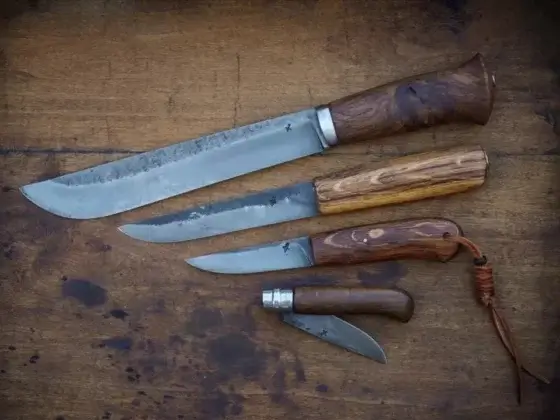
Ernest Delannoy and the Forge of the Old World

Ernest Delannoy and the Forge of the Old World 1080 720 Puukko - Finnish knives

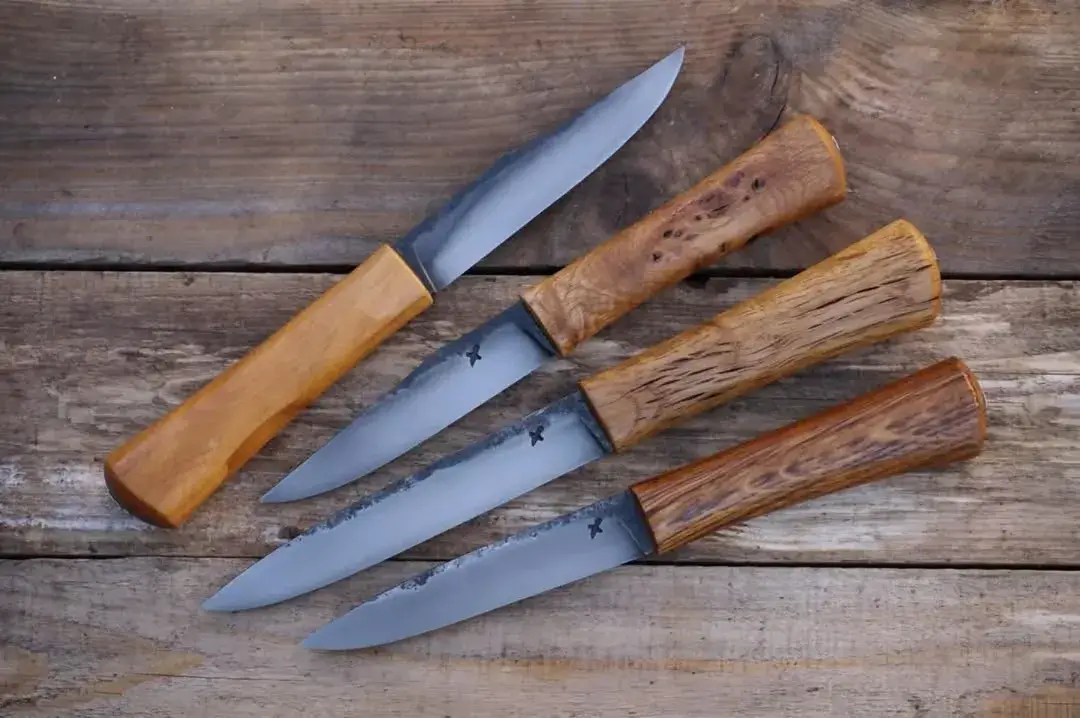
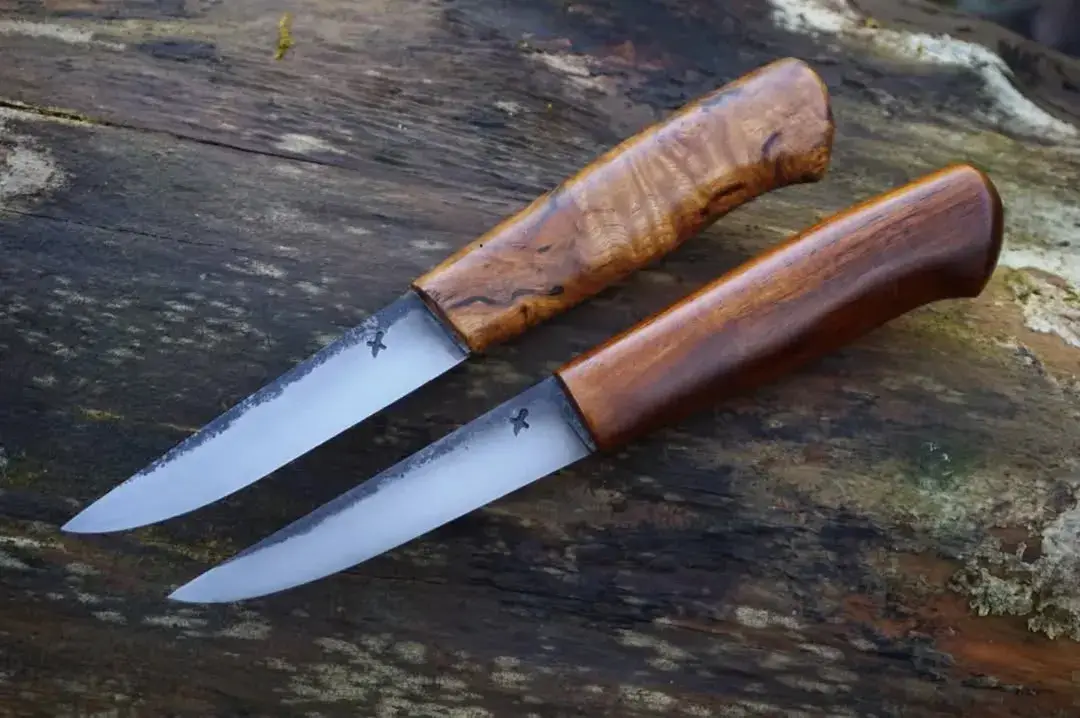
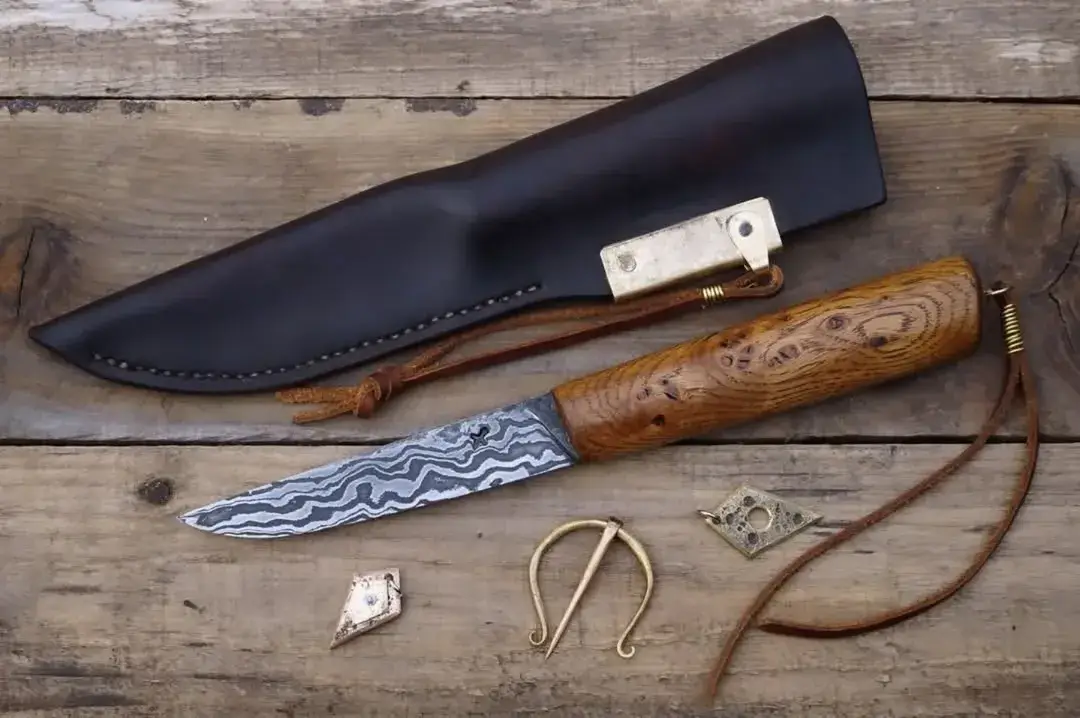
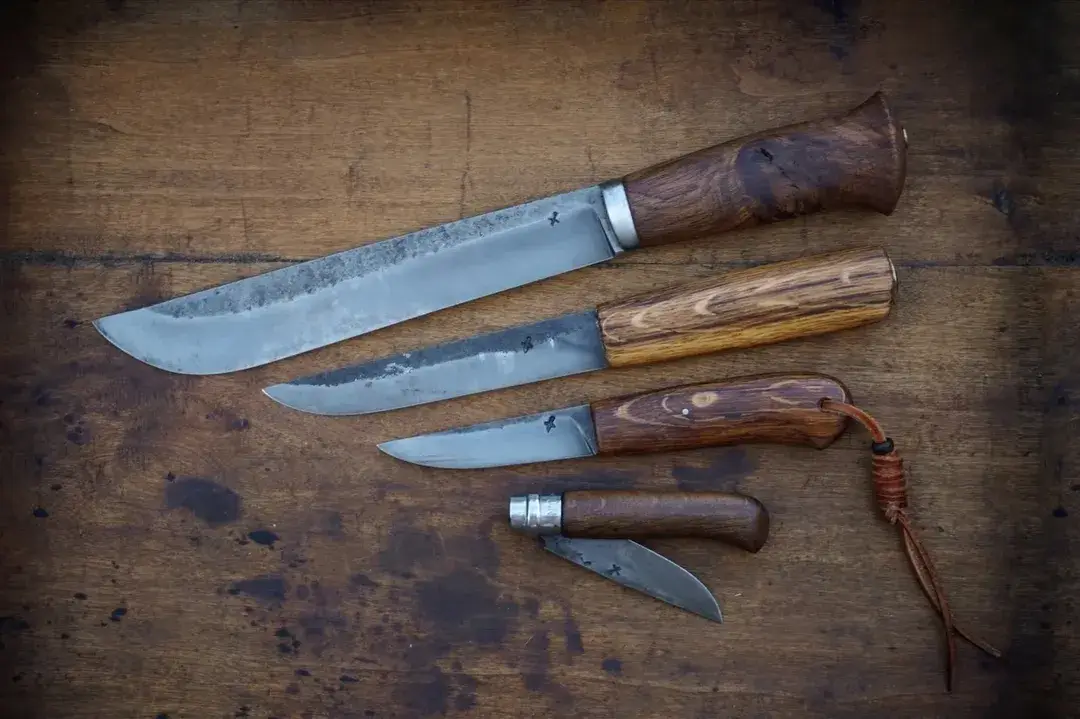
Today, puukko.fr is pleased to welcome Ernest Delannoy. Forgeron-French cutlery specialized in the design of puukkos. Here's his story.

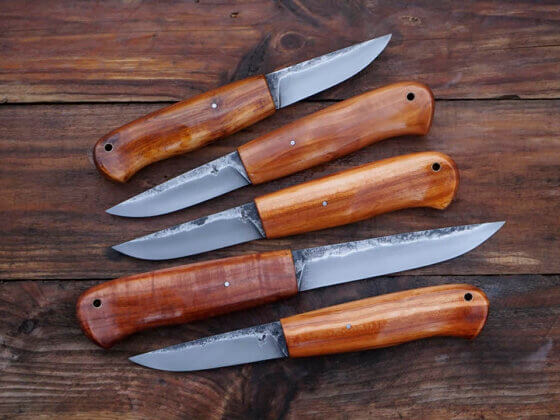
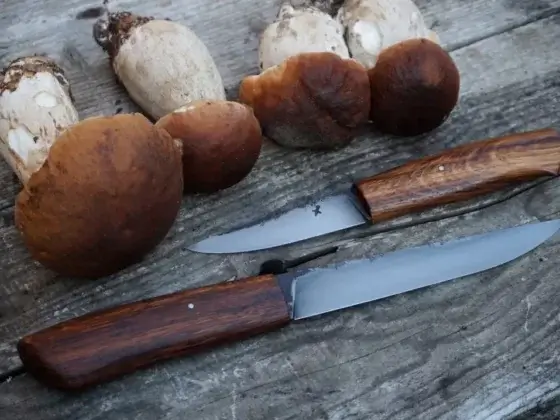
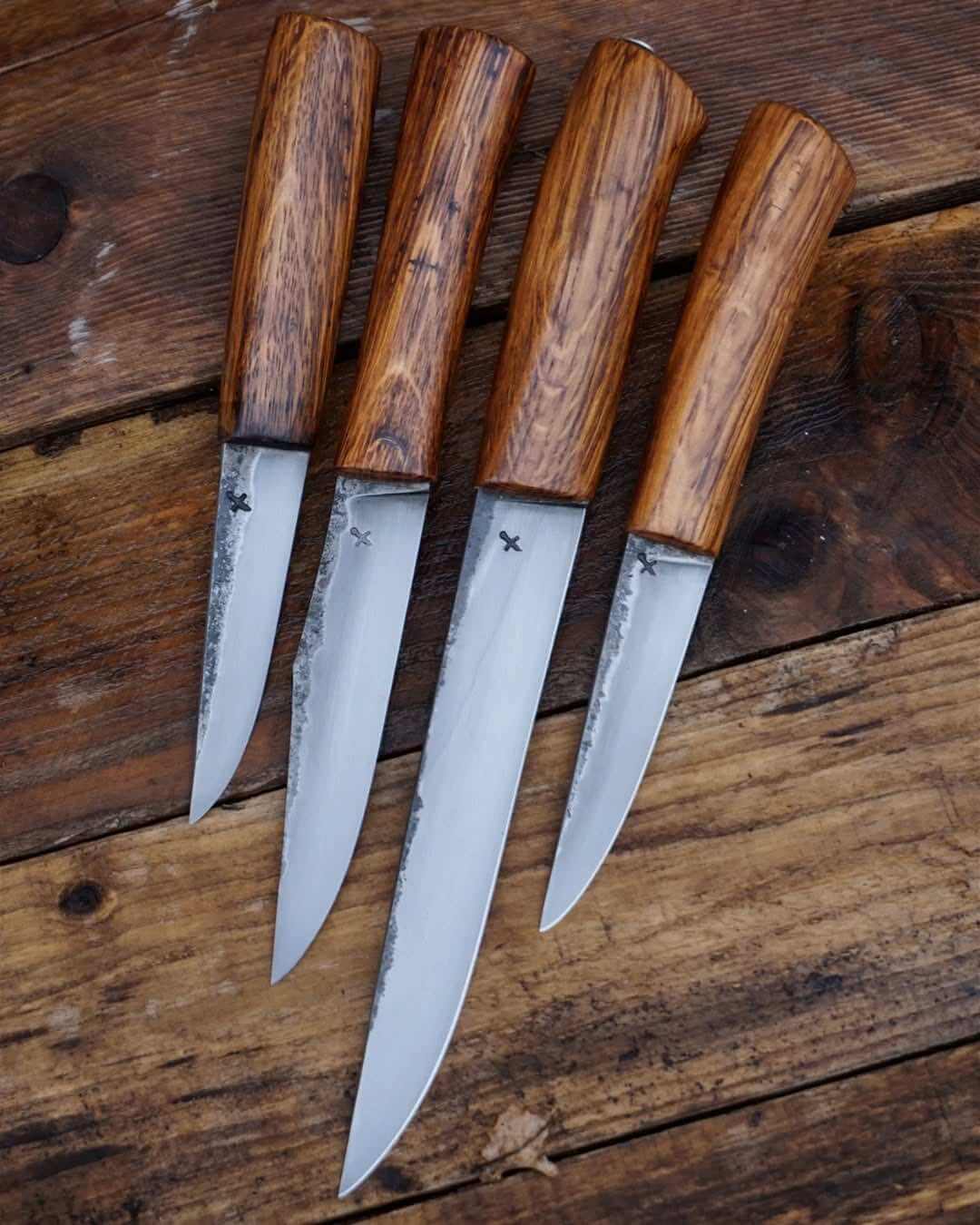
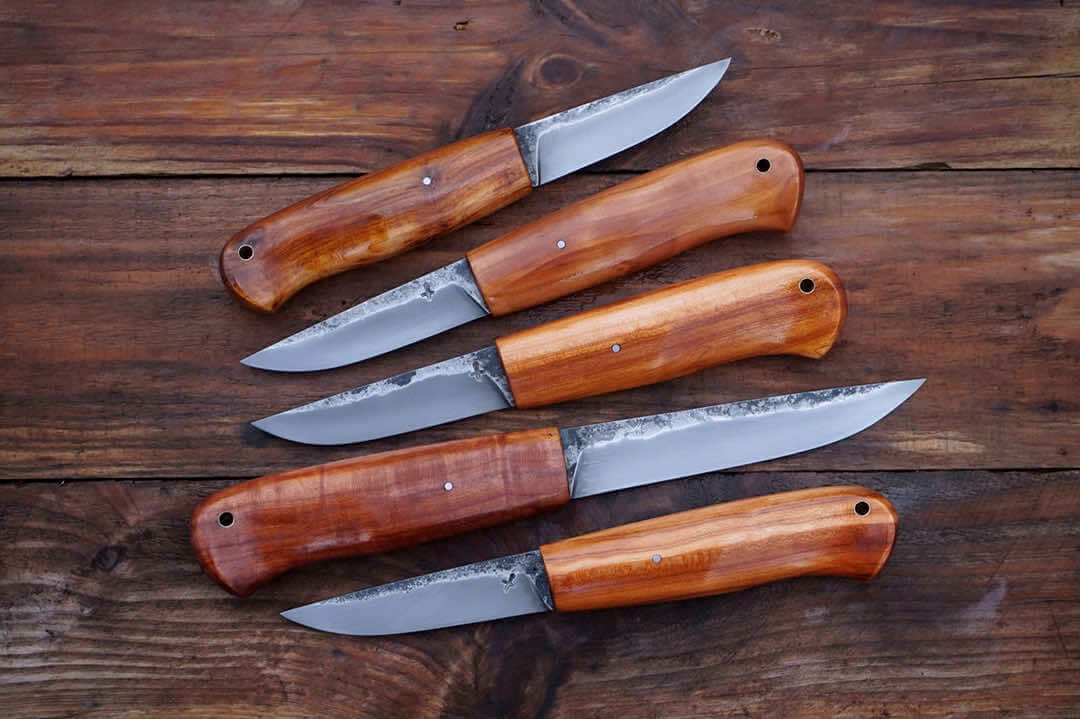
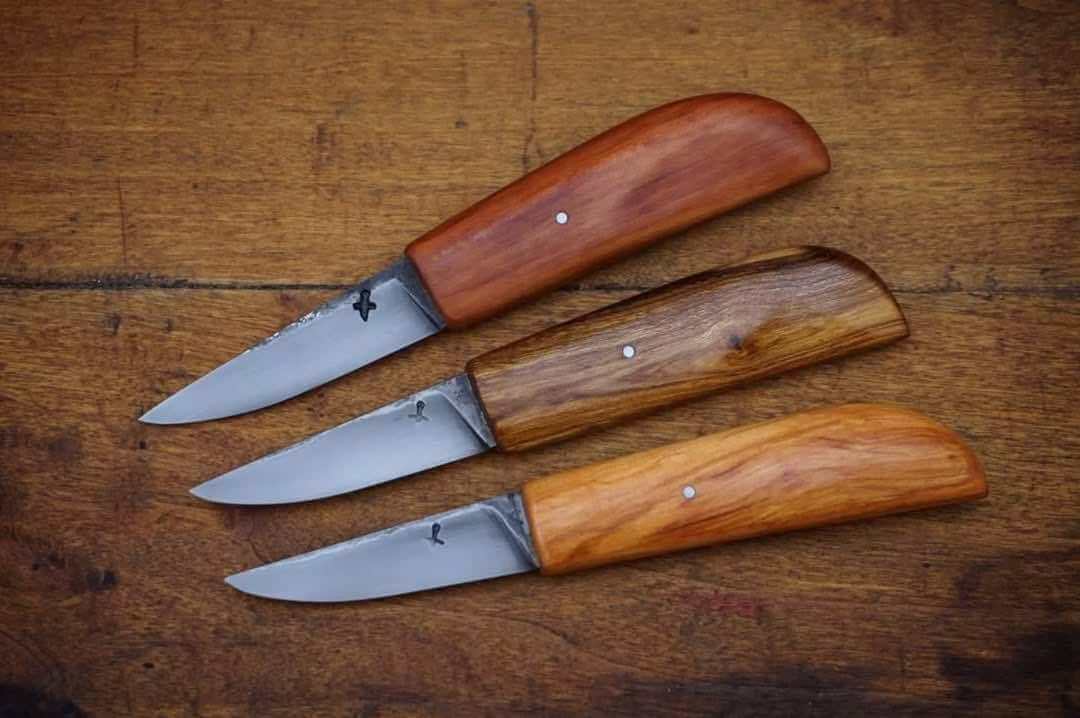
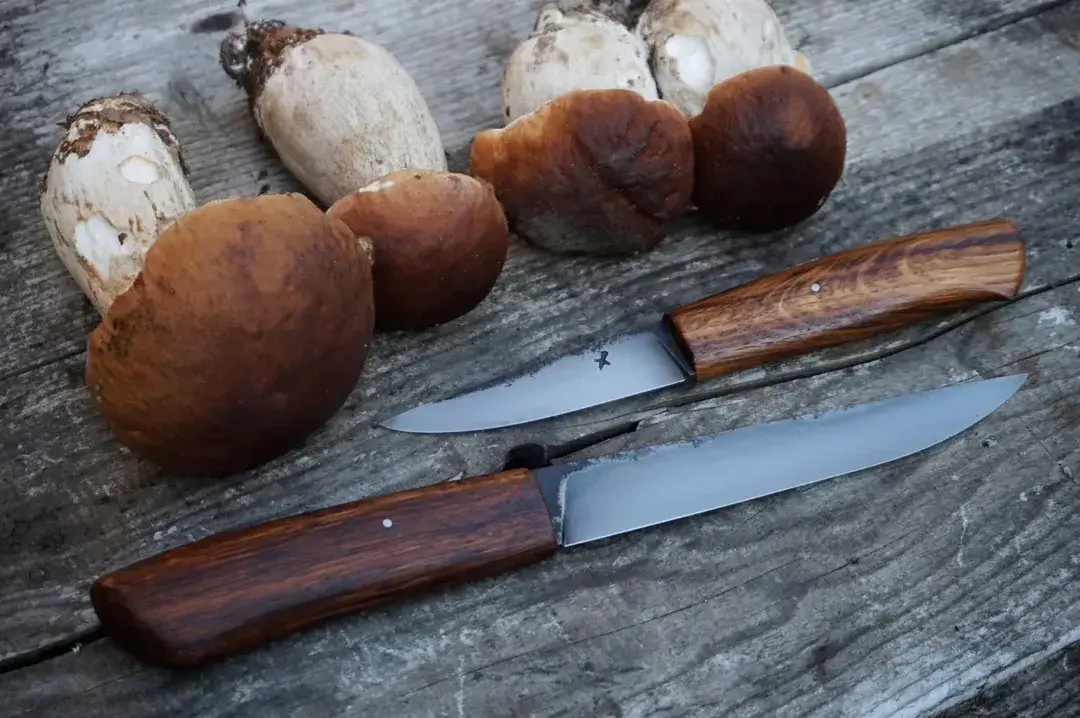
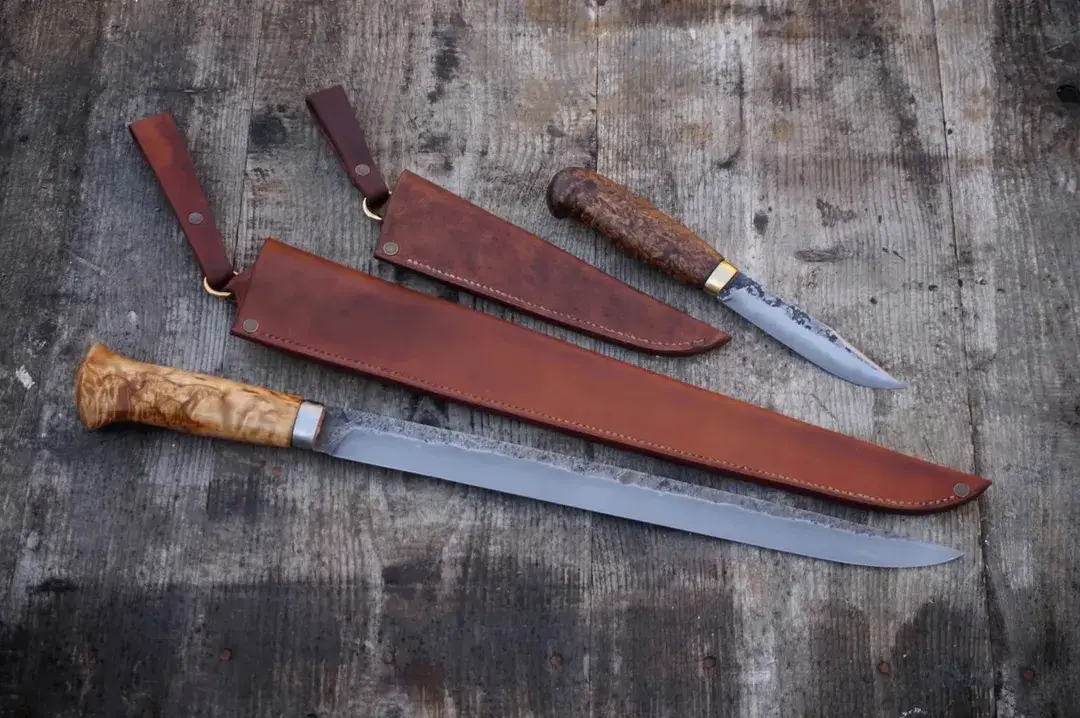
The Forge du Vieux Monde designs utility knives with timeless and proven lines inspired by the Nordic cutlery, including the famous puukkos. Robust blades, cut for adventure, and handles ergonomics with which one can work comfortably for hours. Knives that excel both in the kitchen and in the garden, hiking or hunting...


INTRODUCING

I am inspired by pre-war steel working techniques.

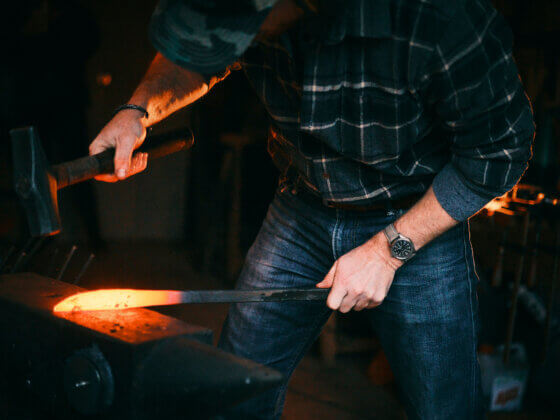
A number of methods exist for making a blade, including cutting and abrasion, which allows stainless steels to be worked. However, I forge the blades in a traditional way, i.e. I shape them by hot deformation with a hammer on the anvil, before polishing and polishing them. sharpen. This ancestral method allows me to have complete control over the geometry of the knife. Combined with appropriate thermal treatments, it gives the blade optimal mechanical properties.

FORGERON-COUTELIER

Ernest Delannoy

The way I work steel is like ancient methods.

Ernest always had a passion for knives. Not as a simple collector, but especially as a wise user.

My curiosity naturally led me to cutlery, because every object I love becomes a subject of exploration. For my part, utility knives embody the perfect balance between shape and function, and it is in the puukko I find the ultimate expression of this harmony. The activities that fill me, like tinkering or adventure in the forests, resonate deeply with the spirit of the puukko. Every walk in nature becomes an opportunity to connect with this tool, which faithfully accompanies my discoveries.

All the knives that Ernest forge are the result of traditional know-how.

This choice of forge allows to retain a greater quantity of material, while favoring precise control over the geometry of each piece. The synergy between the forge and the puukko is palpable. I explore a variety of alloys and steels, which allows me to create different types of puukkos, still anchored in the Nordic spirit. Traditionally, the puukko is an external knife, and it must have a robust and resistant blade, which requires carefully selected steel grades, such as 80CRV2 and 100C6.

His latest collection, entitled « Nordic Collection »is a vibrant tribute to his legacy.

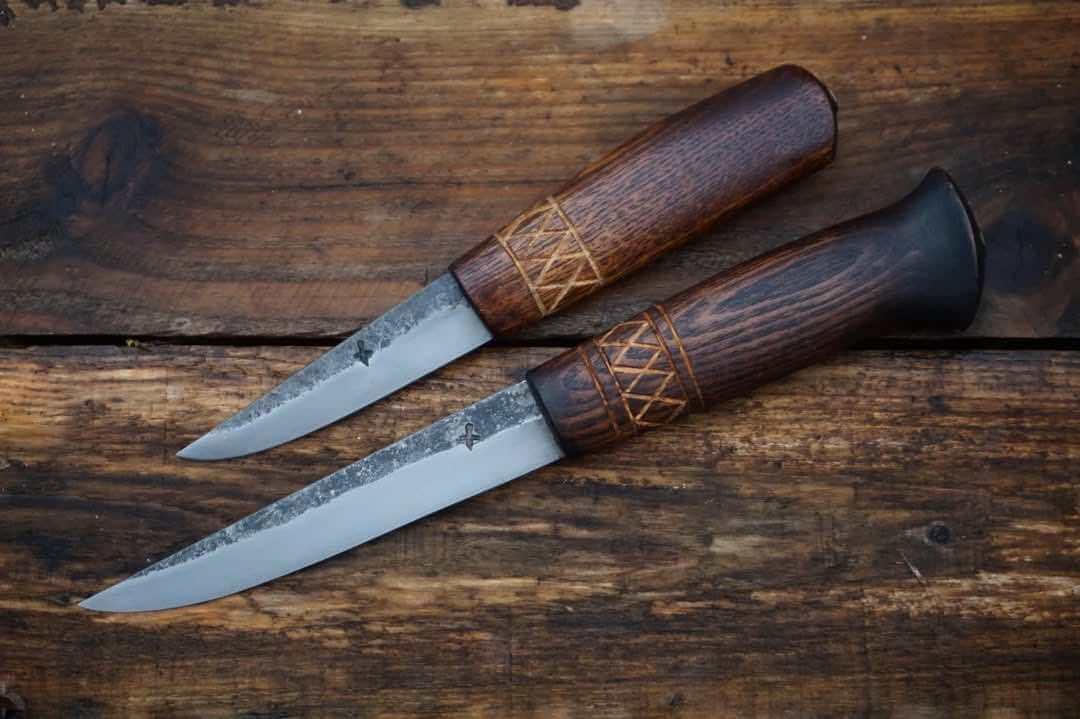
It highlights the birch of Finland, dyed with a mixture that I myself concocted. Each knife is mounted in matted silk, ensuring maximum strength and historical consistency. I choose the best steel shades to offer an exceptional cutting outfit and a resistance to any test. My goal is to pay tribute to the golden age of Scandinavian cutlery, while instilling a personal touch to each piece.


NORTHERN COLLECTION

Ernest Delannoy

I forge my blades in a traditional way, shaping them by hot hammer deformation on the anvil, before polishing and polishing them. sharpen. This ancestral method allows me to have complete control over the geometry of the knife. Combined with appropriate thermal treatments, it gives the blade optimal mechanical properties.


Nordic Collection 2026

Clean, warm and deeply rooted in the traditions of the North. Here's how I designed the Nordic collection.

Ernest Delannoy

As a versatile tool designed for everyday tasks, a utility knife must combine cutting performance, robustness and comfort of use. He accompanies us in the kitchen as well as at the workshop and during outdoor activities.


The work of a blacksmith-cutler is at the same time an art and a science, combining technical skills and aesthetic sensitivity. Every step of creating a knife, from choosing materials to finishing, is essential to produce a quality tool that combines functionality and beauty.


WORK OF A COUNTRY FORCE

What is Ernest Delannoy's work?

1. Design and Planning
Research and inspiration: the blacksmith-cutler often starts by looking for designs and styles of knives, inspired by old traditions or new trends.
Development of plans: he draws sketches and develops technical plans for each knife model, defining the dimensions, materials and techniques to be used.
2. Selection of Materials
Choice of steel: the blacksmith-cutler carefully selects the type of steel according to the properties desired for the blade (hardness, corrosion resistance, ease of sharpening).
Choice of materials for handle : it also chooses wood or other materials for handle, taking into account aesthetics and ergonomics.
3. Forging
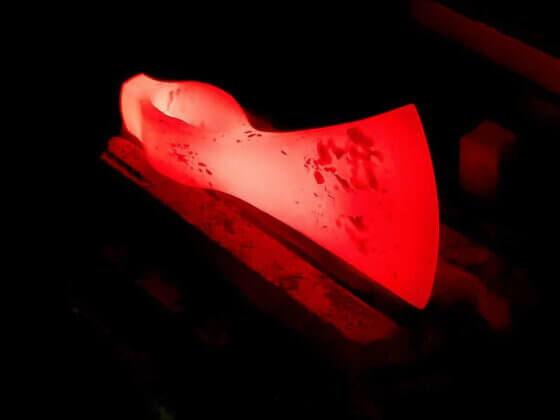
Steel heating: steel is heated in a forge until it reaches a forging temperature, allowing easy deformation.
Blade forming: with the help of a hammer and an avil, the blacksmith shapes the blade, creating the desired shape by hot deformation.
Geometry control: during forging, it ensures that the correct geometry of the blade is maintained, including the thickness and cutting angle.
4. Therapeutic treatments
Structure and hardness: homogenizes and refines the forged steel structure and reduces its hardness through controlled heating and cooling.
Trempe: After forging, the blade is heated to a specific temperature and then plunged into a quenching liquid (oil or water) to harden the steel.
Income: Income treatment can be performed to reduce internal tensions and increase blade tenacity.
5. Sharpening and Finishing
Sharpening : the blade is sharpened with grinding wheels or stone sharpen to get a sharp wire.
Polishing: the blacksmith-cutler polishes the blade to give it a shiny appearance and to protect the steel from corrosion.
Decorative finishes: engravings, patterns or other decorative finishes can be added to customize the knife.
6. Manufacture of Handle
Formatting of the handle : the material chosen for the handle is cut, shaped and assembled with the blade. This may involve bonding, screwing or tenon assembly techniques.
Ergonomics: handle is designed to provide a comfortable grip, allowing prolonged use without fatigue.
7. Final Assembly
Mounting of the blade and the handle : the blade is fixed to the handle, and all parts are checked to ensure a perfect finish.
Quality control: Each knife is subjected to rigorous quality control to ensure that it meets performance and aesthetic standards.
8. Creation
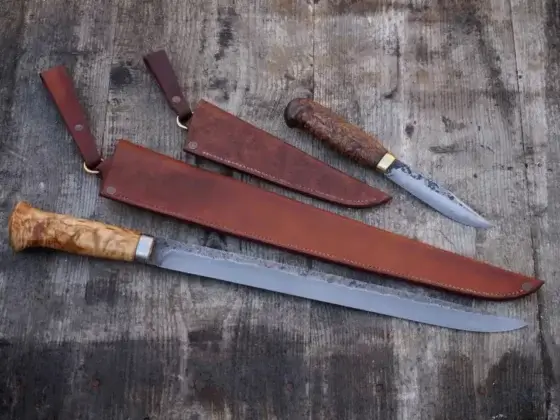
Manufacture of cases: the blacksmith can also design and manufacture leather cases or other materials to protect and carry the knife.


Symbol of Scandinavian culture!

The puukko is characterized by a simple and functional design!

Ils sont généralement inspirés des traditions nordiques. La longueur de la lame varie traditionnellement de 8 à 15 cm, procurant un bon équilibre entre maniabilité et capacité de coupe. Les lames sont souvent en acier carbone ou en acier inoxydable, tandis que les manches peuvent être en bois de différentes essences, comme le bouleau ou le frêne. Chaque partie de sa conception contribue à sa fonctionnalité, en faisant un choix idéal tant pour les tâches quotidiennes que pour les activités en plein air. Le puukko est un outil polyvalent, apprécié pour sa simplicité, son efficacité et son confort d’utilisation.


Made in France

Authentic puukkos

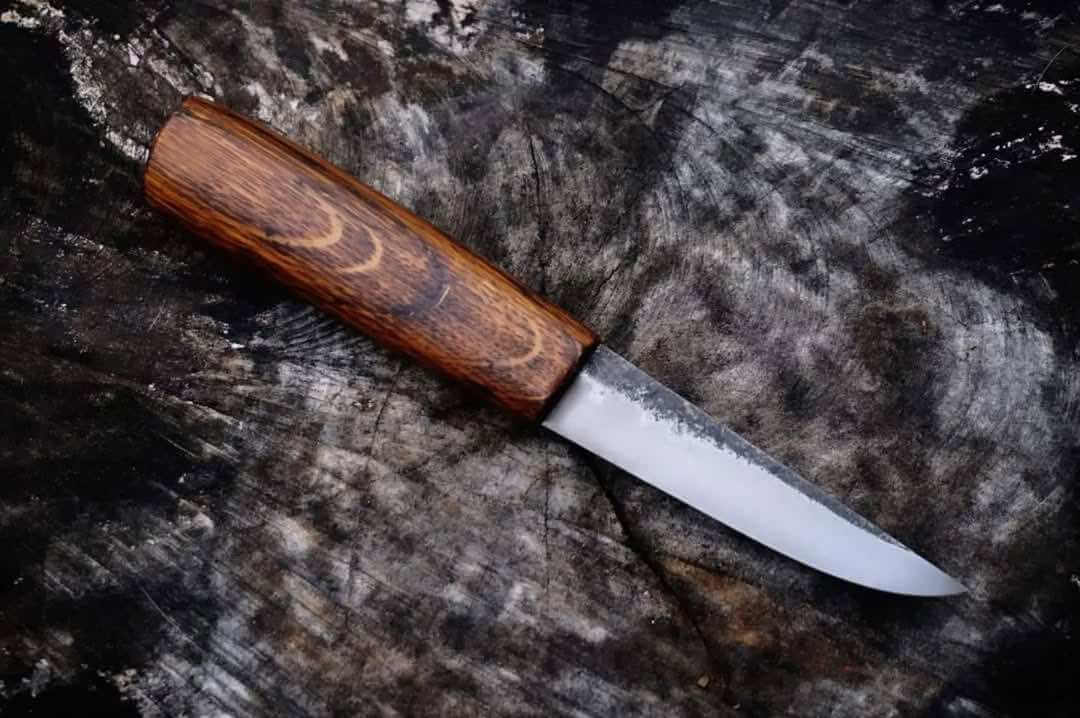
Ernest Delannoy takes as much pleasure in working wood as in shaping steel. It favours European, French and preferably local species. The manufacturing of handle is crucial to ensure the ergonomics of the puukko. It guarantees optimal comfort even during prolonged use. It selects wood for its strength and aesthetics, using classic species such as birch, oak and ash, while committing itself to discovering varieties such as the nerprun, cytise and arbous tree, which compete with exotic woods in beauty and solidity.


ACHIEVEMENTS

The blacksmith embodies the link between man and metal, a symbol of strength and transformation.


Conclusion:

It is always exciting to meet passionate people!

I hope this article about Ernest Delannoy gave you the desire to discover this character attaching more deeply by discovering for example its website. You can also contact him via his email and follow his latest productions on Facebook and Instagram. La Forge du Vieux Monde is located in the department Saint-Privacy. (Photographs: @ Ernest Delannoy)

Thanks for reading this article and thanks to Ernest for this interview, I'm glad I discovered your universe! See you soon.

Discover another cutlery craftsman, Finn this time: Pasi Jaakonaho

Warm regards,


Subscribe to the newsletter.
Not to miss anything, you can subscribe to the newsletter to be notified of next updates.

    EnglishenEnglishEnglish