
Karesuando
THE MOST NORTHERN
The manufacturer north of the Arctic Circle
We make our traditional knives by hand, in much the same way as we have been doing for nearly fifty years.

Manufacturer: Karesuando – Sweden Lapland
Our cutlery workshop is situated on the banks of the river that forms the border with Finland. Here, we lead a daily life close to nature – right at the heart of nature – and the knife is the most important tool we carry with us.
- Background: from a work integration workshop at the Lapland showcase.
- Forces: North in hand.
- Best-sellers: Hunter to serve. Galten for the curve.
- Table: Six blades, one material.
- FAQ: Sami, silk, 10 years.
- Conclusion: other bank of the puukko.
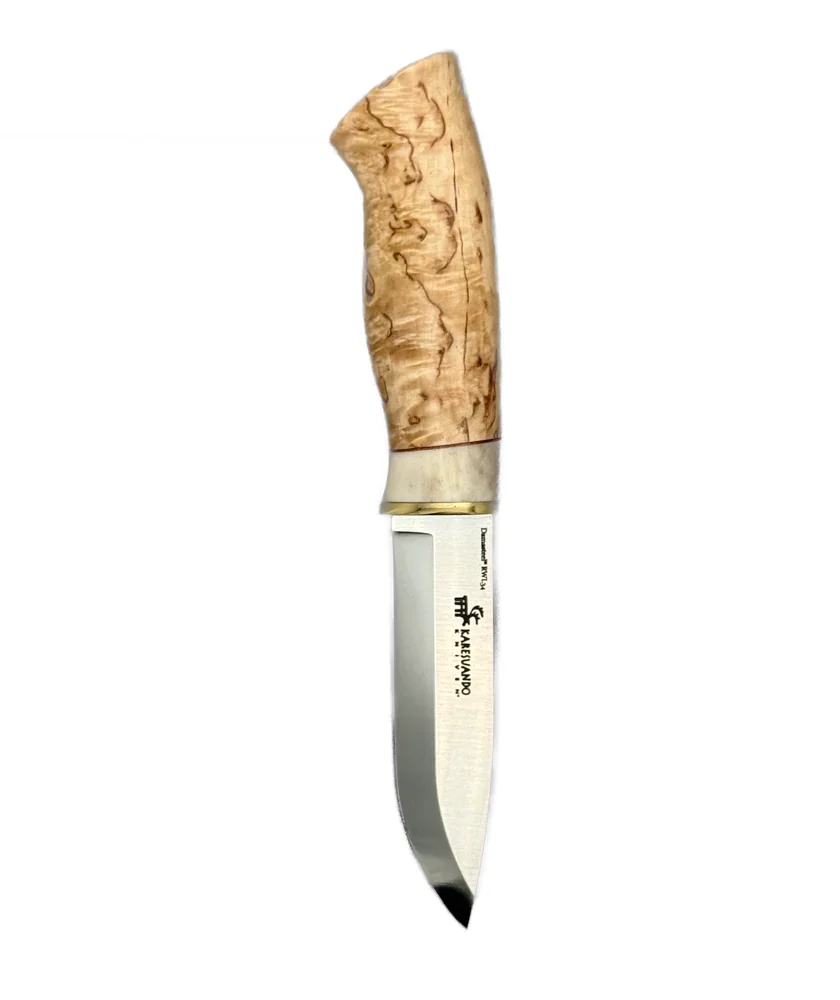
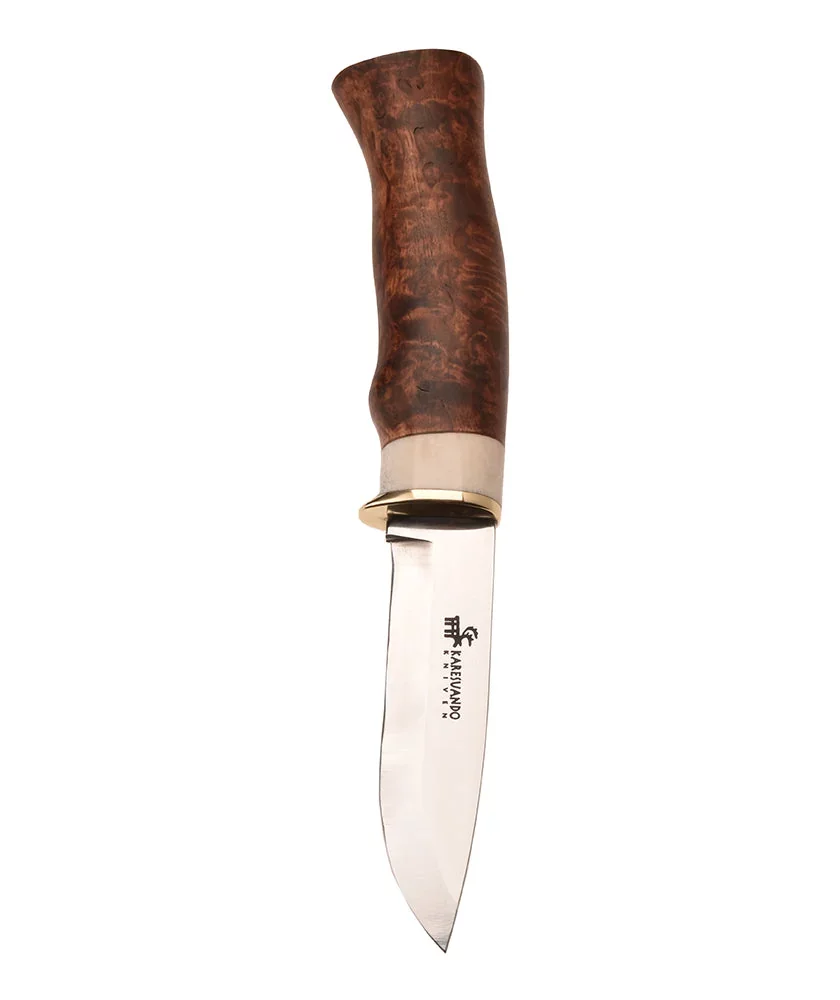
History of the company Karesuando
Karesuando: A Swedish village, 250 km north of the Arctic Circle; the Könkämä sameby; reindeer. First recorded in 1670.
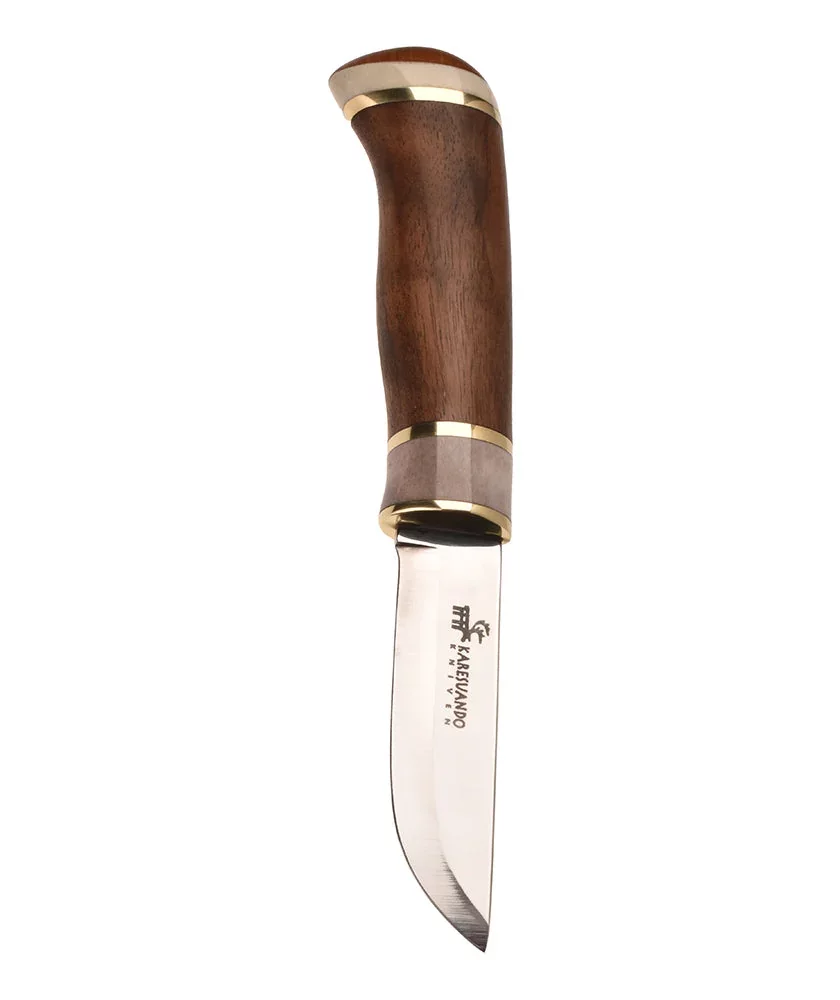
The knives were born in the 1970s as an employment scheme (arbetshus / Samhall), in the building that has been converted into a hostel. With strong Sami roots from the outset (reindeer antler, leather, designs).
1975 : Continuous local production. 1983: the new ‘Formel-produkter’ factory — as symbolic for the village as a blast furnace in Luleå.
Since: Over 200,000 knives and 1 million blades. Everything (or almost everything) is made on site; there is no plastic in the workshop.
Current family: Per and Erik (Jarbelius / Niva according to times). Physical shop reopened to keep visitors in the village.
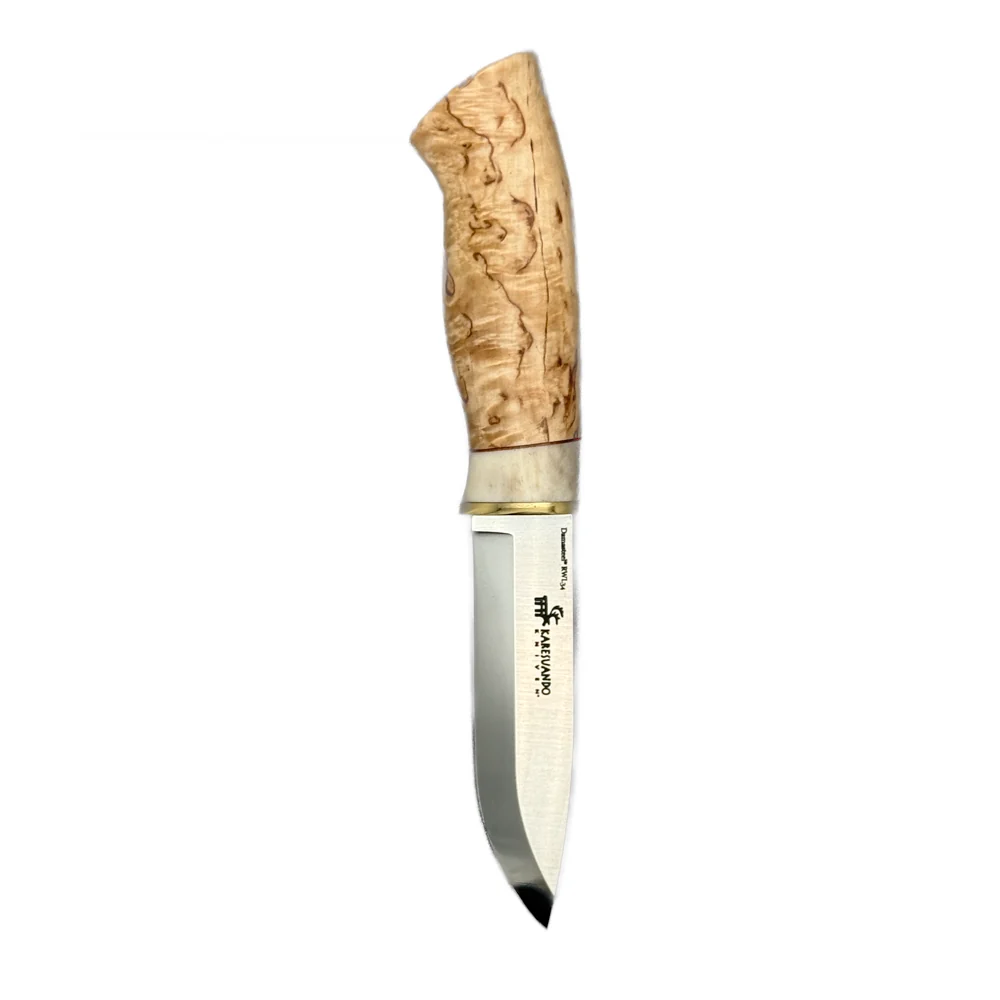
Blades often Sandvik 12C27 (~57 HRC); also carbon, RWL-34, Damascus (Norrsken). Handles : masurbjörk + reindeer antler + brass. Cow or reindeer leather stoves.
10-year guarantee (defaults), not for life. Haches (Unna Aksu) is often the number 1 of sales. Folding Pältsa: Fox machining (IT), finish in Sweden.
Highlights / weak points
Forces
- True north: materials of the place (renne, twisted birch).
- Finish handle often superior (oil, no cheap varnish).
- Steel: 12C27 honest, easy to live. Damascus / RWL-34 as a serious option.
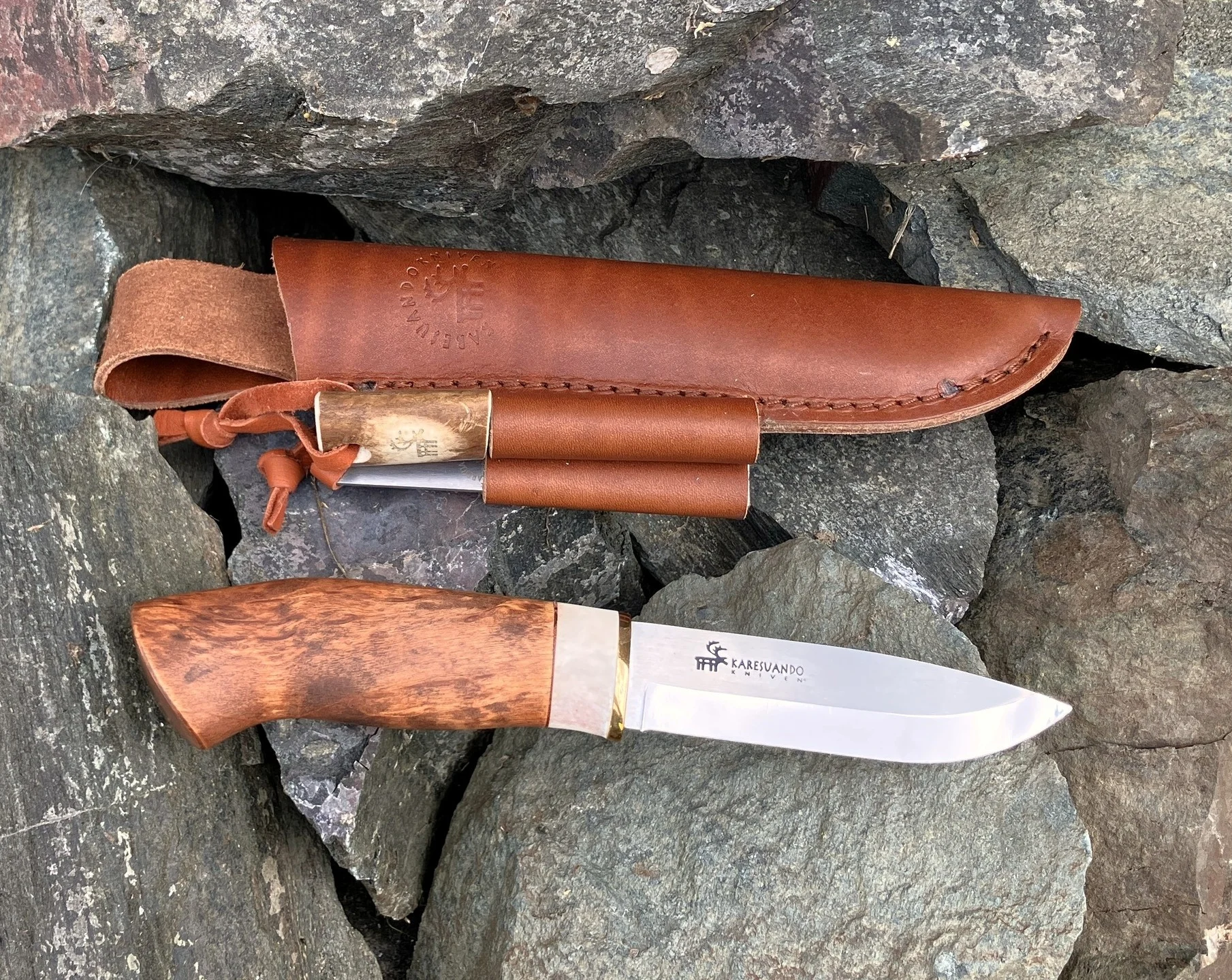
- Intricately crafted scabbards (some with an engraved horn inlay). A distinct Sami identity, free from plastic folklore.
- Made in Sweden, small workshop. Choice of steel on many models.
Weakness
- High price (recently 200–400 €+).
- Classic hidden silk: not a tank. 12C27 UHC.
- Damascus = beautiful and expensive, not magic.
- ‘Lapland Luxury’ catalogue: you’re buying the look rather than the practicality. Just 10 years.
- Axe more sold than knife
- binders: not 100% house.
In one sentence
Karesuando stands out in terms of location, reindeer and craftsmanship; it’s priced like a product from the Far North.
Better sales
Three knives. (Unna Aksu quotes himself apart: best-selling home, it is not a puukko.)
(1) Hunter 10
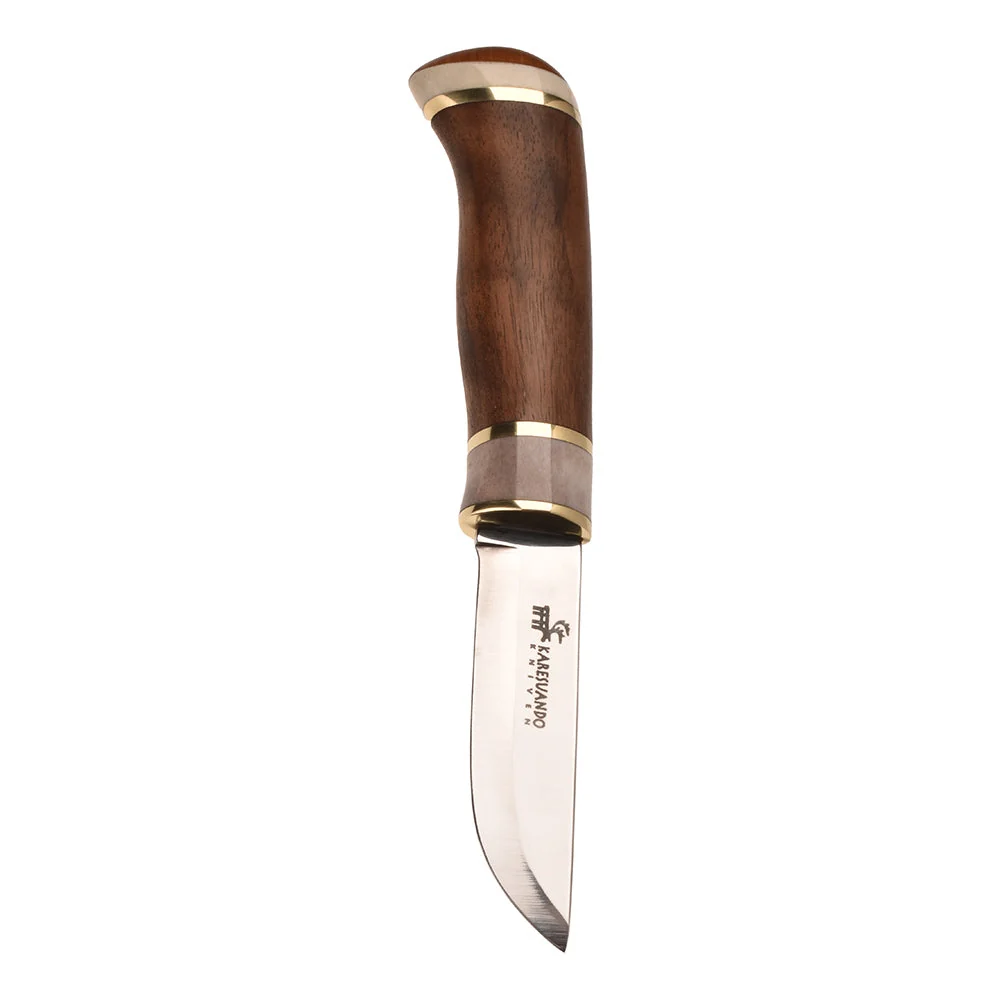
Format « one for the forest ». Blade ~100 mm, ~3–3.2 mm, 12C27 (~57–58 HRC) or damas / RWL-34. Visakoivu + horn + brass. ~95–110 g. First Karesuando if you want a tool, not a Sami window.
2) Galten
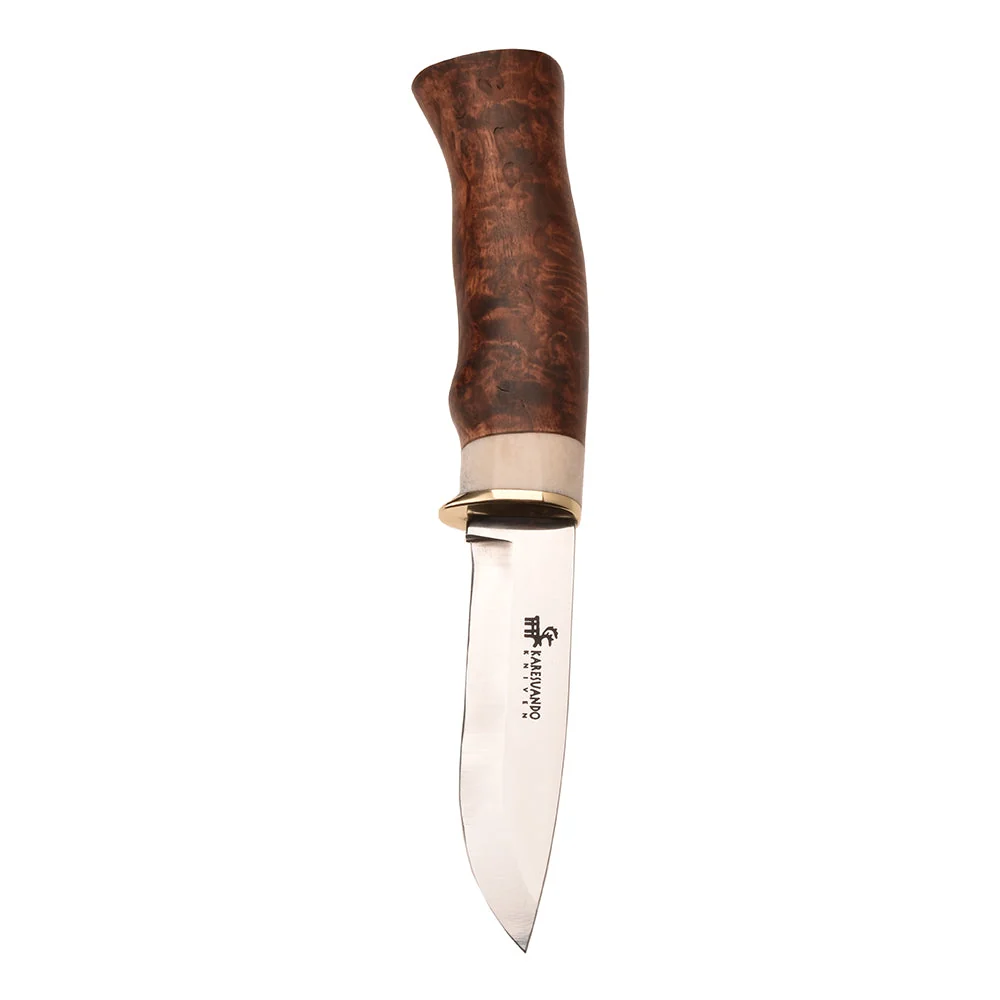
The oldest look « boar » : handle Galbé, local tradition, 40+ years in the catalogue. Hunting. Often the answer « traditional model ».
3) Järven
For the look, Sameby more than for the hard bushcraft.
Mention should also be made of:
Älgen (Elan): shorter.
Damascus Norrsken: gift.
Unna Aksu: small hunting axe, other page.
Doubles (Råsto): large + small, historical use « three knives ».
Your first Karesuando
- The Hunter 10. An elegant, robust knife with a sleek design. Features a blade made from Swedish 12C27 stainless steel and a comfortable handle crafted from oiled, rippled birch, enhanced with reindeer antler details. Supplied in a beautiful leather sheath.
- Personally, I find the handle a bit thin for large hands. I opted for Hieno model, much more comfortable, but more expensive.
Board comparative
| Model | Steel | Blade | Handle | Use | Indicative price |
|---|---|---|---|---|---|
| Hunter 10 / Bäver 10 | 12C27 ~57 HRC | ~100 mm | Birch + horn | Hunting, camp | ~200–250 € |
| Bäver Damascus | Damascus ~58 HRC | ~100 mm | Birch + horn | Same use, window | ~650 € |
| Galten | 12C27 / RWL-34 | ~100 mm | Curve, horn | Traditional hunting | ~220–400 € |
| Järven | 12C27 | ~100 mm | Sami apple | Look sameby | ~470 € |
| Älgen | 12C27 / carbon | ~83 mm | Birch + horn | Compact | –250 € |
| Hunter RWL-34 | RWL-34 ~60 HRC | ~100 mm | Birch + horn | Long wire, stainless steel powder | ~300 € |
Indicative VAT prices EU 2026. Handmade to Karesuando (SE). Variable measures.
FAQ – Karesuando
Subscribe to the newsletter.
FAQ
Most common issues
Is that a puukko?
No. A knife from northern Sweden, inspired by Sami design (known as a ‘leuku’ or ‘tuikka’, depending on the size). Same cultural area, but on the other side of the river.
Why reindeer antler?
Made from local, hard, traditional materials. Pommel, ferrule, inlays. Care: avoid sudden impacts; apply a little oil.
12C27, carbon or damas?
12C27: the daily life of the brand. Carbon: cheaper, more maintenance. RWL-34 / Damascus: yarn and prestige.
Sturdy enough for camp?
Yes for cutting, trimming and shaping. No for vigorous beating: the bristles stick together.
Guarantee?
10 years, material/manufacture defects. They insist: everything is done in their factory.
Which model should I start with?
Hunter or Bäver 10 in 12C27. Galten if we want the local curve.
Karesuando Lapland Sweden

Karesuando Europe
The story of a knife-making workshop situated 250 km north of the Arctic Circle.
Conclusion
Karesuando is the farthest reaches of Sweden: a border river, reindeer, and a workshop that began as a social integration project and has grown into a premium brand. Less established than Marttiini or Helle, more ‘sameby’ than Roselli. You’re paying for the location and the materials. The 12C27 gets the job done without fuss; the Damascus steel tells the story of the North. It doesn’t offer the best value for money (Marttiini, Mora) nor is it the most extreme in-house steel (Roselli).
Do you have any questions? Drop me a line – we’re all enthusiasts here: contact(at)puukko.fr.
But, above all, don’t forget to subscribe to the newsletter.
See you soon.
Warm regards,

A–Z DIRECTORY
Ahti
Brisa
Brusletto
Casström
Fällkniven
Hell
Iisakki Järvenpää
Karesuando
Kauhavan Puukkopaja
Marttiini
Morakniv
Peltonen
Roselli
Terävä
Wood Jewel
Copyright © Photographs – Karesuando