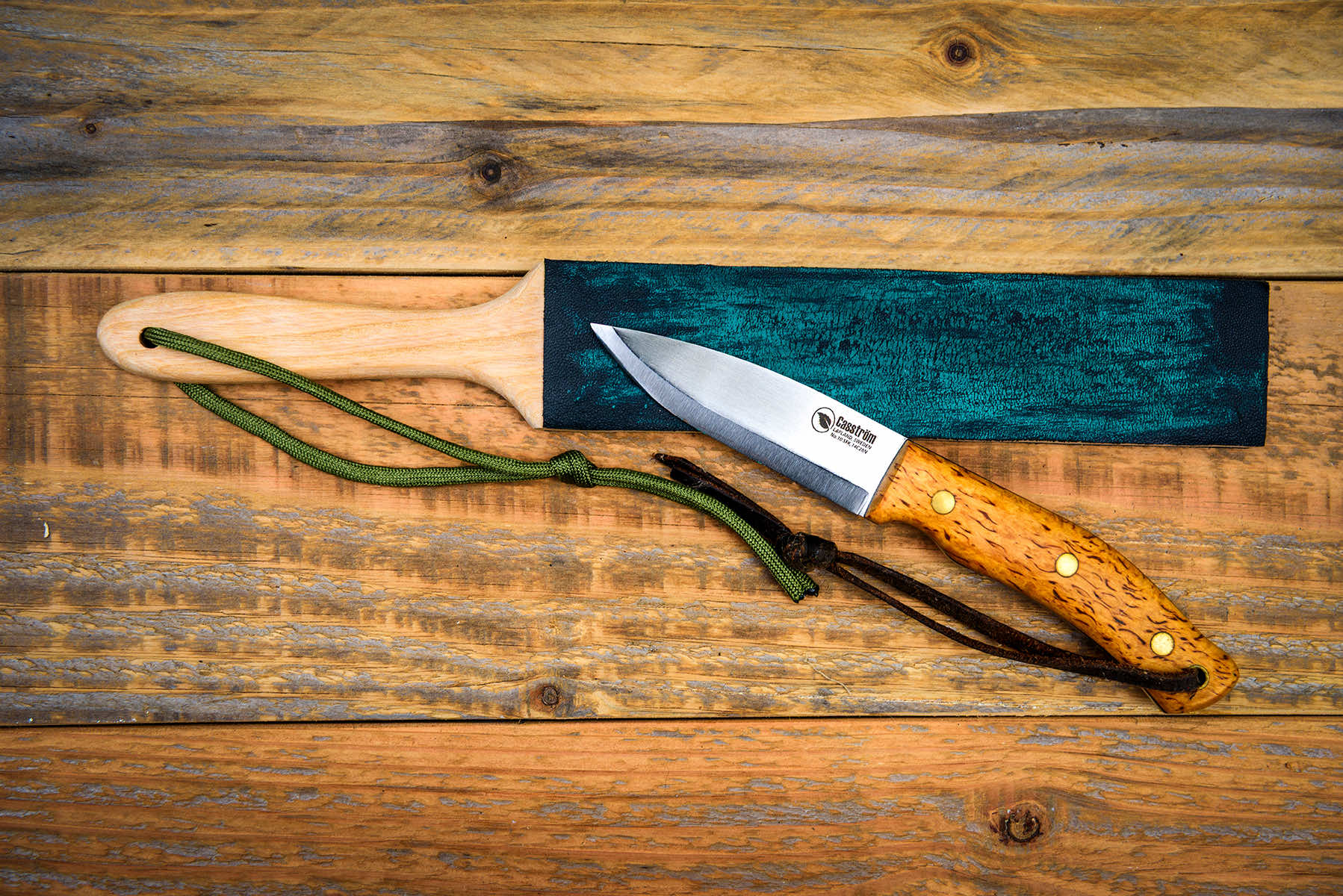
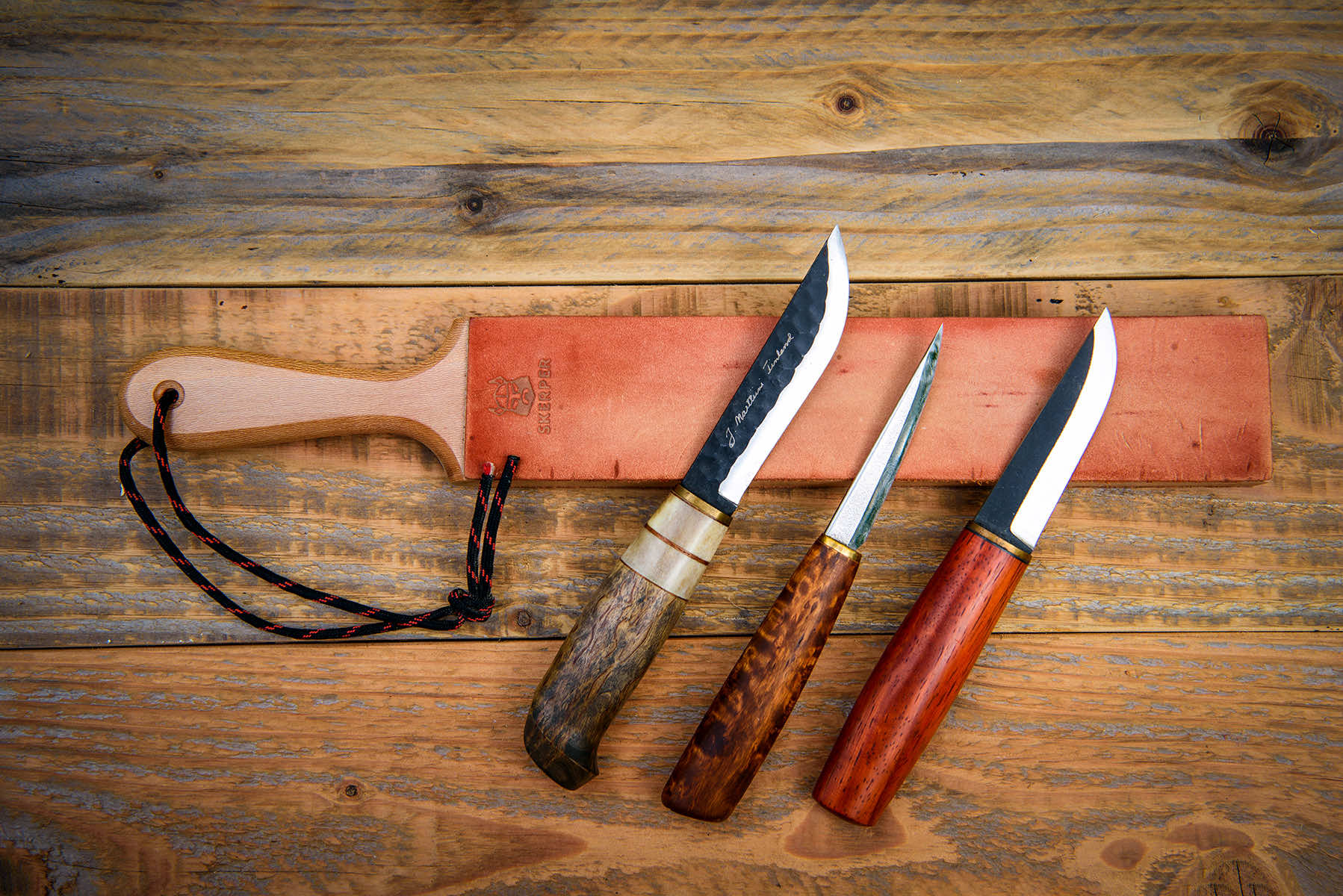
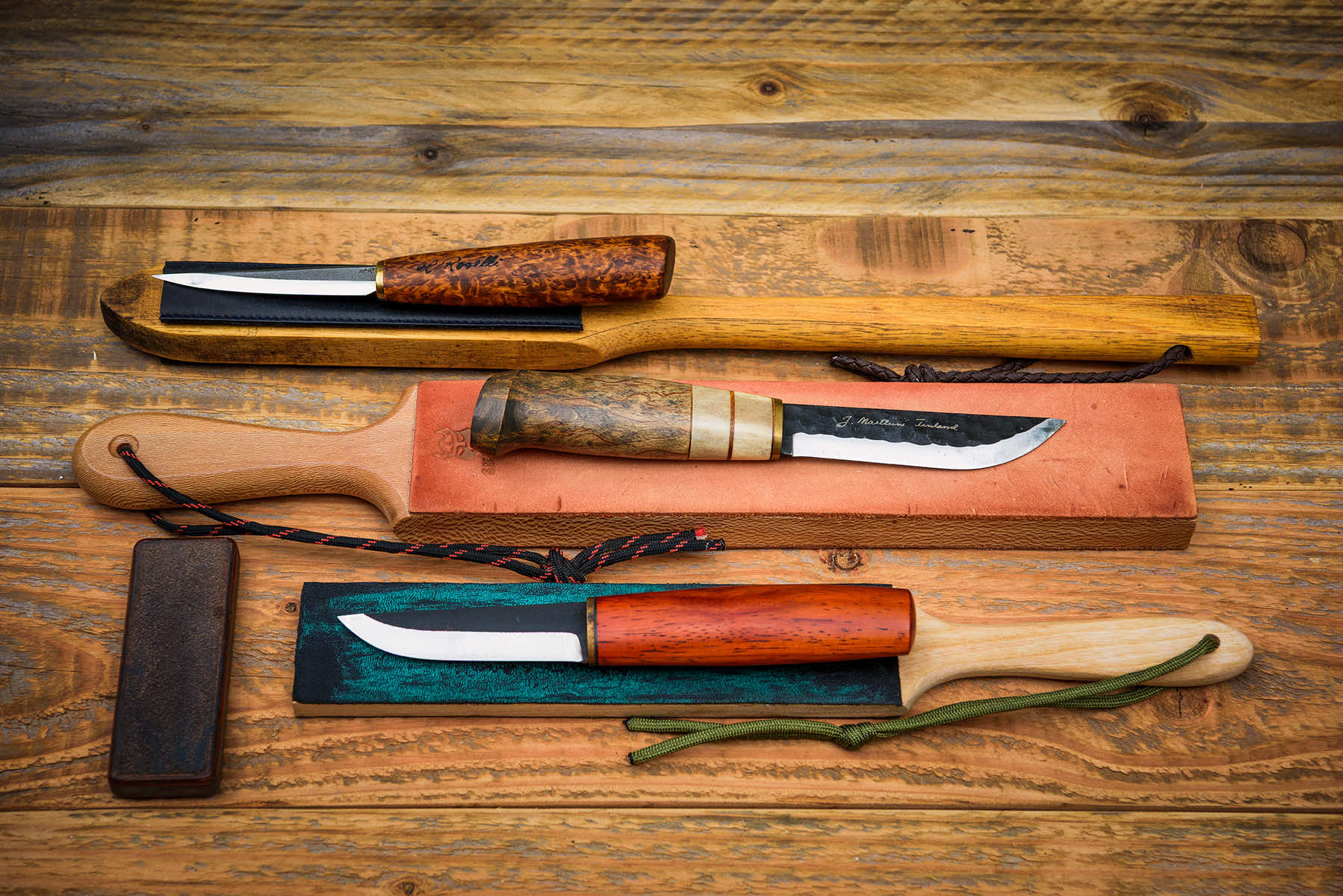
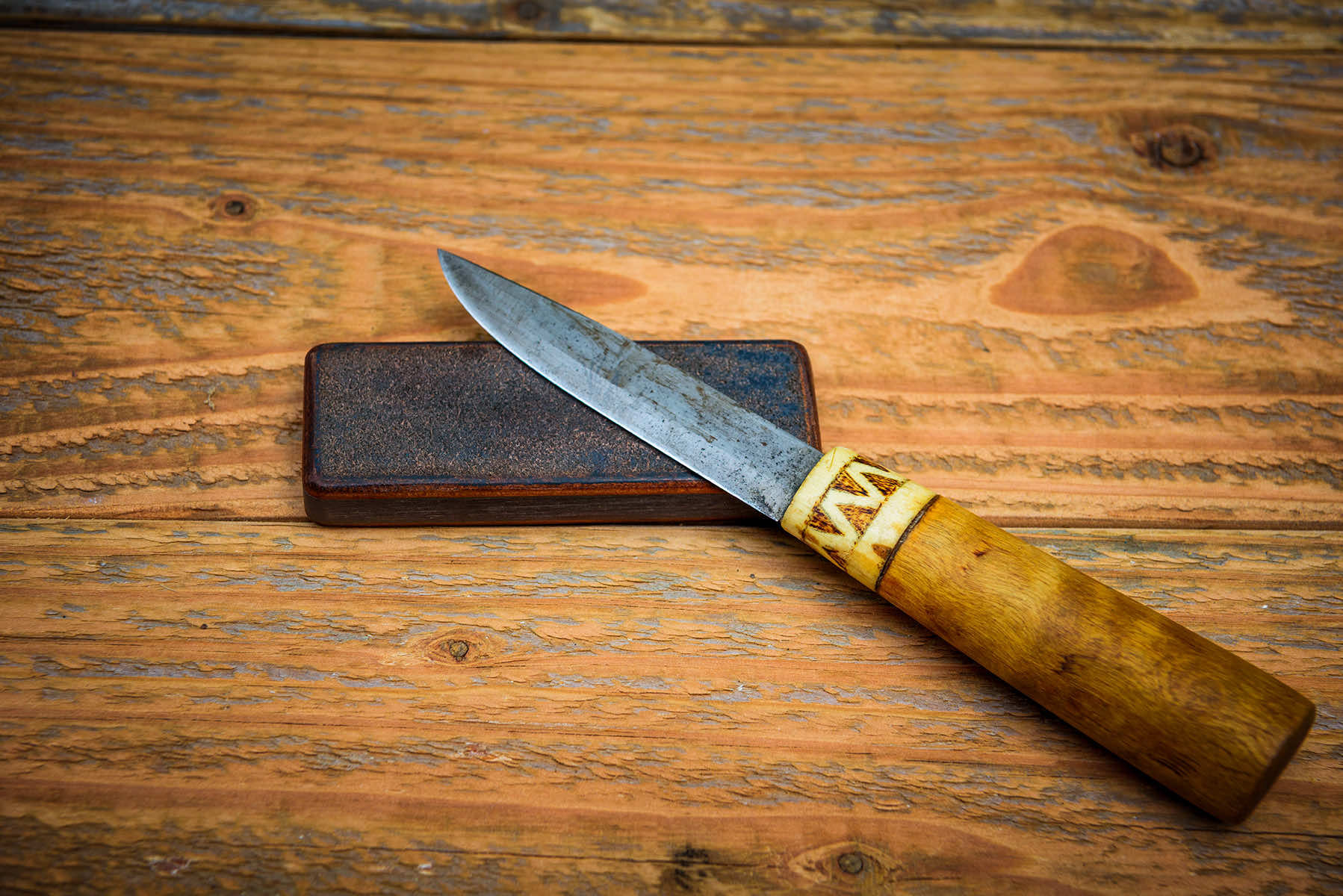
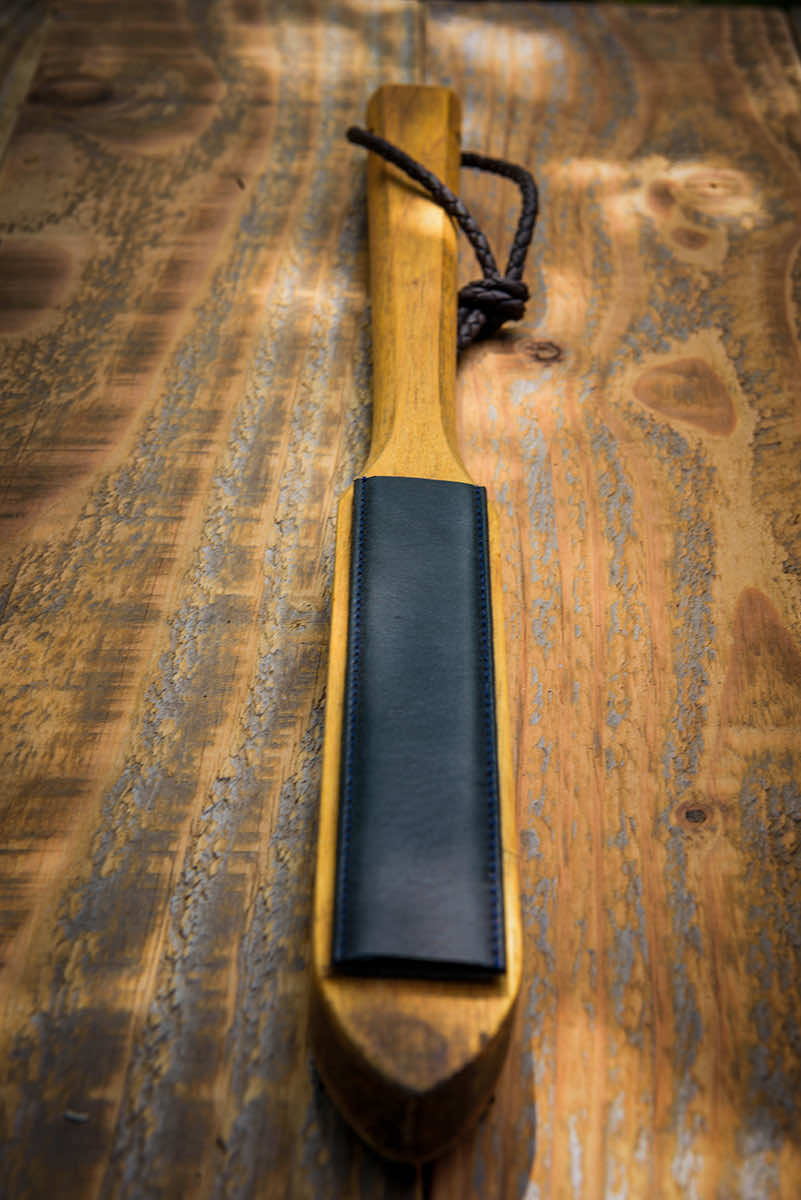
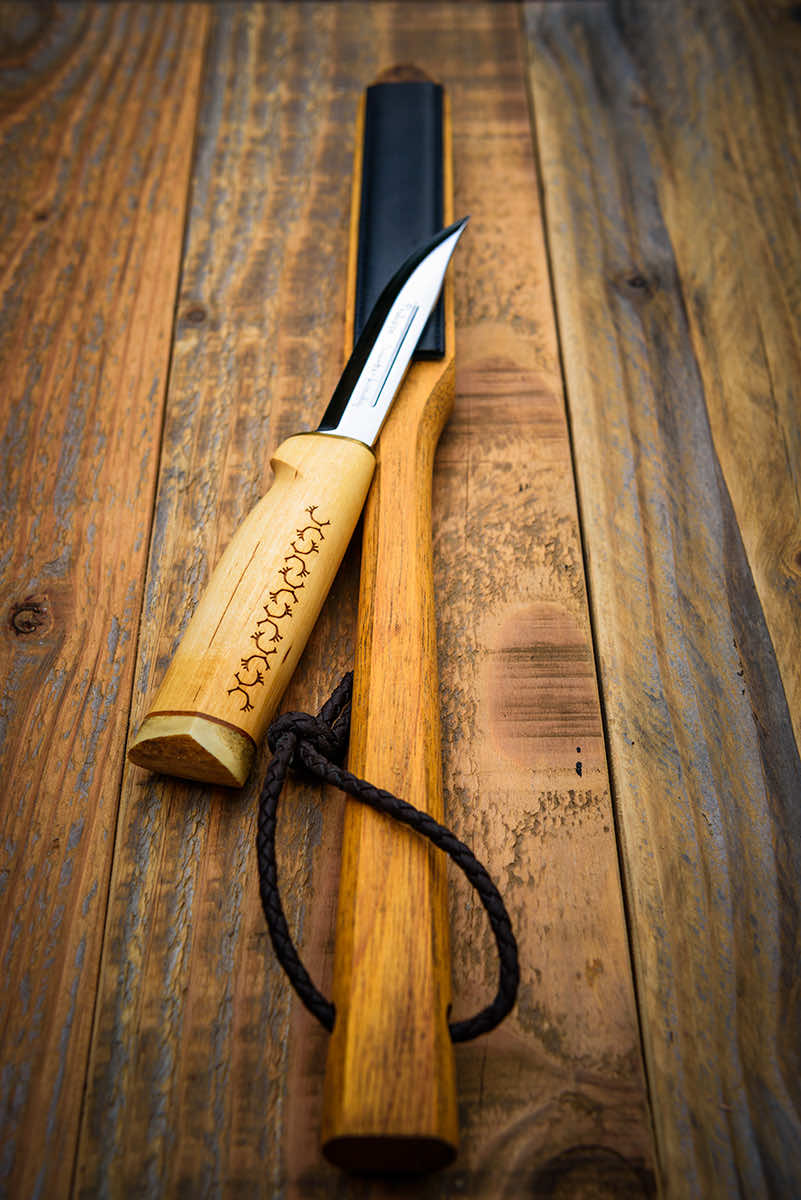
Stropping (sharpening leather) is a finishing technique that refines and polishes the edge of a blade on leather.
Technical principle: slide the blade in motion, at the angle of sharpening, with a very light pressure, alternating the sides. Main advantage: it quickly restores the wire, prolongs the interval between two complete sharpenings and gives a sharper and lasting edge.

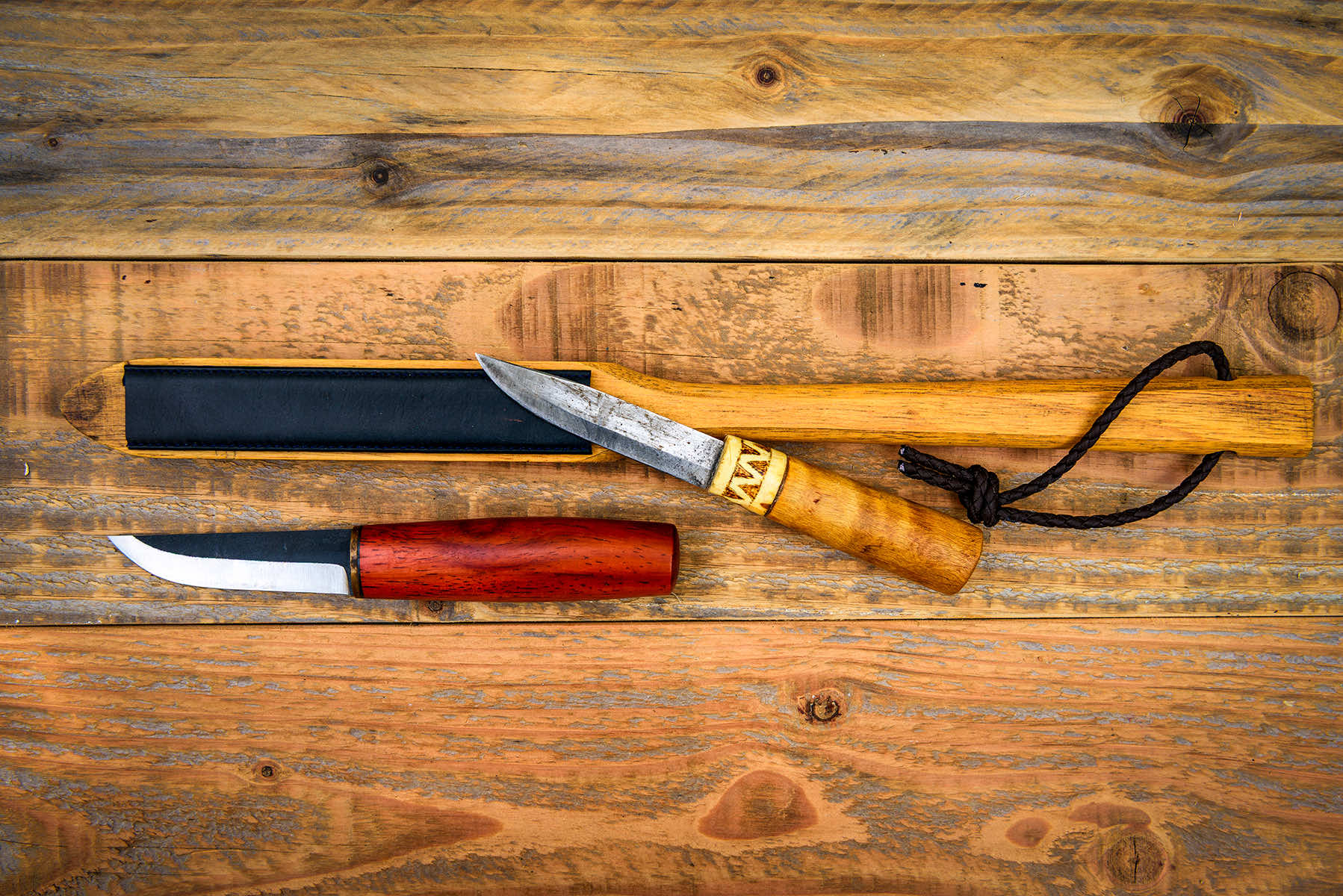
A CLAIR AND PRACTICAL GUIDE ON TECHNOLOGIES D SHARPENING ON CUIR FOR PUUKKOS.
1. Why stroper?
Stropage refines and polishes the edge after the edge sharpening on stone. Here's what he does:
- Line the wire (remove the micro-burr)
- Quickly restores a sharp edge that began to move slightly.
- Gives a more aggressive and durable edge
- Improves slide of blade
- Can restore sharpness quickly between two complete sharpenings
2. Equipment requirements
Leather: face flesh (sweet) or face flower (light). The flesh face hangs the compound better.
Support:
- Strop suspended (hanging strop)
- Strop flat (paddle strop) → easier for beginners
Abrasive compound (strongly recommended):
- Green (chromium oxide) → the most versatile
- White or black → finer or more aggressive
- Uncomposed = very light polishing only
3. Basic technique (most important)
Golden Rule: Always push the back of the blade first (spine leading).
You never pull the edge forward (risk of biting leather).
Steps:
- Apply a thin layer of compound to the leather (if used).
- Put the blade flat on the leather, then lift slightly the back to get the same angle as ton sharpening (usually 15-20° per side for one Scandi or a classic sharp).
- Push the blade forward, keeping the angle constant (the sharp « Next »).
- At the end of the passage, lift the blade, turn it back, and come back in the other direction.
- Alternate Regularly sides.
- Pressure: Very light. The weight of the blade + a slight support is sufficient. Too much pressure rounds the edge.
Number of passages:
- Current maintenance: 10 to 20 passages per side
- After sharpening on stone: 30 to 50 passages per side
- Mirror polishing: more + very fine compound
4. Useful variants
| Type of strop | Advantage | Recommended for |
|---|---|---|
| Suspended | Very fine sensation, good control | Experienced users |
| Flat | More stable, easier | Beginners and regular use |
| Leather + green compound | Better efficiency/fineness ratio | Most cases |
| Leather (without compound) | Ultra-soft polishing | Very light finish |
5. Frequent tips and errors
- Always clean the blade after stropage (the compound can leave residues).
- Do not use a too dirty or too heavy compound (it becomes less effective).
- If you feel the blade « Hang on » strong → too much angle or too much pressure
- For blades Scandi (very common on Mora, Helle, etc.): keep the angle flat Scandi.
- A good stropage can make the difference between a sharp « correct » And a razor edge.
- Stroke a clean, dry blade.
- Never push the edge in the leather.
- Stropage does not replace real sharpening if the blade is really blunt or damaged.
- With practice, the gesture becomes fluid and almost instinctive (often compared to the movement of the old barber).
6. Summary and recommendations:
| Elements | Recommendations | Details / Tips | Recommended frequency |
|---|---|---|---|
| Directorate | Blade back first | Never edge forward (risk of biting leather) | Each stropage session |
| Pressure | Very light | Weight of blade + light support sufficient | Each stropage session |
| Angle | Same angle as I sharpening (15-20°) | Keep angle constant throughout passage | Each stropage session |
| Number of passages | 10 to 50 per side | 10-20 maintenance / 30-50 after stone | Depending on the state of the edge |
| Abrasive compound | Green chrome oxide (recommended) | Apply thin layer on the flesh face | Reload leather every 5-10 sessions |
| Type of strop | Paddle (beginner) or suspended (experienced) | Face flesh hangs the compound better | Preference and level |
| Maintenance stropage | Light polishing | Give the bite back quickly | After 2 to 5 uses |
| Stropage after stone | Complete polishing | Refines and aligns the yarn after sharpening | After each sharpening on stone |


HOW MAINTAIN CORRECTLY A STROP IN CUIR:
1. Regular cleaning
- After each use (or every 3-4 sessions), remove the excess compound and metal particles.
- Use a soft brush (tooth brush or suede brush) to brush in the leather direction.
For further cleaning:
- Pass a slightly damp cloth (weak water only).
- Let the air dry well before re-use.
- Avoids water too much and especially aggressive chemicals.
2. Recharge in abrasive compound
The compound is gradually sausing.
When to recharge?
- When the strop hangs less well
- When results decrease
- Generally every 5 to 10 sessions depending on the intensity of use.
- Apply a thin layer of compound (preferably chromium oxide green).
- Spreads well with the back of an old knife or with the fingers (with gloves if possible).
- Too much compound makes the strop « fat » and less effective.
3. Leather maintenance
Leather can dry out over time. From time to time (every 2-3 months depending on usage):
- Apply a very light layer of leather balm, beef foot oil, or leather conditioner (type Bick 4, Leather Honey, etc.).
- Let in, then wipe the excess.
- Be careful: don't put too much on, otherwise the leather becomes too fat and the compound hangs more correctly.
4. Storage
- Store the strop in a dry place, sheltered from dust and direct sunlight.
- For a strop suspended: leave it tight or put it flat.
- For a paddle: store it in its cover or in a clean drawer.
- Avoid damp places (bathroom, cellar...).
5. When to replace the strop?
- Leather is very worn, hardened or cracked
- It no longer holds the composition correctly
- It has deep cuts or too smooth areas
- In intensive use: average life of 2 to 5 years depending on the quality of the leather
Additional tips
- Keep a small clean cloth dedicated only to strop.
- Make on one side « compound » and the other « leather » If your strop is double-sided.
- A strop well maintained results much better than a strop neglected, even high-end.
6. Summary table
| Action | How to do | Recommended frequency | Tip |
|---|---|---|---|
| Cleaning | Brush with soft brush + damp cloth | After each session or every 3-4 uses | Allow to dry before reuse |
| Recharge in compound | Apply a thin layer of green chrome oxide | Every 5 to 10 sessions | Too much compound = less effective |
| Feeding leather | Light balm layer or leather conditioner | Every 2 to 3 months | Wipe the excess, do not overload |
| Storage | Dry place, sheltered from dust and sun | After each use | Avoid moisture |
| State control | Check for wear, cracks and hold of compound | Every month | Replace if leather is too worn |


STROPPING FAQ
Here is a clear and practical FAQ, prepared on basic and advanced techniques.
1. What exactly is stropping?
Stropping (or stropage) is a finishing technique consisting of dragging a blade onto a soft surface (usually leather) to polish the edge, realign the micro-dents and remove the residual morfil. Unlike sharpening, it hardly removes material.
2. What is the difference between sharpening and stropping?
- Aguisage (stone, diamond...): reformes the bevel by removing steel.
- Stropping: refines and polishes the already formed thread. This is the stage of finishing and running maintenance.
3. Do you have to use a dough or a compound?
No. The bare leather already works very well for daily maintenance. Pasta (chromium oxide, diamond, CBN...) accelerates polishing and makes it possible to obtain a mirror edge, especially after fine sharpening or on super-steel.
4. In what sense should the blade pass?
Always edge trailing: The back of the blade leads the movement, the edge follows. Push the edge leading cut the leather and damage the thread.
5. What angle to use?
The same angle as sharpening (often 15-20° for knives, flatter for straight shavers where the back remains in contact). Some lower the angle by 1-2° to avoid rounding the wire.
6. What pressure to apply?
Very light: The weight of the blade is sufficient in most cases. Too much pressure rounds the edge and reduces its longevity.
7. How many passes do we have to make?
Current maintenance: Ten to 20 passes per side.
After sharpening or with compounds: 10-25 passes per step (from the most abrasive to the most fine), then finish on bare leather.8. Can we strangle all the knives?
No. Avoid serrated blades (they damage the strop) and very curved shapes (curve) if you start. The smooth, straight or slightly curved blades are ideal.
9. When do you get a straight shaver?
Ideally before each shave. Wait 24 to 48 hours after last use to stabilize the wire. Never strangle immediately after shaving (risk of cracking leather with steel particles).
10. How to apply a compound correctly?
Place a very thin layer (paste, spray or emulsion), spread it evenly and let it penetrate well. Too much product crushes the strop and reduces efficiency. On a multi-sided paddle, dedicate one face per grain.
11. What are the most used compounds?
- Chromium oxide (green): versatile and excellent for most steels.
- Diamond (1 μm, 0.5 μm, 0.25 μm...) : very effective on super steels.
- CBN: clean and efficient alternative.
- Classic progression: from coarsest to thinner, then bare leather.
12. How do I know if stropping is successful?
The blade must cut the suspended paper effortlessly, shave a hair easily or slice soft leather cleanly. A well stropped edge is smooth and « Hang on » clean to the touch (without never along the thread).
13. What are the most common mistakes?
- Push the edge into the leather.
- Too much pressure.
- Angle too high or irregular.
- Stroke a dirty or damp blade.
- Contaminate a fine compound with a coarser grain.
14. How often do you cut?
- Kitchen knives or EDC: after each intensive use or as soon as the cut becomes less fluid.
- Straight shavers: before each shave.
Regular stroppage greatly prolongs the interval between two complete sharpenings.
15. How maintain His strop?
Keep it clean and dry. Reload slightly as a compound when it becomes less efficient. Avoid moisture and keep it away from dust. A little light oil can sometimes restore leather flexibility.
Conclusion:
Leather stropping is the final and often underestimated stage of maintenance of a knife. While the stones to sharpen make it possible to reform and sharpen the edge, the strop refines, aligns and polishes the thread to obtain a sharper, more durable and more pleasant to use.
Well controlled,sharpening on leather significantly prolongs the duration between two complete sharpenings on stone. It quickly restores bitrate after a few uses and allows to reach a level of finish that is not easily accessible with stones alone, especially when it is combined with a quality abrasive compound (such as green chrome oxide).
The key lies in regularity and lightness: a minimum pressure, a constant angle and always the back of the blade first. Whether you choose a strop suspended for a better feeling or a paddle for more stability, the main thing remains the consistency in the technique.
In short, strop is not a gadget, but a real maintenance tool. Integrated into a simple and regular routine, it turns a correct edge into an exceptional edge, while preserving the blade over the long term.
Thank you for browsing this article, if you don't want to miss the following, subscribe to the newsletter (it's just below).
To complete this article :
Warm regards,

Subscribe to the newsletter.
Not to miss anything, you can subscribe to the newsletter to be notified of next updates.