


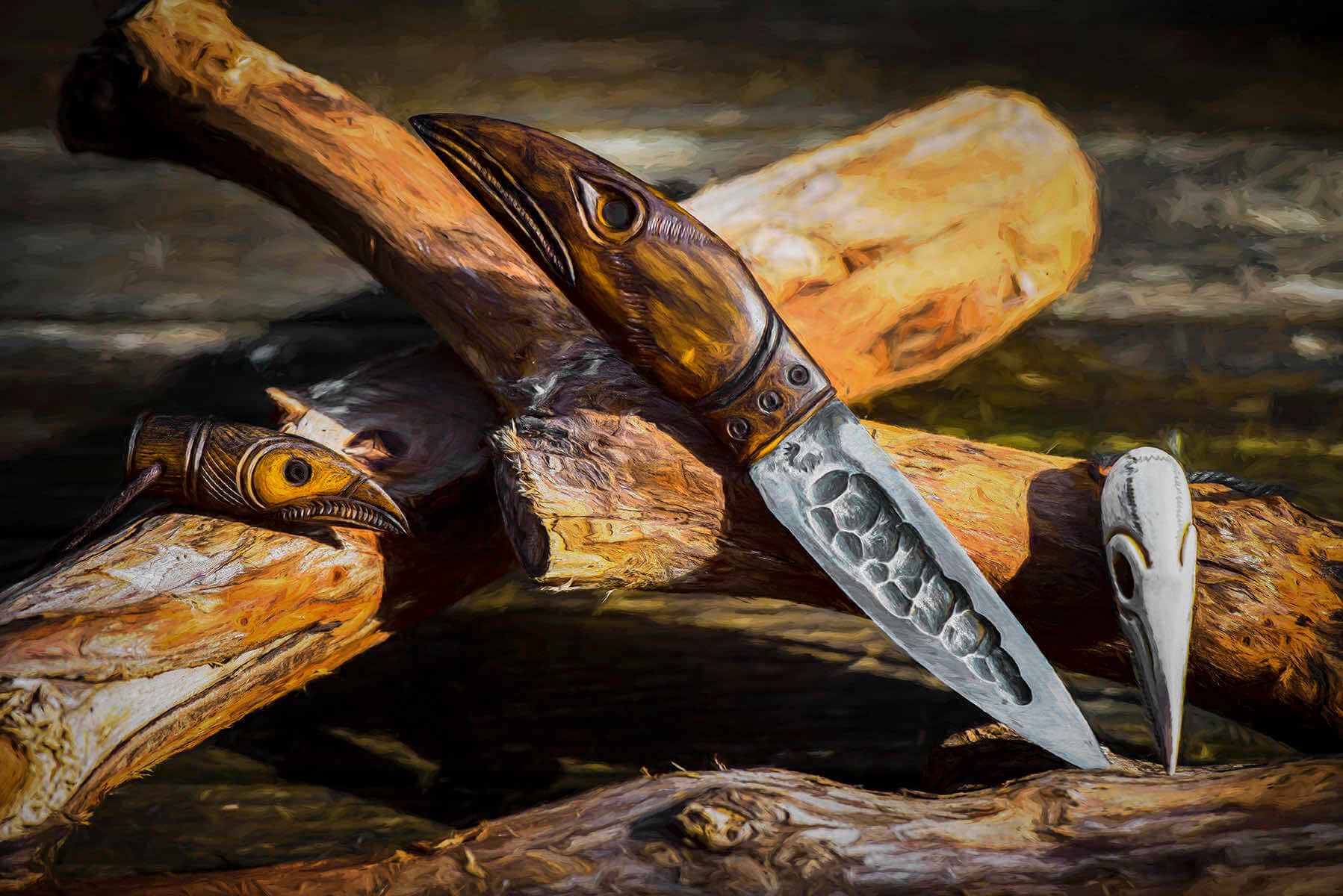
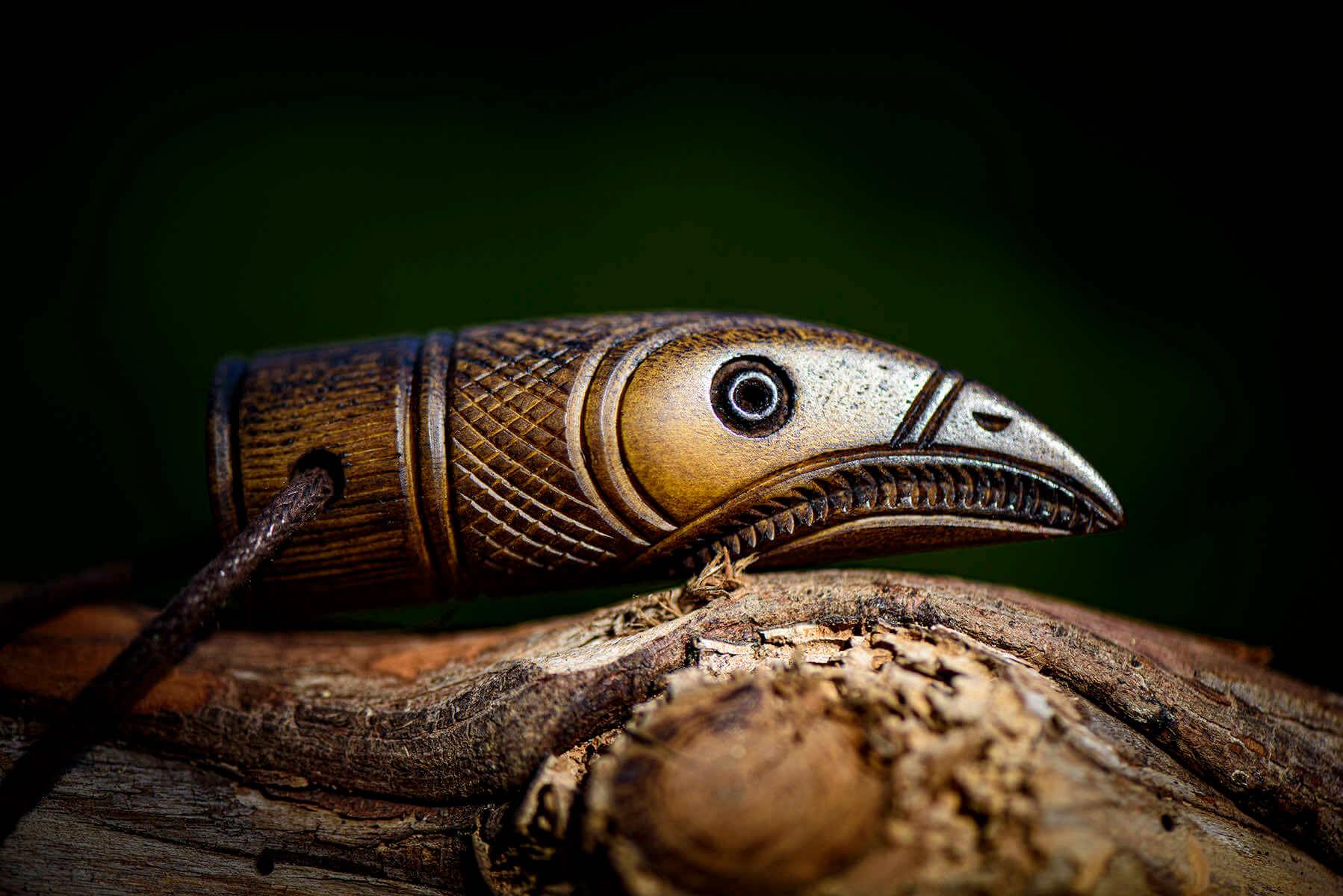
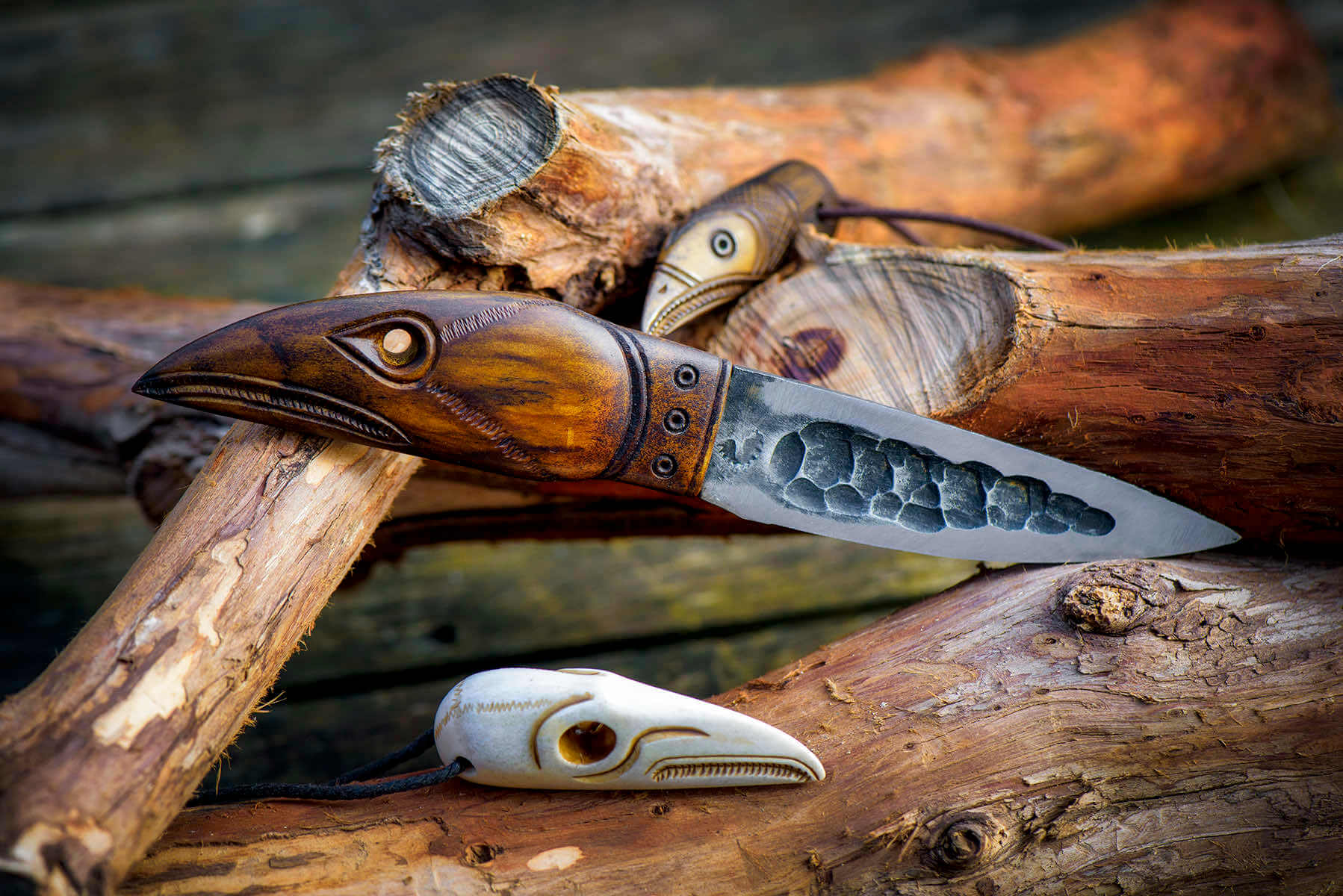
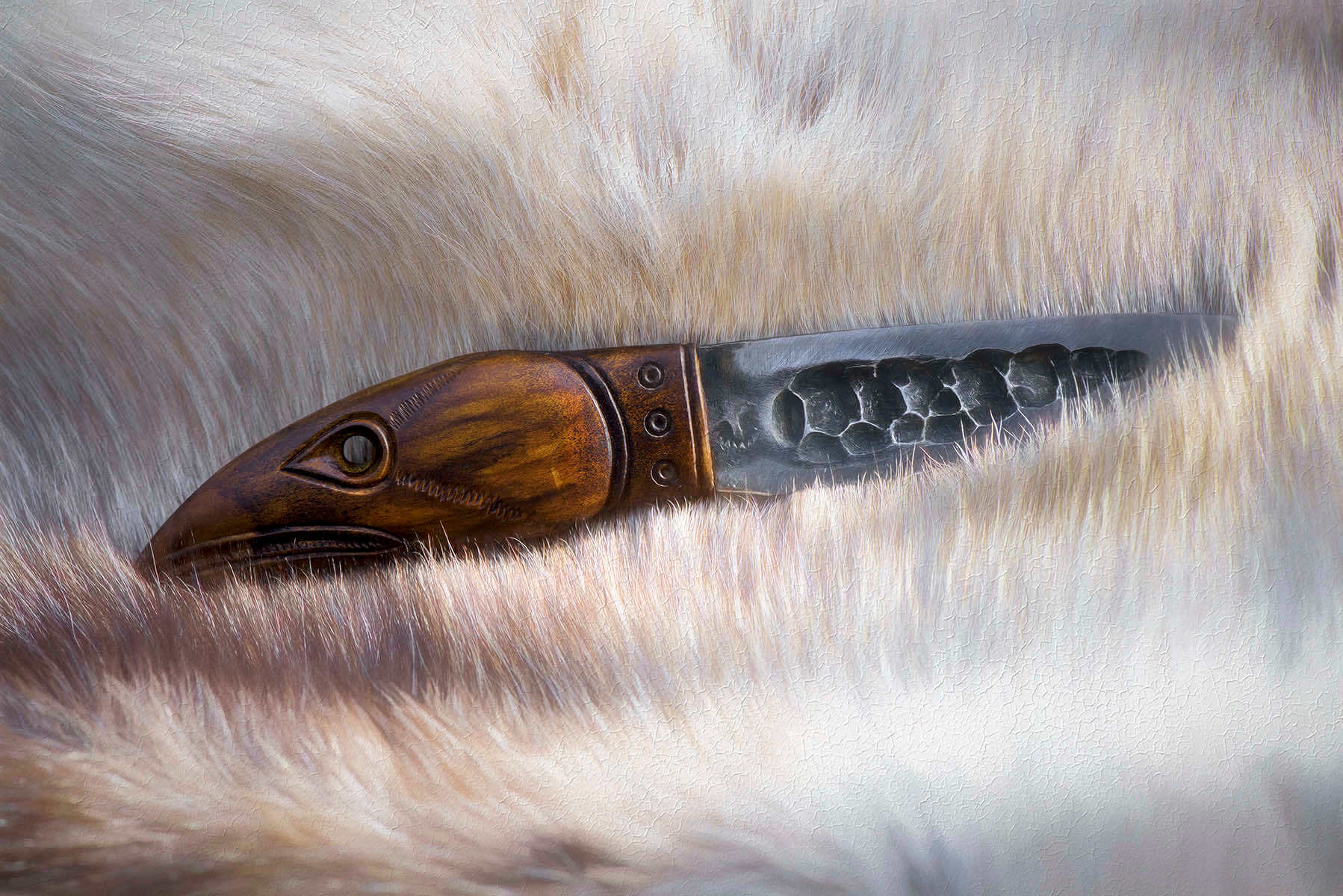
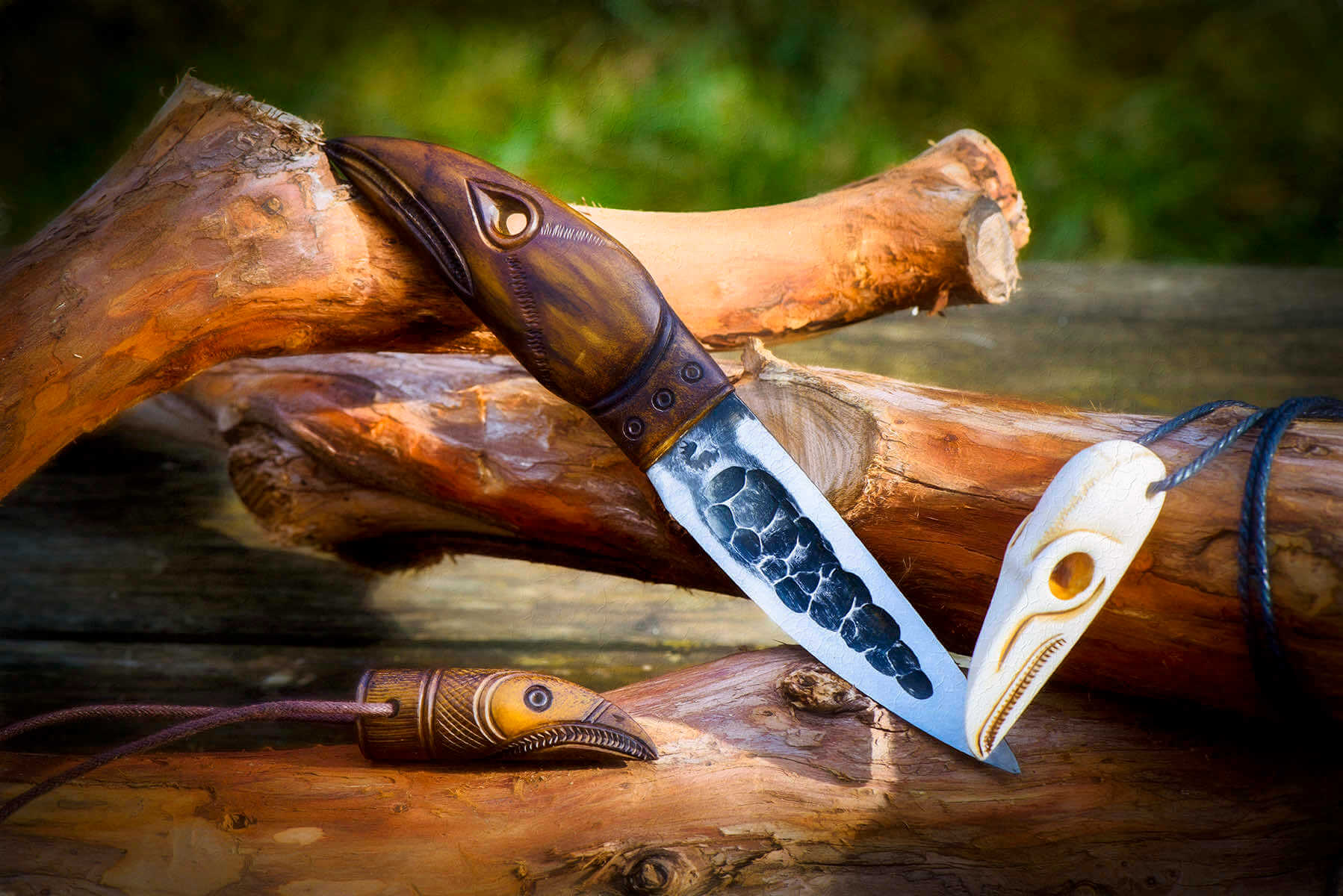
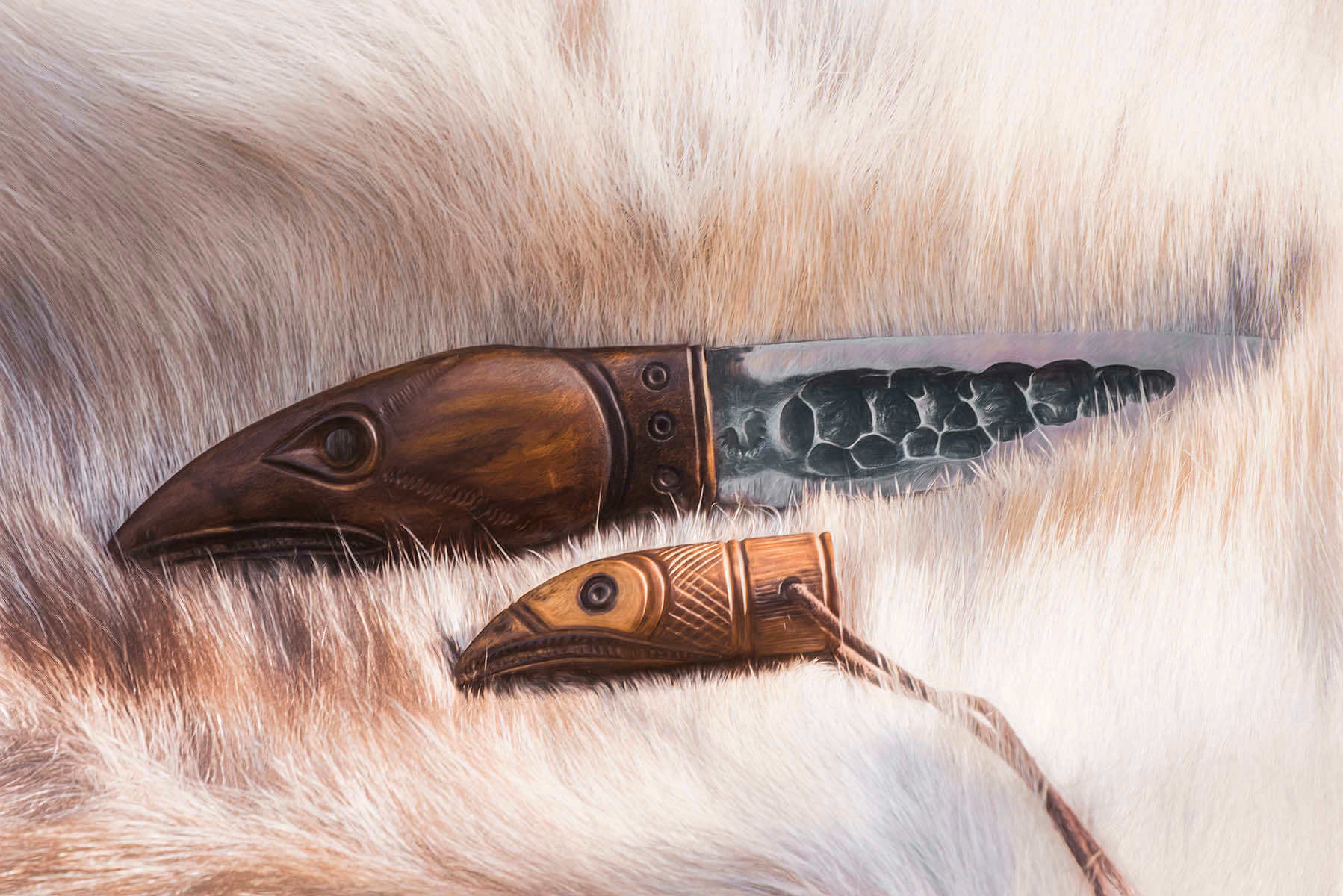
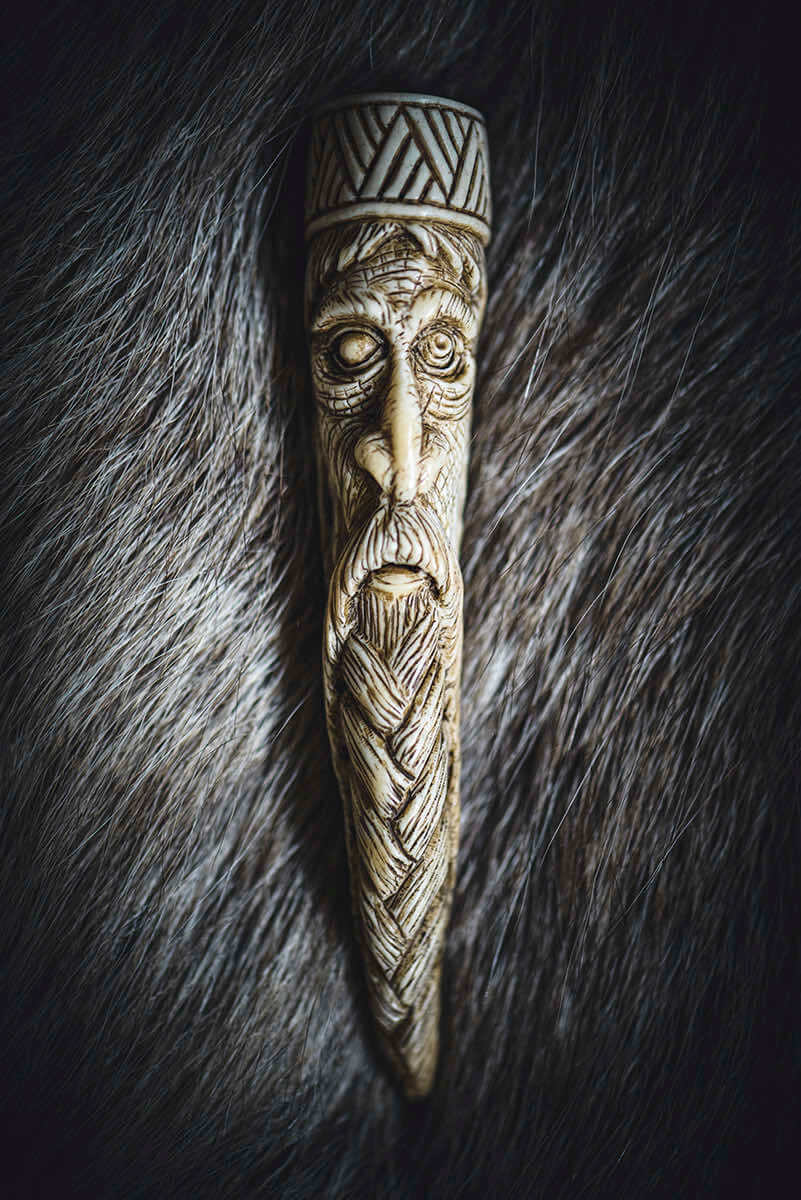
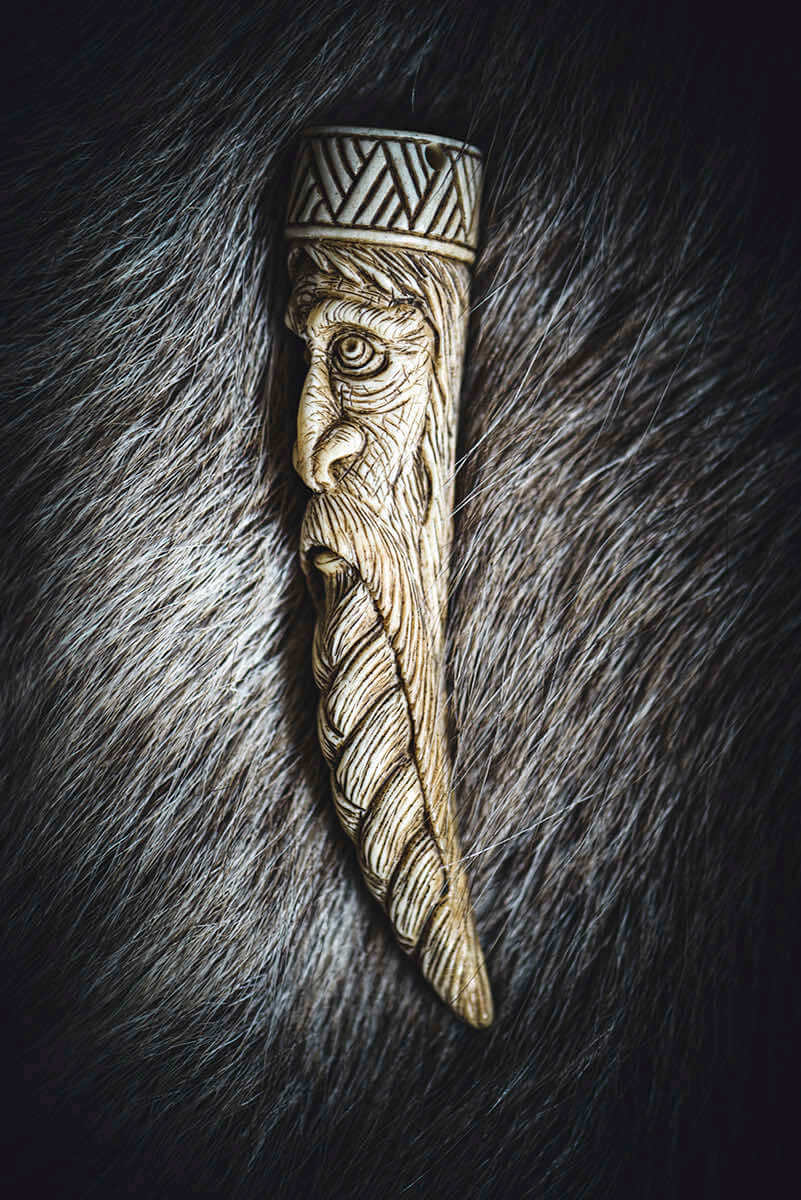
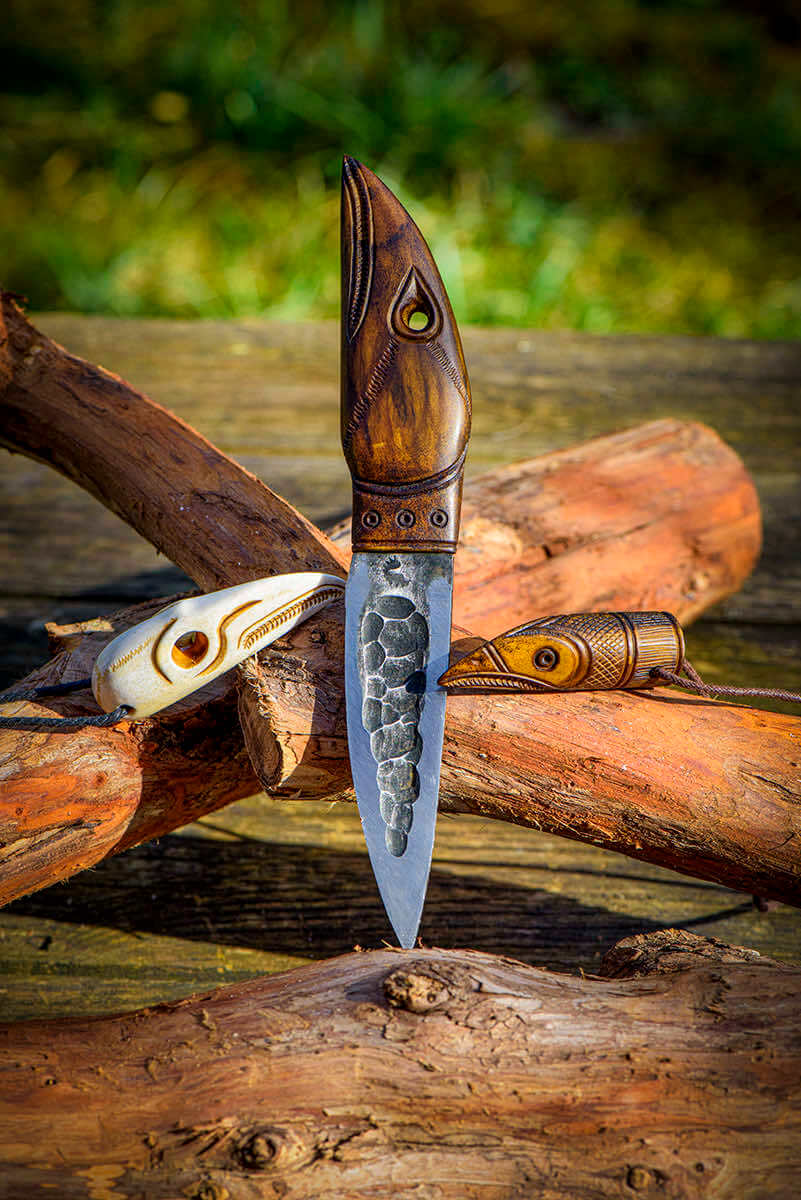
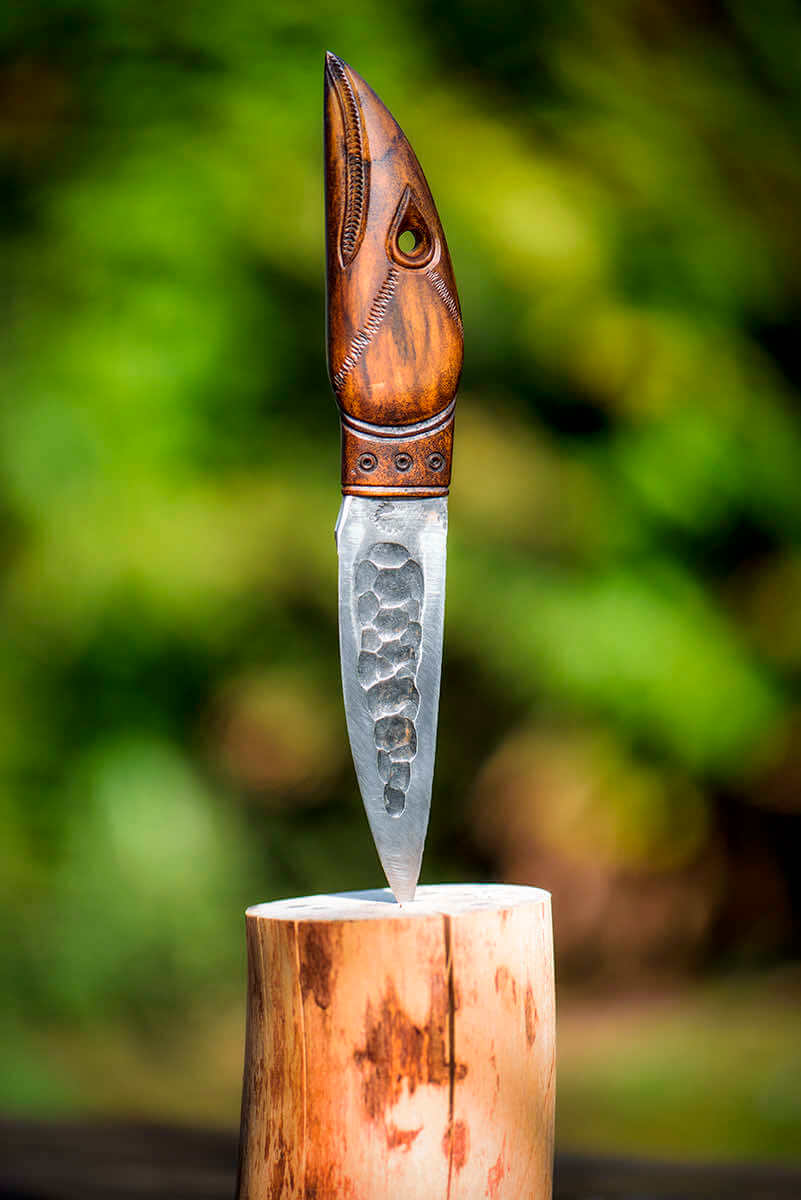
Viking knife forged by hand. Handle crow head carved and patinated in original wood. Amulets related to the god of the Odin war.


Yakoute knife
A Yakutian knife is a Siberian equivalent of puukko Finland.
A Yakutian knife is a Siberian equivalent of puukko Finland.
Today, I push the boundaries of puukko.fr — Finally, one small step and I move from Finland to Russia. In this article, I discuss the vast subject of Vikings and Yakut, the traditional Russian knife. The yakoute knife, and understands of course the puukko, comes from the Scandinavian nations of the North. Aboriginal people, such as Vikings and the Sami people used this tool for many books.
Yakut is the traditional Yakut knife, used in Yakutia for hundreds of years without significant change in its design. Yakutia, now called Republic of Sakha, is a large region of Russia. It covers nearly 3.1 million km2, or about 18% of Russian territory.
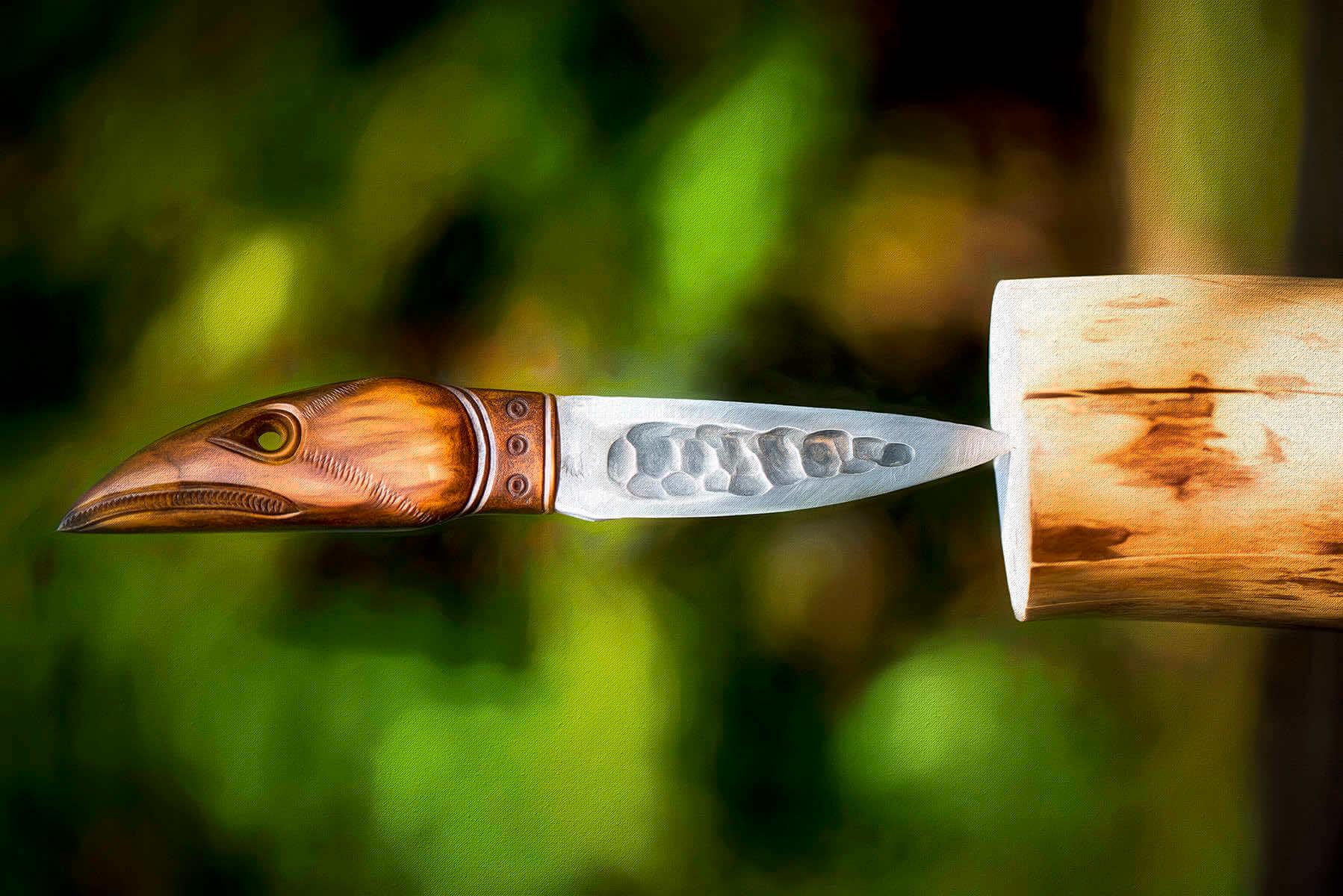
One of the peculiarities of a yakut knife is the blade. Its shape resembles an arch formed in the cross-section to ensure massive resistance with a convex milling on its left and a hollow forged scissor mill similar to the kiridashi Japanese to his right. This is the standard model for right-handed users.
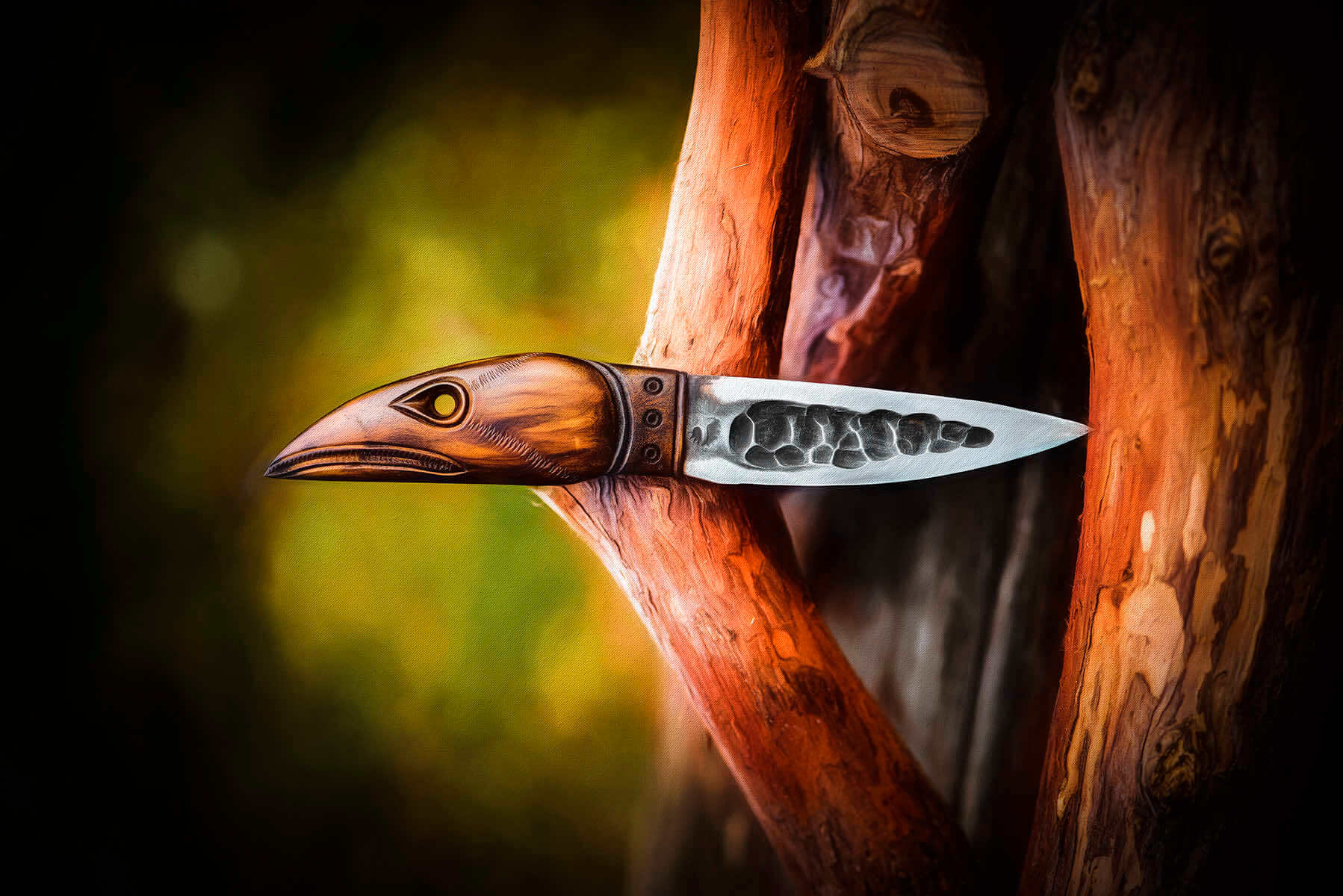
Viking knife forged by hand, handle head of raven cut in original wood.
In northern mythology crows were also associated with death and the Hereafter. It was believed that they would guide the souls of the fallen warriors in Valhalla, the great hall of the dead, where they would feast and fight until the events in Ragnarok.
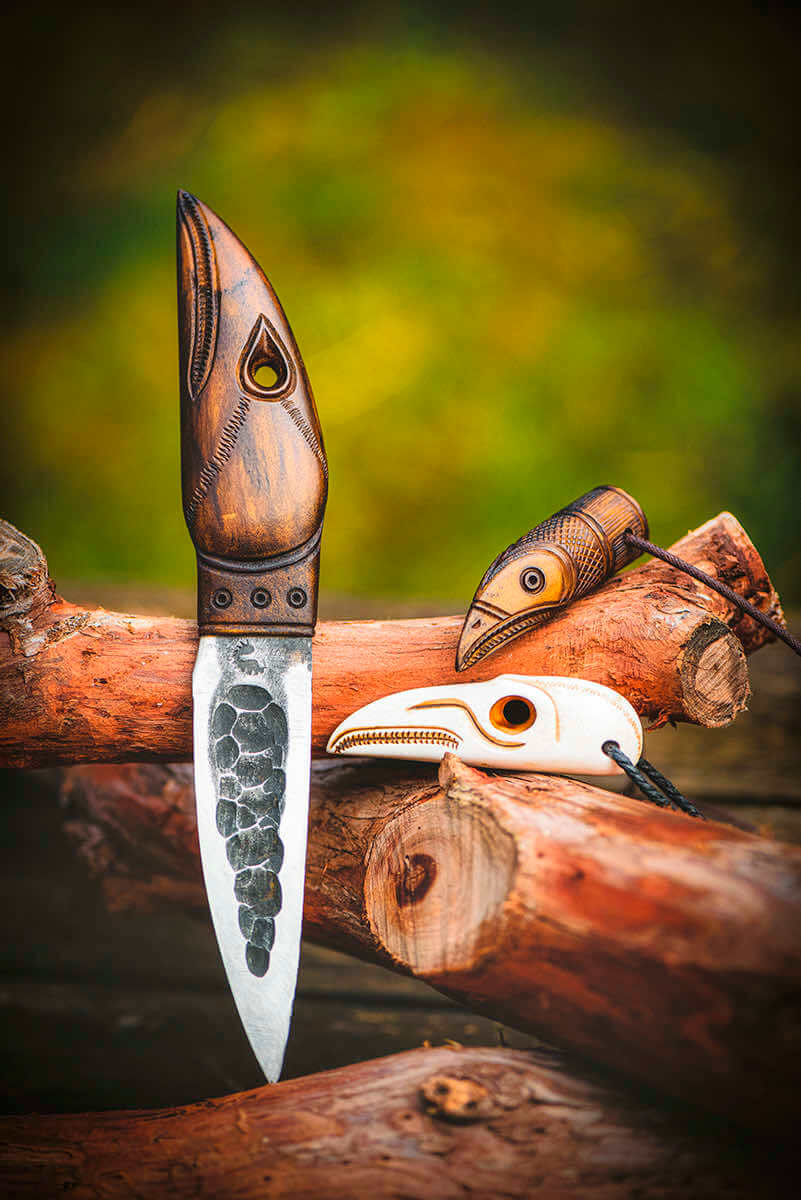
Odin, the Father of all things
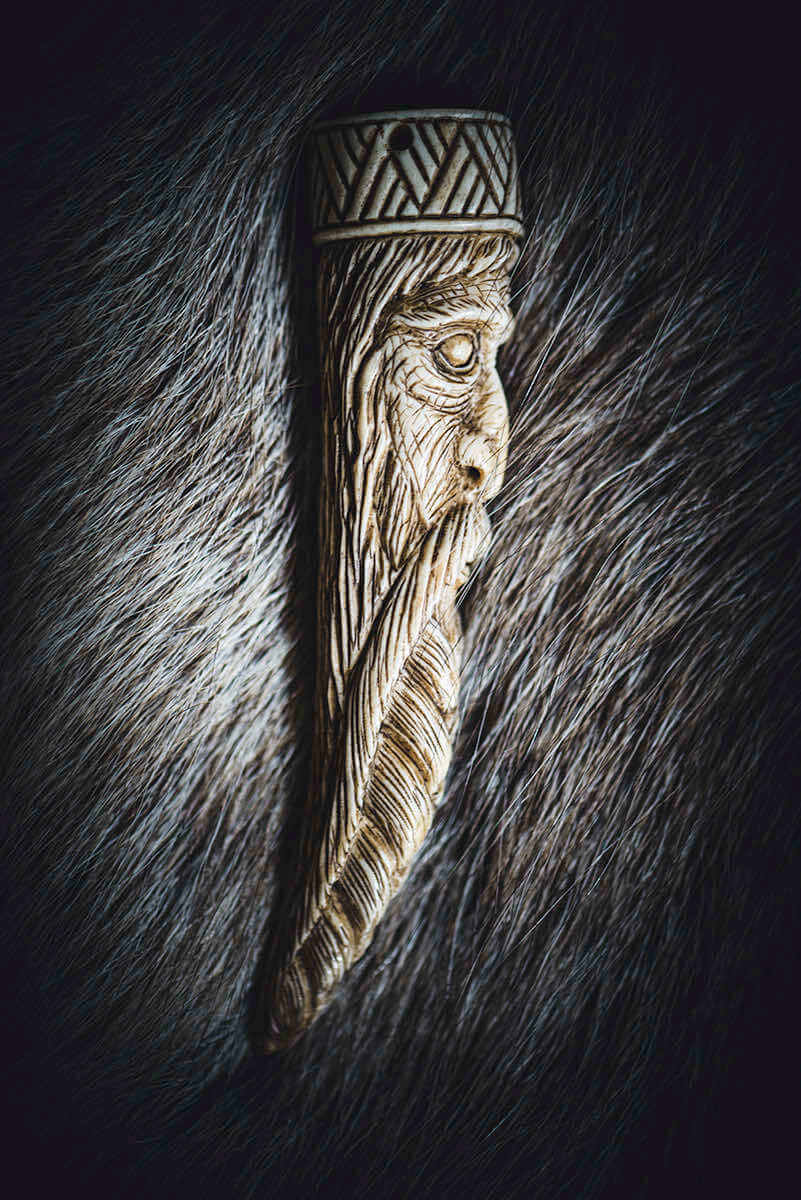
Odin is the king of the gods in Scandinavian mythology. According to legend, he is the son of the first man and daughter of a giant. He lives within a territory called Asgard. He is represented as an old man, rather authoritarian.


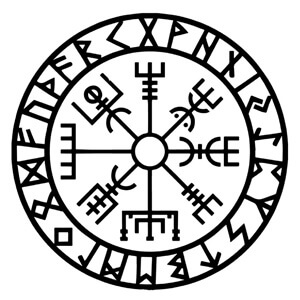
Ravens played an important role in northern mythology
They represent wisdom, knowledge and death. Their presence was deeply respected and associated with the god Odin, considered a wise and powerful figure.
According to northern mythology, Hugin and Munin would fly around the world every day and bring news and information to Odin. The ravens were regarded as wise and well informed creatures, and were regarded as symbols of Odin's wisdom and insight.
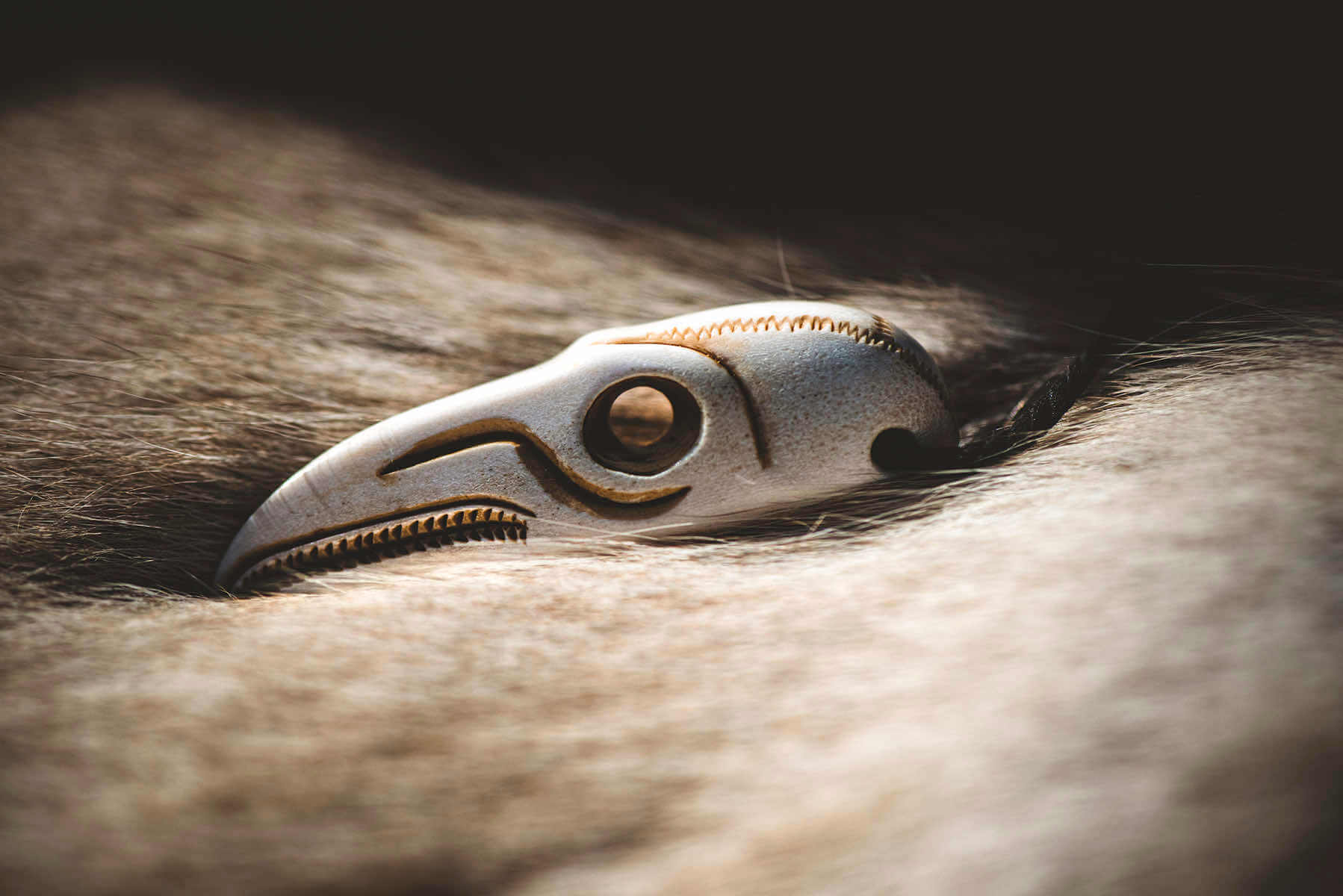
In northern paganism, amulets and talismans were often worn to protect themselves and connect with the gods. It was believed that crow skull amulets would offer the bearer the protection and wisdom of Odin. They were supposed to help the bearer make good decisions and navigate in difficult situations.
In addition to their association with Odin, crows were also seen as powerful and magical creatures in their own right. It was believed that they could see in the future and communicate with the dead. In addition, they were frequently associated with death and beyond.
Overall, crow skull amulets were important to northern pagans, as they represented Odin's wisdom, insight and protection. They continue to be popular today among those who practice northern paganism or are interested in northern mythology and symbolism.
Hugin and Munin are attested in the poetic Edda, compiled in the 13th century from previous traditional sources: the Edda in prose and Heimskringla in the Third Grammar treatise, compiled in the 13th century by Óláfr The Scald is a Scandinavian poet.
The two crows sit on the shoulders of Odin in an illustration of an Icelandic manuscript of the eighteenth century. In the poetic Edda, a disguised Odin expresses that he fears that they will not return from their daily flights. Edda in Prose explains that Odin is called Hrafnaguðr because of his association with Huginn and Munin. In the Edda prose and the third grammar treatise, the two crows are described as perched on the shoulders of Odin. Heimskringla details that Odin gave Huginn and Munin the ability to speak.




Doroobo Philippe! Excellent presentation. And the crow-headed yakut, what a splendor, what a splendor! This month, between Nature P. and Puuko, you are really torn, and the Viking and yakoute documentation is great, the fruit of passionate, of course! I put a little word of admiration on Nature P. because I really enjoyed these spring shipments.
A thousand thanks so beautiful and interesting.
Jacques