Others

Calendar of knives and puukkos 2027

Calendar of knives and puukkos 2027 1200 800 Puukko - Finnish knives

https://puukko.fr/salons-exposures-de-couverts-et-puukkos-calendar-2027/

Leuku: anatomy, history and technique of the large Sami knife

Leuku: anatomy, history and technique of the large Sami knife 1792 1008 Puukko - Finnish knives


Leuku is not a puukko enlarged. It is a distinct tool, born from the extreme constraints of Sami life in Lapland.

Introduction

The puukko is the Scandinavian knife par excellence. But in the Far North, among the Sami, there is a much more imposing and powerful version: leuku (also called rabbitleuku or stuorra niibi).

Born from the extreme needs of reindeer breeders, this large knife is not a simple one. puukko enlarged. It is a real heavy work tool, capable of partially replacing the axe in tundra and arctic taiga.

In this article, we will explore in detail:

  • Origins historical leuku
  • The main manufacturers historical and contemporary
  • The flagship models to know
  • Its anatomy precise technical
  • Differences with the puukko classic
  • Leuku in the daily life of the Sami

Whether you are a collector, a bushcrafter or simply passionate about Nordic cutlery, you will finally understand everything about this knife not like the others.

Historical origins:

The roots of leuku date back to the large knives of the iron age and the period of migration (400-700 AD). It is often linked to Finnish väkipuukko (« strong knife ») and the northern saxes, long and robust tools arrived with forge techniques in the Scandinavian and Baltic peninsula.

Among the Sami, hunter-gatherers and then semi-nomadic reindeer breeders, the need for a tool capable of partially replacing the axe was imposed: to split firewood when the ground is buried under the snow, to prun to build a lavvu, to break reindeer bones, to cut large carcasses or to brush.


The word leuku is Finnish (linked to leuka = jaw, evoking the broad and powerful shape).

The Sami simply call stuorra niibi. Traditionally, they wear both: the small unna niibaš (or buiku/puukko) for fine work and leuku for large work. The very deep sheaths (the knife sinks almost entirely) reflect the vital importance of never losing it in the tundra.

Finnish Leuku


The leading manufacturers of leuku

Before industrialization, leuku was almost exclusively the work of local Sami blacksmiths. Among the names that have perpetuated and formalized the tradition:

Strømeng family (Karasjok, Norway)

The Strømeng family (also spelled Strömeng) is one of the oldest lines of Sami cutlery still active. Located in Karasjok, in the heart of Finnmark, it has been forging samekniv since the 18th century (more than 200 to 300 years of continuity according to family sources). The know-how passed from father to son, remaining very faithful to the needs of reindeer herders. Their large models (often called leuku or huggare on the Finnish side) retain the traditional characteristics: wide and relatively thin blade to combine sharpness and rigidity, handle large in slow growing birch, robust and sheath deep in reindeer leather that includes almost entirely the knife. Today, Strømeng remains a reference for purists who are looking for an authentic tool, little transformed by industrialisation.
→ Stromeng Knives

    • Samekniv KS9 (9′′)
      The largest in the range. Blade carbon about 23 cm, very wide, handle voluminous birch treated with flax oil with expanded head. It's leuku. « serious » par excellence, able to replace a small axe for wood and heavy work.
    • Samekniv KS8 (8′′)
      The most popular and versatile model. Excellent compromise between size and handling. Also available in version « Old Fashioned » (blackened + handle tinted).
    • Samekniv KS8 + 3.5′′
      The traditional duo: large leuku + small puukko in the same sheath (very wanted).
    • Samekniv KS7 and KS5
      More compact versions, highly appreciated for everyday use or by people with smaller hands. Versions with guard (Finger Guard) for the Norwegian army.
    Distinguishing characteristic: Strømeng remain the most faithful to the historical Sami leukus (a relatively fine lam for width, sheath very deep, mitten grip).

Iisakki Järvenpää (Kauhava, Finland)

Founded in 1879 by Iisakki Järvenpää (1859-1929), the company is one of the oldest Puukko factories in Finland. Located in Kauhava, the birthplace of the Ostrobothnian cutlery, it first became known by its classic puukkos (including the famous horse-headed model). Soon, Iisakki and his successors integrated Lapland/leuku models into their production, responding to the demand of northern workers and hunters. These Finnish versions are characterized by a careful finish, handles birch or birch bark, and birch blades carbon robust. The company, still operating under the name Iisakki Järvenpää Oy, thus perpetuates a tradition that links the industrial south of Finland to the practical needs of Lapland.
→ Iisakki Järvenpää

  • Flag models:

    • Poromyhen Leuku (« leuku of the reindeer shepherd »)
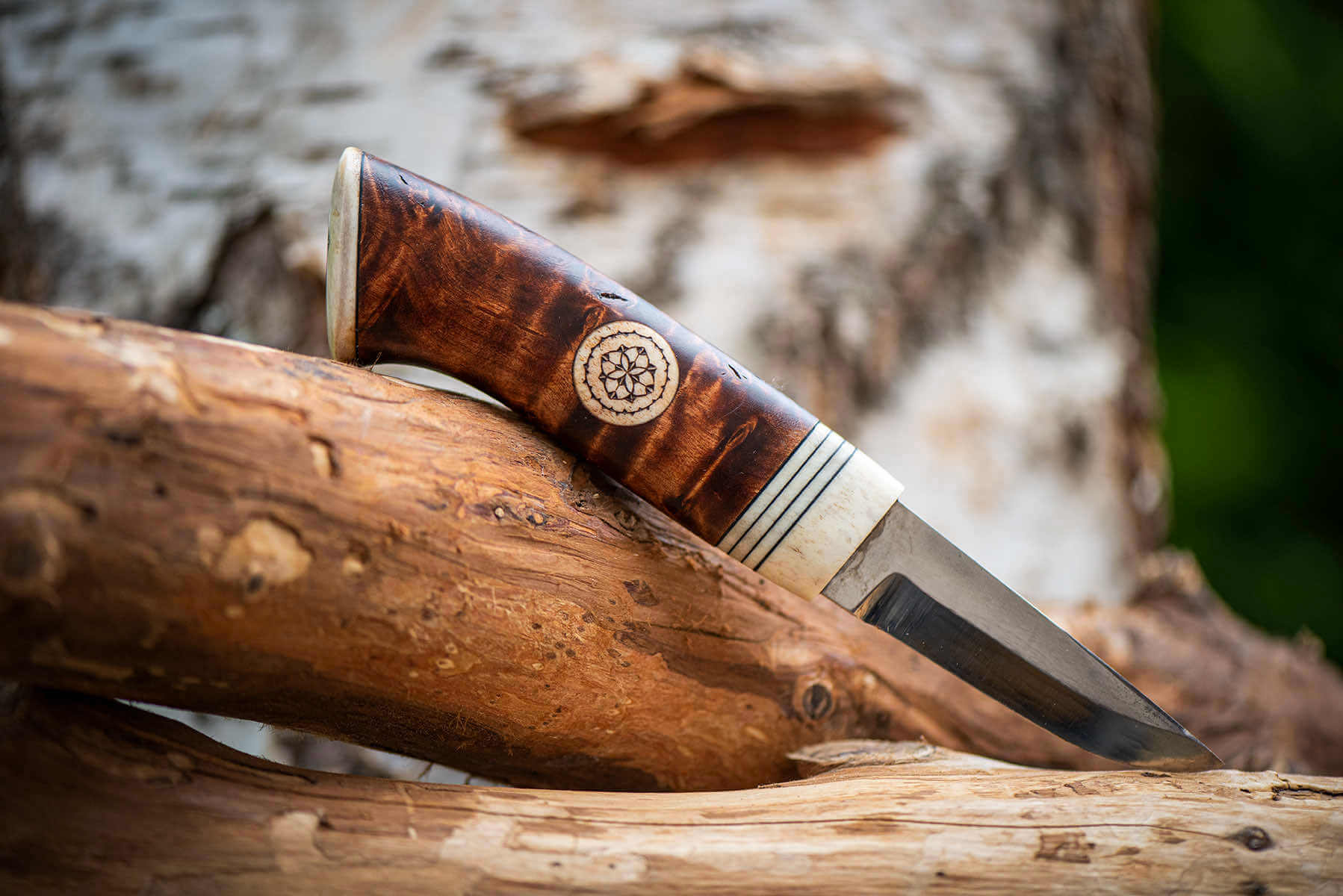
      The great classic of the brand. Blade carbon black not polished about 19 cm, handle in oily curly birch, alpaca fittings. It is their most massive and representative leuku in the Lapland range.
    • Tuplaleuku
      The duo Poromyhen Leuku + small puukko (often the Jätkänvuolu) in the same sheath. Very close to traditional Sami use.
    • Aito
      Their puukko high-end utility (handle birch bark or curly birch). Not a leuku, but a historic best seller of the house.
    • Lapland models smaller and decorative versions with engravings or handles mixed wood/bone.

    Distinguishing characteristic: typical Kauhava neat finish, blades carbon and a real legacy since 1879.

Marttiini (Rovaniemi, Finnish Lapland)

Founded in 1928 by blacksmith Janne Marttiini (born in 1893 in Kierinki), the factory was originally established in Rovaniemi, at the polar circle. This location in the heart of Finnish Lapland naturally directed part of its production towards the Lapinleuku. Janne Marttiini, first travelling blacksmith, quickly developed a factory that combined craftsmanship and larger production. The Lapinleuku Marttiini respect the Sami geometry (long and wide blade, handle adapted to cold conditions) while providing constant quality and greater accessibility. The company, now part of the Rapala VMC group, remains one of the best known to popularize leuku beyond the traditional Sami circles, without betraying its utility spirit.
→ Marttiini

    • Lapinleuku 250
      The brand's most iconic and best-selling model in the leuku category. Blade stainless steel about 16 cm, handle in curly birch, sheath decorated with lace motifs. Also available in Dark version (limited edition) and with guard (255).
    • Lapinleuku 240 / 245
      Very popular intermediate versions (lases around 13 cm). Excellent balance between leuku and puukko multipurpose.
    • Hiileuku 240
      Steel version carbon (80CrV2) long requested by purists. Very well received.
    • Store
      Modern interpretation of leuku (handle bicolor curled birch + thermo-treated birch).
    • Luu-Visaleuku
      Premium version with handle mixed curly birch + reindeer bone.

    Distinguishing characteristic: accessibility, constant quality, and strong identity « Lapland » (decorated studs and studs). Marttiini popularized the Lapinleuku with a very large audience.

Kauhavan Puukkopaja

Founded in 1995 by Matti Koski, Kauhavan Puukkopaja is a family company based in Kauhava, the historic cradle of Finnish cutlery (where Iisakki Järvenpää started its manufacture a century earlier). Specializing in high-quality puukkos made largely by hand, the workshop produces a complete range that ranges from classic models to more robust tools, including leukus and tupleukus (leuku + small combinations). puukko in the same sheath). The blades are supplied by Laurin Metalli Oy (also from Kauhava) steel carbon high quality (about 0.8% of carbon, hardness 59-60 HRC), known for its wire hold and ease of use sharpening. The handles are made of curly birch (visakoivu), reindeer wood, leather, sometimes birch bark or willow root. As for the sheaths, they are designed and manufactured on site in vegetable tanned leather and are particularly well cared for: mouth in for a perfect hold and a clean aesthetic. Although more recent than Strømeng, Järvenpää or Marttiini, Kauhavan Puukkopaja is fully in the Kauhava tradition. It offers leukus faithful to the Sami utility spirit while bringing the neat finish and the
→ Kauhavan Puukkopaja

    • Tuplaleuku 210 (ref. 1320)
      The signature model of the brand. It combines a large leuku of 210 mm of blade and a small puukko about 105-108 mm in the same sheath. It is the modern and faithful version of the Sami tradition of carrying the two knives together. Handle Of curly birch, steel carbon Laurin Metalli, sheath Leather. Available in natural or tinted version. Ideal for bushcraft and multi-purpose work.
    • Leuku 210 (ref. 1202)
      The great leuku solo in its classic version. 210 mm blade with traditional rabbitleuku profile, handle large in curly birch. It is the closest model to the great historical stuorra niibi, appreciated for its presence in hand and its heavy working capacity.
    • Keskikokoinen Leuku (refs. 1102 and 1105)
      1102: blade about 120 mm
      1105: blade about 145 mm
      These medium-sized leukus are excellent compromises: more manageable than a 210 mm while maintaining the robust character of the leuku. Very popular for hiking and bushcraft.
    • Yleispuukko (series 100: 104, 106, 108...)
      The classic polyvalent puukkos of the house (lames from 85 to 108 mm). Best sellers of everyday, excellent for sculpture, outdoor cooking and general use.
    • Eräpuukko (900 series)
      Puukko oriented hunting and outdoor, a little more robust than the yleispuukot, intended for game processing.

    Distinguishing characteristic: typical Kauhava neat finish, blades carbon quality, and a range that goes from small puukko precision up to the real working leukus, all manufactured largely by hand in Matti Koski's workshop.

These manufacturers (and some contemporary independent blacksmiths like Pasi Hurttila in Ivalo) have allowed leuku to leave the pure oral tradition to reach a wider audience, without denying its primary function of survival and work tool.


Technical anatomy

The leuku differs from the puukko classic by deliberately massive and functional geometry, designed for Arctic stresses.

Steel

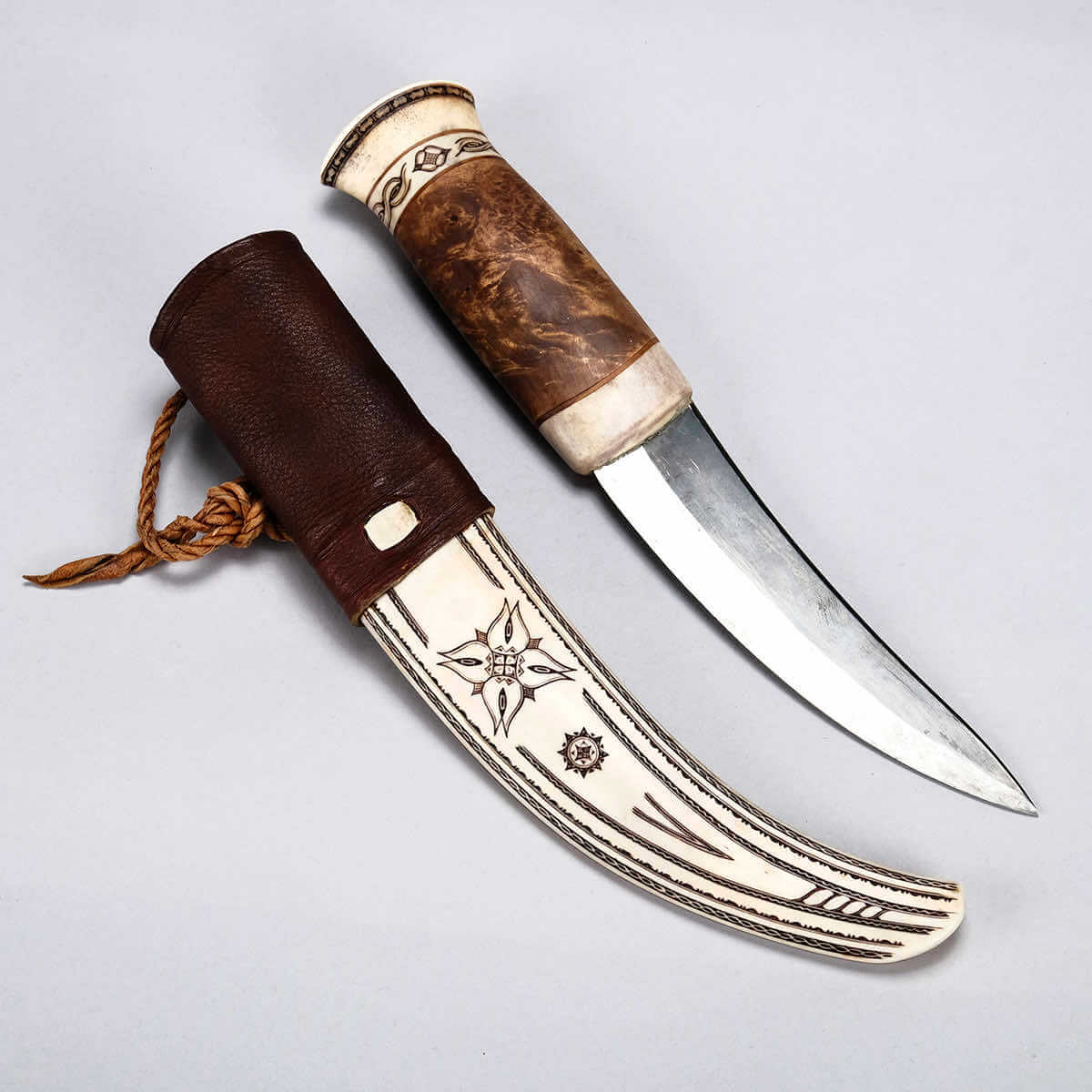
Blade: Typical length from 180 to 300 mm (some traditional models reach 400-450 mm). Large width, often between 30 and 45 mm wide, to maximize mass and rigidity. Back thickness generally from 3.5 to 5 mm, sometimes more on older models for heavy work. The profile is straight or slightly ventru (marked belly), with a robust clip-point or drop-point tip, rarely too thin to withstand shocks and twists. The blade is designed to combine powerful slicing and striking capacity.
→ How to recognize different steels

Grind : traditional grind Scandinavian (Scandi Grind) with a single flat bevel, but frequently higher and more robust than on a puukko. The edge angle is usually between 22 and 30°, more obtuse than the 12-20° of a puukko sculpture. On many ancient leukus and some modern, there is a grind slightly convex (axis-like), which offers better shock resistance and better hold in frozen wood or bones. A fuller (gutter) sometimes appears on the longest blades to lighten the whole without losing rigidity.

Steel and heat treatment: steel carbon traditional (often spring steels or modern equivalents close to 80CrV2, 5160 or historic local steels). The carbon is preferred to the stainless steel for its best tenacity at very low temperature and its ease of reshaping on the ground with a simple stone. The dip is suitable to maintain a certain relative flexibility: too hard, the blade could break in the extreme cold.

Silk: almost always crossing (full tang or stick tang long). It is painted or riveted on the cheek, which stiffens the whole and allows to hit on the handle No risk of loosening. This construction enhances the leuku's ability to act as a lever or occasional corner.

Body

Handle : length of about 110 to 130 mm, large and unguarded. Dominant material: birch (generally runny or curly from Karelia), sometimes combined with los, reindeer wood or leather interlayers. The cheek is enlarged and flat: it prevents the hand from sliding, facilitates the release of the sheath with mittens, and offers a striking surface. The shape is studied for a safe grip even with numb or gloved hands, favoring control during shots (draw cuts).

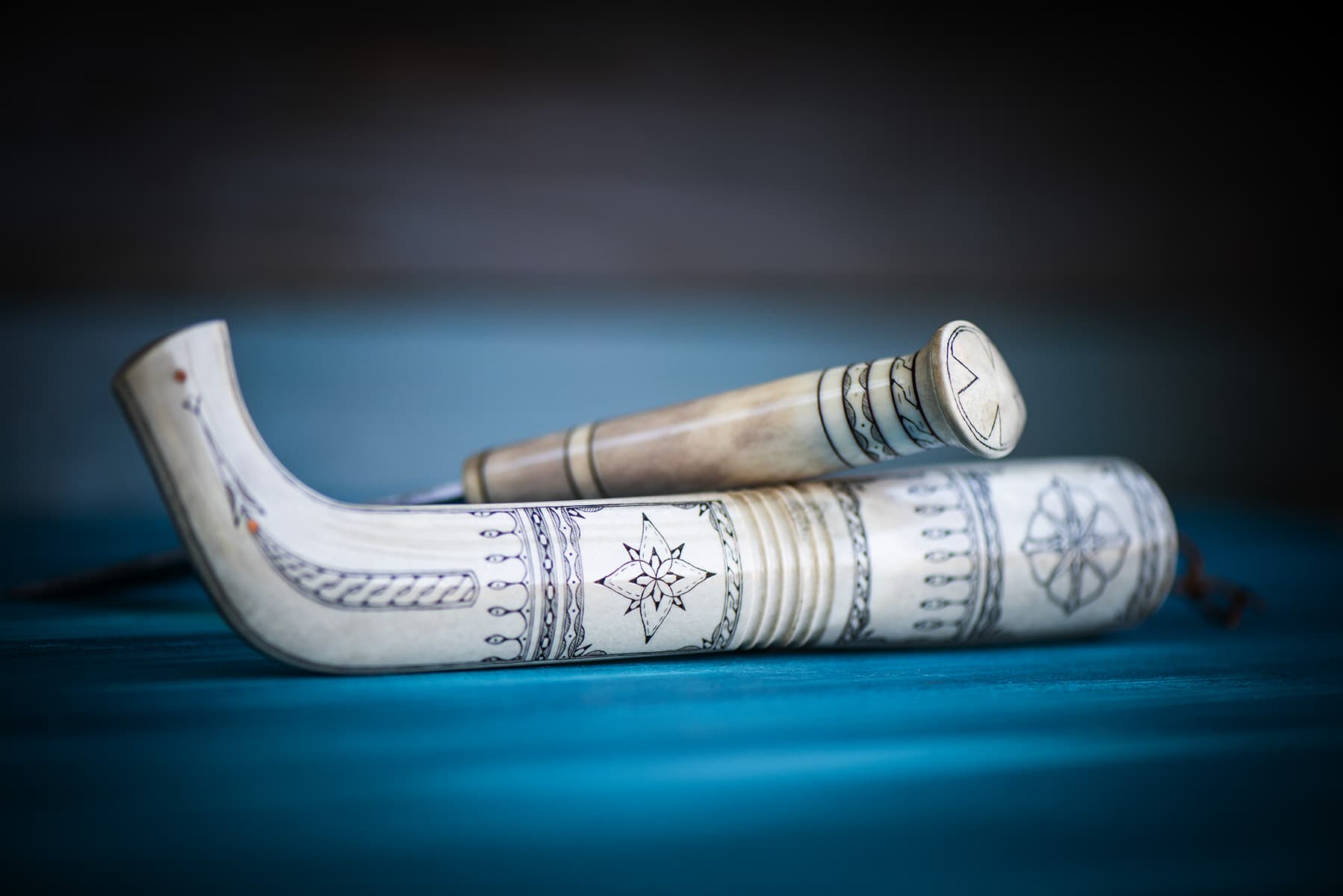
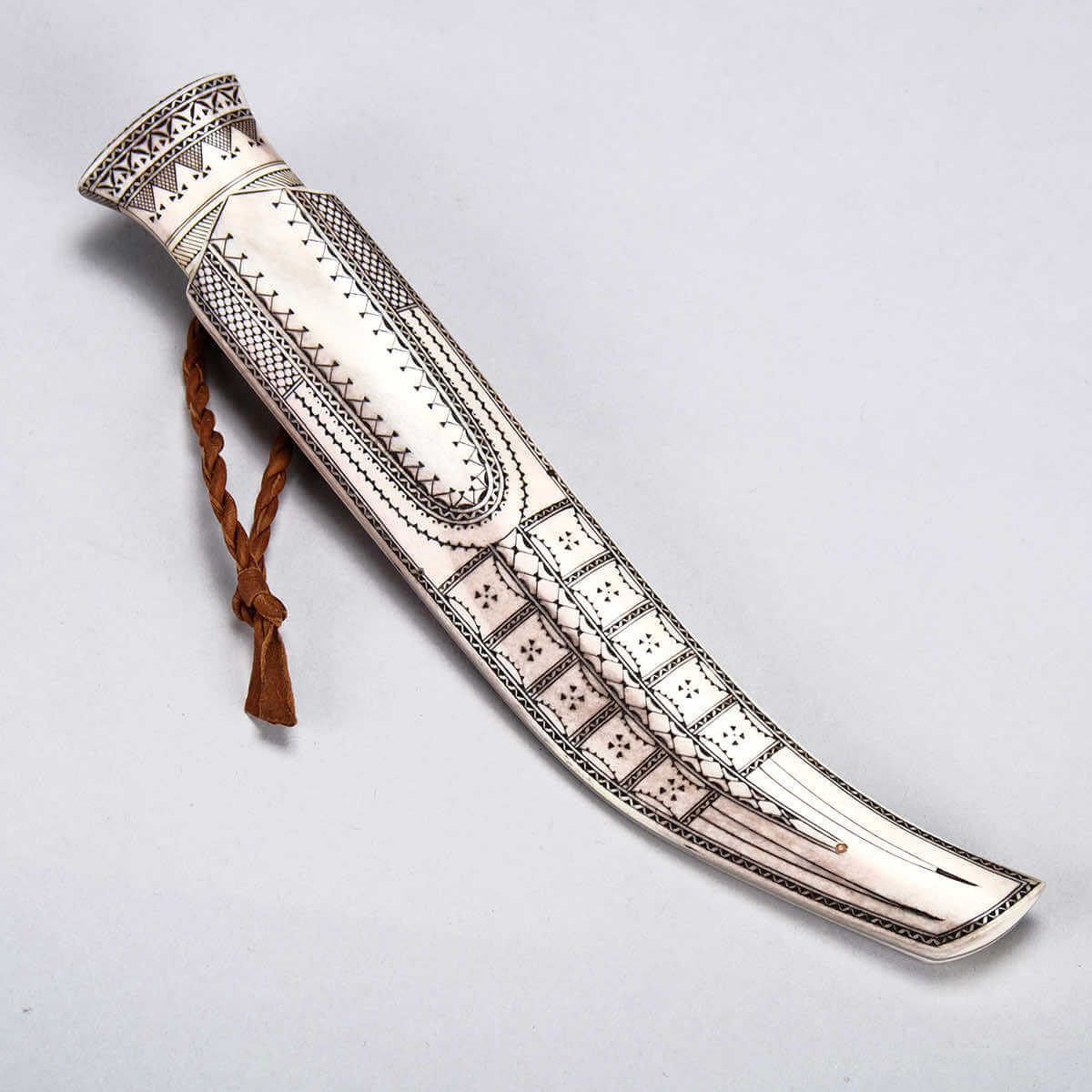
Sheath : traditional reindeer leather, very deep. The knife sinks in almost entirely, only the apple exceeds. This depth, combined with the weight of the blade, ensures a safe hold without straps or push buttons. Reasons duodji (sami ornaments) often decorate leather or brass/bone fittings.
→ How maintain your leather sheaths

Balance and weight: the centre of gravity is voluntarily moved towards the blade to favor the powerful strikes and slicing. The total weight of a medium-sized leuku is generally between 250 and 400 g (excluding sheath), which makes it much more « Present » in hand only puukko classic.

This anatomy makes leuku a heavy work tool above all: it excels in pruning, light cracking, brushing and cutting carcasses. However, he remained less comfortable in precision work than his little brother on the puukko.


Comparative table puukko / leuku

CriteriaPuukko classicLeuku (Labinleuku / Stuorra niibi)
Historical originFinland / General Scandinavia (iron age, continuous evolution)Sami culture (Sápmi). Héritier des väkipuukko et secaxes (400-700 A.D.)
Blade length70-120 mm (ideal 90-110 mm)180-300 mm (typical), up to 450 mm
Width / Thickness backClose to medium / 2.5-3.5 mmLarge (30-45 mm) / 3.5-5+ mm
GrindScandi fine (12-20°), optimized for slicing and sculptureScandi robust or convex (22-30°), shock and cold resistant
Blade profileStraight or slightly curved, fine tipMore ventru, reinforced tip, front mass
HandleCompact, ergonomic, without guardBall, enlarged and flat head, mitten grip
SilkHidden or passing shortCrossing (often painted on the cheekbone)
SheathLeather, medium depthReindeer leather, very deep (almost fully engaged knife)
Main technical useSculpture, fine cutting, daily tasks, light depurationLinging, light slitting, brushing, broken bones, heavy cutting, partial axe replacement
Traditional steelCarbon (easy to sharpen)Carbon (externally cold + ground reshaping)


Leuku in the daily life of the Sami

In daily Sami life, leuku was not an object of prestige but the tool of every moment.

The breeder carried him to the belt from the start of the camp: he shot the young birch and willows for the perches of the lavavu, released the undergrowth, split the dead wood still standing when the snow covered the ground, and lit the fire. At the time of the slaughter, he pierced the reindeer's heart for a quick death, stripped, bited, split the bones to extract the marrow and worked the deer wood. He also cut the fish, cut the leather straps, made spoons, harnesses and makeshift repairs.

Often associated with a small puukko For fine tasks, leuku was used as a light axe, butcher knife and camp tool. In a world where there was little transport, it concentrated almost everything necessary to live, feed and protect itself in the tundra.

→ Sami, Puukkos & Large Spaces

LEUKU FAQ

  • Yes and no. In Finnish it is often called rabbitpuukko or leuku, but technically it is the large sami knife (stuorra niibi), distinct from the puukko classic by its size and vocation.

  • Possible, but not optimal. The blade is too long, too wide and often too thick/hard for fine carving. That's why the Sami also wear a little puukko.

  • 18-22 cm of blade is an excellent compromise for most modern uses (bushcraft, hunting, camp). Beyond 25-30 cm you get close to a small machete.

  • Traditionally carbon (better hold in extreme cold and easier to sharpen on the ground). Many modern models offer both.

  • For wood of small diameter, pruning and light cracking: yes, especially in winter conditions. For big bills: no, nothing replaces a real axe.

  • Marttiini (Labinleuku), Iisakki Järvenpää, Strømeng (Norway), Wood Jewel, Karesuando, or independent Sami/Finnish blacksmiths.

Conclusion:

Leuku is not « one puukko larger ». It is a tool designed for an environment in which the axe is not always convenient (frozen wood, deep snow, nomadic mobility). Where the puukko shines with its precision and light versatility, leuku imposes its power and heavy versatility. Together, they form the perfect duo of the far north. For the modern bushcrafter or Scandinavian knife lover, leuku remains one of the most authentic and efficient designs ever created. A true Sami heritage that deserves to be better known outside Lapland.

Don't you want to leave now? As I understand you, look at the links below and continue the visit... And, most importantly, Subscribe to the newsletter not to miss the next articles. You can also comment and share this article on your favorite social network.

To go further:
• The puukko Over the seasons – Full guide + seasonal checklist + PDF to download
• I am cultelluphilist but I treat myself
• The reference book on puukko

Warm regards,

Subscribe to the newsletter.


BEGINNER'S GUIDE

HOW CHOOSE YOUR FIRST PUUKKO

Puukko & knives: what the law says in France and Europe

Puukko & knives: what the law says in France and Europe 1168 784 Puukko - Finnish knives

The puukkos face French regulations.

Your beautiful puukko deserves to be taken everywhere in complete serenity. Clarifies together, in a precise way, what the French regulations actually provide for knives.

Contents

Here is a clear and up-to-date summary (summer 2026) of the regulation of collectible knives and knives in France, with a broader overview of Europe. It is mainly based on the Code of Internal Security (CSI), official texts (service-public.fr, decrees and decrees of 2025) and prefectural sources.

Knives & Regulation

1. General framework in France

Weapons are classified into:

  • A (prohibited)
  • B (authorisation)
  • C (declaration)
  • D (free acquisition and detention for adults, subject to conditions).

The knives are normally white weapons. According to Article R. 311-1 of the CSI, a white weapon is any object whose sharp, perforating or blunt action is the result of human force alone.

Many knives (including classical folding knives) fall into category D a): « all objects likely to constitute a dangerous weapon for public safety ». This category explicitly includes (since the decree of 4 July 2025):

  1. The daggers and handlers;
  2. The knives « butterfly » (balisong)
  3. Self-opening stop-cran knives;
  4. The jet stars (« Ninja stars ») ;
  5. certain mixed weapons (American punch + blade) before 1946.

Acquisition and possession: free for all adults. Prohibited from minors (except for few very framed exceptions, not applicable to ordinary knives).

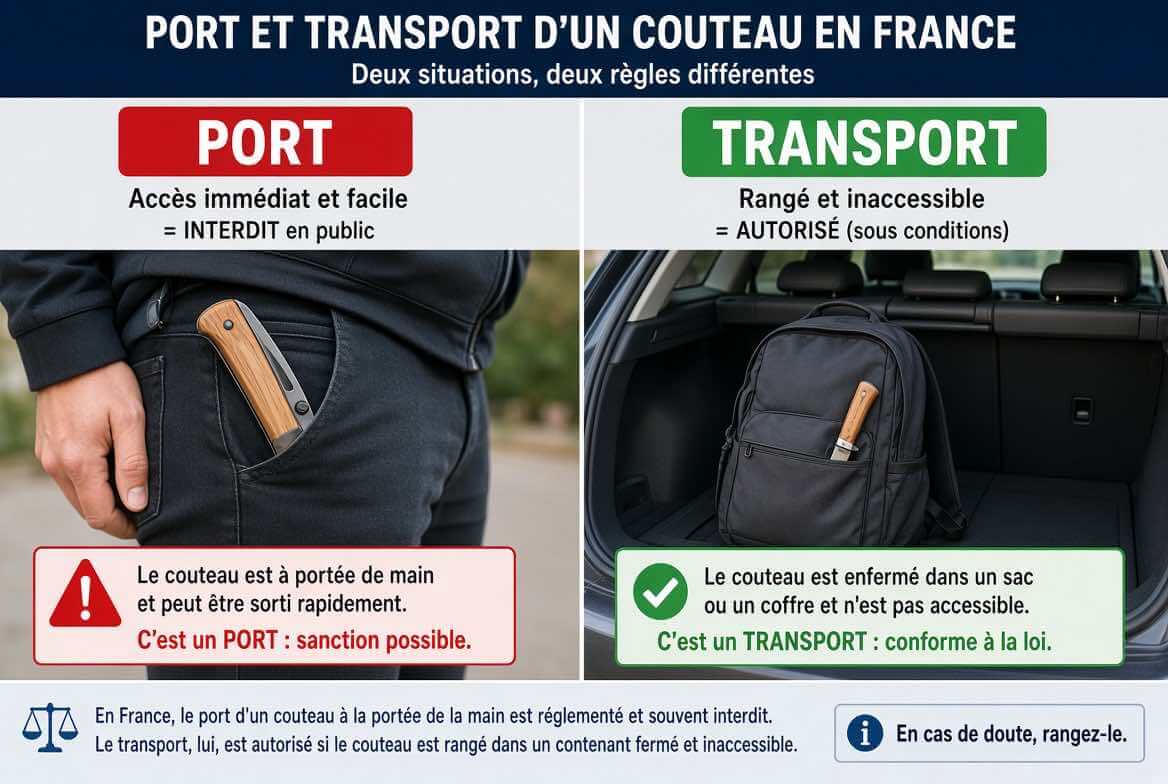
Port and transport outside the home (public road, vehicle, public transport, etc.): prohibited without legitimate reason.
Port = The object is on itself or immediately accessible.
Transport = object is moved but not immediately usable (packaged, in a chest, etc.).

The legitimate motive is assessed on a case-by-case basis by the law enforcement agencies (and possibly the judge) depending on the place, time, type of knife, profile of the person and context. Self-defence is not a legitimate motive in itself.

Penalties (category D): up to 1 year imprisonment and 15,000 € fine (or flat fine of 500 € in the case of voluntary remission in certain cases). Frequent confiscation.

Important: there is no legal blade length limit that would automatically make a knife « Legal » to be worn. The idea received « less palm size » is false. Even a small Opinel, Laguiole or Puukko can be considered as a weapon depending on the context (e.g. in the city centre at night vs. hiking).

2. Recent developments (2025) – critical points

Two major texts:

Order of 4 July 2025: specifies the list of weapons of category D (a) (paillons, automatics, jet stars, etc.). Non-armor traders who sell these models must now obtain a prefectural authorization to open a business (compliance period until March 2026 depending on the sources).

Decree No. 2025-894 of 5 September 2025: Classifies for the first time certain white weapons in category A1 (prohibited from acquisition, possession and marketing):

  • Knives/machettes « zombie » : fixed blade with sharp side + tip + serrated side + (several holes in the blade or several sharp points);
  • American punches 4 holes after 1 January 1900 (and some associated mixed weapons).

The holders of these A1 objects had until 7 December 2025 to hand them over to the police or gendarmerie. After this period: up to five years in prison and 75,000 € the fine for private individuals.

3. Collection knives and special cases

  1. Historical and collection weapons enjoy a specific regime (category D (e), (f) or (g)).
  2. Models prior to January 1, 1900 (except those deemed dangerous and listed) → Free detention for adults.
  3. some models after 1900 on official lists.
  4. reproductions of weapons prior to 1900 under strict conditions.

For collection knives (old, military, regional, etc.), classification depends on the type:

  1. An old dagger or handler knife remains in D a).
  2. Some mixed historical objects (punch + blade) prior to 1946 are maintained in D a) through heritage interventions.
  3. Bayonets are generally not classified « weapons by nature » The same way.

Home detention remains free for adults. Transportation for an exhibition, historical reconstruction or sale can be a legitimate reason (ideally with supporting documents). There is no « collector card » mandatory for simple category D knives (this applies to certain category C firearms).

Practical advice for a collector: keep invoices, certificates of authenticity, photos dated and store coins securely (out of reach of minors).

4. Practical tips for readers of puukko.fr

  • Home: Free (major) detention for the vast majority of ordinary and collection knives not classified A.
  • On the move: Always store the knife in an unaccessible manner (closed bag, safe) and have a credible pattern + proof.
  • Online purchase / import : check the classification (especially for butterflies, automatic or models) « tactics »). Category D import may require an authorisation.
  • Minors: sale and detention prohibited.
  • In case of doubt: consult service-public.fr (pages on D category weapons), Legifrance (CSI Art. R. 311-2 et seq.), or a specialized armor/lawyer.

Main sources:

  1. service-public.fr (F2248 – Category D weapons, updated October 2025)
  2. Decree No. 2025-894 of 5 September 2025 and order of 4 July 2025
  3. Internal Security Code (R. 311-1, R. 311-2, L. 317-8, etc.)
  4. Prefectural News Releases 2025-2026

Buy a puukko is legal.

Carrying it can cost you 15,000 €.


Port and transport from home:
prohibited without legitimate reason.


Acquisition and detention: free for all adults.
Sale to minors: prohibited.

No blade length limit exists in French law. One puukko, so a knife of 9 cm or 12 cm, is treated in the same way: everything depends on the context.

The legitimate reason is assessed on a case-by-case basis (place, time, person profile, type of activity). For a puukko the following situations are generally well received:

  1. Outdoor activities (hiking, bivouac, bushcraft, camping) with the knife stored in a backpack in the middle of a coherent equipment.
  2. Hunting, fishing or work (with possible proofs: permit, licence, professional certificate).
  3. Transportation immediately after purchase (invoice) or to a cutlery/exhibition.
  4. Professional use (guides, nature and forestry facilitators, etc.).

Conversely, wear a puukko in a belt or pocket in the city centre, in public transport, in the evening or during a public event will rarely be considered legitimate. Self-defence is never a valid motive.

Practical advice: always prefer the transport (cain in its sheath placed in a closed bag or in the trunk) in the port (immediately accessible). Keep an invoice or photo of the object in its usage context.

The legitimate motive is not exhaustively listed. It is assessed on a case-by-case basis by place, hour, type of knife, person profile and context.

Self-defence is never accepted as a motive.

Puukkos collection

The old Puukkos, artisanal or historical (Finnish military models, pieces signed by recognized cutlery, etc.) enjoy the same regime. If they have a marked heritage character, their transport to an exhibition, reconstitution or sale can more easily constitute a legitimate motive. No collector card is required for these category D objects.


In summary for those passionate about puukko

One puukko traditional is a perfectly legal tool to acquire and hold in France. Its legal status depends primarily on use and context. Respecting the principle of legitimate motive, properly store the knife and stay in a coherent setting (nature, outdoor activity, collection) allows you to enjoy this Nordic heritage in complete serenity.


Case law and assessment « legitimate reason »
for the transport of knives

The legal framework of the legitimate ground

Article R. 315-1 The Code of Internal Security prohibits the carrying and transport of category D weapons (which most knives belong to) without legitimate grounds.

Article L. 317-8 the same Code punishes this offence by one year's imprisonment and 15,000 € fine (with possibility of a flat fine of 500 € in the event of a voluntary surrender of the weapon in the experimental areas).

The legislator has never limitedly defined what a legitimate motive is. The concept is deliberately broad and assessed on a case-by-case basis by the law enforcement agencies and then by the judge in the event of a dispute.

According to the official website service-public.fr (updated October 2025) and recent ministerial responses (notably of 24 June 2025):

« In determining whether you have a valid reason for carrying or transporting a weapon, the law enforcement authorities, or the judge in the event of a dispute, shall take into account the circumstances of place, time, type of weapon carried and profile of the holder. The legitimate ground is examined on a case-by-case basis. Thus, pretending that the weapon would be used to better deal with an altercation or danger is not a legitimate motive in itself. »

Port/transport distinction (DACG 2024)

The Directorate of Criminal Affairs and Pardons (DACG) stated in its doctrine of April 2024:

Port = having the weapon on yourself or immediately usable.
Transport = moving the weapon by licking it with you but *Unusable immediately** (packaged, in a closed bag, in the trunk, etc.).

This distinction is important: the transport is generally easier to justify than the port.

What jurisprudence and official responses say.

The Court of Cassation consistently recalls that the assessment of the legitimate ground is the sovereign power of the judges of the merits (example: Cass. Crime, 4 January 2017, No. 16-80.564). Each situation is examined in the light of the particular circumstances.

Key departmental responses (which are authoritative):
2013 and confirmed in 2025: « The carrying and transport of knives which are not listed weapons is permitted where there is a legitimate motive. The legitimacy of port and transport implies that the knife carried or carried has characteristics of use in relation to the activity for which it is actually used. »
June 2025 (question on Laguiole): The Government stresses that the concept has been designed to take into account the territorial realities and justified daily uses, especially in rural areas. The experiment with lump sum fines does not call into question this contextualised assessment.

Examples of reasons generally accepted (from judicial practice and doctrine):
Direct transportation after purchase (recent invoice).
Moving to a cutlery, armory, exhibition, living room or historical reconstruction.
Professional activity requiring the tool (cooker, artisan, forester, nature guide...).
Coherent leisure activities: hiking, camping, fishing, hunting (with license or associated equipment).
Transport of a tool in a context of domestic or food use (e.g. traditional pocket knife in rural areas).

Examples systematically rejected:
Self-defence or fear of aggression (« in case »).
The simple pleasure of « carry a knife ».
A journey unrelated to the use of the object (e.g. crossing a large city with a puukko under the pretext of a hike scheduled for the following weekend).

Special points for traditional knives (Puukko, Laguiole, Opinel...

Case law and ministerial responses often recognize the cultural and utilitarian nature of traditional pocket knives, especially in rural or outdoor contexts. However, even a Laguiole or a Puukko can be requalified as a weapon if the context warrants it (sensitive location, late hour, carrier attitude, etc.). The criminal judge is not bound by the technical criteria of Customs and can consider almost any knife as category D.

Practical advice from case law

Always prefer transportation: (Couteau in her sheath placed in a closed bag or trunk) in the port.
Have simple proof: invoice, photo of outdoor equipment, license, professional certification...
Stay consistent: the journey, time and place must stick with the alleged use.
If checked: explain calmly and fcurrently. The lump sum fine (when applicable) requires the consent of the controlled person.


Summary in Key Points – Case Law and Legitimate Reason (carrying knives)

Definition: the legitimate motive is not exhaustively listed. It is valued on a case-by-case basis by location, hour, type of knife, person profile and context (service-public.fr + ministerial responses 2013/2025).

  1. Port vs. Transport:
    Port = immediately usable (more difficult to justify).
    Transport = not immediately usable (closed bag, safe...) → more easily accepted.
  2. Reasons generally accepted:
    Recent purchase (invoice), route to cutlery/exhibition/living room, professional use, outdoor activities (hiking, hunting, fishing, bushcraft) with context consistency.
  3. Reasons systematically rejected:
    Self-defence (« in case »), simple pleasure to wear a knife, journey unrelated to the alleged use.
  4. Traditional knives (Puukko, Laguiole, Opinel...):
    Their cultural/utilitarian nature is often recognized, especially in rural or outdoor areas, but the context remains crucial.
  5. Practical rule:
    Prefer secure transport + simple proof (invoice, photo equipment, license...). The consistency of journey/time/place is essential.


No EU harmonisation on knives.

The rules vary widely from country to country.


European overview (no harmonisation)

There is no single European regulation on knives (unlike firearms). Each country has its own national rules. Here is a simplified overview (to be checked before any trip):

Germany:
prohibition of automatic knives, butterflies and certain models with one hand opening with locking. Blade limit often around 6-12 cm depending on type and location; reinforced prohibitions in public areas, transport and events. Show cause.
Finland:
port in public without valid grounds has been prohibited since 1977, but application remains flexible in rural or professional areas.
Belgium:
rather strict regime, close to France on the port without legitimate grounds; some more restricted models (dagues, automatics).
United Kingdom:
(especially since the « zombie knives »). Carrying a knife in public almost always illegal without good reason; wide ban on zombie-type blades and many offensive models.
Spain:
Free detention of most ordinary knives at home. Public port subject to justification. Prohibition of automatics, butterflies, stilettos, daggers, etc.
Italy:
recently tightened rules (2026). Some pocket blades ≥ 5 cm with one-manual opening or locking system are strongly restricted or prohibited in public, even with pattern.
Other countries:
(Denmark, Netherlands, etc.): often limits of length (e.g. 12 cm) and prohibitions of specific models (automatics, butterflies).

For intra-EU travel: attention to border and airport controls (lames > 6 cm usually prohibited in the cabin). Historical collection knives can sometimes benefit from heritage exceptions, but this is not automatic.

FAQS

Last updated : August 2026 – The information is indicative. Always check the official texts (service-public.fr and Code of Internal Security).

  • Yes. The acquisition and possession of a knife (including puukko) are free for all adults.
    On the other hand, sale to minors is prohibited.

    • Port = knife is on or immediately accessible (pocket, belt...).
    • Transport = knife is moved but not immediately usable (closed bag, car trunk, briefcase...).

    Transportation is generally easier to justify than port.

  • This is the valid reason why a knife can be worn or transported outside your home.
    It is assessed on a case-by-case basis according to location, hour, type of knife and context.
    Self-defence is never a legitimate motive.

    • Professional use (cooker, artisan, forester...)
    • Outdoor activities (hiking, bushcraft, fishing, hunting)
    • Transportation immediately after purchase (with invoice)
    • Go to a cutlery, an exhibition or a salon
  • Yes, like most fixed blade knives, it falls under category D.
    His detention is free, but his port and his transport away from home require a legitimate motive.

  • No. No legal length limit automatically renders a knife « Legal » to be worn.
    Even a small pocket knife can be punished according to the context.

  • Up to 1 year imprisonment and 15,000 € fine.
    In some areas, a flat-rate fine of 500 € is possible if the weapon is voluntarily handed over.

  • Yes, in most cases.
    Transport to an exhibition, reconstitution or sale may be a legitimate reason (ideally with supporting documents).

  • Automatics and butterflies: category D (regulated sale).
    Some models « zombie » and recent American punches: category A1 → banned from acquisition and detention since September 2025.

    • Finland: more flexible. The puukko is a cultural tool; the port is widely tolerated in outdoor context.
    • Sweden: system close to France (« befogad anledning »), quite tolerant on small utility knives in rural areas.
    • France: tighter on the port/transport distinction and hardened some models in 2025.
    • In the cabin: Generally prohibited (strict airport rules).
    • In the hold: possible under conditions. Always check the company rules.
  • Stay calm, clearly explain your pattern and show any supporting evidence (invoice, outdoor equipment, etc.).
    Always store your knife in an unaccessible way.

The regulation of knives in France is not there to bother enthusiasts, but to avoid abuse. With a little sense and a clear pattern, you can enjoy your puukko in complete serenity.

Always keep in mind the golden rule: better to carry than to carry, and always to be able to explain why you have your knife with you.

Conclusion:

I hope that this has not been too much of a rebarbatory. French laws are complex, but it is necessary to know at least the broad outlines, especially on such an important subject.

One puukko traditional, or a classic knife, is a completely legal tool to buy and possess in France. Its legal status depends mainly on its use and the context in which it is used. The key element is to respect the principle of legitimate motive: by properly storing the knife and remaining in an appropriate setting (such as nature, outdoor activities or the collection), it is possible to enjoy this northern heritage in complete tranquility.

Last updated : August 2026 – The information is indicative. Always check the official texts to see developments (service-public.fr and Code of Internal Security).

Thanks for visiting, see you soon.


The Blog of puukko.fr

Articles on puukkos, Scandinavia, nature and large spaces.


Duodji or craft excellence Sami

Duodji or craft excellence Sami 2200 1290 Puukko - Finnish knives

Duodji means craft in Sami

Sami culture has many emblematic terms, including duodji – the Sami craft – is part of it. Duodji tools, clothing and accessories are functional, useful and often incorporate artistic decorative elements. Even if tradition evolves slightly, many craft disciplines (beadwork, lace weaving, wood carving, cutlery) are carefully maintained. Today, some of Duodji's pieces are of great artistic value to collectors around the world.


Sámi Duodji and Sámi Made

Le Conseil Sami lance deux marques Sami. L’objectif des marques est de renforcer le savoir-faire sami et la compétitivité des industries créatives sami. La marque Sámi Duodji a été renouvelée et est donc rééditée. En outre, une toute nouvelle marque de certification est créée, à savoir Sámi Made. Sámi Duodji et Sámi Made sont deux marques de certification différentes dont le but est d’informer l’acheteur quels produits sont de l’artisanat traditionnel (duodji).


Sami Crafts
Traditional Sami Crafts

Traditional Sami Crafts

Sami culture has many emblematic terms, including duodji – the Sami craft – is part of it. Duodji tools, clothing and accessories are functional, useful and often incorporate artistic decorative elements. Even if tradition evolves slightly, many craft disciplines (beadwork, lace weaving, wood carving, cutlery) are carefully maintained. Today, certain duodji pieces are of great artistic value to collectors around the world.


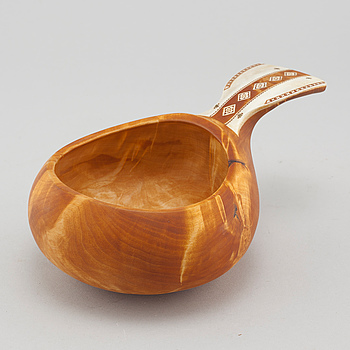
On the one hand the craft made for men with mainly engraved reindeer wood knives and cups (the kuksas). On the other hand, handicrafts for women with clothes, bracelets decorated with tin yarns and other jewellery, as well as birch bark bags and baskets.

The People of the Far North

The Duodji is divided into two categories:


In harmony with nature

The Sami craft, "Duodji " in Sami, is practiced by many members of the community, using natural and surplus materials, such as wood and bark, as well as each part of the reindeer as skin, wood, and even bones. Nothing is lost here, the Sami already had an eco-friendly lifestyle long before sustainability became the fashionable word that it is today.

Puukko Sami

Traditional Swedish Puukkos

The Duodji in summary:

The duodji is a traditional craft by the Sami, an indigenous people who live mainly in the Arctic region of Scandinavia, including Norway, Sweden, Finland and Russia. The duodji is deeply rooted in Sami culture and is considered a form of artistic expression, cultural preservation and lifestyle.

Polyvalence: The duodji includes a wide variety of traditional Sami crafts, including sewing, embroidery, basketry, bone and wood sculpture, jewellery, shoemaking, knife manufacturing, and many others. Each of these trades is adapted to meet the practical needs of the daily life of the Sami.

Use of local materials: A key feature of the duodji is the use of local and natural materials. For example, the Sami use animal skins, bones, wood, horns, and other materials found in their environment to create functional and decorative handicrafts.

Cultural Preservation: The duodji is more than just a craft. It also serves to preserve and transmit Sami culture, traditions and ancestral knowledge. The patterns, techniques and designs used in the duodji often have a cultural meaning and tell stories.

Role in everyday life: Duodji objects are frequently linked to practical aspects of Sami life, such as warm and functional clothing for the Arctic climate, hunting, fishing and survival tools, as well as decorative objects for traditional tents (lavvu) and clothing.

Transmission of skills: The duodji is transmitted from generation to generation within the Sami families. Experienced artisans teach their skills to young members of the community to ensure the continuity of this important tradition.

Contemporary Crafts: Although the duodji is rooted in tradition, it continues to evolve to adapt to modern needs and tastes. Many Sami artisans create contemporary pieces that merge traditional techniques with contemporary artistic elements.

The duodji is a traditional craftsmanship practiced by the Sami for centuries. It plays an essential role in preserving their culture, traditions and craft skills, while producing objects of great beauty and functionality. This form of craftsmanship is a testament to the deep connection of the Sami with their environment and history.

Conclusion:

The duodji, or traditional Sami craft, includes many objects other than the puukkos. There are also clothes, hats, belts, jewelry, cups, bags, needlecases. Aesthetically beautiful, functional and portable, the duodji has been produced by samis duodjars for thousands of years and is intended for everyday use.

Thank you for reading this article! To avoid missing the following, subscribe to the newsletter. It's just below. Thanks again and see you soon.

Sami artisan knife

Sami artisan knife 1798 1200 Puukko - Finnish knives

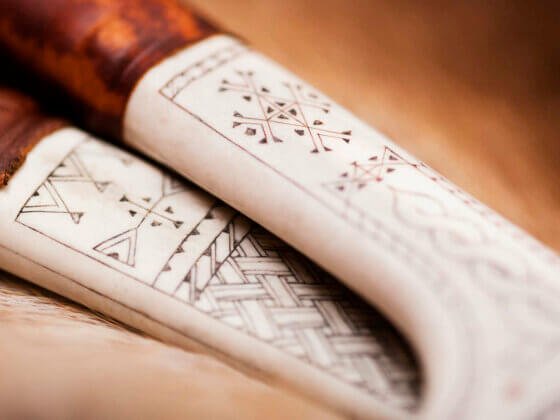
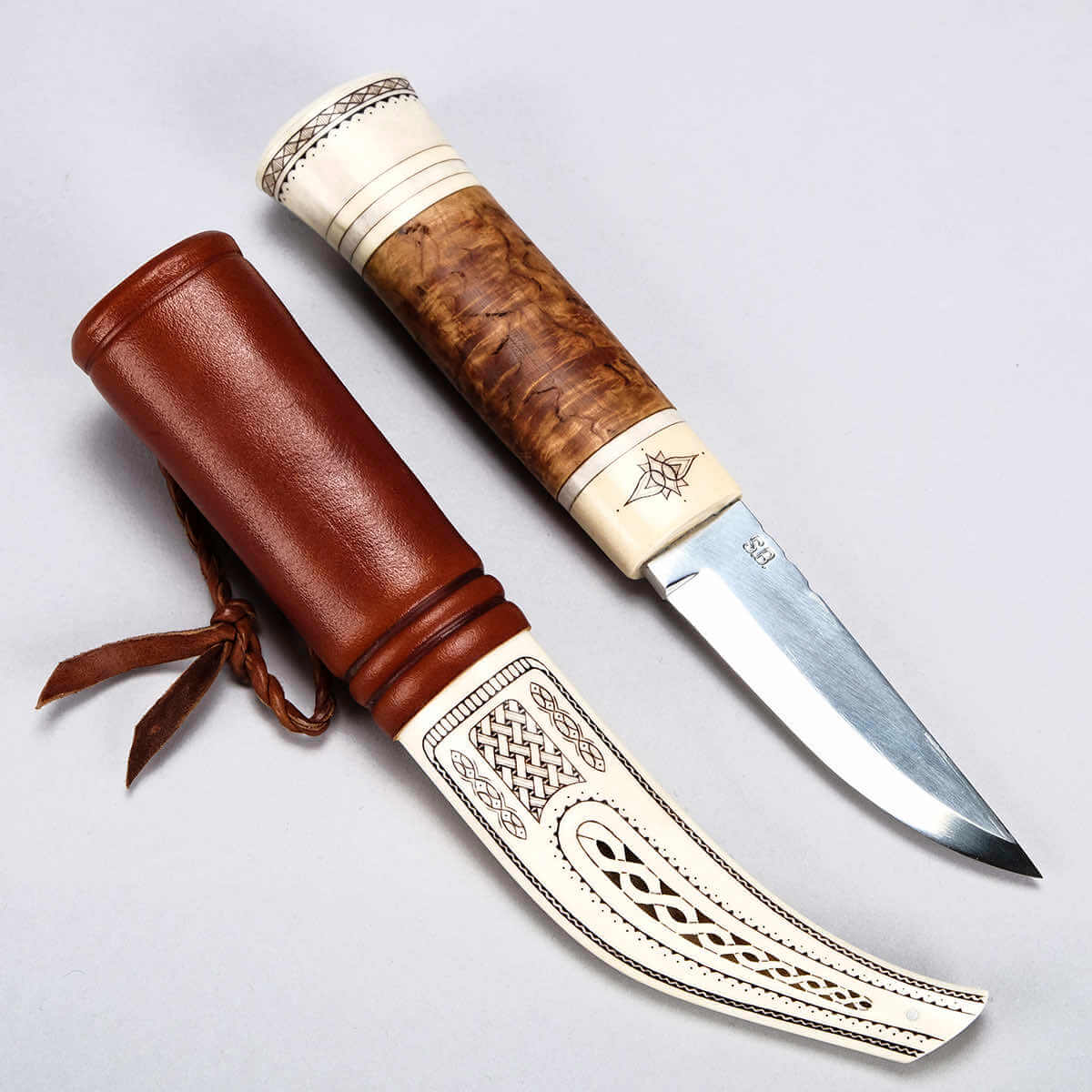
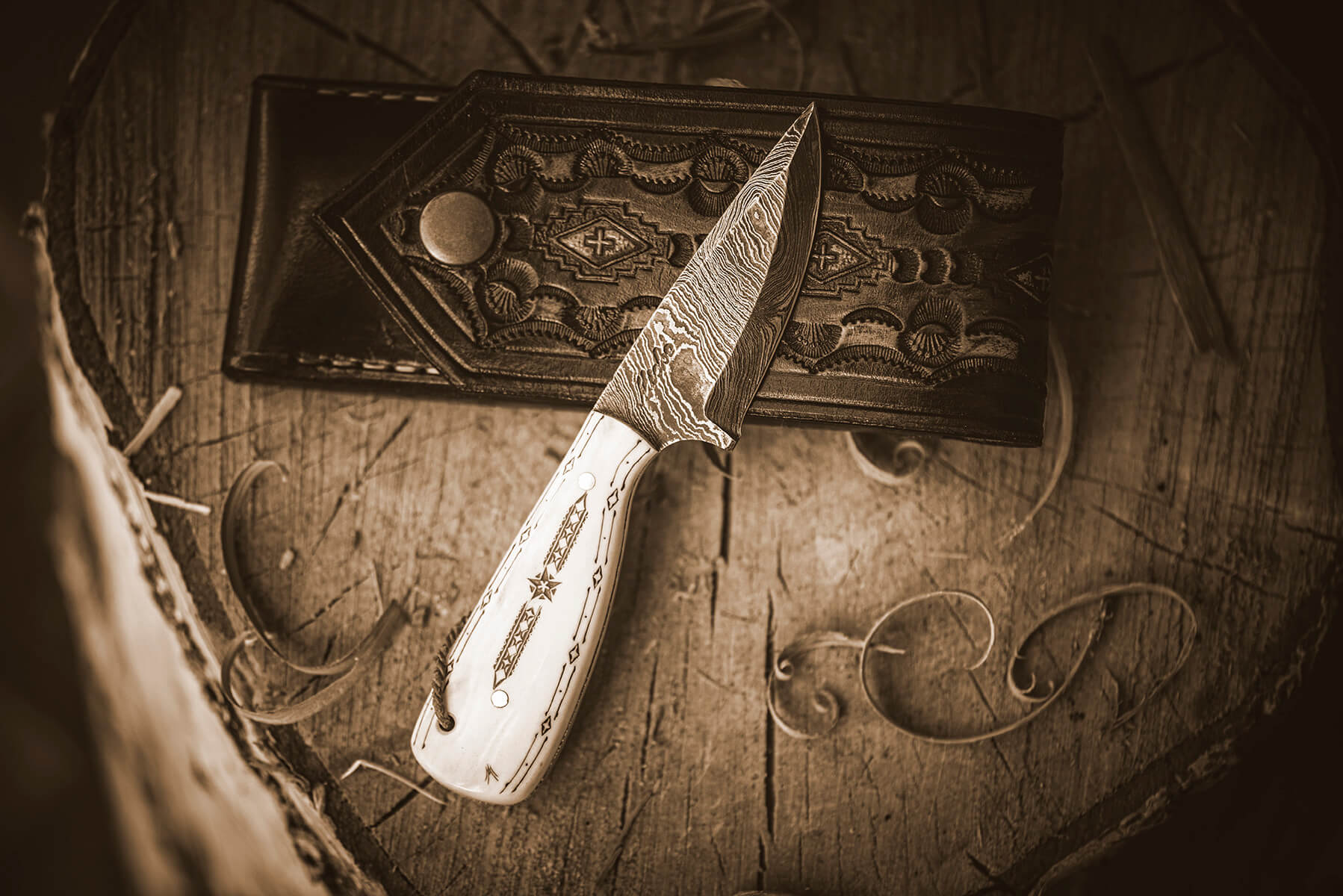
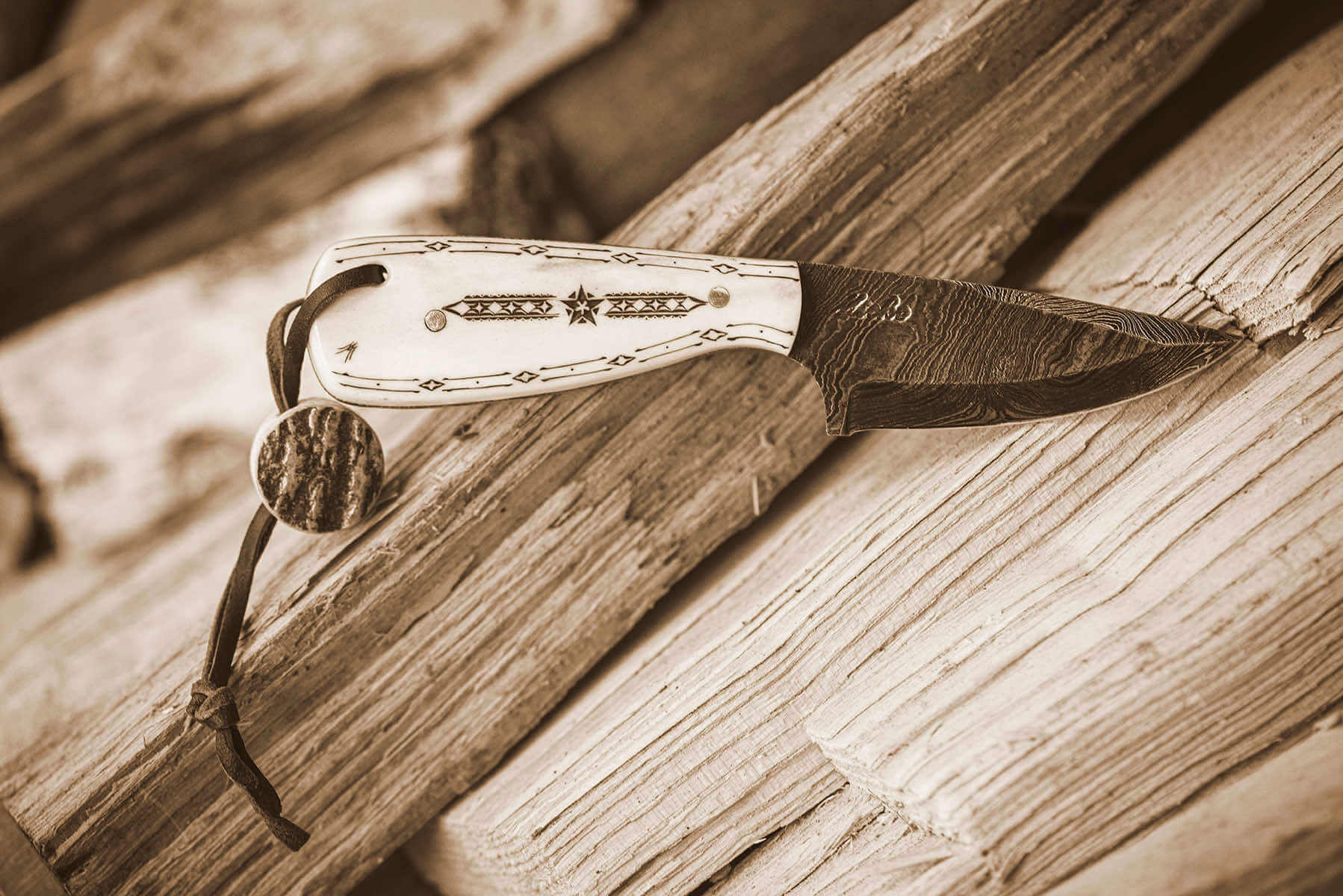
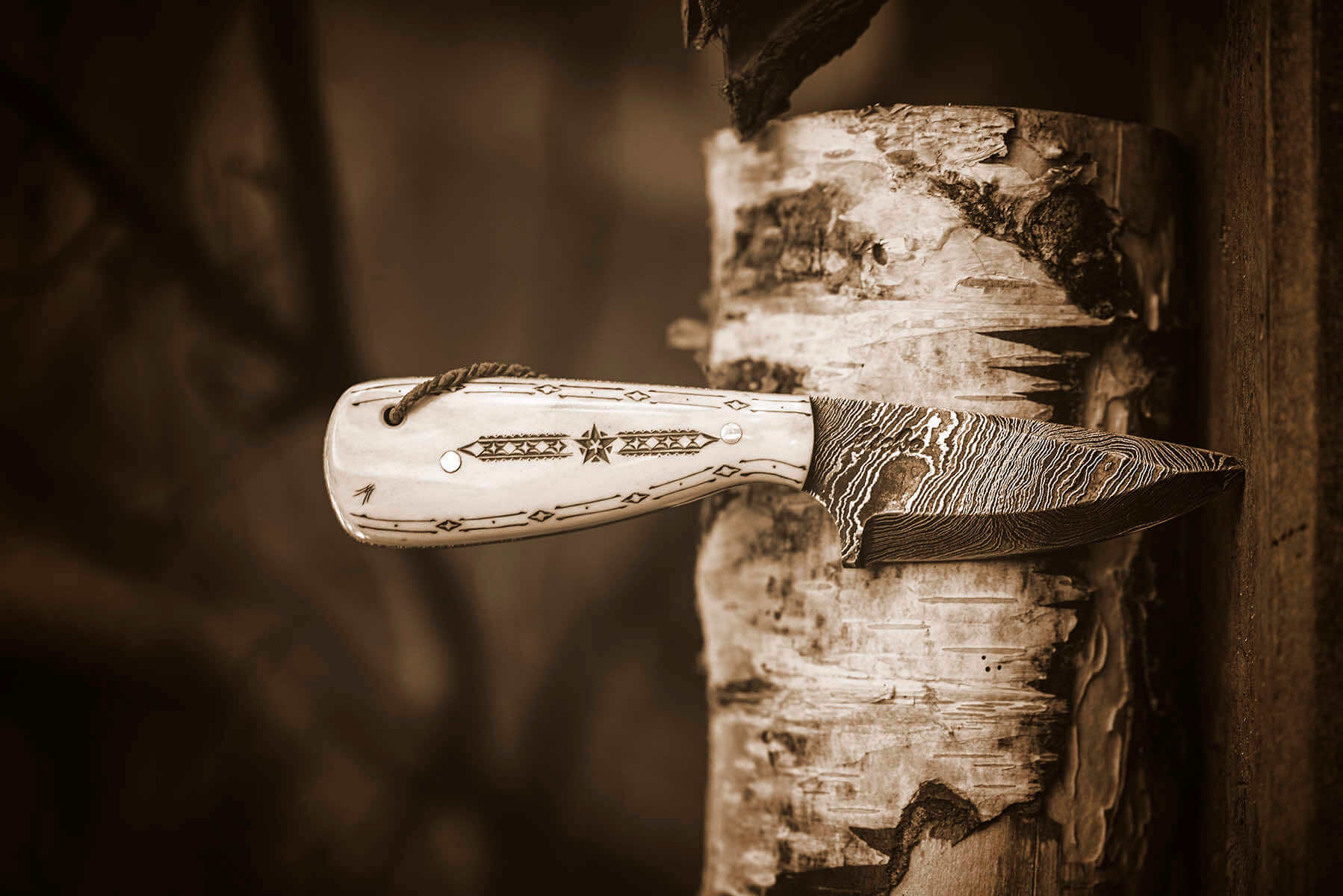
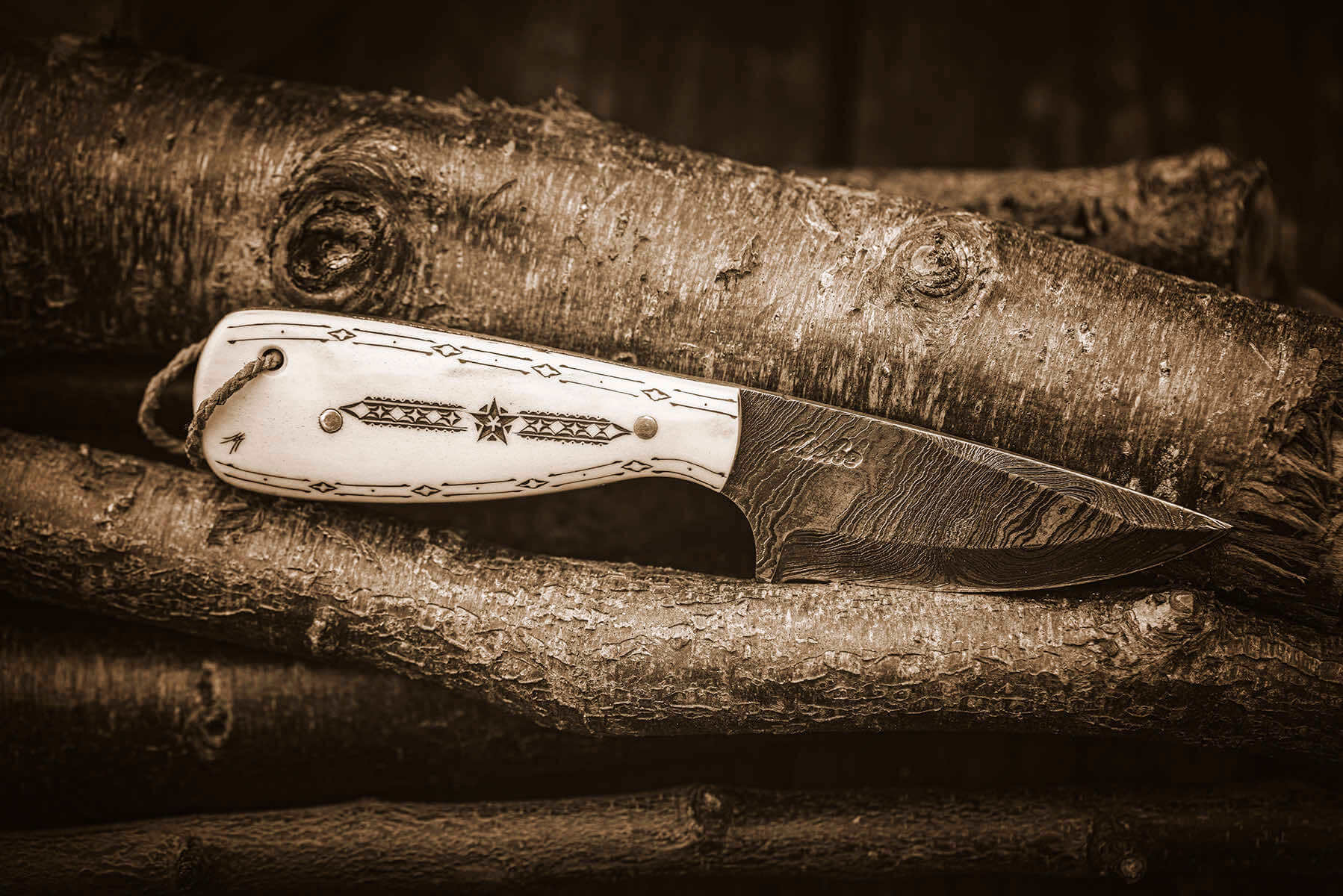
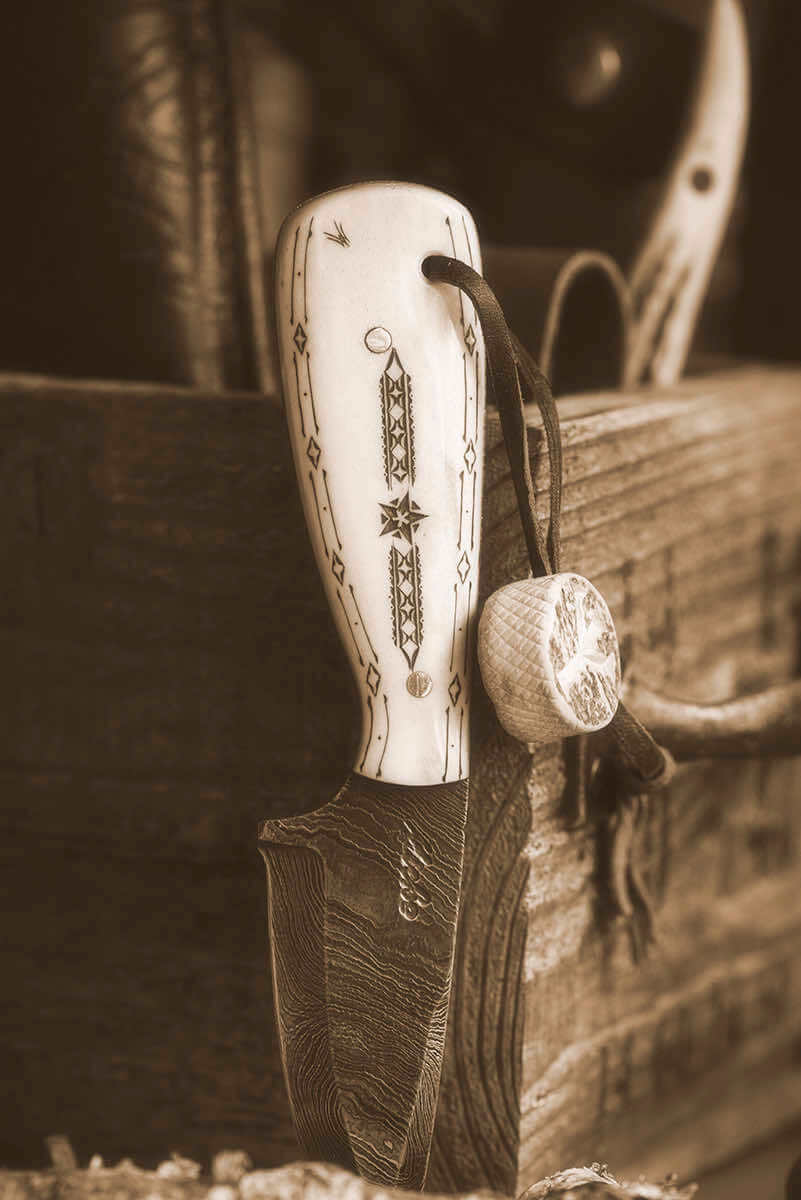
I came across this beautiful Sami knife by chance. Very nice engraving work on the handle And a beautiful Damascus blade. The knife measures 15 cm, the blade 7 cm and the length of the knife sheath Leather is 16 cm. Origin Sweden – Year 1980

Sami Handicraft knife

Blade, knife & sheath signed Micke – Sweden

Since prehistoric times, the Sami people of Arctic Europe have lived and worked in a region that extends to the northern parts of Norway, Sweden, Finland and the Russian peninsula of Kola. Traditionally, the Sami have pursued a variety of livelihoods, including inshore fishing and fur traps. Their best known means of subsistence is semi-nomadic reindeer rearing.

Time Is Passing

Time and equipment may have changed, but the knife still occupies a prominent place in Sami culture as an essential tool.

The Sami, living in the northernmost regions of Europe, have always enjoyed harmony with the surrounding nature. For them, the knife is a personal tool that has evolved over the years to become a very practical everyday object. Handcrafted by master blacksmiths, Sami knives are known for their sharpness and beauty. For the Lapons, the knife is also a symbol of social status, reflecting the role in the community. Women like men wear a knife or two. The most common material for Sami knives is wood and reindeer, rented for its ability to keep its shape for years. Here, a Sami craftsman expressed himself.

Duodji

The Duodji is the decorative art of the Sami peoples for everyday objects. Male objects, mainly of wood, horn or bone. Female objects, mainly of hides or of wood from roots.

The Sami craft, "Duodji" is practiced by many members of the community, making use of natural materials. The wood, the bark, as well as each part of the reindeer like the skin, the woods, and even the bones. Nothing is lost here, the Sami already had an eco-friendly lifestyle long before sustainability became the fashionable word that it is today.

Scandinavian Spirit

My most beautiful puukkos


Conclusion:

I often have an eye on the Tradera auction site. Besides the tab of the site is always open. This sometimes allows to fall on particularly interesting knives. Let me remind you that just divide the price by 10 to convert the Swedish krona into euros. You have the link below.

Thank you for reading this article! Not to miss the following, Subscribe to the newsletter.

Thanks again and see you soon.

Yakut, the traditional Russian knife

Yakut, the traditional Russian knife 1800 1195 Puukko - Finnish knives


What is a Yakut knife?

Nordic Spirit

The Yakut is the traditional Yakut knife in Yakutia, Siberian region. Yakut is used to work wood, leather, skins, fish and meat. It is also used for combat. The knife has existed for hundreds of years without significant changes in its design.

Popular ancient knives, including the Puukkos of the Sami, come from the Scandinavian nations of the north. Aboriginals such as Vikings used these tools at more than one end.

Design & Tradition

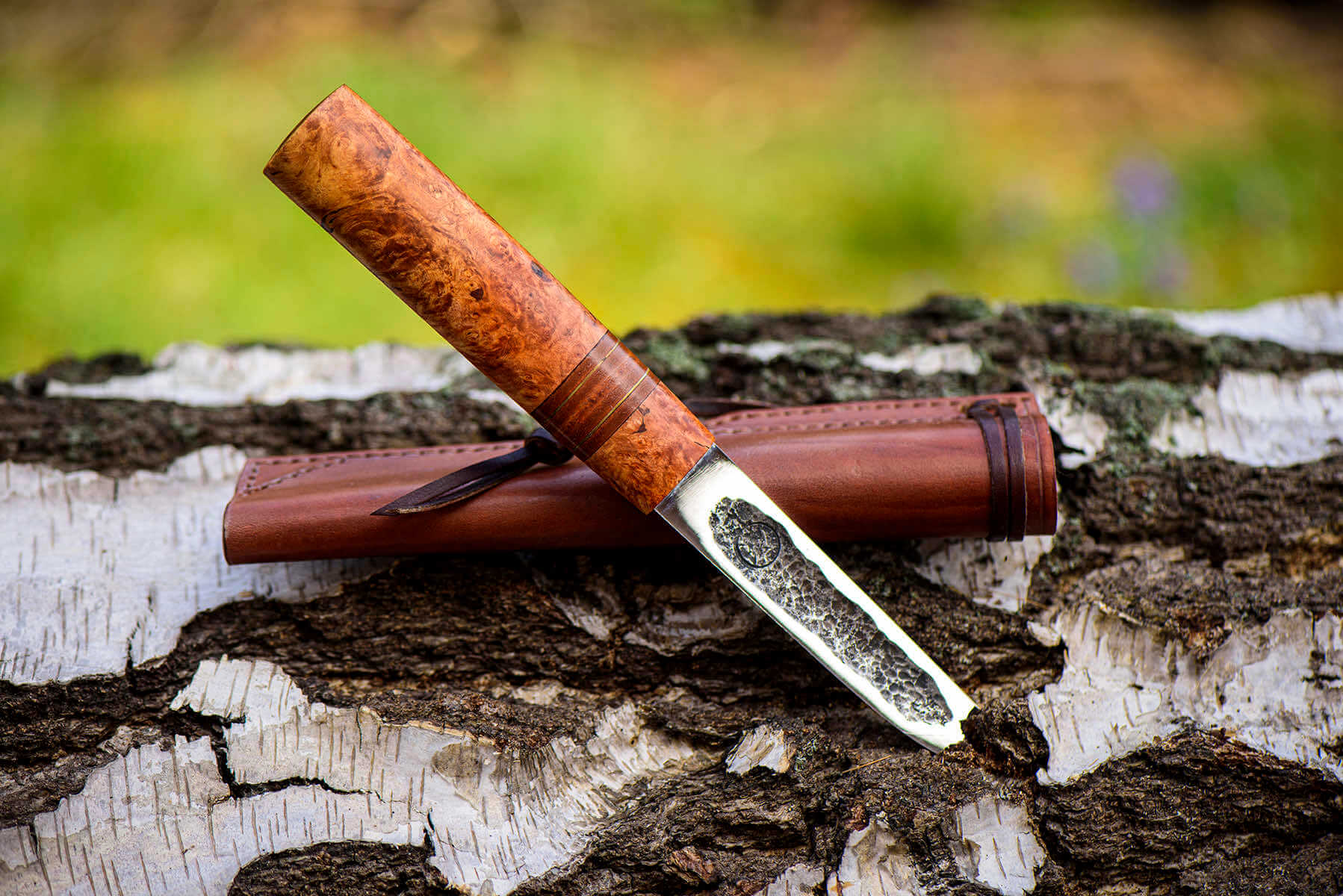
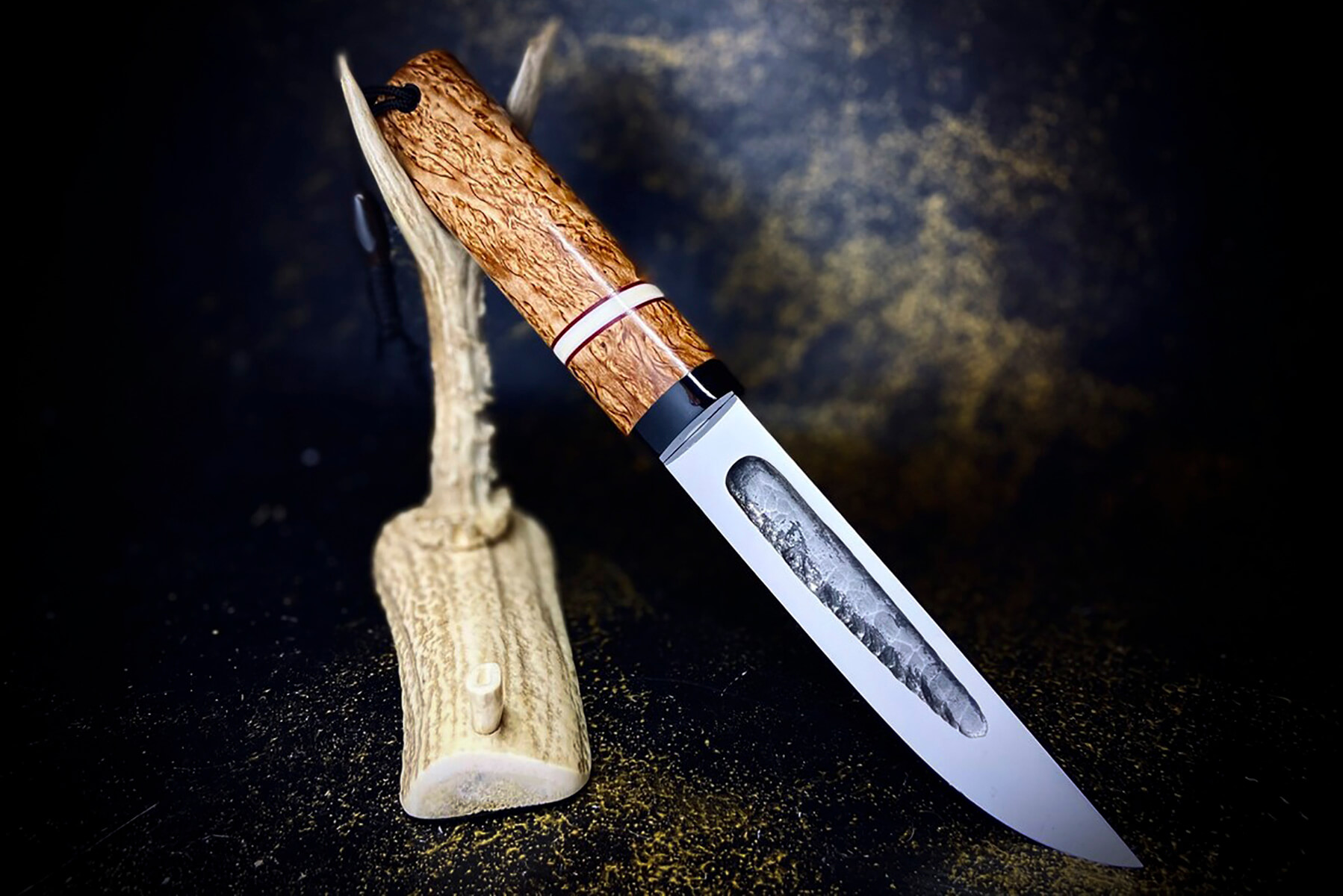
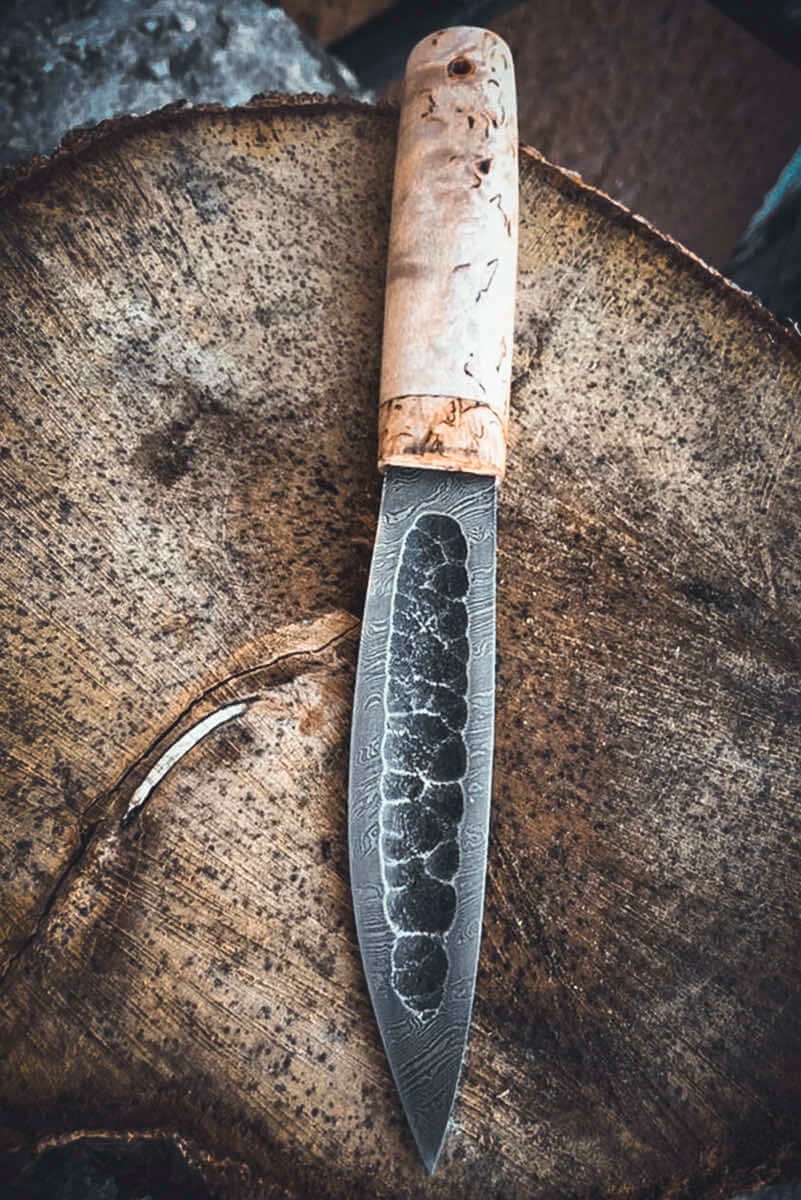
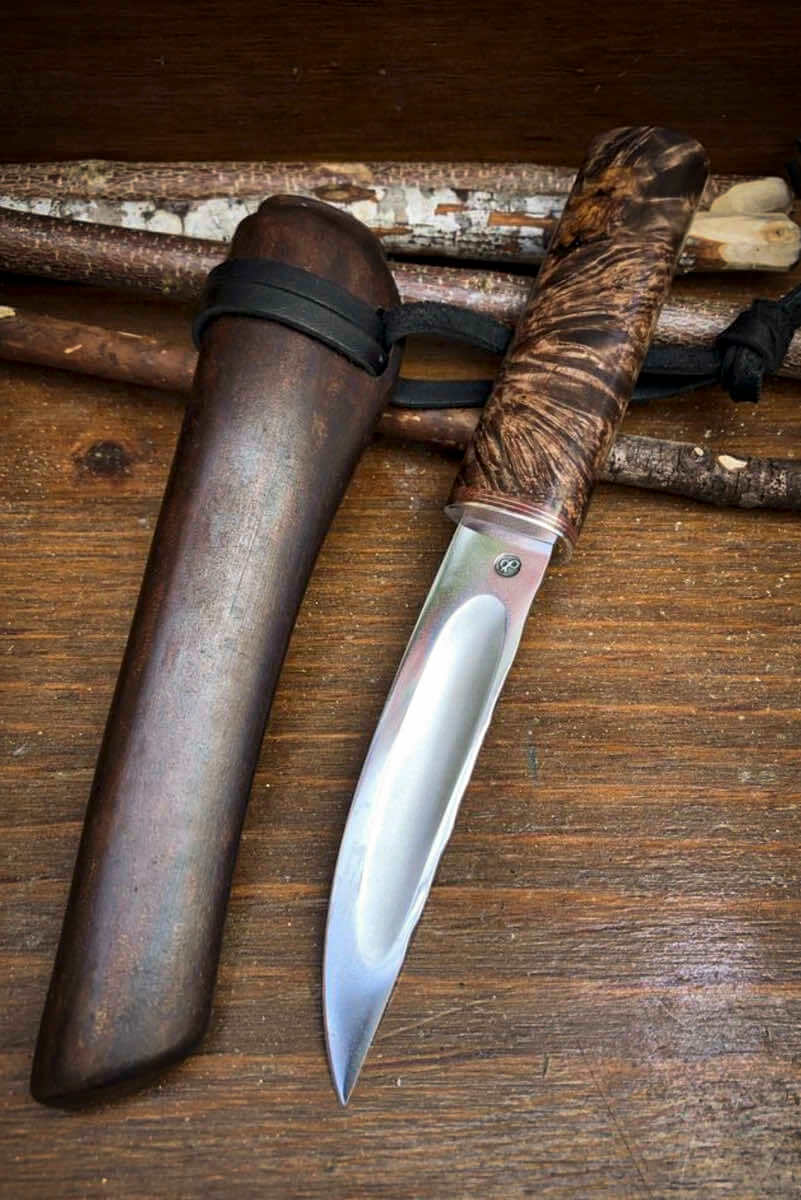
Typical Yakutian knives have a blade length of 10 to 18 cm and a width of 2.5 to 3.8 cm. An unusual feature of this knife is that the blade is asymmetric. One side of the blade has a fuller, i.e. a groove and a milling in the burin, while the other side has no groove and is essentially a convex edge (which means that he shrunk to the edge, rather than having a straight bevel). The blade is traditionally forged from iron ore of local origin melted by yakute blacksmiths. The groove of the blade makes it lighter and allows the blacksmith to reduce the amount of metal needed to make larger knives.

The philosophical basis of the knife is to use only for creativity and work. The master creates his product as an assistant and not to wage war or harm.

Design

It is said that having a yakut is a learning experience. Why? This is due to the concave and convex geometry of its blade with a fuller side forged by hand or mechanized. An atypical feature of this tool is indeed its asymmetric blade with one side having a convex edge and a straight bevel and the other having a grinding scissor and fuller as a groove.

The groove makes the blade less heavy and allows a blacksmith to use less metal to make a larger blade. The blade is forged conventionally using iron ore from a local site and melted by local but expert blacksmiths. The blade is sharp like a razor and remains sharp for a long time and is also easy to sharpen. Its shape resembles an arch formed in the cross-section to ensure massive resistance with a convex milling on its left and a hollow forged scissor mill similar to the Kiridashi Japanese to his right. This is the standard model for right-handed users.

A versatile tool

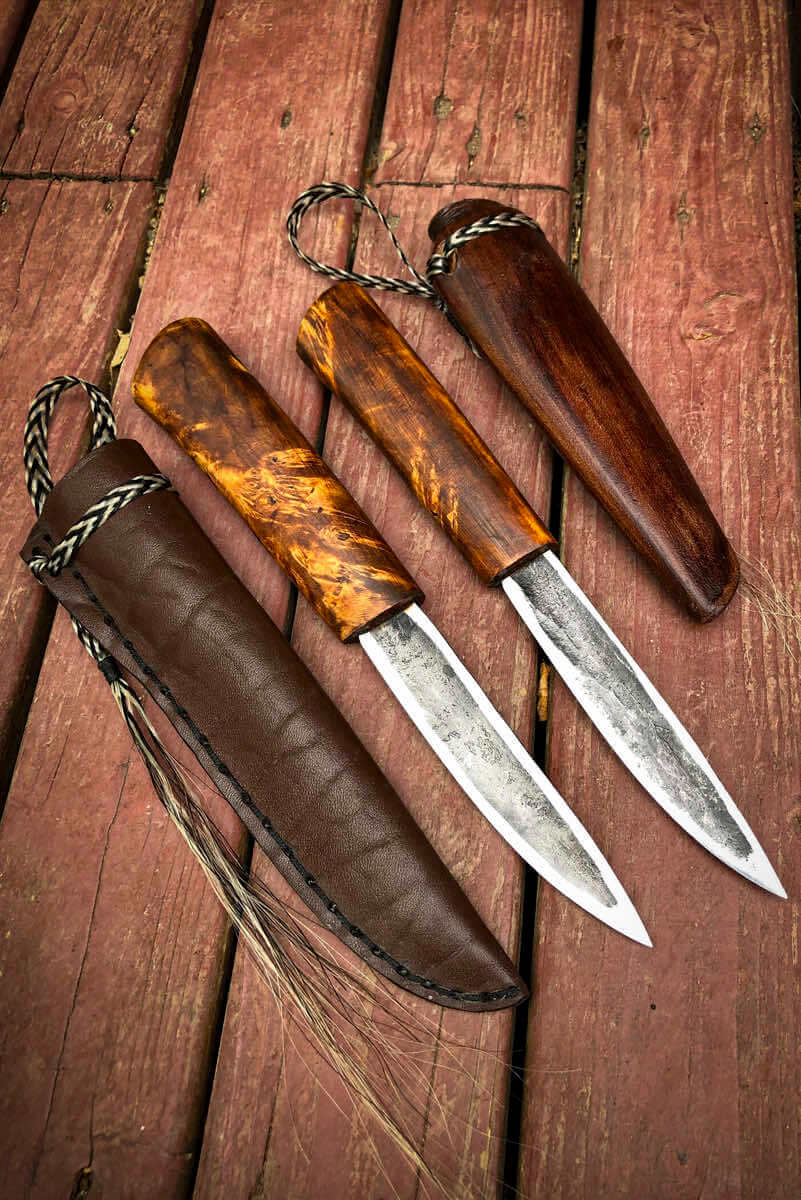
Fortunately, Yakutian knives are also designed for left-handed users, in which the above-mentioned shape is exactly the opposite. The handle is thick and unaltered, is usually made from birch magnifying glass and has a flat oval zone. Its cross section reflects the shape of an egg. Due to the birch material, the handle holds well in the hand, even if it is inside the gloves, indispensable at a temperature of -50 degrees Celsius.

The material also protects the hand from the cold effect of blade steel when it is too cold, a common climatic condition in Siberia. The Yakoute tribe uses many other knives that have this design and shape. In common, they all have a straight egg-like handle and are comfortable in hand. Each knife has its sheath that the Sakha make of leather, wood or skin with a wooden insert and resembles the sheath of the knives Puukko.

Viking Symbol

The handle Yakut is historically made from birch magnifying glass.

It is thick and egg-shaped in cross-section. It adapts to the hand and can also be used with gloves. The birch also protects the hand from the cold effects of steel knife, a common condition in Siberia during the winter months. One sheath with cowtail knife usually completes the whole.

With a Scandinavian milling, these knives, even today, are used for sculpture, bushcraft and utility tasks. Like the other Scandinavian knives, the Yakut is designed and used by an indigenous community in the Sakha Republic region north of Siberia, the Yakut.

He is known for having maintained a flourishing blacksmith tradition for several decades thanks to which he introduced a myriad of sharp tools, ranging from cutting knives to spear tips and swords. The blacksmiths were an integral part of the old Yakoute culture. They are people valued and admired for their ability to convert metals into weapons and tools. Yakut's manufacturing tradition was strong to make unique knives!

Tradition

As tools, the knives have been a must-see friend of every craftsman. For many centuries, knives as tools have played a more important role in the lives of Siberian Aboriginals than all jewelry. The importance of knives for these natives becomes evident through adage: Knife, my third hand. They are still used today for hunting, fishing and cooking tasks. A craftsman also uses a knife as a wooden plank. A Yakut knife is one of these versatile and venerated tools.

Characteristics of a yakut knife

Blade length and material:

The blade of the Yakut knife is what distinguishes it from others. The convex-concave blade is 10-18 cm long and 25-38 mm wide. The blade construction material is generally Russian steel H12MF which is robust and durable due to its high density properties. These blades have improved heat resistance and carry extreme resistance to challenge external influences.

Some modernized models use N690, U8A, ShX15 steel, and they also offer higher corrosion resistance and improved hardness, ensuring durability in action. The blades usually receive a robust finish; Although sometimes slabs in Damascus layers can also be found, they are purchased for collection purposes.

Size and weight:

Despite many variants of the Yakut knife, its initial design and measurements are somewhat constant. The total length of the knife varies between 18 and 28 cm; while the weight is kept low enough for transport reasons.

Handle :

The handle A Yakut knife is 10 to 12 cm long. Traditionally, the Yakut knives used by the inhabitants of Sakha had handles birch, curly birch, guibourtia, birch magnifying glass, etc. The handles are solid and offer a sufficient diameter for a comfortable but solid grip, even with gloves.

Some of the recent designs are in elk horn, marsh oak, wenge wood, etc., which are particularly pleasant to look at. The apple of the handle is strong enough to hammer. Finally, the full silk hidden in the handle doubles the stability of the blade.

Sheath :

The Yakut knives were of great importance to the wearer. And that reflected how they wanted to carry the knife. The Yakutes used hand-made cow leather sheaths to hold the blade. Wooden stoves are also found with some versions.

How sharpen Yakut?

Easy, given the shape of its blade, you only care about one side!

Meaning of Yakutian knives

A traditional Yakut knife is considered the symbol of Siberia, as are Yakut diamonds, Siberian tigers or the hardened mammoth defenses. It is an indigenous heritage of the Sakha people. For them, the tool is both a weapon, a tool and an object of beautification.

Made for a very long time, this knife is still widely used today for many Aboriginal economic activities. To be precise, it is mainly used to simplify long, thorough tasks such as repairing broken sleds and removing meat from bones.

Apps

A conventional Yakut knife is specially sharpened and optimized for cutting pushed cuts. It is usually seen cutting wavy strips of fish Coregonus frozen to make a traditional Yakoutian dish, Stroganina. This dish can also be made with fresh frozen mare milk or reindeer meat.

It's typically where the fowl plays its part. In addition to lighten the blade while ensuring a good balance of handle, the gutter considerably reduces the external contact surface, which facilitates slices.

This also makes the tool a good wood planing machine that can easily cut by traction and push. Traction cuts involve the flat bevel exposed to the cutting surface. However, to avoid having wood chips quite flat, the blade must be tilted.

However, asymmetric milling is not so favorable for making traction cuts without the flat side being exposed to wood or when cutting wood chips. This may be due to the lack of material at the back of the edge and the lack of sufficient mass to separate the fibres using only its unique geometry.

Old Yakut
Map of the Yakutie

Yakut loves extremes!

Seizing concentrated from extremes, Yakutia is best known as land of exile and deportation. It is one of the countless regions of immeasurable Russia.

  • Extremely distant, six time zones east of Moscow.
  • Extremely large, with an area of India, six times that of France.
  • Extremely deserted, a small million inhabitants populate these vast
  • Extremely glacial, ubiquitous permafrost, six to nine months of winter, temperatures around –50 °C.
  • Extremely rich in natural resources.

Yakutian Landscape

YAKOUTIE, TERRE DES EXTREMES!

There are only two seasons in Yakutia. The cold season begins with 2/3 of the year, or eight months. During this season, the temperature may fall to -56°C. Then comes the beautiful season. It's the equivalent of our summer. This beautiful season lasts 4 months. Temperature can range up to 40 degrees in shade.

The Yakutia in video

Yakutia, also known as Republic of Sakha, is an immense region of Russia. It covers approximately 3.1 million km2, or 18 per cent of the territory. Yakutia is called diamond heart of RussiaThis is where a quarter of the world's high-quality diamonds are extracted.

Origin of Yakut

A Yakutian knife is a Siberian equivalent of puukko Finland. With a particularity, the shape of its blade. The merit of this feature lies in its geometry, which combines concave and convex conceptions. Many theories exist, although they are for the most part provisional, because most of the ancient know-how of this knife was lost during the socialist regime. It was only at the end of the 20th century that the Yakuts themselves began to examine it.

According to one theory, the asymmetric blade of this knife is a steel shape of primitive bone knives. This is established on the notion that the division of a long bone towards the outer side will result in convex; while the inner part must be hollowed after removing the marrow. This anthropological theory reveals that the nomads Yakut who knew how to forge steel have adopted the unique geometry of Evenks (one of the Tungo peoples of Siberia) considered cousins of North American natives. The Evenks did not know the forging of steel and they used animal bones. Thus, the geometry of Yakut would come from concave and convex geometry of bone knives.

The Gods of Hell

Another common legend says that blacksmiths have acquired the art of forging this tool of the gods of hell. A more defensible theory specifies that the unique geometry was designed for performance as well as for less use of steel by blade. In concrete terms, a yakut knife is a tool made up of three components, namely an asymmetric blade, an asymmetrical blade, an asymmetrical blade, and a knife. handle made of monolithic wood and a leather sheath. The asymmetric blade usually has a convex bevel on the left and a flat bevel on the right, with a full bevel.

The northern Yakut knives have a more slender blade, unlike those in the south that have a slightly wider blade. The sheath sewn on the side is made from cow's tail skin and holds the knife halfway up to handle.

Introduction to the Yakut people

Origins

Originally from the Far Eastern Siberian Republic of Yakutia, the Yakutes are a semi-nomadic people whose traditional way of life was mainly dictated by the extreme climate of the region where they live. Here's all you need to know about one of Russia's leading Aboriginal groups.

The Yakutes live in some of the coldest places on the planet, which become surprisingly hot in the summer. It is also the largest republic of Russia, officially formed in 1922 at the beginning of the Soviet Union. More than four times the size of Texas, the Yakutia extends to the north coast of Russia. Far above the Arctic polar circle, and south to Lake Baikal, the Buriatia and the Aldan plateau. There are more than 700,000 rivers and water bodies flowing through the vastness of the Republic.

History

The Yakutes appear in oral histories dating back to the 10th century. They are believed to be descendants of the indigenous peoples of the Lake Baikal region who migrated northward and settled among the nomads Evenk and Yukagir around the Lena Valley. Russians only made contact with them in the 17th century. The Cossacks arrived in the area around 1620, and a conflict between them and the Yakutes ensued. By the mid 1600s the Russian empire had absorbed the valley and in the 1700s Iakutsk was a lively Russian outpost.

Culture

Imperial domination and the formation of the Soviet Union have seen the number of Yakutes decrease. In the 19th century, the Yakutes were already giving up their traditional nomadic lifestyle for a more permanent lifestyle, and the increase in urbanization had an additional impact on this. Despite the decline in the number, the regional villages can be entirely populated by Yakutes, where the fate of the extreme conditions continues. The harsh climate and permafrost mean that agriculture is difficult. In the region, many Yakutes are still involved in breeding and mining. Yakutia is one of the world's leading sources of diamonds.

Yakut knives for Bushcraft

There are salient features of a Yakoutian knife because it is considered the ultimate bushcraft tool. Let's explore them.

# 1 – Power

There is a strong reason why modern engineers and biomedical experts examine bones. This is due to their striking physical geometry. After performing a series of tests such as torque and force tests, these people concluded that a bone can easily adapt to a dynamic loading environment over time and recover pressure at risk. Credit goes back to concave and convex geometry, which is the most remarkable feature of a Yakut knife. This shape makes the blade more durable and powerful than other ancient knives. It is precisely the shape of the wheel arch that makes this blade stronger than a traditional blade. In addition, the blade is forged with high-grade steel carbon which makes it almost indestructible by the forces of human members. This characteristic is paramount in a survival situation.

# 2 – Effectiveness

The unique geometry facilitates very little contact with the cut item. This results in very low resistance, which means, not being stuck in the wood. The shape of the blade also allows you to use the tip as a drill to easily and efficiently drill holes in leather or wood. These traits are really practical for survival.

# 3 – Survival

Anyone who has faced a survival spell knows that dehydration and fatigue are the worst opponents in an emergency. With them, one cannot even perform the necessary tasks such as digging for water and making branches to live. However, with this knife, these tasks are easily achievable without you having to make significant efforts. We know that the knife comes from the coldest populated place on the planet, Siberia. Its distinct geometry makes the characteristics robust, which are based on the requirement to function well even in the coldest temperatures ever felt on earth. Since steel properties tend to change radically at these temperatures, it took concave and convex design to ensure the highest level of durability.

# 4 – Sharpening

This is another vital characteristic of a Yakutian blade. You only sharpen the flat side. Your maintenance effort is reduced by half, as you sharpen only one side. In addition, at the time of sharpening, it is not necessary to make an additional effort of repeated passages from the same angle, unlike a standard knife. If forged by means of a high-grade steel material carbon, the knife edge will last longer than any other knife made from steel. A common misunderstanding about sharpening of this knife is that the edge will disappear if it is often sharpened due to its fine profile. Well, that's a myth! Indeed, sharpen a yakoute knife is not like sharpen An ordinary blade. Finally, after several years of use, the hollowed side becomes less deep, but the edge remains intact in terms of size. You get an extremely thin edge with the strength of a normal knife.
# 5 – Floating

Well, yes, the birch magnifying knife floats! A traditional Yakut with a forged blade without anything that can add to its weight will never sink. This ability to float makes the knife an ideal tool for many knife fans.

Convinced!

Yakut is an efficient, durable and versatile choice for most survival tasks. The Yakutian knife is a robust and functional survival tool even under extremely cold conditions. He really is an ideal adventure companion!

FAQS

Maybe some answers to your questions

  • The Puukko is another traditional knife of Scandinavian origin. It was originally created to be used inside as a utility knife for everyday tasks, such as food preparation and minimal wood carving. While a Yakut knife is more an outdoor knife than you can use to hunt, eviscerate and strip hunted animals, thread fish, chop vegetables, cut wood, etc. The two knives also differ visually, one with a grooved blade and the other with a flat back.

    The history of the puukko

  • The groove calculated on the Yakut knives was created, because forging and acquiring steel was difficult at that time for the Yakut nomads, so they tried to save steel by putting a hollow there. This cavity, therefore, reduced the weight of the blade while making the blade wider, but not heavier.

  • If you need ready-to-use knives, there are incredible choices on Etsy where you can buy beautiful hand-made yakutes knives at a reasonable price. Otherwise, it's best to work with an expert blacksmith to make one with your dimensions and materials to design your custom model.
Conclusion:

As much as I like the artist's work done on some puukkos, so much I like the raw and functional side of Yakut. It is felt that this tool was created to withstand all the difficult situations that can be encountered in nature, including extremely cold temperatures.

I hope you enjoyed this article about Yakut, if you do, think about noting it and sharing it. There may still be a lot to say, but this article is already long... It's the right time to discover Ernest Delannoy, French cutlery blacksmith. Thanks again for the visit! See you soon!


The Blog of puukko.fr

Articles on puukkos, Scandinavia, nature and large spaces.


Viking knife & Amulet

Viking knife & Amulet 1798 1200 Puukko - Finnish knives

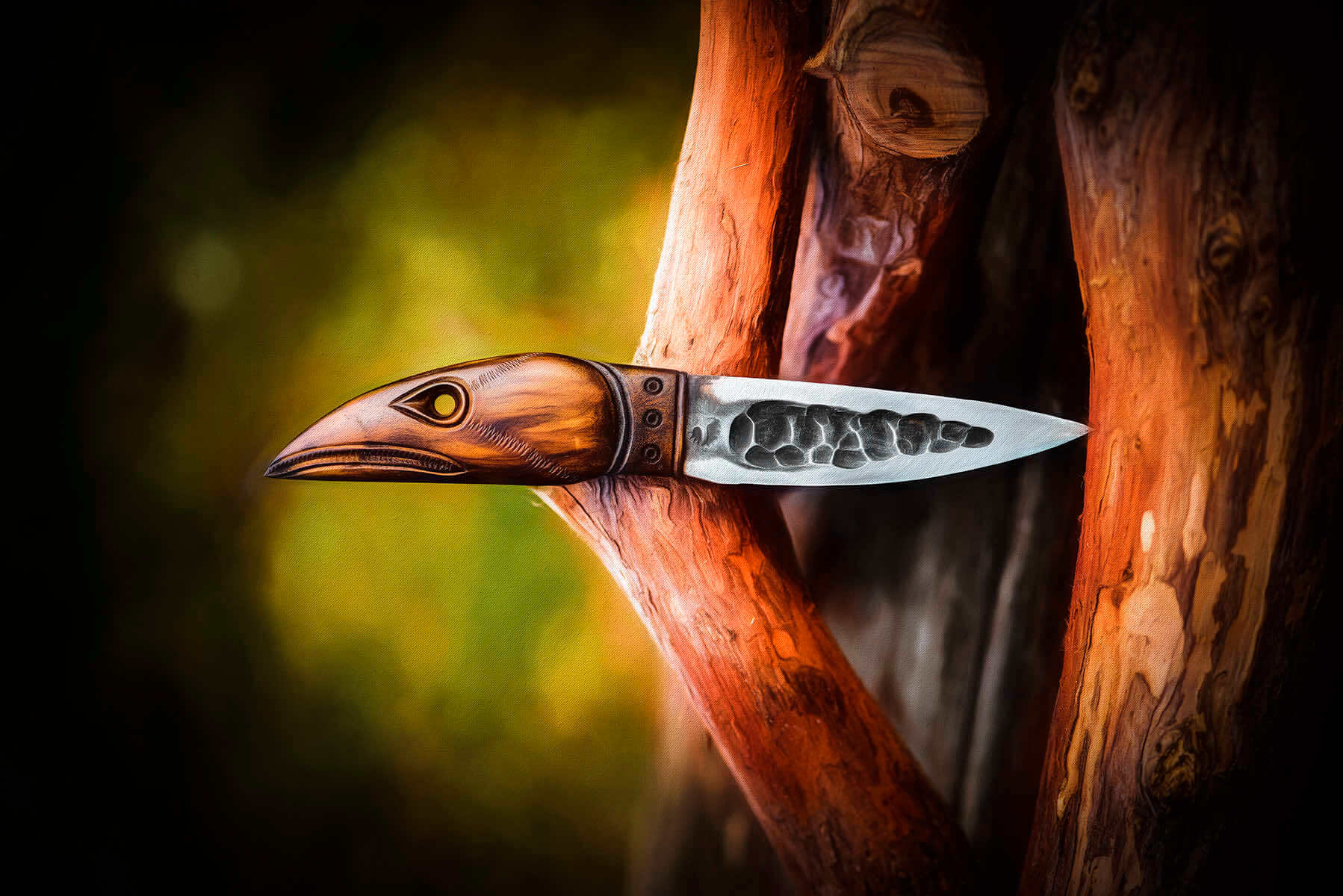
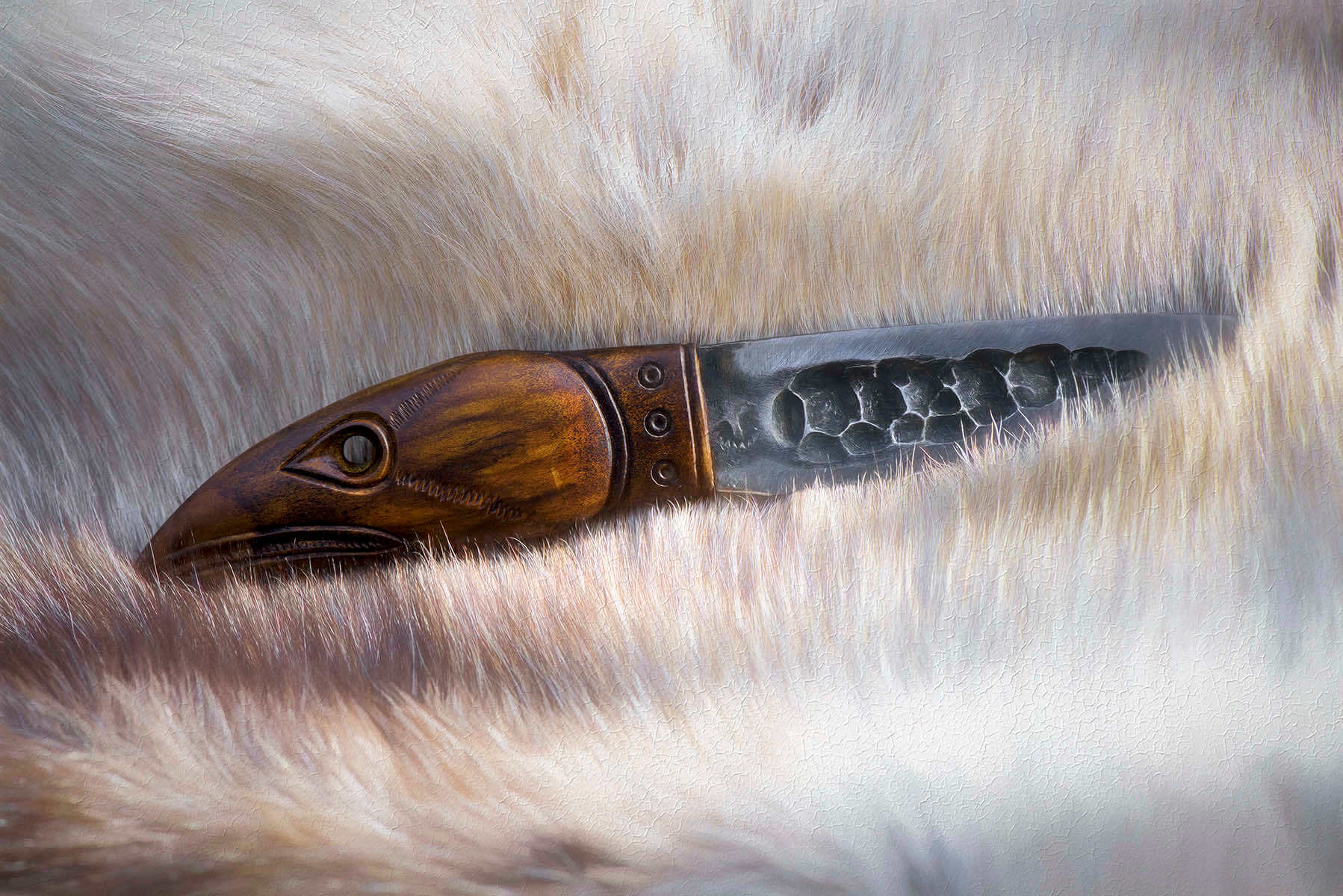
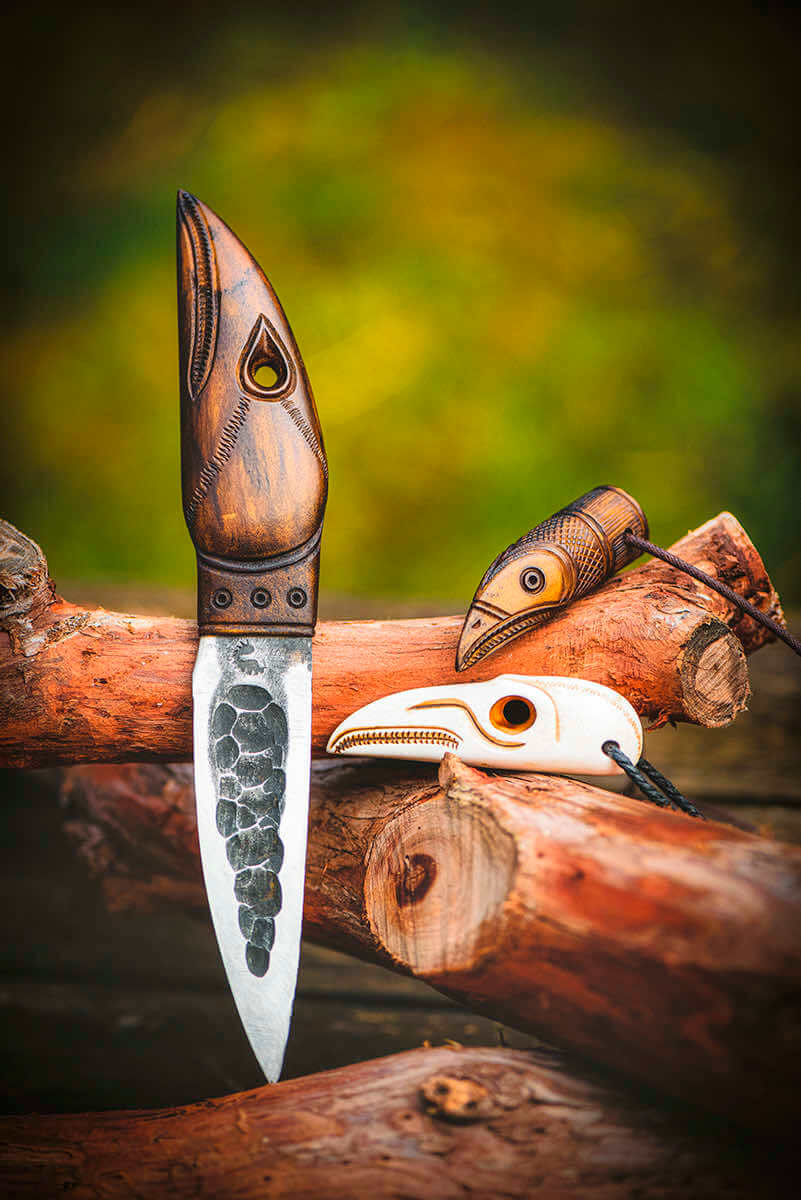
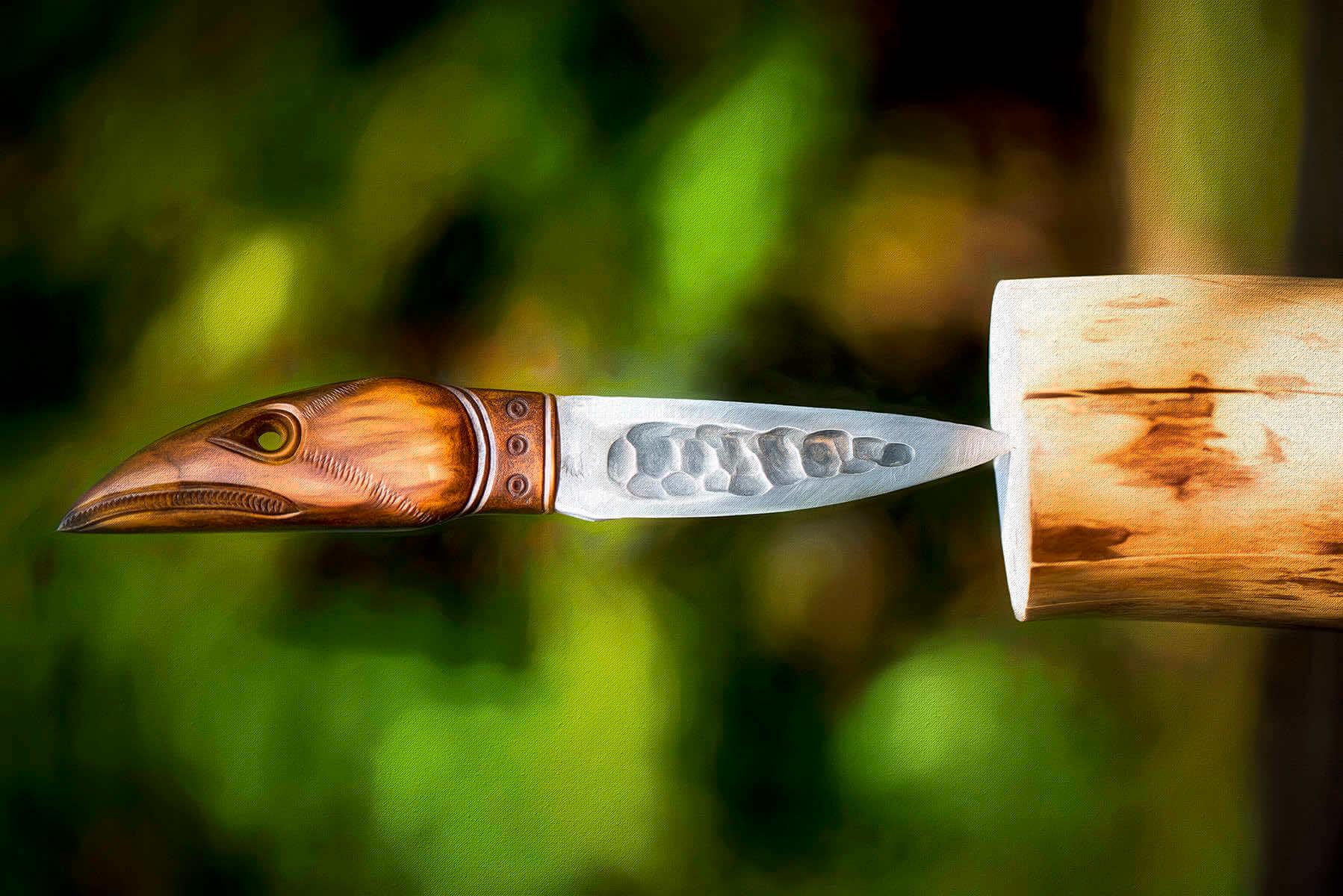
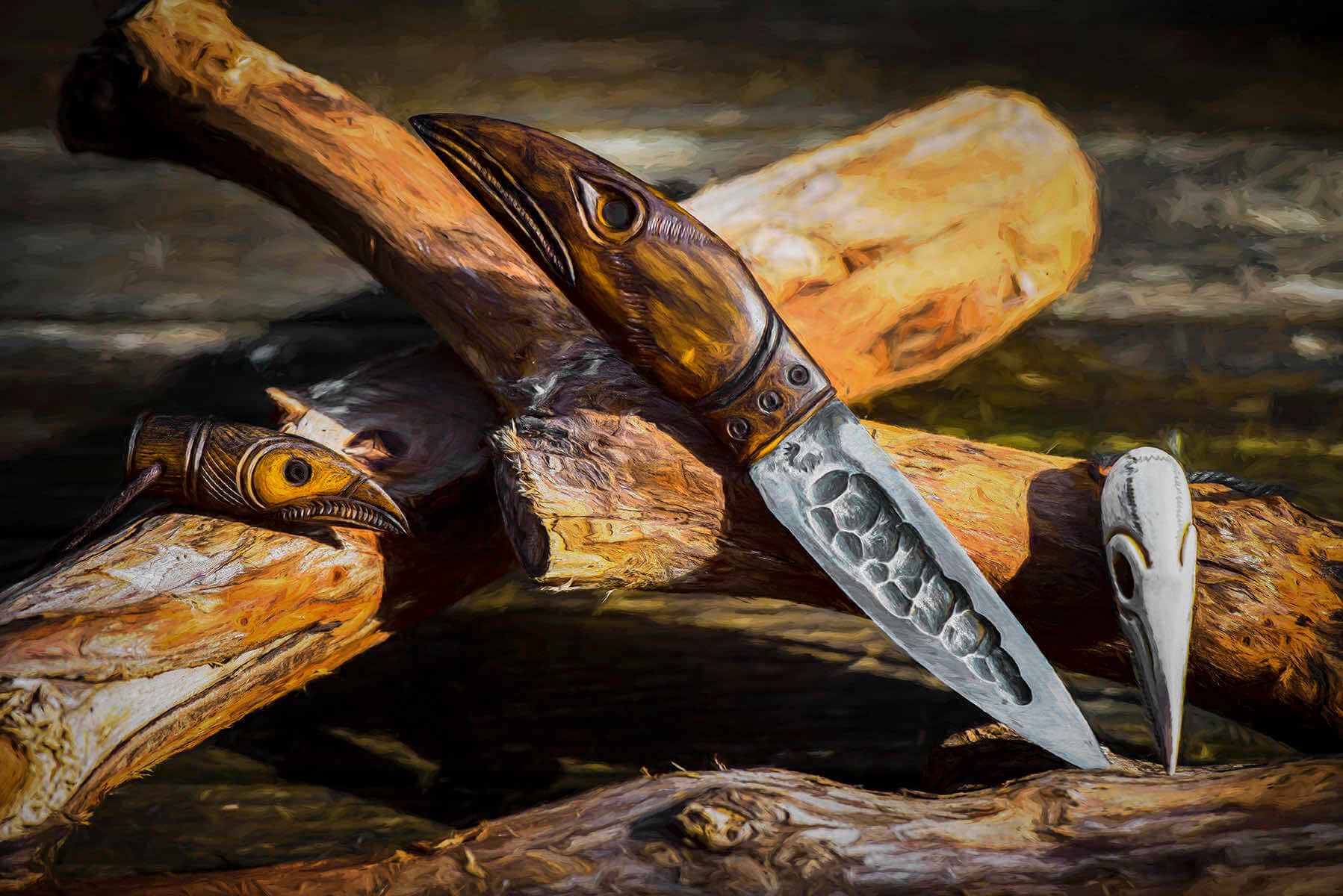
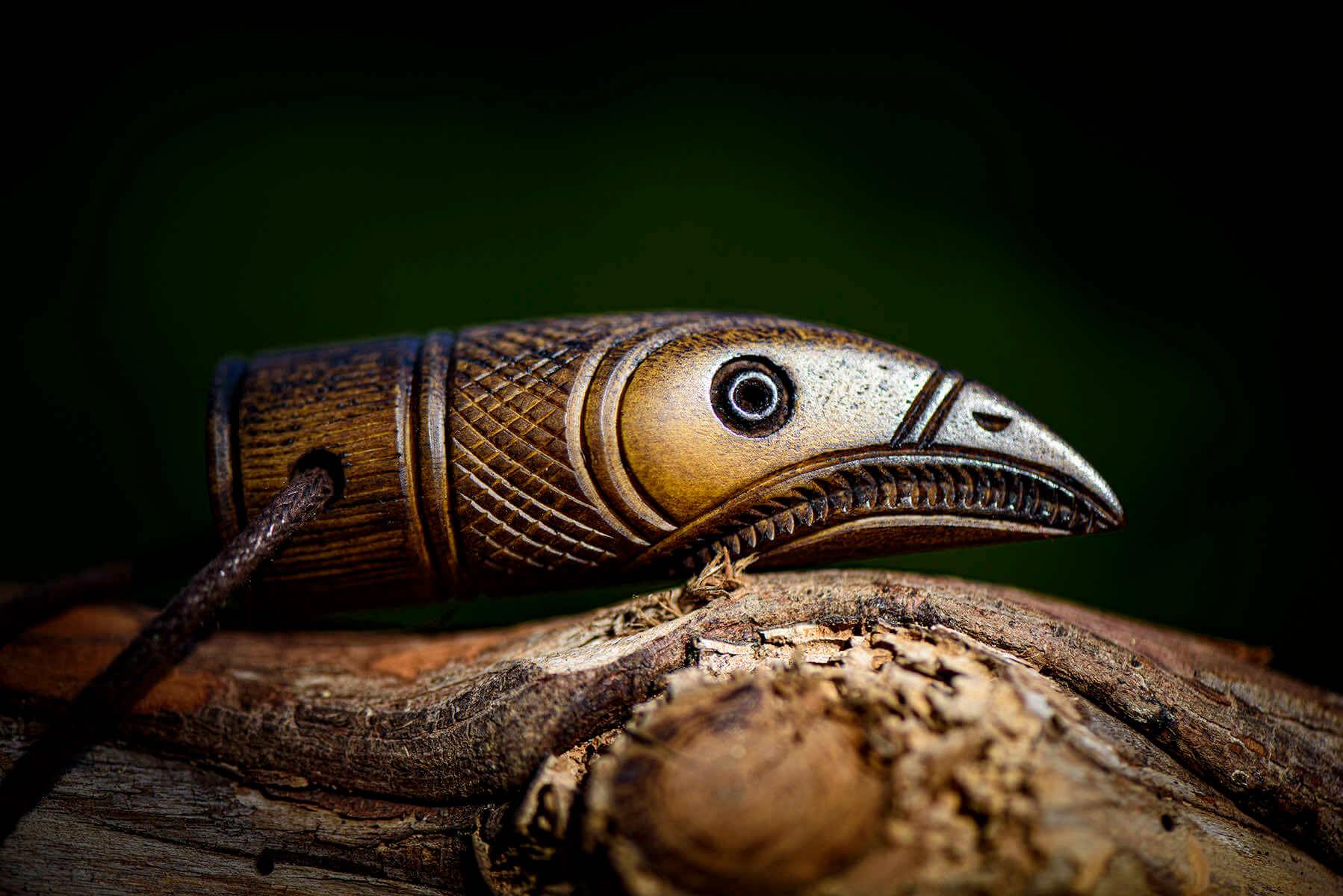
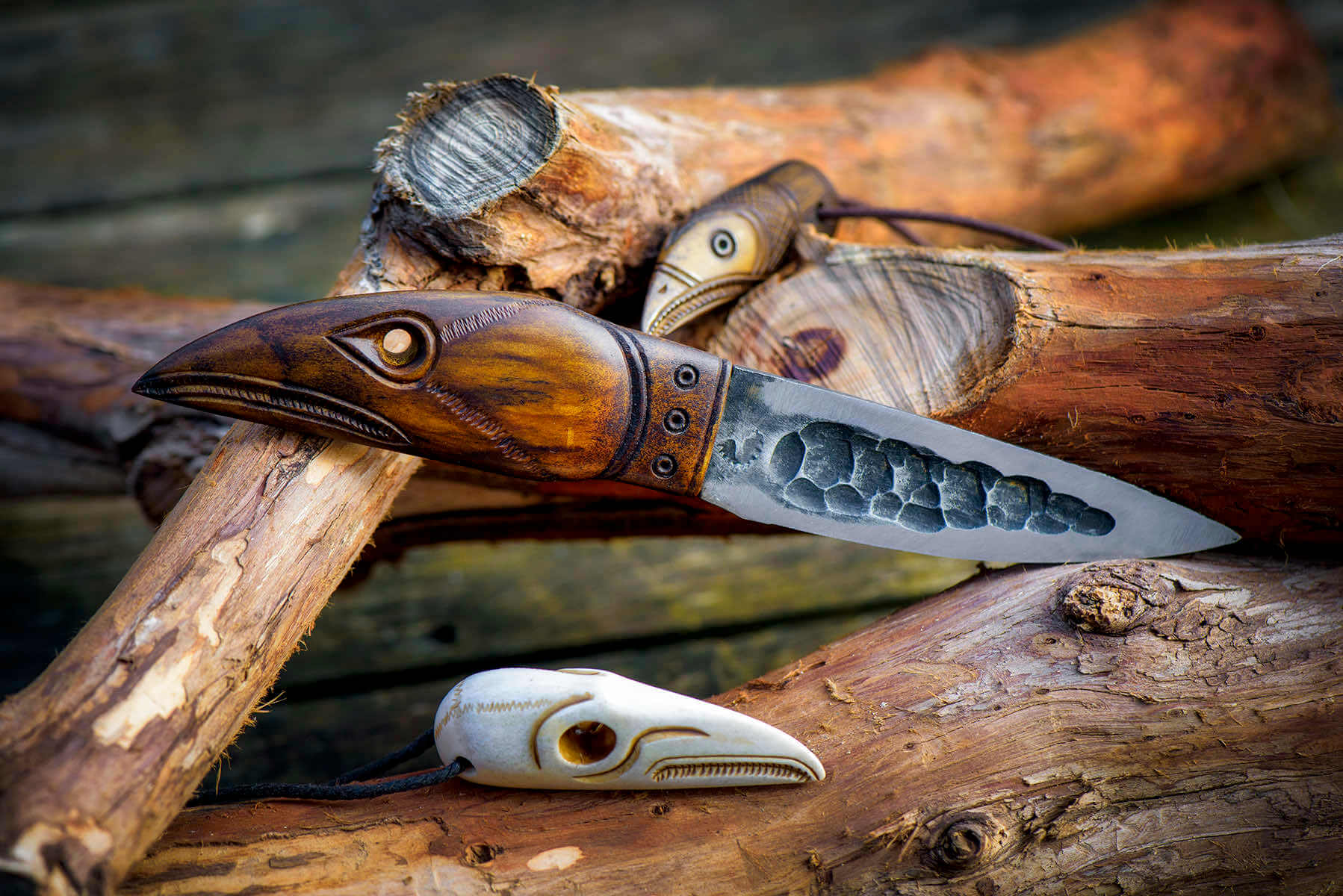
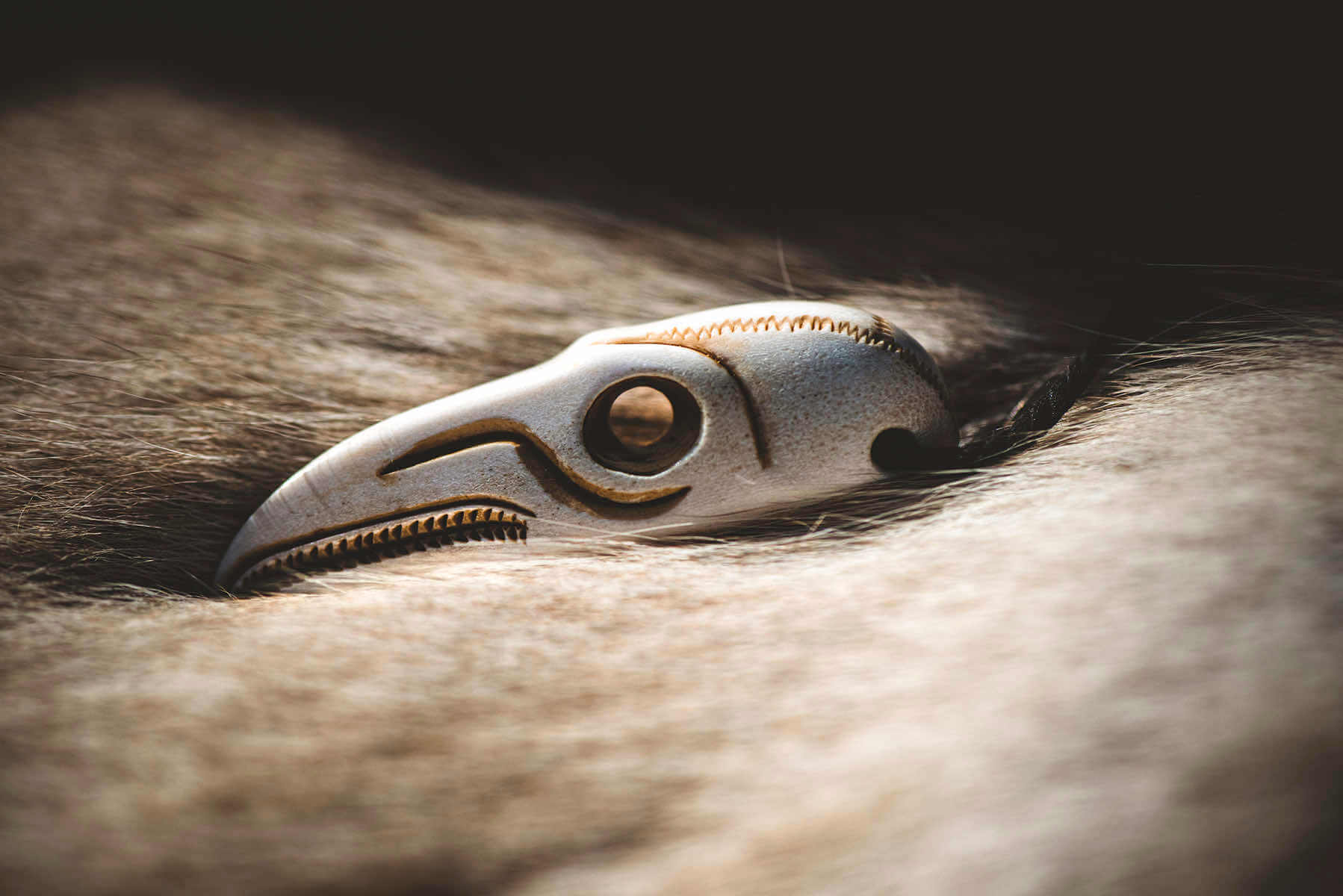
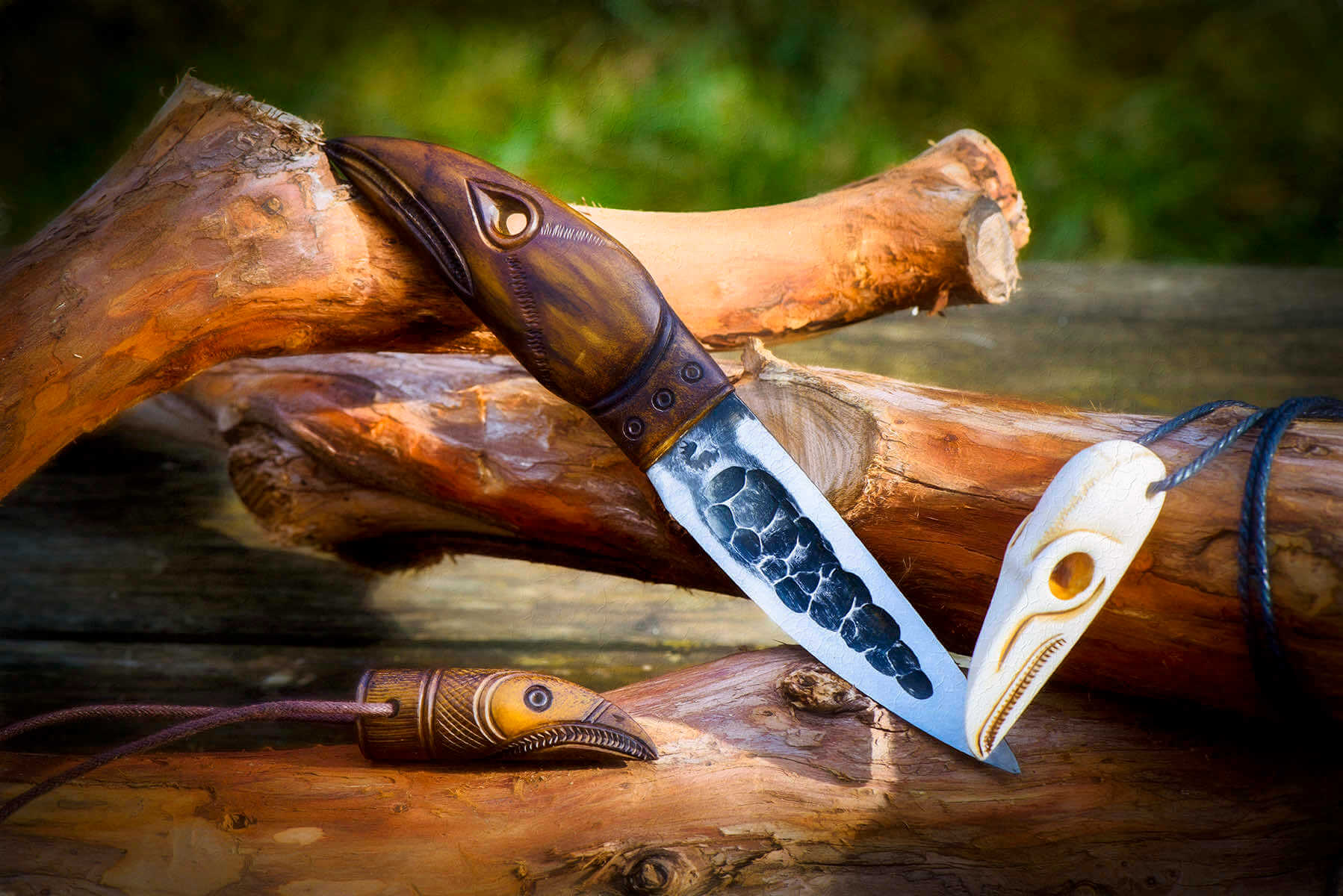
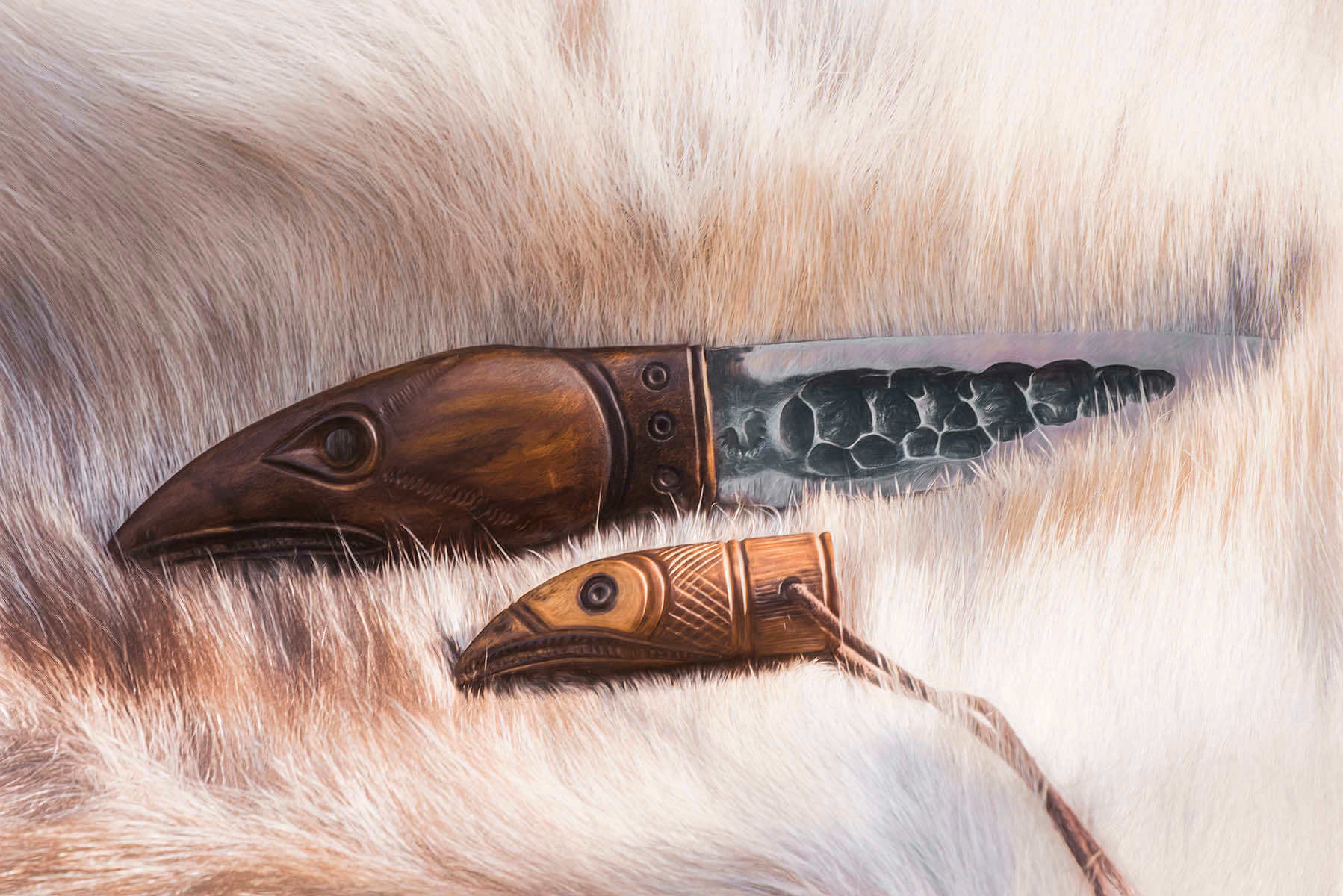
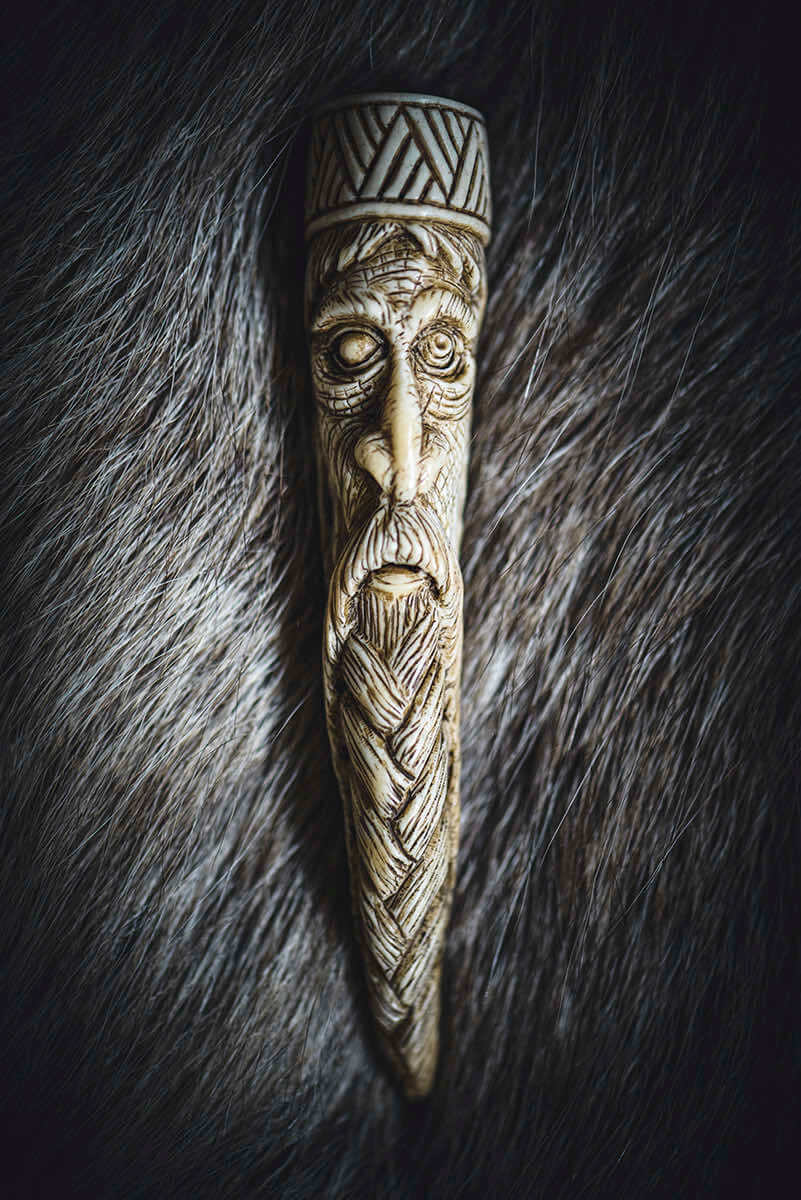
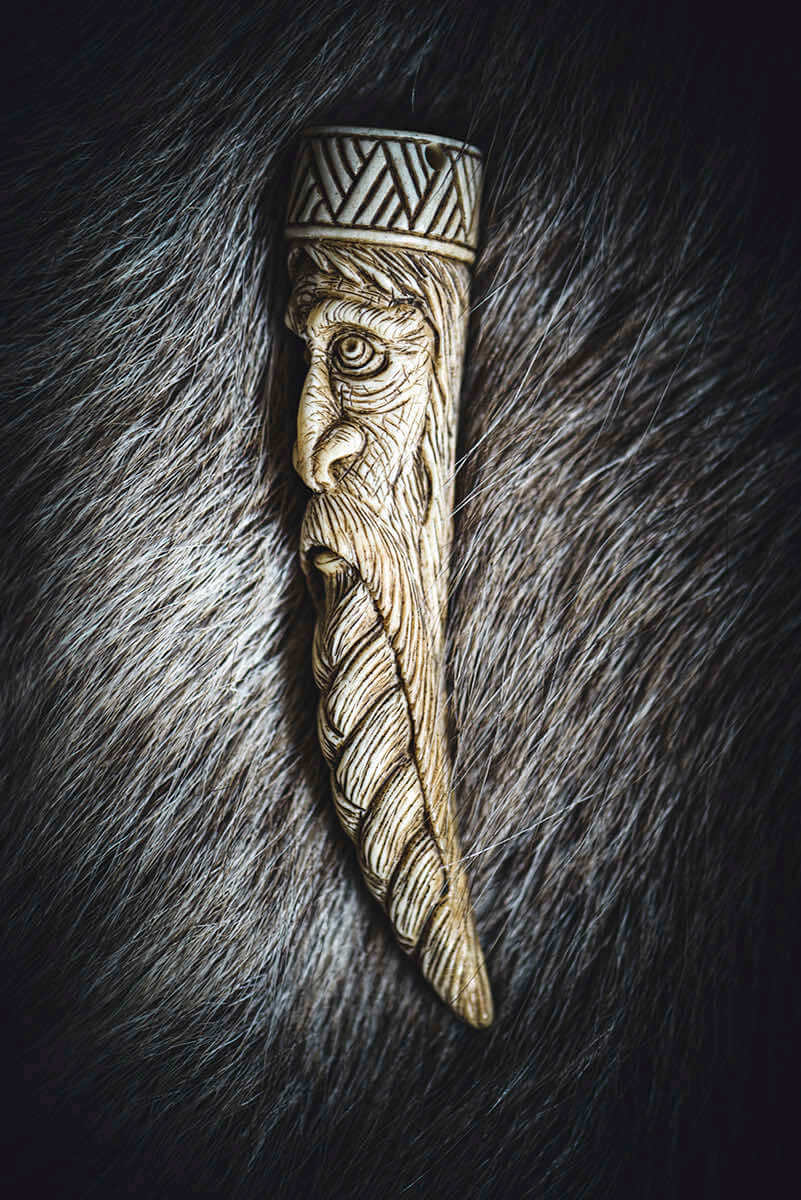
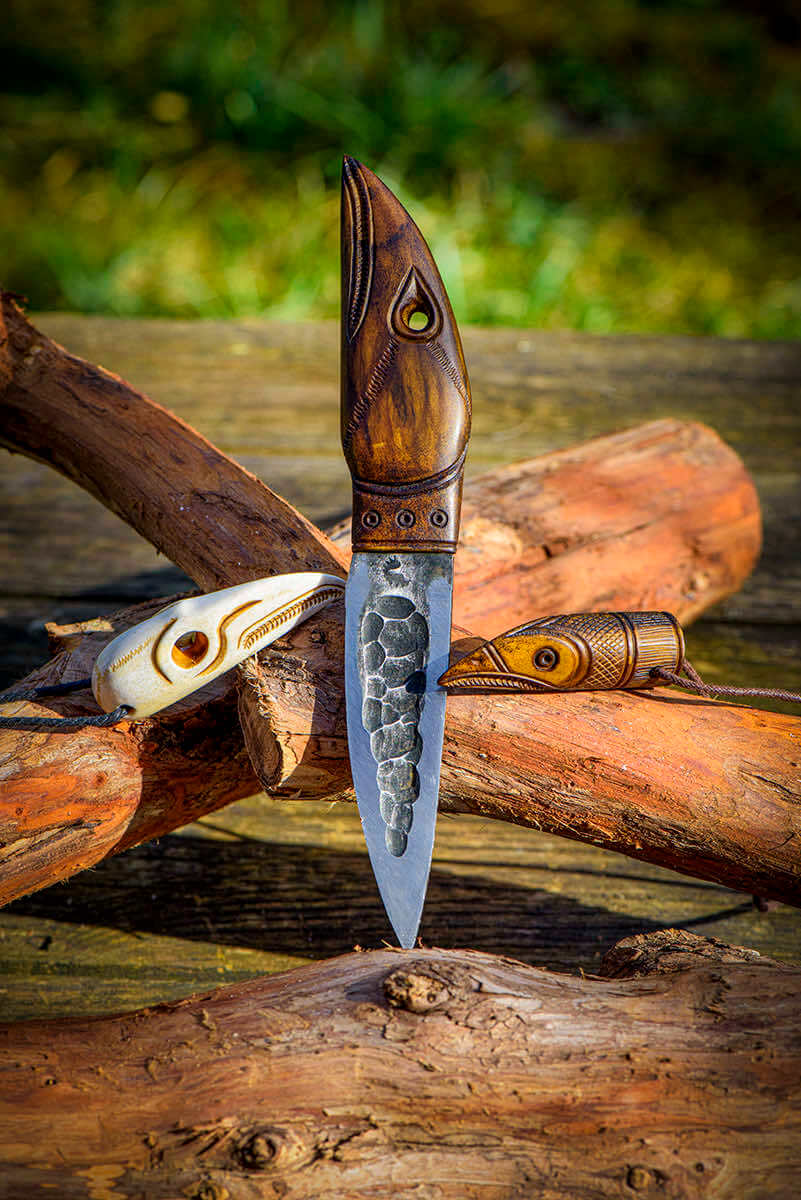
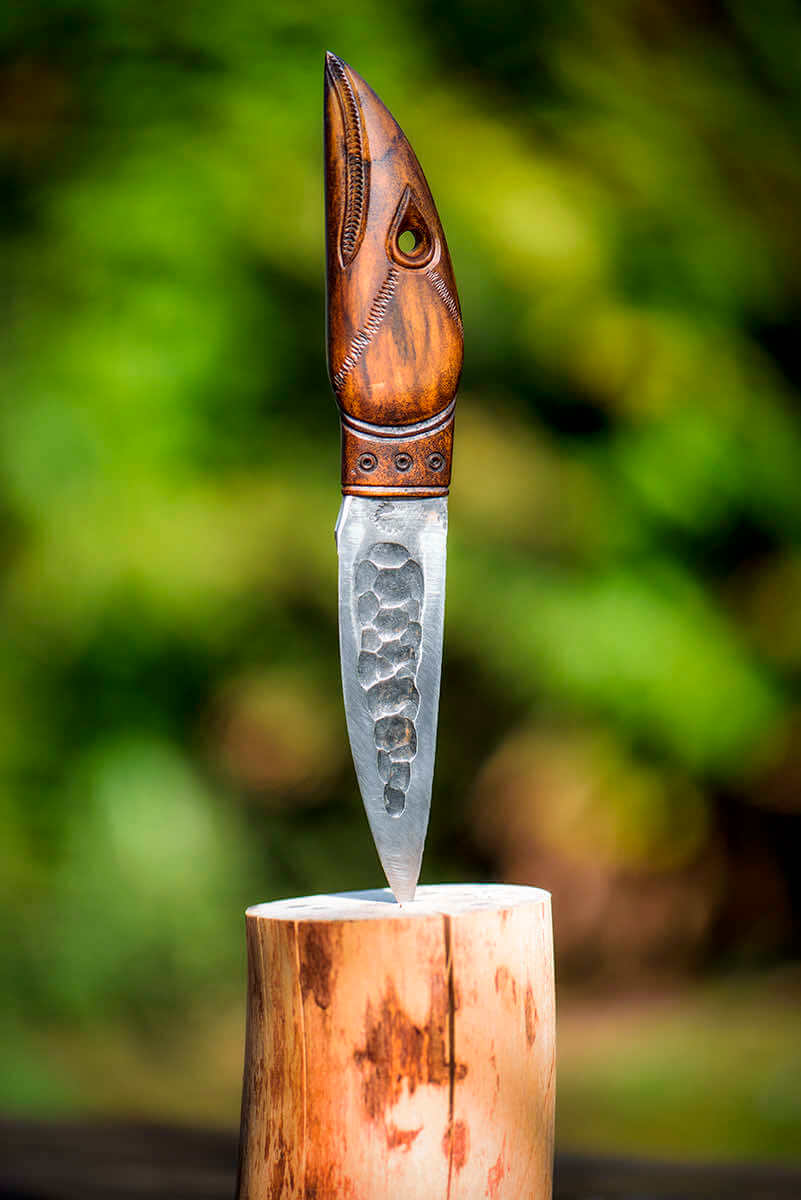
Viking knife forged by hand. Handle crow head carved and patinated in original wood. Amulets related to the god of the Odin war.


Yakoute knife

A Yakutian knife is a Siberian equivalent of puukko Finland.

Today, I push the boundaries of puukko.fr — Finally, one small step and I move from Finland to Russia. In this article, I discuss the vast subject of Vikings and Yakut, the traditional Russian knife. The yakoute knife, and understands of course the puukko, comes from the Scandinavian nations of the North. Aboriginal people, such as Vikings and the Sami people used this tool for many books.

Yakut is the traditional Yakut knife, used in Yakutia for hundreds of years without significant change in its design. Yakutia, now called Republic of Sakha, is a large region of Russia. It covers nearly 3.1 million km2, or about 18% of Russian territory.

One of the peculiarities of a yakut knife is the blade. Its shape resembles an arch formed in the cross-section to ensure massive resistance with a convex milling on its left and a hollow forged scissor mill similar to the kiridashi Japanese to his right. This is the standard model for right-handed users.


Viking knife forged by hand, handle head of raven cut in original wood.

In northern mythology crows were also associated with death and the Hereafter. It was believed that they would guide the souls of the fallen warriors in Valhalla, the great hall of the dead, where they would feast and fight until the events in Ragnarok.


Odin, the Father of all things

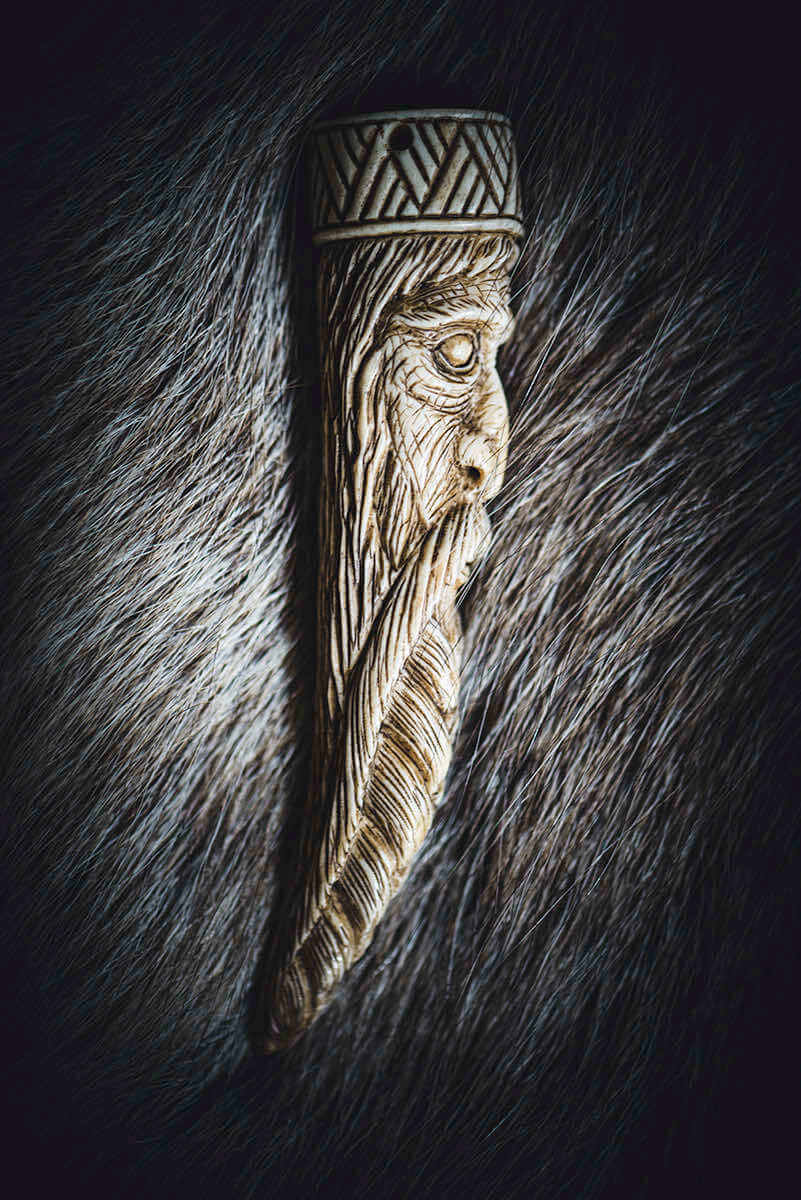
Odin is the king of the gods in Scandinavian mythology. According to legend, he is the son of the first man and daughter of a giant. He lives within a territory called Asgard. He is represented as an old man, rather authoritarian.


Ravens played an important role in northern mythology

They represent wisdom, knowledge and death. Their presence was deeply respected and associated with the god Odin, considered a wise and powerful figure.

According to northern mythology, Hugin and Munin would fly around the world every day and bring news and information to Odin. The ravens were regarded as wise and well informed creatures, and were regarded as symbols of Odin's wisdom and insight.
In northern paganism, amulets and talismans were often worn to protect themselves and connect with the gods. It was believed that crow skull amulets would offer the bearer the protection and wisdom of Odin. They were supposed to help the bearer make good decisions and navigate in difficult situations.

In addition to their association with Odin, crows were also seen as powerful and magical creatures in their own right. It was believed that they could see in the future and communicate with the dead. In addition, they were frequently associated with death and beyond.

Overall, crow skull amulets were important to northern pagans, as they represented Odin's wisdom, insight and protection. They continue to be popular today among those who practice northern paganism or are interested in northern mythology and symbolism.
Hugin and Munin are attested in the poetic Edda, compiled in the 13th century from previous traditional sources: the Edda in prose and Heimskringla in the Third Grammar treatise, compiled in the 13th century by Óláfr The Scald is a Scandinavian poet.
The two crows sit on the shoulders of Odin in an illustration of an Icelandic manuscript of the eighteenth century. In the poetic Edda, a disguised Odin expresses that he fears that they will not return from their daily flights. Edda in Prose explains that Odin is called Hrafnaguðr because of his association with Huginn and Munin. In the Edda prose and the third grammar treatise, the two crows are described as perched on the shoulders of Odin. Heimskringla details that Odin gave Huginn and Munin the ability to speak.

The Vikings marked the history of their footprint.

The Vikings were explorers, farmers, traders and settlers. They had a diverse religion, a stratified society and a rich culture.
They have left traces in the form of prosperous cities, archaeological ruins and breathtaking sagas.


Thank you for reading this article, very soon for new adventures on Viking land.

    EnglishenEnglishEnglish