
Iisakki Järvenpää
A LEGEND
The reference to Kauhava in Finland.
The values we hold dear were established by Iisakki Järvenpää himself over 140 years ago.

Manufacturer: Iisakki Järvenpää – Finland
After much deliberation, Iisakki decided to take a bold step into the unknown. He was 20 years old when he told his fiancée: “I’ve decided to become a puukkoseppä (knife smith).” With this decision, Iisakki became one of Finland’s first entrepreneurs.
- Background: from Pikkuluhta to the Tsar’s blacksmith.
- Forces: Ostrobothnia in the knob.
- Best-sellers: the horse for the eye. Aito for the hand.
- Table: Six Kauhava, a factory.
- FAQ: Tuohi, veriura, first purchase.
- Conclusion: the source adorned with the puukko.


History Kauhavan Puukkopaja
Iisakki (Iisakki Heikinpoika Pikkuluhta), Born on 7 January 1859 in Kauhava, died on 6 March 1929. Self-taught: he made his own tools. On 20 October 1879, to his fiancée Liisa: ‘I have decided to become a puukkoseppä.’ Freedom of enterprise had only just been passed into law.
Together with his cousin Juho Kustaa Lammi, he crafts the Kauhava puukko: sleeker and more ornate than the rough-hewn work knife.
Lammi creates the horse head (first for a cavalry ride). Iisakki popularizes veriura (bra, « blood groove » — decorative role / lightening, not blood) around 1905.
1888 : puukko gift for the tsarevich, future Nicolas II.
1894 : pair of horse heads for the Tsar and Alexandra, coronation. Title: Keisarin puukkoseppä (Forgeron of the Emperor).
1898–1904 : foreman at the Kauhavan puukkotehdas; Unfulfilled promises.
15 February 1904: It reopens its factory (Pukkila).
1919 : Moves on to wires. Current factory: building dating from 1958, Passinraitti 32. Shop + museum. Still based in Kauhava, parts made on-site, no computers in production, machinery from 1920–70, in-house toolmaker. Blades: formerly forged; now made from Thyssen sheet metal (specified alloy), cold-pressed and ground five times by hand. Still supplies the armed forces (RUK, weapons).
Photo 1929: a Kauhava puukko on John Wayne’s belt (its origins are unclear).
Highlights / weak points
Forces
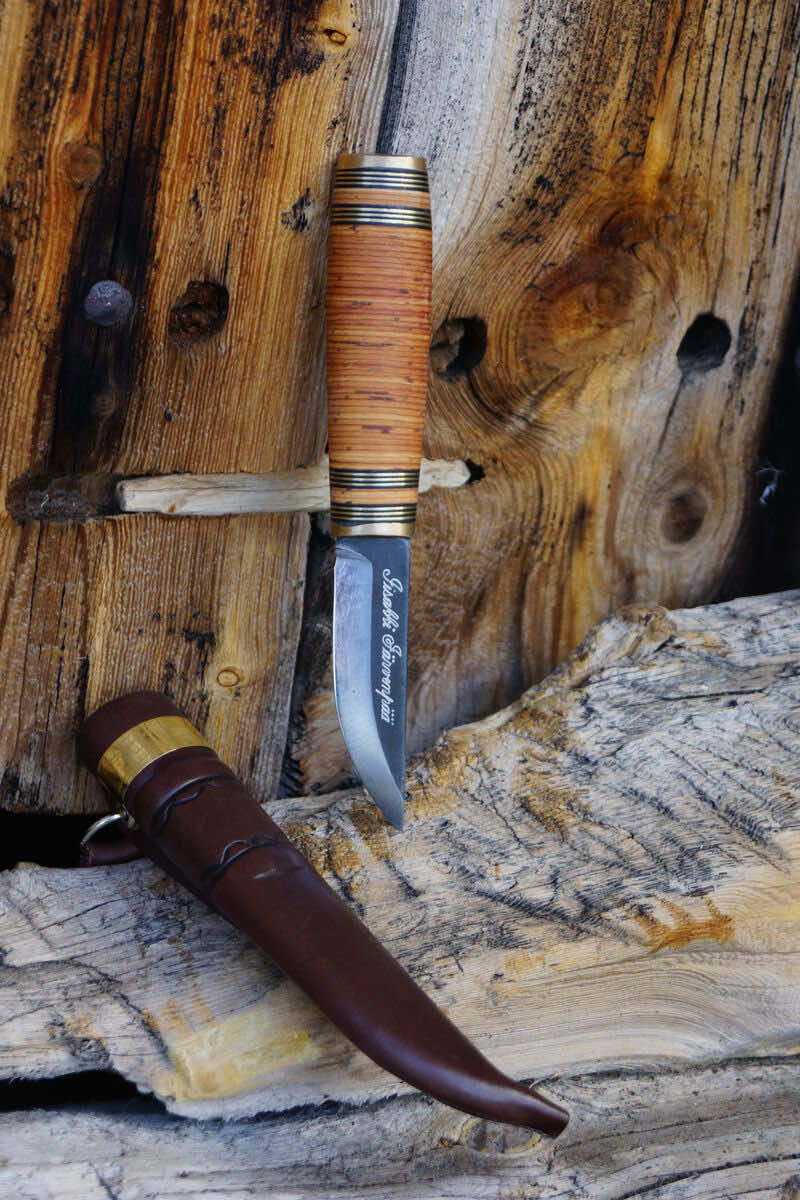
- The most ‘historic’ form of Kauhava. Tuohi: a unique, light, traditional variety, older than the birch in their region.
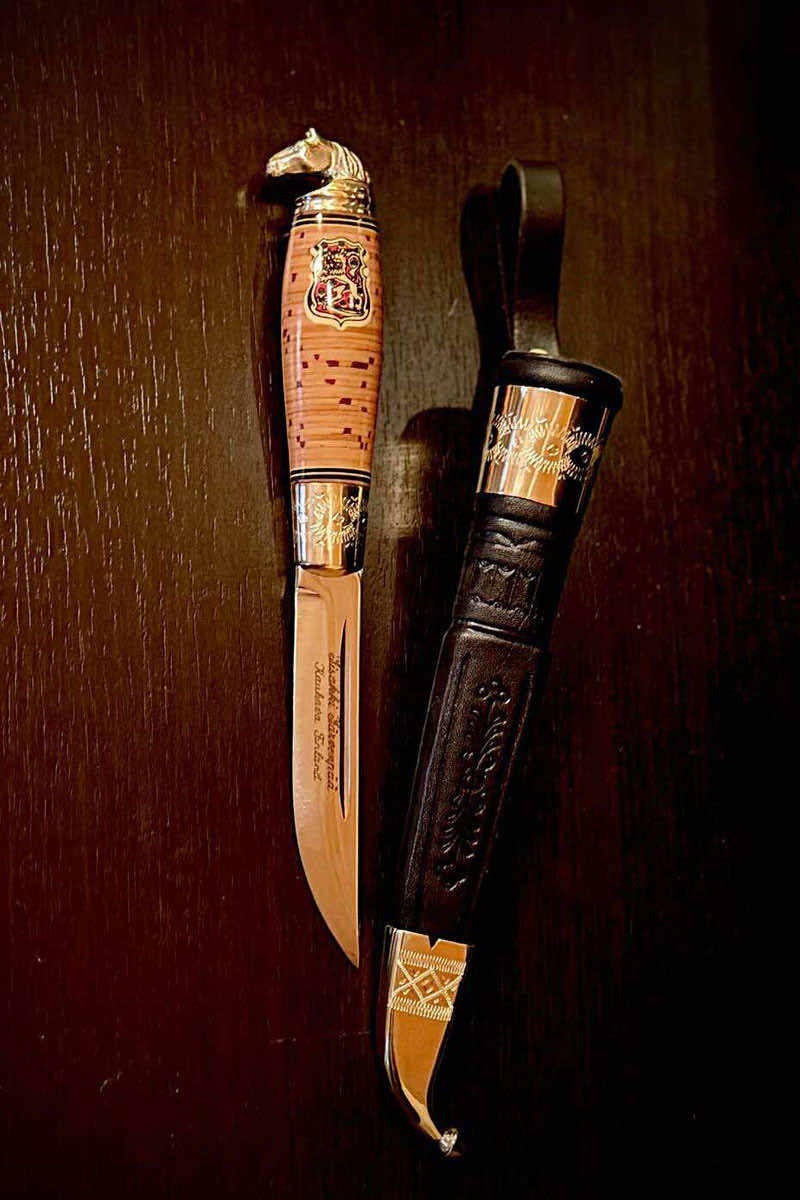
- Horse’s head cast from brass on site. Hand-engraved on the rim. All under one roof.
- High-carbon steel, Scandi-style. Aito / Askare: genuine tools, not just souvenirs. Can be repaired and resharpened. The longest feature in this issue (1879).
Weakness
- Many gift/tourism models (double sheath, steak, cast dogs).
- Tuohi varnished: less « tool » than handle oiled Roselli.
- Classic carbon steel, not UHC.
- Hidden silk.
- Price of the horse’s head (~€230) = you’re paying for the ornament.
- Large catalogue, risk of drowning puukko work.
In one sentence
Järvenpää wins on Kauhava with the horse head; It quickly slides to memory if you don't choose the model.
Better sales
Three lines. Icon, tool, compact.
1) Kauhava Horse Head (Hevospää)
Since ~1882. Polished carbon blade ~100 mm, lacquered tuohi (~50 layers), brass horse-head pommel, hand-engraved. Shorter version for women. Double scabbard available. ~€229.
2) Aito Puukko / Askare
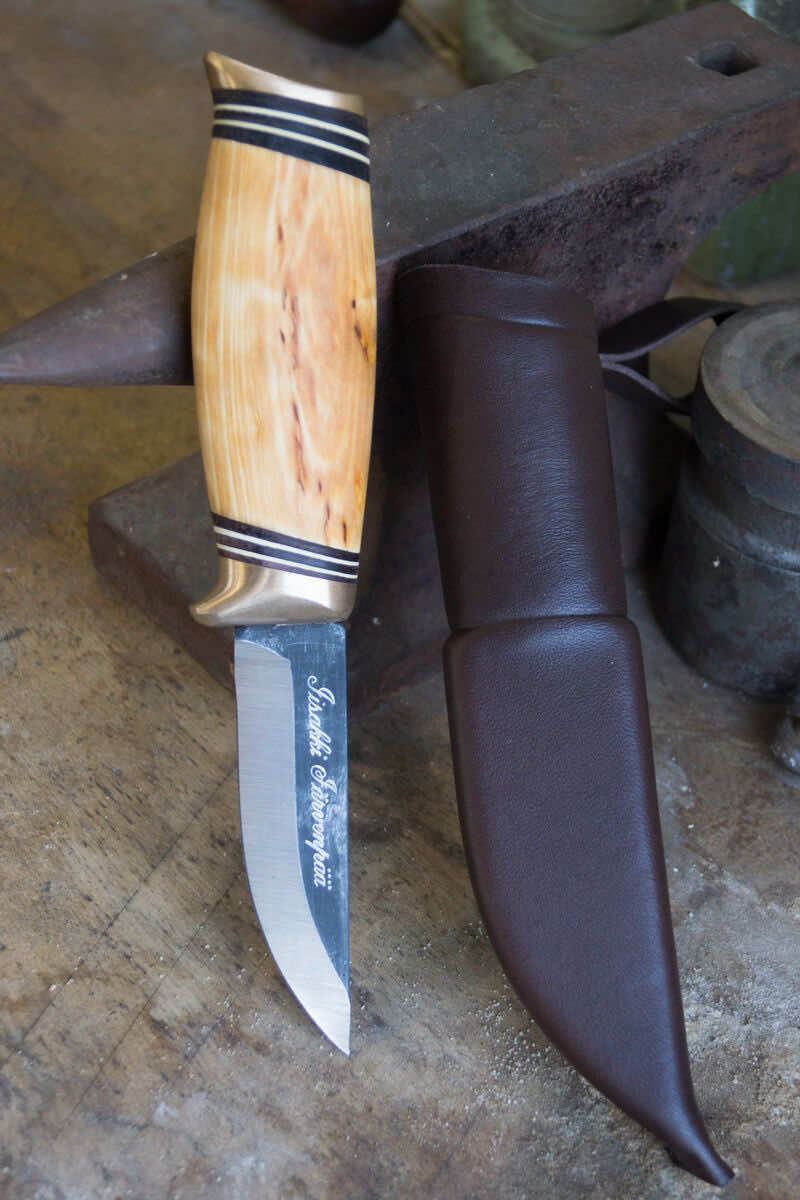
Puukko work. Carbon, scandi, tuohi or simple wood, little ornamentation. Aito ~85 mm an excellent puukko.
3) Nuppipää / Helahoito (Härmäläinen red)
Nuppipää: a round pom-pom, a tradition from Ostrobothnia. Helahoito: the red of Härmä, with a distinct local look. For Ostrobothnian folklore, not for hard work.
Mention should also be made of:
Kolkka / Jahti : Scouts.
Soppavesi: mushrooms.
Dog series (Boxer, Hound): gift.
Your first Iisakki Järvenpää
- Without a moment’s hesitation, the Aito model. Personally, I’d rank it amongst the top five best utility puukkos. The dimensions and weight are just perfect. The finishing touch is a beautiful leather sheath that does a great job of keeping the puukko securely in place.

Board comparative
| Model | Steel | Blade | Handle | Use | Indicative price |
|---|---|---|---|---|---|
| Horse Head | Polished carbon | ~150 mm | Tuohi + horse brass | Kauhava icon | ~275 € |
| Horse Head small | Carbon | shorter | Tuohi + horse | Compact / pair | ~229 € |
| Aito Puukko | Carbon | ~85 mm | Tuohi | Work, camp | ~170 € |
| Askare | Carbon | ~90–100 mm | Wood / simple tuohi | Daily | ~60–80 € |
| Nuppipäää | Carbon | ~100 mm | Ball apple | Tradition Ostrobotnia | ~199 € |
| Helahoito | Carbon | according to version | Red Härmä | Local look | ~160–190 € |
Indicative VAT prices EU 2026. Made in Kauhava. Tuohi = birch bark stacked.
FAQ – Iisakki Järvenpää
Subscribe to the newsletter.
FAQ
Most common issues
Kauhava, where is it?
South Ostrobotnia in Finland, not Lapland. Historical capital of the puukko decorated.
Leather or birch?
Leather = home identity since 1879. Light, visible strata, often varnished. Birch plus « Contemporary forest » (Roselli, Helle).
Horse head: tool or decoration?
Both. Real carbon blade. The apple is mainly used to recognize Kauhava three meters away.
Handmade again?
Yes, in Kauhava, without a prod computer. Blades pressed, not forged with hammer as in 1915. Hand-made engravings.
Good first puukko ?
Askare / Aito, yes. Horse Head, if you want the story on the shelf and on your belt.
Which model should I start with?
Aito or Askare for cutting. Horse Head for souvenirs and Finnish gifts.
Iisakki Järvenpää Finland

Conclusion
Iisakki Järvenpää represents the puukko of the era before Lapland became a tourist destination: a man from Kauhava who, in 1879, pioneered his craft and, together with Lammi, established the style that the whole of Ostrobothnia would go on to emulate. Less ‘secret steel’ than Roselli, less ‘fjord stainless steel’ than Helle, less voluminous than Marttiini. More of a pioneering ornament.
Do you have any questions? Drop me a line – we’re all enthusiasts here: contact(at)puukko.fr.
But, above all, don’t forget to subscribe to the newsletter.
See you soon.
Warm regards,

A–Z DIRECTORY
Ahti
Brisa
Brusletto
Casström
Fällkniven
Hell
Iisakki Järvenpää
Karesuando
Kauhavan Puukkopaja
Marttiini
Morakniv
Peltonen
Roselli
Terävä
Wood Jewel
Copyright © Photographs – Iisakki Järvenpää